by jqm | Jun 22, 2026 | Insurance
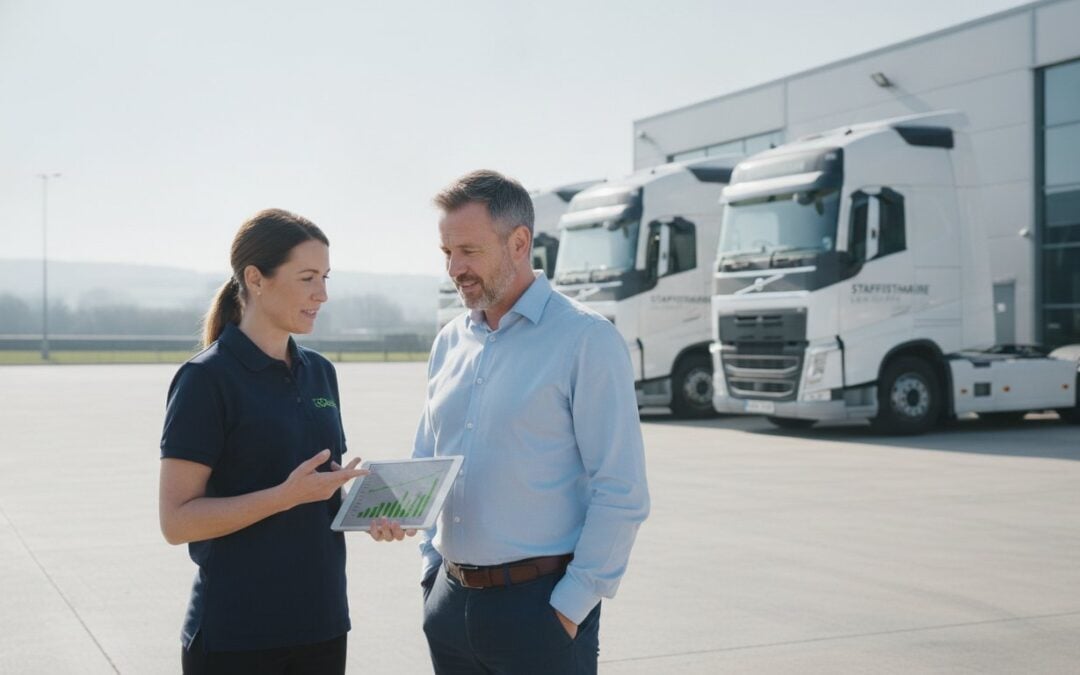
The UK commercial motor insurance market is estimated to reach a value of USD 32.29 billion in 2026, yet many operators still struggle to find a single insurer willing to cover a fleet of fewer than five vehicles. If you manage a handful of trucks, securing hgv fleet insurance for small business often feels like a constant battle against complex jargon and rising premiums driven by Ogden Rate changes. You need a solution that recognizes your specific operational needs rather than forcing your business into a corporate sized box that doesn’t fit.
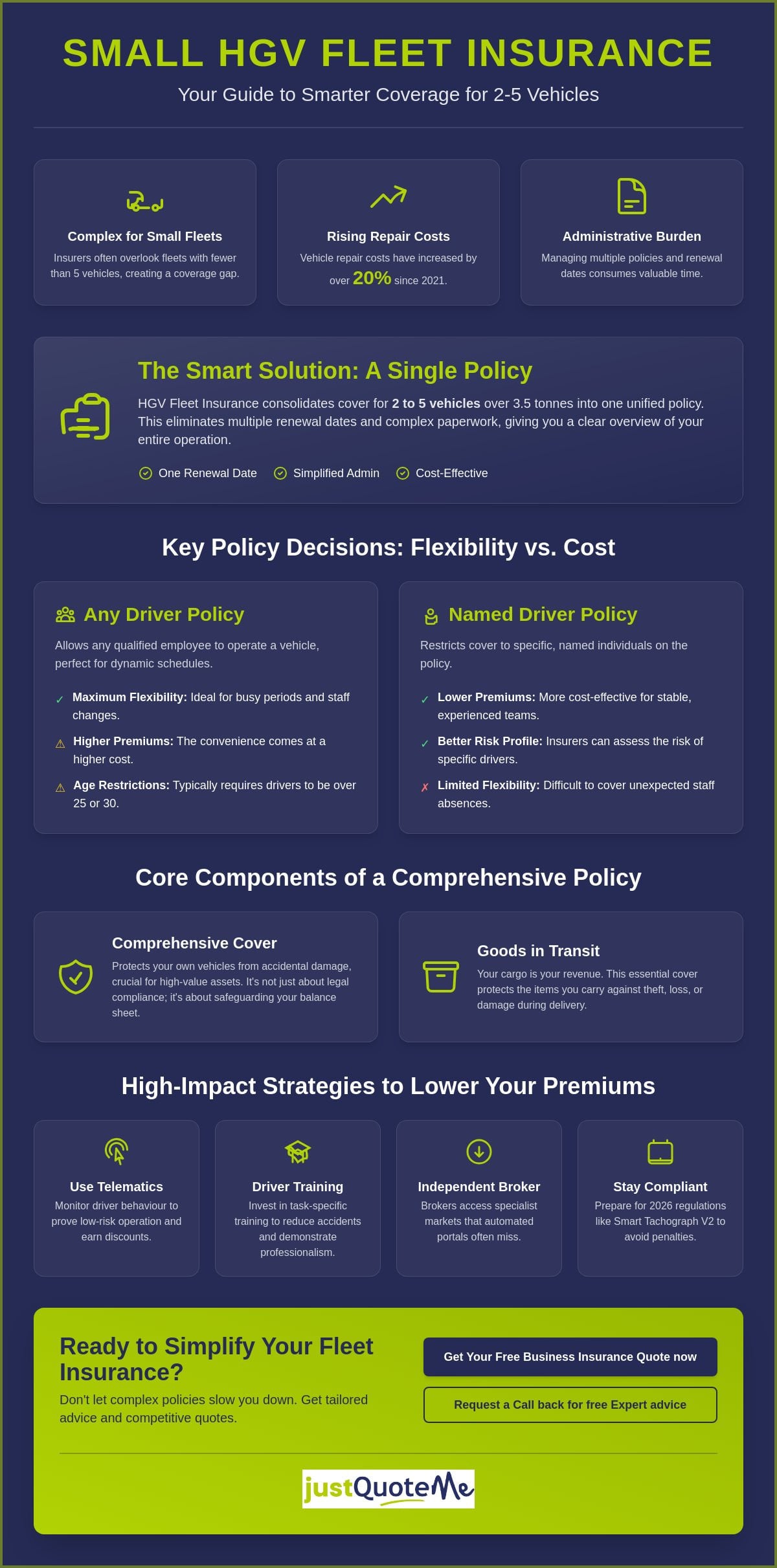
It’s frustrating when administrative burdens pile up alongside rising repair costs, which have increased by more than 20% since 2021. We understand that your priority is keeping your drivers on the road safely and legally, especially with new mandates like the Smart Tachograph Version 2 taking effect for international transport in July 2026. This guide promises to simplify the process of protecting your heavy vehicle fleet with expert broker advice and tailored cost saving strategies. We’ll explore how to consolidate your policies into a single renewal date, manage driver age restrictions, and navigate the latest safety regulations to keep your premiums manageable and your business moving.
Key Takeaways
- Learn how to consolidate 2 to 5 vehicles into a single renewal date to significantly reduce your administrative burden.
- Understand the tactical differences between Any Driver and Named Driver policies to balance operational flexibility with premium costs.
- Discover how an independent broker secures hgv fleet insurance for small business by accessing specialist markets that automated portals often miss.
- Identify high-impact strategies to lower premiums, including the use of telematics and task-specific driver training programmes.
- Navigate the latest 2026 regulatory updates with expert guidance to ensure your small fleet remains fully compliant and cost-effective.
What is HGV Fleet Insurance for Small Businesses?
HGV fleet insurance for small business is a unified policy designed to cover multiple heavy goods vehicles under a single agreement. In the UK, any vehicle with a gross weight exceeding 3.5 tonnes is classified as an HGV. While large haulage firms might manage hundreds of units, small businesses often operate in the “sweet spot” of 2 to 5 vehicles. Consolidating these into one policy eliminates the stress of managing separate renewal dates and multiple sets of paperwork. It’s an efficient way to gain oversight of your entire transport operation without the administrative headache of individual contracts.
This type of cover is fundamentally different from standard commercial van or motor trade policies. Motor trade insurance typically focuses on businesses that handle customer vehicles, whereas an HGV fleet policy protects your own assets used for your specific trade. It provides the essential legal protection required to operate on public roads, meeting the UK’s minimum requirements for third-party liability. Understanding the basics of Vehicle insurance is a good starting point for any operator, but HGV policies require more specialized oversight due to the weight of the vehicles and the potential risk associated with their cargo.
Who Needs a Small HGV Fleet Policy?
Many sectors rely on heavy vehicles to function effectively. Construction firms often require Motor Fleet Insurance to move heavy plant and machinery between sites. Similarly, local distribution and “last-mile” delivery businesses operating 7.5t trucks find that a fleet policy offers the flexibility they need to swap drivers between vehicles as demand shifts. Specialized trades, such as those in waste management or heavy engineering, also benefit from the streamlined administration of a consolidated policy. If you’re managing more than one heavy vehicle, the transition to hgv fleet insurance for small business is usually the most cost-effective move.
Gross Vehicle Weight (GVW) and Your Policy
Weight classes define your insurance requirements and premium levels. Light Goods Vehicles (LGVs) usually stay under the 3.5-tonne mark, while anything above that enters HGV territory. The distinction becomes even more critical when vehicles exceed 7.5 tonnes. At this level, insurers look for specific driver qualifications and apply higher risk tiers because of the increased damage potential in the event of an accident. If your business uses a mix of transit vans and larger lorries, you don’t need separate policies. We can integrate mixed fleets into a single, cohesive plan that covers everything from your smallest van to your heaviest articulated truck, ensuring consistent protection across your entire operation.
Core Components of Comprehensive Small Fleet Cover
Choosing the right level of cover for high-value assets is the first step in protecting your bottom line. While Third Party, Fire and Theft is an option, most operators opting for hgv fleet insurance for small business choose Comprehensive. This level covers accidental damage to your own vehicles, which is vital when a single unit represents a significant financial investment. Commercial vehicle insurance is about more than just staying legal; it’s about protecting your balance sheet from total loss in the event of an at-fault accident.
Flexibility is a major factor for SMEs. An Any Driver policy allows any qualified employee to jump in the cab, which is perfect for busy periods or sudden shifts in scheduling. However, this often comes with age restrictions, typically requiring drivers to be over 25 or 30. If you have a stable team of experienced drivers, a Named Driver policy might lower your premiums, but it limits your ability to react to sudden staff absences. To ensure you aren’t overpaying for features you don’t need, it helps to speak with a specialist broker who can trim the fat from your policy.
Your vehicles are just tools; the cargo is your revenue. Goods in Transit cover protects the items you carry against theft, loss, or damage while they are out for delivery. Without it, a single incident could wipe out your profit for the quarter. Securing the right hgv fleet insurance for small business ensures that your vehicles and your cargo are protected under one cohesive agreement.
Liability Protections for Fleet Operators
HGV operations carry risks that extend far beyond the tarmac. Public Liability Insurance is essential for covering incidents during loading or unloading on a client’s site. You also need to consider environmental liability. A fuel leak or a chemical spill can lead to massive cleanup costs and legal fines. Finally, Employers Liability Insurance remains a strict legal requirement for any fleet owner with employees, providing protection against claims for workplace injuries or illnesses.
Specialist Add-ons for HGVs
Small fleets often benefit from specialist add-ons that handle the “what ifs.” HGV breakdown and recovery is a prime example. Towing a 44-tonne truck requires specialized equipment that can cost thousands without a policy in place. Legal expenses cover is another wise addition, helping you manage the fallout from post-accident litigation. If your business delivers across the Channel, ensure you have a foreign use extension. This is particularly important for 2026 as Smart Tachograph Version 2 mandates take effect for all goods vehicles over 2.5 tonnes used for international transport.
Why an Independent Broker is Essential for Small Fleets
Automated comparison portals are efficient for standard car insurance, but they often struggle with the nuances of hgv fleet insurance for small business. An independent broker provides a vital link to specialized markets, including Lloyd’s of London. These insurers don’t typically offer quotes on public price comparison sites. They prefer working with brokers who can present a detailed, professional risk profile. This access ensures you receive a policy tailored to your specific trade rather than a generic product that might leave you underinsured or overcharged.
Impartiality is a core benefit of the broker model. We don’t work for the insurance companies; we work for you. This means we scan the entire market to find the best value without any bias toward a specific provider. Our team also brings deep local expertise to the table. We understand the economic landscape of the West Midlands and Staffordshire. We know the regional routes and the specific risks facing local trades, which helps us build a more accurate and persuasive case for underwriters when negotiating your premiums.
The Human-Centric Alternative to Algorithms
Algorithms can’t understand why your 7.5t truck has specialized equipment or why your business only operates within a specific radius. When a “computer says no” because your operation doesn’t fit a standard template, a human broker steps in to explain the context to an underwriter. This human-to-human negotiation is often the only way to secure cover for niche HGV uses. Having a local contact is also invaluable during the claims process. If an accident occurs, you won’t be stuck in an endless automated phone queue. You’ll have a dedicated advisor to manage the paperwork and advocate for a fair, fast settlement. For more information on regional support, you can read our guide on choosing a Commercial Insurance Broker Staffordshire.
Streamlining Your Renewals
Managing multiple insurance policies with different start dates is a significant drain on your time. We can consolidate all your vehicles into one “common renewal date.” This means you only have to deal with your insurance once a year, significantly reducing your administrative overhead. Brokers also handle mid-term adjustments seamlessly. If you buy a new vehicle or sell an old one, we update the policy and ensure your cover remains continuous and compliant. It’s a pragmatic approach to fleet management that allows you to focus on your daily operations while we handle the complex administrative burdens.
Strategies to Reduce HGV Fleet Premiums in 2026
Managing the costs of hgv fleet insurance for small business in 2026 requires more than just shopping around; it demands a commitment to tactical risk management. Implementing telematics and multi-camera dashcam systems is a proven way to demonstrate driver safety to underwriters. These tools provide objective data that can override generic risk profiles, often leading to significant premium reductions. When you combine technology with updated driver training programmes, specifically those aligned with the January 2026 ABA categories, you present your hgv fleet insurance for small business as a lower-risk entity.
Another effective lever is the voluntary excess. Increasing your excess can lower your annual premium, but you must calculate the right balance to ensure your business can comfortably cover out-of-pocket costs after an incident. Security also plays a major role. Parking your fleet in a secure, monitored facility overnight significantly reduces the risk of theft and vandalism compared to street parking, which insurers reward with more favorable terms. When you need to simplify this process, Just Quote Me to see how these factors impact your specific costs today.
Managing Your Claims History
The Ogden Rate remains a significant factor in premium calculations, as it dictates how much insurers set aside for personal injury claims. With CPI inflation predicted to reach 3.5% by the end of 2026, repair and medical costs continue to rise. Since 2021, average claim values have already increased by more than 20% due to inflationary pressures on parts and labor. To protect your low-claim bonuses, you should adopt a proactive incident reporting policy. Reporting minor bumps within 24 hours prevents claim inflation and allows your insurer to manage third-party costs effectively before they spiral.
Driver Management and Age Restrictions
Driver age is a sensitive variable in HGV insurance pricing. While an “Any Driver Over 21” policy offers recruitment flexibility, premiums are substantially higher than “Any Driver Over 25” agreements. Insurers view younger drivers as a higher risk due to a lack of experience with heavy loads. Vetting new hires remains essential; you should conduct thorough licence checks and verify previous experience to maintain fleet integrity. To put it simply, every year of age and experience added to your driver roster typically correlates with a measurable reduction in your annual insurance expenditure.
Securing Your Bespoke HGV Fleet Quote with Just Quote Me
With 30 years of experience in the UK insurance brokerage market, Just Quote Me understands the unique pressures facing small fleet operators. We specialize in providing Motor Fleet Insurance for SMEs, moving beyond the rigid templates used by larger, impersonal corporations. Our approach is built on regional trust. Businesses in Stone, Stafford, and Newcastle-under-Lyme rely on our expertise because we combine the authority of an industry veteran with the accessibility of a local partner. We manage the complex administrative burdens so you can focus on your core business goals.
The process of securing hgv fleet insurance for small business with us is efficient and transparent. It starts with an initial consultation where we identify the specific risks associated with your trade. We then take that information directly to our network of specialist underwriters to negotiate the best possible terms on your behalf. This human-to-human interaction often results in more tailored cover and better pricing than any automated portal could provide. We pride ourselves on being a steady hand in a complex market, ensuring your fleet remains protected and compliant as regulations evolve through 2026.
What Information You Need for an HGV Quote
To provide an accurate and competitive quote, we need a clear picture of your transport operation. Gathering these details in advance will speed up the process significantly:
- Vehicle details: We require the make, model, and Gross Vehicle Weight (GVW) for every unit in the fleet, including any specialized equipment or modifications.
- Driver details: You will need to provide the age, licence types, and at least three to five years of claims history for all named drivers or those covered under “any driver” restrictions.
- Business details: Be prepared to discuss the nature of the goods you carry, your typical annual mileage, and your primary operating radius.
Take the Next Step for Your Small Business
Partnering with an independent broker like Just Quote Me provides your business with tactical advantages that go beyond simple price savings. You gain access to specialist markets and benefit from our proactive approach to risk management. As an FCA-authorised firm, we provide expert advice that you can rely on for long-term security. We are here to simplify your administration, consolidate your renewal dates, and advocate for you during the claims process. Protecting your heavy vehicle fleet shouldn’t be a source of stress; it should be a foundation for your business growth.
Get Your Free Business Insurance Quote now
Request a Call back for free Expert advice
Future-Proof Your Transport Operation
Managing a small fleet in 2026 requires a balance of regulatory compliance and smart financial planning. By consolidating your vehicles into a single policy and implementing proactive risk management, you can stabilize your overheads despite rising industry costs. Choosing hgv fleet insurance for small business through an independent broker ensures you aren’t just another number in an automated system. You benefit from over 30 years of industry experience and direct access to top UK insurers, including the specialized Lloyd’s market.
As an FCA-authorised broker, Just Quote Me provides the human oversight necessary to navigate complex jargon and secure bespoke cover that fits your specific trade. Whether you’re moving plant machinery or handling last-mile deliveries, we manage the administrative weight so you can focus on the road ahead. Let us help you find a pragmatic solution that keeps your business moving forward safely and cost-effectively.
Get Your Free Business Insurance Quote now
Request a Call back for free Expert advice
Frequently Asked Questions
What is the minimum number of vehicles for an HGV fleet policy?
Most insurers require a minimum of two vehicles to qualify for a fleet policy. While some providers focus on massive haulage operations, we specialize in helping businesses in the two to five vehicle bracket. This entry point allows you to consolidate your paperwork and renewal dates immediately. It’s an efficient way to manage hgv fleet insurance for small business without needing a large fleet to see the administrative benefits.
Can I include vans and HGVs on the same fleet insurance policy?
You can absolutely include both vans and HGVs on a single multi-vehicle policy. This is known as a mixed fleet and is a pragmatic choice for businesses that use smaller transit vans for local errands alongside larger trucks for heavy haulage. Consolidating different vehicle types into one agreement simplifies your management tasks. It also ensures that every asset, regardless of its weight class, is protected under a consistent level of cover.
How does Gross Vehicle Weight (GVW) affect my insurance premiums?
Gross Vehicle Weight is a primary factor in determining your premium because heavier vehicles have a higher potential for damage in an accident. A 44-tonne articulated lorry carries more risk than a 7.5-tonne rigid truck. Insurers also consider the specific driver qualifications required for higher weight classes. As you move up the GVW scale, underwriters look for more robust safety records and specialized experience to mitigate the increased liability risks.
Is Goods in Transit insurance included in an HGV fleet policy?
Goods in Transit insurance is typically an optional add-on rather than an automatic feature of a standard HGV policy. While your fleet insurance covers the vehicle itself, Goods in Transit protects the cargo you are carrying against theft or damage. It is essential for distribution businesses to ensure their revenue is protected while on the move. We recommend reviewing your cargo values to ensure your limits match the actual worth of your loads.
Are there age restrictions for drivers on a small business HGV fleet?
Most HGV insurers apply a minimum age restriction of 25 for drivers due to the high risk associated with heavy vehicles. While it is possible to find cover for drivers over 21, you will likely face significantly higher premiums and increased excesses. We often advise small businesses to aim for a driver roster aged 30 and over to secure the most competitive rates. This demographic is viewed by underwriters as the most stable and experienced.
What happens if my HGV breaks down without specialist recovery cover?
Without specialist recovery cover, you are responsible for the full cost of towing and roadside assistance for your heavy vehicles. Standard breakdown services often lack the equipment needed to recover a fully laden HGV, leading to private recovery fees that can reach thousands of pounds. Including this as an add-on to your hgv fleet insurance for small business prevents these sudden, high expenses. It ensures your drivers aren’t stranded and your delivery schedules remain intact.
How can telematics help lower my small business fleet insurance costs?
Telematics systems lower costs by providing insurers with objective evidence of safe driving behaviors. By monitoring braking, cornering, and speed, you can prove to an underwriter that your fleet is lower risk than the industry average. This data-driven approach is particularly effective for small businesses looking to differentiate themselves from larger fleets. Many insurers now offer premium discounts or more favorable terms to operators who commit to using active telematics and on-board cameras.
Why should I use an insurance broker instead of going direct to an insurer?
Using an independent broker gives you access to a wider range of insurers, including specialist markets like Lloyd’s of London that don’t sell directly to the public. Unlike a direct insurer who only offers their own product, a broker works for you. We compare multiple quotes to find the best value and provide human advocacy during the claims process. This personalized service is a human-centric alternative to the automated systems used by many direct providers.
Article by
Just Quote Me
JustQuoteMe Ltd is an independent UK insurance brokerage specialising in business and personal insurance solutions. With over 35 years of industry experience, the company provides tailored insurance cover for businesses, landlords, tradespeople, hospitality venues, fleets, and individuals across the UK. Known for its personal service, expert advice, and competitive premiums, JustQuoteMe Ltd works with leading insurers to deliver bespoke policies designed around each client’s unique needs. The company is authorised and regulated by the Financial Conduct Authority (FCA No. 586607) and has built a reputation for trusted, straightforward insurance guidance and long-term client relationships.
by jqm | Jun 21, 2026 | Insurance
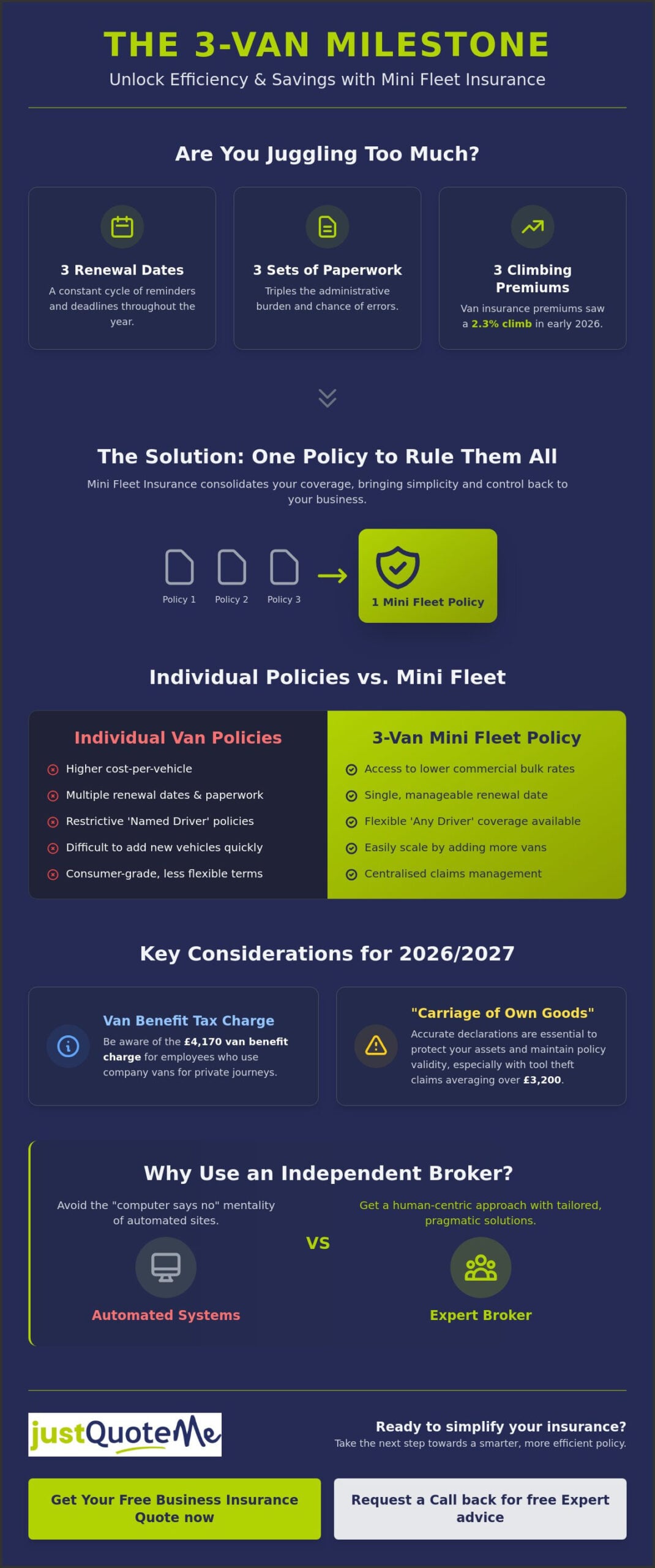
Why are you still managing three different renewal dates, three separate sets of paperwork, and three climbing premiums every year? For many small businesses, reaching a trio of vehicles is the exact moment where individual policies stop making sense and administrative overhead starts to bite. Choosing mini fleet insurance for 3 vans is often the most efficient way to regain control over your schedule and your budget. With van insurance premiums seeing a 2.3 percent climb in early 2026, sticking with the status quo could be costing you more than just your time.
It’s frustrating to watch your overheads rise while you’re busy trying to grow your business. We understand that you need a solution that is both reliable and straightforward. This guide will show you exactly how a single policy can reduce your annual costs and eliminate the headache of managing new drivers. We will explore the latest 2026/2027 tax updates, including the £4,170 van benefit charge, and provide a clear roadmap to help you secure the best coverage for your fleet.
Key Takeaways
- Consolidate your administrative burden by moving three separate renewal dates into a single, manageable policy.
- Learn how switching to mini fleet insurance for 3 vans unlocks commercial rates that are often lower than individual premiums.
- Discover the flexibility of “Any Driver” coverage which simplifies the paperwork involved when hiring new staff or swapping vehicles.
- Understand why accurate declarations for “Carriage of Own Goods” are essential to protecting your assets and maintaining policy validity in 2026.
- Find out how working with an independent broker provides a human-centric alternative to automated systems for more personalized coverage.
What is Mini Fleet Insurance for 3 Vans?
Mini fleet insurance is a specialized commercial product designed to consolidate the coverage of a small number of vehicles, typically ranging from 3 to 12. For many UK businesses, the transition to mini fleet insurance for 3 vans marks the point where manual administration becomes a genuine burden. Instead of juggling three separate policies with different providers and varying renewal dates, a mini fleet policy brings everything under one roof. This single-renewal structure is a game changer for builders, couriers, and service providers who need to focus on their clients rather than their filing cabinets.
An independent broker plays a vital role in this process. Unlike automated comparison sites that often struggle with the nuances of commercial use, a broker can tailor a policy to your specific trade. They act as a steady hand, ensuring that your fleet is protected by a policy that reflects how you actually work. This human-centric approach avoids the “computer says no” mentality, providing a pragmatic solution for businesses that don’t fit into a standard box.
How a Mini Fleet Policy Differs from Multi-Van Cover
While they might sound similar, fleet insurance is a distinct commercial category. Multi-van cover is frequently a consumer-grade extension of a personal policy, which can be restrictive for a growing business. Fleet terms are built for professional flexibility. One of the most significant advantages is the “Any Driver” option. While individual policies often require you to name every driver, motor fleet insurance often allows any authorized employee to get behind the wheel. This is particularly useful in 2026, as recruitment needs can change quickly. Most specialist underwriters view three vehicles as the baseline for these professional terms, making it the ideal entry point for small businesses.
Key Components of a 3-Van Policy
Every policy starts with the legal requirement for Vehicle insurance, as defined by the Road Traffic Act 1988. You can choose between Comprehensive, Third Party Fire and Theft (TPFT), or Third Party Only (TPO). A major benefit of mini fleet insurance for 3 vans is the ability to mix vehicle types. You don’t need a fleet of identical vans; you can cover a mix of large Transits and smaller Caddies under the same agreement. This flexibility is essential for service-based businesses that use different vehicles for different tasks.
Centralised claims management is another cornerstone of these policies. If an accident occurs, you deal with one point of contact for the entire business. This efficiency is critical when you consider that the average claim for tool theft from vans now exceeds £3,200. Having a single, robust policy ensures that the claim process is as frictionless as possible, allowing you to get back to work without unnecessary delays.
The Benefits of Switching at the 3-Van Milestone
Reaching three vehicles is a significant milestone for any small business. It’s the point where you stop being a collection of individual drivers and start operating as a professional fleet. This is why mini fleet insurance for 3 vans is so effective; it rewards your growth by offering access to bulk rates that are simply unavailable to individual policyholders. By moving to a commercial auto insurance policy, you’re no longer just three separate risks in the eyes of an insurer. You’re a single, manageable entity, which often results in a lower cost per vehicle.
The “Any Driver” advantage is particularly potent at this stage. As your team grows, you don’t want to be stuck on the phone with an insurer every time you hire a new technician or a temporary courier. Fleet policies typically allow any authorized employee over a specific age to operate any vehicle in the fleet. This removes the administrative friction of “Named Driver” policies and ensures your vans are never sitting idle because of a paperwork delay. It’s a pragmatic shift that supports the fast-paced nature of modern trade and delivery services.
Future-proofing is another key benefit. Adding a fourth or fifth van to an existing motor fleet insurance policy is significantly faster than starting a fresh individual application. If you win a new contract and need another vehicle on the road by Monday, your fleet policy can usually accommodate it with a simple notification. This agility is vital for businesses looking to scale without being held back by their administrative setup.
Managing Your No Claims Discount (NCD)
One common concern when switching to mini fleet insurance for 3 vans is what happens to your hard-earned NCD. Most insurers will convert your individual years of no-claims into a “Fleet Rated” bonus. This doesn’t mean your history is lost; instead, it’s pooled to benefit the entire business. If one van has a minor scrape, it won’t necessarily wipe out the discount for the entire fleet in the same way an individual claim would. This structure protects your business from the financial impact of a single isolated incident, helping you maintain a stable premium over time.
Simplifying Business Administration
Managing your finances becomes much easier with a consolidated policy. You move from three different monthly or annual payments to one single premium, which improves your cash flow management. Bookkeeping is also simplified with just one VAT receipt to process and one renewal date to remember. You can even add temporary vehicles or hired vans to the same policy during busy periods. If you’re ready to cut down on your paperwork, you can explore tailored fleet options that fit your specific business model and trade requirements.
- One single renewal date replaces multiple administrative cycles.
- Easier accounting with a single premium and VAT receipt.
- Flexible “Any Driver” terms that simplify recruitment.
- The ability to add or remove vehicles quickly as your business scales.
Individual vs. Fleet Insurance: Which is Right for Your 3 Vans?
Deciding between three separate policies and a single fleet agreement is a pivotal moment for a growing business. While a fleet policy isn’t always cheaper on day one, the long-term savings in administrative time and operational flexibility are significant. For many, mini fleet insurance for 3 vans represents the threshold where the math shifts in favor of consolidation. Industry data from early 2026 suggests that switching to business fleet cover can offer savings of 10 to 25 percent compared to insuring vehicles individually. This makes it a pragmatic choice for those looking to scale without increasing their paperwork.
There are instances where sticking with individual policies might still make sense. If your three vehicles have vastly different uses, such as one dedicated to heavy site work and another used primarily for personal errands, the risk profiles might be too disparate for a single fleet underwriter to price competitively. However, for most trades where all three vans are performing similar commercial duties, the benefits of a single renewal date and unified claims process usually outweigh any minor price differences found on generic comparison sites.
The Cost Comparison: 3 Policies vs. 1 Fleet
Individual policies are often priced for the mass market, which means they don’t account for the unique needs of a professional team. Brokers like Just Quote Me specialize in finding “mini-fleet” underwriters that major aggregators frequently overlook. These specialists understand that three vans are a distinct risk profile and offer terms that reflect your professional status. By combining your vehicles, you reduce the insurer’s administrative cost per unit. You can review more motor fleet insurance details to see how these technical specifications apply to your specific vehicle mix. This approach ensures you aren’t paying a premium for three separate sets of overhead costs.
Evaluating Your Driver Risk
Driver experience is the biggest variable in your premium calculation. In 2026, insuring drivers under the age of 25 can increase a premium by 25 to 40 percent. An “Any Driver over 25” policy is the gold standard for small fleets. It simplifies your hiring process immediately because you don’t need to wait for an insurer’s approval before a new team member starts their first shift. This is the point where driver flexibility becomes a major operational win. Instead of managing three separate “Named Driver” lists, you have a blanket of protection that covers your entire workforce. It’s a straightforward solution for businesses that value speed and efficiency over micro-managing every policy detail.
How to Secure the Best Rates for 3-Van Mini Fleet Insurance
Securing the most competitive rates for mini fleet insurance for 3 vans requires a shift from generic searching to precise data presentation. Insurers in 2026 are increasingly analytical, rewarding businesses that provide granular details about their operations. You need to gather comprehensive driver histories, exact vehicle specifications, and realistic annual mileage estimates before starting the process. Being honest about mileage is particularly important; underwriters are now more skeptical of ultra-low claims, and accurate declarations prevent policy invalidation during a claim.
One of the most critical elements is the “Carriage of Own Goods” declaration. This term is often misunderstood, but it’s essential for businesses that transport their own equipment or stock. Whether you’re a plumber with a van full of copper piping or a landscaper with heavy machinery, declaring this use correctly ensures your protection is valid. To complement this, many small fleets are now adopting telematics and dashcams. These “black box” technologies monitor driving habits like braking and speed, providing tangible evidence of a low-risk profile that can lead to lower premiums over time.
While automation works for simple car insurance, it often fails when handling the nuances of a small business. An independent broker can access non-standard markets and specialist underwriters that don’t appear on price comparison sites. This human-centric approach allows for a pragmatic evaluation of your risk rather than a “computer says no” result. If you want to see how this personalized service can benefit your bottom line, you can get a tailored quote from our expert team today.
Risk Management for Small Fleets
Implementing a basic driver safety policy is a straightforward way to demonstrate reliability to an insurer. Even with a small three-man team, having clear guidelines on vehicle maintenance and usage can lower your risk profile. Location also plays a significant role in your quote. For businesses operating in Staffordshire or the West Midlands, secure overnight parking in a locked compound or garage can positively impact your premium. Given that the average claim for stolen tools now exceeds £3,200, many tradespeople also choose to integrate van tools insurance as a vital bolt-on to their main fleet policy.
Preparing for Your Broker Consultation
Preparation is the key to a frictionless experience. You should have your V5C logbooks and proof of your current No Claims Discount (NCD) ready for review. Explaining your business use accurately is the best way to avoid claim rejection later. For example, if your vans are primarily used for construction projects, you should discuss how your fleet policy integrates with your wider builders insurance. This ensures there are no gaps in your coverage between your transit risks and your site-based liabilities. Having this documentation organized allows your broker to present your business in the best possible light to specialist underwriters.
Why Just Quote Me is Your Ideal Mini Fleet Partner
Finding the right mini fleet insurance for 3 vans isn’t just about finding the lowest number on a screen. It’s about finding a partner who understands the local landscape and the specific pressures of running a small business in 2026. Just Quote Me brings over 30 years of experience as an independent UK insurance broker to your side. We don’t rely on the rigid, automated algorithms that larger aggregators use. Instead, we use our long-standing relationships with a wide panel of specialist UK underwriters to find coverage that actually fits your trade.
Our expertise extends deep into the local markets of Stafford, Stone, and Newcastle-under-Lyme. We know the regional risks and the local business community, which allows us to provide advice that’s both relevant and practical. By working with us, you gain access to insurance markets that are often closed to the general public. This ensures your three-van fleet is rated fairly and accurately based on your actual performance rather than a generic postcode average. We position ourselves as a steady hand in a complex market, managing the administrative heavy lifting so you don’t have to.
The Human Touch in Commercial Insurance
We prioritize expert advice over automated systems because we know that no two businesses are identical. Whether you’re transitioning from individual policies or looking to move away from a standard multi-van setup, we’re here to manage the paperwork for you. Our goal is to simplify your administrative cycles, replacing three separate renewal dates with one clear, manageable point in the year. As your business scales, we scale with you. We’ve helped many clients grow their operations from a modest 3-van setup to a 30-vehicle fleet, providing steady guidance through every stage of their expansion.
Ready to Simplify Your Van Insurance?
Switching to a consolidated policy is the most effective way to reclaim your time and potentially reduce your annual premiums. You’ve seen how the 2026 market is shifting; don’t let rising costs or administrative burdens slow your momentum. Getting a tailored quote is the first step toward a more efficient business model. Our team is ready to provide the pragmatic, straightforward solutions your business deserves.
Take Control of Your Small Business Fleet
Consolidating your vehicles into a single policy is more than just a convenience; it’s a strategic move to protect your bottom line. By switching to mini fleet insurance for 3 vans, you replace the friction of multiple renewal dates with a unified system that grows alongside your team. You’ve seen how this transition unlocks commercial rates and provides the essential flexibility to hire new drivers without the usual administrative delays.
As an FCA-authorised independent broker with over 30 years of industry experience, Just Quote Me specializes in delivering these bespoke solutions for UK trades and businesses. We know that your time is better spent on-site than managing a filing cabinet full of individual policies. Our pragmatic approach ensures that your coverage is as reliable as the vans you drive.
If you’re ready to slash your admin time and secure a deal that reflects your professional status, Get Your Free Business Insurance Quote now. Streamlining your operations is a straightforward process when you have a steady hand to guide you through the market. Focus on your growth and let us handle the complexities of your commercial protection.
Frequently Asked Questions
Is mini fleet insurance cheaper for exactly 3 vans?
It is often more cost-effective because insurers offer bulk-buying discounts once you reach this specific threshold. While individual premiums for a single van averaged £432 in early 2026, combining three vehicles under one agreement reduces the insurer’s administrative overhead. This efficiency is passed on to you as a lower rate per vehicle. You also save on the hidden costs of managing three separate sets of paperwork and renewal dates.
Can I include different types of vehicles on a 3-van fleet policy?
Yes, you can mix and match various vehicle types within a single policy. You don’t need a uniform fleet of identical models to qualify for these terms. It’s common to cover two large Transit vans alongside a smaller Caddy or even a commercial 4×4. This flexibility allows your insurance to reflect the actual diversity of your business operations without forcing you into multiple individual policies for different vehicle classes.
What happens to my No Claims Discount when I move to a fleet policy?
Your individual No Claims Discount (NCD) is typically converted into a “fleet-rated” discount during the transition. This means your previous driving history isn’t lost; instead, it’s used to calculate a collective bonus for the entire policy. If one vehicle is involved in an incident, it won’t necessarily reset the discount for the other two vans. This structure helps stabilize your premiums even if one driver has a minor scrape.
Does fleet insurance cover “Any Driver” for my business?
Most mini fleet insurance for 3 vans policies offer an “Any Driver over 25” option as a standard feature. This is a significant upgrade from individual policies where you must name every specific person on the document. It allows any authorized employee meeting the age criteria to drive any vehicle in your fleet. This streamlines your recruitment process because you don’t need to contact your broker every time you hire a new technician.
Is public liability insurance included in a mini fleet policy?
Public liability is not automatically included in a standard road risk policy, but it can be added as a bolt-on. While your fleet policy covers vehicle-related incidents, it doesn’t protect you if a member of the public is injured by your business activities outside the van. Most tradespeople choose to bundle these protections together for administrative ease and to ensure there are no gaps in their commercial liability.
What is the minimum number of vehicles for a fleet policy in the UK?
The standard minimum for a fleet policy in the UK is usually two or three vehicles. While some niche products exist for two vehicles, most specialist fleet underwriters consider mini fleet insurance for 3 vans to be the ideal entry point for professional terms. Reaching this milestone allows you to move away from consumer-grade multi-car extensions and into the more flexible world of commercial fleet rating and management.
Can I add a fourth van to my policy mid-term?
You can easily add a fourth vehicle to your existing policy at any point during the term. This is one of the primary benefits of fleet management; you don’t need to start a fresh application or wait for a new renewal date. Your broker simply updates the schedule and adjusts the premium proportionally for the remaining months. This agility is vital for businesses responding to new contracts or seasonal demand.
Do I need employers liability insurance if I have 3 vans and 3 drivers?
Employers liability is a legal requirement if you employ anyone, even on a temporary or casual basis. If those three drivers are employees rather than just the business owners, you must have this cover in place by law. While it’s a separate legal protection from your vehicle insurance, it’s often more efficient to manage both through the same broker to ensure your business remains fully compliant and legally protected.
Article by
Just Quote Me
JustQuoteMe Ltd is an independent UK insurance brokerage specialising in business and personal insurance solutions. With over 35 years of industry experience, the company provides tailored insurance cover for businesses, landlords, tradespeople, hospitality venues, fleets, and individuals across the UK. Known for its personal service, expert advice, and competitive premiums, JustQuoteMe Ltd works with leading insurers to deliver bespoke policies designed around each client’s unique needs. The company is authorised and regulated by the Financial Conduct Authority (FCA No. 586607) and has built a reputation for trusted, straightforward insurance guidance and long-term client relationships.

by jqm | Jun 20, 2026 | Insurance
Did you know that as of 2026, failing to meet the latest SIA training requirements could leave your firm’s liability coverage completely void? Running a professional security firm involves managing high-stakes risks every single day, yet finding Security company insurance that actually understands the specific nuances of the regulatory environment often feels like an uphill battle. You are likely frustrated by soaring premiums and the ongoing headache of deciphering complex ‘efficacy’ or ‘wrongful arrest’ clauses that seem designed to confuse rather than protect. It is a common challenge to find a partner who sees beyond the high-risk label to the professional, disciplined operation you actually run.
We believe that protecting your business shouldn’t be more stressful than the job itself. This guide simplifies these complexities by offering a clear, pragmatic path to bespoke insurance solutions tailored for 2026. We will explore how to manage modern cyber-physical threats, ensure your contracts remain fully compliant, and gain the peace of mind that comes from knowing your guards are truly protected against liability claims. This overview provides the expert advice you need to turn your insurance from a complex administrative burden into a strategic shield for your firm’s future.
Key Takeaways
- Understand why standard policies often fail and how specialist Security company insurance protects against ‘failure to perform’ risks specific to 2026.
- Identify the essential covers required for contract compliance, including mandatory Employers’ Liability and robust Public Liability protections for your workforce.
- Learn why ‘Efficacy’ and ‘Wrongful Arrest’ clauses are critical for protecting your firm if security measures fail or legal disputes arise.
- Navigate emerging 2026 threats, such as liability for AI surveillance errors and cyber breaches affecting digital access control systems.
- Discover how working with an expert broker provides access to a specialist panel of UK underwriters who truly understand the security sector.
What is Security Company Insurance and Why is it Essential in 2026?
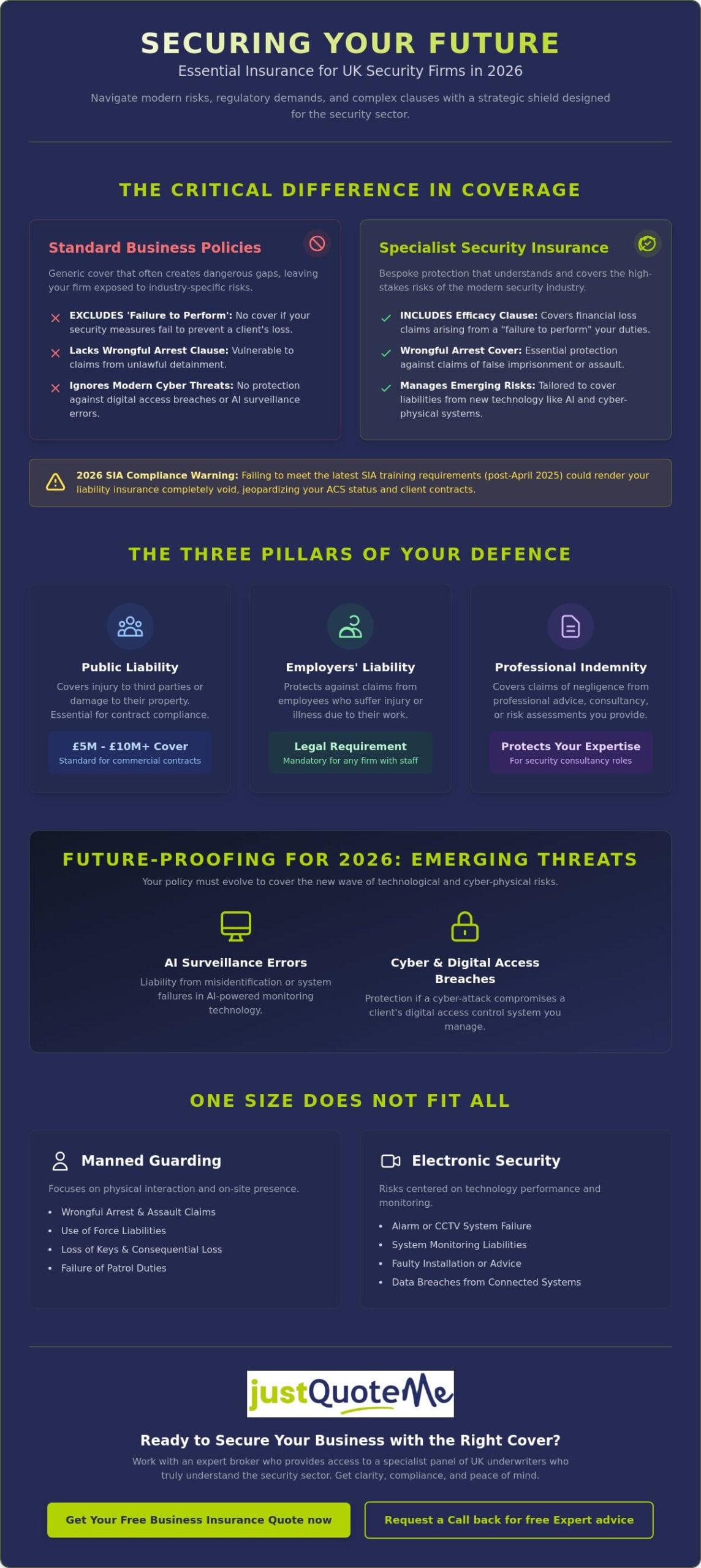
A modern Private security company operates in an increasingly litigious and regulated environment. Security company insurance is not a single policy but a strategic bundle of specialist covers designed to protect manned guarding firms, door supervisors, and electronic security installers. By 2026, the gap between standard business insurance and specialist security cover has widened significantly. General policies often exclude “failure to perform” risks, leaving firms vulnerable if a security measure fails to prevent a loss. Without bespoke protection, your firm faces catastrophic financial exposure from claims that a standard public liability policy won’t touch.
Your insurance status directly affects your standing with the Security Industry Authority (SIA). Following the April 1, 2025, introduction of mandatory refresher qualifications, insurers now scrutinize training records more closely before offering terms. Maintaining the right Security company insurance is essential for your Approved Contractor Scheme (ACS) standing. If your insurance lapses or provides inadequate protection, you risk losing your accreditation and the high-value contracts that come with it. Firms handling close protection or high-value assets require even more granular policies to address specific risks like international transit liabilities or specialized equipment failure.
The Core Components of a Security Policy
A robust policy starts with public liability insurance, which covers third-party injuries or property damage occurring during patrols. Next is employers’ liability insurance. This is a legal requirement for any firm employing guards, bouncers, or office staff. Finally, professional indemnity insurance protects your firm when providing consultancy or risk assessments. These three pillars form the foundation of a contract-compliant business. They ensure you can meet the stringent demands of commercial clients who require proof of cover before work begins.
Manned Guarding vs. Electronic Security Needs
Physical guarding and electronic security face very different threat profiles. For firms providing physical personnel, risks often center on wrongful arrest or claims regarding the use of force. Conversely, electronic security firms deal with alarm failures and system monitoring liabilities. If a CCTV system fails during a break-in, the installer could be held liable for the resulting theft. A “one size fits all” approach creates dangerous gaps in cover. You need a policy that reflects the specific tasks your team performs every day. Generic business cover doesn’t account for these professional nuances.
Navigating the ‘Must-Have’ Covers for Security Professionals
Building a robust insurance portfolio is about more than ticking boxes. It is about ensuring your business survives a worst-case scenario. Securing the right Security company insurance requires a granular understanding of your daily operations. While many providers offer a generic package, a professional firm needs a policy built on specific, high-limit protections that satisfy both the law and demanding client contracts.
Public Liability: More Than Just ‘Slips and Trips’
In the security sector, public liability insurance serves as the primary shield against claims of third-party injury or property damage. Unlike a standard retail shop, your guards operate in high-friction environments where the risk of accidental damage is significantly higher. A critical aspect often overlooked is the ‘care, custody, or control’ extension. Standard policies frequently exclude damage to property you’re actively guarding. If your team is responsible for a site and a fire occurs due to a missed patrol, you need specific wording to ensure the claim is paid. Most commercial contracts now demand a minimum of £5 million in cover, though £10 million is becoming the standard for public-facing roles. The legal necessity for such protection is mirrored internationally, as seen in Washington state law for security firms, which mandates liability insurance to maintain a professional license.
Employers’ Liability: Protecting Your Frontline
For any firm utilizing personnel, employers liability insurance is a non-negotiable legal requirement. In the UK, you must have at least £5 million in cover, though we typically recommend £10 million to account for severe incidents. This protection is vital if you use subcontractors or temporary staff, as the law often views them as employees for insurance purposes. It provides a safety net if a guard is assaulted, injured on-site, or develops a long-term illness related to their duties. Failing to hold valid EL cover can result in fines of up to £2,500 per day from the Health and Safety Executive. It’s about protecting the people who protect your clients.
Your hardware also needs protection. Commercial property and equipment cover ensures that expensive radios, body cams, and monitoring station hardware are replaced quickly if stolen or damaged. Additionally, if your firm provides consultancy, professional indemnity insurance covers you if your advice leads to a client’s financial loss. You can find more details on these specific protections by viewing our business insurance services designed for the security industry.
Specialist Clauses: Why ‘Efficacy’ and ‘Wrongful Arrest’ Matter
Standard business insurance is designed for offices and shops where the primary risks are simple slips and trips. For a security firm, the biggest risk is often what doesn’t happen. If your security measures fail to prevent a loss, a standard policy will likely leave you exposed. This is why specialist Security company insurance includes specific clauses that address the unique operational failures of the industry. Without these technical extensions, your firm is essentially self-insuring against the most common claims in the sector.
Understanding Efficacy and Contractual Liability
The ‘Efficacy’ clause is perhaps the most critical component of a professional security policy. Most standard liability policies exclude what they call ‘failure to perform’. If a guard misses a scheduled patrol or an alarm system fails to trigger during a break-in, the insurer might argue that you simply failed to fulfill your contract. They won’t pay for the resulting theft or damage. A specialist security insurance policy adds this protection back in, ensuring your liability is covered even when a service failure occurs.
Imagine a high-value warehouse breach where thieves bypass a perimeter fence. If the investigation reveals a guard was distracted or a sensor was improperly maintained, the client will likely sue your firm for the total value of the stolen goods. Efficacy cover ensures that your insurer handles the claim, protecting your firm from a potentially bankrupting settlement. This level of technical protection is what separates a generalist broker from a specialist partner who understands the high stakes of your work.
Legal Protection and Wrongful Arrest
Retail security and door supervisors face a constant risk of allegations regarding wrongful arrest or false imprisonment. Even if your staff followed every protocol, a disgruntled individual can still file a claim for illegal detention or assault. The legal costs to defend these cases are substantial. This protection often works alongside your professional indemnity insurance to provide a complete legal defence. It’s about protecting your firm’s reputation as much as its finances during a dispute.
Two other essential clauses to look for are Fidelity Bonding and Lost Key Cover. Fidelity Bonding protects your business if one of your own employees commits a dishonest act, such as theft from a client site. Lost Key Cover is equally practical. If a guard loses a master set of keys for a large commercial complex, the cost to replace all locks and re-secure the premises can run into thousands of pounds. Having these specific protections in place ensures that a single human error doesn’t derail your entire operation.
Managing Modern Risks: Cyber Security and AI in 2026
The security industry is changing rapidly. By 2026, the line between a physical guard and a digital firewall has almost disappeared. If your firm uses automated surveillance or facial recognition, you face liability risks that didn’t exist a decade ago. AI errors can lead to misidentification or privacy breaches, which could result in costly legal actions. Standard Security company insurance must now evolve to cover these digital-first threats. It’s no longer enough to protect against physical entry; you must also protect the systems that monitor those entry points.
The Rise of Cyber-Physical Threats
Cyber-physical threats occur when a digital breach leads to a physical security failure. If a hacker gains access to your client’s digital access control system and unlocks a door, the responsibility often falls on the security provider. This convergence makes cyber insurance a vital addition to your portfolio. It isn’t just about stolen passwords; it’s about the physical consequences of a digital attack. With 43% of UK businesses reporting a cybersecurity breach in the last 12 months, the risk is real and measurable. You also need to manage GDPR compliance for CCTV footage and biometric data stored by your firm. If this sensitive data is leaked, the financial penalties and reputational damage can be devastating. Remote monitoring stations must also have contingency plans for downtime to avoid “failure to perform” claims during a system outage.
How to Reduce Your Security Insurance Premiums
Insurers reward proactive risk management. Maintaining your SIA Approved Contractor status is one of the most effective ways to lower your risk profile. It signals to underwriters that you follow industry best practices and maintain high training standards. Using body-worn cameras is another strategic move. These devices provide undeniable evidence during a claim, often preventing expensive legal battles over disputed events. Robust incident reporting protocols also help. When you can demonstrate a consistent history of detailed, accurate reporting, insurers see a lower risk of unexpected lawsuits. Proactive guard training, especially in counter-terrorism and vulnerability awareness as required by 2025 SIA updates, further demonstrates your commitment to safety. If you want to ensure your firm is protected against these emerging threats, you can compare security insurance options that match your specific risk profile today.
Why Choose Just Quote Me as Your Security Insurance Partner?
Choosing the right partner to manage your firm’s protection is a strategic decision that shouldn’t be left to chance. Just Quote Me brings over 30 years of experience as an independent insurance broker. This longevity in the market has allowed us to build strong relationships with a specialist panel of UK underwriters who truly understand the technicalities of the security sector. We don’t just find you a policy; we find the right Security company insurance that addresses the precise risks your team faces every day.
We’ve built our reputation on being a human-centric alternative to the impersonal, automated systems that often dominate the insurance landscape. We believe in providing expert advice through direct, honest communication. Our team acts as a steady hand, managing the complex administrative burdens and paperwork so you don’t have to. This pragmatic approach ensures that whether you’re a sole trader or a national firm with a large fleet, your cover remains bespoke and scalable as your business grows.
Expert Advice from a Local Staffordshire Broker
Our roots are deep in the local community, and we remain dedicated to supporting the business landscapes of Newcastle-under-Lyme, Stone, and Stafford. This regional focus allows us to offer a level of individualized service that larger, national generalists simply can’t replicate. We understand that every firm has a different risk profile, and we take the time to ensure you aren’t paying for cover you don’t need while closing dangerous gaps in your protection. Our goal is to simplify the often confusing process of securing security insurance, turning it from a hurdle into a strategic asset for your firm.
Get Started with Your Bespoke Quote Today
We’ve designed our service delivery to be fast-paced and logical, mirroring the efficiency your own clients expect from you. If you need a quick solution to satisfy a new contract, our online quote process provides a direct route to immediate cover. For firms with more complex risk profiles or those managing multi-site operations, we recommend a more personal touch. You can request a callback to speak with an advisor who understands the nuances of Security company insurance and can provide the expert guidance you need to make an informed choice. It’s about providing enough information to build trust without overwhelming you with unnecessary detail.
Get Your Free Business Insurance Quote now
Securing Your Firm’s Future in an Evolving Market
Just Quote Me acts as your trusted advisor, drawing on over 30 years of industry experience to simplify the insurance process. As an FCA Authorised Broker, we provide direct access to a specialist security underwriting panel that understands the nuances of the SIA regulatory environment. We’re here to offer the human-centric, expert advice you need to navigate this high-risk sector with confidence. It’s time to move beyond generic protection and secure a policy that truly reflects the professional standards of your firm. You can protect your security business today with a partner who understands your world. Let’s work together to ensure your firm remains secure, compliant, and ready for whatever the future holds.
Frequently Asked Questions
Is security company insurance a legal requirement in the UK?
Employers’ Liability insurance is a legal requirement for any security firm that employs staff, including part-time guards or door supervisors. You must carry a minimum of £5 million in cover to comply with UK law and avoid severe daily fines. While Public Liability isn’t a universal legal mandate, it’s effectively required to secure an SIA license and satisfy the terms of most commercial contracts.
What is ‘Efficacy Cover’ and why do I need it?
Efficacy cover protects your firm if your security measures fail to prevent the very loss they were intended to stop. Standard liability policies often exclude “failure to perform” risks, which means they won’t pay if a guard misses a scheduled patrol or an alarm doesn’t sound during a theft. This specialist extension is vital because it addresses the core professional risk that standard business insurance ignores.
How much does security guard insurance cost per month?
The monthly cost of Security company insurance varies based on your firm’s specific risk profile, staff numbers, and the nature of your contracts. Factors like whether your guards are armed, the location of your sites, and your claims history all influence the premium. Following the 2025 SIA training updates, insurers also look closely at your compliance records when calculating your monthly rates.
Does my policy cover me for ‘Wrongful Arrest’ claims?
Yes, wrongful arrest and false imprisonment are typically covered through a specific endorsement on a specialist security policy. This protection is essential for retail security and door supervisors who frequently interact with the public. It covers the legal defense costs and potential settlements arising from allegations of improper detention or excessive use of force during an incident.
Do I need separate insurance for close protection or bodyguard services?
Close protection services require a specialized policy because the risk profile is significantly higher than standard manned guarding. Bodyguard work often involves high-net-worth individuals or international travel, which standard policies usually exclude. You need a bespoke insurance package that specifically names close protection activities to ensure your team is fully protected during high-stakes assignments.
Can I get insurance for my security company if we use subcontractors?
You can get insurance if you use subcontractors, but you must disclose this to your broker from the start. You’ll need to ensure that your subcontractors carry their own valid insurance, or you may need to extend your policy to cover their actions. Failing to declare the use of external staff can lead to claims being rejected if an incident occurs while they’re on duty.
How do I choose the right level of Public Liability cover for my contracts?
Your choice of Public Liability limit is usually dictated by your largest client contract or specific industry standards. Most commercial and local government contracts now require a minimum of £5 million, though high-risk sites often demand £10 million. It’s best to review your existing agreements and consider future growth to ensure your limit provides enough headroom for all potential liabilities.
What happens if my security guards are injured while on duty?
If a guard is injured while on duty, your Employers’ Liability insurance handles the claim for compensation and legal costs. This cover protects your firm if you’re found liable for the injury due to negligence or lack of proper training. It provides the financial support needed to handle the claim without depleting your business’s cash reserves or interrupting your daily operations.
Get Your Free Business Insurance Quote now
Request a Call back for free Expert advice
Article by
Just Quote Me
JustQuoteMe Ltd is an independent UK insurance brokerage specialising in business and personal insurance solutions. With over 35 years of industry experience, the company provides tailored insurance cover for businesses, landlords, tradespeople, hospitality venues, fleets, and individuals across the UK. Known for its personal service, expert advice, and competitive premiums, JustQuoteMe Ltd works with leading insurers to deliver bespoke policies designed around each client’s unique needs. The company is authorised and regulated by the Financial Conduct Authority (FCA No. 586607) and has built a reputation for trusted, straightforward insurance guidance and long-term client relationships.
by jqm | Jun 19, 2026 | Insurance
What if the vehicle insurance you rely on every day is legally invalid the moment you load your tools for a job? For many UK professionals, the distinction between a standard car policy and commercial vehicle insurance for sole trader is a source of constant stress and financial risk. You work hard to build your business, and the fear of a rejected claim or a hefty fine shouldn’t be part of your daily routine. Just Quote Me to bridge the gap between confusion and total protection.
This comprehensive 2026 guide provides the clarity you need to safeguard your livelihood with the right cover tailored for your specific trade. We’ll examine the critical differences between classes of use, the importance of protecting your equipment against theft, and practical ways to drive down your annual premiums. Whether you’re a new startup or an established professional, you’ll find the expert insights required to maintain legal compliance and secure competitive pricing from a trusted UK broker.
Key Takeaways
- Understand the critical legal differences between standard business use and a dedicated commercial vehicle insurance for sole trader policy to ensure your claims are never rejected.
- Evaluate the cost-benefit ratio of comprehensive versus third-party cover to protect your business assets without overpaying for unnecessary features.
- Identify essential add-ons that safeguard the contents of your vehicle, particularly as tool theft trends continue to evolve in 2026.
- Learn how to leverage your No Claims Discount and implement practical risk-reduction steps to drive down your annual premium costs.
- Discover the value of working with a local broker who brings over 30 years of industry experience to simplify your administrative requirements.
Why Standard Car Insurance Often Fails the UK Sole Trader
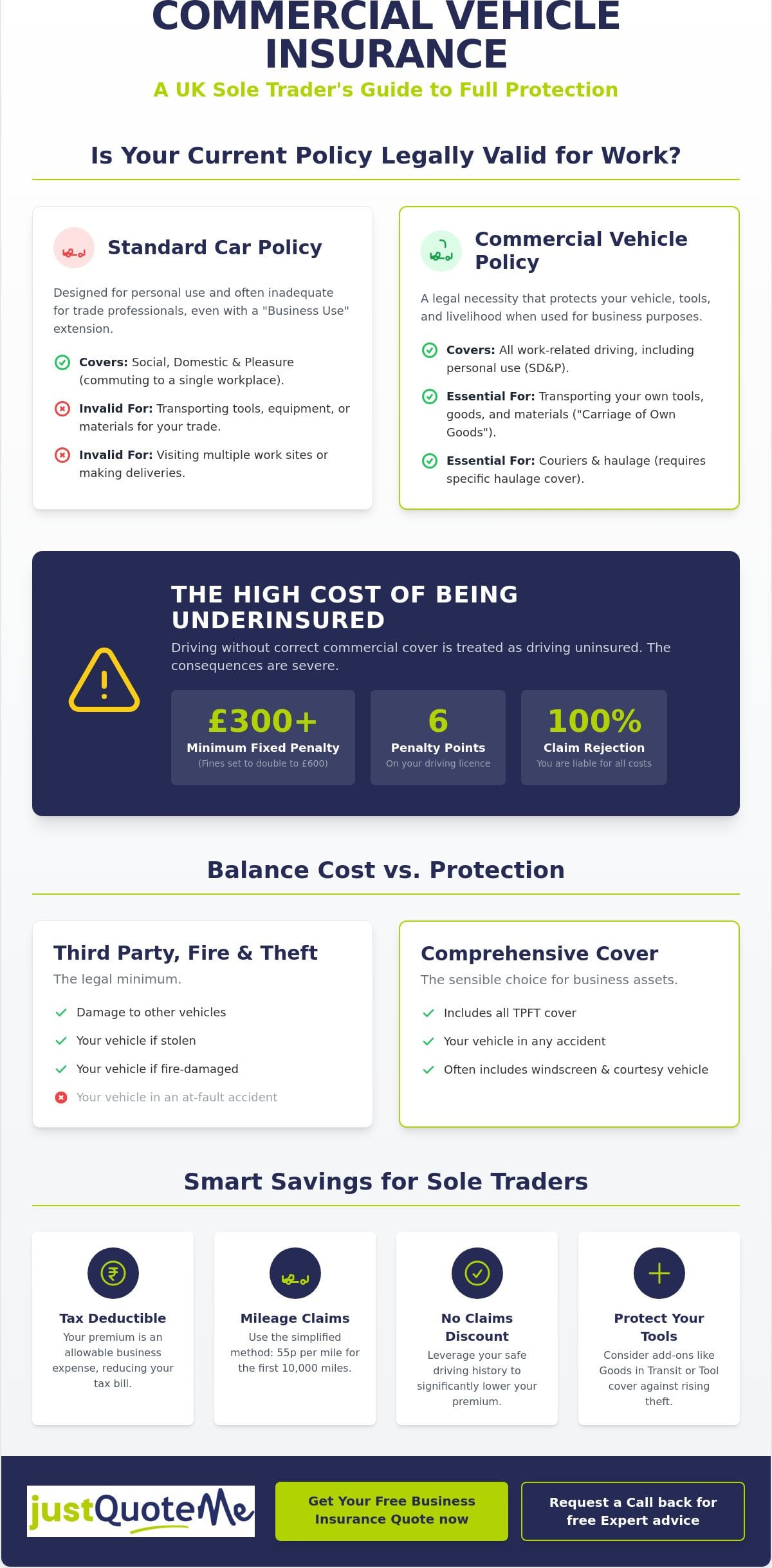
Commercial vehicle insurance for sole trader is a legal necessity for any vehicle used primarily for trade or professional services. While standard vehicle insurance provides a baseline for personal travel, it rarely meets the demands of a self-employed professional. Many sole traders mistakenly believe that adding “Business Use” to a personal policy offers sufficient protection. In reality, these extensions are often designed for office-based workers who drive to occasional meetings. If you carry tools, transport goods, or visit multiple work sites daily, a dedicated commercial policy is the only way to ensure your livelihood remains protected.
Social, Domestic, and Pleasure (SD&P) cover is designed for personal life. It assumes your vehicle is parked in a safe location during the working day and isn’t subjected to the high-mileage wear and tear common in trade industries. When you use a vehicle for work without the correct policy, you’re essentially driving uninsured. This exposure is a primary cause of rejected claims, leaving many professionals to foot massive repair bills out of their own pockets.
The Risks of Incorrect Class of Use
Insurers are increasingly sophisticated in how they identify undeclared business use during a claim. If an accident occurs while you’re performing a trade-related task on a personal policy, your insurer will likely void the cover immediately. This leaves you personally liable for all repair costs and third-party damages. Beyond the financial ruin of a voided policy, the legal repercussions are severe. Driving without the correct commercial cover is treated as driving without insurance, resulting in a fixed penalty of at least £300 and six points on your license. Government plans for 2026 suggest these fines could double to £600, making the risk of an incorrect class of use far too high for any serious professional.
Sole Trader vs. Limited Company Vehicle Needs
Your business structure dictates how you manage your vehicle and its insurance. As a sole trader, the vehicle is typically registered in your personal name, but its primary function is business. This differs from a Limited Company, where the vehicle is a corporate asset. For the self-employed, commercial vehicle insurance for sole trader is a tax-deductible expense. You can claim the actual costs of the policy or use the simplified mileage method, which recently increased to 55p per mile for the first 10,000 miles. Just Quote Me simplifies this transition for new professionals, ensuring you have the right documentation to satisfy both HMRC and the Road Traffic Act. We provide a steady hand to help you manage these administrative burdens so you can focus on your trade.
Choosing the Right Level of Commercial Vehicle Cover
Selecting the right tier of cover is about balancing upfront costs against the potential for total business disruption. While Third Party, Fire and Theft (TPFT) is the minimum required to protect against external liabilities, it leaves your own vehicle vulnerable in an at-fault accident. For high-mileage traders, comprehensive cover is often the most cost-effective choice. It typically includes essential extras like windscreen cover and courtesy vehicles that keep you on the road after a mishap. Since vehicle insurance is classified under allowable business expenses, the tax-deductible nature of the premium makes the jump to comprehensive cover a sensible investment for your primary business asset.
You should evaluate the current market value of your vehicle against the annual premium. If you drive an older van with low resale value, TPFT might seem attractive on paper. However, you must consider the replacement cost. If losing that vehicle would stop you from earning, the protection offered by a comprehensive policy is invaluable. When setting up your commercial vehicle insurance for sole trader, you also need to decide between “Named Driver” and “Any Driver” options. A named driver policy is generally cheaper and suits those who are the sole operators of their business. “Any Driver” cover provides much more flexibility if you occasionally need others to drive, though it usually carries a higher price tag.
Carriage of Own Goods vs. Haulage
The distinction between “Carriage of Own Goods” and “Haulage” is a common area of confusion that can lead to rejected claims. Carriage of Own Goods is the standard requirement for tradespeople, such as electricians or carpenters, who transport their own tools and materials to a job site. If you’re paid to transport goods belonging to other people, such as a delivery driver or courier, you require Haulage or Courier cover. Selecting the wrong category means you’re technically uninsured for your specific work activities. It’s often best to speak with a specialist broker to verify your specific classification before signing a policy.
Personal Use on a Commercial Policy
Don’t assume your commercial vehicle insurance for sole trader automatically covers personal trips like the school run or a weekly shop. To maintain protection during non-work hours, you need a “Dual Use” clause or a Social, Domestic, and Pleasure extension on your commercial policy. This ensures a single policy covers your entire life, providing seamless protection from the job site to your own driveway. For more information on balancing these professional and personal requirements, you can explore our guide on Insurance for Sole Traders & Self-Employed in the UK.
Essential Add-ons: Beyond the Basic Policy
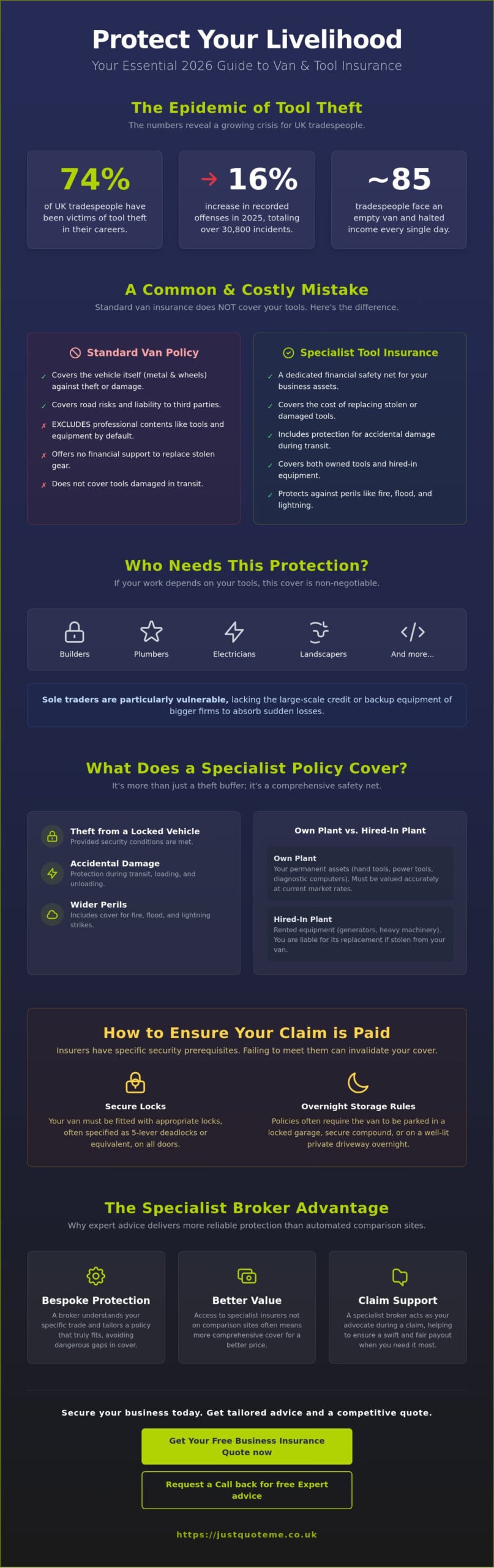
A standard commercial vehicle insurance for sole trader policy primarily protects the metal shell of your van and your liability to other road users. It rarely extends to the thousands of pounds worth of specialized equipment stored in the back. In 2026, while vehicle premiums have stabilized, tool theft remains a persistent threat to trade professionals. Thieves often target commercial vehicles specifically for high-value power tools and diagnostic equipment. If you rely on your gear to complete a day’s work, a basic road-risk policy isn’t enough. You must integrate your vehicle cover with a wider business insurance portfolio to ensure every aspect of your operation is secure.
Beyond physical assets, a truly comprehensive portfolio includes protection for the business owner themselves. For expert help navigating complex health and life insurance plans, you can Just Ask The Insurance Guy for a free one-on-one consultation tailored to the needs of individuals and small businesses.
Most basic policies treat the contents of your vehicle as “personal effects” with very low claim limits. This is why many professionals opt for specific van and tools insurance as a vital add-on. This ensures that if your vehicle is broken into, you aren’t left to fund an entire new kit out of your own pocket. Integrating these protections into your commercial vehicle insurance for sole trader creates a comprehensive shield that keeps you working even after a setback.
Tool and Equipment Cover
Standard vehicle policies often exclude “goods and tools” entirely or offer negligible payouts. When selecting an add-on, you must pay close attention to the “Night-Time” clause. Many insurers require tools to be removed from the vehicle overnight or for the van to be parked in a locked building or a secure, well-lit driveway. Failing to meet these security criteria can result in a rejected claim. To simplify the process, maintain a digital inventory of your equipment with photos and serial numbers. This pragmatic step speeds up the claims process and ensures you receive the full value of your assets.
Public Liability and Goods in Transit
Your vehicle is often the place where your road risk and site risk overlap. If you cause an accident while driving, your motor policy responds. However, if you injure a pedestrian while unloading a heavy piece of plant machinery, you need public liability insurance to cover the legal costs. Furthermore, if you transport items belonging to customers, you require Goods in Transit cover. Bundling these protections with a trusted broker like Just Quote Me is significantly more efficient than managing multiple separate policies. We help you identify these gaps in your cover, ensuring your business is compliant and fully protected without the administrative burden of juggling different renewal dates.
How to Reduce Your Commercial Insurance Premiums
Lowering the cost of commercial vehicle insurance for sole trader doesn’t mean you have to settle for inferior protection. It’s about presenting a lower risk profile to insurers through pragmatic choices. Your No Claims Discount (NCD) is your strongest asset here. In the commercial market, a clean driving history is a major factor in pricing. Many professionals choose to pay a small supplement to protect their NCD, ensuring a single minor incident doesn’t reset years of earned discounts. An independent broker can often access “offline” rates not available on comparison sites, giving you a distinct advantage in a crowded market.
Your business location significantly influences your quote. For example, a professional based in Staffordshire towns like Stone, Stafford, or Newcastle-under-Lyme will typically see more favorable rates than a trader in London. Since London premiums can be nearly double the national average, regional traders should leverage their local advantage when seeking a quote. To see how much you could save based on your specific location and trade, get a personalized insurance review today.
Security Measures and Telematics
Insurers favor vehicles equipped with Thatcham-approved security hardware. Installing an alarm, immobiliser, or a high-quality tracker can lead to immediate premium reductions. Telematics, often called “black box” insurance, is another viable route for many sole traders. While it involves monitoring your driving style and mileage, the data can prove you’re a low-risk driver, leading to lower costs over time. Dashcams are equally valuable. They provide objective evidence in the event of an accident, which speeds up the claims process and protects your NCD from fraudulent claims or disputes.
The Broker Advantage: Tailoring Your Risk
Just Quote Me to bypass the frustration of automated comparison systems that don’t understand your specific trade. We act as your advocate, searching a panel of the UK’s leading insurers to find the best possible value. Unlike generic websites, we understand that a plumber in Stafford has different needs than a consultant in Newcastle-under-Lyme. We handle the complex administrative searching so you can stay focused on your work. Request a Call back for free Expert advice to review your current policy and ensure you aren’t overpaying for your cover.
Getting Your Quote with Just Quote Me
Securing commercial vehicle insurance for sole trader doesn’t have to be a slow or frustrating process. With over 30 years of experience in the UK market, we’ve refined our approach to move you from an initial inquiry to full protection with maximum efficiency. We understand that your vehicle is your office and your delivery hub. Any delay in getting the right cover is time you aren’t earning. Our role is to act as your steady hand, managing the complex administrative burdens so you can focus on your trade with total confidence. Just Quote Me to simplify your renewal and ensure your 2026 cover is both comprehensive and cost-effective.
A Local Service with National Reach
While we provide coverage across the UK, we’re particularly proud of our roots as a commercial insurance broker Staffordshire businesses can rely on. Whether you’re based in Stone, Stafford, or Newcastle-under-Lyme, we offer a human-centric alternative to the impersonal chatbots and automated phone systems of larger competitors. This regional expertise allows us to understand local risks and provide a level of individualized service that generic providers simply can’t match. We’re committed to the West Midlands business community, ensuring that local sole traders have access to the same high-tier insurance products as national firms.
Start Your Quote Today
Get Your Free Business Insurance Quote now
Request a Call back for free Expert advice
Secure Your Professional Future Today
Your vehicle is more than just a mode of transport; it’s the heart of your daily operations. Ensuring you have the correct commercial vehicle insurance for sole trader is the only way to protect your primary business asset and stay legally compliant. By selecting comprehensive cover and integrating essential protections for your tools, you build a resilient foundation that can withstand the unexpected challenges of 2026. Correct classification is non-negotiable if you want to avoid the financial ruin of a voided claim.
Relying on automated comparison sites often leaves you with dangerous gaps in your cover or unnecessarily high premiums. As an FCA-authorised independent broker with over 30 years of industry experience, we provide a steady hand in a complex market. We leverage our access to a broad network of top UK insurers to find a policy that fits your specific trade perfectly. Don’t leave your livelihood to chance. Take the next step toward total peace of mind and secure your business assets with Just Quote Me today. We’re ready to manage the administrative burden so you can get back to work with confidence.
Get Your Free Business Insurance Quote now
Request a Call back for free Expert advice
Frequently Asked Questions
Is commercial vehicle insurance more expensive than personal insurance?
Commercial vehicle insurance for sole trader is usually more expensive than personal cover because business vehicles are on the road more often. In 2026, the market is very competitive, so the price difference is less significant than in previous years. The premium reflects the professional nature of your work and the increased liability risks associated with trade use.
Can I use my personal No Claims Discount on a sole trader commercial policy?
Most UK insurers let you transfer your personal No Claims Discount to a commercial policy. This is a great way to lower your initial costs when starting out as a self-employed professional. You’ll need to provide written proof of your discount from your previous personal insurer during the quote process.
Do I need commercial insurance if I only use my car for occasional business meetings?
If you only drive to occasional meetings, a “Business Use” extension on your personal policy might be enough. However, if your vehicle is a primary tool of your trade or used to transport goods, you require a dedicated commercial vehicle insurance for sole trader policy. Using a personal policy for trade work can leave you uninsured and facing legal penalties.
What happens if my tools are stolen from my van overnight?
Tools stolen from your van aren’t covered by a standard motor policy. You need a specific tool insurance add-on to protect your equipment. Always check your policy for “Night-Time” clauses, as many insurers require tools to be removed or the vehicle to be parked in a secure location after hours.
Does commercial vehicle insurance cover me for driving other cars?
Driving other cars is almost never included in commercial policies. This is a common feature of personal insurance but is excluded from business contracts to manage risk more precisely. If you need to drive another vehicle, you’ll generally need to be added as a named driver on that specific policy.
How much public liability insurance does a sole trader need?
Most sole traders start with £1 million in public liability insurance, but many clients or trade bodies require £2 million or £5 million. The amount you need depends on the specific contracts you hold and the level of risk involved in your daily work. It’s an essential safeguard alongside your vehicle cover.
Is my trailer covered under my commercial vehicle policy?
Your commercial policy usually provides third-party cover for a trailer while it’s hitched to your vehicle. This covers damage you might cause to others. If you want to protect the trailer itself against theft or damage, you’ll need to add specific trailer insurance to your business portfolio.
Can I pay for my sole trader insurance monthly?
Yes, you can pay for your insurance through monthly direct debits to help manage your business cash flow. While paying annually is often cheaper, spreading the cost over the year is a pragmatic choice for many growing businesses. We can help you set up a payment plan that fits your budget.
Get Your Free Business Insurance Quote now
Request a Call back for free Expert advice
Article by
Just Quote Me
JustQuoteMe Ltd is an independent UK insurance brokerage specialising in business and personal insurance solutions. With over 35 years of industry experience, the company provides tailored insurance cover for businesses, landlords, tradespeople, hospitality venues, fleets, and individuals across the UK. Known for its personal service, expert advice, and competitive premiums, JustQuoteMe Ltd works with leading insurers to deliver bespoke policies designed around each client’s unique needs. The company is authorised and regulated by the Financial Conduct Authority (FCA No. 586607) and has built a reputation for trusted, straightforward insurance guidance and long-term client relationships.
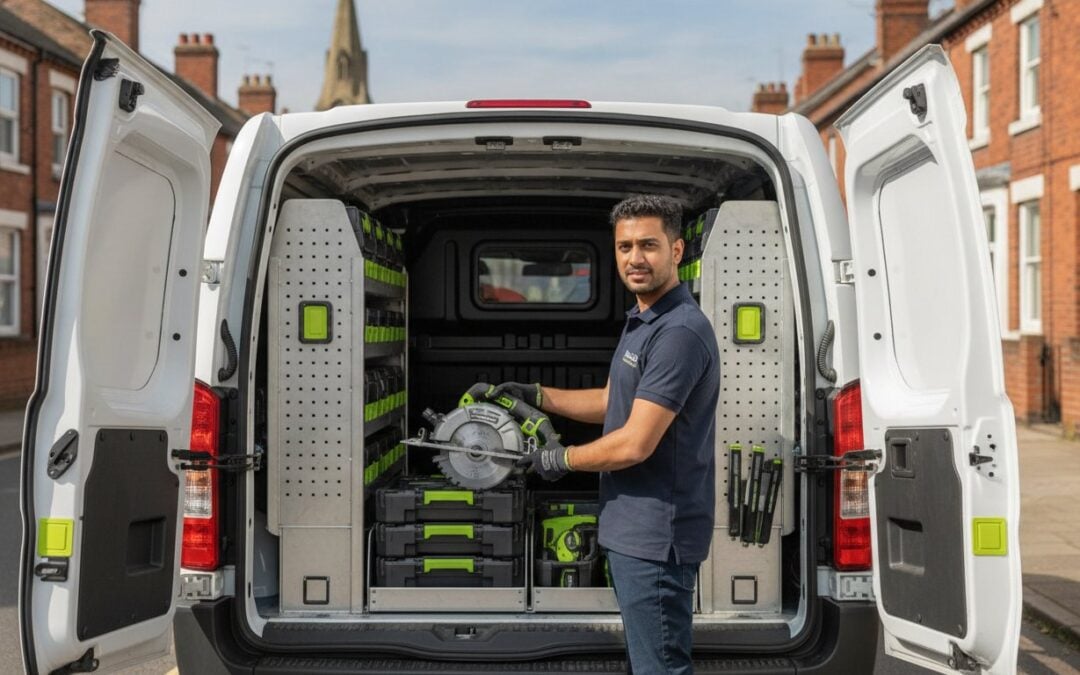
by jqm | Jun 18, 2026 | Insurance
Did you know that 74% of UK tradespeople have been victims of tool theft at some point during their careers? With 30,848 recorded offenses in 2025, an increase of 16% from the previous year, this epidemic is hitting professionals harder than ever before. It is a common mistake to assume a standard motor policy automatically covers your kit, but specialized van insurance for tools and equipment is the only way to ensure your livelihood is truly protected against theft or damage.
We understand the stress of facing high replacement costs and the devastating loss of income while you wait for new gear to arrive. You need clarity on complex overnight storage rules and security requirements that actually make sense for your daily routine. This complete 2026 guide will show you how to secure comprehensive protection that pays out quickly, covering both your owned tools and hired-in equipment. We will explore the latest security standards and expert brokerage strategies to keep your business running, moving you quickly from uncertainty to total peace of mind.
Key Takeaways
- Understand the vital distinction between standard motor policies and specialized protection designed specifically for your business assets.
- Learn how to secure comprehensive cover for hand tools, power tools, and diagnostic equipment, including protection against accidental damage during transit.
- Compare the practical benefits of bundling van insurance for tools and equipment with your public liability policy versus choosing standalone cover for high-value gear.
- Identify the specific security prerequisites, such as 5-lever deadlocks and overnight storage rules, that are essential for ensuring a successful claim payout.
- Discover how a specialist broker provides more reliable, personalized protection and better value than automated comparison websites.
For most UK tradespeople, a van is more than just a vehicle; it is a mobile workshop. While your motor policy covers the metal and wheels, van insurance for tools and equipment is a specialized form of protection designed to cover the high cost of replacing your professional kit. In the current 2026 landscape, this cover has transitioned from an optional extra to a business necessity. According to data from 2025, tool theft incidents rose by 16% to over 30,000 recorded offenses. This means approximately 85 tradespeople every single day face the reality of an empty van and a halted income.
Relying on basic public liability insurance is a common mistake. While those policies protect you against claims from third parties, they don’t provide any funds to replace your stolen drills, saws, or diagnostic kit. Specialist tool cover bridges this gap by focusing on your business assets. It ensures that if your livelihood is targeted, you have the financial support to get back on-site without draining your personal savings or business reserves.
The Difference Between Van Insurance and Tool Cover
It is a frustrating realization for many that even a comprehensive van policy usually excludes professional contents by default. Motor insurance is primarily concerned with road risks and vehicle value. To protect what is inside, you need to understand property insurance basics, which distinguish between the vehicle itself and the business property it carries. Most specialized policies differentiate between “In-Transit” cover, which protects items while you’re moving between jobs, and “Stationary Storage,” which applies when the vehicle is parked.
Tool insurance is a dedicated financial safety net that ensures your business can continue operating immediately following the loss or theft of your essential equipment.
Who Needs This Protection?
If your work depends on specialized power tools or expensive hand kits, this protection is non-negotiable. Builders, plumbers, electricians, and landscapers are the primary targets for opportunistic thieves. Sole traders are particularly vulnerable because they often lack the fleet backup or large-scale credit lines that bigger firms use to absorb sudden losses. For those in the construction sector, integrating van insurance for tools and equipment with builders insurance creates a robust defense against the most common professional risks. Protecting your tools means protecting your reputation; if you can’t show up to the job because your kit is gone, you lose more than just the tools, you lose the client’s trust too.
A specialist policy is more than just a theft buffer. It acts as a comprehensive safety net for the physical assets that make your work possible. While many focus solely on stolen gear, a robust policy for van insurance for tools and equipment also protects against accidental damage during transit or while you’re loading and unloading at a job site. If a heavy power saw drops and breaks while you’re moving it from the van to the workspace, a standard motor policy won’t help, but a specialist tool policy will.
Coverage typically extends to fire, flood, and lightning strikes. If your van is caught in a flash flood or a vehicle fire destroys your entire inventory, these policies ensure you aren’t left footing the bill for a total replacement. It is this level of detail that defines comprehensive contractor insurance, protecting you against a wide range of perils that could otherwise bankrupt a small trade business. Most policies cover theft from a locked vehicle, provided you meet specific security conditions which we will detail later in this guide.
Own Plant vs. Hired-In Plant
It is vital to distinguish between the equipment you own and the gear you rent. “Own Plant” refers to your permanent assets, from basic hand tools to specialized diagnostic computers. You must value these accurately based on current 2026 market rates to avoid being underinsured. However, many tradespeople forget they are also liable for hired equipment. If you rent a high-end generator and it is stolen from your van, the hire company will expect you to pay for the replacement. For larger items, you should consider specific plant and machinery insurance to cover these high-value liabilities.
Stock and Business Materials
Your van doesn’t just carry tools; it carries the materials you need for the day’s work. There is a clear distinction between “tools,” which are the assets you keep, and “stock,” which are the consumables you leave behind, like copper piping, timber, or tiles. A quality policy for van insurance for tools and equipment allows you to add stock cover for these items while they are in transit. When calculating your “sum insured,” always use the 2026 replacement cost rather than what you originally paid. If you are unsure about the right coverage levels for your specific trade, you can speak with a specialist broker to refine your policy.
Choosing the right way to structure your van insurance for tools and equipment depends on the scale of your business and the value of your kit. Most tradespeople find that adding tool cover to their public liability insurance is the most efficient and cost-effective route. This approach consolidates your business protection, ensuring you only have one premium to track and one point of contact for claims. However, if you carry specialized diagnostic gear or high-value kits that exceed standard bundle limits, a standalone policy might be the better option. These dedicated plans often provide higher total limits and more tailored terms for specific professional assets that a general add-on might not fully protect.
You also need to weigh the benefits of “New for Old” replacement versus “Market Value” cover. A “New for Old” policy is designed to pay for a brand-new equivalent of your stolen or damaged tool at current 2026 market prices. This is vital for professionals who cannot afford the downtime of searching for used replacements. Conversely, a “Market Value” policy factors in wear and tear, meaning the payout will be lower based on the age and condition of the equipment. While “Market Value” premiums are often cheaper, the financial gap you’ll have to bridge during a replacement can be substantial.
Integrated Trade Packages
For many contractors, a comprehensive tradesman insurance package offers the best balance of value and protection. These all-in-one solutions combine liability and tool cover into a single document with one renewal date. If your business is growing, these packages make it easy to add employers liability insurance when you take on staff or apprentices. This integrated approach removes the administrative burden of managing multiple policies and ensures there are no conflicting terms that could complicate a claim.
Evaluating Policy Limits
It’s essential to select a policy limit that reflects the true replacement cost of your inventory. Common tiers usually range from £1,000 to over £10,000, but you must look closely at the “Single Article Limit.” This is a common trap where an insurer caps the payout for any one individual item. For example, if you have a £3,000 specialized testing unit but your policy has a £1,500 single article limit, you’ll be left with a significant shortfall. Conducting a regular inventory of your van insurance for tools and equipment ensures your coverage levels remain accurate as you invest in new gear.
Security Requirements: How to Ensure Your Claim is Paid
Having a policy is only the first step. If you don’t adhere to the strict security mandates hidden in the small print, your insurer may refuse to pay out after a theft. The most common pitfall for tradespeople is the “Overnight Requirement.” Many specialist providers stipulate that between 9 PM and 6 AM, tools must either be removed from the vehicle or the van must be secured in a specific manner. If your kit is stolen from your van while it’s parked on a public road overnight, and your policy requires off-street parking, you’ll likely face a rejected claim. This “overnight storage” trap is a primary reason why van insurance for tools and equipment requires careful management rather than a “set and forget” attitude.
Lock standards are equally critical. Most insurers now view factory-fitted locks as a baseline rather than a complete solution. You’ll often find that Thatcham-approved, 5-lever deadlocks are a prerequisite for valid cover. While visible signage like “No Tools Left in This Vehicle” can act as a deterrent for opportunistic thieves, it rarely impacts your premium or the validity of a claim. Instead, insurers focus on the presence of functioning alarms and immobilizers. If your alarm wasn’t active at the time of the theft, or if you can’t prove the vehicle was double-locked, you risk losing your settlement entirely.
The “Garaged” Clause Explained
Insurers define “securely garaged” or “off-street parking” with high precision. This usually means the vehicle must be kept in a locked building, a secure compound, or on a private driveway. If you operate in theft hotspots across Staffordshire or the West Midlands, these mandates are often non-negotiable. High crime rates in these regions mean underwriters are less likely to cover tools left in vans parked on public highways. You can ensure your policy meets these strict criteria by speaking to our experts who understand the regional requirements for different UK postcodes.
Documenting Your Assets
If the worst happens, you must be able to prove what was taken. A successful claim in 2026 relies on clear documentation. You should maintain a digital inventory that includes serial numbers and original purchase receipts for every high-value item. Digital inventory apps are now the standard for speeding up the claims process, allowing you to submit evidence instantly from your phone. It’s also vital to take regular, date-stamped photos of your tools as they are stored inside your van to prove you were following security protocols at the time of the incident. Don’t wait for a theft to happen before you start organizing your records; a lack of proof of ownership is a frequent hurdle that delays or reduces payouts.
While automated comparison sites offer speed, they often lack the depth required to navigate the complexities of 2026 tool protection. Using Just Quote Me gives you a direct line to an expert who understands that your business isn’t a generic data point. We provide bespoke van insurance for tools and equipment by accessing a broad panel of UK insurers, ensuring you get a policy that balances competitive pricing with the strict security requirements we discussed earlier. Unlike a bot, an independent broker acts as your advocate, especially during the claims process when you need a human voice to help navigate the administrative hurdles and ensure a fair settlement.
Our approach is grounded in reliability. We don’t just provide a document; we provide a partnership. This means we take the time to understand the specific nuances of your trade, whether you are a sole trader with a single van or a growing firm with a small fleet. By managing the complex administrative burdens on your behalf, we allow you to focus on your work, confident that your livelihood is secured by a policy that actually performs when you need it most.
Local Expertise in Staffordshire
We take pride in our regional roots, serving tradespeople across Stone, Stafford, and Newcastle-under-Lyme. This local presence allows us to understand the specific risks facing the construction and hospitality sectors in the West Midlands. We know which areas are seeing shifts in crime patterns and which security upgrades insurers are currently prioritizing in our region. For businesses with complex needs, our local office provides a space for face-to-face risk assessment consultations, ensuring no detail of your equipment or storage setup is overlooked.
Streamlined Quote Process
We know your time is money, so we’ve designed a quote process that is both fast and thorough. We simplify the administrative burden by gathering all necessary details in one go, allowing us to build a comprehensive trade setup for you. This might involve customizing your policy to include contractors all risk insurance to cover ongoing works alongside your van insurance for tools and equipment. Our goal is to move you from an initial inquiry to a fully protected state with minimal friction and maximum clarity.
Secure Your Livelihood for 2026 and Beyond
Protecting your professional assets requires more than just a standard motor policy. You’ve seen how specialized van insurance for tools and equipment acts as a vital safeguard, bridging the gap between basic vehicle cover and the comprehensive protection your business needs. By adhering to strict security requirements and choosing the right policy structure, you ensure that a theft doesn’t result in a permanent loss of income. It’s about more than just replacing gear; it’s about maintaining your professional continuity.
As an FCA-authorised independent broker with over 30 years of UK industry experience, Just Quote Me offers you access to a broad network of top UK insurers. We don’t just provide a quote; we provide a partnership grounded in reliability and expert advocacy. When you’re ready to secure your business, partner with an expert broker who understands your trade. Don’t leave your professional future to chance. Take a proactive step today to secure the tools that build your success.
Frequently Asked Questions
Is my van insurance for tools and equipment valid if I leave tools in the van overnight?
Validity depends on your specific “overnight storage” clause. Most insurers require the vehicle to be parked in a secure location, such as a locked garage or a private driveway, between set hours. If you leave tools in a van parked on a public road during these hours, your claim could be rejected for failing to meet the security requirements detailed in your policy wording.
Does tool insurance cover hired-in equipment like diggers or generators?
Standard policies focus on owned assets, but many can be extended to include hired-in plant. You are usually contractually liable for any equipment you rent, meaning you must pay for its replacement if it is stolen or damaged while in your care. Check that your policy specifically mentions “hired-in plant” to ensure these high-value liabilities are fully protected.
Can I get “new for old” replacement on my stolen power tools?
“New for old” cover is a common feature in specialist policies, ensuring you receive a brand-new equivalent at current market prices. Without this, your insurer will only pay the “market value,” which subtracts depreciation for wear and tear. This can leave a significant financial gap when you need to replace older kit immediately to stay on the job.
How much does tool insurance typically cost for a UK sole trader?
Pricing for van insurance for tools and equipment varies based on the total value of your kit, your postcode, and your chosen excess. While designed to be affordable for sole traders, your premium reflects the specific risk level of your trade and location. Requesting a personalized quote is the most efficient way to see the exact cost for your business setup.
What is a “single article limit” and how does it affect my claim?
A single article limit is the maximum amount an insurer will pay for any one individual item, regardless of your total policy limit. If you have a total cover of £5,000 but a single article limit of £500, you cannot claim the full value of a £1,500 specialized diagnostic tool. Ensure your highest-value items fall within these individual caps to avoid being underinsured.
Do I need receipts to make a claim for stolen tools?
Proof of ownership is essential, and original purchase receipts are the most reliable evidence. If receipts are missing, insurers may accept bank statements, dated photographs, or serial numbers. Maintaining a digital inventory with these details ensures your claim progresses quickly and helps establish the true replacement value of your lost equipment.
Does tool insurance cover me if my tools are stolen from a job site rather than the van?
Comprehensive policies often include “on-site” cover, but it is rarely automatic in basic transit plans. This extension protects your equipment while it is being used or stored temporarily at a customer’s property. If your work involves leaving gear on-site, verify that your policy specifically covers theft from locations other than your locked vehicle.
Is accidental damage included in standard tool insurance policies?
Accidental damage is usually an optional add-on rather than a standard feature. This cover protects you if a tool is dropped, crushed, or broken during the normal course of your work, such as during loading or unloading. It provides a robust level of protection, ensuring simple mishaps don’t result in a total loss or halt your business operations.
Article by
Just Quote Me
JustQuoteMe Ltd is an independent UK insurance brokerage specialising in business and personal insurance solutions. With over 35 years of industry experience, the company provides tailored insurance cover for businesses, landlords, tradespeople, hospitality venues, fleets, and individuals across the UK. Known for its personal service, expert advice, and competitive premiums, JustQuoteMe Ltd works with leading insurers to deliver bespoke policies designed around each client’s unique needs. The company is authorised and regulated by the Financial Conduct Authority (FCA No. 586607) and has built a reputation for trusted, straightforward insurance guidance and long-term client relationships.
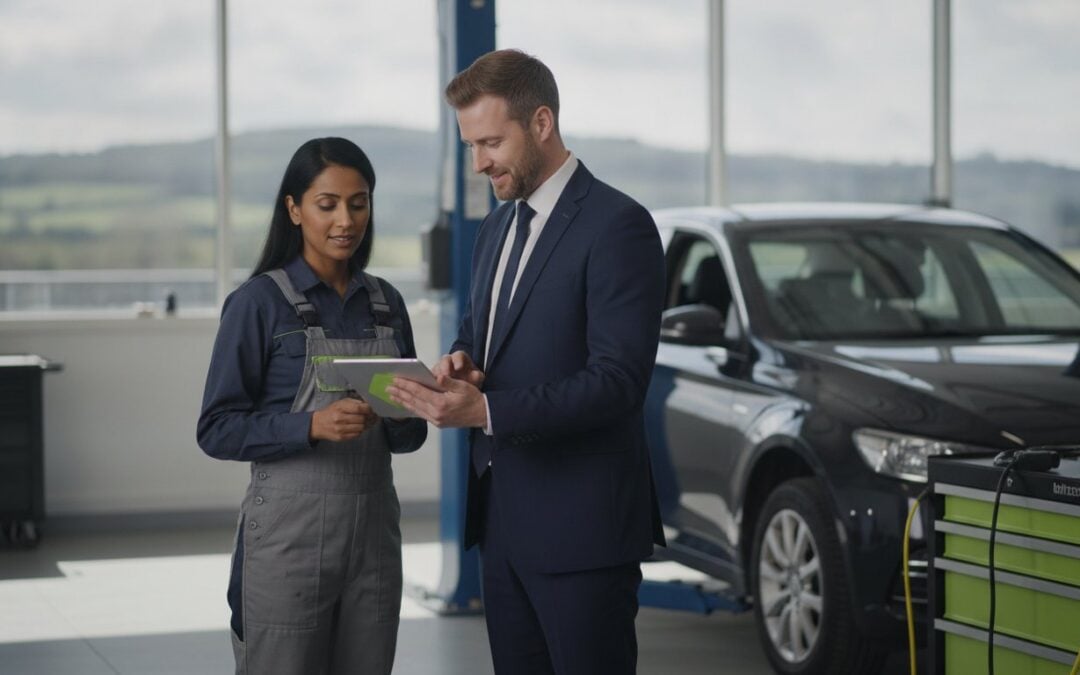
by jqm | Jun 17, 2026 | Insurance
Is your motor trade insurance actually protecting your livelihood, or is it just a costly paperwork exercise that leaves you exposed to a single administrative oversight? We know that keeping up with the industry’s moving parts is a full-time job in itself. Between the 12% Insurance Premium Tax and the transition from the old MID to the new Navigate system, the legal jargon can feel designed to trip you up. It’s frustrating to face rising premiums just because you’re a new trader or you’re trying to manage a growing fleet in a complex 2026 market.
You deserve a straightforward partner who simplifies these burdens so you can focus on the workshop or the showroom. This guide will help you master the complexities of motor trade insurance by breaking down exact cover levels and the latest legal requirements. We’ll explore bespoke cost-saving strategies that help you manage rising overheads like the increased National Living Wage of £12.71 per hour. From understanding road risk to managing the Motor Insurers’ Bureau’s latest digital platforms, we’re providing the pragmatic roadmap you need to secure your business for the year ahead.
Key Takeaways
- Identify why standard business car insurance often isn’t enough for automotive professionals and how to avoid costly coverage gaps.
- Master the three pillars of motor trade insurance to ensure your road risks, liabilities, and premises are fully protected.
- Discover the legal essentials of the Road Traffic Act and your mandatory obligations under the new Navigate database system.
- Uncover practical strategies to reduce your annual premiums through effective No Claims Bonus management and risk assessment.
- Understand the benefits of choosing a local broker with regional expertise in Staffordshire for a truly bespoke policy.
What is Motor Trade Insurance and Who Actually Needs It?
Motor trade insurance is the essential safety net for your automotive business. In 2026, this isn’t just a luxury; it’s a legal and operational necessity. Under the Road Traffic Act, you must have insurance to drive any vehicle on public roads, regardless of who owns it. If you’re moving a customer’s car from a driveway to your workshop, a personal policy won’t cover you. You need a policy that recognizes you’re handling someone else’s property for profit.
Professional motor trade insurance differs from standard vehicle insurance because it accounts for the unique risks of the automotive industry. Whether you’re a full-time dealership owner or a part-time mobile mechanic, your policy must reflect the reality of your daily operations. Standard personal policies often explicitly exclude business activities like repairs or sales. This leaves you personally liable for any accidents or damage if you don’t have the right professional cover in place. The distinction between a hobbyist and a professional is often found in the quality of their insurance.
Common Trades That Require Specialist Cover
The scope of the motor trade is broader than many realize. It’s not just about traditional garages. Common professionals who need this cover include:
- Mechanics and garages: This applies whether you operate from a fixed premises or a mobile van. You need protection for the work you perform and the vehicles in your care.
- Car valeters and detailing specialists: Handling high-value assets for cosmetic work requires protection against accidental damage or theft.
- Vehicle sales and delivery: Auction houses, independent traders, and delivery drivers need flexible cover to drive various stock vehicles.
- Auto-electricians and window tinting professionals: Specialized technicians often handle customer cars in varied environments and need liability protection.
The Legal Reality of “Care, Custody, and Control”
When a client hands you their keys, you assume “care, custody, and control” of that vehicle. This is a critical legal distinction. If a car is damaged while sitting in your garage or during a diagnostic road test, you are responsible for the loss. Motor trade insurance provides the necessary framework to handle these claims without bankrupting your business. Most policies utilize an “any driver” structure for employees, allowing your team to move vehicles efficiently. This flexibility is the backbone of a functional workshop. To protect your team and your reputation, you should also ensure you have employers liability insurance if you have any staff members, even on a casual basis.
Understanding these requirements is the first step toward a secure business. It’s about more than just a certificate; it’s about having the right level of public liability insurance to protect against third-party claims while you work. By choosing a tailored approach, you ensure that your specific trade niche is covered without paying for unnecessary extras.
The Three Pillars of Motor Trade Cover: Road Risks, Liability, and Premises
A robust motor trade insurance policy isn’t a one-size-fits-all product. It’s built on three distinct pillars that can be combined or selected individually depending on how you operate. For mobile traders, road risks might be the primary focus. For established garages, the physical premises and expensive diagnostic equipment require equal attention. Building your policy modularly ensures you only pay for the protection your specific business model requires.
Road Risks: Third Party vs. Comprehensive
This is the foundational element required for anyone driving vehicles they don’t own. You have three main choices. Third Party Only is the minimum legal requirement, covering damage to others but leaving your stock or customer cars unprotected. Third Party, Fire and Theft adds a layer of security against those specific risks. Comprehensive cover is the gold standard, protecting vehicles in your care even if an accident is your fault. When selecting a level, check your indemnity limits carefully. If you regularly handle high-end EVs or performance cars, a standard limit might not be enough to cover a total loss in a high-value claim.
Business Liability: Public and Employers Liability
Liability cover protects you from the financial fallout of accidents involving people rather than just metal. Public liability insurance is vital if customers visit your site or if you work on-site at their homes. It covers injury or property damage caused by your business activities. If you have any employees, including part-time or casual staff, employers liability insurance is a legal mandate. This ensures you’re covered if a staff member is injured while working. You should also consider sales and service indemnity. This protects you if a customer claims your workmanship was faulty after they’ve left the garage. These aren’t just suggestions; they are core legal insurance requirements that keep your professional reputation intact.
Combined Motor Trade: Protecting the Workshop
For those with a fixed location, a combined policy brings everything under one roof. This includes cover for your buildings and specialized equipment through plant and machinery insurance. If you’re a mobile technician, your livelihood depends on your kit, making van and tools insurance a non-negotiable addition. We also recommend business interruption cover. This provides a financial cushion if a fire or flood forces your garage to close temporarily. If you aren’t sure which combination fits your specific trade, it’s worth speaking with a specialist advisor to build a modular plan that doesn’t waste your budget on unnecessary extras. This pragmatic approach allows you to scale your motor trade insurance as your business grows.
Motor Trade Insurance vs. Standard Business Car Insurance: A Critical Comparison
Many entrepreneurs starting out in the automotive world mistakenly assume that adding “business use” to a personal policy is enough. This confusion often stems from search queries like “business insurance car” which lead to products designed for office workers or sales reps rather than mechanics or dealers. While both products involve driving for work, they serve entirely different legal and operational purposes. Understanding this critical comparison is the only way to ensure your policy isn’t voided the moment you file a claim.
The fundamental trigger for needing motor trade insurance is the profit motive. Standard business car insurance is an extension of a personal policy. It allows you to drive your own vehicle to different sites or meetings. It doesn’t, however, cover you for handling, repairing, or selling vehicles that belong to other people or your business stock. If you’re using a personal policy to conduct trade activities, you’re likely driving uninsured in the eyes of the law. This can lead to heavy fines, seized vehicles, and a permanent black mark on your insurance history.
When Business Car Insurance is Sufficient
There are specific scenarios where a standard policy with business use is all you need. These typically involve professionals who don’t touch the mechanics or ownership of a vehicle as part of their service. You’re likely safe with standard cover if you are:
- A consultant or sales representative traveling between multiple fixed work sites.
- A professional using your own car to attend meetings or visit clients.
- An occasional business user in a non-automotive trade, such as a florist or an accountant.
When You Must Switch to Motor Trade Insurance
If your business involves “care, custody, and control” of vehicles that aren’t your personal daily driver, you’ve crossed into the motor trade. This transition is mandatory for anyone buying and selling vehicles for profit, even if you’re operating as a “driveway trader” from home. You also need this specialist cover if you collect or deliver customer cars for servicing, as a standard policy won’t protect the customer’s asset while you’re behind the wheel.
Operating a repair, recovery, or valeting business also requires this professional level of protection. As your business scales from a solo operation to a larger garage, you’ll also need to integrate other protections like employers liability insurance to cover your team. Don’t wait for a rejected claim to realize you’ve outgrown your personal policy. Making the switch ensures that your livelihood is protected by a policy designed for the risks you actually face every day.
How to Secure the Best Rates and Manage Your MID Duties
Securing competitive rates for your motor trade insurance in 2026 requires a proactive approach to risk management. Insurance premiums have remained high due to the increased complexity of vehicle repairs and the standard 12% Insurance Premium Tax (IPT). Underwriters prioritize traders who can demonstrate stability and a clear history of safety. This means your No Claims Bonus (NCB) is your most valuable asset. If you’re transitioning from a personal policy to a professional one, some specialist brokers can mirror your personal NCB to help reduce your initial trade premium.
Physical security also plays a massive role in how an insurer views your business. Installing Thatcham-approved trackers on stock vehicles or upgrading your workshop’s CCTV and perimeter fencing can lead to direct discounts. Avoid the common pitfall of “fronting,” where a more experienced driver is named as the lead on a policy actually used by a younger or higher-risk trader. This is considered insurance fraud. It will lead to your policy being cancelled, making it nearly impossible to secure affordable cover in the future.
Mastering the Motor Insurance Database (Navigate)
In April 2024, the Motor Insurance Database (MID) was replaced by a more streamlined system called “Navigate.” Despite the system update, your legal obligations remain strict. You must register any vehicle in your possession for more than 14 days on this database. This includes trade plates and all stock vehicles intended for sale or repair. Failing to do so doesn’t just risk a fine; it makes the vehicle appear uninsured to police Automatic Number Plate Recognition (ANPR) cameras, which can lead to immediate roadside seizure.
Managing Navigate effectively is about administrative consistency. We recommend a weekly audit of your stock list to ensure every vehicle is accounted for. This digital record is the primary tool used by the Motor Insurers’ Bureau (MIB) to enforce the UK’s common framework for motor insurance. Accurate reporting protects you from unnecessary police stops and ensures your claims process remains smooth if an incident occurs. If you’re managing multiple vehicles, you might find motor fleet insurance a more efficient way to handle your database duties.
Cost-Saving Strategies for New and Part-Time Traders
If you’re just starting out or running a part-time operation from home, you can lower your costs by being selective with your policy terms. Restricting your driver list to individuals over the age of 25 with at least two years of driving experience is one of the fastest ways to drop your premium. While “any driver” policies offer convenience, they carry the highest risk profile for insurers.
Choosing a higher voluntary excess can also make your annual payments more manageable. However, you must ensure you have the cash reserves to cover this excess if you need to claim. Be honest about your projected turnover and the total value of the vehicles you handle. Overestimating these figures leads to unnecessarily high premiums, while underestimating them could result in a “pro-rata” reduction of any claim payout. To find a policy that balances these factors perfectly, you can compare motor trade insurance options with our expert team today.
Finding Bespoke Motor Trade Solutions in Staffordshire and the West Midlands
Choosing motor trade insurance shouldn’t feel like a gamble with an algorithm. While automated aggregators offer speed, they often lack the depth required for complex automotive businesses in 2026. A specialist independent broker understands that a mobile mechanic in Stone has different risks than a large dealership in the center of Stafford. By leveraging a human-centric approach, we move beyond generic data points to build a policy that reflects your actual daily operations. We act as a steady hand in a complex market, managing the administrative weight so you can focus on your customers.
Working with an independent broker gives you access to a broad network of UK underwriters. This competition is vital for securing competitive pricing, especially as repair costs and parts availability continue to fluctuate. We don’t just provide a certificate; we provide a partnership. This means we’re here to help when you need to update your Navigate records or when you’re considering expanding your fleet. Our goal is to simplify the insurance process, making it a frictionless part of your business growth rather than a hurdle.
Local Knowledge for Staffordshire Businesses
Staffordshire businesses benefit from regional expertise that national providers simply can’t match. We provide tailored advice for builders and tradesmen who manage diverse vehicle fleets alongside their primary trade. Whether you need face-to-face support in Newcastle-under-Lyme or specific guidance on how local trade patterns affect your premium, our team is on the ground. We understand how regional crime data impacts your risk profile, and we use that knowledge to present your business to underwriters in the best possible light.
Get Your Bespoke Quote Today
The process of securing your cover should be direct and efficient. We’ve refined our system to move you quickly from an initial inquiry to a fully active policy. In a market where motor trade insurance premiums saw significant increases in 2025, having a partner who knows where to find value is essential. We look at the specifics of your experience, your security measures, and your business goals to ensure you aren’t overpaying for generic cover. Take the first step toward a more secure automotive business by connecting with our expert team for a personalized assessment.
Securing Your Automotive Future in 2026
Protecting your automotive business requires more than just a basic policy; it demands a strategic understanding of your legal obligations and risk profile. You now know the critical distinction between standard business car insurance and professional motor trade insurance. By mastering your Navigate database duties and choosing a modular approach to road risks and liability, you ensure your livelihood remains secure against rising industry costs. Whether you’re a mobile mechanic or a large dealership, staying compliant is the only way to avoid the pitfalls of voided cover.
Just Quote Me brings over 30 years of industry experience to your side. As an FCA-authorised independent broker, we provide access to a broad network of top UK insurers, ensuring you receive a policy tailored to your specific trade niche. We move beyond automated systems to offer the pragmatic, human-centric advice that Staffordshire and West Midlands businesses rely on. Don’t leave your workshop’s future to chance when you can partner with a steady hand to manage your administrative burdens. We’re ready to help you drive your business forward with confidence.
Get Your Free Business Insurance Quote now
Request a Call back for free Expert advice
Frequently Asked Questions
Can I drive any car with a motor trade insurance policy?
A motor trade insurance policy doesn’t grant you permission to drive every vehicle on the road. It covers vehicles owned by your business or those in your care for trade purposes, such as customer repairs or stock for sale. You must specifically list your personal vehicles on the policy if you intend to drive them for non-business reasons. Always check your schedule to confirm your specific indemnity limits.
What is the minimum age for a motor trade insurance policy in 2026?
Most insurers set the minimum age at 21, though you’ll find much better rates once you reach 25. Younger traders often face higher premiums and stricter restrictions on the engine size or vehicle value they can drive. If you’re under 25, you might need to provide more evidence of your trade experience to secure a professional motor trade insurance policy.
Do I need motor trade insurance if I only work on cars part-time?
You definitely need a specialist policy if you handle customer vehicles for profit, regardless of how many hours you work. Standard personal insurance doesn’t cover any activity related to the motor trade. Operating without the correct cover, even as a part-time mobile mechanic, leaves you legally exposed and risks your personal policy being voided if an accident occurs during business activities.
How do I add or remove vehicles from the Motor Insurance Database (MID)?
You manage your vehicle records through the “Navigate” portal, which is the current platform for the Motor Insurance Database. You’re legally required to add any vehicle you hold for more than 14 days. This includes trade plates and stock. Keeping this updated ensures that police ANPR cameras recognize the vehicle as insured, preventing unnecessary stops and potential vehicle seizures.
Does motor trade insurance cover my personal tools and equipment?
Standard road risks policies don’t cover your personal tools or diagnostic equipment by default. To protect these assets, you must add specific “van and tools” or “premises and machinery” cover to your plan. This is essential for mobile mechanics whose livelihood depends on expensive kits that are frequently at risk of theft or damage while on location.
What happens if I drive a customer vehicle without motor trade insurance?
Driving a customer’s vehicle without the correct cover means you’re driving uninsured. This is a serious legal offense that results in fixed penalty fines, six points on your license, and the immediate seizure of the vehicle by the police. Beyond the legal penalties, you’ll be personally liable for any damage caused to the customer’s car or third-party property.
Is public liability included in a standard road risks policy?
Public liability isn’t included in a basic road risks policy. Road risks cover only allows you to drive vehicles on public highways. To protect against claims of injury or property damage occurring at your place of work or a customer’s home, you must add public liability as a separate component. Most professional traders combine these for comprehensive protection.
Can I use my motor trade policy for social, domestic, and pleasure use?
You can use your trade policy for personal trips if you have specifically added “social, domestic, and pleasure” (SD&P) use to your cover. Not all motor trade insurance policies include this automatically. If it’s not listed on your certificate, you’re only covered for business-related driving. It’s vital to confirm this extension if you plan to use a stock vehicle for personal errands.
Article by
Just Quote Me
JustQuoteMe Ltd is an independent UK insurance brokerage specialising in business and personal insurance solutions. With over 35 years of industry experience, the company provides tailored insurance cover for businesses, landlords, tradespeople, hospitality venues, fleets, and individuals across the UK. Known for its personal service, expert advice, and competitive premiums, JustQuoteMe Ltd works with leading insurers to deliver bespoke policies designed around each client’s unique needs. The company is authorised and regulated by the Financial Conduct Authority (FCA No. 586607) and has built a reputation for trusted, straightforward insurance guidance and long-term client relationships.
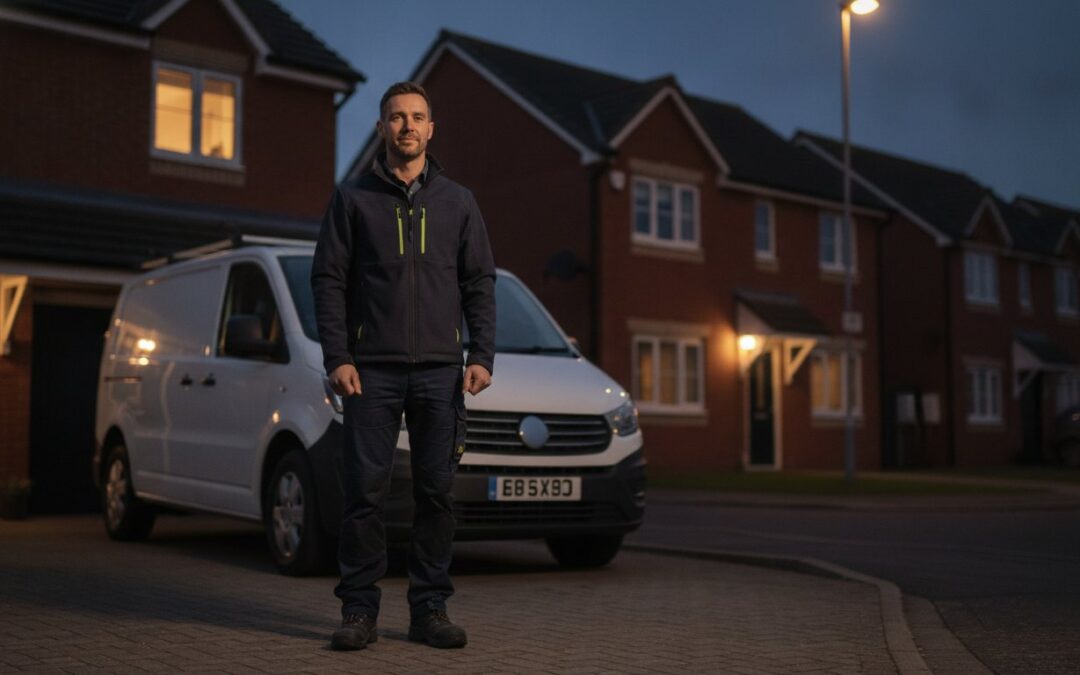
by jqm | Jun 16, 2026 | Insurance
In 2025, a tool theft was reported every 20 minutes across the UK, contributing to a staggering £19 million in total losses for the year. For most professionals, your van isn’t just a vehicle; it’s a mobile workshop and the backbone of your livelihood. You likely already know that the rising cost of power tools makes you a target, and the fear of a break-in is a constant weight on your mind. Securing the right tradesman insurance for tools in van overnight is the only way to protect your business from the four days of average downtime that follows a theft.
We understand that insurance jargon and complex overnight exclusion clauses often feel designed to prevent a payout. You deserve total clarity on what your policy requires to remain valid. This 2026 guide explains how to meet strict security standards, ensure your tools are covered 24/7, and streamline the claims process. We’ll walk you through the essential steps to guarantee that your insurance works for you, allowing you to focus on your trade with the confidence that your equipment is fully protected.
Key Takeaways
- Understand the specific timeframes defined in the “overnight” clause to ensure your tools remain protected between 9 PM and 6 AM.
- Identify the exact security hardware, such as Thatcham-approved alarms and deadlocks, required to satisfy insurer conditions and guarantee a payout.
- Learn how to accurately calculate your sum insured for tradesman insurance for tools in van overnight to avoid the high costs of under-insurance.
- Discover the critical differences between “In Transit” and “Stationary Vehicle” cover to ensure your livelihood is protected 24/7.
- See why a specialist broker provides a more reliable claims experience and better policy customization than a generic comparison website.
The reality of operating a trade business in 2026 is that tool theft has become a persistent threat rather than a rare occurrence. Data from 2025 reveals that a tool theft was reported every 20 minutes across the UK, resulting in over 30,000 recorded offenses. For tradespeople working in Staffordshire and the West Midlands, the risks are particularly concentrated. Urban centres like Birmingham, Wolverhampton, and Stoke-on-Trent remain hotspots for van-related crime as thieves target the high-value equipment essential for local construction and renovation projects. Relying on standard van insurance often leaves you vulnerable; these policies typically focus on the vehicle itself rather than the professional equipment inside.
By understanding property insurance principles, it becomes evident that specialized protection is necessary for mobile business assets. A standard motor policy rarely accounts for the full replacement value of a professional kit. This is where tradesman insurance for tools in van overnight becomes a critical safety net. It bridges the gap between vehicle protection and business continuity, ensuring that a single night of criminal activity doesn’t end your career.
The “Peel and Steal” Epidemic
Thieves in 2026 continue to use the “peel and steal” method, a technique where the side or rear doors of a van are physically forced and folded down to bypass factory locks. Older van models are at a higher risk because they lack the structural reinforcements found in newer, security-focused designs. There’s also been a noticeable shift toward targeting high-value cordless battery systems. These items are compact, expensive, and easily resold, making them a primary target for organized theft rings operating under the cover of darkness.
Calculating the True Cost of Stolen Tools
The financial impact of a break-in extends far beyond the price of a replacement drill. While the average value of stolen tools per incident reached £1,300 in 2025, the total bill for your business is often much higher. You must account for both direct and indirect expenses to understand the full scale of the risk.
- Direct costs: Replacement of power tools, hand tools, and specialized diagnostic equipment, plus the cost of repairing van damage.
- Indirect costs: Contract penalties for missed deadlines, the daily expense of hiring temporary equipment, and the long-term impact of increased insurance premiums.
The majority of victims face a significant disruption to their livelihood, as the average tool theft victim was forced to take 3.97 days of unplanned downtime in 2024.
Understanding the ‘Overnight’ Clause: What Counts as Secure?
The “overnight” clause is often where claims succeed or fail. In the world of tradesman insurance for tools in van overnight, this term doesn’t just describe a time of day; it’s a specific contractual window, usually between 9 PM and 6 AM. During these hours, your tools transition from being “In Transit” to being in a “Stationary Vehicle.” This distinction is vital because the security requirements for a stationary van are significantly more stringent. If a theft occurs during this period, your insurer will look for proof that you met the specific storage conditions outlined in your policy documents.
Insurers categorize parking locations based on a clear hierarchy of risk. A locked, private garage is the gold standard and often results in lower premiums or more favorable terms. Gated driveways with motion-sensor lighting provide a secondary layer of protection that many underwriters prefer over open access. Conversely, parking on a public road is viewed as high risk. Many policies include a “100-metre rule,” which requires the vehicle to be parked within a certain distance of your home or temporary lodging. If you’re working away and staying at a hotel, you must ensure the parking area meets the policy’s criteria, or you might find your cover is void.
Parking Requirements and Your Premium
Choosing to park on a public road doesn’t just increase the likelihood of a break-in; it can also double your policy excess for overnight theft. Insurers reward proactive security. Utilizing a driveway with visible Police-approved van security measures, such as CCTV or perimeter lighting, strengthens your position during a claim. If you’re unsure if your current parking setup meets the grade, it’s a good idea to review your business insurance options with a specialist.
The Definition of “Locked and Secured”
In the eyes of an insurer, “locked” often goes beyond simply pressing a button on your key fob. Many modern policies require secondary security measures to be active for a claim to be valid. This might include high-security deadlocks or internal tool vaults bolted to the chassis. A vehicle must be forcibly entered for most theft claims to be considered, meaning there must be clear physical evidence of a break-in, such as a smashed window or a damaged lock. Relying solely on factory-fitted central locking is rarely enough for high-value tool cover in 2026. Internal bulkheads also play a role by preventing thieves from accessing the cargo area through the cab, providing an extra layer of defense that underwriters value.
Security Requirements to Avoid Claim Rejection
Securing a policy for tradesman insurance for tools in van overnight is only the first step. To ensure a claim is actually paid out, you must adhere to the specific hardware standards dictated by your underwriter. Most insurers view Thatcham-approved alarms and immobilisers as the industry gold standard. These systems undergo rigorous testing to ensure they can withstand sophisticated theft attempts. If your van only relies on a factory-fitted alarm that isn’t Thatcham Category 1 or 2 certified, you might find your theft cover is restricted or completely invalid.
Visible deterrents play a role, but stickers claiming “no tools left in this vehicle” aren’t enough to satisfy a claims adjuster. Professional thieves often ignore these signs, knowing that many tradespeople find it impractical to unload heavy kit every evening. Instead, underwriters look for physical proof of security. This includes high-quality locks and internal storage solutions that provide a secondary layer of defense. While protecting your physical assets is vital, it’s also worth ensuring your broader business is secure. For example, Public Liability Insurance works alongside your tool cover to protect you from the financial consequences of accidents or injuries that occur once you’re back on the tools.
Essential Hardware Upgrades for 2026
The choice between deadlocks and slamlocks is a common point of confusion. Slamlocks are designed for multi-drop couriers and engage automatically when the door shuts. However, for overnight protection, most insurers specifically require external deadlocks. These require a manual turn of a key, making them much harder to bypass via electronic hacking or the “peel and steal” methods discussed earlier. Internal tool chests bolted to the vehicle floor provide an additional barrier. Even if a thief breaches the van, they face a second, time-consuming challenge to access your high-value cordless systems.
Smart security is also becoming a standard requirement for high-sum insured policies. Electronic tool tracking using professional GPS units or even consumer-grade devices like Apple AirTags can aid in recovery. Some modern policies may even offer premium discounts if you integrate van-integrated CCTV that uploads footage to the cloud in real-time.
Evidence Needed After a Break-In
If the worst happens, the quality of your evidence determines the speed of your payout. An adjuster’s first request will almost always be for clear photos of the forced entry. You need to show exactly how the security was bypassed. It’s also mandatory to report the theft to the police within 24 hours. A crime reference number is an absolute requirement for any claim involving criminal activity. Without this official record, most insurers will refuse to process the file, regardless of the security measures you had in place.
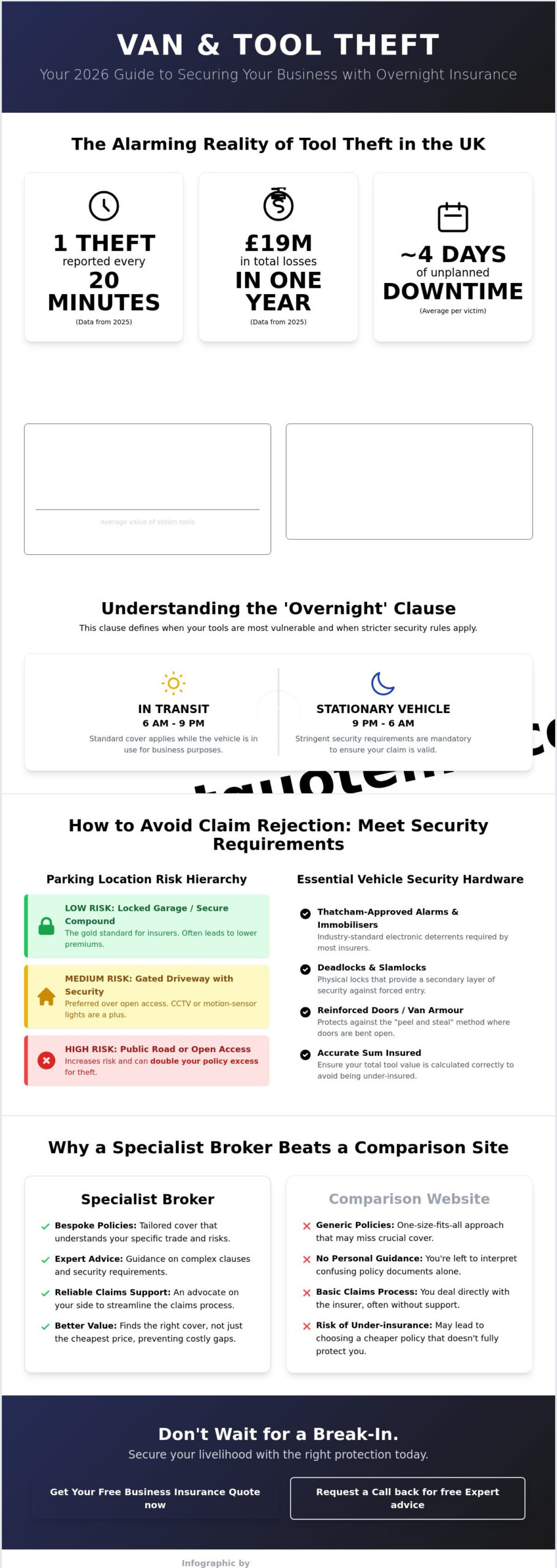
Selecting the right level of protection is just as critical as the physical locks on your van doors. Many professionals fall into the trap of under-insuring their assets to save on monthly premiums, but this often leads to significant financial shortfalls during a claim. When arranging tradesman insurance for tools in van overnight, you must set an accurate “Sum Insured” that reflects the total replacement cost of your kit. If you claim for £5,000 worth of stolen tools but your total inventory is actually worth £10,000, an insurer may apply the “condition of average,” potentially halving your payout because you were only 50% insured.
You also need to distinguish between owned tools and hired-in plant. Standard tool policies generally cover items you own personally or through your business. However, if you frequently rent specialized machinery or larger equipment for specific jobs, these assets usually require different handling. For comprehensive protection on larger projects involving rented kit, you might consider Contractors All Risk Insurance to bridge the gap between your personal tools and project-specific machinery.
Calculating Your Total Tool Value
When calculating your total value, you’ll need to choose between “New for Old” and “Indemnity” cover. New for Old is the preferred choice for most, as it pays out the cost of a brand-new equivalent regardless of the age of your stolen gear. Indemnity cover, or market value, accounts for depreciation, meaning you’ll receive less for a three-year-old combi drill than you originally paid. Don’t forget the “small stuff” during this calculation. While a single screwdriver isn’t expensive, a full set of hand tools, high-quality drill bits, and consumables can easily total thousands of pounds.
The Importance of Itemised Receipts
A vague description like “box of tools” is a primary reason for claim delays or lower payouts. Insurers require specific evidence to verify your loss. Digital inventory management is the most efficient way to handle this. Use your smartphone to take photos of serial numbers and store digital copies of your receipts in the cloud. This ensures you have instant access to proof of ownership even if your physical records are lost or damaged. If you’ve purchased tools second-hand or lack VAT receipts, keep detailed photographic evidence of the tools in your possession and records of their current market value.
Specialized diagnostic kit or high-end surveying equipment often exceeds standard single-item limits, which can be as low as £500. If you carry expensive tech, you must declare these items specifically to ensure they aren’t capped during a claim. To get a policy tailored to your specific inventory, you can request a personalized insurance review from our team today.
Why a Bespoke Broker is Better than a Comparison Site
Algorithms and automated comparison sites are built for speed, but they often lack the nuance required to secure effective tradesman insurance for tools in van overnight. When you use a generic search engine to find cover, you’re essentially being grouped into a broad risk category that doesn’t account for the specifics of your business or your location. An independent broker provides a human element that’s invaluable during the application process and even more critical when you need to make a claim. We don’t just sell you a policy; we act as a partner who understands that your tools are the lifeblood of your career.
Our team understands the regional crime trends affecting Staffordshire and the West Midlands. We know that a tradesperson operating in urban centres like Birmingham or Wolverhampton faces different challenges than someone based in more rural areas. By leveraging this local expertise, we can point you toward specialist underwriters who actually understand the “van life” of a tradesman. This specialized knowledge ensures that your policy isn’t just a piece of paper, but a robust legal agreement designed to protect you when things go wrong.
Tailored Policies for Specific Trades
Every trade has a unique risk profile. A plumber’s kit, filled with expensive diagnostic tech and specialized pressing tools, requires a different approach than a landscaper who might be more concerned about hired-in plant or heavy machinery. As your business grows and you add more vans or employees to your fleet, your insurance needs to evolve with you. We help you adjust your cover levels dynamically, ensuring you’re never paying for protection you don’t need or leaving yourself exposed. This customized approach is why many professionals view Tradesman Insurance as a holistic shield for their entire operation, rather than just a mandatory expense.
The Just Quote Me Advantage
With over 30 years of experience navigating UK insurance law, Just Quote Me provides the reliability that automated systems simply can’t match. We offer direct access to expert advice for professionals in Stone, Stafford, and Newcastle-under-Lyme, giving you a local point of contact who knows your area. Just Quote Me acts as a steady hand in a complex insurance market, managing the administrative burdens and fine-print negotiations so you can stay on the tools and focus on your work. We handle the paperwork and the difficult conversations with underwriters, ensuring that if you do experience a break-in, the claims process is as fast and frictionless as possible.
Protecting your livelihood in 2026 requires a proactive approach that blends physical security with precise policy compliance. As we’ve explored, ensuring your van meets Thatcham standards and maintaining a rigorous digital inventory are the most effective ways to guarantee your claim is settled without delay. By respecting the specific time and distance requirements of the overnight clause, you turn your insurance from a basic requirement into a robust safety net for your professional kit. Don’t let the threat of theft disrupt your business or your peace of mind.
Finding the right tradesman insurance for tools in van overnight is a straightforward process when you have the right partner. With over 30 years of experience and access to a broad network of top UK insurers, Just Quote Me provides the FCA-authorised expert advice needed to navigate this complex market. We act as a steady hand, managing the administrative burdens so you can stay on the tools and focus on your work. Take the next step in securing your professional future today.
Get Your Free Business Insurance Quote now
Frequently Asked Questions
Is tool insurance valid if my van is parked on the street overnight?
Street parking is generally permitted, provided you meet the specific security conditions and “distance from home” rules outlined in your policy schedule. While off-street parking is preferred, most tradesman insurance for tools in van overnight options cover public roads if the vehicle is locked and within the required 100-metre radius of your home. You should check your specific terms for any “garage requirement” that might apply to high-value kits.
What is the maximum value of tools I can insure in a single van?
Coverage levels typically range from £1,000 to £10,000 depending on the specific provider and your business requirements. It is vital to set an accurate “sum insured” that reflects the total replacement cost of your kit to avoid the “condition of average” during a claim settlement. If your professional equipment exceeds these standard limits, specialist underwriters can often arrange higher levels of protection.
Does my insurance cover tools stolen from a hired van?
Many professional policies extend cover to tools stored in a hired van, provided you notify your broker of the temporary vehicle change. The same security standards, such as ensuring the vehicle is locked and forcibly entered, will apply to the rental. You should verify that your policy includes “hired-in plant” or temporary vehicle clauses before leaving your professional equipment in a van you do not own.
Do I need to have specific locks fitted to my van for the insurance to be valid?
Insurers typically require more than just factory-fitted locks; many mandate Thatcham-approved deadlocks for a policy to remain valid. These manual locks are harder to bypass than electronic systems and provide the physical proof of forced entry necessary for a successful claim. Always check your policy wording to see if specific hardware upgrades are a condition of your cover.
Will my tools be covered if they are stolen while I am working on-site?
Your tools are generally covered while on-site, provided the vehicle remains locked and secured whenever you are away from it. Theft from a building or the site itself usually requires a different type of cover, such as a site-specific extension or contractors all risks insurance. For the van-based portion of your work, ensuring the alarm is active and doors are deadlocked is essential for maintaining your protection.
What is the difference between “new for old” and “wear and tear” tool cover?
“New for old” cover provides a payout equivalent to the cost of a brand-new replacement for your stolen item, regardless of its age. “Wear and tear,” or indemnity cover, accounts for depreciation and pays only the current market value of the used tool. Choosing a new-for-old policy ensures you aren’t left out of pocket when you need to replace a three-year-old power tool with a modern equivalent.
Can I get insurance for tools left in my van if I don’t have a garage?
You can certainly obtain cover without a garage by declaring your actual parking arrangements, such as a private driveway or a public road, during the quote process. Insurers will evaluate the risk based on your location and may require additional hardware like internal vaults to compensate for the lack of a garage. Having the right tradesman insurance for tools in van overnight ensures you are protected regardless of your storage facilities, provided you follow the agreed security protocols.
How long does it typically take to settle a tool insurance claim?
Most straightforward tool insurance claims are settled within five to ten working days once all evidence is submitted. This speed relies on you providing a crime reference number and proof of ownership immediately. Just Quote Me manages the communication with underwriters to ensure your settlement is processed as efficiently as possible, helping you return to work without unnecessary delays.
Get Your Free Business Insurance Quote now
Request a Call back for free Expert advice
Article by
Just Quote Me
JustQuoteMe Ltd is an independent UK insurance brokerage specialising in business and personal insurance solutions. With over 35 years of industry experience, the company provides tailored insurance cover for businesses, landlords, tradespeople, hospitality venues, fleets, and individuals across the UK. Known for its personal service, expert advice, and competitive premiums, JustQuoteMe Ltd works with leading insurers to deliver bespoke policies designed around each client’s unique needs. The company is authorised and regulated by the Financial Conduct Authority (FCA No. 586607) and has built a reputation for trusted, straightforward insurance guidance and long-term client relationships.

by jqm | Jun 15, 2026 | Insurance
By the end of 2026, every short-term let in the UK must be registered on a national database, a move that will put your insurance and safety compliance under a local council microscope. Running a guest house in the Staffordshire Moorlands or near Alton Towers is rewarding, but the administrative burden of legal requirements like Employers Liability and public safety can feel overwhelming. You shouldn’t have to guess whether your policy actually covers a slip in the dining room or property damage from a weekend visitor. Securing specialized bed and breakfast insurance staffordshire is no longer just a recommendation; it’s a vital step in protecting your livelihood against specific hospitality risks.
We understand that you want comprehensive protection without the “specialist” price tag or the confusion of standard home insurance limitations. This guide provides a clear roadmap to the bespoke cover you need to satisfy local requirements and gain total peace of mind. We’ll break down the 2026 regulatory changes, including the new C5 use class, and show you how a local broker with deep roots in the Staffordshire tourism market can simplify your administrative load. You deserve a partner who manages the complex paperwork so you can focus on delivering an exceptional guest experience.
Key Takeaways
- Understand why standard home insurance often voids your protection and why a specialist commercial policy is non-negotiable for hospitality hosts.
- Identify the industry-standard levels for Public Liability and Buildings cover needed to protect your property and satisfy local legal requirements.
- Learn how to safeguard your revenue and guest belongings with tailored cover for stock, contents, and business interruption.
- Discover how rural location and property maintenance risks influence your bed and breakfast insurance staffordshire costs in 2026.
- Explore the advantages of using a human-led local broker to navigate complex insurance markets rather than relying on impersonal algorithms.
Why Specialist Bed and Breakfast Insurance is Essential for Staffordshire Hosts
Operating a Bed and breakfast in the heart of the West Midlands is a unique undertaking that blends residential living with commercial hospitality. Because your property serves two purposes, you cannot rely on a single-purpose insurance policy. Specialist bed and breakfast insurance staffordshire is a dedicated commercial product designed to cover the specific risks that standard home insurance ignores. It protects your property, your guests, and your legal standing as a business owner in a regulated industry.
Staffordshire hosts face specific regional pressures that require tailored protection. Whether you are situated near the high-footfall gates of Alton Towers or provide a quiet retreat near the Peak District, your risk profile changes with the seasons. A specialist policy ensures that you are covered for guest liabilities, commercial kitchen accidents, and even the loss of income if a local event or property damage forces you to close your doors during peak tourism months.
The Risk of Relying on Standard Home Insurance
Many new hosts assume that adding “business use” to their existing home insurance is sufficient. This is a dangerous misconception. Home insurance is designed for private residents; it does not account for the increased fire risks of commercial cooking or the legal liability of having paying guests on-site. If a guest suffers an injury or causes significant damage, a standard insurer will often void your policy entirely because the commercial nature of the stay was not properly disclosed or covered. Relying on the wrong cover puts your entire home at risk. Professional advice ensures you have a robust Hotel and Guest House Insurance policy that keeps your personal and professional assets secure.
Staffordshire’s Unique Hospitality Landscape
Staffordshire’s tourism economy is diverse, ranging from the busy market towns of Stone and Leek to the rural stretches of the Moorlands. Local events, such as the Stone Food and Drink Festival or seasonal surges in Stafford, create periods of high occupancy that demand higher liability limits. You need a policy that reflects these local realities. For example, if you employ local staff to help with cleaning or breakfast service, you have a legal obligation to hold Employers Liability Insurance. For more information on how local expertise can protect your firm, explore our commercial insurance broker Staffordshire guide. Choosing a partner who understands the regional market ensures your bed and breakfast insurance staffordshire is both compliant and cost-effective.
Core Protection: Public Liability and Buildings Cover for Your Guest House
Every guest house owner needs to consider the dual pillars of protection: the people who visit and the walls that house them. When seeking bed and breakfast insurance staffordshire, you’ll find that Public Liability and Buildings cover form the foundation of any reliable policy. These aren’t just checkboxes for your local council; they’re the financial safety net that prevents a single accident from ending your business. We focus on providing clarity here so you can make an informed choice about your limits.
Public Liability limits are often a point of confusion for new hosts. While a £2 million limit is a common starting point, many Staffordshire hosts now opt for £5 million. This higher threshold is frequently required if you host local government events, weddings, or corporate retreats. Your legal responsibilities are clearly defined under the Regulatory Reform (Fire Safety) Order 2005, which mandates strict safety standards. If you’re unsure which level of cover fits your specific guest capacity, we can help you compare business insurance options to find the right fit.
Buildings insurance is equally critical but often miscalculated in our region. Staffordshire has a high density of Victorian and Georgian properties that require specialist materials and heritage craftsmen for repair. Your rebuild cost assessment must be accurate to avoid being underinsured. If a fire or flood occurs, your policy should also provide for “loss of rent” or “alternative accommodation”. This ensures that even if you can’t host guests, your fixed costs are met and your income is protected while repairs are underway.
The Importance of Public Liability in Hospitality
Guest safety is your primary responsibility. Slips and trips are the most common claims in the hospitality sector. Imagine a guest tripping over a loose carpet tile in your communal dining area and sustaining a serious injury. Without robust cover, the legal fees and compensation costs could be catastrophic. Our public liability insurance page details how you’re protected against these specific third party claims.
Insuring the Structure: From Modern Builds to Period Properties
Staffordshire’s architecture varies from modern builds in Stafford to historic thatched cottages in the Moorlands. Standard policies often fail to account for the specialized repair costs of listed buildings. If your guest house is a heritage property or features traditional roofing, you might find our expertise in thatched pub insurance particularly relevant for your structural needs. We treat your property as a commercial asset, not just a house.
Protecting the Guest Experience: Contents, Stock, and Revenue Loss
Reputation is your most valuable asset in the Staffordshire tourism market. A single incident involving a guest’s property or a health scare related to the food you serve can have long-lasting consequences for your brand. Specialized cover accounts for these nuances, providing a safety net for both your tangible goods and your professional standing. By choosing a policy tailored for hospitality, you demonstrate a commitment to professional standards that aligns with the best practices promoted by The Bed and Breakfast Association.
Managing Guest Belongings and Liability
Providing a secure environment for your visitors is part of your duty of care. However, accidents happen, and guests often travel with expensive electronics or jewelry. Guest effects cover acts as a vital differentiator for B&B policies, offering protection for visitor belongings that your personal home insurance would exclude. Most specialist policies set clear limits, such as £1,000 per guest, to manage these risks effectively. This cover doesn’t just pay for lost items; it supports your reputation by allowing you to resolve guest issues quickly and professionally, ensuring a negative experience doesn’t turn into a permanent stain on your online reviews.
Stock, Fixtures, and Business Interruption
Your insurance needs to clearly distinguish between your personal possessions and your business assets. Commercial kitchen equipment, guest room furniture, and bulk stock of food and drink represent a significant investment. If a fire or flood occurs, the cost to replace these items at commercial rates can be staggering. More importantly, you must consider how you would survive if your doors were forced to close during repairs.
Business Interruption cover is designed to replace your lost income during these fallow periods, covering your fixed costs and projected profits based on your previous booking data. This is especially critical in 2026 as regional revenue per available room continues to grow. For a comprehensive look at how these elements fit together, our hotels and guest house insurance packages provide the specific hospitality frameworks you need. Finally, don’t overlook Product Liability. If you serve the “breakfast” part of your B&B, this cover protects you against claims of food poisoning or allergic reactions, which are risks that can arise even in the most hygienic kitchens.
Tailoring Your Policy: Staffordshire-Specific Risks and Considerations
Staffordshire’s geography is a patchwork of bustling market towns and isolated rural stretches. This variety means that your neighbor’s policy might be entirely inappropriate for your property. When you look for bed and breakfast insurance staffordshire, you need a broker who understands that a guest house in Stone faces different challenges than one in the Staffordshire Moorlands. We operate as an independent broker based in Stone, giving us a front-row seat to the local market shifts and regional risks that national call centers often overlook. This local oversight allows us to verify property details that an automated algorithm might miss, ensuring your premium reflects the reality of your location.
Seasonal fluctuations also play a major role in your risk profile. During peak periods, your stock levels for food, drink, and linens will naturally increase. We help you account for these surges, such as:
- Christmas Markets: Increased stock for festive guests in Stafford and Stone.
- Summer Peaks: Higher occupancy rates driven by visitors to Alton Towers and the Peak District.
- Local Festivals: Short-term increases in footfall for events like the Stone Food and Drink Festival.
Managing these shifts through mid-term adjustments ensures you are never underinsured during your most profitable months.
Rural vs. Urban Risk Factors in the West Midlands
Urban locations like Stafford town center often prioritize security and theft protection due to higher footfall and proximity to nightlife. If your establishment hosts larger events or festive gatherings, you may need to consider security insurance to manage crowd control and site safety effectively. Conversely, rural properties in the Moorlands must account for slower emergency service response times and specific environmental factors. For properties situated near the River Sow, flood risk becomes a primary concern that directly influences your premiums. A local expert can help you navigate these environmental maps to ensure you aren’t overcharged for risks that don’t apply to your specific postcode.
Maintenance and Legal Compliance
Maintaining a guest house often involves tasks that fall outside standard residential upkeep. For larger properties with multiple stories or traditional chimneys, working at height during routine maintenance is a significant liability risk. You must ensure your contractors are insured, or if you handle minor repairs yourself, that your policy accounts for these activities to avoid claim rejection.
The legal landscape is also shifting. With the 2026 national registration scheme for short-term lets, your safety documentation and insurance details will be under greater scrutiny from local authorities. If you hire local residents to assist during busy periods, having employers liability insurance is a strict legal requirement. This flexibility ensures you only pay for the high-value stock when it’s actually on-site. If you’re ready to secure your business with local expertise, get a personalized insurance review today.
How Just Quote Me Simplifies B&B Insurance in Stafford and Beyond
Finding the right protection for a hospitality business in 2026 shouldn’t be a complex administrative burden. While automated algorithms offer quick results, they often fail to understand the specific needs of a guest house near Alton Towers or a historic property in the Moorlands. Just Quote Me provides the specialized oversight you need to protect your investment, acting as a human-centric alternative to impersonal systems. With over 30 years of industry experience, we focus on delivering efficient, reliable results that allow you to focus on your guests while we handle the fine print of your bed and breakfast insurance staffordshire.
The Local Broker Advantage
We believe that proximity matters. Our Stone-based office allows us to provide a level of local oversight that national firms simply cannot match. As an independent broker, we don’t work for a single insurer; we work for you. We navigate a broad panel of the UK’s top insurers to find the most competitive prices and comprehensive terms for your specific situation. Whether you are looking for Hotel and Guest House Insurance or need to discuss the legal requirements of Employers Liability Insurance, we provide straightforward advice without the corporate jargon.
Our “Request a Call back” service is designed for busy owners who prefer a direct conversation over a digital form. This personalized approach allows us to address your specific concerns, from the impact of the 2026 national register to the nuances of building rebuild costs for period properties. We provide a steady hand in a complex market, ensuring that your policy is always compliant with evolving local council regulations. Our approach is grounded in reliability and a commitment to individualized service because we understand that your guest house is both a home and a professional asset.
Ready to Protect Your Staffordshire B&B?
Don’t settle for generic cover that might leave you vulnerable when it matters most. Securing bespoke bed and breakfast insurance staffordshire ensures that your property, your guests, and your future revenue are fully protected. We invite you to experience the difference that professional, human-led advice can make for your business. Whether your renewal is approaching or you’re starting a new venture in Stafford or Stone, our team is ready to assist you with speed and precision. Act before your next renewal to ensure your business remains compliant and secure.
Future-Proof Your Guest House with Local Expertise
Protecting your business requires more than just a generic policy; it demands a strategy that accounts for the unique hospitality landscape of the West Midlands. You’ve seen how standard home insurance falls short and why core protections like Public Liability and Business Interruption are non-negotiable for 2026. By choosing a policy tailored to the regional risks of the Moorlands or Stafford town centre, you ensure your guest house remains both compliant and profitable. We manage the administrative complexity so you can focus on providing a warm welcome to your guests.
Just Quote Me brings over 30 years of industry experience to every client. As an FCA-authorised expert based right here in Staffordshire, we provide the human oversight that automated systems lack. Don’t wait for your next renewal to find out you’re underinsured. Secure your livelihood with bespoke bed and breakfast insurance staffordshire today by choosing a partner who understands your market. We’re here to help you navigate the 2026 regulatory changes with confidence and ease. Get your professional insurance review and enjoy the peace of mind that comes with expert, local protection.
Get Your Free Business Insurance Quote now
Request a Call back for free Expert advice
Frequently Asked Questions
Do I need commercial insurance for a small home-based B&B in Staffordshire?
Yes, you definitely do. Standard home insurance is designed for private residential use and typically excludes risks associated with paying guests. Even if you only let out one room, you are technically operating a business. Specialist bed and breakfast insurance staffordshire ensures your buildings and liability remain protected when visitors are on-site, preventing your policy from being voided in the event of a claim.
Is public liability insurance a legal requirement for guest houses?
Public liability isn’t a statutory legal requirement in the same way as Employers Liability, but it’s practically essential for any hospitality business. Most local councils and online booking platforms require you to have it before you can list your property. It protects you against potentially ruinous claims for guest injuries or property damage. We generally recommend a minimum of £2 million in cover to satisfy these common industry standards.
How much does bed and breakfast insurance cost in the West Midlands?
Premiums vary based on your property size, location, and the specific services you offer. Factors like the age of your building, the number of guest rooms, and whether you serve alcohol or have a commercial kitchen will influence the final price. Because every guest house is unique, we recommend getting a bespoke quote. This ensures you only pay for the specific protections your Staffordshire business actually needs without any unnecessary extras.
Does my policy cover guest injuries and food poisoning claims?
Yes, provided your policy includes both Public Liability and Product Liability cover. Public Liability handles accidents like slips, trips, and falls within your property. Product Liability is the specific section that covers illnesses resulting from food or drink served on the premises. This is a vital safeguard for any establishment serving the “breakfast” part of the B&B experience to their visitors.
Can I get insurance for a B&B with a thatched roof or listed status?
You can, but these properties require specialist handling due to their higher rebuild costs and traditional materials. Many standard insurers avoid thatched or Grade I and II listed buildings because they are more complex to repair. We work with a dedicated panel of insurers who understand heritage properties. This ensures your historic Staffordshire guest house is protected with accurate valuations and the right structural cover.
What happens if I have to close my B&B temporarily due to flood or fire?
Business Interruption cover is designed to manage this exact scenario by replacing your lost revenue. If a fire or flood makes your rooms untradeable, this cover handles your projected profits and ongoing fixed costs while repairs are underway. This ensures you can survive a temporary closure without draining your personal savings, which is especially important if the damage occurs during peak tourism months in the region.
Does B&B insurance cover my own personal belongings in the property?
A comprehensive policy can be structured to protect both your commercial assets and your personal contents. Since many B&B owners live on the premises, we often combine residential and commercial elements into one seamless package. This approach eliminates the need for two separate policies and ensures there are no gaps in protection for your private living quarters or your personal possessions.
Why should I use a local Staffordshire broker instead of a comparison site?
Local brokers provide human oversight and regional expertise that automated comparison sites simply cannot match. We understand the specific risks in Stone, Stafford, and the Moorlands, such as local flood zones or seasonal occupancy shifts. Using Just Quote Me gives you access to a tailored bed and breakfast insurance staffordshire policy that fits your exact postcode and property type, backed by real people you can talk to.
Article by
Just Quote Me
JustQuoteMe Ltd is an independent UK insurance brokerage specialising in business and personal insurance solutions. With over 35 years of industry experience, the company provides tailored insurance cover for businesses, landlords, tradespeople, hospitality venues, fleets, and individuals across the UK. Known for its personal service, expert advice, and competitive premiums, JustQuoteMe Ltd works with leading insurers to deliver bespoke policies designed around each client’s unique needs. The company is authorised and regulated by the Financial Conduct Authority (FCA No. 586607) and has built a reputation for trusted, straightforward insurance guidance and long-term client relationships.
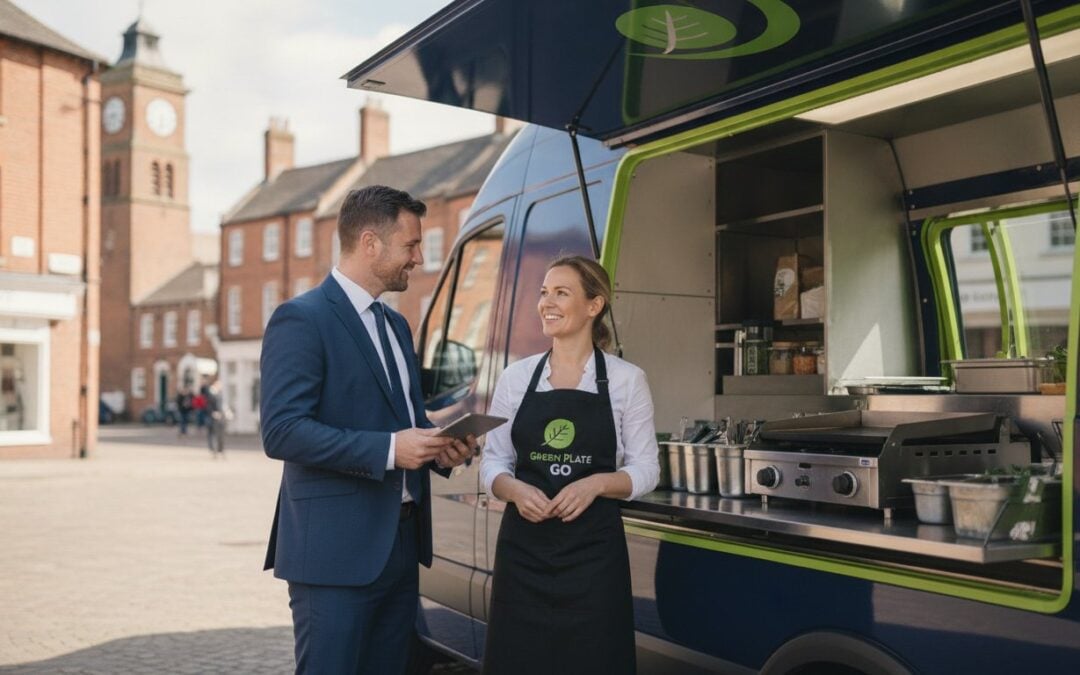
by jqm | Jun 14, 2026 | Insurance
Did you know that the average insurance claim for a mobile caterer reached £18,555 between April 2025 and March 2026? For many business owners, trying to secure a mobile catering van insurance quote feels like a minefield of confusing jargon and hidden exclusions. It’s frustrating when you can’t tell if a standard motor policy covers your expensive kitchen equipment or if you’re leaving yourself vulnerable to a rejected claim. You want to focus on your food and your customers, not worry about whether your fine print covers a gas explosion or a stolen generator.
We understand that you need clear, straightforward answers rather than automated systems that don’t grasp the nuances of your trade. This expert guide simplifies the entire process, showing you how to secure the right protection for your food truck while avoiding the high premiums often charged to new ventures. We’ll break down the essential legal requirements for 2026, explain the vital difference between vehicle and kitchen cover, and show you how bespoke broker advice provides the peace of mind you deserve. By the end of this article, you’ll know exactly how to protect your investment and trade with total confidence.
Key Takeaways
- Understand why standard commercial vehicle policies leave your kitchen equipment and business liability exposed to significant financial risk.
- Identify the specific roles of Public and Product Liability insurance in protecting your venture from accidents and food-related legal claims.
- Discover the essential steps to secure a competitive mobile catering van insurance quote by focusing on accurate asset valuations and fire safety equipment.
- Learn the practical differences between insuring a motorized catering van and a towed trailer to ensure your specific setup is fully compliant.
- Find out how a specialist broker can access a broad network of top insurers that are often unavailable on standard comparison websites.
What is Mobile Catering Van Insurance and Why is it Essential?
Mobile catering van insurance is a specialized hybrid policy designed to address the unique risks of running a food business on wheels. Unlike standard commercial vehicle cover, this insurance bridges the gap between the Road Traffic Act requirements for driving and the complex liability needs of a professional kitchen. When you request a mobile catering van insurance quote, you aren’t just looking for vehicle protection; you’re securing a policy that understands the dual nature of your business. To understand the scale of this industry, it helps to look at the history and operational scope of What is a Mobile Catering Van, which functions as both a transport asset and a high-risk production environment.
Standard van insurance is fundamentally insufficient for caterers because it typically excludes the “kitchen risk.” A regular policy might cover a collision on the road, but it won’t pay out if a deep-fat fryer causes a fire while you’re parked at a festival. It also won’t cover the specialized modifications, such as stainless steel counters, refrigeration units, and extraction systems, which can cost tens of thousands of pounds. A dedicated catering policy protects the physical asset of the van while simultaneously covering the operational hazards of serving food to the public.
The Difference Between Van Insurance and Catering Insurance
The primary distinction lies in the scope of liability. Every vehicle on UK roads must have insurance that complies with the Road Traffic Act, but this only covers third-party injury or property damage during transit. It doesn’t address the risks associated with Liquid Petroleum Gas (LPG) cylinders, which are essential for most mobile kitchens but viewed as high-risk by standard insurers.
A specialist policy integrates Public Liability Insurance to protect you if a customer is injured by your equipment or trips over a cable. It also accounts for the high-value cooking equipment that “social and domestic” or “standard carriage of goods” policies often ignore. Without this specific wording, you risk a total loss if your vehicle is stolen or damaged, as insurers may void claims on the grounds of “undisclosed modifications.”
Who Needs This Cover in 2026?
The mobile food sector has diversified significantly, and insurance requirements have evolved to match. You need this specific protection if you operate any of the following:
- Food Trucks and Burger Vans: High-volume units using gas or electric cooking equipment.
- Coffee Vans and Mobile Bars: Specialist conversions with expensive espresso machines or pressurized keg systems.
- Ice Cream Vans: Vehicles with specialized refrigeration and “soft serve” machinery.
- Pop-up Street Food Traders: Even if you use a gazebo, your transport and equipment still require professional cover.
Trading at festivals, markets, or on public highways in 2026 requires more than just a 28-day council registration. Most event organizers and local authorities will demand proof of at least £5 million or £10 million in public liability cover before allowing you to trade. Securing a comprehensive mobile catering van insurance quote ensures you meet these legal and contractual obligations from day one.
Get Your Free Business Insurance Quote now
Request a Call back for free Expert advice
Essential Cover Types for Your Catering Van Policy
When you look for a mobile catering van insurance quote, it’s vital to understand that a single policy usually bundles several distinct protections. These Essential Cover Types are dictated by both UK law and the specific operational risks of the food industry. You aren’t just insuring a vehicle; you’re protecting a workplace, a retail point, and a food production facility all at once. Failing to include the right components can leave you personally liable for claims that often reach into the tens of thousands of pounds.
Liability Protection: Public and Product
Liability is the most significant risk for any caterer. Public liability insurance is the foundation of your policy. It steps in if a member of the public is injured or their property is damaged because of your business activities. Common examples include a customer tripping over a generator cable or a hot oil spill causing a serious burn.
Product liability is equally critical in the modern food industry. This cover handles claims specifically related to the food and drink you serve, such as food poisoning or undisclosed allergen reactions. When selecting your limits, remember that most local councils and event organizers require a minimum of £5 million in cover, though £10 million is increasingly requested for major festivals and high-footfall city center pitches.
Protecting Your Assets: Van and Equipment
Your van is a mobile kitchen, and your insurance must reflect its true value. Standard motor policies rarely cover bespoke branding or high-end appliances like industrial espresso machines and commercial fryers. For total protection, look at van and tools insurance options that specifically include fixtures and fittings.
Comparing different options for a mobile catering van insurance quote involves more than just looking at the vehicle’s road value. You must account for the conversion costs and the stock you carry. Comprehensive cover is usually the best choice, as it protects your vehicle and expensive kitchen equipment against theft, fire, and accidental damage, ensuring you don’t face a total loss if the worst happens.
Legal and Financial Safeguards
If you employ anyone, employers’ liability insurance is a legal requirement. This applies even if you only hire part-time staff or seasonal help for summer festivals. Non-compliance can result in daily fines of up to £2,500. Beyond the legal basics, consider business interruption cover. If an accident takes your van off the road, this cover helps replace your lost income while repairs are underway, keeping your business afloat during the downtime. You can speak with a specialist advisor to tailor these limits to your specific trading locations and staff numbers.
Get Your Free Business Insurance Quote now
Request a Call back for free Expert advice
Comparing Catering Van vs. Trailer vs. Pop-up Stall Insurance
Choosing the right physical setup for your business doesn’t just impact your menu; it fundamentally changes your risk profile. A motorized van is effectively a mobile commercial kitchen and a heavy goods vehicle rolled into one. Consequently, when you request a mobile catering van insurance quote, you’ll find the premiums reflect the engine and road risks that aren’t present with stationary setups. While motorized units offer the greatest mobility for moving between city centers and private events, they carry the highest liability burden because the vehicle itself is a potential source of accident or breakdown.
In contrast, catering trailers and pop-up stalls present different challenges. A trailer requires “towed-item” cover and relies on a separate vehicle for transport, which must be correctly insured for business use. Pop-up stalls focus almost entirely on liability and stock protection because there’s no engine or drivetrain involved. Each setup requires a specific policy structure to ensure you aren’t paying for cover you don’t need or, worse, leaving gaps in your protection that could lead to a rejected claim during a busy festival season.
Premium Factors for Motorized Units
For motorized food trucks, underwriters look closely at the vehicle’s mechanics. Engine size, vehicle age, and your estimated annual mileage are primary drivers of cost. However, the conversion itself is where many owners get caught out. Every modification, from the extraction fans to the reinforced flooring, must be declared. If you’ve spent £20,000 converting a standard transit van into a professional unit, that value needs to be reflected in the policy. Security measures like Thatcham-approved trackers and immobilisers can help lower costs, especially if you store the vehicle in a secure yard overnight.
Insurance Nuances for Towed Trailers
Towed trailers inhabit a unique insurance space. Your towing vehicle insurance might cover the trailer while it’s hitched and in transit, but it usually won’t provide liability cover once it’s unhitched and trading. This is a critical gap. You need a policy that covers the trailer as a standalone unit. For heavy-duty trailers with built-in industrial ovens or specialized generators, plant and machinery insurance can provide the extra layer of protection required for high-value equipment that standard policies might cap.
Some business owners use their vans for multiple purposes. If your vehicle doubles as a transport for construction materials during the week, you might require bespoke builders insurance alongside your catering cover. Always ensure your broker understands the full scope of your vehicle’s use to prevent complications. Getting a competitive mobile catering van insurance quote means being transparent about how and where you use your equipment to ensure the policy is fit for purpose.
Get Your Free Business Insurance Quote now
Request a Call back for free Expert advice
How to Get a Competitive Mobile Catering Van Insurance Quote
Securing a competitive mobile catering van insurance quote requires more than just entering a few details into an online form. While some providers prioritize speed, focusing on accuracy ensures your policy is actually valid when you need it most. Underwriters look for indicators of a well managed business. For example, your Food Hygiene Rating isn’t just a badge for your customers; it’s a risk assessment tool. A rating of 4 or 5 suggests a lower probability of product liability claims, which can positively influence the trust an insurer places in your operation.
Safety equipment also plays a decisive role in your premium. Beyond standard extinguishers, installing a professional fire suppression system specifically designed for commercial kitchens can significantly reduce your risk profile. When you provide these details, you demonstrate a commitment to prevention that automated systems often overlook. You should also be prepared to discuss your driving history and named drivers. Restricting the policy to experienced drivers with clean records is one of the most effective ways to lower the cost of the motor element of your cover.
Get Your Free Business Insurance Quote now
Information You Need to Have Ready
To make the process efficient, gather your documentation before starting. You’ll need your vehicle registration and V5C details to confirm the van’s age and specifications. Insurers also require an estimated annual turnover and precise staff numbers to calculate your employers’ liability insurance needs. Perhaps most importantly, ensure your gas and electrical safety certificates are current. A valid CP44 commercial gas safety certificate is often a non-negotiable condition of cover for any van using LPG appliances.
Tips for Lowering Your Premiums
There are several pragmatic ways to reduce your annual insurance costs without compromising on protection. Increasing your voluntary excess is a direct way to lower your premium, provided you can afford the out-of-pocket cost in the event of a claim. You can also look at consolidating your various protections into a single “Commercial Combined” policy. This approach is often more cost effective than buying separate motor, liability, and stock policies. Finally, investing in high-quality security such as steering locks or Thatcham-approved trackers provides the physical reassurance insurers need to offer better rates. If you want to ensure every detail of your setup is accounted for, you can start your application today with a specialist who understands the catering trade.
Get Your Free Business Insurance Quote now
Request a Call back for free Expert advice
Why Choose Just Quote Me as Your Insurance Broker?
Selecting where to get your mobile catering van insurance quote is a decision that impacts your business long after the first premium is paid. While automated comparison sites prioritize speed, they often lack the depth required for complex food businesses. We bring over 30 years of industry experience to the table, acting as a steady hand in a market that can feel overwhelming. As an independent brokerage, we work for you, not the insurance company. This means our priority is finding the most robust protection at a competitive price, rather than simply pushing a standard product.
Accessing a mobile catering van insurance quote through a broker also gives you access to markets that aren’t available to the general public. We have built relationships with a broad network of top insurers that aggregators often miss. This includes specialist underwriters who only work through professional brokers to provide tailored solutions for specialist catering ventures. Our role is to manage the administrative burden so you can focus on managing your food and serving your customers.
The Broker Advantage vs. Online Aggregators
The main drawback of online aggregators is their “one-size-fits-all” approach. These systems are designed for standard risks, but a mobile kitchen is anything but standard. Policies bought through bots often fail at the claims stage because a critical detail, such as an LPG setup or a specific modification, wasn’t correctly disclosed or understood by the algorithm. We provide bespoke risk assessments for unique food concepts, ensuring every piece of high-value equipment is accounted for. If you need to make a mid-term adjustment, like adding a new staff member or changing your trading radius, you get human support from an expert who understands your sector.
Reliability and Trust in Staffordshire and Beyond
We take pride in being an FCA-authorised firm that offers personal service from our Stone-based office. While we serve clients across the UK, our roots in Staffordshire define our approach to customer care. You aren’t just a policy number; you’re a business owner with specific goals and challenges. Whether you operate a single coffee van or a fleet of street food trucks, we provide the pragmatic, honest communication you need to feel secure. We handle the fine print and the complex negotiations with insurers, providing peace of mind that your livelihood is protected by experts.
Get Your Free Business Insurance Quote now
Request a Call back for free Expert advice
Secure Your Culinary Future on the Road
Building a successful mobile food business in 2026 requires more than a signature dish; it requires a robust foundation of professional protection. We’ve explored how essential it is to differentiate between your vehicle’s road risk and the specific liabilities of a working kitchen. By ensuring your gas safety certificates are current and your equipment valuations are accurate, you’re not just complying with the law; you’re safeguarding your entire investment against the unexpected.
Securing a competitive mobile catering van insurance quote is a straightforward process when you have the right partner. As an FCA Authorised Broker with 30+ years of industry experience, we offer bespoke policies from top UK insurers that provide far more security than a generic, automated policy. We manage the complex administrative details so you can focus on what you do best: serving great food to your customers. Partner with an insurance specialist today to ensure your business remains resilient and ready for every trading opportunity that comes your way.
Get Your Free Business Insurance Quote now
Request a Call back for free Expert advice
Frequently Asked Questions
Do I need catering insurance if I only trade at weekends?
Yes, trading frequency doesn’t change the legal and financial risks you face. Even if you only operate at weekend markets, you still face potential claims for food poisoning or accidents. Most local authorities and private event organizers require proof of public liability insurance before you can trade on their land. A specialized policy ensures you aren’t personally liable for thousands of pounds in damages if an incident occurs during your limited trading hours.
What is the minimum public liability cover for a food truck?
While £1 million of cover is often the minimum available, it’s rarely enough for professional traders. Most UK councils and festival organizers now require a minimum of £5 million or £10 million in public liability cover. This higher limit protects you against more serious claims that involve multiple people or significant property damage. Always check your pitch agreement before finalizing your policy to ensure your limits meet their specific contractual requirements.
Does my policy cover my van if it breaks down on the way to an event?
Roadside assistance is typically an optional extra rather than a standard feature of a catering policy. If your van breaks down, you need specialist recovery because standard car recovery services often cannot handle the weight and dimensions of a converted catering unit. Adding breakdown cover to your policy ensures that you can get your kitchen back on the road quickly, minimizing the lost revenue from missing a lucrative pre-booked event.
Can I get insurance for a van I converted myself?
You can insure a self converted van, but the process requires thorough documentation to establish the vehicle’s value and safety. You must declare all modifications and provide valid gas and electrical safety certificates issued by qualified engineers. When you request a mobile catering van insurance quote for a DIY conversion, being transparent about the materials used and the installation process helps the insurer provide accurate cover that won’t be voided during a claim.
Is my stock covered if my fridge fails overnight?
Stock is only covered if you have specifically included “deterioration of stock” in your policy. This add-on protects you if your refrigerated or frozen goods are ruined due to a mechanical fault in the fridge or an unforeseen power failure. It’s a vital safeguard for businesses carrying high value ingredients. Without this specific wording, a simple fuse blow or equipment failure could result in hundreds of pounds of wasted stock and lost profits.
Does catering van insurance cover gas explosions?
Gas explosions are covered under the fire and liability sections of a specialist policy, provided you comply with all safety regulations. You must hold a valid CP44 commercial gas safety certificate for your LPG appliances and ensure they are serviced annually. If you fail to maintain your equipment or lack the necessary certification, your insurer is likely to reject any claim arising from a gas related incident, leaving you with the full repair costs.
How much does mobile catering insurance cost on average in 2026?
The cost of your policy depends on several variables, including the value of your equipment, your annual turnover, and where you store the vehicle overnight. Premiums are also influenced by your claims history and the specific types of food you serve. Since every setup is unique, the best approach is to request a mobile catering van insurance quote. This allows an expert to assess your specific risks and provide a competitive price for your business.
Do I need insurance for my staff if they are family members?
You generally need Employers’ Liability insurance if you have any staff, including family members. While there are some narrow exemptions for family run businesses that aren’t limited companies, these are complex and often leave gaps in protection. Carrying this cover ensures that your family members are financially protected if they suffer an injury or illness while working in the van. It also ensures you remain compliant with UK law, avoiding heavy daily fines.
Get Your Free Business Insurance Quote now
Request a Call back for free Expert advice
Article by
Just Quote Me
JustQuoteMe Ltd is an independent UK insurance brokerage specialising in business and personal insurance solutions. With over 35 years of industry experience, the company provides tailored insurance cover for businesses, landlords, tradespeople, hospitality venues, fleets, and individuals across the UK. Known for its personal service, expert advice, and competitive premiums, JustQuoteMe Ltd works with leading insurers to deliver bespoke policies designed around each client’s unique needs. The company is authorised and regulated by the Financial Conduct Authority (FCA No. 586607) and has built a reputation for trusted, straightforward insurance guidance and long-term client relationships.

by jqm | Jun 13, 2026 | Insurance
A single customer slipping on a freshly mopped floor or a batch of spoiled milk can cost your business thousands of pounds in a matter of minutes. As the UK coffee shop market reaches an estimated value of £6.8 billion in 2026, the financial stakes for independent owners have never been higher. Finding reliable cafe and coffee shop insurance uk is no longer just a routine administrative task; it’s a vital strategy to protect your livelihood against rising inflation and strict new food safety regulations. You likely already feel the pressure of keeping up with shifting legislation, such as the July 2026 BPA packaging ban, while trying to maintain your profit margins.
We understand that you want to focus on your customers, not on deciphering complex policy documents or worrying about the fine print of a claim rejection. This guide provides a clear roadmap to full legal compliance and bespoke protection, covering everything from hot liquid burns to stock spoilage. We’ll explain exactly which covers are essential, how to avoid unnecessary premium costs, and how a trusted expert broker can provide the peace of mind you need to grow your business with confidence.
Key Takeaways
- Learn why specialized cafe and coffee shop insurance uk is essential to cover unique hospitality risks that standard retail policies often overlook.
- Understand your legal obligations regarding Employers’ Liability and how to protect your business from common public liability claims like slips or hot liquid spills.
- Discover how to safeguard your income and inventory against unforeseen events with targeted business interruption and stock spoilage coverage.
- Identify actionable ways to reduce your insurance premiums through documented risk assessments and improved staff safety training.
- Find out why a local independent broker offers a more secure, bespoke alternative to generic call centres for 2026 market challenges.
Navigating Cafe and Coffee Shop Insurance in the 2026 UK Market
The Core Components of a Hospitality Policy
A robust policy typically centers on the “Big Three” liability protections. Public Liability Insurance covers accidents involving customers, such as trips or spills. You can find a Public Liability Insurance Explained guide for a deeper look at how these protections function. Beyond this, Employers Liability Insurance is a legal necessity for any business with staff, providing cover for workplace injuries or illnesses. The third pillar is Product Liability, which protects you if a customer falls ill from something you’ve served. Integrating these with your buildings and contents cover into a single contract simplifies your administration and ensures no gaps exist between different providers. While digital “off-the-shelf” products offer speed, they often lack the nuance of a bespoke broker policy tailored to your specific square footage and footfall.
Why Your Coffee Shop Needs More Than a Generic Quote
A standard shop insurance policy might cover a gift store adequately, but it often fails to account for the specific machinery in a cafe. High-pressure espresso machines and steam wands present distinct burn and explosion risks that require specialized pressure vessel inspections and specific wording in your policy. Under-insurance is a growing danger in the current inflationary climate; if the replacement cost of your high-end roaster has increased significantly since you last renewed, your old policy limit won’t suffice. Cafe Insurance is a tailored shield against hospitality-specific financial losses. Relying on generic quotes leaves you exposed to the fine print of claim rejections when you need help most. Just Quote Me provides the expertise needed to identify these hidden gaps before they become expensive problems.
Get Your Free Business Insurance Quote now
Request a Call back for free Expert advice
The Legal and Practical Essentials: Liability Cover for Cafes
Liability insurance forms the backbone of any robust cafe and coffee shop insurance uk package. While property cover protects your physical assets, liability cover protects your legal standing and financial liquidity. Product liability is a critical component here, acting as your primary defense against claims of food poisoning or undisclosed allergen incidents. With the UK coffee market’s continued expansion, the risk of a mislabeled ingredient leading to a costly legal battle is a reality every owner must prepare for. Ensuring your policy is current and comprehensive is the only way to safeguard your business against these high-value risks.
Meeting the Employers’ Liability Act 1969
If you employ even one person, you’re legally bound by the Employers’ Liability (Compulsory Insurance) Act 1969. This legislation mandates a minimum of £5 million in cover, though most standard policies provide £10 million to account for legal costs and multiple claimants. In 2026, the definition of an “employee” remains broad; it includes part-time baristas, seasonal summer help, and even casual staff who only work a few hours a week. Failing to hold Employers’ Liability Insurance can result in fines of up to £2,500 for every single day you’re uninsured. It’s a risk that simply isn’t worth taking for any legitimate hospitality operator.
Public Liability for High-Footfall Establishments
Cafes are inherently higher risk than standard retail units. The combination of high-temperature steam, boiling water, and constant liquid movement creates an environment where accidents are more likely. You aren’t just dealing with a quiet shop floor; you’re managing a space where wet floors near condiment stations or a spilled Americano can lead to a significant claim. Public Liability Insurance is designed to handle these specific hospitality hazards. For a busy high street location, a standard £1 million limit might be insufficient. If your footfall is high, increasing your limit to £2 million or £5 million provides the extra security needed for the current litigious environment. Matching your liability limits to your specific location and turnover is a task best handled with expert guidance. You can speak with our team to ensure your policy limits are perfectly aligned with your business’s daily reality.
Get Your Free Business Insurance Quote now
Request a Call back for free Expert advice
Protecting Your Assets: Business Interruption and Modern Risks
Protecting your physical and digital assets is just as vital as managing liability. A comprehensive policy for cafe and coffee shop insurance uk must address the reality of a modern high street where risks extend beyond the physical premises. If your fridge fails or your digital payment system goes dark, the financial impact is immediate. You need a safety net that covers more than just fire and theft.
In a nearly cashless society, your Point of Sale (POS) system is your lifeline. A cyber-attack or system failure doesn’t just lose you a morning’s coffee sales; it risks customer data and your reputation. Cyber Liability Insurance is no longer an optional extra for tech-savvy shops. It’s a fundamental requirement for anyone processing digital payments. If your system is compromised, this cover handles the recovery costs and legal fees associated with data breaches.
Fridge breakdowns or local power failures can ruin thousands of pounds worth of inventory in hours. While following the Safer Food, Better Business (SFBB) guidance helps you maintain high standards, it can’t prevent a compressor from failing overnight. Stock spoilage cover ensures you can replace your inventory without dipping into your cash reserves. This includes everything from expensive plant-based milks to high-end specialty beans.
Don’t overlook your shop front. Specialist cover for glass and signage handles the repair of expensive bespoke shop fronts and awnings. These are often targets for accidental damage or vandalism on a busy UK high street. Replacing a large pane of toughened glass can be a significant unbudgeted expense that disrupts your cash flow.
Business Interruption in the 2026 Economy
This cover bridges the financial gap between a disaster, like a fire or flood, and your eventual reopening. In the 2026 economy, supply chain delays can extend repair times for specialist equipment. Calculating your indemnity period is crucial. Twelve months might seem long, but eighteen or twenty-four months often provide a safer buffer for full recovery. It’s about long-term survival. For a deeper look at basic protections, see our guide on What Is Public Liability Insurance? A Simple Guide for 2026.
Contents and Equipment Breakdown
Your espresso machine is likely the most expensive item in your shop. Standard policies might cover theft, but you need to ensure you’re covered for accidental damage and mechanical breakdown too. Commercial Property Insurance can be tailored to include these high-value contents. This protects your ovens, roasters, and furniture from both external threats and internal accidents. It ensures a single broken boiler doesn’t stop your business in its tracks. Securing the right cafe and coffee shop insurance uk means every piece of gear is accounted for.
Get Your Free Business Insurance Quote now
Request a Call back for free Expert advice
Proven Strategies to Reduce Your Cafe Insurance Premiums
Managing the cost of cafe and coffee shop insurance uk requires more than just a annual price comparison. It involves a proactive approach to risk management that signals to underwriters that your business is a safe bet. When an insurer sees documented evidence of safety protocols, they’re often more willing to offer competitive rates. By reducing the likelihood of a claim, you’re directly influencing your long-term insurance costs. It’s about building a profile of reliability that separates your establishment from higher-risk competitors.
The way you handle your finances also impacts the total amount you pay. Opting for a single annual premium payment instead of monthly instalments is one of the simplest ways to lower your costs. Monthly plans often include interest charges or administrative fees that inflate the overall price. While it requires more upfront capital, the interest-free saving is immediate and guaranteed. Combining this with the guidance of an independent broker allows you to access non-standard market rates that generic comparison sites simply can’t reach.
The Cafe Risk Assessment Checklist
Underwriters value consistency and documentation. A structured risk-management framework provides the proof they need to justify lower premiums. Focus on these core areas:
- Daily floor protocols: Implement scheduled floor checks every two hours. Documenting these sweeps ensures that spillages are identified and “wet floor” signage is deployed before an accident occurs.
- Electrical maintenance: Regular PAT testing for all electrical kitchen equipment, particularly high-usage coffee grinders and ovens, reduces the risk of electrical fires.
- Staff training logs: Keep an updated record of all health, safety, and allergen awareness training. If a claim arises, these logs are vital for proving you met your duty of care.
Security and Fire Prevention
Physical upgrades to your premises provide tangible reasons for an insurer to reduce your premium. Installing a high-specification CCTV system that covers both the till area and the entrance can significantly lower the theft and vandalism loading on your policy. This is especially important for businesses in high-traffic areas of Staffordshire or the West Midlands, where regional crime statistics can influence local rates. A local broker understands these regional nuances and can help you select security measures that offer the best return on investment.
Fire prevention is equally critical. Commercial kitchens are high-risk environments due to heat and oil. Installing automatic fire suppression systems in ventilation ducts and hoods is a major safety win. Regular professional duct cleaning is also a common requirement for many shop insurance policies. Demonstrating that you’ve mitigated these primary risks makes your business much more attractive to the UK’s leading insurers. Speak with our experts today to identify which specific safety improvements could lower your current premium.
Get Your Free Business Insurance Quote now
Request a Call back for free Expert advice
The Independent Broker Advantage: Securing Bespoke Cafe Protection
Algorithms are efficient at processing numbers, but they lack the nuance required for the hospitality sector. When you secure cafe and coffee shop insurance uk through an independent broker, you’re gaining a partner with 30 years of industry experience. We don’t just look at your turnover; we identify the hidden policy gaps that often lead to claim rejections. This might include specific wording for outdoor seating areas or ensuring your high-pressure boilers are correctly scheduled. Having a steady hand to manage the administrative burden means you can focus on your customers while we handle the complex legal and financial details.
Managing a claim is often the most stressful part of being a business owner. A broker acts as your advocate, dealing directly with insurers to ensure a fair and swift resolution. We leverage a broad network of top UK insurers to find competitive, tailored pricing that generic comparison sites simply can’t access. This human-centric approach ensures that your policy is a functional tool for recovery, not just a document sitting in a drawer. It’s about providing a reliable safety net that evolves alongside your business.
Independent Advice vs. Generic Comparison Sites
Generic comparison sites prioritize the lowest possible price, but “cheap” often translates to “incomplete” when a crisis hits. These platforms are designed for standard retail, not for the unique risks of a bustling coffee shop. An independent broker provides human advice, especially during the stressful claims process. Instead of waiting on hold with a generic call centre, you speak with a local expert who understands your business. We simplify the setup of complex insurance contracts by finding bespoke clauses that protect your specific equipment and liability needs.
Secure Your Cafe Protection Today
Our regional expertise across Newcastle-under-Lyme, Stone, and Stafford gives us a unique perspective on the local market. We understand the specific challenges facing businesses in the West Midlands, from local footfall trends to regional crime rates. This specialized knowledge is a marker of quality that sets us apart from impersonal national providers. For more information on how we support local firms, read our Commercial Insurance Broker Staffordshire: Your 2026 Business Guide. Securing the right cafe and coffee shop insurance uk shouldn’t be a frictionless, automated process; it should be a personalized conversation that results in a secure, bespoke shield for your business.
Get Your Free Business Insurance Quote now
Request a Call back for free Expert advice
Secure Your Future in the UK Hospitality Market
As an FCA-authorised independent broker with over 30 years of industry experience, we provide the steady hand you need to manage complex administrative burdens. We leverage a broad network of top UK insurers to find the specific cafe and coffee shop insurance uk that fits your unique footprint and operational style. Don’t leave your livelihood to chance or a generic algorithm. Secure your business with expert guidance today and focus on serving your local community. We’re here to help you grow your business with complete peace of mind.
Get Your Free Business Insurance Quote now
Request a Call back for free Expert advice
Frequently Asked Questions
Is cafe insurance a legal requirement in the UK?
Employers’ Liability insurance is a legal requirement for any business with staff under the Employers’ Liability (Compulsory Insurance) Act 1969. You can be fined up to £2,500 for every single day you’re without it. While other forms of cover like Public Liability aren’t legally mandated by national law, they’re usually required by commercial landlords or local councils before they’ll grant a pavement license for outdoor seating.
How much does public liability insurance cost for a small coffee shop?
Insurance premiums are calculated based on your specific business risks, including your annual turnover, location, and previous claims history. Because every establishment is unique, there isn’t a one-size-fits-all price for your cafe and coffee shop insurance uk. Factors like high footfall or specialized high-pressure machinery can influence the final rate. To find an accurate price, it’s best to speak with a broker who can access multiple underwriters.
Do I need insurance for my outdoor seating area?
Yes, you must ensure your Public Liability policy specifically includes coverage for your outdoor seating area. This protects you if a member of the public slips or trips on your terrace or pavement furniture. Landlords and local authorities often require proof of this coverage before granting a license. It’s vital to declare the exact nature of your outdoor space to avoid any gaps in your protection.
Can I include cyber insurance in my cafe policy?
You can definitely integrate Cyber Liability Insurance into your hospitality package. In an increasingly cashless society, protecting your digital POS systems and customer data is essential. This cover helps manage the financial fallout from data breaches, hacking, or system failures that prevent you from taking payments. It’s a proactive way to safeguard your business’s digital infrastructure against modern threats that traditional policies might miss.
What happens if I serve food that causes an allergic reaction?
If a customer suffers an allergic reaction, your Product Liability insurance handles the legal defense and any resulting compensation claims. This is particularly important with the strict food safety laws currently in place across the UK. Having this cover ensures that a single mistake or undisclosed allergen doesn’t lead to a devastating financial loss. It’s a critical safety net for any business handling and serving food to the public.
How do I calculate the rebuild cost for my coffee shop premises?
Calculating the rebuild cost requires looking at the total expense of rebuilding the structure from scratch, not the current market value of the property. This should include professional fees for architects and surveyors, as well as the cost of debris removal. It’s often helpful to consult a professional surveyor to ensure your building sum insured is accurate, as under-insurance can lead to reduced payouts during a claim.
Does cafe insurance cover me for home delivery or takeaway services?
Standard hospitality policies usually cover takeaway services, but home delivery often requires a specific extension. If you’re using your own vehicles or staff for deliveries, you’ll need to ensure your motor insurance and liability covers are updated to reflect this activity. It’s important to clarify these details with your broker to ensure your staff and products are protected once they leave your physical premises for transit.
What is the difference between shop insurance and cafe insurance?
The primary difference lies in the specific hospitality risks that a standard shop policy often ignores. Specialized cafe and coffee shop insurance uk is tailored to cover hazards like hot liquid burns, food poisoning claims, and specialized machinery breakdown. While a generic retail policy might cover theft and fire, it won’t necessarily address the unique pressures of a high-volume kitchen or the specific liability needs of the food service industry.
Get Your Free Business Insurance Quote now
Request a Call back for free Expert advice
Article by
Just Quote Me
JustQuoteMe Ltd is an independent UK insurance brokerage specialising in business and personal insurance solutions. With over 35 years of industry experience, the company provides tailored insurance cover for businesses, landlords, tradespeople, hospitality venues, fleets, and individuals across the UK. Known for its personal service, expert advice, and competitive premiums, JustQuoteMe Ltd works with leading insurers to deliver bespoke policies designed around each client’s unique needs. The company is authorised and regulated by the Financial Conduct Authority (FCA No. 586607) and has built a reputation for trusted, straightforward insurance guidance and long-term client relationships.

by jqm | Jun 12, 2026 | Insurance
Does your current policy actually account for a busy Friday night on Ironmarket when the student crowd pours out of the local bars? Running a food business in 2026 is increasingly complex. You’re likely balancing rising operational costs with strict Newcastle-under-Lyme Borough Council licensing and the constant pressure of delivery deadlines. Finding the right takeaway insurance newcastle-under-lyme isn’t just about ticking a legal box; it’s about protecting your livelihood against specific regional risks that generic national providers often overlook.
We understand that your focus should be on the kitchen, especially as Newcastle-under-Lyme currently leads the West Midlands in food hygiene standards. When the administrative burden feels heavy, Just Quote Me to simplify the process and get back to what you do best. This guide provides a clear roadmap to the essential coverages you need to stay fully compliant and financially secure this year. We’ll explore the mandatory requirements for council registration, the impact of the 2026 retail multipliers, and how to safeguard your business against the unique challenges of the late-night trade. From protecting your delivery drivers to securing local support for claims handling, you’ll discover how to build a resilient business that thrives in our local community.
Key Takeaways
- Identify the mandatory legal requirements for your staff and customers to ensure full compliance with current UK safety regulations.
- Learn how to tailor your takeaway insurance newcastle-under-lyme to handle the unique risks of the local student market and late-night trade.
- Navigate the complexities of the 2026 business rate changes and Newcastle-under-Lyme Borough Council’s registration process with confidence.
- Explore the differences between generic policies and bespoke coverage designed for specific delivery routes across urban and rural Staffordshire.
- Understand why a human-led approach to insurance provides more reliable protection than automated comparison tools during a claim.
The Takeaway Landscape in Newcastle-under-Lyme (2026)
Newcastle-under-Lyme’s takeaway sector remains a cornerstone of the local economy, spanning from the bustling Ironmarket to the residential pockets of Silverdale and Chesterton. By mid-2026, the landscape for food retailers has shifted. While delivery sales across the UK have seen a 5.7% year-on-year increase, local businesses face a new set of Non-Domestic Rating multipliers. Properties in the ST5 area with a rateable value below £51,000 now deal with a 38.2p multiplier. These rising operational costs, coupled with evolving safety regulations, make robust takeaway insurance newcastle-under-lyme more critical than ever for maintaining a profitable shop.
This insurance isn’t a simple, one-off purchase. It’s a multi-layered protection strategy designed to shield your assets, your employees, and your reputation. A core part of this involves understanding liability insurance and how it mitigates the financial impact of accidents or food-related claims. In an environment where value-conscious consumers are quick to review and even quicker to claim, having a steady hand managing your risks is essential for long-term survival. It ensures that a single incident won’t derail years of hard work.
Local Council Compliance and Licensing
Every food business in Newcastle-under-Lyme must register with the Borough Council at least 28 days before they start trading. This registration is free, but it triggers inspections from Environmental Health Officers. Your insurance policy needs to reflect the high standards required by the Food Hygiene Rating Scheme, where our town recently ranked first in the West Midlands with an average rating of 4.78. If you plan to serve hot food after 11:00 PM, you’ll also need a late-night refreshment license. Most insurers require proof of these licenses before providing full coverage. Additionally, having employers liability insurance is a non-negotiable legal requirement if you employ anyone, even on a casual basis.
Why Local Expertise Matters in ST5
Generic policies often fail to account for the specific geography of Newcastle-under-Lyme. A local broker understands that the risk profile of a shop on the High Street, with its heavy weekend footfall, differs vastly from a delivery-focused “ghost kitchen” on the outskirts. We know the ST5 postcode inside out. We understand the impact of the Keele University student population on late-night trade and the specific delivery challenges posed by the town’s road layouts. This regional knowledge allows for more precise risk assessment. It ensures you aren’t overpaying for irrelevant clauses while remaining fully protected where it counts most.
Get Your Free Business Insurance Quote now
Request a Call back for free Expert advice
Core Insurance Components for Your Newcastle Food Business
With the UK food delivery market projected to reach a value of £115.40 billion in 2026, local shops are handling more orders than ever before. This increased volume brings higher exposure to everyday risks. Securing comprehensive takeaway insurance newcastle-under-lyme involves assembling several specific layers of protection. You need to account for everything from a customer slipping on a freshly mopped floor to a deep-fat fryer malfunction. Without the right components, a single incident could jeopardize your entire operation.
Public Liability Insurance serves as your primary defense. It covers compensation claims if a member of the public is injured or their property is damaged because of your business. In a takeaway setting, this includes claims related to food poisoning or a delivery driver accidentally damaging a customer’s property. It’s a non-negotiable safeguard for any business interacting with the public, whether they’re walking through your door in the town centre or receiving a delivery in the suburbs.
If you employ anyone, meeting the legal requirement for employers’ liability insurance is your top priority. This isn’t just a recommendation; it’s a statutory obligation. Whether you have full-time chefs or part-time delivery riders, you must have at least £5 million in cover. This ensures that if a staff member falls ill or gets injured while working for you, the legal costs and compensation are handled. Failing to maintain this cover can result in significant daily fines from the Health and Safety Executive.
Protecting Your Staff and Customers
A busy kitchen in the ST5 area is a high-pressure environment where accidents can happen in seconds. Staff members face daily risks from hot oil burns, sharp knives, and manual handling injuries while moving heavy stock. Employers Liability Insurance provides the necessary safety net for your team. Similarly, Public Liability is essential for counter service, protecting you if a customer trips while waiting for their order. If you’re unsure about your current coverage levels, it’s helpful to consult a professional who understands the local food industry requirements.
Equipment and Stock Security
Your industrial fryers, ovens, and POS systems represent a major financial investment. Plant and machinery insurance protects this vital hardware against theft, fire, or accidental damage. However, you also need to consider what’s inside your appliances. If a freezer fails overnight due to a mechanical breakdown or a power cut, you could lose thousands of pounds in ingredients. A “Deterioration of Stock” clause is essential here. It covers the cost of replacing chilled or frozen goods that spoil, ensuring a technical glitch doesn’t lead to a massive financial loss.
Get Your Free Business Insurance Quote now
Request a Call back for free Expert advice
Addressing Newcastle-under-Lyme Specific Risks
Every town has its quirks. Newcastle-under-Lyme presents a unique set of variables for food retailers that generic policies often miss. With Keele University nearby, the ST5 postcode sees a massive surge in demand from the student population during term time. While this provides a steady stream of orders, it also introduces specific risks that your takeaway insurance newcastle-under-lyme must account for. Late-night deliveries to student halls or shared housing often involve navigating unfamiliar premises or high-footfall areas where the potential for accidental damage or liability claims increases significantly.
The weekend “night-out” crowd in the town centre also shifts your risk profile. Operating a shop near the High Street or Ironmarket means managing a busy counter during peak hours when tensions can occasionally run high. Maintaining strict food hygiene and safety standards is your first line of defense, but insurance provides the essential financial safety net for when the unexpected occurs. Local businesses must also consider the threat of business interruption. Utility failures or major roadworks in the ST5 area can halt your trade entirely. It’s vital to have a policy that covers lost income during these forced closures so you can keep paying your bills.
Delivery and “Stock in Transit”
Many owners don’t realize that standard vehicle policies won’t cover commercial food delivery. If your drivers use their own cars, you must ensure they have specific business use cover. The rise of third-party apps has created a liability gap that many local takeaways fall into. While these apps provide some protection, they often don’t cover your business if a customer claims against you directly for food quality issues. Protecting your goods from the kitchen to the customer’s door requires “Stock in Transit” cover. If you’re managing a growing delivery team, it’s worth exploring motor fleet insurance to streamline your overheads.
Late-Night Refreshment and Security
Operating past 11:00 PM requires a robust security strategy. Insurers look favourably on businesses that invest in high-quality CCTV and alarm systems. These measures don’t just deter crime; they provide vital evidence during a claim. When an incident happens during the early hours, having clear footage can be the difference between a successful defense and a costly settlement. We recommend reviewing your security protocols annually to ensure they meet the requirements of your policy and help keep your premiums manageable.
Get Your Free Business Insurance Quote now
Request a Call back for free Expert advice
Why Choose an Independent Broker Over Comparison Sites?
Comparison sites are built for speed, not specificity. They use one-size-fits-all algorithms that often fail to grasp the nuances of your specific kitchen setup. When searching for takeaway insurance newcastle-under-lyme, you’re looking for a partner who understands that a pizza shop with deep-fat fryers faces different fire risks than a cold-prep sushi bar. An independent broker provides a human touch that automated bots simply can’t replicate. We listen to your concerns, assess your actual premises, and build a policy that fits your business exactly.
Speaking with a local expert also gives you access to a wider panel of specialist insurers. Many of these providers don’t appear on mainstream comparison sites because they prefer working through trusted brokers who can accurately present the risk. This often results in better coverage and more competitive premiums for complex businesses. Most importantly, a broker acts as your claims advocate. If the worst happens, you don’t have to navigate a nameless call centre. You have a local partner in Staffordshire ready to fight your corner and ensure a fair settlement.
Avoiding the “Cheap Policy” Trap
Budget policies are frequently riddled with exclusions that only come to light during a claim. These might include restrictive security requirements or low limits on “Stock in Transit” cover. In 2026, the risk of under-insurance is particularly high due to the rising replacement costs of industrial kitchen equipment. If your “Sum Insured” value hasn’t been updated to reflect the current market price of your ovens and fryers, you could face a significant financial shortfall. We help you calculate these values accurately to ensure your fit-out is fully protected.
Just Quote Me: Your Local Insurance Partner
With over 30 years of experience serving the West Midlands business community, we’ve seen every challenge the industry has to offer. We provide pragmatic, straightforward advice without hiding behind corporate jargon. Our goal is to simplify your administrative burden so you can focus on your customers. As a leading Commercial Insurance Broker Staffordshire, we pride ourselves on being a human-centric alternative to the automated systems that dominate the market.
Stop relying on generic algorithms for your livelihood. You can secure expert protection today by speaking with our local team.
Get Your Free Business Insurance Quote now
Request a Call back for free Expert advice
Getting Your Takeaway Insurance Quote in Newcastle-under-Lyme
Securing the right takeaway insurance newcastle-under-lyme doesn’t have to be a time-consuming chore. We’ve refined our process to be as efficient as your kitchen during the Friday night rush. By following a few simple steps, you can move from uncertainty to full protection with documentation in hand. Our approach focuses on accuracy and speed. This ensures you don’t pay for coverage you don’t need while remaining shielded against the ST5-specific risks we’ve discussed throughout this guide.
- Step 1: Gather your business details. We’ll need your projected annual turnover and exact staff numbers.
- Step 2: Review your safety measures. Have your fire safety certificates and CCTV details ready.
- Step 3: Just Quote Me for a tailored risk assessment of your Newcastle premises.
- Step 4: Compare quotes. We’ll search our extensive panel of UK underwriters to find the best value for your specific shop type.
- Step 5: Finalise your cover. Once you’re happy with the terms, we’ll issue your documentation instantly.
Information You Will Need
Accuracy at the quote stage prevents headaches during a claim. You’ll need to provide specific details about your cooking equipment. We’ll ask about deep fat frying safety protocols and extraction system cleaning schedules. For your employers liability insurance, ensure you have a clear count of all staff. This includes full-time chefs, part-time counter assistants, and any delivery riders you employ directly. Finally, provide your full business address within the Newcastle-under-Lyme area so we can account for local risk factors accurately.
Take Action Today
You don’t need to wait for your renewal date to improve your protection. With operational costs and business rate multipliers shifting in 2026, a free insurance health check can often identify areas where you’re over-insured or, more dangerously, under-insured. Our team provides pragmatic advice to ensure your shop insurance remains fit for purpose in an evolving market. It’s about peace of mind for you and security for your livelihood.
Ready to secure your business? Get Your Free Business Insurance Quote now and see the difference local expertise makes to your bottom line.
Get Your Free Business Insurance Quote now
Request a Call back for free Expert advice
Future-Proof Your Newcastle Takeaway Today
Running a food business in the ST5 area is a balancing act between high customer demand and strict regulatory standards. We’ve explored how the 2026 landscape and specific local risks can impact your shop’s stability. By securing takeaway insurance newcastle-under-lyme that’s tailored to your exact operation, you protect your livelihood from the financial fallout of accidents or technical failures. It’s about ensuring your business isn’t just surviving, but thriving in Newcastle’s competitive market.
Just Quote Me brings over 30 years of industry experience and the authority of an FCA Authorised Broker to your side. We provide access to a specialist hospitality panel that understands the unique needs of takeaways, from fire safety warranties to delivery liability. Our team offers a pragmatic, human alternative to automated systems, handling the complex administrative burdens so you don’t have to. Take control of your business protection today with our straightforward and reliable service.
Get Your Free Business Insurance Quote now
Request a Call back for free Expert advice
Frequently Asked Questions
Is takeaway insurance a legal requirement in the UK?
Employers’ Liability insurance is a legal requirement for any takeaway that employs staff, including part-time workers or delivery riders. While other covers like Public Liability aren’t statutory requirements by law, they’re almost always mandatory to satisfy your landlord’s lease or to obtain a late-night refreshment license from Newcastle-under-Lyme Borough Council. Most owners treat takeaway insurance newcastle-under-lyme as an essential foundation for their business safety.
Does standard business insurance cover my delivery drivers?
No, standard policies usually exclude commercial food delivery. You need specific “Hire and Reward” or commercial motor cover to protect drivers while they’re on the road. If your staff use their own vehicles without this specific extension, their personal insurance is void during work hours. This leaves your business liable for any accidents or injuries that occur during a delivery run.
How much does takeaway insurance cost in Newcastle-under-Lyme?
Your premium depends on several individual factors rather than a fixed town-wide rate. Insurers calculate costs based on your annual turnover, the number of employees you have, and the specific cooking equipment you use. Your claims history and the security measures at your ST5 premises also play a significant role in determining your final quote. We focus on finding the most competitive rates from our specialist hospitality panel.
What is the difference between Public Liability and Product Liability for food?
Public Liability covers injuries or property damage that happen on your premises, such as a customer slipping on a spilled drink. Product Liability specifically protects you against claims arising from the food and drink you serve, such as food poisoning or allergic reactions. Both are vital for food retailers to ensure they’re protected from the moment a customer enters the shop until they consume their meal.
Do I need special cover for deep fat fryers or high-pressure equipment?
Yes, insurers view deep fat fryers as a high fire risk and often include specific “frying warranties” in your policy. These clauses require you to follow strict safety protocols, such as professional duct cleaning every six or twelve months and maintaining a set distance between fryers and other equipment. Failing to adhere to these specific conditions can lead to a claim being rejected after a kitchen fire.
Can I get insurance if my takeaway has a flat roof or is in a listed building?
You can certainly get cover, but it requires specialist underwriting. Listed buildings in the town centre have higher rebuild costs and stricter repair regulations, while flat roofs are statistically more prone to leaks and weather damage. We work with niche insurers who understand these architectural risks, ensuring you get a policy that reflects the true value and requirements of your specific building.
How does the 2026 inflation rate affect my business interruption cover?
Inflation increases the cost of replacing your kitchen equipment and stock, which means your “Sum Insured” values must be higher in 2026 to avoid under-insurance. If you haven’t adjusted your cover to reflect these rising costs, you might find that your payout doesn’t cover the full expense of getting back on your feet after a major incident. It’s essential to review these figures annually to keep your protection accurate.
What happens if a customer claims they got food poisoning from my shop?
Your Product Liability cover handles the legal costs and any compensation if a customer makes a successful claim. To defend your business, you’ll need to provide evidence of your takeaway insurance newcastle-under-lyme safety protocols and your Food Hygiene Rating Scheme inspections. Maintaining the high standards Newcastle-under-Lyme is known for is your best defense, as it allows your insurer to challenge unfounded or fraudulent claims effectively.
Get Your Free Business Insurance Quote now
Request a Call back for free Expert advice
Article by
Just Quote Me
JustQuoteMe Ltd is an independent UK insurance brokerage specialising in business and personal insurance solutions. With over 35 years of industry experience, the company provides tailored insurance cover for businesses, landlords, tradespeople, hospitality venues, fleets, and individuals across the UK. Known for its personal service, expert advice, and competitive premiums, JustQuoteMe Ltd works with leading insurers to deliver bespoke policies designed around each client’s unique needs. The company is authorised and regulated by the Financial Conduct Authority (FCA No. 586607) and has built a reputation for trusted, straightforward insurance guidance and long-term client relationships.

by jqm | Jun 11, 2026 | Insurance
Did you know that an estimated 70% to 75% of UK commercial properties are underinsured in 2026? For hospitality owners in the Peak District, this statistic isn’t just a number; it’s a significant threat to your livelihood. Securing the right hotel insurance staffordshire moorlands is no longer a simple administrative task, especially when generic national providers fail to account for the unique heritage of our local buildings.
We know that running a guest house or hotel right now is demanding. You’re likely balancing new statutory duties under Martyn’s Law with rising operational costs, such as the 15% employer National Insurance rate. It’s frustrating when high premiums for historic assets or complex claims processes through automated systems add to your burden. You deserve a partner who understands the local tourism fluctuations and the specific risks of rural Staffordshire.
This article provides a clear roadmap to securing comprehensive, locally-tailored insurance that protects your assets and your guests. We’ll explore how to avoid underinsurance despite rising rebuild costs and explain how local expertise ensures your claims are handled with speed and efficiency. Discover how to gain peace of mind while protecting your historic property for the long term.
Key Takeaways
- Understand why standard business policies often fall short and how to build a package specifically for the 2026 hospitality landscape.
- Identify your essential legal obligations, from mandatory Employers Liability to robust Public Liability protections for guest safety.
- Discover the secrets to insuring historic or listed buildings while effectively managing seasonal occupancy shifts in the Peak District.
- Learn a two-step process to evaluate your unique risks and secure the most accurate hotel insurance staffordshire moorlands for your venue.
- Explore how partnering with a local expert with over 30 years of experience can streamline your claims and reduce administrative burdens.
What is Hotel Insurance and Why is it Essential in the Staffordshire Moorlands?
In 2026, hotel insurance staffordshire moorlands is much more than a simple set of certificates. It’s a comprehensive, combined policy designed to protect the unique operational risks of hospitality businesses in our region. While standard business insurance might cover basic contents and general risks, it often leaves dangerous gaps for hotel owners. A generic policy rarely accounts for 24-hour guest occupancy, specialized kitchen equipment, or the high-value assets found in many of our local historic buildings. Without a tailored approach, you might find yourself underinsured when you need support the most.
Reputation is the lifeblood of any guest house or hotel in a tight-knit community. In places like Leek or Cheadle, news of a poorly handled accident or a failed claim travels fast. Protecting your business means protecting your local standing. An independent broker plays a vital role here, acting as a human-centric advisor rather than an automated system. They help you navigate the 2026 insurance market, where insurers are applying increased scrutiny to individual applications despite a general softening of rates. Having a professional who understands the specific nuances of the Staffordshire hospitality sector ensures your policy is both cost-effective and robust.
The Core Components of a Hospitality Policy
A hospitality policy typically bundles property cover, business interruption, and Public Liability into one manageable package. It’s important to realize that hotels require much higher liability limits than a standard retail shop. You’re responsible for your guests’ safety while they sleep, dine, and relax on your premises. As we move through 2026, we’re also seeing a significant shift toward digital risk management. Even smaller B&Bs now rely on sophisticated online booking systems, making cyber protection a standard part of a modern insurance renewal to prevent operational downtime.
Staffordshire Moorlands: A Unique Hospitality Landscape
Your risk profile is deeply connected to your location. Proximity to the Peak District brings high footfall, but it also presents rural challenges. Destination hotels in the Moorlands often face longer emergency response times than those in urban centers, a factor that insurers carefully weigh when setting premiums. Whether you’re managing a boutique hotel in Leek or a country inn near Cheadle, your policy must reflect these geographical realities. Rural infrastructure issues, such as localized flooding or seasonal road closures, can impact your revenue, making specialized business interruption cover essential for maintaining your cash flow during unexpected disruptions.
Core Coverage: Protecting Your Guests, Staff, and Assets
Building a robust policy starts with identifying the specific risks that could halt your operations overnight. For owners seeking hotel insurance staffordshire moorlands, coverage must extend beyond the front door to protect every interaction within your venue. A comprehensive approach ensures that whether you are dealing with a guest injury or a sudden equipment failure, your business remains financially resilient.
Guest Safety and Public Liability
Public liability insurance is the non-negotiable foundation of your hospitality policy. It covers claims arising from slips, trips, or food-related incidents that can occur in busy dining rooms or guest suites. In 2026, guest expectations are higher than ever, and a single accidental injury claim could be financially devastating without the right indemnity limits. This protection also extends to guest belongings, ensuring that if accidental damage occurs to a visitor’s property while under your roof, your business isn’t left footing the bill. You might also want to consult with a specialist to ensure your liability limits match the scale of your events and guest capacity.
Protecting Your Human Capital
Your staff are the heart of your service. In the UK, there is a strict legal requirement for employers’ liability insurance that applies even if you only hire seasonal cleaners or part-time bar staff. With the employer National Insurance rate at 15% for the 2026/27 tax year and new statutory rights like sick pay from day one, managing your team has become more complex. Accurate employers liability insurance protects you against claims related to workplace injuries or illnesses. Modern policies in 2026 also frequently include clauses for employee mental health and wellbeing, reflecting the high-pressure nature of the modern hospitality industry.
Property and Asset Protection
The physical heart of your business requires specialized care. With UK commercial rebuild costs rising by approximately 30% to 35% between 2020 and 2025, an estimated 70% to 75% of commercial properties are now underinsured. Using specialist commercial property insurance is essential to cover high-value kitchen equipment and bespoke hotel furnishings. It’s vital to have an accurate rebuild cost assessment to ensure your hotel insurance staffordshire moorlands actually covers the current market price of materials and labor. These costs were 2% higher in January 2026 than the previous year, making regular valuation reviews a necessity rather than an option.
Don’t overlook revenue protection. Business interruption insurance keeps your cash flow steady if you’re forced to close due to a fire, flood, or major equipment failure. Similarly, loss of license cover is vital for hotels where bar or restaurant revenue is a significant portion of the turnover. These layers of protection ensure that an unexpected event doesn’t lead to a permanent closure.
Specialised Risks for Moorlands Hotels and B&Bs
The Staffordshire Moorlands isn’t just a scenic backdrop; it’s a specific risk environment that requires more than a generic insurance policy. While previous sections highlighted core liabilities, local hotel owners must also navigate the complexities of the Peak District fringe. From the unique preservation requirements of historic stone buildings to the sudden weather shifts in the valleys, your hotel insurance staffordshire moorlands needs to be as specialized as the landscape itself. Standard national providers often overlook these regional nuances, leaving you vulnerable to significant financial shortfalls.
Heritage and Listed Property Challenges
Many guest houses in Leek and the surrounding villages are Grade II listed, which brings specific legal obligations for repairs. If a fire or flood damages a heritage building, you can’t simply use modern, off-the-shelf materials. Heritage officers often insist on Staffordshire blue bricks, specific lime mortars, or hand-carved stonework. These materials and the specialist craftsmen required to install them are expensive. Standard policies fail here because they don’t account for the massive gap between modern rebuild costs and heritage restoration. Your policy must also cover the cost of bringing a damaged building up to 2026 building regulation standards, which is a common requirement during major repairs.
Tourism Peaks and Seasonal Staffing
Tourism in the Moorlands is highly seasonal, peaking during the summer months and the Christmas period. This fluctuation impacts your risk profile in two ways. First, your liability exposure increases when guest numbers swell. It’s essential to follow the Health and Safety Executive guidance for hospitality to manage risks like slips in gardens or kitchen incidents during peak service. Second, the low season brings its own dangers. If a property sits partially unoccupied during the quiet months of January or February, the risk of undetected pipe bursts or rural theft increases. A tailored policy allows you to scale your cover, ensuring you aren’t paying for excess capacity in winter while remaining fully protected during the summer rush.
Digital Risks in Rural Locations
Rural connectivity issues don’t just affect your Netflix stream; they impact your business security. Most Moorlands hotels now rely on a Property Management System (PMS) to handle bookings and guest data. Even a small B&B is a target for data breaches, making cyber insurance a critical requirement in 2026. Furthermore, the rural infrastructure in our valleys is prone to power failures or broadband outages. If a local network failure prevents you from taking bookings or processing payments, you need business interruption cover that specifically includes “failure of utilities.” This ensures that a fallen tree or a local exchange fault doesn’t result in a total loss of revenue for the week.
How to Evaluate Your Hotel Insurance Requirements
Evaluating your hotel insurance staffordshire moorlands requirements requires a methodical approach to ensure no operational gaps remain. A generic policy might seem sufficient on paper, but the reality of 2026 regulations and local environmental factors demands a closer look. Follow these five steps to build a more resilient business model.
- Step 1: Conduct a physical risk assessment. Walk your premises to identify hazards, paying close attention to guest safety in communal areas and kitchen fire suppression systems.
- Step 2: Review financial projections. Your 2026 revenue and occupancy levels dictate your business interruption limits; ensure these reflect your actual growth.
- Step 3: Monitor regulatory changes. Ensure compliance with Martyn’s Law and the Employment Rights Act updates effective April 2026.
- Step 4: Secure a professional audit. A local expert can identify risks unique to the Moorlands that national call centers miss.
- Step 5: Prioritize value. The cheapest premium often hides restrictive exclusions that cost more in the long run.
For a clear perspective on your current coverage, speak with a local insurance expert today to identify any hidden vulnerabilities in your current policy.
The Independent Broker Advantage
Algorithms use generic data. They don’t understand the specific access issues of a rural Peak District guest house or the heritage value of a stone-built hotel in Leek. A local broker provides access to niche underwriters who specialize in heritage properties and high-risk hospitality venues. These specialists don’t always appear on automated comparison sites. Perhaps most importantly, having a human advocate during the claims process ensures you receive personal support when you’re under pressure. You aren’t just a policy number in an automated system; you’re a local business owner with a dedicated partner.
Avoiding the Underinsurance Trap
Many owners fall victim to “Average Clauses” in their property insurance. If you insure your building for only 80% of its actual value, the insurer may reduce any claim payout by 20%, even for a minor incident. Underinsurance in 2026 occurs when a property’s declared value fails to match the current, inflated costs of labor and materials, potentially resulting in a claim payout that is reduced by the same percentage as the shortfall. To stay protected, update your asset register annually to reflect the rising material costs seen in early 2026. A tailored hotel and guest house insurance policy should always be based on a professional reinstatement cost assessment rather than a simple market valuation.
Just Quote Me: Your Local Staffordshire Moorlands Insurance Partner
Just Quote Me acts as your steady hand in a complex market. We’ve spent over 30 years refining our knowledge of the Staffordshire and West Midlands hospitality sectors. This experience means we can quickly identify the specific risks associated with your venue, whether it’s a historic coaching inn or a modern guest house. We provide hotel and guest house insurance that is highly customized, ensuring you don’t pay for unnecessary extras while remaining fully protected against regional risks. Our approach is intentionally straightforward and jargon-free. We believe you should feel confident in your policy wording without needing to decipher complex legal terminology.
Securing the right hotel insurance staffordshire moorlands is about more than just finding a policy; it’s about building a partnership. By leveraging our extensive insurer network, we find competitive pricing that balances value with security. We manage the administrative burdens and complex negotiations with underwriters so you don’t have to. This commitment to efficiency allows you to focus on what matters most: delivering an exceptional experience for your guests.
Why Local Expertise Matters
National call centers often fail to grasp the nuances of our region. They don’t understand the specific access issues of the Peak District fringe or the heritage value of stone buildings in Leek, Cheadle, and Biddulph. We do. Our deep roots in the local business community allow us to provide a personalized service that larger national brokers cannot replicate. Supporting the Staffordshire Moorlands economy through local partnership is a core part of our identity. When you work with us, you’re partnering with a team that understands your environment because we live and work in it too.
Ready to Secure Your Business?
Our efficient process is designed to save you time and reduce your administrative workload. We provide a human-centric alternative to automated systems, ensuring you have a dedicated advocate who understands your specific professional sector. Whether you need to cover seasonal staff or protect a listed property asset, we provide the expertise needed to navigate the 2026 insurance landscape with confidence. Take the first step toward comprehensive protection today.
Secure Your Venue’s Future in the Staffordshire Moorlands
Protecting your hospitality business in 2026 requires more than a standard policy. It demands a strategy that accounts for the unique heritage of the Peak District and the evolving regulatory landscape. By prioritizing accurate rebuild valuations and addressing modern digital risks, you ensure your hotel remains resilient against the unexpected. Choosing a partner with specialized hospitality sector knowledge means you won’t be left navigating complex claims alone.
Just Quote Me brings over 30 years of industry experience to every policy we audit. As an FCA-authorised independent broker, we provide human-centric advice that automated algorithms simply can’t offer. We manage the administrative weight of your hotel insurance staffordshire moorlands so you can focus on welcoming guests to our beautiful corner of the country. We look forward to helping you protect your business for years to come.
Get Your Free Business Insurance Quote now
Request a Call back for free Expert advice
Frequently Asked Questions
Do I need specific insurance for a small B&B in the Staffordshire Moorlands?
Yes, you require a specialized policy that bridges the gap between residential and commercial risks. Standard home insurance usually excludes business activities like hosting paying guests. A tailored policy for a B&B covers your personal belongings alongside business liabilities, ensuring you aren’t left vulnerable if a guest is injured or your property is damaged during their stay. It’s a vital safeguard for your home and livelihood.
Is public liability insurance a legal requirement for UK hotels?
Public liability insurance isn’t a legal requirement in the UK, but it’s considered essential for any hospitality provider. Without it, your business would be responsible for legal fees and compensation if a guest claims for an injury or property damage. Given the high volume of guest interactions in a hotel, the financial risk of operating without this protection is far too high for most owners to manage safely.
How does listed building status affect my hotel insurance premiums?
Listed building status generally increases premiums due to the higher costs of specialist materials and traditional craftsmanship required for repairs. Insurers must account for strict planning requirements and the potential for extended repair timelines. When seeking hotel insurance staffordshire moorlands, it’s vital to declare your building’s grade accurately to ensure your sum insured reflects the true cost of heritage restoration rather than modern rebuild rates.
Does hotel insurance cover guest cancellations or no-shows?
Standard hotel policies don’t typically cover individual guest cancellations or no-shows. However, you can often add specific extensions for loss of revenue caused by larger external events that prevent guests from reaching you. It’s best to check the specific exclusions in your policy regarding “cancellation of bookings” to see if you have protection for major disruptions beyond your control, such as local road closures or utility failures.
What is business interruption insurance and do I really need it?
Business interruption insurance covers the loss of income you suffer following a physical claim, such as a fire or flood. It ensures you can still pay your fixed costs and staff while your hotel is closed for repairs. For many venues, this is the difference between a temporary setback and permanent closure, as it maintains your cash flow during the months you cannot trade.
Can I get insurance for a hotel that is only open seasonally?
Yes, you can secure coverage that reflects your seasonal trading patterns. Many insurers offer policies that adjust liability limits and property protection based on your peak and low seasons. This ensures you aren’t paying for full guest capacity during months when you’re closed, though you must still maintain essential property and liability cover to protect the building and any remaining staff during the off-season.
Why should I use a broker instead of a comparison website for my hotel?
Using a broker provides access to niche insurers that don’t appear on generic comparison sites. A broker understands the specific risks of the hospitality sector and can negotiate better terms based on your individual risk profile. This human-centric approach ensures you get a policy tailored to your actual needs rather than a “one size fits all” solution that might leave you underinsured in a crisis.
What happens if my hotel is flooded or suffers storm damage?
If your hotel suffers flood or storm damage, your buildings and contents insurance covers the physical repair costs. Additionally, your business interruption cover kicks in to replace the revenue lost while the property is uninhabitable. When arranging your hotel insurance staffordshire moorlands, it’s important to verify that your policy includes “flood cover” as a standard peril, especially if your venue is located in a valley or near a watercourse.
Article by
Just Quote Me
JustQuoteMe Ltd is an independent UK insurance brokerage specialising in business and personal insurance solutions. With over 35 years of industry experience, the company provides tailored insurance cover for businesses, landlords, tradespeople, hospitality venues, fleets, and individuals across the UK. Known for its personal service, expert advice, and competitive premiums, JustQuoteMe Ltd works with leading insurers to deliver bespoke policies designed around each client’s unique needs. The company is authorised and regulated by the Financial Conduct Authority (FCA No. 586607) and has built a reputation for trusted, straightforward insurance guidance and long-term client relationships.