

What if your stock, fixtures and equipment aren’t covered in the way you expect? A shop’s contents can include several types of business assets, and policy wording may treat them differently. Choosing stock and contents insurance for shopkeepers means checking more than the headline limit: the values, cover sections and conditions need to reflect how your business trades.
It’s understandable to want clear answers before you buy. This guide explains the distinction between stock and other shop contents, what values to consider, and which limits, exclusions and optional covers to review. You’ll also learn why seasonal stock levels and replacement costs matter when assessing whether your declared values are adequate.
We’ll outline practical questions to ask when comparing policies, so you can look beyond similar-sounding summaries and check the wording that applies to your shop. Just Quote Me is an FCA-authorised independent UK broker with over 30 years of industry experience, arranging tailored Shop Insurance through a network of UK insurers. If a policy detail is unclear, tailored advice can help you understand your options.
Key Takeaways
- Stock and contents insurance for shopkeepers can involve different categories of business property, so check how each is defined in the policy.
- Compare insured property, sums insured, limits, excesses and exclusions side by side; cover varies between insurers.
- Build a clear asset list and review your records before confirming stock, fixtures and equipment values.
- Consider how your products, premises, staff and trading model affect your wider insurance needs, including liability and loss of income.
- Gather your business details, compare policy wording and ask for clarification where needed; an independent broker can help you review insurer options.
What stock and contents insurance for shopkeepers is designed to protect
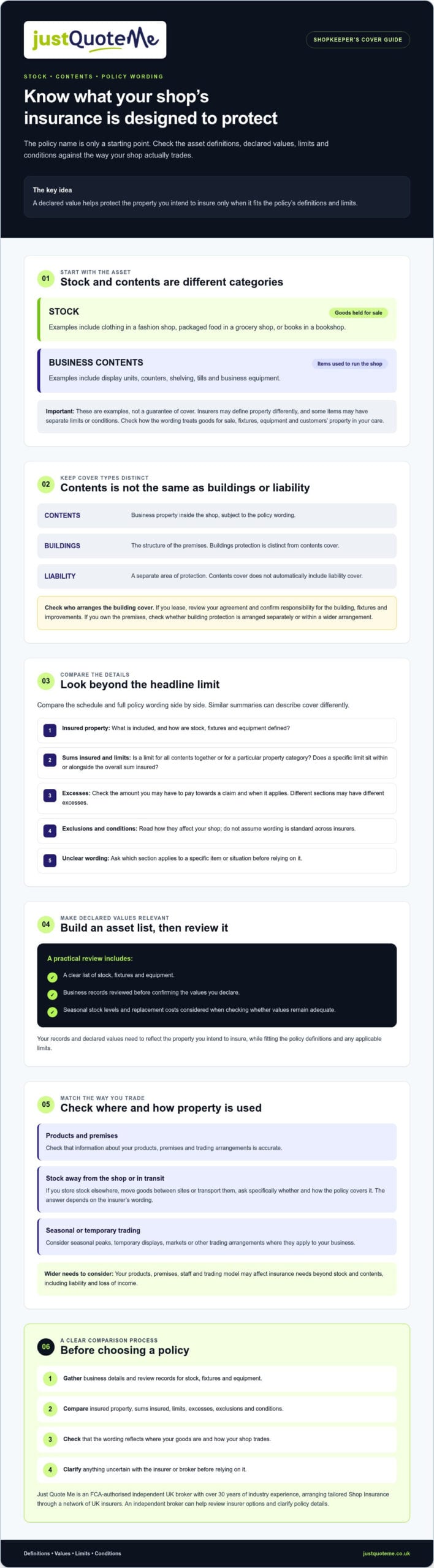
Stock is the goods your shop holds for sale; business contents are other items used to run it, such as shop fittings and equipment. Stock and contents insurance for shopkeepers may cover these assets against insured events, but the exact protection depends on the policy wording, declared values, limits and conditions. The name of a policy alone doesn’t confirm what’s included.
What counts as shop stock and business contents?
Stock could include clothing in a fashion shop, packaged food in a grocery shop or books in a bookshop. Contents may include display units, counters, shelving, tills and business equipment. These are examples, not a guarantee of cover: insurers may define property differently, and particular items may have separate limits or conditions. Check how the policy describes goods held for sale, fixtures, equipment and any customers’ property in your care. If a definition is unclear, ask the insurer or broker before relying on it.
How does contents cover differ from buildings insurance?
Contents cover concerns business property inside the shop; buildings insurance concerns the premises’ structure. They’re distinct types of protection, and contents cover doesn’t automatically include buildings or liability cover. A general Business insurance overview can help place these protections in context, but your own policy wording determines what applies.
If you lease your shop, check your agreement and confirm who arranges cover for the building, as well as which fixtures or improvements are your responsibility. If you own the premises, confirm whether building protection is arranged separately or included in a wider arrangement, and check the relevant terms. Don’t assume that ownership or tenancy alone makes the responsibility clear.
Just Quote Me arranges Shop Insurance and Commercial Property Insurance through a network of UK insurers. Comparing the relevant policy sections can help you identify whether your stock, contents and premises have been addressed without assuming they’re covered together.
Which policy details should shopkeepers compare before choosing cover?
Policy summaries can use similar language while defining cover differently. Compare the schedule and full wording side by side, focusing on what property is insured, how it’s defined, the sums insured, any specific limits, excesses, exclusions and conditions. For stock and contents insurance for shopkeepers, a clear match between your business assets and the policy definitions matters as much as the headline sum insured.
A declared value only helps protect the property you intend to insure if it fits the policy’s definitions and limits. Check whether a limit applies to all contents together or to a particular category of property. Don’t assume a feature is included because another insurer offers it. Ask for clarification if the wording doesn’t make clear which section applies to an item or situation.
Which limits, excesses, and exclusions need attention?
Look for limits that could cap payment for stock, contents or particular items, and check whether they sit within or alongside the overall sum insured. An excess is the amount you’re responsible for paying towards a claim when it applies. Confirm the amount and when it applies under the policy, including whether different sections have different excesses. Read exclusions and conditions carefully, and ask how they affect your shop rather than assuming particular wording is standard across insurers.
Does the policy match how and where your shop trades?
Check that the information provided about your products, premises and trading arrangements remains accurate. If you store stock elsewhere, move goods between sites or transport them, ask specifically whether and how the policy covers stock away from the insured premises or in transit. The answer depends on the insurer’s wording.
Consider seasonal peaks, temporary displays, markets or other trading arrangements if they apply to your business. Ask whether these need to be declared and whether any limits or conditions change. Cover suited to your usual shop setup may not automatically account for a change in where or how you trade.
To discuss how your requirements fit into shop insurance cover, you can review options with Just Quote Me, an independent UK broker that arranges tailored Shop Insurance through a network of UK insurers. Ask for help clarifying policy wording or comparing available options, then check the final schedule and terms against your needs.
How should you calculate the stock and contents values to declare?
Start with a clear inventory, then check how the policy asks you to value each category. Stock for sale should be listed separately from fixtures, fittings, equipment and other business contents. The right basis can differ by policy, so don’t rely on a rough estimate or assume the figures on your accounts are automatically suitable.
Use this sequence to prepare your figures:
- List the property: Separate saleable stock from shop fittings, equipment and other contents.
- Check the values: Estimate stock levels and the cost of replacing contents, then confirm the valuation basis the insurer requires.
- Review records: Use purchase invoices, stock records and asset lists to support your calculations.
- Confirm the figures: Discuss your valuations with the insurer or broker and check they match the policy definitions and sums insured.
Account for the highest stock levels you may hold, not just a typical quiet week. Seasonal peaks, new product lines or changes in how you trade can alter the amount at risk. Raise these details when arranging cover and review them at renewal.
How can you build a usable stock and contents inventory?
Record each item or suitable group of items with a description, quantity, value and location. Keep supporting purchase records for stock and asset documents for equipment or fittings. Update the list when you buy new equipment, change shop fittings or adjust stock ranges. Documentation helps you explain what you own and how you calculated its value, but it doesn’t guarantee a claim outcome. The policy wording and claim assessment still apply.
What can lead to a mismatch between values and cover?
Old estimates can become unreliable as stock, equipment and the shop’s trading profile change. A new display unit, additional stock stored elsewhere or a seasonal increase may not be reflected in figures carried forward from a previous renewal. Underinsurance may be a concern if declared amounts fall short of the value calculated under the policy’s terms. Ask the insurer or broker how any valuation conditions affect your cover.
Declared values should reflect the valuation basis set out in the policy. For stock, ask whether the insurer expects a figure based on its cost, replacement cost or another stated method, and how it treats VAT if your business can reclaim it. For contents, confirm whether values should reflect replacement as new or another basis. Don’t assume one method applies to every policy.
Before finalising your stock and contents insurance for shopkeepers, check that your inventory, declared figures and policy wording all refer to the same property and valuation basis. If anything remains unclear, ask for an explanation and keep a record of the confirmed figures.
What related risks and cover should a shopkeeper consider?
Protecting stock and contents addresses property risks, but it doesn’t automatically cover every financial impact of an incident. Liability cover concerns claims made against your business, while loss-of-income protection may help with certain interruptions to trading, subject to the policy terms. Buildings risks are another separate consideration. Check each policy’s scope rather than assuming these protections come with stock and contents insurance for shopkeepers.
Think through the risks created by your products, premises, staff and trading model. A shop selling goods that customers handle may have different liability concerns from one with little customer interaction. Staff, delivery arrangements, online sales and the way your premises are used can also affect which questions to raise. Related policies may address different exposures, but check for gaps or overlap with your insurer or broker.
When might shop insurance need more than stock and contents cover?
Consider these areas separately, then ask how they fit with your policy:
- Liability: Could a customer or another third party be injured or have their property damaged in connection with your business? Ask whether public liability cover is relevant and what its wording includes.
- Staff: Review whether employers liability insurance is appropriate for your circumstances and confirm its scope with the insurer or broker.
- Trading interruption: Ask whether cover for loss of income is available and what events, limits and conditions apply.
- Premises: Check who arranges buildings cover and whether your responsibilities as owner or tenant are clear.
Availability and scope vary by insurer and the policy selected. For a focused next step, read the public liability insurance guide and consider what questions apply to your shop.
What should you disclose when your shop’s risks change?
A new product range, a rise in stock volumes, a move or alteration to your premises, changed security arrangements or a new business activity may affect the information on which your cover is based. Contact your insurer or broker to explain relevant changes, ask whether they affect your policy and follow the instructions in your documents. Check the policy for any notification requirements and timing; don’t assume these are identical across insurers.
Keep a note of what you’ve told them and any response or change to your documents. If you’re unsure whether an adjustment matters, ask rather than guessing. This helps you check that the cover still reflects how your shop operates without assuming a related policy is automatically included.
How can shopkeepers arrange suitable stock and contents cover?
A clear buying process makes it easier to explain your needs and check whether the proposed policy fits. Start by gathering your shop’s details, then prepare an asset list, compare the wording, ask about anything uncertain and review the final documents before relying on the cover.
What information should you prepare for a quote?
Bring together information about your shop’s activities and premises, the types of stock you hold, and the values you intend to declare. Note relevant changes, such as new products, additional storage locations or changes to how you trade. A current inventory and supporting records can help you explain how you arrived at your figures.
Prepare questions about policy definitions, limits, exclusions, excesses and valuation terms. If a phrase in the wording could affect a particular item or trading arrangement, ask how it applies to your circumstances. The insurer’s terms determine what is covered, so don’t rely on assumptions or a brief summary alone.
How can a broker help you compare options?
An independent broker can discuss your requirements and help you compare options available through insurers. That can be useful if you’re unsure how a policy treats a type of stock, equipment or a change in your business. Just Quote Me is an FCA-authorised independent UK insurance broker with over 30 years of industry experience, arranging tailored Shop Insurance through a network of UK insurers. It doesn’t underwrite policies directly.
Before relying on cover, check the final schedule and policy wording against the information you supplied. Confirm that the declared values, insured property and relevant conditions reflect your shop, and ask for clarification if anything is unclear. Keep the documents available so you can refer back to the agreed terms.
When you’re ready to explore your options, Get Your Free Business Insurance Quote now. If you’d like to discuss your requirements, Request a Call back for free Expert advice.
Take the next step towards cover that fits your shop
Choosing stock and contents insurance for shopkeepers starts with knowing what you need to protect and checking that your declared values match the policy’s definitions. Compare limits, excesses and exclusions, and consider related risks such as liability, buildings and interruption to trading separately. Review your details when stock levels or your business change.
An independent broker can help you discuss your requirements and compare options from insurers. Just Quote Me is an FCA-authorised independent insurance broker with over 30 years of industry experience and access to a network of UK insurers. Learn more about Just Quote Me and the support available as you consider your shop’s insurance needs.
Ready to explore your options? Get Your Free Business Insurance Quote now.
Frequently Asked Questions
Is stock automatically included in shop contents insurance?
Stock may be included, but it depends on the policy’s definitions, limits, exclusions and declared values. Check whether the wording covers the goods your shop holds, such as clothing, food or specialist products, and whether any sub-limits apply. Don’t assume every insurer treats stock in the same way. If the terms are unclear, ask the insurer or broker to explain how they apply to your business before choosing cover.
What is the difference between stock insurance and contents insurance for a shop?
Stock generally means goods held for sale, while business contents may refer to other property used in your shop, such as fixtures, fittings or equipment. The policy defines what falls into each category and how it’s valued. Check how it classifies items that could be unclear, including display goods or equipment used in selling. Describe specialist, seasonal or changing stock accurately when seeking a quote, then confirm the relevant terms.
Can I insure shop stock kept away from my premises?
Cover for stock away from your insured premises isn’t something to assume. The policy may set conditions or limits based on where goods are kept, and stock in transit may be treated differently. Tell your insurer or broker about off-site storage, temporary locations and goods being transported. Ask what cover applies to each arrangement, then check the schedule and policy wording to confirm the terms, limits and any conditions relevant to your circumstances.
How do I calculate the value of stock and shop contents for insurance?
Make separate records for goods held for sale and other business property, such as equipment and fittings. Note descriptions, quantities and locations, and use purchase or asset records to support your figures. Then check the valuation basis specified by the insurer, as accepted methods can differ between policies. Review your estimates when stock or equipment changes, and discuss seasonal peaks or other fluctuations with your insurer or broker before confirming the values.
Does shop contents insurance cover the building and loss of income?
Don’t assume contents cover includes the building or loss of income. These are separate insurance considerations, and any protection depends on the products selected and their wording. If you own or lease the premises, establish who arranges insurance for the structure and check what responsibilities remain with you. Ask separately about cover for interruption to trading, including its scope, limits and conditions, and confirm the details in the relevant policy documents.
What should I check before buying stock and contents insurance for my shop?
When comparing stock and contents insurance for shopkeepers, check the definitions of insured property, declared values, limits, excesses, exclusions and conditions. Confirm that the policy reflects your stock types, premises, storage arrangements and current business activity. Ask how values should be calculated and what records may be relevant if you make a claim. Read the schedule alongside the full policy wording, and ask the insurer or broker to clarify anything you don’t understand.
