

A high goods in transit limit can still leave a gap if the policy doesn’t match the parcels you carry or the way you deliver them. Choosing goods in transit insurance for couriers means looking beyond the headline figure. Check whether the wording fits your work, from the goods you handle to the stages of each delivery.
It’s also easy to confuse goods in transit cover with insurance for your vehicle or liability to other people. These policies address different risks, so don’t assume one replaces another. This guide explains what courier goods in transit insurance may cover, which limits, exclusions and security conditions to review, and how to compare options against your delivery work. It also sets out what information to prepare before seeking advice, so you can ask focused questions and assess whether a policy may suit your needs.
Key Takeaways
- Check whether goods in transit insurance for couriers matches the parcels and delivery activities you handle.
- Compare policy wording on insured goods, limits, exclusions, territory, excesses and conditions, not just the headline limit.
- Consider how your routes, vehicle use and operating arrangements may affect which cover is suitable.
- Prepare clear details about your goods and delivery work before approaching an insurer or broker.
- A broker may help clarify your requirements and check options with insurers, subject to availability and policy terms.
What does goods in transit insurance for couriers protect?
As a courier, you need to know who is responsible for parcels while you’re carrying them. Goods in transit insurance covers goods while they are being transported, subject to the policy’s terms, limits and exclusions. The property and journey stages covered vary between insurers, so read the wording as well as checking the cover name. For a general introduction to the concept, see Shipping insurance.
Goods in transit insurance for couriers concerns the cargo, not every risk connected with a delivery. It shouldn’t be confused with vehicle insurance, which relates to your van and its insured use, or public liability insurance, which addresses a different type of risk and shouldn’t be assumed to cover parcels.
Which goods and delivery activities should couriers check?
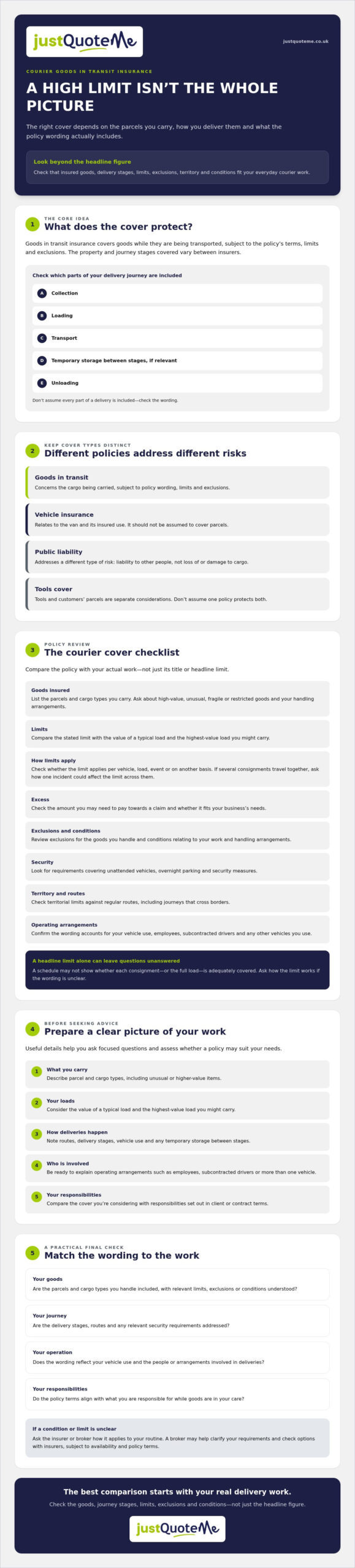
Start with the work you actually do. List the parcels and cargo types you carry, then compare that list with the policy wording. Check whether cover applies during collection, loading, transport, unloading and any temporary storage between stages. Don’t assume every part of a delivery is included.
Tell the insurer or broker about high-value, unusual, fragile or restricted goods. Ask whether those items and your handling arrangements can be covered, and check for relevant limits, exclusions or conditions in the wording. A general description such as “parcels” may not be enough to establish whether a specific load is insured.
How does goods in transit cover differ from other insurance?
Each policy addresses a different exposure. Vehicle insurance concerns the van and the use declared for it. Public liability insurance relates to liability to other people, not loss of or damage to cargo. For more on that separate type of cover, read Just Quote Me’s public liability insurance guide.
Tools carried in a van are another distinct consideration. Don’t assume a policy for tools protects customers’ parcels, or that goods in transit cover protects your tools. Check each policy’s purpose and wording against what you carry and why.
Which courier risks and policy terms should you check?
Review the policy against your everyday work, not just its title or headline limit. Check the goods insured, how each limit applies, exclusions, territorial scope, excesses, security requirements and any conditions tied to your vehicle or working pattern. Cover depends on the policy wording and the courier activity you’ve declared.
A van may carry parcels for several customers, with different values and handling needs. The limit shown on a schedule won’t tell you on its own whether each consignment, or the full load, is adequately covered. Check how the insurer applies the limit, and ask for clarification if the wording isn’t clear.
Do policy limits match the value of the goods?
Compare the stated limit with the value of a typical load and the highest-value load you might carry. Check what the limit applies to: it may be expressed per vehicle, load, event or on another basis, so don’t assume how it works. If you carry multiple consignments together, ask whether one incident could affect how the limit is shared across them.
Check the excess too, meaning the amount you may need to pay towards a claim. A limit that looks suitable may be less useful if the excess or another condition doesn’t fit your business’s needs.
Which exclusions, conditions, and routes need attention?
Read the exclusions for goods you handle and check requirements for unattended vehicles, overnight parking and security measures. Confirm whether collection, loading, temporary storage and unloading are covered where relevant to your operation. If a condition is unclear, ask the insurer or broker how it applies to your routine.
Check the policy’s territorial limits against your regular routes, including journeys that cross borders. If you use employees, subcontracted drivers or more than one vehicle, confirm that the wording accounts for those arrangements. Your client or contract terms may also set out responsibilities for goods in your care. Compare those responsibilities with the cover you’re considering. The RHA Conditions of Carriage may be a useful reference when reviewing carriage terms.
Keep a short list of your goods, routes, vehicle use and delivery arrangements beside the policy documents. This gives you a practical checklist for identifying gaps and asking focused questions before choosing goods in transit insurance for couriers.
How can you compare courier goods in transit insurance?
Compare quotes using the same description of your work, then decide whether each policy fits before weighing the premium. A lower price isn’t a useful comparison if the insured goods, delivery activities or conditions don’t match your needs. For broader logistics-sector information, Logistics UK is a useful industry resource, but check insurance details in the insurer’s own documents.
What information should you compare across quotes?
Check who or what is insured, which courier activities and vehicles you’ve declared, and whether the wording reflects your routes and operating arrangements. Use the policy documents, not just a quote summary, to compare limits, excesses, exclusions and security requirements.
This table can help you organise the details:
| Compare | What to check |
|---|---|
| Insured goods | Are the parcels and cargo types you carry included? |
| Limits | What is the stated limit, and how does it apply to a load or event? |
| Exclusions | Which goods, causes of loss or situations are excluded? |
| Territory | Do the stated boundaries include your regular routes? |
| Excess | What amount may you need to pay towards a claim? |
| Conditions | What security, vehicle or operating requirements apply? |
Keep two columns in your notes: confirmed in the wording and needs clarification. Similar labels don’t necessarily mean two policies offer the same protection. Ask the insurer or broker to resolve unanswered questions before deciding.
When might a courier need additional business cover?
Goods, vehicles, tools and liability to other people are separate risks. Assess them individually rather than assuming one policy covers everything. If you operate multiple vehicles, compare your needs with the scope of motor fleet insurance and confirm which vehicles and uses would be included.
If you carry tools as well as parcels, consider whether they need separate protection. Van tools insurance concerns tools, not customers’ cargo, so check the relevant wording for each. Likewise, don’t treat goods cover as a substitute for vehicle insurance or public liability insurance.
When comparing goods in transit insurance for couriers, give each insurer or broker consistent information about your goods, routes, vehicles and delivery activities. This makes it easier to separate confirmed cover from points that still need an answer.
What should couriers prepare before requesting a quote?
Clear, accurate information helps an insurer or broker assess whether an option may suit your courier work. Before enquiring about goods in transit insurance for couriers, gather details that show what you carry, how deliveries operate and where you travel. Include unusual work too, and ask what needs to be declared if you’re unsure.
What details help describe your courier business?
Use this checklist to prepare information an insurer or broker may request:
- Goods: List the types of parcels or cargo you carry, including high-value, fragile or unusual items.
- Load values: Note the value of a typical load and your highest likely load. Include how multiple consignments may travel together.
- Delivery activities: Describe collections, loading, transport, unloading and any temporary storage involved.
- Routes and destinations: Record your usual collection points and delivery areas, along with routes outside your normal pattern.
- Work arrangements: Explain whether you work directly for clients, through a subcontractor, occasionally or for multiple clients.
- Vehicles and drivers: Keep the details requested about your vehicles and drivers to hand. Describe any employees, subcontracted drivers or additional vehicles rather than assuming they’ll be included.
- Security: Be ready to explain how goods are secured during stops or overnight parking, if relevant to your work.
Tell the insurer or broker if your work changes, for example if you carry new types of goods, add routes or change who makes deliveries. Ask whether the change affects the cover and whether your policy details need updating.
What should you confirm before accepting a policy?
Check that the policy description reflects the work you actually do. Review the schedule and wording for insured goods, limits, exclusions, territory, excesses and conditions. Ask for unclear terms to be explained in writing, especially if they could affect the goods, routes, drivers or delivery stages you’ve described.
Keep the schedule and full wording accessible, and note the renewal date and any requirements for reporting changes. Just Quote Me is an independent broker with access to a panel of UK insurers, but goods in transit cover for couriers is not confirmed as available. Ask specifically whether suitable cover can be sourced before relying on a quote.
Get Your Free Business Insurance Quote now
How can a broker help arrange courier goods in transit cover?
A broker may help you describe your courier requirements clearly and approach insurers to check whether suitable cover is available. Requesting a quote doesn’t confirm availability, so ask specifically whether an insurer can consider goods in transit cover for your type of delivery work. Check any quote against the policy wording before relying on it.
What can a broker clarify during the quotation process?
Share a clear picture of the goods you carry, your routes, delivery arrangements and vehicle use. A broker can help identify questions to put to insurers, including how the wording treats your declared activities, which exclusions apply and how limits work. If an answer is unclear, ask for clarification before deciding.
Just Quote Me is an independent, FCA-authorised UK insurance broker with access to a panel of UK insurers and over 30 years of industry experience. That background may be useful when discussing your requirements, but it doesn’t guarantee that goods in transit cover for couriers will be available, or that a particular price or policy will suit your business. Cover is provided by insurers, and the terms need to be confirmed in their documents.
What are the next steps to explore cover?
Before getting in touch, gather the details you’ve prepared about your business, goods and load values, routes, vehicles, drivers and security arrangements. This gives the broker or insurer a clearer basis for checking options. If a quote is offered, verify that the insured activity and goods match what you actually do, then review the limits, exclusions and conditions in the schedule and wording.
To explore your options, use the online quote route or request a callback. These are enquiry options, not confirmation that goods in transit cover is available.
Get Your Free Business Insurance Quote now
Request a Call back for free Expert advice
Make your cover decision with confidence
Choosing goods in transit insurance for couriers starts with the work you actually do, not just a headline limit. Compare the goods and activities covered, limits, exclusions, routes and policy conditions. Before relying on a quote, confirm that the insurer can cover your courier work and check the full wording.
Just Quote Me is an independent, FCA-authorised UK insurance broker founded in 1989, with over 30 years of industry experience and access to a panel of UK insurers. The broker may be able to help clarify your requirements and check options, but availability, terms and price must be confirmed for your circumstances.
Prepare your business and load details, then get in touch to explore your options. A clear description of your work can help make the discussion more focused.
Get Your Free Business Insurance Quote now
Request a Call back for free Expert advice
With focused questions and the policy wording in hand, you can make a more informed choice for your delivery work.
Frequently Asked Questions
What is goods in transit insurance for couriers?
Goods in transit insurance for couriers can protect goods while they’re being transported, subject to the policy terms. The wording determines which goods and delivery activities are covered, what limits apply and which exclusions or conditions may affect a claim. It’s separate from vehicle insurance, which concerns the vehicle and its insured use. Check the schedule and full policy wording rather than assuming every courier policy covers the same risks.
Does courier van insurance cover parcels and customer goods?
Not necessarily. Vehicle insurance and cover for parcels address different risks, so don’t assume a van policy protects customer goods or that goods cover insures the vehicle. Check your motor policy for the vehicle and its declared use, then review any separate goods in transit wording for covered items, limits and exclusions. If either document is unclear, ask the insurer or broker to confirm what applies to your delivery work.
What does goods in transit insurance usually exclude?
There isn’t one standard list of exclusions that applies to every policy. Terms vary by insurer and cover, so check the actual wording for excluded goods, security conditions, territorial limits and requirements relating to the vehicle or how it’s used. Pay particular attention to conditions that affect your regular deliveries, such as where goods are left during a stop. Ask the insurer or broker to explain anything unclear before relying on the cover.
How much goods in transit cover does a courier need?
Compare the policy limit and how it applies with the value of the goods you carry, including your highest likely load. Check whether the limit applies per load, vehicle, event or on another basis, and ask how multiple consignments are treated. The appropriate limit depends on your goods, delivery work and the insurer’s terms. A headline figure alone can’t confirm that a particular load is adequately covered, so seek clarification for your circumstances.
Does goods in transit insurance cover goods left in a van overnight?
It depends on the policy wording and any security conditions. Before leaving goods in a vehicle overnight, check the terms for unattended vehicles, permitted parking arrangements and circumstances that may affect cover. Don’t rely on an assumption based on the policy name or a headline limit. If the wording doesn’t clearly address your situation, ask the insurer or broker to confirm the requirements in writing before leaving goods in the van.
Can self-employed couriers get goods in transit insurance?
Whether cover is available depends on the insurer’s criteria and the courier work you declare. Prepare a clear description of the goods you carry, your routes, vehicle use and delivery arrangements, including whether you work directly for clients or through another business. Then ask an insurer or broker to confirm availability and explain the terms that would apply. Don’t assume a policy is suitable until its wording reflects your actual activities.
