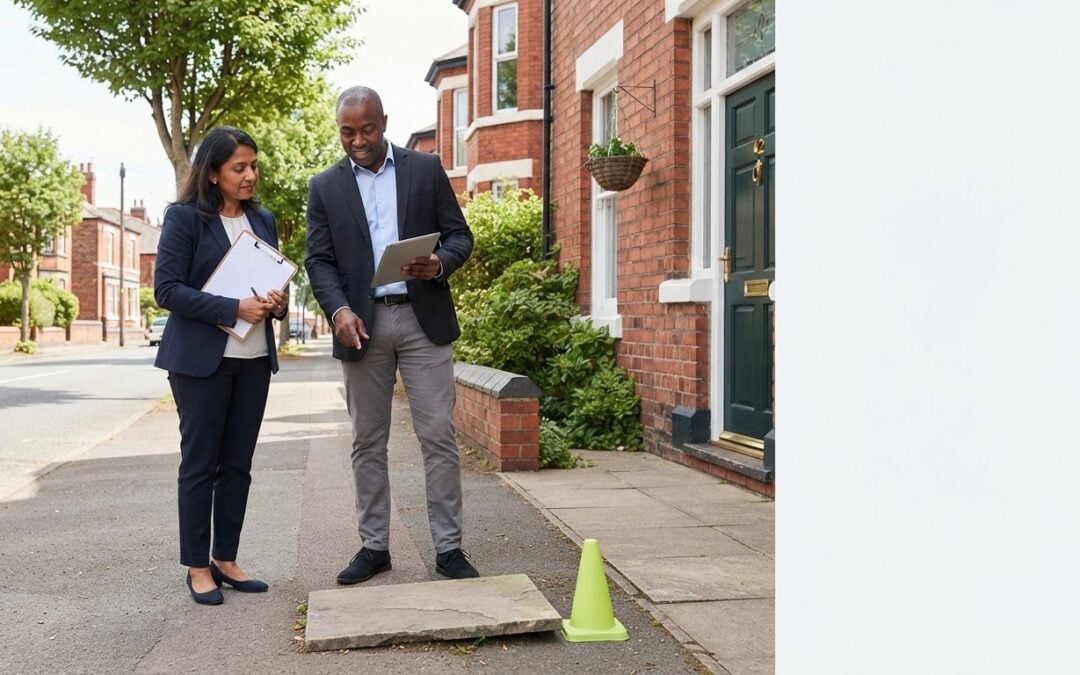
A visitor trips on a loose paving slab outside your rental property. Which policy might respond, and could you be held responsible? If you’re asking “what is property owners liability insurance”, the key is understanding how it relates to your responsibility for the property, not relying on a policy label alone.
It’s easy to confuse liability cover with buildings insurance or landlord insurance. In general, property owners’ liability may help with claims involving injury or property damage connected to owning or maintaining a property, subject to the policy’s terms, limits and exclusions. It won’t automatically cover every incident, and the right cover can depend on how the property is used.
This guide explains the usual purpose of the cover, how it differs from related insurance, and what to check in the wording before choosing a policy. You’ll also find practical questions to consider about visitors, tenants, maintenance and liability limits. If you’re unsure which cover fits your circumstances, a conversation with an independent broker can help clarify your options.
Key Takeaways
- Understand what property owners’ liability insurance may cover and why the policy wording matters.
- Learn what is property owners liability insurance and how a claim may be assessed against the facts and cover terms.
- Compare property owners’ liability with public liability and landlord insurance without assuming the policies are interchangeable.
- Use a practical checklist to consider ownership, occupancy, property use, access and who may visit.
- See how Just Quote Me, an independent UK broker, can help you explore cover suited to your property and its use.
What Is Property Owners’ Liability Insurance and Its Use?
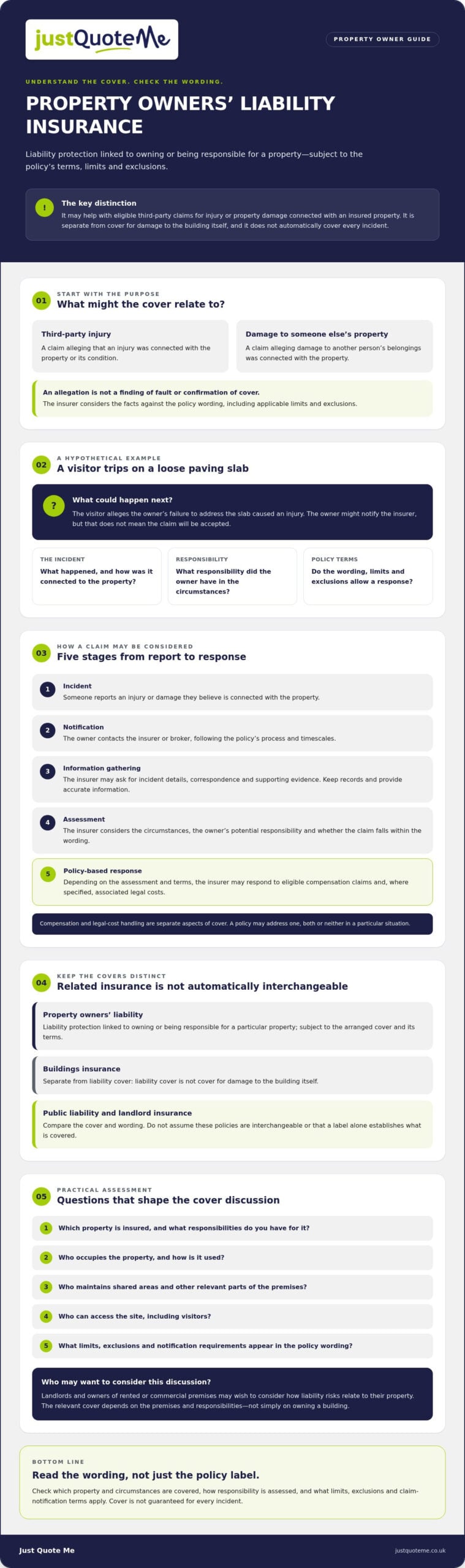
Property owners’ liability insurance may help with eligible third-party claims for injury or property damage connected with an insured property, subject to the policy’s terms. The cover isn’t automatic: the property insured, what happened, the owner’s responsibilities, policy limits and exclusions can all affect whether a claim is covered.
If you’re searching for what is property owners liability insurance, think of it as liability protection linked to owning or being responsible for a particular property. It’s separate from cover for damage to the building itself. To understand the legal context around responsibility to visitors and non-visitors in England, see this overview of Occupiers’ liability in English law.
Hypothetical visitor incident: A visitor trips on a loose paving slab at a rented property and alleges that the owner’s failure to address it caused an injury. The owner might notify their insurer, but that doesn’t mean the claim will be accepted. The insurer would consider the circumstances and the policy wording, including any applicable limit or exclusion.
Who might consider property owners’ liability cover?
Landlords and owners of rented or commercial premises may want to consider how liability risks relate to their property. The right insurance discussion depends on the specific premises and responsibilities, not simply on whether someone owns a building. Consider who occupies it, how it’s used, who maintains shared areas and who can access the site. Owners exploring landlord cover can also review residential letting insurance as part of assessing their needs.
What kinds of third-party claims may be relevant?
A claim may allege that an injury or damage to someone else’s belongings resulted from a condition or issue connected with the property. Examples could include an injury following a fall or a visitor’s possessions being damaged. These are examples of allegations, not confirmation that a policy covers them. The insurer assesses the facts against the wording, limits and exclusions before deciding how the policy responds.
Liability exposure can arise when someone alleges that a property owner’s responsibility for premises contributed to injury or damage. An allegation alone doesn’t establish fault or guarantee insurance cover, so check which property and circumstances the policy applies to, along with its limits and exclusions.
How does property owners’ liability insurance respond to a claim?
A claim usually moves through several stages, but the policy doesn’t guarantee payment. If you’re asking what is property owners liability insurance in practice, the key is that the insurer considers the reported incident against the particular cover arranged and the evidence available.
- Incident: Someone reports an injury or damage they believe is connected with the property.
- Notification: The owner contacts the insurer or broker promptly, using the notification process and timescales set out in the policy.
- Information gathering: The insurer may request details of what happened, relevant correspondence and supporting evidence. Keep copies of records and provide accurate information.
- Assessment: The insurer considers the circumstances, the owner’s potential responsibility and whether the claim falls within the policy wording.
- Policy-based response: Depending on the assessment, wording, limits and exclusions, the insurer may respond to eligible compensation claims and, where specified, associated legal costs.
Compensation and legal-cost handling are separate aspects of cover. A policy may address one, both or neither in a particular situation, so check the terms rather than assuming either is included. For background on the legal context for visitors in England, the Occupiers’ Liability Act 1957 sets out a common duty of care. Insurance cover and legal responsibility are related, but they aren’t the same thing.
What should an owner check after an incident?
Follow the policy’s notification instructions and contact the insurer or broker promptly. Record what you know, keep relevant correspondence and preserve available supporting evidence, such as photographs or maintenance records. Don’t admit liability or promise payment before checking the insurer’s guidance. If you’re unsure how to report an incident, ask the insurer or broker what steps the policy requires.
What affects whether a claim is covered?
Check which property is insured, how the policy defines that property, which events it covers and what exclusions or conditions apply. Limits set the maximum available under the relevant cover, while an excess may affect how much is payable in a claim. The insurer’s decision depends on the facts and the applicable terms.
The policy wording, not the product label, determines how an insurer responds to a claim. For that reason, don’t rely on a general description or another owner’s experience as confirmation that your circumstances are covered. If you need help understanding how cover relates to your property and its use, a broker can help you review the options; Just Quote Me arranges insurance through UK insurers rather than underwriting policies directly.
Property owners’ liability vs public liability and landlord insurance
These policy names describe different insurance purposes, even where their scope may overlap. If you’re researching what is property owners liability insurance, compare the property and activities insured, the types of claims considered and the wording that applies. A policy’s title alone won’t tell you whether a particular incident is covered.
| Cover type | Purpose and typical exposure | Wording to check |
|---|---|---|
| Property owners’ liability | May address eligible third-party claims connected with owning or being responsible for a property. | Which premises are insured, what responsibilities and circumstances are covered, and what limits and exclusions apply. |
| Public liability | Generally concerns third-party claims connected with business activities. Some incidents at a property could involve both the premises and business activity. | Which business activities and locations are insured, plus relevant exclusions, limits and conditions. See this public liability insurance guide for more detail. |
| Landlord insurance | A broader policy arrangement for a rental property. Its components vary by provider and policy, and may include liability cover alongside other types of protection. | Which sections are included, whether liability cover applies to the insured property and use, and what each section excludes. |
| Buildings insurance | Concerned with damage to the building itself, rather than eligible claims made by third parties against the owner. | Which property and types of damage are insured, along with limits, exclusions and conditions. |
Is property owners’ liability the same as public liability insurance?
Not necessarily. Property owners’ liability focuses on exposure connected with ownership or responsibility for premises. Public liability generally relates to third-party claims arising from business activity. If a customer is injured at a business premises, the circumstances could involve both the condition of the property and the activity taking place there. Don’t assume one policy automatically covers both; check how each defines insured activities, premises and claims.
Is liability cover the same as buildings or landlord insurance?
No. Buildings insurance relates to the physical property, while liability cover concerns eligible third-party claims. Landlord insurance is a broader category whose included protections vary between policies, so check whether liability cover is included and what it applies to. For a rented home, compare the terms of residential letting insurance; for business premises, review commercial property insurance. Choose based on the property’s use, then confirm the relevant wording with the insurer.
How to assess your property owners’ liability insurance needs
Start with the property and how it’s used, rather than choosing cover based on a policy name. The right questions for a rented flat may differ from those for commercial premises with customers, contractors or shared areas. This checklist can help you prepare for a policy review, but it isn’t a legal assessment or a guarantee that particular cover is suitable.
What details should you gather before reviewing cover?
Write down who owns or manages the premises, who occupies it and what happens there. Include how people access the property and which areas they can use. These details help make a discussion about cover more specific.
- Ownership and responsibility: Note who owns, manages and maintains the premises, including any shared or external areas.
- Occupancy and use: Record whether the property is occupied, let, vacant or used commercially, and describe the activities that take place there.
- People on site: Consider tenants, visitors, customers, contractors and anyone else who may access the premises.
- Documents and changes: Gather your current policy schedule and wording. Note changes to the property’s use, occupancy, access or management since the cover began.
Then compare those details with the schedule and policy wording. Check the insured-property definition, applicable limits, exclusions, conditions and any information the insurer requires you to disclose. Ask the insurer or broker to clarify terms you don’t understand, and confirm whether a change in use or responsibility needs to be reported.
How can owners reduce avoidable liability risks?
Keep the premises in suitable condition through sensible inspection and maintenance for its use. Record relevant checks, work completed and issues identified, along with any action taken. Follow professional advice where appropriate and comply with the conditions set out in your policy. These practical steps aren’t a complete legal duty checklist, and they don’t guarantee that a claim will be covered.
Review cover when circumstances change. For example, letting a previously owner-occupied property or opening a commercial space to visitors may affect the information an insurer needs and the wording that fits. Your policy terms and exclusions still determine how cover applies.
If you’re unsure how your ownership, occupancy or property use affects the options, a broker conversation can help clarify what to check. Speak with Just Quote Me about reviewing cover for your property. Just Quote Me is an independent UK broker that arranges insurance through UK insurers; the insurer’s policy wording sets out the cover.
Get tailored property owners’ liability insurance guidance from Just Quote Me
The right cover depends on the property, how it’s used and the responsibilities attached to owning or managing it. A rented home, a shop and a mixed-use premises can present different questions about access, occupancy and potential third-party claims. If you’re still asking what is property owners liability insurance, the practical next step is to compare your circumstances with the policy wording, rather than assume a policy label tells the whole story.
Just Quote Me is an independent, FCA-authorised UK insurance broker with over 30 years of industry experience. It arranges cover through a broad network of UK insurers, including landlord and commercial property insurance. Just Quote Me doesn’t underwrite policies directly. A broker can help clarify what information to provide and which cover options may be relevant; the insurer’s terms determine the final cover.
What to prepare when requesting a quote
Having clear details ready can make it easier to explain your situation and identify questions to resolve. Gather the following before requesting a quote or discussing your existing cover:
- Property details: Address, use and occupancy, such as whether the premises are let, owner-occupied or used commercially.
- Ownership and management: Who owns or manages the property, and who is responsible for relevant areas?
- Access and visitors: Note who may visit, including tenants, customers or contractors, and which shared or external areas they can access.
- Changes and documents: Describe changes to the property’s use, occupancy, access or management. Keep your current policy schedule and wording nearby so you can check existing cover and raise specific questions.
These details help frame the conversation, but they don’t guarantee that an insurer will offer cover or accept a particular risk. Check the insurer’s requirements and confirm any relevant policy terms, limits, conditions and exclusions.
How to take the next step
If you’re ready to explore your options, request a quote using the details you’ve gathered. If you’d rather talk through how the property is used or who is responsible for it, you can ask for a callback. Both are straightforward ways to take the next step, without assuming a particular policy is right before your circumstances have been considered.
Get Your Free Business Insurance Quote now
Request a Call back for free Expert advice
Make your property cover fit your responsibilities
Understanding what is property owners liability insurance starts with the property itself: how it’s used, who can access it and what responsibilities you have. Liability cover, buildings insurance and landlord insurance serve different purposes, so check the policy wording, limits and exclusions rather than relying on the name alone. If circumstances change, review whether your existing cover still reflects the property.
Just Quote Me is an FCA-authorised independent UK insurance broker with over 30 years of industry experience and access to a broad network of UK insurers. It arranges cover rather than underwriting policies, and can help you explore options suited to your circumstances.
Explore your property insurance options with Just Quote Me, or take the next step with a quote or callback:
Get Your Free Business Insurance Quote now
Request a Call back for free Expert advice
A clear review now can help you move forward with greater confidence.
Frequently Asked Questions
What is property owners’ liability insurance?
Property owners’ liability insurance may help with eligible third-party claims for injury or damage to someone else’s property connected with an insured property. If you’re asking “what is property owners liability insurance”, the answer depends on the specific policy: the insured premises, circumstances, limits, exclusions and conditions all matter. An allegation doesn’t automatically mean the insurer will accept a claim, and this cover isn’t the same as insurance for damage to the building itself.
Does property owners’ liability insurance cover tenant injuries?
It may respond to an eligible claim involving a tenant’s injury, but cover isn’t automatic. The insurer will consider what happened, the owner’s responsibilities and whether the property and circumstances fall within the policy wording. Check for applicable exclusions, limits and conditions, and follow the insurer’s instructions if an incident occurs. A tenant making a claim doesn’t by itself establish liability or guarantee that the insurer will pay compensation or legal costs.
Is property owners’ liability insurance the same as public liability insurance?
No, they generally focus on different sources of liability. Property owners’ liability relates to claims connected with owning or being responsible for premises, while public liability generally concerns third-party claims connected with business activities. A situation at business premises could involve both the property and the activity taking place there. Don’t assume the policies are interchangeable; check which properties, activities and circumstances each policy covers, along with exclusions and limits.
Is property owners’ liability insurance included in landlord insurance?
Property owners’ liability cover is often included in a comprehensive landlord insurance policy, but inclusions vary by provider and policy. Check the schedule and wording to confirm whether a liability section is included, which property and circumstances it applies to, and what limits, exclusions or conditions apply. Landlord insurance may also include other types of cover, but don’t assume a particular component is present just because the policy is described as landlord insurance.
Do I legally need property owners’ liability insurance in the UK?
There’s no legal minimum for property owners’ liability insurance in the UK, according to the information used for this guide. That doesn’t rule out a contract or premises agreement specifying insurance requirements, so check any relevant terms. This cover is distinct from employers’ liability insurance, which has a statutory minimum requirement. If you’re unsure whether a requirement applies to your situation, check the relevant contract and seek appropriate advice.
What is not covered by property owners’ liability insurance?
There isn’t one exclusion list that applies to every policy. A claim may fall outside cover if the property, event or circumstances aren’t included, or if an exclusion or condition applies. The policy may also set a limit or excess that affects its response. Read the schedule and full wording, paying attention to definitions, exclusions and conditions. Ask the insurer or broker to explain any terms that could affect your circumstances.
How do I choose property owners’ liability insurance?
Match the cover to the property, its use and your responsibilities. Before comparing options, note whether it’s let, occupied or used commercially, who can visit, and which areas they can access. Then check the insured-property definition, limits, exclusions, conditions and any information the insurer requires you to disclose. Just Quote Me is an FCA-authorised independent broker with over 30 years of experience, arranging cover through a broad network of UK insurers.
