
What if the most important part of professional indemnity cover is what it leaves out? The common exclusions in professional indemnity policies include dishonest acts, fines and penalties, bodily injury or property damage, and claims linked to work outside the policy’s stated scope. Policies contain about 20 standard exclusions on average, but the exact wording varies.
It’s sensible to expect professional indemnity insurance to respond when a client alleges an error or omission in your work. But an exclusion can limit or remove cover for a particular claim, and some policies include exceptions or write-backs that affect how an exclusion applies.
This article explains what professional indemnity insurance is, the exclusions you’re likely to encounter, and why declared services, the retroactive date and contractual terms matter. You’ll also see how exclusions can differ between professions, helping you read your policy wording and understand where cover may stop.
Key Takeaways
- Contract terms can create liabilities beyond your usual professional duty, so understand how the policy treats guarantees, penalties and damages.
- Known claims and circumstances may affect cover from the outset, while the retroactive date can determine whether earlier work falls within the policy period.
- Fraudulent, dishonest or criminal acts are generally excluded; the wording also determines how claims involving individuals are handled.
- Exclusions vary with your profession, services and policy wording, so focus on the risks most relevant to the work you actually do.
Contractual liability beyond the usual duty of care
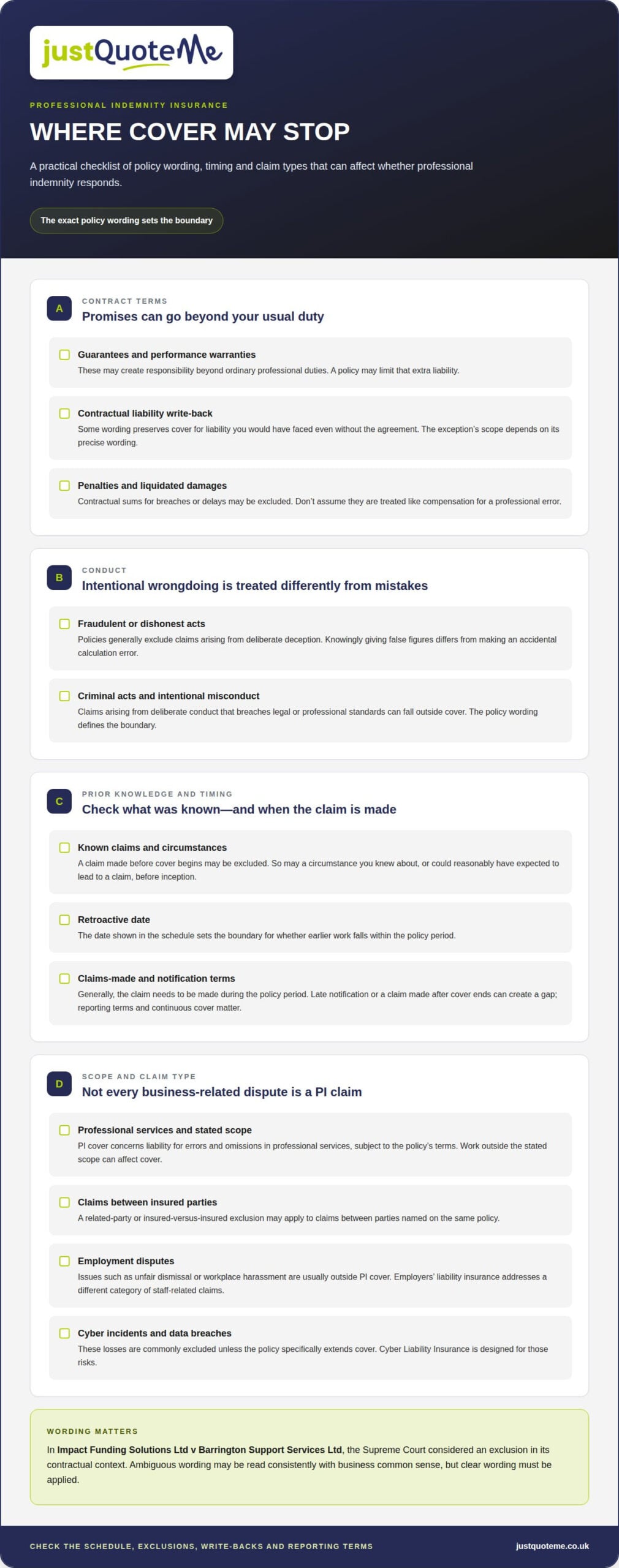
A contract may make you responsible for more than negligence under your usual professional duty. Guarantees, performance warranties and other promises can therefore create liabilities that a professional indemnity policy treats differently.
Assumed Contractual Liabilities
Assumed contractual liability is responsibility accepted through an agreement that would not otherwise arise under ordinary duties. A policy may limit cover for this additional responsibility, even when the same work could otherwise lead to a negligence claim. Some policy wordings include a contractual-liability write-back, preserving cover for liability you would have faced without the agreement. The precise wording determines the scope of that exception.
Penalties and Liquidated Damages
Contractual penalties and liquidated damages are sums specified in an agreement for particular breaches or delays. Professional indemnity policies may exclude these amounts, so do not assume they are treated like compensation for a professional error. For example, a clause requiring a fixed payment when a project misses a deadline may create a contractual obligation beyond the usual duty of care. The policy wording determines how that liability is treated.
Are contractual liability, guarantees and performance warranties excluded from professional indemnity insurance? They may be excluded to the extent they impose liability beyond your usual professional duty, but some policies write back cover for liability that would exist without the contract. For example, a consultant who guarantees a 50% revenue increase may not have cover for that additional promise if the target is missed.
Ambiguous wording does not automatically mean broader cover applies. In Impact Funding Solutions Ltd v Barrington Support Services Ltd, the Supreme Court considered how an exclusion should be interpreted in its contractual context. A court may favour a reading consistent with business common sense when wording is ambiguous, but must apply clear wording. This distinction matters when a contractual promise appears to expand the insured’s liability beyond negligence or regulatory obligations.
What is Professional indemnity insurance?
Professional indemnity insurance covers liability to pay compensation for errors and omissions in professional services. A client might allege that an architect’s design error caused financial losses, or that an accountant gave negligent advice. Subject to the policy’s terms and exclusions, cover can include the costs of defending a claim.
Claims often concern advice, designs, reports or other work delivered to a client. The alleged loss may be financial rather than physical: for example, a client may say an inaccurate assessment led to a costly business decision. Professional indemnity responds to alleged professional failings, not every dispute connected with a business relationship.
Known claims and circumstances can affect whether a policy responds. A known-claim exclusion generally applies to claims made before cover begins. A known-circumstance exclusion may apply when, before inception, you knew or could reasonably have expected that an issue might lead to a claim. Matters disclosed to the insurer before cover starts may also be excluded. The retroactive date in the schedule sets the boundary for earlier work.
Most professional indemnity cover operates on a claims-made basis. The claim generally needs to be made during the policy period, and late notification or a claim made after cover ends can create a gap. For example, a client may complain about advice near renewal but issue a formal claim later. Continuous cover and the policy’s reporting terms therefore matter.
Claims between parties named on the same policy may fall under a related-party or insured-versus-insured exclusion. Employment disputes, such as unfair dismissal or workplace harassment, are also usually outside professional indemnity cover. Employers’ liability insurance addresses a different category of staff-related claims.
How do professional indemnity policies treat claims arising from cyber incidents and data breaches? These losses are commonly excluded unless the policy specifically extends cover. Cyber Liability Insurance is designed for those risks.
To consider cover in light of your services and the claims you face, Request a Call back for free Expert advice.
Fraud, dishonesty and deliberate wrongdoing
Professional indemnity policies generally exclude claims arising from fraudulent, dishonest or criminal acts. The wording matters because an allegation of poor work differs from deliberate deception.
Fraudulent and Dishonest Acts
A dishonest act involves deliberate deception, while fraud is dishonest conduct intended to gain an advantage or cause loss. Policies generally exclude claims arising from these acts, even when they occur during professional work. For example, knowingly giving a client false figures differs from making an accidental calculation error. The exclusion focuses on the conduct behind the claim, not simply the fact that a client suffered losses.
Consider a consultant who knowingly alters a report to secure a contract. If the client later claims financial loss arising from that deception, the fraud exclusion may apply. By contrast, a mistaken figure could give rise to a negligence claim rather than deliberate dishonesty. The policy wording sets the relevant boundary, so the distinction between an error and intentional conduct can affect how the claim is assessed.
Criminal Acts and Intentional Misconduct
Criminal acts and intentional misconduct are deliberate actions that breach legal or professional standards. A policy exclusion can leave claims arising from such conduct outside cover. For example, deliberately misusing a client’s funds differs from an administrative mistake that causes financial loss. Professional indemnity is not protection for intentional wrongdoing.
The retroactive date addresses when insured work began, but it does not turn deliberate conduct into covered negligence. Likewise, an injury or property damage claim may engage separate policy exclusions, so the cause and wording remain central. A client alleging fraud does not, by itself, establish whether the conduct was deliberate. The policy’s definitions, the alleged facts and the established circumstances all inform how the exclusion applies.
Keep records showing how advice was prepared and communicated. Dated client instructions, working papers and report versions, for example, can help distinguish an unintended error from a deliberate alteration. Clear documentation does not remove an exclusion, but it can provide a factual account of the professional conduct at issue.
Common professional indemnity exclusions
Professional indemnity insurance focuses on liability for professional errors and omissions, not every business loss. Common exclusions can cover physical injury, property damage, penalties, cyber incidents, employment disputes, trading debts and pollution. Exact wording varies with the profession, the risk and the insurer’s underwriting approach.
Are bodily injury and property damage excluded from professional indemnity cover in the UK? Many policies exclude these claims, although some include a write-back for injury or damage arising from a breach of professional duty during professional services. A client injured by a design error may therefore raise different issues from damage caused during ordinary business operations.
Public Liability Insurance generally addresses third-party injury and property damage, rather than errors in professional advice. Professional indemnity policies may also exclude fines and penalties, even where they cover the cost of defending a claim. A regulatory penalty and a client’s compensation claim are distinct liabilities, so the wording can lead to different outcomes.
How do pollution, asbestos and environmental damage exclusions apply to professional indemnity policies? Policies may exclude claims arising from pollution or environmental damage and commonly include asbestos exclusions. For example, a claim alleging that professional advice caused contamination may engage specific exclusion wording, while an asbestos-related claim may be excluded because of associated health risks and long disease latency.
Other exclusions can remove cover for refunds of professional fees, unpaid trading debts or loan repayments. A client seeking repayment of fees after dissatisfaction may therefore bring a different claim from one seeking compensation for negligent advice. Claims brought in a United States court may also be excluded, as may product liability claims and employment disputes such as unfair dismissal.
Use the policy schedule and wording to identify declared services, territorial limits and exclusions. A newly added service outside the declared work can create a gap, while a cyberattack may require separate cyber cover. Matching the policy to your actual activities is a practical way to clarify which claims are covered.
Just Quote Me: Professional Indemnity Insurance
Just Quote Me can help you consider Professional Indemnity Insurance in relation to your professional services and the exclusions discussed above. This can be useful when your work changes, you take on new contractual responsibilities, or you need to understand how declared activities and policy wording affect cover. The aim is to identify relevant cover considerations, not to assume every claim will be insured.
Different risks may call for different types of cover. Public Liability Insurance relates to third-party injury or property damage, while Employers Liability Insurance concerns staff-related risks. Just Quote Me can help you consider these alongside professional indemnity, where they fit your business needs.
Request a Call back for free Expert advice from Just Quote Me.
Make your next cover review purposeful
Use your next renewal or contract review to consider how your insurance fits the work you plan to take on. New clients, changing responsibilities and expanded services can alter the risks your business faces. A clear view of those changes helps you discuss cover in practical terms rather than rely on assumptions about what a policy includes.
The common exclusions in professional indemnity policies are one part of that review. Consider how Professional Indemnity Insurance relates to your professional work, and whether Public Liability Insurance or Employers Liability Insurance addresses other risks your business may face. Each policy serves a different purpose, so understanding how they fit together can support informed decisions.
Just Quote Me can help you consider these business insurance needs. For support with your next step, Request a Call back for free Expert advice from Just Quote Me. A considered review can make it easier to move forward with clarity.
Frequently Asked Questions
What are the common exclusions in UK professional indemnity insurance policies?
Common exclusions in professional indemnity policies include claims involving fraud, penalties, bodily injury or property damage, cyber incidents, employment disputes, trading debts and pollution. Policies may also restrict cover for work outside declared services, certain territories or the retroactive date. For a practical review, group exclusions by the risks your business faces: client advice, staff matters, physical damage and digital incidents. Then read the schedule alongside the policy wording.
Do professional indemnity policies exclude fraud, dishonesty or deliberate wrongdoing?
Generally, yes. Claims arising from fraudulent, dishonest or criminal acts are usually excluded. An allegation alone does not establish what happened, so the policy wording and facts of the claim matter. For example, a client disputing an inaccurate report raises different issues from evidence that someone knowingly altered figures. Keep dated instructions and report versions to help establish how the work was prepared and communicated.
Do UK PI policies exclude known claims, prior circumstances or work completed before the retroactive date?
They can. A known-claim exclusion generally concerns claims made before the policy starts; a known-circumstance exclusion can apply to an earlier issue that could reasonably lead to a claim. Work before the retroactive date may also fall outside cover. For example, a complaint disclosed before inception or an earlier project named in a dispute may need close attention to the application, schedule and notification terms.
Are fines, penalties, punitive damages and taxes covered by UK professional indemnity insurance?
Fines and penalties are typically excluded, including civil or criminal penalties and punitive, aggravated or exemplary damages. A policy may cover defence costs for a claim without covering a penalty imposed by law. Tax-related demands depend on their nature and the wording: repayment of a tax amount differs from compensation claimed for negligent tax advice. Separate those elements when assessing what the claim seeks.
What exclusions commonly apply to employee claims, insolvency and related-party disputes under PI policies?
Employment disputes such as unfair dismissal, workplace harassment and staff complaints are usually outside professional indemnity cover. Some policies also exclude insolvency-related claims, including trading debts or losses directly caused by a client’s or insured’s collapse. A related-party exclusion may prevent a claim by another party named on the same policy. For instance, a co-insured business generally cannot rely on that policy to claim against another insured party.
How do professional indemnity exclusions vary by profession, insurer and policy wording in the UK?
The common exclusions in professional indemnity policies vary with the profession, work performed, risk presented and insurer’s underwriting approach. A management consultant may face restrictions around investment advice or business valuations, while a healthcare professional may see an exclusion for experimental treatment. Financial services cover may treat pension transfer advice differently. Compare declared activities and specific exclusions with the actual services, contracts and territories involved in your work.
