
Choosing road risks-only cover doesn’t mean choosing between protection and no protection. The key question is whether the policy covers damage to the vehicle being driven, as well as injury to other people and damage to their property. To understand what is covered by a road risk policy, start with its cover level and the vehicles and drivers included under its terms.
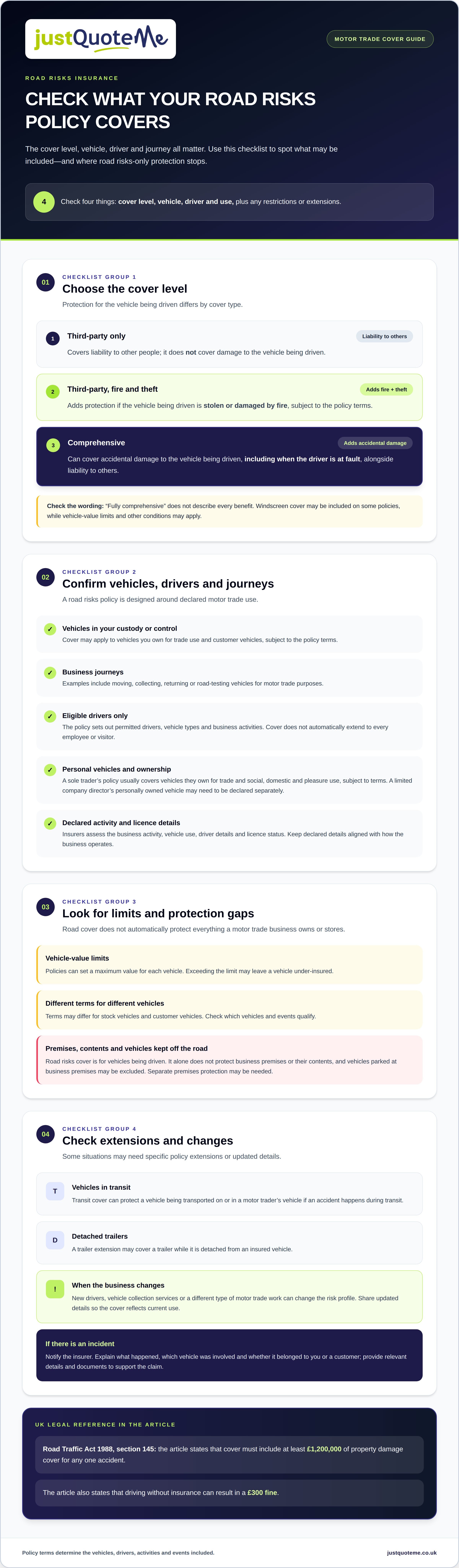
For UK motor traders, road risks cover can apply when driving vehicles in their custody or control for business purposes, such as moving, collecting, returning or road-testing them. Third-party-only cover addresses liability to other people. Third-party, fire and theft adds cover if the vehicle is stolen or damaged by fire. Comprehensive cover can also cover accidental damage to the vehicle being driven, including when the driver is at fault. This guide explains how cover may apply to vehicles owned by the policyholder and to different drivers, what each level includes, and where road risks-only protection stops. It also distinguishes cover for vehicles on the road from protection for vehicles, equipment or premises kept at a business location.
Key Takeaways
- Understand how a motor trade policy may treat vehicles you own, personal vehicles and vehicles in your care.
- Learn when business driving, such as collecting, returning or road-testing a vehicle, may fall within road risks cover.
- Compare the protection comprehensive cover can provide for the vehicle being driven with the limits of other cover levels.
- See why road risks-only cover may leave vehicles, premises or equipment kept off the road needing separate protection.
Cover for vehicles owned by the policyholder
A motor trade road risks policy may cover vehicles you own for trade use, subject to its terms. It can also cover customer vehicles, road tests and transport, depending on the cover selected.
According to The National Archives (legislation.gov.uk), section 143 of the Road Traffic Act 1988 makes it an offence in Great Britain to use a motor vehicle on a road or other public place, or cause or permit its use, without insurance meeting the Act’s requirements. Section 145 requires cover for death, bodily injury and property damage arising from vehicle use, including at least £1,200,000 of property damage cover for any one accident, according to The National Archives (legislation.gov.uk). The UK Government says driving without insurance can result in a £300 fine.
A sole trader’s motor trade policy usually covers vehicles they own for trade and social, domestic and pleasure use, subject to the policy terms. A limited company director’s personally owned vehicle may need to be declared separately. The policy should reflect whether a vehicle is personal, commercial stock or used in the business.
Motor trade insurance can cover customer vehicles in your care while you move, collect, return or road-test them. For example, a mechanic may need cover while testing a customer’s car after repairs. Third-party, fire and theft can add protection if a customer’s car or a stock vehicle is stolen or damaged by fire while in the trader’s care.
Vehicles in Transit and Detached Trailers
Vehicles-in-transit cover can protect a vehicle being transported on or in a motor trader’s vehicle if an accident happens during transit. A trailer extension may also cover a trailer while it is detached from an insured vehicle. These extensions matter when a vehicle or trailer is away from its usual storage place, since ordinary road cover may not address every transit situation.
Exclusions and Restrictions
Restrictions can include vehicle-value limits, different terms for stock and customer vehicles, and exclusions for vehicles parked at business premises. Road risks cover alone doesn’t protect premises or their contents. After an incident, notify the insurer and explain what happened, which vehicle was involved, and whether it belonged to you or a customer. Provide relevant details and documents to support the claim.
Who can drive on a Road Risks policy?
A motor trade road risks policy is designed for business driving in vehicles under the trader’s custody or control. It can cover the policyholder and eligible drivers when moving, collecting, returning or road-testing vehicles for motor trade purposes. The driver must meet the policy terms: cover doesn’t automatically extend to every employee or visitor.
For example, a mechanic might drive a customer’s vehicle after repairs, while a trader may collect a car for sale. These journeys differ from ordinary commuting or personal use. The policy sets out permitted drivers, vehicle types and business activities, so the declared use needs to reflect how the business actually operates.
Changes to the business matter. If it starts offering vehicle collection, employs additional drivers or moves into a different type of motor trade work, its risk profile changes. Vehicle values matter too: policies can set a maximum value for each vehicle, and exceeding that limit may leave a vehicle under-insured. A broker can help align the declared activity and vehicle values with the cover arranged.
Road risks cover is for vehicles being driven, not general protection for business premises or their contents. Vehicles kept at separate business premises may need premises cover, especially if stock or customers’ vehicles remain there between jobs. Traders who employ staff, hold stock or store customer vehicles overnight may consider combining road risks and premises protection.
There is no single licence or document rule that applies to every policy. Insurers assess the declared business activity, vehicle use, driver details and licence status when setting eligibility and policy terms. Accurate details help establish which drivers and journeys are included.
If your operations or vehicles change, share the updated details with your broker so the cover reflects the business’s current use. A motor trade insurance broker can help you understand how the policy fits your driving and premises needs.
Comprehensive road risk cover
Comprehensive cover can protect the vehicle being driven against accidental damage, including when the driver is at fault. It sits alongside liability cover for injury to other people and damage to their property. For a motor trader, understanding what is covered by a road risk policy means distinguishing protection for a vehicle on the road from cover for other business assets.
For example, if a trader has an accident while driving a customer’s car, comprehensive road risk insurance may cover damage to that car. Third-party-only cover doesn’t cover damage to the vehicle being driven. Third-party, fire and theft adds protection if that vehicle is stolen or damaged by fire. The policy terms determine which events and vehicles qualify.
“Fully comprehensive” is commonly used to describe comprehensive cover, but the label alone doesn’t explain every benefit. Some policies include windscreen repair or replacement for vehicles in the trader’s care. Others may set vehicle-value limits or apply specific conditions. A combined motor trade policy addresses separate business risks, such as premises and contents, rather than simply changing the road risks cover level.
UK road risk insurance costs depend on factors such as the declared drivers, vehicles, business activity and selected cover level. The price varies by case and is provided after a quote request.
Fire and theft are covered under third-party, fire and theft, subject to the policy terms. Comprehensive cover includes accidental damage to the vehicle being driven. Whether vandalism or windscreen damage is covered depends on the policy’s specific terms and benefits.
Cover for driving abroad or on private land depends on the policy’s territorial limits, permitted use and conditions. Don’t assume UK road-use protection applies in every country or on every private site. To understand what is covered by a road risk policy, consider the vehicle’s value and whether the selected cover addresses damage that could occur during its intended use.
Third-party-only cover may meet the minimum liability requirement, but it leaves damage to the driven vehicle outside that protection. Comprehensive cover can address that gap for accidental damage, while separate premises cover may be needed for business assets kept off the road.
Road risks-only policies
“Road risks-only” describes a motor trade policy focused on vehicles while they’re being driven for business. It doesn’t automatically mean third-party-only cover. The phrase describes the policy’s scope, while third-party-only, third-party, fire and theft, and comprehensive describe the selected level of protection. To understand what is covered by a road risk policy, keep those distinctions separate.
A trader who moves vehicles between locations may need road cover for those journeys. If the vehicle is then parked at a forecourt overnight, road risks-only cover doesn’t automatically protect it while it’s stationary. The same distinction applies to customer vehicles stored between repair jobs: driving cover and protection while parked address different risks.
Road risks-only cover doesn’t, by itself, protect a workshop, tools or other business contents. A motor trade business operating from premises may need separate protection for those assets. A trader who works from home and mainly drives vehicles for business may have different needs from a mechanic with equipment and customer vehicles kept at a separate site.
So, what is covered by a road risk policy depends on both its scope and its cover level. Consider where vehicles are driven, where they’re stored and which business assets need protection. This helps you decide whether road cover alone fits the operation or whether premises and stock protection should also form part of the insurance arrangement.
To discuss options that reflect your motor trade activity, request help with your insurance options.
Just Quote Me: Contractors all risks insurance
Just Quote Me can help if your wider concern is protecting a construction project rather than insuring vehicles for motor trade driving. Its contractors all risks insurance may suit construction work, while Public Liability Insurance, Employers Liability Insurance and Professional Indemnity Insurance address separate business insurance needs.
These policies aren’t substitutes for motor trade road risks cover. They may be relevant if your work combines construction activities with vehicles or other business risks and you want to understand how those insurance needs differ.
Contact Just Quote Me to discuss which business insurance options may fit your needs.
Plan your next insurance review
As your work evolves, include insurance in your business planning. Consider upcoming projects, responsibilities and how your team interacts with customers or the public. These details can help identify which risks need attention and where different types of cover may fit. Understanding what is covered by a road risk policy is one part of reviewing your wider business needs.
Just Quote Me offers Public Liability Insurance, Employers Liability Insurance and Professional Indemnity Insurance. These policies address different business risks and may be relevant alongside your other insurance arrangements. A conversation can help you consider how they relate to your work and what you want to protect as your business develops.
Request a callback for free expert advice about your business insurance needs and take the next step with confidence.
Frequently Asked Questions
What levels of cover are there?
Motor trade road risks cover is commonly available as third-party-only, third-party, fire and theft, or comprehensive. The choice affects whether protection extends beyond liability to other people. For example, a trader transporting a valuable vehicle may weigh the potential cost of damage to that vehicle against the cover level. Policy limits, excesses and exclusions also affect how each option responds.
What does UK road risk insurance cover?
UK road risk insurance is designed to cover specified motor trade driving, including journeys in vehicles in the trader’s custody or control. This can include collecting a vehicle from a customer, returning it after repairs or moving stock. The policy’s permitted business use and driver conditions shape the protection. It doesn’t automatically cover business premises, equipment or vehicles kept off the road.
What types of vehicles can a road risk policy cover?
A policy may cover vehicles connected with the motor trade, including vehicles owned for trade use, stock and customers’ cars in the trader’s care. Eligible vehicle types and values depend on the policy. Motorcycle cover can be added as an extension. If a trader handles unusual vehicles or higher-value stock, those details affect how the cover is arranged.
Does road risk insurance cover damage to the policyholder’s vehicle?
It depends on the selected cover level and the vehicle’s use. Comprehensive cover can include accidental damage to the vehicle being driven, even when the driver is at fault. Third-party-only cover doesn’t pay for damage to that vehicle, while third-party, fire and theft focuses on fire or theft protection. A trader’s vehicle parked at a business location may need separate cover.
What is the difference between third-party, third-party fire and theft, and comprehensive road risk cover?
Third-party-only covers liability for injury to other people and damage to their property, not damage to the vehicle being driven. Third-party, fire and theft adds cover if that vehicle is stolen or damaged by fire. Comprehensive cover can also cover accidental damage to the vehicle being driven. For instance, after an at-fault collision, the selected level determines whether damage to that vehicle is covered.
Does road risk cover include driving customers’ vehicles or vehicles in a motor trade business?
Yes, motor trade road risks cover is designed for eligible business driving in vehicles under the trader’s custody or control. A mechanic might move a customer’s vehicle between a workshop and a road test, while a trader could collect stock for sale. The policy’s driver conditions, declared business activity and vehicle limits determine whether that particular journey and driver are covered.
