

A workplace injury doesn’t automatically make an employer liable. If you’re asking who may be liable when an employee is injured at work, it depends on what caused the injury. An employer may be responsible for its own negligence or for a worker’s wrongful act closely connected to their job; in other cases, a third party may be liable.
It’s reasonable to expect an employer to take responsibility for workplace safety, but liability depends on the evidence and the connection between the injury and work duties. An employer may also be responsible for harm caused by a former employee if it occurred during their employment and was connected to their work.
This article explains employers’ safety responsibilities, how vicarious liability and the connection to job duties affect a claim, and when an employee may seek compensation. It also covers the role of third parties and employers’ liability insurance. UK employers are legally required to hold this insurance under the Employers’ Liability (Compulsory Insurance) Act 1969, according to UK Parliament.
Key Takeaways
- Liability can depend on whether an employee’s actions or omissions were connected to their work, including when the person responsible has since left the job.
- The Health and Safety at Work Act 1974 sets out employers’ duty of care towards employees, according to UK Parliament.
- A compensation claim may turn on whether the employer owed and breached a duty of care, and whether that breach caused the injury.
- Employers’ liability insurance is a legal requirement for UK employers under the Employers’ Liability (Compulsory Insurance) Act 1969, according to UK Parliament.
What is vicarious liability?
Vicarious liability can make an employer responsible for an employee’s wrongful act or omission in the course of their work. Whether it applies depends on the working relationship and how closely the conduct was connected to the job.
Employee Acts and Omissions
Vicarious liability means an employer may be held responsible for certain harm caused by an employee acting in the course of their employment. An omission can also matter, such as a worker failing to follow a work procedure while carrying out assigned duties. For a claim against an employer, the key issue is whether the act or omission was sufficiently connected to the employee’s role, not simply where it happened.
An independent contractor is generally treated differently from an employee, so an employer is usually not vicariously liable for a contractor’s wrongdoing. The employer’s own conduct may still be relevant if it contributed to the injury. The nature of the working relationship and the employer’s control over the work help distinguish these situations.
Co-worker Negligence
If a co-worker’s negligence causes an injury while they are doing their job, vicarious liability may make the employer responsible. For example, a worker could be injured because a colleague failed to use equipment safely during an assigned task. The injured worker’s claim may therefore be against the employer, rather than only the colleague who caused the accident.
An employer is not automatically liable for every incident involving staff. The conduct must be sufficiently connected to the employee’s work. Details recorded after the accident, such as what the colleague was doing and whether the task was work-related, can help establish that connection.
Third-Party Liability for Employee Negligence
A third party may be liable if someone outside the employer and its workforce caused the workplace accident. For instance, a visitor or another organisation’s worker might create a hazard that injures an employee. Responsibility depends on whose conduct caused the harm and whether an employer or employee also contributed.
An employee’s own negligence does not necessarily prevent a claim. If a worker’s actions contributed to the injury, responsibility may be shared and compensation may be reduced for contributory negligence. An employer may also be vicariously liable for a former employee if the harmful act happened during their employment and was connected to their role. Leaving the job later does not, by itself, remove that connection.
How can employers help to ensure the safety of their employees?
UK employers must take reasonable steps to protect staff, and workers also have health and safety responsibilities. Appropriate precautions depend on workplace hazards, equipment and the tasks employees perform.
Employer Health, Safety, and Welfare Duties
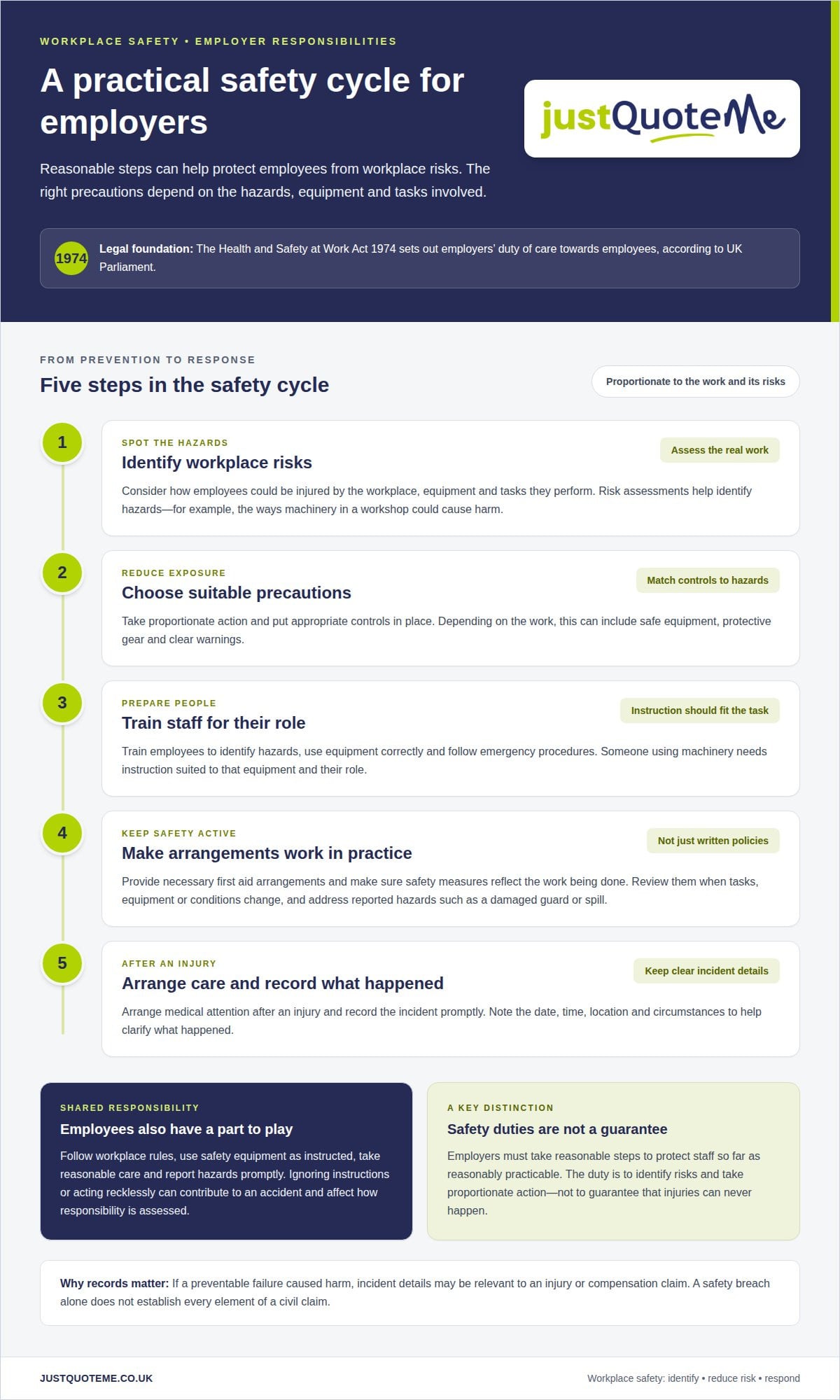
The Health and Safety at Work Act 1974 sets out employers’ duty of care towards employees, according to UK Parliament. Employers must take reasonable steps to protect staff’s health, safety and welfare so far as reasonably practicable. This means identifying workplace risks and taking proportionate action, not guaranteeing that injuries can never happen.
For example, a workshop using machinery should assess how workers could be injured and put suitable controls in place. Risk assessments help identify hazards, while training, safe equipment, protective gear and clear warnings can reduce exposure. Measures should reflect the work being done and be reviewed when tasks, equipment or conditions change.
Employer Health and Safety Responsibilities
Employers are responsible for making safety arrangements work in practice, not just writing policies. They should train staff to identify hazards, use equipment correctly and follow emergency procedures. Someone using machinery, for example, needs instruction suited to that equipment and their role.
Employers should also provide necessary first aid, arrange medical attention after an injury and record the incident promptly. A record of the date, time, location and circumstances can help clarify what happened. If a preventable failure caused harm, those details may be relevant to an injury or compensation claim.
Employees must follow workplace rules, use safety equipment as instructed and take reasonable care of their own health and safety. Promptly reporting a damaged guard or spill gives the employer a chance to address the hazard before someone else is hurt. Ignoring instructions or acting recklessly can contribute to an accident and affect how responsibility is assessed.
Health and safety failures can include inadequate training, unsafe machinery or hazards left unaddressed. An employer’s conduct is assessed against the risks and precautions reasonably available in that situation. Meeting safety duties can reduce negligence risks, but a breach alone does not establish every element of a civil claim. For employers reviewing how insurance fits alongside risk controls, employers’ liability cover may form part of their planning.
Close connection between wrongdoing and job duties
Vicarious liability depends on a clear link between an employee’s wrongful actions and their role. The UK Supreme Court confirmed a two-stage test on 26 April 2023. The first stage considers whether the relationship is one that can give rise to vicarious liability. The rule generally concerns an employer and employee, rather than an independent contractor. That distinction matters when establishing who may be responsible for a work accident.
The next question is whether the wrongdoing was sufficiently connected to the employee’s duties. A worker carrying out an assigned task might act carelessly or misuse their position. The employer may be liable if the connection is close enough. By contrast, personal conduct entirely unrelated to the job may fall outside the course of employment. What the person was doing and why are therefore central to assessing a claim.
The two-stage approach followed the 2020 judgment in Various Claimants v Wm Morrison Supermarkets Plc. It helps distinguish workplace wrongdoing from an incident that merely happened at work. For example, if a staff member causes an accident while performing a work duty, the job connection may be relevant. If the same member of staff acts for a personal reason unrelated to their role, the employer may not be vicariously liable.
The circumstances of the conduct may matter when assessing whether it falls within the scope of employment. The nature of the conduct and its connection to assigned duties still matter. A former employee may also create liability for a former employer if the harmful act occurred during employment and remained closely connected to the role. Leaving the workplace later does not, by itself, settle whether that connection existed.
When an employee is injured at work, the practical question is whether the evidence establishes both the relevant relationship and the connection to the job. The task being performed, the employee’s role and the circumstances of the accident can help clarify those points. These details shape whether a claim may be brought against the employer, the individual or another responsible party.
Can an employee claim compensation from their employer for a work injury?
Yes, an employee may claim compensation if the employer’s negligence caused an injury or work-related illness. The claim generally needs to establish that the employer owed a duty of care, breached it and caused the harm. For example, evidence that unsafe machinery was used despite a known hazard may help show how the breach resulted in injury. Who may be liable when an employee is injured at work depends on the facts.
Responsibility can still be assessed if the worker contributed to the accident. Failing to follow safety instructions or use required equipment may amount to contributory negligence, reducing compensation rather than automatically preventing a claim. The circumstances matter: a worker who made a mistake after inadequate training may be assessed differently from someone who ignored clear instructions. This can affect who is liable when an employee is injured at work.
UK employers are legally required to hold employers’ liability insurance under the Employers’ Liability (Compulsory Insurance) Act 1969, according to UK Parliament. Most employers in England and Wales must hold Employers’ Liability insurance with at least £5 million of cover, according to the Health and Safety Executive. This insurance helps address compensation claims for employee injury or illness connected with work.
After an accident, the incident record, photographs, witness details and medical records can help establish what happened and the injury’s effects. For example, a report noting a damaged safety guard may support an account of how machinery caused harm. An employer should refer a compensation claim to its employers’ liability insurer, which handles the claim on the employer’s behalf.
In the UK, the time limit to make an accident-at-work compensation claim is usually three years from the accident date, according to UK Parliament. Keep the date in view while gathering relevant records and considering the next step. A civil compensation judgment awards damages for injury-related pain, suffering and losses; it is not a criminal conviction.
Just Quote Me
Just Quote Me helps employers consider business insurance alongside their workplace responsibilities. If you’re reviewing protection after an accident or as your business changes, an independent broker can help you understand how cover options relate to your circumstances. Employers’ Liability Insurance and Public Liability Insurance address different business risks, so the relevant option depends on who may be affected and the nature of the work.
Insurance does not determine who is legally liable for an injury or replace advice about a compensation claim. It can, however, form part of a business’s wider approach to managing financial risks. Just Quote Me provides tailored insurance solutions, including Employers’ Liability Insurance, Public Liability Insurance, Professional Indemnity Insurance and Landlord Insurance.
Contact Just Quote Me to request a call back for free expert advice.
Make workplace protection part of ongoing planning
If you’re asking who may be liable when an employee is injured at work, consider how your business manages changing risks. New equipment, different tasks or changes to a worksite can affect the hazards employees face. Reviewing how these changes are managed helps keep safety arrangements practical, rather than relying on procedures that no longer fit the work.
Insurance is a separate part of business planning, not a decision about legal responsibility for an accident. Just Quote Me offers Public Liability Insurance, Employers Liability Insurance and Professional Indemnity Insurance. The relevant cover depends on your business activities and exposures, so consider whether your current arrangements still reflect the work you do and the risks your business faces.
For help considering your business insurance needs, contact Just Quote Me. Taking a considered next step can help you plan with greater clarity and confidence.
Frequently Asked Questions
What responsibilities do employers have for their employees?
Employers must take reasonable steps to protect employees’ health, safety and welfare at work. In practice, precautions should reflect the risks of each role, such as providing suitable instruction before a worker operates unfamiliar machinery. Employers should also make appropriate first aid available and arrange medical attention after an injury. Employees, in turn, must follow workplace instructions and take reasonable care.
What should I do if my employer is at fault for my accident at work?
Report the accident promptly to your employer or usual workplace contact, and explain clearly what happened. If there is no accident book, write down the details, send them to your manager or usual contact, and keep a copy. Seek medical attention so your injury is treated and recorded. Legal advice can help you understand whether the evidence supports a claim.
If an accident occurs in the workplace, who is at fault?
Fault depends on what caused the accident and whether someone’s conduct contributed to it. For example, a delivery company may be responsible if its worker leaves a hazard that injures a member of staff. An employer or employee may also share responsibility if their own negligence contributed. The location alone does not establish fault; what led to the injury matters.
Can I still claim if the accident was caused by an independent contractor?
Yes, a claim may still be possible if an independent contractor caused the accident. An employer is generally not vicariously liable for an independent contractor’s wrongdoing, but the contractor’s conduct may be relevant to a claim. The employer’s own actions also matter, particularly if it controlled the work or contributed to the hazard. The working arrangement and cause of the injury help distinguish responsibility.
Is an employer always liable for accidents in the workplace?
No. An accident at work does not automatically make an employer liable. The circumstances must establish a basis for responsibility, such as the employer’s negligence or an employee’s wrongful act sufficiently connected to work. The employee’s own conduct may also affect the outcome. A civil compensation claim is separate from criminal proceedings, so a compensation decision does not itself mean anyone has been convicted of an offence.
What compensation can you claim for a work accident?
A successful claim may result in damages for the injury’s pain and suffering and the losses it caused. Relevant losses depend on the consequences of the accident, including its effect on the injured person. If the worker was partly responsible, contributory negligence may reduce compensation. Some benefits received because of the accident may also be recovered from compensation under Compensation Recovery Unit rules.
