
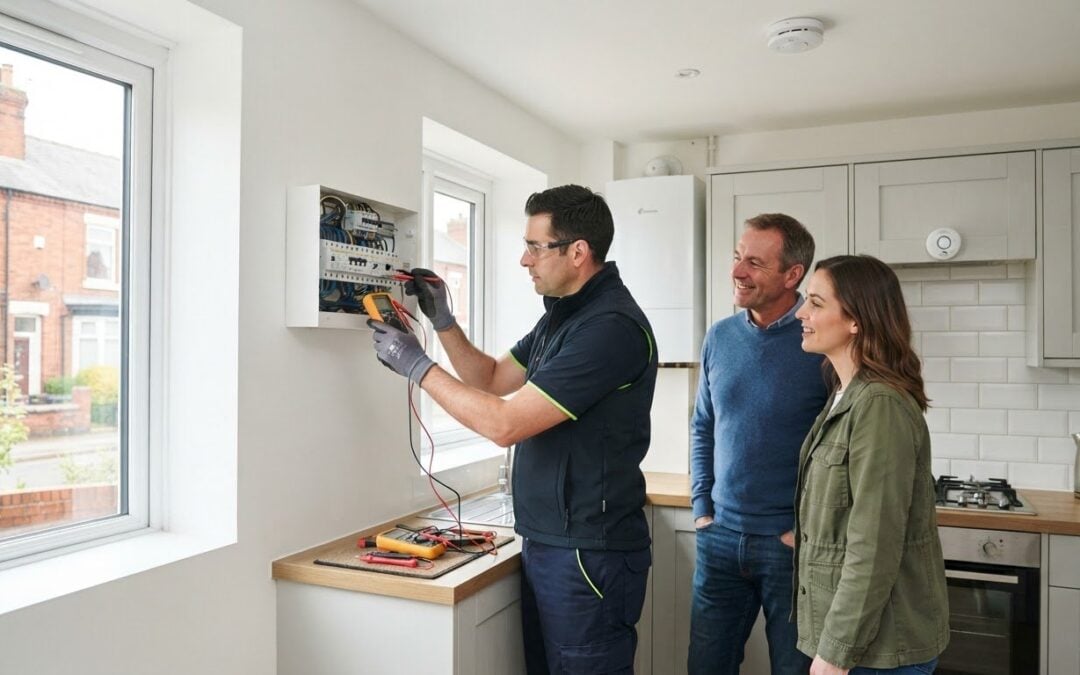
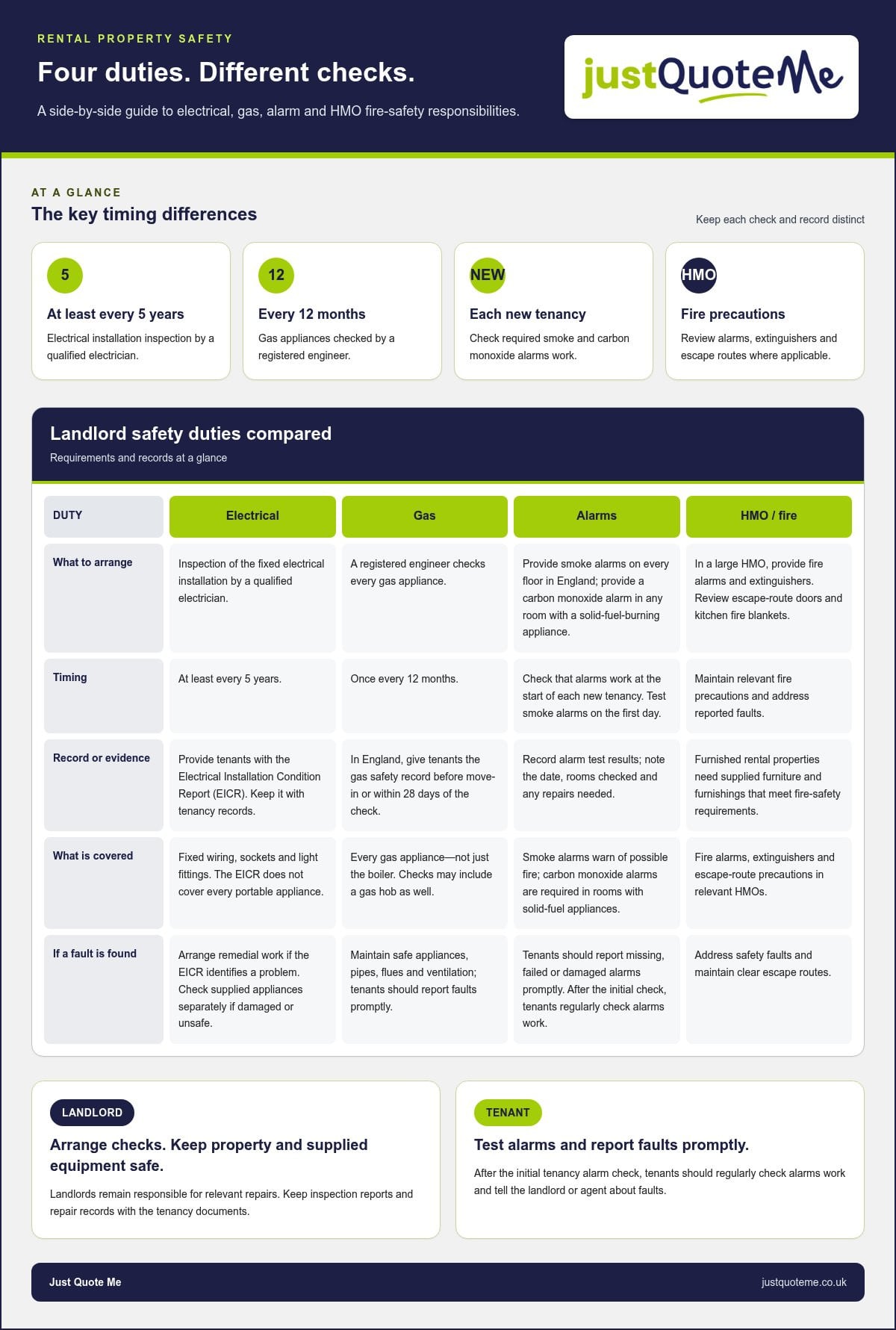
Landlord responsibilities for tenant safety start with keeping the property and supplied equipment safe. According to the UK Government, electrical installations must be checked by a qualified electrician at least every five years, with an Electrical Installation Condition Report provided to tenants. The Health and Safety Executive says landlords must have every gas appliance checked by a registered engineer once every 12 months.
Safety duties go beyond arranging inspections. In England, landlords must provide a smoke alarm on every floor and a carbon monoxide alarm in any room with a solid fuel-burning appliance. They must also check that the alarms work at the start of each new tenancy.
It can be difficult to keep track of the checks, records and fire precautions that apply to a rental property. This guide explains key electrical, alarm, gas and fire safety duties, including additional precautions for houses in multiple occupation. It also covers repair and maintenance responsibilities, helping you organise essential checks and understand what to address during a tenancy.
Key Takeaways
- Arrange an electrical inspection at least every five years and provide tenants with the report, as advised by the UK Government.
- Make sure smoke and carbon monoxide alarms are in place where required and working at the start of each new tenancy.
- Book gas appliance checks every 12 months with a registered engineer. The Health and Safety Executive also sets out when tenants must receive the check record.
- For a house in multiple occupation, review fire precautions such as escape-route doors, extinguishers and kitchen fire blankets.
Electrical systems and supplied appliances
Electrical safety includes fixed wiring, sockets and light fittings, as well as appliances supplied with a rental property. Landlord responsibilities for tenant safety include keeping installations and supplied appliances safe, and arranging repairs when faults arise.
Section 11 of the UK Landlord and Tenant Act 1985 sets out repair and maintenance responsibilities for landlords and tenants, according to UK Legislation. Tenants should report faults promptly, while landlords remain responsible for relevant repairs. These landlord responsibilities for tenant safety apply alongside the duty to address hazards that affect the property.
Electrical Installation Condition Reports
An Electrical Installation Condition Report (EICR) records the condition of a property’s fixed electrical installation. It can identify damage, deterioration or defects that may affect safety.
The UK Government says landlords should arrange an inspection by a qualified electrician at least every five years and provide tenants with the report. Keep the EICR with the tenancy records and arrange remedial work if it identifies a problem. It covers fixed wiring, not every portable appliance. Check supplied items such as a cooker or kettle separately if they appear damaged or unsafe.
Electrical Safety Inspections
An electrical safety inspection assesses the installation, and the EICR documents the findings. The electrician examines components such as wiring, sockets and light fittings for damage or other unsafe conditions.
Use a qualified electrician for the inspection, then retain the report and repair records. If a supplied appliance is damaged, stop using it and report the fault to the landlord or agent. Gas safety is a separate check: the Health and Safety Executive says landlords must have every gas appliance checked by a registered engineer once every 12 months.
If a landlord ignores a serious hazard, report it in writing to the landlord or agent and describe the danger clearly. Keep copies of the report and any replies. If the hazard remains unresolved, contact the local council’s housing or environmental health service.
A council can assess unsafe housing under the Housing Health and Safety Rating System. If it identifies a Category 1 hazard, it is obliged to take action. Council intervention may follow where landlords breach safety duties. When contacting the council, provide the property address, explain the hazard and share relevant reports or correspondence.
Smoke and carbon monoxide alarms
Smoke and carbon monoxide alarms warn occupants of a possible fire or the presence of dangerous gas. Landlords must install the required alarms and check that they work when a new tenancy begins.
Smoke Alarms and Fire Safety
A smoke alarm detects smoke and warns occupants of a possible fire. Smoke alarms are an important part of fire safety in rental properties.
Test each alarm on the first day of a new tenancy and record the result. Tenants should promptly tell the landlord or agent if an alarm is missing or stops working. After the initial check, tenants are responsible for regularly checking that the alarms work.
Alarms are only one part of fire safety. In a large house in multiple occupation, landlords must provide fire alarms and extinguishers. Furnished rental properties also need supplied furniture and furnishings that meet fire-safety requirements. Keep alarm checks separate from other precautions, such as maintaining escape routes and addressing reported faults.
Carbon Monoxide Detectors
A carbon monoxide alarm detects the gas and warns occupants of its presence. In England, landlords must provide one in any room containing a solid-fuel-burning appliance.
Examples include a room with a solid-fuel stove or fire. Put the required alarm in the same room as the appliance, then test it at the start of each new tenancy. Gas appliances have separate safety requirements, and a carbon monoxide alarm does not replace a gas safety check.
On move-in day, test each alarm using its test control and report any failure to the landlord or agent. Record the date, rooms checked and any repairs needed. If an alarm fails, report the problem promptly and do not rely on it until it works again.
Tenants should regularly test smoke and carbon monoxide alarms after the initial tenancy check. If a device gives a warning or appears damaged, report it instead of removing or disabling it. Clear communication helps the landlord arrange repairs and keep a reliable record of reported problems.
Annual gas safety checks
An annual gas safety check is an inspection of gas appliances in a rented property. The Health and Safety Executive says landlords must have every gas appliance checked by a registered engineer once every 12 months. The engineer checks whether appliances are safe to use, while landlords must keep supplied gas equipment safely installed and maintained.
A gas safety certificate is the record of an engineer’s gas safety check. In England, the Health and Safety Executive says landlords must give tenants a copy before they move in or within 28 days of the check. Keep the record with the property’s tenancy documents so it can be provided to the tenant when required.
The gas safety check covers every gas appliance, not just the boiler. For example, a property with a gas hob and boiler needs both included. Maintaining safe gas equipment also involves repairs to appliances, pipes, flues and ventilation. Tenants should promptly report faults to the landlord or agent, describing the appliance and the problem.
Right to Rent checks are identity checks landlords carry out on prospective tenants in England. Landlords or letting agents must check each tenant over 18 before signing the tenancy agreement, and the scheme has applied since 2016.
These checks are separate from gas safety regulations: Right to Rent concerns a tenant’s eligibility to rent, while the gas check concerns equipment condition. Organise both processes before move-in, but keep their records distinct. The gas safety certificate documents the inspection; Right to Rent records relate to the tenancy applicant. A tenancy deposit is another separate obligation, and landlords must protect it in an approved scheme within 30 days of receiving it.
Before a new tenancy begins, confirm that the gas check is current, provide the certificate, and complete the required tenant checks. During the tenancy, arrange the next inspection within the 12-month cycle and retain the updated record.
Fire precautions in houses in multiple occupation
Fire safety requirements for rental homes include suitable alarms, safe furnishings and clear escape routes. In England, large houses in multiple occupation (HMOs) need fire alarms and extinguishers, and shared houses have additional precautions.
Fire Escape Routes
A fire escape route is a clear path occupants can use to leave a property during a fire. Fire-resistant doors can help protect escape routes in an HMO.
Keep these routes usable and avoid storing furniture, rubbish or other obstacles in shared halls and staircases. Internal doors should be appropriately made and fitted, with self-closers where applicable. Landlords can include a practical check of shared housing areas when reviewing fire precautions, looking for blocked exits or doors that do not close properly.
Fire-Safe Furniture and Furnishings
Fire-safe furnishings are supplied furniture and coverings that meet the applicable fire-safety requirements. In England, landlords must ensure supplied furniture and furnishings are fire safe.
When furnishing a rental, check that items comply with the relevant regulations and display standard labels. Sofas and other upholstered furniture can present fire risks, so retain their labels as evidence of compliance. Replace damaged or unsuitable furnishings rather than assuming an old label or previous tenancy confirms their current condition.
HMO Licensing and Fire Safety
HMO licensing is a local authority requirement that can apply to shared rented housing. A landlord may need a licence where five or more tenants form two or more households.
In shared houses in England, provide at least one fire extinguisher on each storey and a fire blanket in kitchen areas. Fire precautions must also meet the Housing Health and Safety Rating System, which local councils use to assess hazards. Councils may consider escape routes, doors and shared areas when assessing fire risk. Licensing and fire precautions are related but distinct: meeting one does not replace the other.
Before renting an HMO, review its layout, shared facilities and fire precautions together. Check that escape-route doors close, furniture retains its compliance labels and required equipment is available. Gas and solid-fuel appliances also have separate safety requirements. A Gas Safe registered engineer carries out gas appliance checks, which do not replace fire precautions.
Just Quote Me: Public Liability Insurance
Just Quote Me can help landlords consider Public Liability Insurance alongside their property cover. Safety checks, alarm maintenance and fire precautions remain essential duties; insurance is a separate part of managing a rental property.
Consider reviewing your cover when you take on a property, change how it is used or reassess your existing arrangements. Just Quote Me also offers residential letting insurance, which may be relevant when arranging protection for a rental property. The right options depend on your circumstances and the cover you need.
Make your next property decision with confidence
Manage rental-property safety as an ongoing routine, not a task completed once at move-in. Set regular times to review maintenance records, tenant reports and changes in how the property is used. This helps you spot gaps early and keep decisions organised as tenancies change.
Landlord responsibilities for tenant safety remain distinct from insurance, but reviewing both can support sound property management. Just Quote Me offers Public Liability Insurance, Employers Liability Insurance and Professional Indemnity Insurance. The cover to consider depends on your circumstances and the risks involved, so assess your needs rather than assuming one policy addresses every exposure.
If you’d like to discuss cover for your property or business, Contact Just Quote Me for a quote. A clear conversation can help you consider your options and decide what to review next.
Frequently Asked Questions
What are a landlord’s legal safety responsibilities in England, Scotland, Wales and Northern Ireland?
Landlords must maintain safe rental housing, but rules differ across the UK’s nations. The requirements in this guide include England-specific examples, so do not assume they apply identically in Scotland, Wales or Northern Ireland. Identify the rules for the property’s nation and local area, then keep relevant inspection and repair records together for each tenancy.
How often must landlords arrange gas safety checks and provide certificates?
Landlords must have every gas appliance checked by a registered engineer once every 12 months, according to the Health and Safety Executive. In England, the tenant must receive the gas safety check record before moving in or within 28 days of the check. Keep the certificate accessible with the property’s records, especially when a new tenancy begins or an appliance is replaced.
What electrical safety inspections and repairs are landlords required to carry out?
The UK Government says landlords should arrange checks of electrical installations by a qualified electrician at least every five years and provide tenants with an Electrical Installation Condition Report. The inspection concerns the fixed installation, such as wiring and sockets. Section 11 of the Landlord and Tenant Act 1985 sets out repair and maintenance responsibilities; tenants should report faults clearly so needed repairs can be addressed.
What are landlords’ responsibilities for smoke alarms and carbon monoxide alarms?
In England, landlords must provide a smoke alarm on every floor and a carbon monoxide alarm in any room with a solid fuel-burning appliance. They must check that alarms work when a new tenancy starts. If an alarm is later damaged, missing or unresponsive, tenants should promptly tell the landlord or agent and specify the affected room.
Who is responsible for fixing hazards such as damp, mould, unsafe stairs and broken locks?
Landlords are generally responsible for repairs to a property’s structure and exterior, heating, hot water and electrical wiring. Mould, broken steps and poor security can signal hazards that need attention. Report the issue in writing, describe its location and impact, and keep a copy. If serious hazards remain unresolved, contact the local council, which assesses housing conditions.
What are the rules for water hygiene and Legionella risk assessments in rental properties?
Landlords are advised to arrange a Legionella Risk Assessment to assess water-system risks in the property. It can identify conditions that may need attention, but does not replace action on a reported water or plumbing problem. Keep a record of the assessment and any action taken, and tell tenants how to report leaks or concerns about the water system.
For insurance options, Get Your Free Business Insurance Quote now or Request a Call back for free Expert advice.
