
An any-driver commercial vehicle insurance policy can let eligible staff drive a business vehicle without naming each driver individually. It doesn’t automatically mean every employee is covered: eligibility and permitted use depend on the policy, and any-driver cover usually applies to drivers over 25, although insurer rules vary. In the United Kingdom, van insurance is a legal requirement under the Road Traffic Act for owning or driving a van or pickup, unless the vehicle is declared off-road and kept on private property.
It’s understandable to want cover that keeps pace when staff or vehicles change. This guide explains what business vehicle insurance can cover and when your business may need it. It also outlines how to update drivers or vehicles and what information helps when arranging cover for several vans. You’ll find practical points to consider when choosing cover, so you can make a decision based on how your vehicles are used and who needs to drive them.
Key Takeaways
- Understand how comprehensive and third-party, fire and theft cover differ, and consider which protection fits your business vehicles.
- Keep your policy details aligned with your fleet by arranging updates when drivers or vehicles change.
- Identify when business use means a vehicle needs appropriate insurance, including when staff drive it for work.
- Prepare useful vehicle and driver details to make a multi-van quote more straightforward, and understand who may qualify to drive.
Comprehensive cover and third-party, fire and theft
Commercial van insurance commonly offers comprehensive or third-party, fire and theft cover. Comprehensive cover can protect against damage to your vehicle, as well as damage or injury you cause to others while driving. For example, it may cover damage to your van in a collision, subject to the policy excess and terms. Third-party, fire and theft cover protects against liability to others and damage to your van caused by fire or theft, but not accidental damage to your own van.
The cover level describes the type of loss insured, not who is allowed to drive. An any-driver commercial vehicle insurance policy still has driver eligibility conditions. Check the policy wording and schedule for the vehicles, business use, exclusions and excesses. Comprehensive cover is not automatically broader in every respect, so compare the protections stated in the policy rather than relying on the label alone.
- Personal belongings: Cover for items kept in a van may be limited, excluded or offered as an extra. Tools and business equipment may need separate protection. For example, a laptop left in the cab may be treated differently from goods carried for work.
- Personal accident: This can provide a benefit after specified injuries to an insured person. Check who qualifies, which injuries are covered and any limits in the policy documents.
- Breakdown cover: This is an optional extra on some insurance policies. It can provide roadside assistance or recovery, depending on the selected terms.
- Motor legal cover: This optional cover can help with certain legal costs after an insured motoring incident. The policy sets the circumstances and limits.
For a business van, choose a cover level that reflects the financial risks you need to manage. Comprehensive cover may suit a business that wants protection for damage to its own vehicle, while third-party, fire and theft may suit a different risk preference. Review belongings, personal accident, breakdown and legal cover separately, and confirm each protection you select appears in the policy documents.
How do I add or remove a driver or change my vehicle?
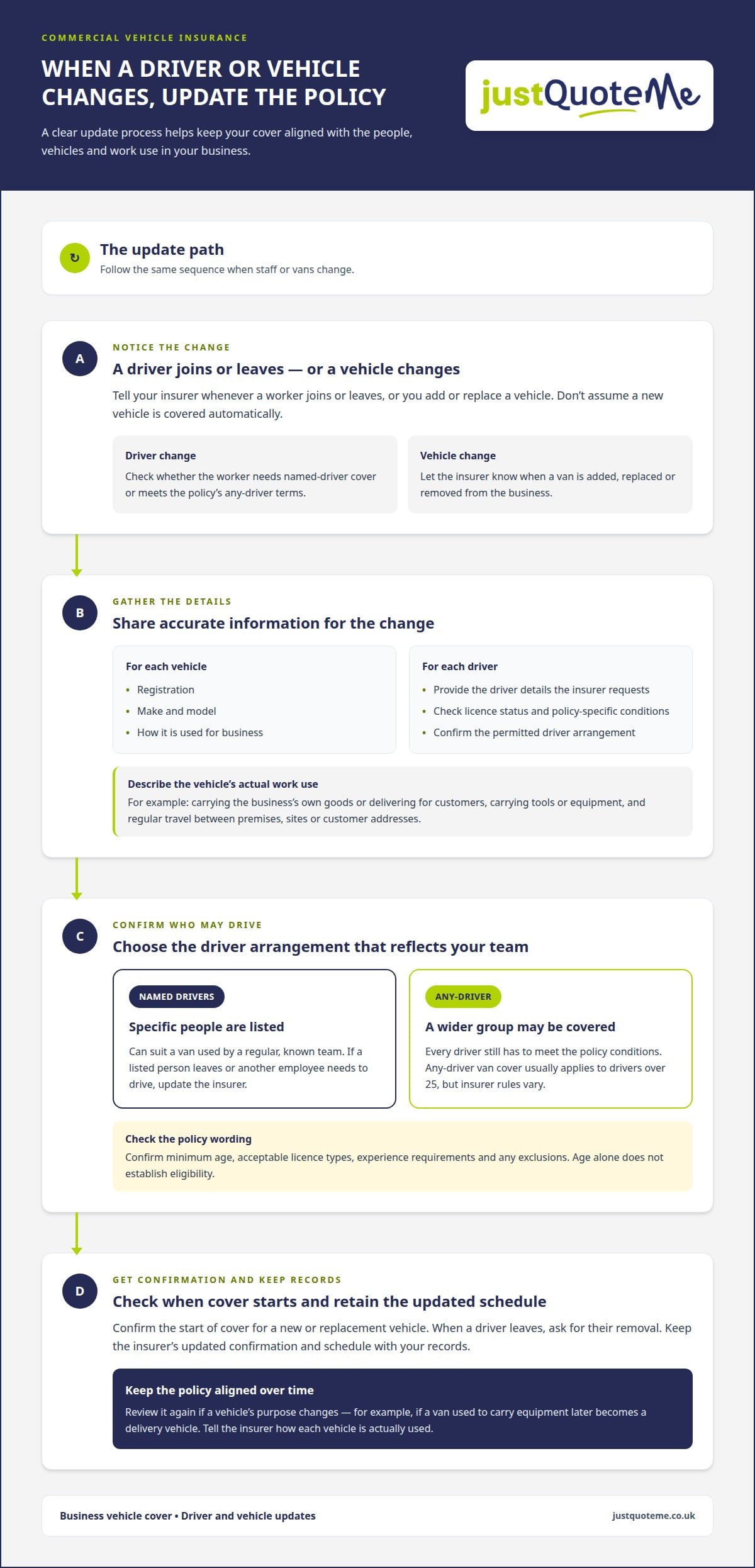
Keep your cover aligned with the people and vans used by your business. Give the insurer accurate information whenever a driver joins or leaves, or a vehicle changes.
Adding Drivers and Vehicles
For a multi-van policy, tell the insurer when you add or replace a vehicle rather than assuming it is covered automatically. Provide its registration, make, model and business use, then confirm when cover starts. When a worker joins, share the requested driver details and establish whether they need named-driver cover or meet the policy’s any-driver terms. When an employee leaves, ask for their removal and keep the updated schedule with your records. Eligibility for multi-van cover depends on details such as the vehicles, their use and your business circumstances.
Named Driver Choices
Named-driver cover lists the specific people permitted to drive. Any-driver cover allows a wider group, but only when each person meets the policy conditions. A named arrangement can suit a van used by a regular, known team, while broader cover may fit changing staffing needs. For example, if two employees use a van, naming them makes it clear who is permitted to drive. Update the insurer when either person leaves or another employee needs to drive, so the information remains current for any claim.
Driver Eligibility and Restrictions
Any-driver van insurance in the UK usually covers drivers over the age of 25, although insurer rules vary. Age alone does not establish eligibility: licence status and any policy-specific conditions also matter. Confirm the minimum age, acceptable licence types and any experience requirements shown in the policy documents. Check exclusions for vehicle use, driver eligibility and business activities, too. A claim may be affected if the driver or use falls outside the agreed terms, so make those conditions clear to staff before they take a van.
When a driver or vehicle changes, give the insurer the details and keep its updated confirmation. For help considering cover across your business, explore business insurance options.
When business vehicle insurance is needed
Business vehicle insurance is relevant when a vehicle is used for work, not simply because a business owns it. A van carrying tools to a building site, delivering goods to customers or travelling between work locations has a business use to describe. Tell the insurer how each vehicle is used so the policy reflects its actual role.
In the United Kingdom, van insurance is a legal requirement under the Road Traffic Act for owning or driving a van or pickup, unless the vehicle is declared off-road and kept on private property. A vehicle used for business on public roads still needs appropriate cover. The policy should reflect its work purposes and permitted drivers.
Start by listing each vehicle’s regular work use. A tradesperson’s van, for example, may carry equipment between jobs, while a catering business may use a van to transport supplies. These activities can affect which cover is suitable, so describe them accurately when arranging or renewing insurance.
- Deliveries: State whether staff carry the business’s own goods or deliver items for customers.
- Tools and equipment: Explain whether workers keep tools in the van, as vehicle insurance may not cover the contents.
- Work locations: Describe regular travel between premises, sites or customer addresses.
- Staff driving: Identify whether one employee, named drivers or a wider group uses each vehicle.
Review the policy whenever a vehicle’s purpose changes. A van used only to carry equipment may later become a delivery vehicle. Tell the insurer about the change and confirm the policy schedule reflects the new use before relying on the van for work. Do the same if a vehicle used personally starts making regular business journeys.
Consider business use alongside vehicle type, driver arrangements and the items carried. A clear account of these details helps match cover to the work being done. Keep policy documents accessible to staff so they can check which vehicle they may drive and for what purposes.
Who is eligible to drive under any driver commercial vehicle insurance?
“Any driver” does not mean every person can drive without conditions. In the UK, this cover usually applies to drivers over the age of 25, although insurer rules vary. The policy wording sets the actual eligibility criteria, so the phrase alone cannot establish whether a particular employee is covered.
Use the policy schedule to identify restrictions that apply to your business vehicles. Check for age limits, licence conditions, permitted vehicle use and other driver requirements. A policy may allow eligible staff to share a van but still restrict who qualifies. Check each person against the terms before they take the keys.
A straightforward process helps keep driver eligibility clear:
- Read the driver conditions: Note the minimum age and licence terms shown in the policy documents.
- Match each driver: Compare the employee’s details with those conditions before authorising them to drive.
- Explain restrictions: Tell staff which vehicles and business purposes the policy allows them to use.
- Review changes: Revisit eligibility when your workforce, vehicles or business use changes, and request a policy update if needed.
For example, if an employee is below the policy’s stated age limit, don’t assume broad any-driver wording overrides that restriction. The same applies if a driver’s licence details or vehicle use do not meet the stated terms. A claim could be affected if the driver falls outside the cover conditions, so make the requirements clear before assigning a van.
Eligibility depends on the exact wording, not simply the number of staff who may drive. Keep the current schedule available to whoever assigns vehicles, and make sure each driver understands the applicable conditions. If your team or van arrangements change, review your business insurance options to consider suitable cover.
Just Quote Me: Commercial Property Insurance
Just Quote Me can help you consider Commercial Property Insurance alongside the risks created by your business vehicles. Vehicle and premises cover address different needs: insurance for your workplace does not replace cover for vans used on the road. If your business owns or occupies premises, reviewing property protection can be a useful part of arranging cover for your operations.
Just Quote Me can also discuss how your business needs relate to Public Liability Insurance, Employers Liability Insurance or Professional Indemnity Insurance. The right combination depends on your activities, people and property, so consider which risks each policy needs to address.
Contact Just Quote Me to discuss your business insurance needs.
Make your next cover review purposeful
Use your next renewal or staffing change to decide how vehicle access should be managed. If an any-driver commercial vehicle insurance arrangement seems suitable, set out who needs to drive, which vehicles they use and what work those vehicles support. A clear picture of daily operations gives the discussion a practical starting point, rather than treating driver access as an isolated decision. Assign someone to keep the details current as your business changes.
Consider the wider risks around your business, too. Just Quote Me offers Public Liability Insurance, Employers Liability Insurance and Professional Indemnity Insurance, each addressing different business exposures from vehicle cover. The right combination depends on your activities and circumstances, so focus on protection relevant to your work.
A considered approach helps you make cover decisions that fit how the business operates today and can be revisited as it changes. Contact Just Quote Me about cover to discuss a suitable next step and move forward with confidence.
Frequently Asked Questions
What is business vehicle insurance?
Business vehicle insurance covers vehicles used for work, with protection defined by the policy. An any-driver commercial vehicle insurance policy may suit a business where eligible staff share work vehicles, while other policies name specific drivers. For example, a van carrying stock between a warehouse and customers has a different work purpose from a car used occasionally for meetings.
How can I get cheaper van insurance?
To manage costs, provide accurate details about the van, its use and its regular drivers. Avoid paying for optional protections the business doesn’t need, but don’t remove cover that addresses a real risk. For example, if a van carries valuable tools, consider whether the contents need separate protection. A clear description helps insurers assess the actual risk rather than make assumptions.
What is the maximum weight of a van that you will insure?
There isn’t one maximum weight that applies to every commercial vehicle policy. The vehicle’s gross vehicle weight, type and business use affect which policy terms are suitable. Weight also matters when assessing whether any-driver commercial vehicle insurance fits the vehicle and its use. Provide the van’s make, model and gross vehicle weight so the cover can be considered against its specifications.
What does any driver commercial vehicle insurance cover in the UK?
Any-driver commercial vehicle insurance provides the cover described in its policy for eligible drivers using insured business vehicles. The protection may include third-party liability and, depending on the chosen level, damage to the insured vehicle. The schedule and wording set the actual scope, including permitted use, exclusions and driver conditions. Check those terms for each vehicle rather than relying on the policy label.
What factors affect the price of any driver commercial vehicle insurance?
The premium reflects the risk presented by the vehicles and how your business uses them. Relevant details can include vehicle type and value, annual mileage, where vehicles are kept, work purposes, driver eligibility and claims history. Delivery work, for example, may involve different journeys from carrying equipment between fixed work sites. Accurate details help insurers assess the specific risk.
What vehicle types and business uses can any driver commercial insurance cover?
Commercial vehicle policies can cover vehicles such as vans and pickups, subject to policy terms and vehicle details. Business uses might include delivering goods, carrying tools or travelling between work locations. Describe what each vehicle carries and the journeys it makes. This helps distinguish a tradesperson’s equipment van from a vehicle used mainly for customer deliveries.
Request a Call back for free Expert advice
