Renting a commercial kitchen doesn’t automatically mean the landlord’s insurance covers your business. Commercial kitchen insurance requirements when renting often come from your kitchen agreement, while employers’ liability insurance is a legal requirement if you employ staff. In Great Britain, the minimum cover is £5 million, according to UK Legislation.
It’s reasonable to want clarity about who pays if a customer is injured, food you supply causes illness or your work damages rented premises. Public and product liability can address claims involving the public and food you supply. Cover for damage to rented premises may help with repair costs if your business is responsible.
This guide explains the main types of cover, what rental agreements may require and how to consider protection for staff, customers, equipment and the kitchen itself. The right cover depends on how you operate, including whether you cater off-site or employ people.
Key Takeaways
- Separate legal obligations from insurance conditions set by the kitchen rental agreement.
- Understand how public liability and product liability relate to different claims involving customers and food you supply.
- Consider who could be responsible for repair costs if your business damages the rented kitchen.
- Match your cover to your staffing, equipment and the way your food business operates.
What Is Commercial Kitchen Insurance?
Commercial kitchen insurance can combine cover for a food business’s liability, premises, equipment and trading risks. The right mix depends on the kitchen, your staff and whether you cater off-site.
In Great Britain, the Employers’ Liability (Compulsory Insurance) Act 1969 requires employers’ liability insurance with a minimum cover of £5 million, according to UK Legislation. In England, Natasha’s Law, the Food Information (Amendment) (England) Regulations 2019, came into force on 1 October 2021 and requires ingredient and allergen labelling on food pre-packed for direct sale, according to UK Legislation. The Regulatory Reform (Fire Safety) Order 2005 does not specifically mandate suppression systems, but requires the responsible person to assess fire risks and implement appropriate measures, according to UK Legislation.
Property and Business Interruption Cover
Property cover can protect insured business assets against covered damage. Business interruption cover can help replace lost income and ongoing costs if an insured event prevents you from trading. For example, a fire that closes a kitchen may interrupt catering while repairs take place. Check the policy wording for covered events, eligible costs and the indemnity period, as these details affect the protection.
Equipment, Inventory, and Tenant Improvements
Contents cover can protect kitchen equipment, stock and ingredients against insured damage or theft. Tenant improvements cover may apply to alterations made to rented premises. For instance, a renter may need cover for their own refrigeration equipment, ingredients and fitted improvements, rather than relying on the landlord’s building insurance. The policy wording sets out covered items and risks, including limits and exclusions.
Other business insurance options include public and product liability, as well as employers’ liability for staff. Professional indemnity, cyber and legal expenses cover may also suit particular operations. If you cater at festivals, markets or private functions, check whether liability cover applies away from your usual premises. Cover for food contamination and product recall also depends on the policy terms.
When comparing quotes, match the business activities, property, liability limits and excesses across each option. Then choose cover that reflects your operation. Comparing these details makes differences in protection clearer than looking at price alone.
Before buying, review exclusions relating to contamination, equipment, stock and off-site catering, as well as any conditions that affect claims. In the UK, employers’ liability is the relevant cover for employee injury or illness claims; workers’ compensation is not the usual UK term.
Public and product liability
Liability insurance addresses different types of claims, including customer injuries, property damage and illness linked to food supplied by a catering business. The right limits and scope matter because kitchen work can expose a business to several kinds of claim.
General Liability and Legal Defence
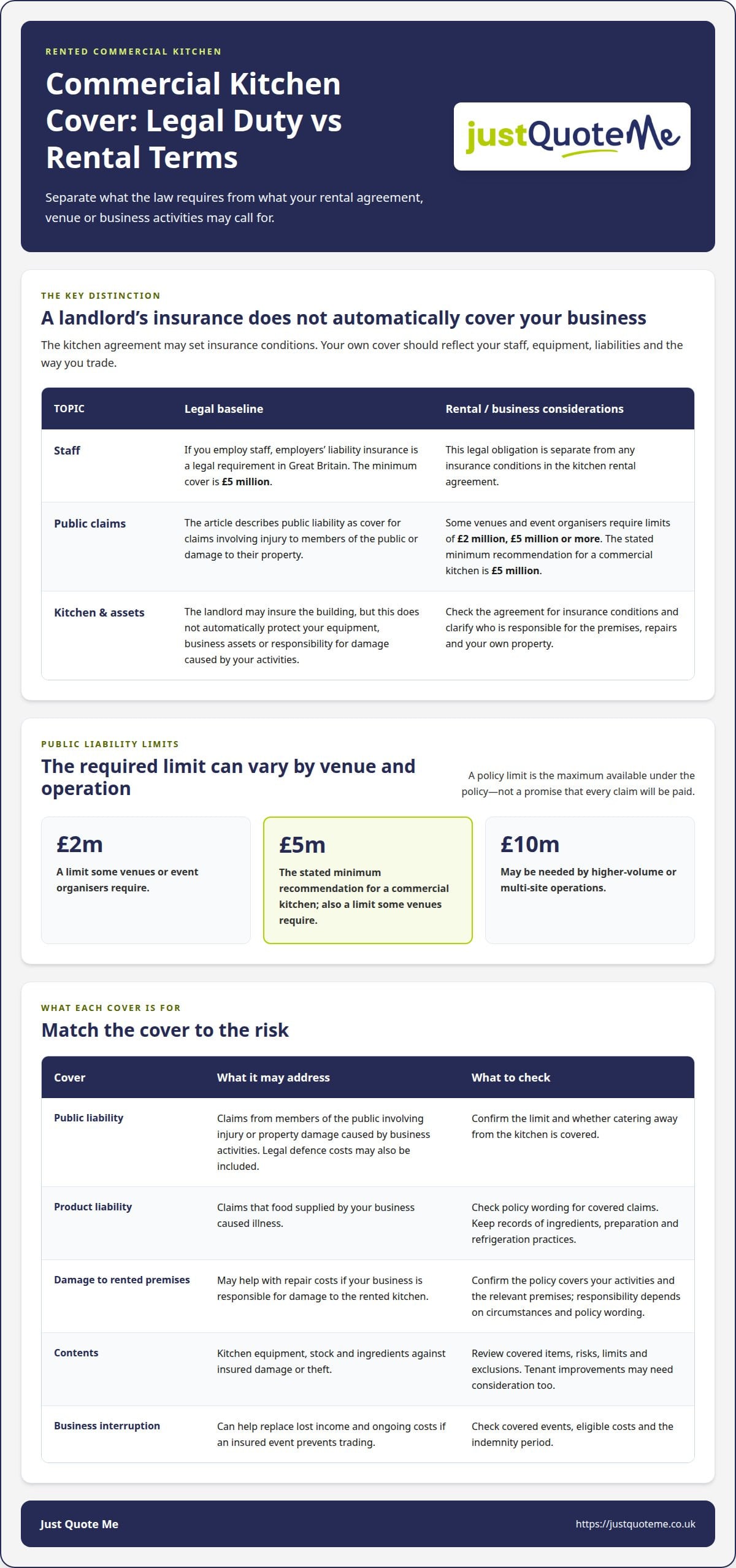
Public liability can cover claims from members of the public injured or whose property is damaged because of business activities. For example, a visitor could slip on a wet floor or have belongings damaged during a catering job. Cover may also include legal defence costs when a claim is made. Some venues and event organisers require limits of £2 million, £5 million or more before allowing a caterer to trade.
Foodborne Illness and Product Claims
Product liability can address claims that food supplied by a business caused illness. An outbreak of foodborne illness traced to a food business can lead to multiple claims. Food safety procedures matter, but the policy wording determines which claims are covered. Keep records of ingredients, preparation and refrigeration practices to help establish what happened if there is an incident.
For public liability, £5 million is the stated minimum recommendation for a commercial kitchen. Higher-volume or multi-site operations may need £10 million. A limit is the maximum available under the policy, not a guarantee that every claim will be paid. The activity covered also matters: check that catering away from the kitchen falls within the policy.
Legal expenses cover may help with costs arising from contract disputes, employment tribunals, licensing matters, Environmental Health issues, tax or VAT investigations, and debt recovery. Management liability is a separate consideration for decisions made by business leaders. Check the policy wording to see whether it is included.
Businesses serving alcohol should review liquor liability wording as well. Dram shop exposure may be excluded from standard general liability policies, requiring a separate policy or endorsement. To explore suitable business liability cover, consider how your menu, events and trading locations affect your risks.
Damage to rented premises
Damage to a rented kitchen can create costs for both tenant and landlord. For example, a cooking fire could damage extraction equipment, work surfaces or adjoining areas. The landlord may insure the building, but that policy does not automatically protect the tenant’s equipment or business assets, or cover its responsibility for damage caused by its activities.
Who owns the premises affects the property insurance you may need. A business that owns its premises may need cover for the building as well as its contents. In a rented kitchen, the landlord may insure the structure, while the tenant’s policy can cover its own equipment and liability for damage. Rental agreements may also set insurance conditions, so distinguish between the landlord’s and tenant’s responsibilities when arranging cover.
Responsibility depends on the circumstances and policy wording. If a fire starts during a tenant’s use of the kitchen and damages the facility, the tenant may face a claim for repair expenses. Public liability can respond to some third-party property damage claims, but the policy must cover the tenant’s activities and premises. Commercial property insurance relates to buildings and business property, with cover depending on the insured interest.
Food safety controls can also affect how insurers assess a catering risk. A documented HACCP plan may help some establishments qualify for reduced product liability premiums with specific insurers. HACCP records can show how a business manages hazards such as contamination, but they do not replace insurance. Product liability and property damage address different risks, even when both arise from one incident.
Allow for Insurance Premium Tax when considering a policy’s total cost. Insurance Premium Tax on most UK insurance policies is 12%, according to HM Revenue & Customs. The premium and tax are separate parts of the amount payable. For a tenant, the insured property, cooking activities, liability exposure and any landlord requirements all shape the cover arranged and its cost.
Insurance requirements when renting a commercial kitchen
Employers’ liability cover is an important consideration for catering businesses with staff. Public liability insurance is not a legal requirement for UK catering businesses, but venues, councils and event organisers may require it before you trade.
For renters, commercial kitchen insurance requirements often come from the rental agreement. A shared kitchen may set liability limits, ask to be named on the policy or require proof of cover before granting access. These are contractual conditions, not general legal rules. The agreement may also specify who is responsible for damage during cooking or after equipment breakdown.
For employers’ liability, the Employers’ Liability (Compulsory Insurance) Act 1969 requires minimum cover of £5 million in Great Britain, according to UK Legislation. This legal duty applies when you employ staff, including casual, seasonal or family workers. A business with no employees has a different position under this requirement.
Identify the activities your policy needs to cover. A restaurant tenant preparing meals for collection faces different risks from a caterer using the same kitchen for off-site events. Consider whether the policy covers work away from the shared kitchen and claims involving customers, food supplied, staff, equipment and stock. Commercial kitchen insurance requirements may also depend on the limits and conditions in your lease.
Rental arrangements can change as a food business grows. Hiring staff, adding event catering or storing more stock can change the risks that need protection. The kitchen owner may ask for updated evidence after a renewal or a change to the agreement. Keep the agreed activities and insurance conditions clear so your policy remains aligned with the rental terms.
Just Quote Me: Commercial Property Insurance
Just Quote Me can help you consider Commercial Property Insurance alongside the risks your rented kitchen agreement places on your business. This can be a useful next step when you want to understand how property cover fits with liability protection and your trading activities.
A tenant’s needs differ from an owner’s: the landlord may insure the building, while your business owns its equipment and stock and has its own responsibilities. Just Quote Me offers Public Liability Insurance and Employers Liability Insurance, as well as Professional Indemnity Insurance for relevant professional risks. The right combination depends on your business activities and the cover you need.
Request a Call back for free Expert advice.
Make your next kitchen decision with confidence
Your insurance should reflect how your food business operates. Changes to your menu, staffing, equipment or use of a rented kitchen can alter the risks your cover needs to address. Treat the commercial kitchen insurance requirements in your rental agreement as part of your wider business planning, rather than a one-off formality. Clear details about your activities and responsibilities help shape a more relevant discussion about protection.
Just Quote Me offers Public Liability Insurance, Employers Liability Insurance and Professional Indemnity Insurance. These options address different business risks, from claims involving members of the public to employee-related risks and professional advice or services. Consider which concerns matter most to your operation, then take the next step when you’re ready.
Request a Call back for free Expert advice to discuss your business insurance needs and move forward with a clearer plan.
Frequently Asked Questions
What insurance does a catering business need?
A catering business commonly needs public and product liability, as well as employers’ liability if it has staff. Property or contents cover may also suit a business that owns equipment, ingredients or other stock. For example, a mobile caterer working at events should consider whether its liability cover applies away from its usual kitchen. The right combination depends on the business’s activities and assets.
Is employers’ liability insurance mandatory for commercial kitchen staff, and what is the minimum cover?
Yes, employers’ liability insurance is required in Great Britain when a business employs staff. The Employers’ Liability (Compulsory Insurance) Act 1969 requires a minimum cover of £5 million, according to UK Legislation. This includes businesses employing casual, seasonal or family staff. A catering business should account for its actual working arrangements, rather than treating occasional shifts as automatically outside the requirement.
What public liability insurance cover should a UK commercial kitchen have?
£5 million is the stated minimum recommendation for a commercial kitchen, while higher-volume or multi-site operations may need £10 million. Some venues and event organisers set their own limits as a condition of trading. For instance, a caterer taking a booking at a venue should ensure the policy limit meets the venue’s stated requirement and covers the work being carried out there.
Do commercial kitchens need product liability insurance for food and drink sold?
Product liability is commonly relevant when a catering business supplies food or drink, as it can address claims that a product caused illness. A claim could involve a meal sold for collection or food served at an event. Consider the products you prepare and supply, including how you communicate ingredients and allergens, and check the policy terms for product-related claims.
What buildings, contents and equipment insurance is suitable for a commercial kitchen?
Cover should reflect who owns the building and which assets belong to your business. A property owner may need buildings cover, while a tenant may need protection for business-owned equipment, stock and contents. For example, a caterer using its own refrigeration unit in a shared kitchen should consider whether its policy covers that equipment. The rental agreement may also affect the tenant’s responsibilities.
Does commercial kitchen insurance cover fire, cooking oil fires and business interruption?
Fire damage and resulting business interruption may be covered if they arise from an insured event, but the policy wording sets the scope. A cooking oil fire could damage kitchen equipment and stop trading, but whether a claim is covered depends on the specific cause, safety conditions, exclusions and interruption terms. Review these provisions against your cooking methods and the costs that would continue during a closure.
