
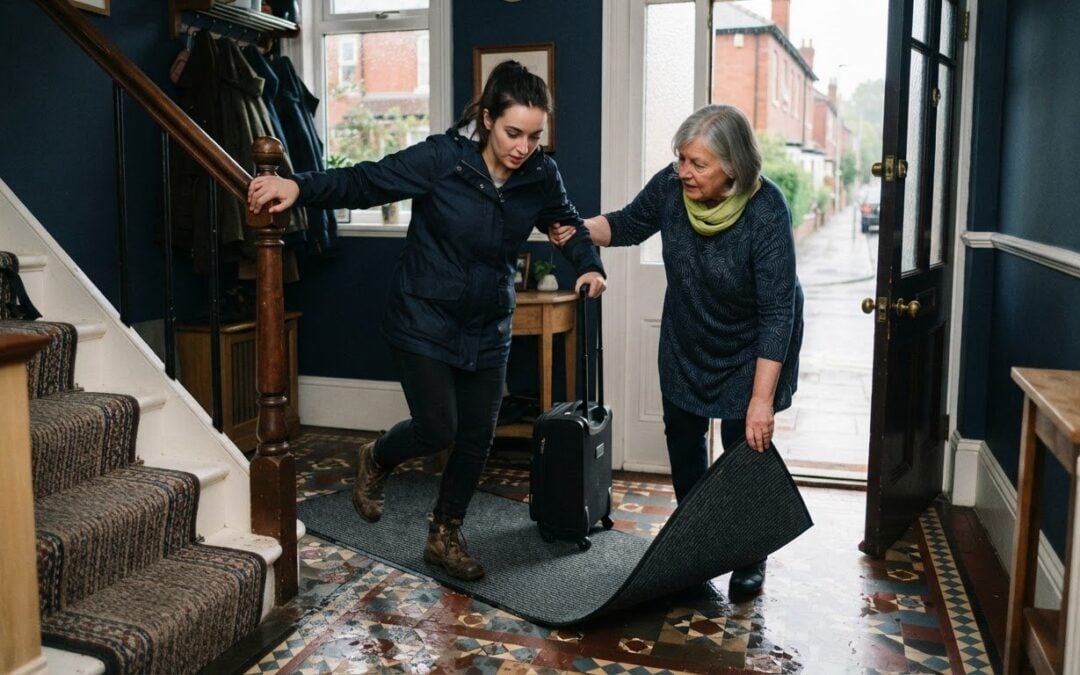
A small, home-run guesthouse may need more than an extension to ordinary home insurance. Guesthouse insurance for paying guests should reflect the accommodation business, including its property, liability to guests and any staff it employs. Public liability insurance can cover claims if a guest or visitor is injured or their property is damaged on the premises.
It’s easy to assume that home insurance or standard lodgers’ cover will take care of everything. But welcoming paying guests brings business risks that need separate consideration, and cover varies between policies.
This guide explains what guesthouse insurance can cover, how public liability differs from employers’ liability, and what to consider for a smaller or home-run property. It also covers buildings and contents, lost income, and details that can shape suitable cover, helping you make a clearer decision about protecting your guesthouse.
Key Takeaways
- Understand how public liability can respond to guest or visitor injury and property damage, and how it differs from cover for employee claims.
- See how guesthouse cover may bring together protection for the building, business contents, liability and income interruption.
- Identify why running accommodation from home can call for business-specific cover rather than relying on a household policy alone.
- Learn which property, staffing and guest-related details can help shape cover for a smaller hospitality business.
Public liability cover
For a bed and breakfast or guesthouse, public liability insurance can cover claims from guests and visitors injured on the premises, or whose property is damaged there. For example, a guest could claim after slipping on a wet entrance floor. The policy terms and limits determine the cover, so the wording matters as much as the policy label.
Public liability concerns members of the public and other businesses, not employees. That distinction matters if a guest is injured in a shared hallway, while a staff member is hurt doing their job. Public liability insurance addresses the first type of claim; employers’ liability addresses employee injury or illness connected with work.
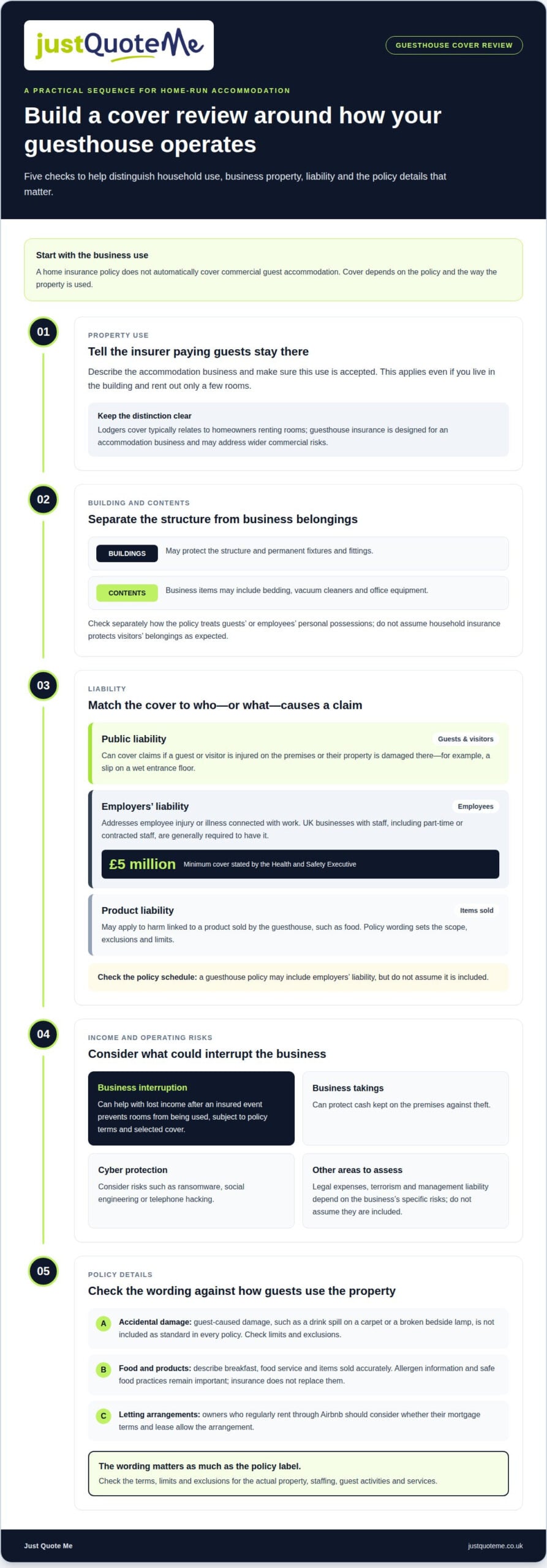
Does guesthouse insurance include employers’ liability insurance, and when is it required? A guesthouse policy may include it, but the cover should be checked in the policy schedule. In the UK, businesses with staff, including part-time or contracted staff, are generally required to have employers’ liability insurance; the Health and Safety Executive says the policy must provide a minimum of £5 million cover.
What insurance does a UK guesthouse need when it accepts paying guests? Consider public liability alongside buildings, contents and business interruption cover, based on the property and how it operates. Public liability is not a substitute for cover for the building, furnishings or lost income if an insured event prevents rooms from being used.
Home insurance alone may not reflect the risks of running a bed and breakfast from residential premises. Buildings cover can protect the structure, while contents cover may protect items such as bedding and cleaning equipment. Business interruption cover can help with lost income after an insured event, subject to the policy terms and selected cover.
Consider specialist options as well. Guesthouse cover may include cyber protection for risks such as ransomware, social engineering or telephone hacking. Business takings cover can protect cash kept on the premises against theft. Legal expenses, terrorism and management liability are other areas to assess against the business’s specific risks, rather than assume they are included.
What is Guest House Insurance?
Guesthouse insurance brings together cover relevant to a business providing accommodation, with protection depending on the policy. Public liability concerns claims from guests or visitors. Product liability addresses a different risk: harm linked to an item the guesthouse sells. For example, a guest might allege that a product bought at reception caused an injury or damaged their belongings.
Food service provides a practical example. If a guest becomes ill after eating breakfast, they may make a claim against the business. Public liability may respond to injury claims, while product liability may apply if the claim relates to food or another product sold. The policy wording sets the scope, exclusions and limits for each type of liability cover.
Owners serving breakfast should also consider how they handle food information. The Food Standards Agency’s allergen guidance is relevant to guesthouses providing breakfast or other food. Clear, accurate allergen information can help guests make informed choices. Insurance does not replace safe food practices or the need to manage service risks carefully.
Consider the difference between a loose stair carpet and a packaged snack sold in the dining room. A guest who trips may bring a public liability claim about the premises. A claim involving an item sold by the guesthouse may fall under product liability, subject to the policy terms. Hotel and guesthouse policies vary, so quotes should reflect what the business actually serves and sells.
When reviewing cover, describe the accommodation and any food or retail activity accurately. This helps establish whether the selected covers match the likely sources of claims, rather than treating every incident as the same liability issue. For a property offering rooms and breakfast, explore a guest house insurance arrangement that takes both activities into account.
Commercial insurance for a home-run guesthouse
Running a guesthouse from your home changes how the property is used. A household policy does not automatically cover business activities just because accommodation is provided at home. If you serve breakfast, advertise rooms or regularly welcome paying visitors, guesthouse insurance can address risks connected with operating commercially.
Tell your insurer that paying guests stay at the property and ensure this use is accepted. Otherwise, a claim connected with guest accommodation may not match the use described under your home insurance. This distinction matters even if you live in the same building and rent out only a few rooms.
Guest house insurance and lodgers cover also serve different purposes. Lodgers cover typically relates to homeowners renting rooms, while a guesthouse policy is designed for accommodation businesses and may address wider commercial exposures. A bed and breakfast is generally a home-based accommodation business, while a guest house operates as a commercial accommodation business.
Think about the property as both a home and a business. Buildings cover may protect permanent fixtures and fittings, while business contents cover can include bedding, vacuum cleaners and office equipment. Guesthouse policies may also cover guests’ or employees’ personal possessions, but don’t assume household insurance will protect visitors’ belongings as you expect.
Accidental damage caused by guests is not included as standard in every policy. For example, a guest could spill a drink on a carpet or break a bedside lamp. Check how the policy treats such incidents, including any limits or exclusions. Owners who regularly rent through Airbnb should also consider whether their mortgage terms and lease allow this arrangement.
For a home-run operation, consider the building’s use, contents, guest belongings and public liability insurance together. If the property is rented, the lease may affect responsibility for buildings cover. Commercial property insurance can be relevant to the building side of a guesthouse’s protection.
Arranging specialist insurance for smaller hospitality properties
Smaller hospitality businesses need cover matched to their building, guests and income risks. For UK guesthouses, compare policy details, not just the headline premium.
Comparing Insurance Providers
Compare buildings insurance with the property’s rebuild cost, not its market value. Then review liability limits, contents protection and business interruption cover in case an insured event makes rooms unusable. Cover for guest possessions or accidental damage can address different needs, so check each inclusion and exclusion.
Consider how a policy treats risks specific to your operation. A guesthouse that serves breakfast, employs staff or keeps cash on the premises has different exposures from one offering rooms only. Hotels and small guesthouses may need specialist hospitality cover, but the relevant sections and limits depend on the business.
Getting an Insurance Quote
To get a quote, provide a clear picture of the premises and business. Useful details include the rebuild value, guest capacity, staff numbers, claims history and exposure to fire or flooding. Describe the accommodation and activities accurately, including any food service, so the proposed cover reflects how the business operates.
Use the quote to identify gaps between your needs and the proposed policy. For example, check whether business interruption cover addresses lost income while rooms are unavailable after an insured event. If you rent the premises, buildings insurance may be the landlord’s responsibility; the lease can clarify this. Reviewing the building, liability and income sections together helps you assess each risk in context.
Choose cover by matching policy wording to the property and its trading risks, rather than selecting limits by price alone. If the building’s rebuild value, guest capacity or activities change, those details can affect the cover required. Request a guesthouse insurance quote to explore cover suited to your hospitality business.
Just Quote Me: Hotel and Guest House Insurance
Just Quote Me arranges Hotel and Guest House Insurance for home-run B&Bs and smaller accommodation businesses. It’s a useful next step when you need cover shaped around the building, guests, staff and day-to-day operations, rather than relying on household insurance alone. Depending on your needs, cover can include public liability, employers’ liability or professional indemnity insurance.
Discuss the property’s use, guest arrangements and the risks you want the policy to address. This gives you a clearer basis for considering suitable cover and understanding how its different elements work together. Just Quote Me provides a straightforward route to advice tailored to your circumstances.
Request a call back for free expert advice from Just Quote Me.
Make your next insurance decision with confidence
Let the needs of your operation guide your next step. A clear picture of how you run the guesthouse and what you want the policy to protect can keep your choices focused as the business changes.
Review the details that matter to your operation, then decide whether you’re ready to explore a quote or would prefer to discuss your questions first. Just Quote Me can help you consider the next step for your circumstances.
Frequently Asked Questions
What factors influence bed and breakfast insurance costs?
A quote for guesthouse insurance for paying guests depends on the property, its risks and the cover selected. Insurers may consider rebuild cost, property size and location, guest capacity, staff numbers, claims history, and exposure to fire or flooding. A swimming pool or selected extras, such as home emergency cover, can also affect the assessment. Describe the business accurately when requesting a quote.
Am I covered if a guest damages a room?
Guest damage is covered only if the policy includes protection that applies to the incident. Accidental damage caused by guests isn’t included as standard in every guesthouse policy. For example, a guest might stain a carpet or break a lamp; the policy wording determines whether the damage is covered and which limits or exclusions apply. Review the accidental damage terms alongside your buildings and contents sections.
Are there any exclusions?
Yes, exclusions and limits depend on the policy wording. Accidental damage caused by guests may not be included, and household insurance does not automatically protect guests’ possessions. Review the schedule and wording for exclusions affecting the building, contents, liability and any optional cover. For instance, a policy may treat damage to furnishings differently from damage to the structure, so check each section separately.
Are there any more additional covers?
Yes, additional protection may address risks beyond the core property and liability sections. Options may include business interruption cover for lost income after an insured event, business takings cover for cash kept on the premises, and cyber protection for risks such as ransomware or telephone hacking. Legal expenses, terrorism and management liability are other areas to consider. Relevant options depend on how the guesthouse operates.
Can I protect my guests and employees’ personal possessions?
Yes, guesthouse policies may cover guests’ and employees’ personal possessions against loss or damage. The policy wording sets which belongings qualify, the applicable limits and any exclusions. For example, a guest’s coat or an employee’s bag may be treated differently from business equipment such as bedding or office items. Review the personal possessions section separately from business contents cover.
Do I need public liability cover for my Bed & Breakfast?
For guesthouse insurance for paying guests, public liability cover is identified as a legal requirement for guesthouse insurance. It relates to claims from guests, visitors or other members of the public, rather than employee injury claims. For example, a visitor who alleges an injury on the premises may bring a public liability claim. Employers’ liability is separate and is legally required for businesses with staff, including part-time or contracted workers.
