

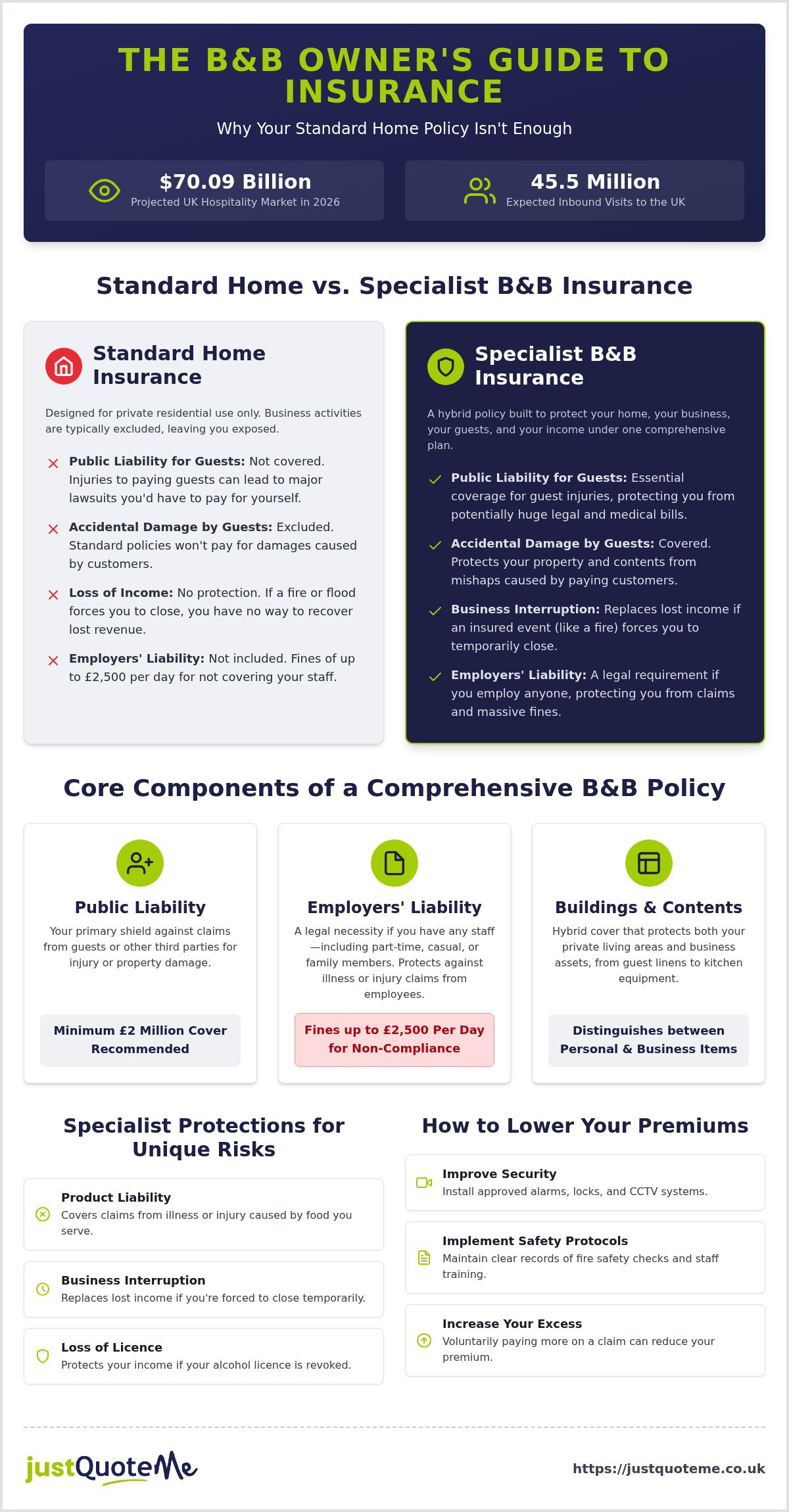
What if the very insurance policy you rely on to protect your home actually leaves you completely exposed the moment you welcome a paying guest? Many owners mistakenly believe their standard residential cover extends to their business, but the reality is that without specialist b&b insurance, you could face catastrophic financial losses from a single accident or legal claim. With the UK hospitality market projected to reach $70.09 billion in 2026 and inbound visits expected to hit 45.5 million, the risks of operating without professional protection have never been higher.
We understand that managing the administrative side of a guest house feels overwhelming, especially when you’re trying to balance domestic comfort with commercial regulations. It’s natural to feel anxious about liability claims or the impact of a sudden loss of income on your livelihood. This guide provides the clarity you need to safeguard your property and stay compliant with UK law. We’ll explore bespoke cover options, explain legal requirements like employers’ liability, and show you how to secure total peace of mind for both your personal assets and your business future.
Key Takeaways
- Learn why standard home policies are insufficient and how specialist b&b insurance provides the hybrid protection your guest house needs.
- Identify essential legal requirements, including Employers’ Liability, to ensure your business stays compliant with UK employment regulations.
- Discover how to protect against niche hospitality risks such as food-related product liability and the sudden loss of your alcohol licence.
- Explore actionable ways to lower your insurance costs by implementing smart security upgrades and rigorous safety protocols.
- Understand the value of a human-centric broker in securing off-market rates and bespoke coverage tailored to your specific property.
Why Standard Home Insurance Isn’t Enough for Your B&B
Running a bed and breakfast is a rewarding venture, but it represents a fundamental shift in how your property is viewed by underwriters. Standard home insurance is designed for private residential use, where risks are predictable and limited to family or occasional social visitors. Once you enter the hospitality industry, your risk profile changes entirely. Insurers view “paying guests” as a significant commercial exposure because their presence increases the likelihood of accidental damage, theft, and personal injury claims. Unlike friends or family, guests expect a professional standard of care, and your liability for their safety is legally much higher.
Most residential policies contain strict exclusions for business activities, meaning a standard provider will likely void a claim if an incident involves your guest house operations. In 2026, the legal distinction between a private lodger and a commercial guest is sharper than ever. While a lodger shares your home under a license to occupy, a B&B guest is a consumer of a professional service. This triggers a wide array of safety regulations and liability requirements that residential policies aren’t built to handle. Common pitfalls that lead to rejected claims include:
- Accidental damage: Damage caused specifically by paying guests is rarely covered under domestic plans.
- Public liability: Standard home insurance doesn’t cover injuries sustained by guests on your premises.
- Theft: Policies often exclude theft if there’s no evidence of forced entry, which is common in guest house settings.
The “Change of Use” Clause Explained
Insurers use “change of use” clauses to define the primary purpose of your property. If you transition from a private dwelling to a place of business without informing your provider, you’ve breached the insurance contract. This non-disclosure can lead to total policy cancellation. For owners of heritage or unique properties, accurate descriptions are vital. A standard algorithm might miss the nuances of a Grade II listed building, but a specialist hotel and guest house insurance policy ensures every architectural detail is protected under the correct commercial classification.
Protecting Your Personal Space and Business Assets
One of the biggest challenges for owners is separating their personal lives from their professional ones. Specialized b&b insurance solves this by offering a hybrid structure that protects both. It provides contents cover that distinguishes between your private belongings and business assets, such as guest linens or industrial kitchen equipment. Crucially, it also protects your private living quarters during business hours. b&b insurance acts as the bridge between landlord insurance and standard home cover. This ensures that whether a pipe bursts in your private bathroom or a guest suite, your entire property remains secure.
The Core Components of a Comprehensive B&B Policy
A robust b&b insurance policy isn’t a single product; it’s a collection of safeguards designed to protect different parts of your operation. While your property is your home, it’s also a commercial venue, which means you need specific layers of protection that go beyond residential limits. These components work together to ensure that a single accident or unforeseen event doesn’t lead to financial ruin.
Public Liability: Your Primary Shield
Public liability acts as your primary defense against claims from third parties. If a guest slips on a wet floor in the hallway or trips over a loose rug in the dining area, you could be held responsible for their medical costs and legal fees. Real-world incidents like these are common in high-traffic common areas. Many industry experts recommend a minimum of £2 million in cover to handle these potential costs. This is similar to requirements seen globally, where authorities often mandate special insurance to rent out your property to ensure guest safety is prioritized. You can find more details on how this works on our public liability insurance page.
Employers’ Liability for Small Teams
If you employ anyone, even on a casual basis, UK law is very clear. Employers’ liability is a legal requirement. This applies to part-time cleaners, seasonal breakfast staff, or even family members who aren’t on a formal contract. The consequences of non-compliance are severe. Operating without valid cover can result in a fine of up to £2,500 for every single day you’re uninsured. Our employers liability insurance section breaks down these legal obligations in detail to help you stay protected.
Beyond liability, your policy must address the physical and financial health of your business. Buildings and contents cover protects the physical structure and your inventory, from high-end mattresses to commercial kitchen equipment. Finally, business interruption cover serves as your financial safety net. If a fire or flood makes your guest house uninhabitable, this cover replaces the lost income you would have earned while the property is being repaired. Choosing a bespoke hospitality insurance policy ensures these components are weighted correctly for your specific property and risk level.
Specialist Protections for Unique Guest House Risks
Beyond the standard building and liability covers, guest house owners face specific operational challenges that generic policies often overlook. Whether you’re serving a locally sourced breakfast or hosting guests in a centuries-old manor, your insurance needs to account for these niche exposures. Implementing robust risk management practices is essential to identify these gaps before they result in a claim.
Catering and Food Safety Risks
The “breakfast” element of your b&b insurance isn’t just a marketing tool; it’s a potential legal liability. Product liability insurance is vital for any guest house that prepares food. Even a simple continental spread carries risks related to food poisoning or undisclosed allergens. If a guest suffers an allergic reaction to an unlabelled ingredient, the legal and compensatory costs can be staggering. Integrating strict food hygiene standards into your daily routine helps, but product liability provides the financial safety net if something goes wrong despite your best efforts.
Many owners also choose to offer an “honesty bar” or serve alcohol with evening meals. If your business model relies on these sales, loss of licence cover is indispensable. This protection compensates you for the loss of income or the reduction in property value if your alcohol permit is revoked through no fault of your own. It ensures that a regulatory hurdle doesn’t end your business’s profitability overnight.
Insurance for Thatched and Heritage B&Bs
If your property is a historic building or features a traditional thatched roof, you already know that standard insurers are often hesitant to offer cover. The unique fire risks associated with thatch and the high cost of specialist repairs for Grade II listed buildings require a bespoke approach. We draw on our experience in thatched pub insurance to help guest house owners find underwriters who understand these heritage risks. Specialist cover ensures that if a fire or structural issue occurs, you have access to the right craftsmen and materials to restore your property to its original state. For heritage properties requiring specific expertise, firms like Avon Peak Roofing Bristol can provide the necessary skills for intricate leadwork and slate repairs that insurers expect.
Finally, don’t overlook guest effects cover. While guests are usually responsible for their own travel insurance, providing a level of protection for their belongings while they’re on your premises builds significant trust. It covers theft or damage to guest property within the guest house, providing an extra layer of service that differentiates your business from larger, more impersonal hotels. Managing these specialist risks ensures your b&b insurance is as unique as the property you run.
Reducing your b&b insurance costs requires a shift from passive price comparison to active risk reduction. In a market where the UK hospitality sector is projected to grow to over $70 billion in 2026, underwriters are increasingly rewarding owners who demonstrate a commitment to safety through technology and rigorous documentation. You can secure more competitive rates by proving that your property is a lower risk than the industry average.
One of the most effective ways to influence your quote is through security upgrades. Installing high-definition CCTV in common areas and fitting smart locks on guest rooms provides a digital audit trail that traditional keys cannot match. These systems reduce the likelihood of unauthorized access and help resolve disputes quickly. Additionally, choosing the right excess level is a practical way to balance your monthly outgoings. While a higher voluntary excess lowers your premium, you must ensure it remains an amount you can comfortably afford if you need to make a claim. Bundling your various protections into a single bespoke policy is also more cost-effective than managing separate domestic and commercial covers.
Proactive Risk Management
Insurers look for evidence of a managed environment. This means staying on top of regular fire risk assessments and ensuring all electrical equipment undergoes annual PAT testing. Maintaining accurate guest registers and utilizing digital check-in systems also improves your risk profile by ensuring you always know exactly who is on the premises. A documented safety history can significantly lower annual premiums by providing insurers with clear evidence that you prioritize guest welfare and property maintenance. This proactive approach shows underwriters that you’re a responsible operator, which often unlocks “off-market” rates not available to the general public.
Evaluating Your Rebuild Costs
Under-insurance remains a critical threat to guest house owners, especially during periods of rising construction costs. Many owners base their building cover on the market value of their property, but insurance is concerned with the “reinstatement value”—the total cost to rebuild from scratch. If you’re under-insured, providers may apply the “condition of average,” which reduces your claim payout proportionally. Using professional appraisals to satisfy underwriter requirements ensures your cover is accurate and prevents you from overpaying for unnecessary protection or being left short during a disaster. To ensure you aren’t paying more than necessary for your protection, Just Quote Me on your next renewal for a tailored assessment of your needs.
Choosing a Bespoke Policy with Just Quote Me
While automated comparison sites offer speed, they often fail to grasp the nuances of the hospitality sector. A generic algorithm doesn’t understand the difference between a modern guest house and a 17th-century thatched property. Choosing the right b&b insurance requires a human-centric approach that balances domestic comfort with commercial liability. At Just Quote Me, we act as your advocate, navigating the complexities of the market so you can focus on your guests.
The Advantage of Independent Brokerage
As an independent broker, we aren’t tied to a single provider. This independence allows us to evaluate your specific guest house needs without bias. We compare the market on your behalf, looking beyond the headline price to find the best value-to-protection ratio. This often involves accessing “off-market” rates from a broad panel of top UK underwriters that aren’t available on standard comparison engines. By tailoring a policy to your unique risk profile, we ensure you aren’t paying for redundant cover. You can explore our specific hotel and guest house insurance options to see how we structure these bespoke solutions.
Expert Advice and Regional Knowledge
With over 30 years of industry experience, we have a deep understanding of the local landscape in Staffordshire and the West Midlands. Whether your property is in Newcastle-under-Lyme, Stone, or Stafford, we understand the regional factors that influence your risk. This local expertise allows us to provide more accurate advice than a distant, automated system. We don’t just sell you a policy; we develop a long-term partnership. We’re here for your annual renewals, policy adjustments as your business grows, and, most importantly, personalized claims support. If something goes wrong, you have a steady hand and a knowledgeable partner to manage the administrative burden and fight your corner.
Securing the Future of Your Guest House
Protecting your bed and breakfast in 2026 requires more than just a generic policy. It’s about understanding the unique risks of the hospitality sector and ensuring your personal home and business assets are correctly separated. By prioritizing essential covers like public liability and implementing proactive risk management, you can lower your premiums while staying fully compliant with UK law.
As an FCA Authorised Independent Broker with over 30 years of hospitality expertise, we simplify the complex administrative burden of b&b insurance. We provide the steady hand you need to navigate this market, offering access to off-market rates and personalized support that automated systems simply cannot match. Our team is dedicated to providing a human-centric alternative to the industry’s digital noise.
If you’re ready to protect your livelihood with a policy tailored to your specific property, we are here to help. Host with confidence knowing your assets are secure.
Get Your Free Business Insurance Quote now
Request a Call back for free Expert advice
Frequently Asked Questions
Is B&B insurance a legal requirement in the UK?
Employers’ liability insurance is the only component that is strictly a legal requirement if you employ any staff, including casual cleaners or seasonal help. While other covers like public liability aren’t mandated by law, they are often required by mortgage lenders and booking platforms. Operating without these protections leaves you personally liable for legal fees and compensation costs that could easily bankrupt a small business.
Does standard home insurance cover my bed and breakfast?
Standard home insurance doesn’t cover commercial activities or paying guests. Welcoming guests for profit changes your property’s risk profile, which usually voids a domestic policy immediately. You need specialized b&b insurance to bridge the gap between your private life and your business. This ensures that both your residential dwelling and your commercial hospitality operations are fully protected under one comprehensive, hybrid agreement.
How much does B&B insurance cost on average in 2026?
Premiums vary based on the number of guest rooms, your property’s location, and your previous claims history. Factors like building reinstatement values and chosen liability limits also play a significant role in determining the final price. Because every guest house is unique, we don’t provide generic averages. Instead, we offer bespoke quotes that reflect the actual risks of your specific operation and property type.
What is the difference between guest house insurance and hotel insurance?
The main difference lies in the scale of the operation and the owner’s living arrangements. Guest house insurance is tailored for smaller properties where the owner often lives on-site. Hotel insurance is designed for larger, commercial-only buildings that may feature extensive facilities like gyms, spas, or large-scale public restaurants. These larger venues, such as the nature-oriented Tanjung Inn, require higher liability limits and more complex business interruption structures than a typical B&B.
Do I need insurance if I only have one guest room?
Yes, you need protection even if you only host one guest at a time. A single accident involving a paying guest can lead to a substantial liability claim that a standard home policy will not cover. Specialized b&b insurance protects you from the moment a guest enters your property. It ensures your home remains secure and your personal finances stay protected regardless of your business’s size.
Can I get insurance for a B&B with a thatched roof?
You can certainly get cover, but it requires a specialist broker who understands heritage risks. Many high-street insurers refuse to cover thatched properties due to the perceived fire risk and the high cost of traditional repairs. We use our extensive experience with thatched buildings to find underwriters who provide comprehensive protection. This ensures your historic property is insured for its true rebuild value using authentic materials.
What happens if a guest sues me for food poisoning?
This situation is handled under the product liability section of your policy. Your insurer will manage the legal defense and cover any awarded compensation, provided you’ve maintained required food safety standards. This protection is vital for anyone serving food, as even a minor incident can result in a complex legal battle. It provides the financial security needed to keep your business running while the claim is resolved.
