
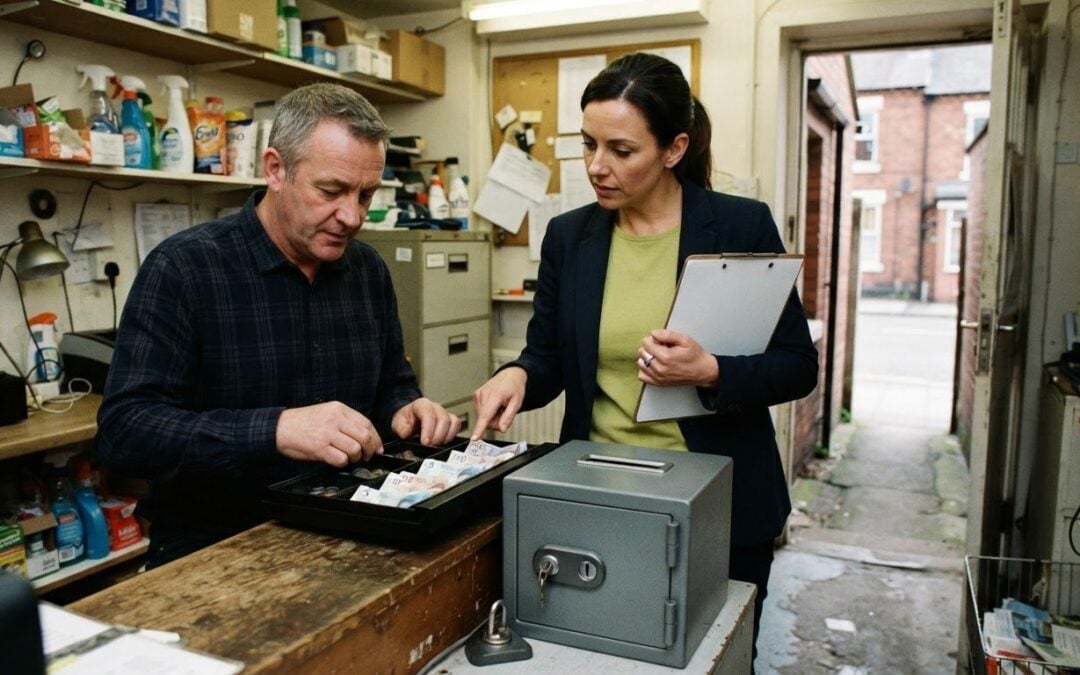
Insuring a business in a high crime area may involve adding commercial crime insurance for losses caused by employee dishonesty or certain forms of third-party fraud. Theft or vandalism at your premises may instead fall under commercial property or business contents cover, depending on the policy. According to the UK Home Office, criminal activity affected 26% of UK businesses in 2023.
Look beyond the postcode when insuring a business in a high crime area. The right cover depends on how your business could be affected, from stolen stock to financial losses caused by fraud. Location can influence insurance terms, but the risks that matter most vary according to your business and its assets.
This article covers crime-related insurance to consider, the financial and operational effects of commercial crime, and which businesses may benefit from reviewing their risks. It also explains why policy wording, security measures and the type of crime risk matter when deciding what protection is appropriate.
Key Takeaways
- Match optional crime cover to the losses your business could face, including employee dishonesty or third-party fraud.
- Consider how theft or fraud could affect cash flow, staff time and customer confidence, not just physical property.
- Understand how your location, business activity, assets and security measures can shape available cover and premiums.
- Assess whether your exposure to employee dishonesty or fraud makes crime insurance relevant to your type of business.
Crime risks for businesses in high-crime neighbourhoods
Crime can affect stock, equipment, premises and the people working or shopping there. According to the UK Home Office, 409,000 UK businesses experienced some form of crime in 2023.
Theft and Vandalism Exposure
Theft removes stock, cash or equipment, while vandalism damages property and can interrupt trading. In a high-crime neighbourhood, a break-in could mean replacing tools as well as repairing a damaged door or window. Owners should assess what is accessible, what would be costly to replace, and how a criminal could enter or leave. These details help identify where an uninsured loss could have the greatest effect.
Risk Differences by Business Size and Industry
Crime exposure varies with a business’s workforce, activity, premises and valuable assets. According to the UK Home Office, in 2022 and 2023, businesses with 50 or more employees experienced higher crime rates than smaller sites. Industry also matters: a shop with portable stock faces different theft opportunities from an office holding specialist equipment. Assessing each location and its operations helps owners understand which risks may result in increased losses.
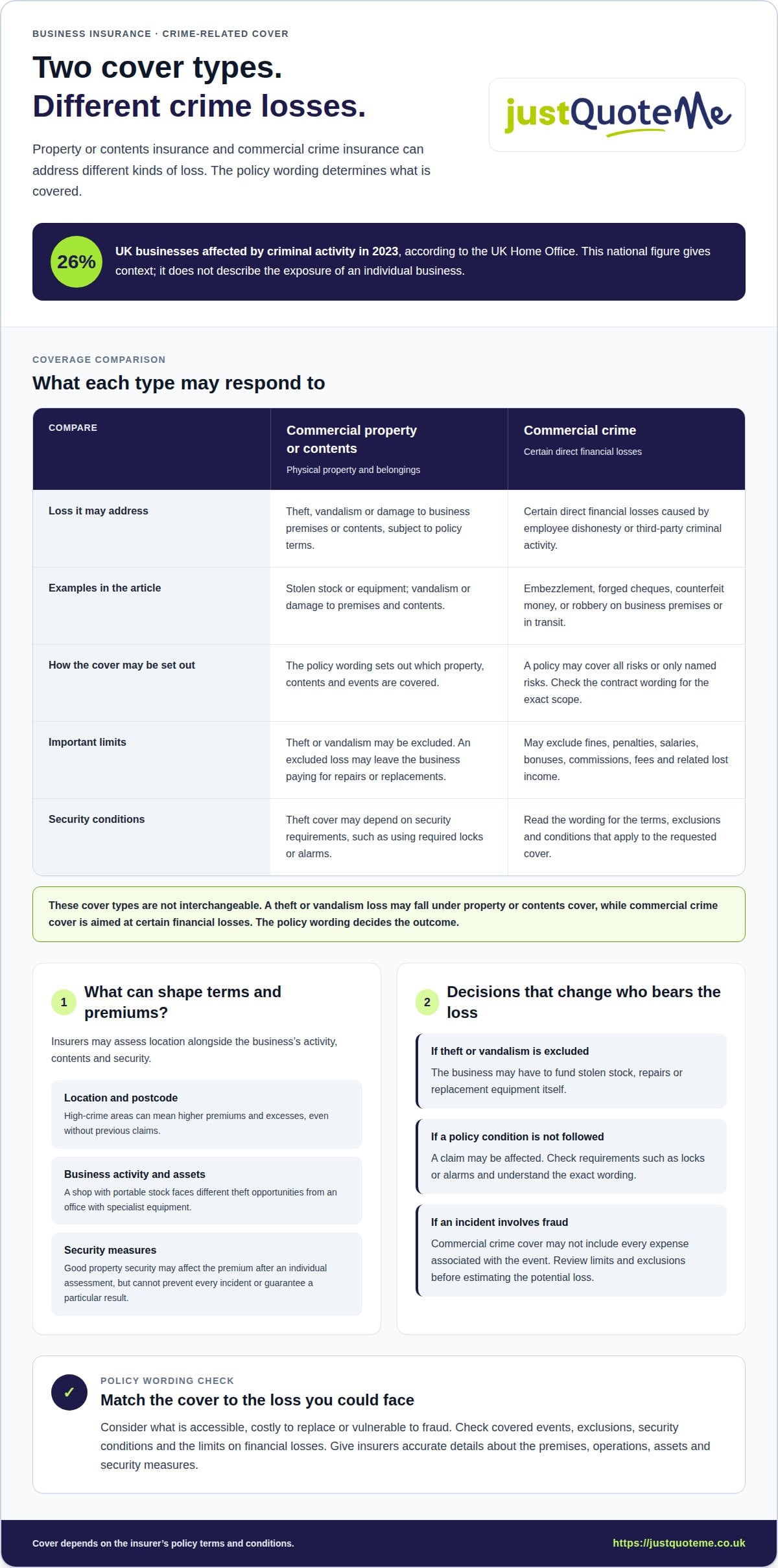
According to the UK Home Office, criminal activity affected 26% of UK businesses in 2023. That figure gives context, but it doesn’t show the specific exposure of an individual premises. A business beside late-night venues, for example, may assess risks differently from a daytime studio with limited public access.
Crime is not the only location-related risk. Flooding, storms and other natural disasters can damage buildings, stock and equipment, even where theft is the main concern. Premises near flood-prone ground face different risks from those vulnerable to storm damage. Consider these hazards separately, because cover for one type of event does not necessarily include another.
Policy exclusions can leave a business paying out of pocket after an excluded event. If theft or vandalism is excluded, the business may have to fund stolen stock, repairs or replacement equipment itself. Similar costs can follow damage from a natural disaster that the policy excludes. Understanding which events are covered helps you assess the potential consequences before a loss occurs.
Financial and reputational consequences of commercial crime
A crime can create direct losses and extra work, even if trading continues. In 2022, 45% of UK businesses that experienced commercial property crime reported significant financial loss. A further 33% said they paid for additional staff time to manage the incident. Replacing stolen items is only part of the impact: staff may also need to document losses and arrange repairs.
Customer confidence can suffer if a theft, fraud or data breach disrupts service. In 2023, 63% of UK commercial crime victims reported moderate financial impact, with no premises closing as a result. The UK Commercial Victimisation Survey offers context on business crime, but national findings don’t describe every firm’s exposure. Protecting your business includes planning for a prompt response and clear communication with affected customers.
Businesses handling cash, valuable stock, sensitive data or frequent payments may face different crime risks. Commercial crime losses can involve fraud, embezzlement or data theft, while property crime can interrupt deliveries or customer access. Postcode crime patterns, the premises and its security can influence how insurers assess risk and set terms. If an application is declined or the premium is high, provide accurate business information and details of risk-reduction measures, such as access controls, to help insurers review the risk.
Theft cover may depend on security conditions, such as using required locks or alarms. Failing to follow a policy condition can cause problems with a claim. Read the wording to understand the exact requirements and exclusions for your premises.
Commercial crime cover may respond to direct financial loss, subject to its terms, but may exclude fines, penalties, salaries, bonuses, commissions, fees and related lost income. This distinction matters when estimating what an incident could cost the business. For example, a policy may not cover every expense associated with fraud. Understanding the limits helps owners decide which risks to retain and which to insure.
What additional optional insurance cover is available?
For a UK business, the right combination of cover depends on its property, activities, assets and likely crime losses. The policy wording sets out the cover, exclusions and security conditions that apply.
Commercial property insurance may cover theft, vandalism and damage to premises or contents, subject to the policy terms. Commercial crime insurance can address certain direct financial losses from employee dishonesty or third-party criminal activity. Cover may include embezzlement, forged cheques, counterfeit money or robbery on business premises or in transit. Policies may cover all risks or only named risks, so read the contract wording carefully.
Premiums and excesses can be higher for businesses in high-crime areas, even without previous claims. Insurers assess factors such as postcode, business activity, contents and security. Good property security may affect the premium after an individual assessment, but it cannot prevent every incident or guarantee a particular result. Provide accurate, detailed information about the premises, operations, assets and security measures so insurers can assess the location and requested cover.
Excluding theft or vandalism may reduce a premium, but the business would have to meet those losses itself if they occurred. Whether particular risks can be excluded depends on the insurer. Before deciding, consider the potential cost of replacing stolen stock, damaged fittings or equipment.
For property loss, commercial property or contents cover may respond to theft, vandalism or other damage, depending on the policy. Crime insurance addresses certain financial losses caused by crime, which is different from cover for property damage.
After theft or vandalism, report the incident to the police and make an insurance claim. Prepare a list of stolen items, proof of ownership and relevant security footage to support your claim.
Security conditions vary between policies, and failing to follow a stated condition can cause problems with a theft claim. Read the wording for requirements and exclusions, including those concerning locks, alarms or other protections. Keep clear records of security measures to show how you protect the premises.
Businesses that may benefit from crime insurance
Crime insurance is most relevant when dishonest acts could cause a financial loss the business could not readily absorb. When insuring a business in a high crime area, location is one factor, not the only reason to consider this cover. Also assess who can access money, stock, records or payment systems, and how misuse could affect operations.
Financial services businesses may face greater exposure to insider fraud and other employee dishonesty. Financial institutions often need a specific form of crime cover called a fidelity bond. This illustrates why it is important to assess the business’s work and controls, rather than treating crime insurance as a one-size-fits-all solution.
Businesses with employees who handle payments, reconcile accounts or approve transactions may also want to assess their exposure. A small firm could face disruption if dishonest actions affect its accounts. Employee numbers alone do not determine the need for cover: access levels, oversight and the possible scale of losses matter too. These factors are particularly relevant when insuring a business in a high crime area.
Retailers, hospitality businesses and firms holding valuable stock can assess different crime scenarios. Stolen goods may cause a property loss, while forged payment instructions or employee embezzlement create different financial risks. Crime cover may address specified dishonest acts, subject to the policy terms. It does not prevent criminal activity or necessarily cover every loss connected with an incident.
Start by assessing the business’s most exposed processes. Identify who can move funds, change supplier details, approve refunds or access valuable goods. Then consider whether existing checks would identify misuse promptly and whether the resulting loss could threaten cash flow or operations. For a business in a high-crime location, this review can help clarify which exposures need attention.
Crime insurance is worth considering where losses from employee dishonesty or third-party fraud could materially affect the business. A firm with limited financial exposure may prioritise other risks. One that relies on trusted staff to control payments may have stronger reasons to examine crime cover and its specific terms.
Just Quote Me
Just Quote Me can help you review the wider insurance needs alongside crime-related risks. If your business employs staff, Employers Liability Insurance may be relevant, while Public Liability Insurance addresses a different area of business risk. Professional Indemnity Insurance and Landlord Insurance may also suit particular work or property arrangements.
Consider how your premises, people and business activities fit together, rather than treating one policy as protection against every loss. Clear information about your operations and existing cover helps guide a useful discussion about your insurance needs. For crime-specific losses, the policy wording is central: check which events and costs it covers and which it excludes.
If you’d like to discuss your business insurance needs, contact Just Quote Me.
Make your next insurance decision with confidence
Use your next renewal or policy review to decide which risks your business can manage and which could disrupt its plans. When insuring a business in a high crime area, a clear picture of your operations, property and responsibilities can support an informed discussion about cover. Focus on protection that fits your business rather than assuming one policy addresses every risk.
Just Quote Me offers Public Liability Insurance, Employers Liability Insurance and Professional Indemnity Insurance for different business exposures. Get Your Free Business Insurance Quote now, or Request a Call back for free Expert advice. A conversation can help you move forward with a clearer view of your insurance needs.
Frequently Asked Questions
What can you do to lower business costs if you’re in a high-risk area?
Reduce avoidable exposure by reviewing access to stock, cash and equipment, then addressing weak points. For example, control who holds keys, secure goods away from windows and maintain security systems. Give insurers accurate details about safeguards and insured property values. Consider removing cover only after weighing the cost of replacing stolen or damaged items yourself.
Why can the location of your business affect its insurance prices and cover?
Location helps insurers assess the risks around particular premises. A business in an area with more reported theft or vandalism may present a different claims profile from a similar business elsewhere. The postcode is one factor, alongside the premises, its use, the assets inside and the protection in place. These details can influence the premium and policy terms.
How does a business’s crime rate or location affect insurance premiums in the UK?
Insurers use location information, including postcode crime patterns, as part of their risk assessment. Higher perceived exposure can affect the premium, excess or terms offered, even if the business has no previous claims. For example, two shops with similar stock may receive different assessments if their premises are in areas with different recorded crime patterns.
What security measures can reduce business insurance premiums or satisfy insurer requirements?
CCTV, alarm systems, secure locks and access controls can help deter crime and show that a business has taken steps to manage risk. Maintain equipment and record how security procedures work, including who can access keys or set alarms. Insurers assess these measures individually: they do not automatically secure a lower premium or replace policy conditions.
How much does business insurance cost for premises in a high-crime area in the UK?
The premium depends on the individual case and is provided after a quote request. Insurers assess factors such as business activity, postcode, premises construction, contents and stock values, security arrangements, claims history, selected cover and excess. A shop storing valuable goods and an office with limited contents present different risks, so their quotes can differ.
How do business insurance quotes compare for high-crime and low-crime locations?
Quotes can differ because insurers assess location alongside a business’s activities, property and security. For a useful comparison, keep the requested cover, insured values and excess consistent across quotes. Then review exclusions and security conditions as well as the premium. A lower figure alone does not show whether the policy responds to the losses that concern the business.
