Plant and machinery insurance in the UK can protect owned or hired equipment against insured events such as theft, fire and accidental damage. Standard cover usually focuses on damage or theft, while mechanical or electrical breakdown and general wear and tear are often excluded. Plant and machinery insurance isn’t a legal requirement in the UK.
A breakdown can still bring work to a halt, but it doesn’t automatically mean your policy will pay for repairs or replacement. The machine, how it’s used and the cover selected all matter.
This guide explains which types of plant and machinery businesses can insure, what cover may include and how owned plant differs from hired-in equipment. It also outlines what to check for breakdowns, transit and continuing hire charges, as well as factors that influence premiums. Use these points to identify your business’s needs and know which policy details to review before arranging cover.
Key Takeaways
- Separate accidental damage and theft cover from mechanical breakdown protection, which is often excluded from standard policies.
- Distinguish owned equipment from hired-in plant so the cover reflects who owns the machinery and any continuing hire charges.
- Assess how equipment value, type, use, location and claims history can affect your premium.
- Identify the machinery your business relies on, from excavators and forklifts to cranes and concrete mixers, and consider where it needs protection.
What plant and machinery insurance covers
Cover can protect owned or hired equipment against insured events such as theft, fire and accidental damage. Check the policy wording carefully: standard cover usually excludes mechanical breakdown and wear and tear.
Businesses and Work Requiring Cover
Contractors on construction and infrastructure projects may need cover for machinery used across sites, such as diggers, cherry pickers and excavators. Tradespeople and small businesses should consider which equipment they rely on, where it operates and whether it’s owned or hired. Public Liability Insurance is separate and may protect against claims for injury or property damage caused to other people.
Plant cover is available from UK insurers and specialist schemes, but policies differ in limits, exclusions, excesses and security conditions. Check whether the wording includes transit, off-site storage, hired equipment and continuing hire charges. Machinery driven on public roads needs a road-risk element for legal compliance.
Valuing Equipment for Insurance
Set the insured value by estimating the cost of replacing each machine with an equivalent model, rather than relying only on its original purchase price. For example, replacing a used digger today may cost more than its original purchase price. Include VAT in the declared value if it forms part of your business’s replacement cost.
Keep an equipment schedule that records each machine’s make, model, age and value. Accurate details help ensure the cover reflects the plant used on your projects, rather than an outdated fleet list.
Claims, Theft and Security Requirements
To make a claim, report the incident to your insurer using the helpline and claims number in your policy document. Give a clear account of what happened and identify the affected machine. A theft claim may need details such as the equipment’s make, model and last known location.
Reduce theft risk by securing machinery when it’s unattended and following the policy’s security conditions. Plant stored in an unsecured location may be excluded. Check the requirements for storage on-site, in transit and at off-site locations, especially when equipment moves between projects.
Differences between owned and hired-in plant
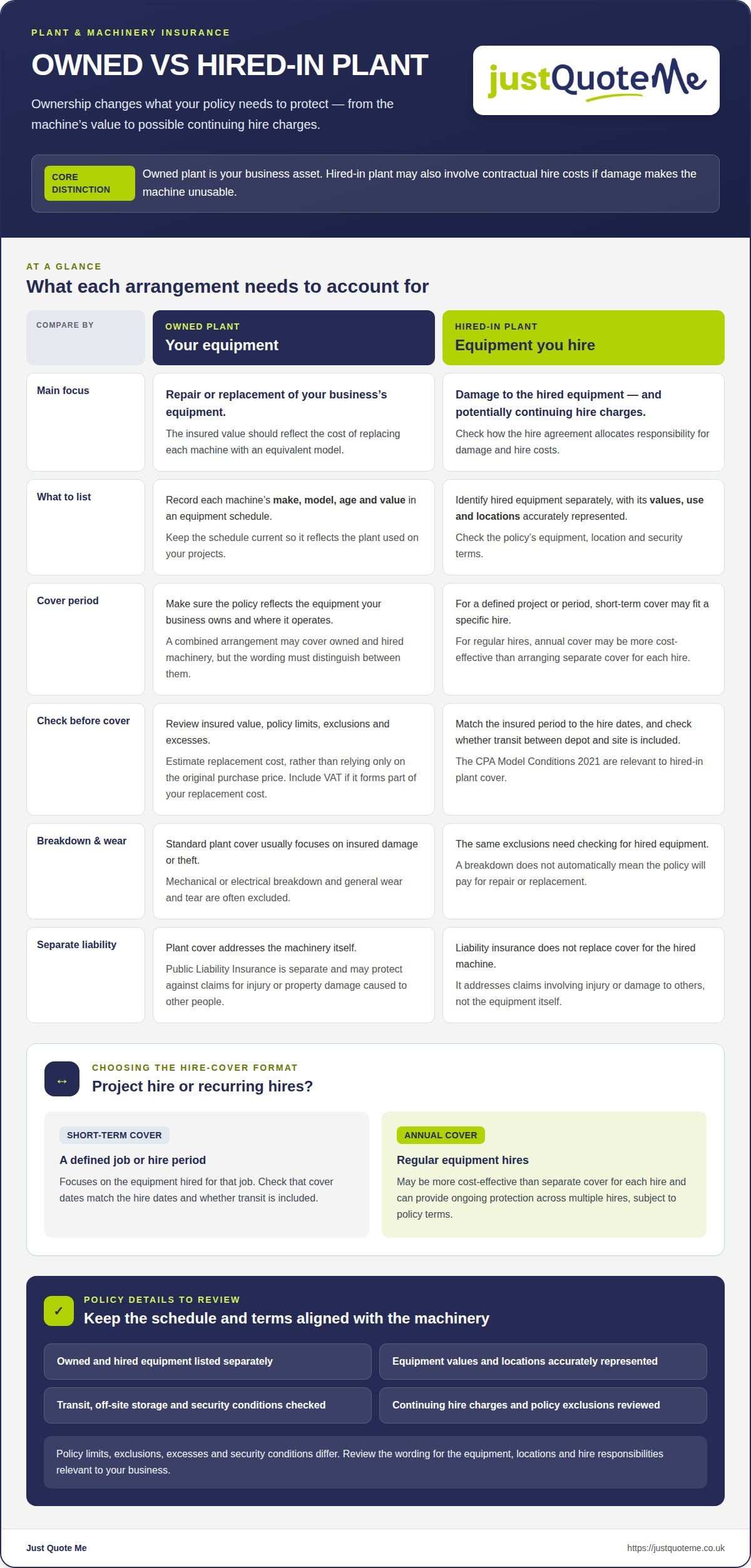
Ownership affects what the policy needs to protect. A construction contractor’s own excavator is an asset to repair or replace, while a hired machine may also bring continuing hire charges if damage makes it unusable. Plant cover can include owned or hired equipment, but the schedule and terms need to reflect each accurately.
For owned plant, cover focuses on the business’s equipment and its value. For hired-in plant, consider both damage to the equipment and the contractual cost of continuing to hire it after an insured incident. The policy excess and exclusions also affect how a claim is handled.
Short-term cover may suit a business hiring a machine for a defined project or period. It focuses on the equipment hired for that job, rather than extending across regular hires throughout the year. Check that the insured period matches the hire dates, and consider whether transit between the depot and site is included.
Businesses hiring machinery regularly may find annual hired-in plant insurance more cost-effective than arranging separate cover for each hire. It can provide ongoing protection across multiple hires, subject to the policy’s equipment, location and security terms. The CPA Model Conditions 2021 are relevant to hired-in plant cover, so understand how the hire agreement allocates responsibility for damage and hire charges.
A combined arrangement may cover owned and hired machinery under one policy, but the wording must distinguish between them. List owned assets separately from hired equipment, and make sure each category’s values, use and locations are represented. Severe weather or accidental damage can affect either type of machine, while mechanical breakdown is often excluded from standard plant cover. Liability insurance is separate: it addresses claims involving injury or damage to others, not the machine itself.
Factors affecting plant insurance costs
Insurers assess the equipment, business activity and requested protection when calculating a premium. An excavator used daily on construction sites presents a different risk from a machine kept securely in storage. The type and value of each item, its location and how often it operates all influence the policy. The final premium depends on the overall risk.
Business size, employee numbers, work locations and the type of work also matter. A contractor working across busy urban sites may face different risks from one operating at a fixed rural location. Postcode, previous claims and security arrangements help insurers assess the risk of theft and damage. Describe how the equipment is used and stored so the cover can reflect the work accurately.
Owned and hired machinery can affect the premium in different ways. The value of owned plant influences the amount of cover required, while hired-in machinery may bring continuing hire charges after an insured incident. If you hire equipment regularly, annual cover may be worth considering instead of arranging protection for separate hire periods. The policy’s limits, excess and included cover also affect the overall cost.
Risk management can help reduce costs. Securing equipment with anti-theft devices, limiting the number of machinery operators and paying annually rather than monthly may reduce premiums. For example, a business can review who operates each machine and how excavators are secured overnight. These measures do not replace suitable plant insurance cover, but they can form part of how an insurer assesses the risk.
The premium depends on the details provided when requesting a quote. Equipment type and value, location, use, claims history, whether the machinery is hired or owned, and the selected cover can all affect it. Review these details together to align the quote with the machinery and projects the policy needs to protect.
Types of insurable plant and machinery
Plant insurance can apply to a broad range of equipment, from mobile construction machinery to fixed business machinery. Common examples include concrete mixers, cranes, bulldozers, dumpers, excavators and forklifts. Start by grouping equipment by function, value and use. A contractor’s excavator moving between projects has different needs from a machine kept at one site.
Lifting and access machinery can include cranes and cherry pickers, while earthmoving plant includes diggers, bulldozers and dumpers. Describe how each machine is used, where it operates and whether it moves between sites. Transit cover may protect equipment travelling between jobs if the policy includes it. Storage also matters: plant kept in an unsecured location may be excluded.
Fixed machinery used in business premises may also need protection alongside mobile plant. Insured events may include theft, attempted theft, fire, accidental damage, malicious damage, storm or flood. The policy wording determines which incidents are covered. Standard plant insurance usually focuses on damage or theft, not mechanical or electrical breakdown or general wear and tear.
Smaller everyday tools are generally treated differently from larger, heavier plant. A tradesperson’s hand tools and equipment may need tools cover, while an excavator or forklift fits the plant category. Plant insurance itself isn’t a legal requirement in the UK. However, machinery driven on public roads needs a road-risk element for legal compliance. Liability cover addresses risks to other people, not damage to the machine.
Build an equipment list by category, then record each item’s ownership, location and working conditions. For example, a business using a forklift at its premises and a hired crane on a construction project faces distinct equipment risks. Matching cover to those uses can help prevent gaps around transit, storage, theft, vandalism or breakdown. This classification gives contractors a clearer basis for arranging suitable protection.
Just Quote Me: Pant and machinery insurance
Just Quote Me can help businesses arrange plant and machinery insurance suited to their equipment and work. This may be useful if you use a mix of owned and hired-in plant, work across multiple sites, or need to consider transit and storage alongside damage cover.
For a tailored discussion, describe the machinery you use, whether it’s owned or hired, where it operates and which risks you want the policy to address. Just Quote Me can also discuss related Public Liability Insurance or Employers Liability Insurance where these fit your business needs.
Contact Just Quote Me to request a call back for free expert advice.
Keep your cover aligned with the work ahead
Include insurance in your equipment planning before each new project. New contracts, machinery purchases and changes in how or where equipment is used can alter your business’s risks. Build a review into your planning process so your cover can keep pace as operations change.
A sound approach to plant and machinery insurance in the UK also considers how equipment risks fit alongside other business responsibilities. Just Quote Me offers Public Liability Insurance, Employers Liability Insurance and Professional Indemnity Insurance, which address different exposures from damage to machinery itself.
When you’re ready to discuss cover for your business, request a call back for free expert advice from Just Quote Me. A clear picture of your equipment and planned work is a practical starting point for the conversation. Take the next step with confidence and choose cover that supports the work you want to do.
Frequently Asked Questions
Am I covered if my machinery breaks down?
Standard plant insurance usually doesn’t cover mechanical or electrical breakdown. It generally focuses on damage or theft, so a machine that stops working because of an internal fault may not qualify for a repair claim. The cause matters: damage from an insured incident differs from gradual wear or component failure. Read the policy wording to understand which events apply to your machinery.
Are there any requirements for equipment to be classed as plant?
There isn’t one universal test for every type of equipment. A machine’s function and how it’s identified can matter. For vehicles, classification depends on whether the logbook specifies the vehicle as plant. This can affect how cover is arranged, particularly if the machine is also driven on public roads. Describe its use and registration details accurately when arranging cover.
Can equipment be covered while being transported to and from a site?
Transit cover can protect equipment travelling between sites if it’s included in the policy. For example, a contractor moving a machine from a depot to a new project should check whether that journey is covered. Policies can differ on transport and off-site storage, so review the wording for the equipment’s journey, storage location and insured events.
Is Plant Insurance a legal requirement?
Plant and machinery insurance isn’t a legal requirement in the UK. However, a business may have other insurance duties. For example, employers’ liability insurance is legally required for many businesses with staff. Plant insurance instead helps manage financial exposure if insured equipment is damaged or stolen. Consider these covers separately because they protect against different risks.
What’s included?
Cover commonly includes insured events such as theft, attempted theft, fire, accidental damage, malicious damage, storm or flood. Hired-in plant policies may also cover continuing hire charges if damage makes machinery unavailable. These benefits aren’t automatic across all policies. Check the listed insured events, exclusions, excess and any conditions about where equipment is kept or how it’s used.
What does plant and machinery insurance cover in the UK?
Plant insurance can cover business machinery against insured loss or damage, whether it’s owned or hired. The specific scope depends on the policy, including its equipment description, locations and insured events. For example, a crane stored off-site may have different location considerations from a forklift kept at business premises. The policy schedule and wording set out the protection that applies. For help discussing your equipment and operations, Request a Call back for free Expert advice from Just Quote Me.
