
If a business insurance quote is cheaper, does that make it the better fit? Not necessarily. The benefits of an independent insurance broker can include a broader view of available cover and practical help making sense of policy wording, so you can compare what each option actually protects, not just its headline price.
It’s understandable to find insurance options difficult to weigh up. A single insurer can only show its own products, while an online comparison process may not explain how differences in exclusions, limits or terms relate to your business. An independent broker can bring comparison tools and sector knowledge together, while the options available will still depend on the insurers and policies they can access.
This article explains what a broker does, where their role has limits and how to judge cover beyond cost. You’ll also learn what information to prepare before requesting a quote, and how to explore your options without feeling pushed into a decision. The aim is to help you choose your next steps with confidence.
Key Takeaways
- The benefits of an independent insurance broker include help connecting your business activities and responsibilities with cover options worth reviewing.
- Understand how a broker’s role differs from buying directly from one insurer, and why the available choice depends on the market they can access.
- Separate a free, no-obligation quote from the policy premium and any applicable charges, which depend on the arrangement.
- Compare direct, online and broker routes by advice, convenience, market access and transparency to find an approach that suits your needs.
- See how Just Quote Me’s online comparison engine and broker support can work together as you explore business or personal insurance options.
What does an independent insurance broker do, and how is it different?
An independent insurance broker is an intermediary who helps customers consider insurance options and arrange a policy. The insurer provides and underwrites the policy; the broker helps identify options within the markets they can access and may explain how the terms relate to your needs. The What is an Insurance Broker? overview gives useful background on this intermediary role. For a business, that support can help make a complicated decision easier to assess, but it doesn’t remove the need to review the policy wording.
The benefits of an independent insurance broker can include having someone explain differences between options, rather than choosing on headline price alone. The type of service matters, though: a broker may provide advice or present information without making a recommendation. Understand what support is being provided and what markets are being considered.
Independent broker, insurer or comparison website: what changes?
The main difference is who is selecting, presenting and explaining the options. Buying directly starts with one insurer’s products and process. A comparison website can present quotes from participating providers, but it isn’t the insurer and its results aren’t a substitute for reading the terms. A broker can add human explanation, although the scope of that support and the insurers considered can vary.
- Direct from an insurer: The insurer presents its own products and provides the policy. You compare those options with your requirements.
- Through a comparison website: The site displays options available through its panel and may help you obtain a quote. Check the policy documents for exclusions, limits and conditions, not just the summary.
- Through a broker: The broker discusses your requirements and can compare options within the markets it accesses. Depending on the service, they may explain differences or advise on suitability before you decide.
For example, a business that serves customers at its premises and another that provides professional advice may need to consider different risks. A quote list can help show possible options, but it won’t automatically tell you whether the policy wording matches your activities. That’s where a broker’s explanation may help you make a more informed comparison.
What does ‘independent’ mean when choosing insurance?
An independent broker isn’t tied to just one insurer, but independence alone doesn’t guarantee access to the whole market or impartial advice. The broker may work with a selected panel of insurers or particular specialist markets. The word “independent” describes the broker’s position, not an assurance that every policy has been considered or that every recommendation is free from commercial influences.
Before comparing recommendations, look at the broker’s stated market scope and how it explains its service and remuneration. A clear account of which insurers or markets were considered helps you understand the boundaries of the comparison. Then assess the cover itself: check whether the policy reflects your business activities, who or what it covers, and the exclusions and limits that could affect you. This gives you a practical basis for weighing the options, whatever route you use to buy.
How an independent broker can make cover more relevant to your needs
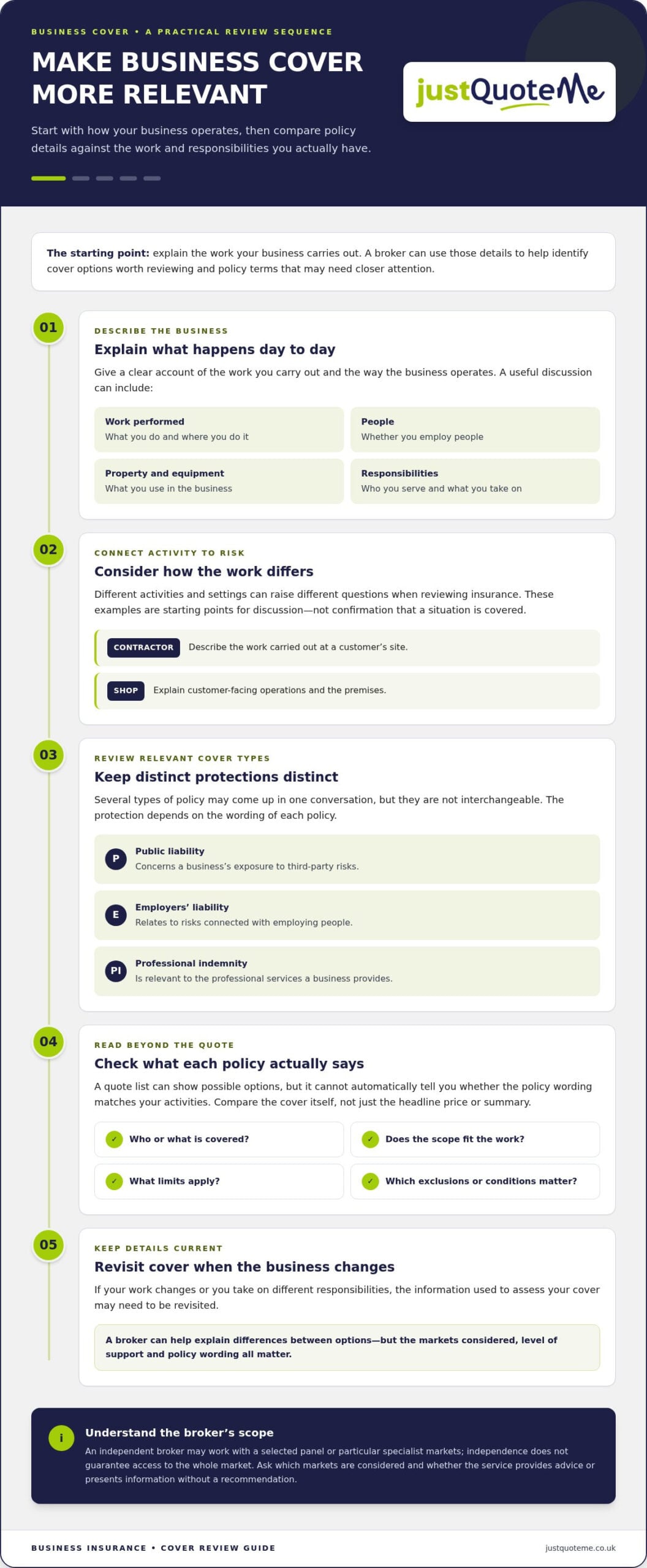
A useful insurance discussion starts with how your business actually operates, not just its name or industry. A broker can ask about the work you carry out, the people you employ, the property or equipment you use, and the responsibilities you take on. Those details help frame which types of cover may be relevant to review, and which policy terms need closer attention.
Relevant cover depends on your business’s risks and the wording, limits and exclusions of each policy. A broker’s questions can help bring those details into view, but examples are starting points for consideration, not confirmation that a particular situation is covered or legal advice.
Why business activities matter when discussing insurance
Consider a contractor working at a customer’s site and a shop welcoming customers into its premises. Their day-to-day activities, locations and interactions differ, so the risks they discuss when reviewing insurance may differ too. A contractor might describe the work performed on site, while a shop may need to explain its customer-facing operations and premises. A public liability insurance guide can help explain why businesses consider cover in relation to third-party risks.
Several policy types can come up in the same conversation, but they aren’t interchangeable. Public liability insurance concerns a business’s exposure to third-party risks. Employers’ liability insurance relates to risks connected with employing people. Professional indemnity insurance is relevant to the professional services a business provides. The precise protection depends on the policy wording, so compare each policy’s scope and exclusions against the activities you’ve described.
These examples don’t establish that a business must buy a particular policy, that a claim would be covered, or what legal obligations apply. They show why accurate information matters: if your work changes, or you take on different responsibilities, the details used to assess your cover may need to be revisited.
Where specialist insurance knowledge can help
A generic quote form may not prompt you to describe every detail that affects how your business operates. A conversation can explore those details further, such as the type of work undertaken, where it takes place, who is involved and what assets or responsibilities are part of the operation. That context can make it easier to identify which cover options merit consideration, without assuming that a sector label tells the whole story.
For example, construction businesses can vary in the work they carry out and the conditions at their worksites. A builder’s activities and responsibilities may raise different questions from those of another contractor; the builders insurance guide provides a sector-specific reference point. Hospitality businesses also differ: a takeaway, restaurant or hotel can have distinct premises and operations to discuss. In each case, details help shape the review, while the policy wording determines the cover actually provided.
Before requesting a quote, prepare a clear description of your work, staff, premises, equipment and key responsibilities. Specific answers help make the discussion more useful and support a more considered comparison of suitable options.
Does using an independent insurance broker cost more?
Not necessarily, but there isn’t one answer for every policy or broker. The cost depends on the insurance being arranged and how the broker is paid. Some brokers receive commission from an insurer, some charge customers a fee, and remuneration arrangements can differ. The important point is to understand any applicable charges and the service being provided before deciding whether to proceed.
A broker’s involvement doesn’t automatically mean you’ll pay extra, and using one doesn’t guarantee a lower premium. The benefits of an independent insurance broker should be weighed against the actual policy terms, the support offered and the total costs explained for your circumstances. Compare like with like, including the cover, limits, exclusions and any charges, rather than assuming the route with the lowest headline figure represents the best value.
How to understand commission, fees and the insurance premium
The premium is the amount charged for the insurance policy. Broker remuneration is separate: a broker may receive commission, charge a fee, or use another disclosed arrangement. These costs can affect what you pay or how the broker is remunerated, so get a clear explanation before you accept an option.
Consider the charges alongside the policy and service. Ask what the premium covers, whether a broker fee applies, how the broker is paid and when any fee would be due. Then check the policy details. A lower premium may come with different terms, while a charge for arranging cover doesn’t by itself tell you whether the policy is suitable.
What free, no-obligation quotes tell you, and what they do not
Just Quote Me offers free, no-obligation quotes and callbacks. This gives you a way to explore options without committing to buy. It doesn’t mean every policy or service has no charge, and the quote itself isn’t the same as taking out insurance. Review the costs and terms associated with the specific policy and arrangement before you proceed.
A free quote lets you explore an option; buying a policy means accepting its terms and paying the applicable premium and any disclosed charges. Treat those as separate decisions. A quote is a starting point for comparison, not a promise that cover is in force or that the final policy will be right for your business.
Before making a decision, check the quote against your requirements and read the policy documents, especially the exclusions and limits. Make sure you understand the broker’s remuneration and any charge that applies if you go ahead. If the explanation is unclear, ask for the cost breakdown in plain language before agreeing to arrange the policy. That way, you can judge the price and service together, without assuming that broker support is either automatically free or automatically more expensive.
Comparing independent brokers with other insurance options
Choosing how to arrange business insurance depends on how much comparison and explanation you need. Buying directly, using an online service or speaking with a broker can each be a practical route. The benefits of an independent insurance broker may matter most when your operations are complex, you have specialist risks or you’re unsure how policy terms differ. No route is automatically right for every business.
Use the comparison below as a starting point. The market access and level of support available will vary by provider, and a quote alone doesn’t establish that a policy suits your business.
| Route | Advice and explanation | Market access | Convenience and transparency |
|---|---|---|---|
| Direct from an insurer | Information relates to that insurer’s products; you assess the terms. | Limited to the insurer’s own offerings. | A direct process may be convenient if you know what you need. Review the policy details and charges. |
| Online comparison | Options and quote information are presented digitally; explanation can vary. | Options depend on the providers included in the comparison. | Can make it easier to view quotes. Check what the comparison includes and read the policy documents. |
| Independent broker | A broker can discuss your requirements and help explain differences, depending on the service provided. | Access depends on the insurers and markets the broker considers. | Offers a conversation alongside comparison. Understand the broker’s scope, remuneration and ongoing service. |
Whichever route you choose, compare the policy wording, limits and exclusions against your actual business activities. A lower headline price may reflect different terms or cover, so look at what each option includes as well as what it leaves out. A Staffordshire business, for example, should assess its own work, premises and responsibilities rather than assume that location alone determines suitable cover.
When a broker may be a useful route
A discussion may help if your business has several activities, specialist risks or policy differences you’re finding difficult to weigh up. A broker can organise options and explain relevant distinctions, but can’t promise that a particular insurer will offer terms or that a claim will be covered. For businesses reviewing workforce-related cover, employers’ liability insurance is one policy to consider in light of the business’s circumstances and the wording available.
Questions to use when comparing insurance options
Before you decide, use a short set of questions to make comparisons clearer:
- What activities, people, property or responsibilities does the policy cover?
- What exclusions, limits, conditions or information requirements could affect the cover?
- Which insurers or markets were considered, and how are the options explained?
- What fees or commission apply, and what ongoing service is included?
Clear answers make it easier to compare like with like, whether you buy directly, use an online comparison service or work with a broker. Focus on how well the terms align with your business, not simply on the number of quotes or the first price shown.
How Just Quote Me helps you explore independent insurance options
Just Quote Me combines an online comparison engine with broker support, giving you a practical way to explore insurance and make sense of options. The comparison process helps you review available quotes, while a conversation can help put policy details in context. These approaches complement each other: digital tools make it easier to start comparing, and broker support can help you consider how options relate to your circumstances.
Business cover needs vary with activities, premises, staff and responsibilities. Just Quote Me helps businesses explore options such as public liability, employers’ liability, professional indemnity and specialist sector insurance. Personal insurance options are also available, though the right policy depends on the individual’s circumstances. The benefits of an independent insurance broker are most useful when the discussion and comparison help you understand the choices in front of you, without treating a quote as a recommendation to buy.
Just Quote Me has an average online review rating of 4.6 out of 5. One client testimonial describes a relationship spanning 22 years, reflecting the value some customers place on ongoing broker support.
What to prepare before requesting an insurance quote
A little preparation can make your quote request more accurate and the options easier to assess. Gather details about your business activities, premises, property or equipment, staff and key responsibilities. If you already have insurance, keep your current policy documents nearby so you can compare existing terms with the options presented.
Describe your operations plainly and accurately. For example, explain the work you carry out, where it takes place and any changes to your business since your current policy began. Complete the information requested as carefully as you can. Clear details help ensure the options are considered against your circumstances, rather than assumptions based only on a business name or broad sector.
A quote is a starting point for review, not a substitute for checking the policy. Read the wording, limits, exclusions and conditions before deciding whether it fits. If a difference between options isn’t clear, broker support can help you understand what to consider next.
Your next steps with Just Quote Me
You can begin online with a free, no-obligation quote or explore your options through a free, no-obligation callback. Neither commits you to buying a policy. If you choose to purchase, policy documents are emailed instantly after purchase. Review them carefully so you understand the cover and terms arranged.
Whether you’re reviewing business insurance or personal cover, start with the information you’ve gathered and compare the policy details against your needs. Choose the route that gives you the clarity you need to make an informed decision.
Get Your Free Business Insurance Quote now
Request a Call back for free Expert advice
Make your next insurance decision with confidence
Your business can change over time, and its insurance needs may change with it. A new service, different premises or added responsibilities can be a useful prompt to review whether your current cover still reflects how you operate. Keep your policy details and a clear description of your activities close at hand, so your next discussion or comparison starts with the right context.
The benefits of an independent insurance broker are most valuable when they help you understand your options and take a considered next step. You don’t need to settle every question before starting. Begin by exploring suitable options, then take time to review the wording and costs before deciding whether to proceed.
Get Your Free Business Insurance Quote now and take the next step towards a clearer view of your cover.
Request a Call back for free Expert advice
Frequently Asked Questions
Does an independent insurance broker have access to every insurer?
No. Being independent doesn’t automatically give a broker access to every insurer or policy. The available market varies, so ask which insurers were considered and what options the broker can compare. For instance, a business with a less common activity may want to understand whether the options include relevant specialist markets. The useful test isn’t a claim of universal access, but whether the available policies address your needs and offer terms you understand.
Can an independent insurance broker help with specialist business insurance?
Yes, a broker may help a business explore specialist insurance options, depending on its activities and the policies available. A construction firm and a hospitality business, for example, may need to consider different risks and policy details. Just Quote Me serves a range of sectors and offers business insurance options. The benefits of an independent insurance broker can include help relating those options to your circumstances, but check the wording and exclusions before choosing cover.
Is an online insurance comparison website the same as an independent broker?
No. Both can help you consider insurance options, but the process may differ. A comparison website presents quotes through an online process, while a broker can offer a point of discussion about the options and their relevance to your circumstances. If a result shows several policies, look beyond the summary: check whether the insured activities are described correctly and read the exclusions and limits in the policy documents before deciding.
Can I get an insurance quote from Just Quote Me without committing to buy?
Yes. Just Quote Me offers free, no-obligation insurance quotes and callbacks, so requesting a quote doesn’t commit you to buying. Use the quote to assess the option presented, including its wording, exclusions and any applicable charges. A free quote doesn’t mean the policy itself has no premium or that every related service is free. Take time to review the terms before deciding whether to proceed.
Does an independent insurance broker handle claims for customers?
Claims support can vary between brokers and policies, so arranging insurance doesn’t by itself tell you what help may be available if you need to claim. The insurer’s policy documents set out how to report a claim and what information to provide. Keep those documents accessible, along with relevant records about the insured business activity. Follow the process stated by the insurer, and refer to the policy wording if you’re unsure what applies.
How can I tell whether an insurance broker is independent?
Ask how the broker describes its relationship with insurers and which markets it can access. Independent doesn’t necessarily mean whole-of-market access or that every policy is available. Consider whether the broker explains how it reached a recommendation, how it is remunerated and what charges may apply. Just Quote Me is described as an independent broker and an FCA-authorised firm. Understanding these points helps you assess the service as well as the options presented.
