

Could a claim made today relate to work your current policy won’t cover? That’s why having your professional indemnity retroactive date explained matters. The date can set the earliest point in your work history that a policy will consider, while the policy start date marks when the current cover begins. They’re not necessarily the same.
It’s reasonable to expect a renewal or insurer switch to keep protection for past work intact, but continuity depends on the policy wording and dates, not just the new start date. Professional indemnity cover is generally written on a claims-made basis, so the policy in force when a claim is made may respond, subject to its terms and any retroactive date. A changed date or a gap in cover could affect how earlier work is treated.
This guide explains the practical difference between these dates, how specified and unlimited retroactive cover work, and what to review before renewing or changing insurer. You’ll also see why it helps to check policy documents alongside reporting requirements, so you can compare your options with greater confidence.
Key Takeaways
- Get professional indemnity retroactive date explained in plain English, including how policy wording affects the treatment of past work.
- Compare the inception date with the retroactive date to see what each date means for your cover.
- Understand the differences between specified dates, unlimited retroactivity and retroactive date inception.
- Before renewal or a switch, review your policy schedule, endorsements, relevant wording and previous policy records.
- Compare dates alongside reporting conditions to make a more informed decision about your professional indemnity options.
What does a professional indemnity retroactive date mean?
A professional indemnity retroactive date sets a time boundary for the past professional work a policy may consider. It can be relevant when a client alleges that advice or a service caused them a loss, but the date does not decide the claim on its own. The policy wording explains how it applies, including which work falls within scope and what other conditions must be met.
Professional indemnity policies are commonly written on a claims-made basis. In broad terms, this means the policy in force when a claim is made may be the one that responds, subject to its wording. The date the work was done and the date the claim is made are therefore separate points to consider. A general overview of professional indemnity insurance can help explain this claims-made context.
Why the date matters when a client alleges an error
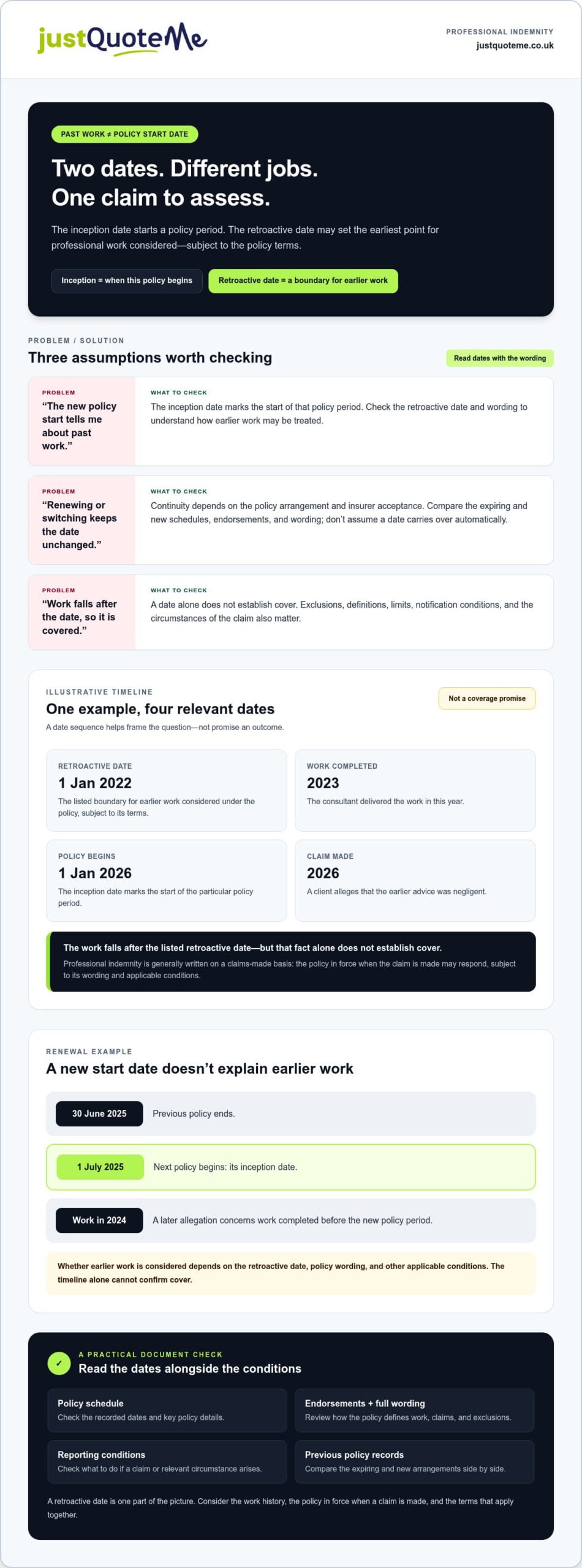
A complaint can arrive after a piece of work is complete, sometimes after a business has renewed or changed its policy. For example, a client might allege in 2026 that advice provided in 2023 was negligent. The work date is 2023; the claim date is 2026. A retroactive date may help determine whether the earlier work is within the policy’s relevant timeframe, while the current policy period and other terms also matter.
Illustrative timeline, not a coverage promise: A consultant’s policy begins on 1 January 2026 and lists a retroactive date of 1 January 2022. The consultant delivered work in 2023, and a client makes a claim in 2026. The work falls after the listed date, but that fact alone doesn’t establish cover. The insurer’s wording and the circumstances of the claim must also be considered.
What the retroactive date does not tell you by itself
A date is only one part of the policy. Exclusions, definitions, limits and notification conditions may affect how a particular claim is treated. Read the schedule, which records key policy details, alongside any endorsements and the full wording. If you’re comparing professional indemnity insurance options, consider how these terms work together rather than relying on a date in isolation.
In practical terms, “professional indemnity retroactive date explained” means understanding both the boundary and its limits. Check what professional activities the policy defines, how it describes a claim, and what it requires you to do if circumstances arise that might lead to one. A date that appears to include earlier work isn’t a standalone guarantee that an allegation will be covered.
Retroactive date vs inception date: how the two dates work together
The inception date and retroactive date answer different questions. One marks when a particular policy period begins; the other sets a boundary relevant to earlier professional work. Reviewing both helps you understand how a renewal or insurer change relates to your work history. The terms used and their effect can vary between insurers and policy wordings, so read the schedule alongside the full wording.
Inception date
The start date of the specific policy period. It tells you when that policy begins, not automatically which earlier work it may consider.
Retroactive date
A date shown in the policy documents that may set the earliest point in time for professional work considered under the policy, subject to its terms.
What is the policy inception date?
The inception date marks the start of the particular policy period. For example, an existing policy might end on 30 June, and a renewal policy might start on 1 July. The new inception date is 1 July. It doesn’t, by itself, explain how the policy treats work completed before then. For that, look at the retroactive date and the relevant wording in the new schedule.
Illustrative renewal timeline, not a promise of cover: A business’s previous policy ends on 30 June 2025, and its next policy begins on 1 July 2025. A client later makes an allegation about work completed in 2024. The new inception date shows when the current policy period started. Whether the earlier work is considered depends on the retroactive date, policy wording, and other applicable conditions. The timeline alone cannot confirm cover.
How continuous cover can affect the retroactive date
Where cover continues without a break, an earlier retroactive date may be retained, depending on the policy arrangement and insurer acceptance. Don’t assume it carries over automatically when renewing or switching. Check the expiring and new schedules side by side, then read the wording and any endorsements for the dates and terms that apply.
Insurers may use different labels, such as “retroactive start date”, and the same term can’t be interpreted without its policy context. The FCA guidance on Professional Indemnity Insurance discusses retroactive start dates for relevant regulated firms. Its guidance should be considered in its proper context, rather than treated as a rule for every business or profession.
Claims-made policies generally make it important to consider both the work history and the conditions for reporting a claim or relevant circumstances. A date may appear unchanged while other terms differ. For a clearer professional indemnity retroactive date explained, compare the dates, wording and reporting conditions together. You can also review professional indemnity insurance options with those points in mind.
Specified dates, unlimited retroactivity, and gaps in cover explained
Policies can describe the treatment of past work in different ways. A specified date gives a calendar boundary, “unlimited retroactivity” indicates no fixed past-work cut-off in that respect, and “retroactive date inception” generally links the boundary to the policy’s start. These labels are useful clues, not complete explanations. The schedule and full wording determine their effect, including how definitions, exclusions and endorsements apply.
| Date arrangement | What it may indicate |
|---|---|
| Specified retroactive date | Work before the stated date may fall outside the policy’s consideration, subject to the wording. |
| Unlimited retroactivity | No fixed retroactive cut-off is stated, but other policy terms still affect whether a claim is covered. |
| Retroactive date inception | The policy’s start date may act as the boundary, so earlier work is treated differently under the wording. |
What a specified retroactive date indicates
Imagine a policy schedule gives a particular date as the retroactive boundary. A client later alleges that a service delivered before that date caused a loss. The earlier work may fall outside the policy’s response, but the date alone doesn’t settle the position. Read the policy’s definitions, exclusions and endorsements to understand what work and claims the terms address.
What unlimited retroactivity and retroactive date inception mean
ACCA’s explanation of common arrangements distinguishes unlimited retroactivity from a specified date and retroactive date inception. In broad terms, unlimited retroactivity removes a fixed past-work date boundary, while inception-based wording may use the policy start as the boundary. The insurer’s schedule and wording control the actual effect. Neither label guarantees cover for every historic service, allegation or circumstance.
A break in cover deserves careful review, but it isn’t enough on its own to conclude that a particular claim is covered or excluded. Consider when the work took place, when a claim or relevant circumstance was reported, and which policy was in force at the relevant point. Then compare the dates and reporting conditions across the policies around the gap. A later policy may have terms that treat earlier work differently.
For solicitors, The Law Society’s guidance on PII renewal and run-off cover explains issues that can arise if a firm cannot renew. Its discussion relates to solicitors, so it should not be treated as a general rule for every profession.
To have professional indemnity retroactive date explained in practical terms, compare the policy schedule with the wording and your previous cover records. Check the specific boundary, any conditions affecting past work, and what the policy requires if a claim or relevant circumstance arises. That gives you a clearer basis for reviewing continuity without assuming that a particular date format protects every past service.
How to check your professional indemnity policy dates before renewal
A focused document review can help you spot date differences before renewing or switching insurer. Gather your current policy schedule, any endorsements, the full wording and previous policy records. Compare these with the professional work your business has carried out and the dates you’ve held cover. This checklist is a practical starting point, not a decision about whether a particular claim is insured.
Where to find the retroactive date in policy documents
Start with the policy schedule, which sets out key details such as the policy period and any stated retroactive date. Then check for endorsements that may amend or clarify the schedule. Labels can vary, so read the wording around the date rather than relying on a heading alone. Keep earlier schedules and renewal documents together to make changes in dates easier to identify.
- Schedule: Note the policy period and the retroactive date shown, if one is stated.
- Endorsements: Look for amendments that affect the dates or how terms apply.
- Inception date: Record when the current policy period begins and compare it with the previous policy’s end date.
- Retroactive date: Compare the stated boundary with when your professional practice began and when relevant services were delivered.
- Relevant wording: Review definitions, exclusions and notification conditions that may affect how the dates operate.
Keep a simple record of policy periods, renewal dates and any changes to the retroactive date. That gives you a clear reference when reviewing future documents and helps you identify any apparent gap or difference that needs explanation.
Questions to resolve before renewing or changing insurer
Before a new policy takes effect, check that its schedule records the retroactive date you intend to carry forward. Compare the proposed terms with your previous policy documents, and note any difference in the date or policy period. If there’s a gap in cover or the date has changed, review how the wording treats that situation rather than assuming the effect from the dates alone.
Compare reporting requirements and exclusions as well as dates. A schedule may appear consistent while other terms have changed, so read the relevant wording in full. If you’re unsure how provisions compare, an independent broker can help you review professional indemnity options and understand the differences between policies. Explore professional indemnity insurance as part of that review.
Use this process to organise the documents and identify questions before renewal or a switch. The phrase “professional indemnity retroactive date explained” is only useful in practice when you connect the date to your own work history and the policy terms. The checklist cannot determine whether a claim is insured; that depends on the specific wording and circumstances.
Get Your Free Business Insurance Quote now
Get help reviewing a professional indemnity retroactive date
Before renewing or moving your cover, bring the key details together: the current and proposed inception dates, each policy’s retroactive date, the relevant wording, and the conditions for reporting claims or circumstances. Compare them against your professional work history and previous policy records. This gives you a clearer view of what has changed and which points need careful attention, without treating a date as a decision about whether a claim is insured.
When broker support can help with policy comparisons
Just Quote Me arranges professional indemnity insurance and provides free, no-obligation quotes. As an independent UK insurance broker, it can help you compare available options and understand how policy terms relate to your profession, services and work history. Reviewing the retroactive date alongside reporting conditions and exclusions can make differences between policies easier to identify. No comparison can promise a particular coverage outcome, which depends on the policy wording and circumstances.
For a useful comparison, have your existing schedule and previous renewal documents to hand. Then consider whether the proposed policy records the date you intend, whether any break or changed date affects the terms, and how the reporting requirements compare. Focus on the wording that applies to your work, not just the headline dates. This helps keep the discussion specific to your business rather than relying on a general explanation.
You can review professional indemnity insurance options with those points in mind. A broker can help you understand the choices available and compare policy details, but can’t promise that a particular claim or past service will be covered. The final terms and the circumstances of any claim matter.
Choose a clear next step
Set aside your current and previous schedules, endorsements and wording before requesting a comparison. A concise record of your professional activities and policy dates can help keep the review focused. If you’re considering a switch, compare the proposed terms before the new policy takes effect, and make sure you understand any differences in dates or reporting conditions. This is a practical way to put “professional indemnity retroactive date explained” into action.
Get Your Free Business Insurance Quote now
Request a Call back for free Expert advice
Make your next renewal a more informed decision
Use your policy review as a chance to look ahead, not just compare this year’s documents with last year’s. If your services, client work or professional practice have changed, consider how those changes sit alongside the dates and terms you’re reviewing. Keeping a clear record can make future renewals easier to assess and help you spot questions before a policy change takes effect. For creative professionals and performers looking to keep their business finances and compliance equally organised, performanceaccountancy.co.uk provides specialist chartered accountancy support.
With professional indemnity retroactive date explained in practical terms, you can approach a comparison with a clearer sense of what to examine. Just Quote Me is an independent UK insurance broker with over 30 years of industry experience. Explore your options with a free, no-obligation quote or request a callback for help understanding the choices available. Any cover remains subject to the relevant policy terms.
Get Your Free Business Insurance Quote now
Request a Call back for free Expert advice
A considered review today can help you move into your next policy period with greater confidence.
Frequently Asked Questions
Can professional indemnity insurance be backdated?
An insurer may agree to a retroactive date earlier than the policy’s start, but that isn’t the same as starting a policy in the past. Don’t assume an application or renewal can create cover retrospectively for work, claims or circumstances already known. If you’re seeking a different date, review the insurer’s written terms and the issued schedule. The effect depends on what the insurer accepts and the policy wording.
What happens if my professional indemnity policy has a gap?
A gap can create uncertainty about which policy, if any, may respond to a claim made during that period, particularly if the claim relates to earlier work. For example, note the dates your old policy ended and any replacement policy began, then check the reporting terms for each. Don’t infer the outcome from the gap alone. Review the documents and get guidance on the specific circumstances.
Can I change my retroactive date when I renew my policy?
A renewal may show a different retroactive date, but a date shouldn’t be assumed to carry forward or change automatically. Compare the proposed schedule with your expiring one before accepting the renewal. If the date differs, consider how that affects work undertaken during your practice and any services that remain relevant. The insurer’s accepted terms and policy wording determine the effect, so keep a record of the final documents.
Does unlimited retroactivity mean every past piece of work is covered?
No. Unlimited retroactivity generally means there’s no fixed retroactive date limiting how far back the work may have taken place. It doesn’t remove other policy conditions. For instance, the professional activity may need to fit the policy’s definitions, and an exclusion or reporting condition may affect the claim. “Professional indemnity retroactive date explained” should never be read as a promise of cover for every historic service or allegation.
What happens if a claim is reported after my policy ends?
With claims-made cover, the policy in force when the claim is made is generally relevant, subject to its terms. A claim first reported after a policy ends may therefore raise questions about whether an active policy can respond or whether an applicable extension of reporting is in place. Check the policy’s reporting provisions and any arrangements that apply after expiry. The timing and circumstances matter, so don’t assume the answer from the expiry date alone.
Can a retroactive date apply differently to different professional services?
It can depend on the policy schedule and wording. A policy may describe insured activities, endorsements or limitations that affect how different services are treated, so don’t rely on one date without checking the scope of cover. For example, if your business has added a new service, compare its description with the activities recorded in the policy documents. The wording and accepted terms determine how the date applies to a particular claim.
