A craft fair may require insurance even when the law doesn’t. If you’re asking, “do i need insurance to sell at a craft fair?”, the answer depends on your circumstances and the organiser’s terms. Public liability insurance isn’t generally a legal requirement for stallholders in the UK, but an organiser may make it a condition of booking.
It’s easy to confuse the different requirements. Public liability relates to incidents connected with your stall and business activities, while product liability concerns alleged injury or damage caused by something you’ve sold.
This guide explains what to check before booking, how legal obligations differ from an organiser’s conditions, and what to ask about cover for your stall and products. It also sets out how to compare your activities and the event requirements with a policy, so you can take practical next steps with more confidence.
Key Takeaways
- To answer “do i need insurance to sell at a craft fair”, separate legal obligations from the conditions set by the event organiser.
- Public liability and product liability relate to different types of risk. Consider both your stall activities and the items you sell.
- Your cover needs may depend on what you do at the fair, from selling finished crafts to demonstrating a process or taking custom orders.
- Before booking, check the trader terms, required insurance documents, submission deadlines and any restrictions on your activities.
- Have details of your products, activities, event requirements and existing cover ready when discussing options with an insurance broker.
Do I need insurance to sell at a craft fair in the UK?
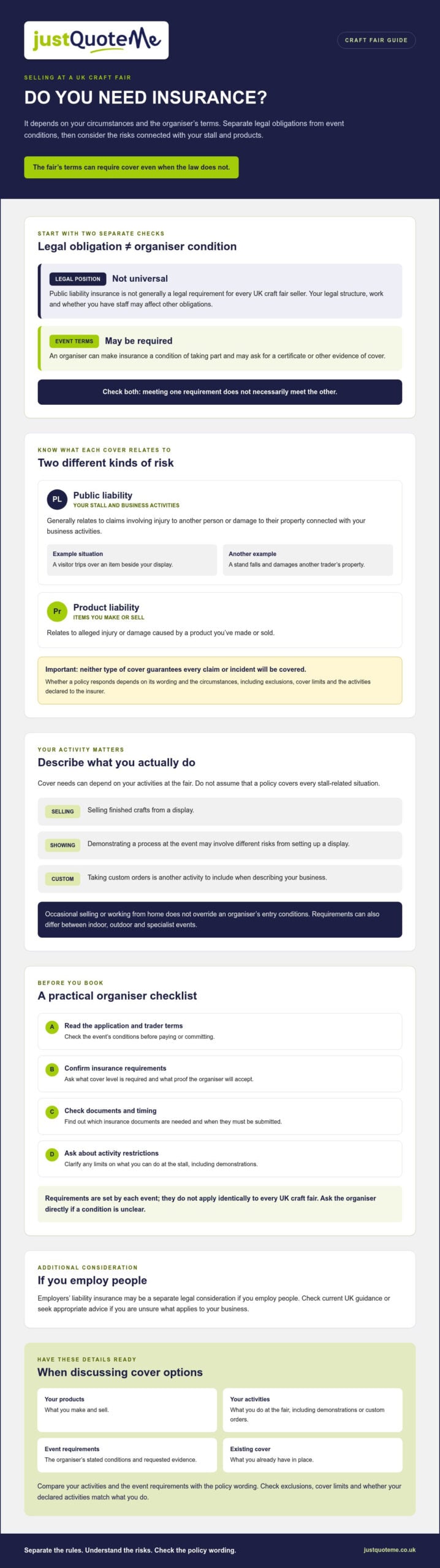
There isn’t a general legal requirement for every UK craft fair seller to have public liability insurance, but an organiser can make it a condition of taking part. If you’re asking “do i need insurance to sell at a craft fair?”, check both the rules that apply to your circumstances and the specific event’s terms before you book.
These are separate questions. A legal obligation applies under the relevant law, while an event condition is a requirement you agree to meet if you want to trade at that fair. Organisers may ask stallholders to provide evidence of insurance, even where that type of cover isn’t generally required by law. For background on liability cover, see this overview of Liability insurance.
Is craft fair insurance a legal requirement for every seller?
Public liability insurance isn’t a universal legal requirement for all craft fair sellers. However, your legal structure, the work you do and whether you have staff can affect other obligations. Employers’ liability insurance, for example, may be a separate legal consideration if you employ people. Check current UK guidance or seek appropriate advice if you’re unsure what applies to your business.
Don’t assume that selling occasionally, working from home or trading as a sole seller settles the question. Those details may help determine what cover is suitable, but they don’t override an organiser’s entry conditions. The right option depends on your activities and the event requirements.
Why might a craft fair organiser ask for proof of insurance?
Organisers set terms for their own events and may ask stallholders to show they have considered risks connected with trading. A certificate or other evidence of cover may be requested as part of the application or before the event. Requirements are set by each event, rather than applying identically to every UK fair.
Conditions can vary between indoor, outdoor and specialist events. A fair involving demonstrations, particular products or different stall arrangements may set requirements that differ from another event. If the organiser asks for public liability insurance, confirm the required cover level and what proof they’ll accept. Just Quote Me can discuss Public Liability Insurance in relation to your activities and the event’s stated requirements.
Before paying or committing, read the application form and trader terms. Ask the organiser directly about any unclear conditions. Check both the law that applies to your circumstances and the fair’s own terms, because meeting one doesn’t necessarily meet the other.
What risks can public liability and product liability insurance address?
These covers relate to different parts of selling at a craft fair. Public liability insurance generally concerns claims involving injury to another person or damage to their property connected with your business activities. Product liability insurance relates to alleged injury or damage caused by a product you’ve made or sold. Neither should be treated as a promise that every incident or claim will be covered.
When might public liability be relevant at a craft stall?
For example, a visitor might trip over an item beside your display, or a stand might fall and damage another trader’s property. These are situations where a third party injury or property damage claim might arise. Whether a policy responds depends on its wording and the circumstances, including exclusions, cover limits and the activities declared to the insurer.
A policy may not automatically cover every activity you carry out at an event. Setting up a display and giving a live demonstration, for instance, may involve different risks. Describe what you actually do rather than assuming the policy covers every stall related situation. You can read more about Public Liability Insurance and discuss whether it fits your craft fair activities.
Could handmade products raise product liability questions?
Yes. A claim about an item causing injury or damaging someone’s property is different from an incident involving your stall or event space. For instance, a customer might allege that a handmade product caused an injury after purchase. This is an illustrative situation, not a guarantee that a particular claim would be covered.
When seeking advice, explain what you make and sell, and whether you demonstrate how products are made or used. Be specific about materials, product types and activities, then check that the policy wording reflects them. Exclusions and limits matter too. If your work changes or you add new products, ask whether the information held for your cover needs reviewing.
If you’re wondering “do i need insurance to sell at a craft fair” and what type may suit your stall, focus on the risks and activities involved, not just how often you trade. An independent broker can discuss Public Liability Insurance and Product Liability Insurance against those details, without guaranteeing acceptance or a particular claims outcome. For broader market stall planning, see this guide to starting a market stall.
Do occasional sellers, home-based makers, and demonstrators need the same cover?
Not necessarily. How often you trade is only one part of the picture. Your products, what you do at the stall, the event’s conditions and any existing insurance all matter. If you’re asking “do i need insurance to sell at a craft fair”, consider your actual activities instead of assuming that occasional selling or working from home settles the question.
A seller displaying finished goods may do different activities from someone making items in front of visitors. Taking custom orders can also involve different business arrangements from selling ready made stock. Describe each part of your work when checking insurance, including whether you take payments, offer demonstrations or agree to make items after the fair.
Does selling at only one craft fair change the insurance question?
One event doesn’t automatically remove an organiser’s insurance conditions. Check the trader terms for that fair, even if you don’t sell elsewhere. Review any existing policies and ask the insurer whether they include your business activity and participation in an event. Don’t assume personal or home insurance extends to selling stock, business related liability or market activity. Ask what your policy actually covers.
The number of events alone doesn’t establish what cover is suitable. A single stall can still involve particular products, equipment or activities, while a regular seller’s needs can depend on their own circumstances. Focus on the details rather than treating frequency as a complete measure of risk.
What if you demonstrate or make products at the event?
Explain the demonstration clearly when checking whether cover is appropriate. Consider the tools and materials involved, whether you use heat or sharp objects, and how visitors may interact with the activity. Sewing, jewellery making or working with heated materials, for example, could involve different practical considerations. These examples don’t indicate that a claim would be covered.
Be clear about what you’ll bring and do, not just what you sell. If you only display finished goods at some fairs but demonstrate your process at others, tell the insurer and check the policy wording for each activity. Ask about relevant exclusions and limits, and confirm whether the event’s conditions align with the cover being considered.
Suitable cover should reflect your actual products and activities, as well as the specific event’s conditions. Before booking, prepare a short description of what you sell, how you make it, whether you demonstrate, and any custom order arrangements. That gives an insurer or broker a clearer basis for discussing relevant options.
What should you check before booking a UK craft fair stall?
Before you pay a deposit or confirm your place, compare the fair’s requirements with your planned activities and the wording of any insurance you already have. If you’re asking “do i need insurance to sell at a craft fair”, this checklist can help you get clear answers before committing.
- 1. Read the trader terms. Check whether insurance is required, what type is specified, and whether there’s a stated minimum level of cover. Don’t assume the same conditions apply at every event.
- 2. Ask what proof is accepted. Find out whether the organiser wants a certificate or other documents, how to submit them, and the deadline. Check whether evidence is required with your application or later.
- 3. Describe your activities accurately. Tell the organiser if you’ll demonstrate your craft, use tools or materials at the stall, take custom orders, or do anything beyond displaying finished products.
- 4. Confirm product specific conditions. Ask whether the fair has extra requirements or restrictions for products such as food, candles or cosmetics. Confirm any relevant rules directly with the organiser before applying.
- 5. Compare the event with your policy. Check that your cover describes your products, sales activities and event locations, and review its exclusions, conditions and limits. Ask the insurer or broker to clarify anything that doesn’t match your plans.
- 6. Check deadlines and restrictions. Note application and document submission dates, plus any conditions on demonstrations, stall set up or products. Get unclear requirements confirmed in writing before you commit.
A policy that sounds relevant by name may not reflect every activity you plan to carry out. For example, a policy may describe selling finished goods but not address a public demonstration. Review the wording and declared business activities together, rather than relying on assumptions. You can also explore information about Public Liability Insurance when considering cover for your stall activities.
If an organiser’s requirement is unclear, ask them directly. For policy questions, contact your insurer or broker and share the event terms alongside details of what you sell and do. Check the fair’s conditions and your policy against your actual activities before booking.
For information about insurance options, visit Just Quote Me and consider what details to discuss about your craft fair activities and the organiser’s requirements.
How can a broker help you arrange suitable craft fair insurance?
A broker can help you discuss insurance options in light of your products, activities and the fair’s requirements. This may be useful if you’re still asking “do i need insurance to sell at a craft fair”, or if you’re unsure whether existing cover reflects what you’ll do at the event. A broker can explain relevant options, but can’t guarantee that an organiser will accept a policy or that a particular claim will be covered.
Just Quote Me is an independent UK insurance broker with over 30 years of industry experience. It arranges Public Liability Insurance and Product Liability Insurance through a network of UK insurers, and can offer tailored advice based on the information you provide. Its FCA authorised status is a further point to check when choosing an insurance broker.
What information should you prepare for an insurance enquiry?
Clear details make it easier to discuss whether potential cover fits your circumstances. Gather the following before making an enquiry:
- Your products: List what you make and sell, including any new or custom made items.
- Your activities: Explain how products are made, whether you demonstrate at the stall, and what tools or materials you use.
- Event details: Note the fair dates, venue, organiser’s terms and any insurance evidence or cover requirements they’ve requested.
- Existing policy information: Have your policy documents available so you can check declared activities, exclusions, conditions and limits.
Share the organiser’s exact wording if possible. That helps distinguish a general question about insurance from a specific event condition, such as a requested document or a restriction on demonstrations.
When should you request tailored advice?
Ask for help if you can’t tell whether your policy includes the products or activities you’ve declared, or if an organiser’s requirement is unclear. This is especially relevant if you’ll demonstrate a process, take custom orders or sell products that aren’t listed in your existing policy. A broker can discuss options against those details, while the insurer’s policy wording sets out the terms, exclusions and limits that apply.
Once you’ve gathered your product details, activity description and fair requirements, you can discuss them with Just Quote Me:
Contact Just Quote Me about business insurance
Speak with Just Quote Me about your insurance enquiry
Check your cover before you book your next fair
If you’re asking “do i need insurance to sell at a craft fair”, remember to check both the organiser’s conditions and any obligations that apply to your circumstances. Suitable cover depends on what you make, sell or demonstrate, while public liability and product liability relate to different types of risk. Before booking, compare the event’s requirements with your policy wording and the activities you’ve declared.
Just Quote Me is an independent UK insurance broker founded in 1989, with over 30 years of industry experience. As an FCA authorised firm with access to a network of UK insurers, it can discuss relevant options based on your products and event requirements, without guaranteeing acceptance or claims outcomes.
Prepare your product details, planned activities, event terms and existing policy documents before asking for guidance. A clear picture of your stall can help you take a more informed next step.
Discuss your craft fair insurance requirements
Contact Just Quote Me about your cover
Or learn more about Just Quote Me and the insurance options it arranges.
Frequently Asked Questions
Is public liability insurance a legal requirement for selling at a craft fair?
Public liability insurance isn’t generally a legal requirement for every craft fair seller in the UK. However, an organiser may make it a condition of taking a stall, and separate legal obligations can apply depending on your business circumstances, such as whether you employ staff. Check current guidance for your situation, then read the organiser’s terms. A legal requirement and an event entry condition are different things.
Can I sell at a craft fair without insurance?
Possibly, if the organiser’s terms don’t require insurance and no separate legal obligation applies to your circumstances. Check before booking, since an organiser may ask for proof of cover as a condition of taking part. You can also discuss risks connected with your products or stall activities with an insurer or broker. Don’t rely on assumptions about what an existing policy includes.
What insurance do I need to sell handmade products at a craft fair?
There isn’t one answer that applies to every maker. Public liability insurance may be relevant to incidents involving your stall, while product liability insurance concerns alleged injury or damage caused by a product you sell. Suitable cover depends on your products, how you make or demonstrate them, and the fair’s terms. Check policy wording, exclusions and limits, and describe your activities accurately when asking about options.
Does public liability insurance cover the products I sell?
Public liability insurance and product liability insurance address different types of claims. Public liability relates to third party injury or property damage connected with your business activities, while product liability relates to alleged harm or damage caused by a product after sale. Don’t assume public liability automatically covers product related claims. Check the policy wording and ask your insurer or broker whether your specific products and activities are included.
Can a craft fair organiser require stallholders to have insurance?
Yes. An organiser can set insurance conditions for participation in its event, including asking stallholders to provide evidence of cover. Requirements can differ between fairs, so check the application form and trader terms rather than assuming another event’s rules apply. Ask what type of insurance is required, what evidence is accepted, whether there’s a minimum cover level, and when documents must be submitted.
Do I need insurance if I only sell at one craft fair?
Selling at one event doesn’t automatically remove an organiser’s insurance conditions or settle what cover may suit you. Check the fair’s terms and review any existing policy to see whether it includes your products, sales activity and event participation. If you demonstrate your craft or take custom orders, mention that too. Ask your insurer or broker to clarify any uncertainty before you commit to the stall.
