
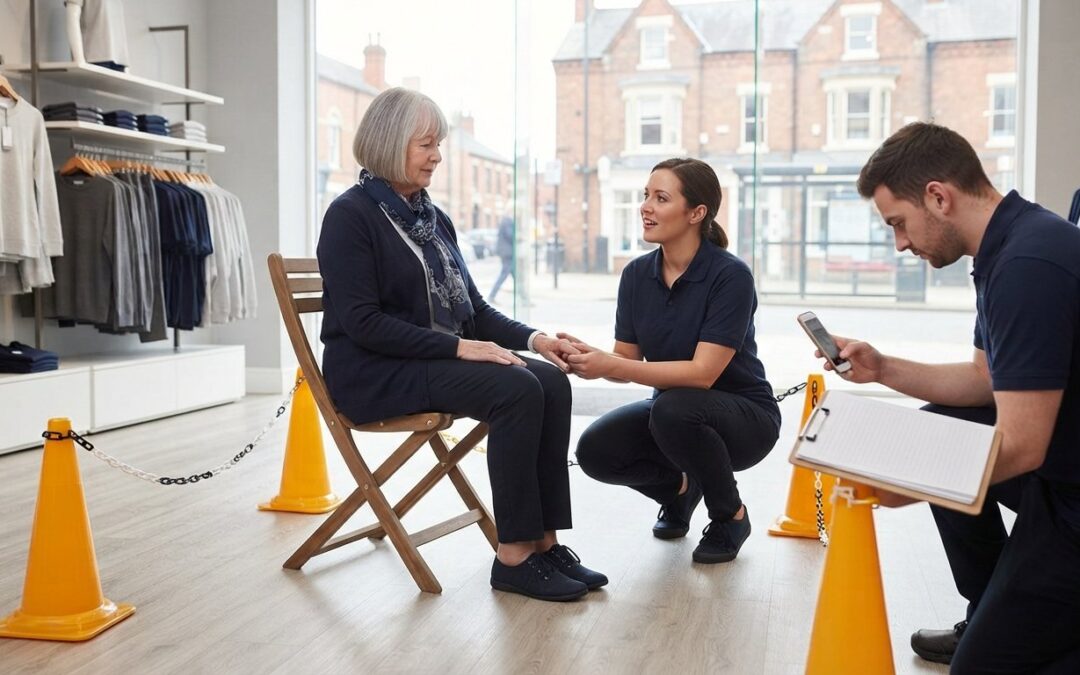
Slips, trips, and falls on the same level account for 30% of all reported non-fatal injuries in Great Britain, making them the single most common cause of accidents in the retail sector. When a person hits the floor, the immediate rush of adrenaline often makes it hard to think clearly. You’re likely worried about the customer’s wellbeing while simultaneously wondering exactly what to do if a customer slips in my shop to protect your business from a costly legal claim. It’s a stressful situation that every shop owner fears, especially when you’re unsure about RIDDOR reporting or what to say to the injured party without compromising your position.
We understand that you need a steady hand to guide you through these high-pressure moments. This article provides a straightforward, step-by-step risk management checklist to help you handle shop floor accidents professionally and with confidence. We’ll explain how to document evidence correctly, how to communicate with the customer without admitting liability, and when you need to notify your insurance broker. By following this protocol, you’ll minimise the chance of a successful claim and ensure your staff are prepared to manage the situation calmly and effectively.
Key Takeaways
- Prioritise the customer’s safety by providing immediate first aid and calling emergency services if there is any doubt about their condition.
- Learn exactly what to do if a customer slips in my shop by following a strict documentation checklist that includes preserving CCTV and taking detailed photos of the scene.
- Master the balance of being helpful and empathetic without inadvertently admitting legal liability or making damaging statements to the injured party.
- Understand your statutory obligations for RIDDOR reporting and why notifying your insurance broker immediately is vital for protecting your business.
- Implement proactive risk management strategies, such as updated cleaning schedules and regular floor inspections, to prevent future accidents and strengthen your defence.
Immediate Response: Ensuring Safety and Managing the Scene
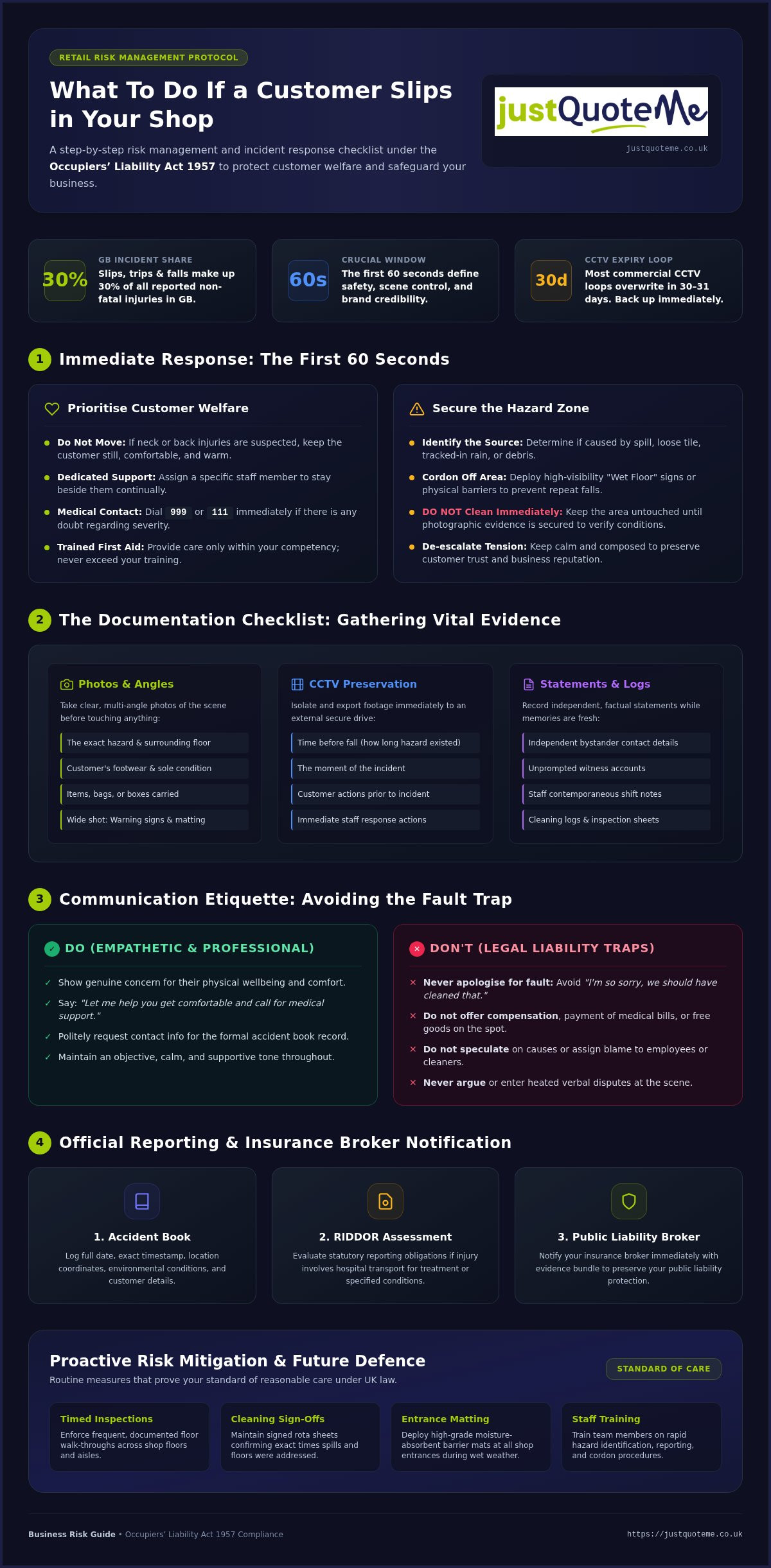
The first sixty seconds after an accident are the most critical for your business. When you are deciding what to do if a customer slips in my shop, your primary focus must be on immediate safety and scene control. Slips and falls account for 30% of all non-fatal workplace injuries in Great Britain; they are high-stakes events that require a disciplined response. You have a legal duty under the Occupiers’ Liability Act 1957 to ensure your visitors are reasonably safe. Failing to act decisively can escalate a minor tumble into a significant legal issue.
Attend to the customer immediately. Do not move them if they appear to have back or neck injuries; instead, keep them still and comfortable. Assign a specific staff member to stay by their side until they either leave the premises or professional help arrives. This provides emotional support and ensures the customer isn’t left alone while you manage the logistics of the accident. If there is any doubt about the severity of the injury, call for professional medical assistance by dialling 999 or 111. It’s better to over-respond than to overlook a serious internal injury.
Prioritising Customer Welfare
Offer basic first aid if you are trained to do so, but never exceed your level of competency. Your goal is to keep the individual comfortable and warm while waiting for help. Maintaining a calm, professional demeanour is vital for de-escalating tension. High-stress environments often lead to heated exchanges; staying composed helps protect your brand’s reputation. Understanding slip and fall premises liability claims is helpful, but in the heat of the moment, your human-centric response is what the customer will remember most. If you have the right Public Liability Insurance in place, you can focus on the person rather than the potential cost.
Securing the Accident Scene
While one staff member attends to the customer, another must secure the area. Securing the scene is a vital part of knowing what to do if a customer slips in my shop, as it prevents further injuries and preserves the environment for inspection. Identify the source of the slip immediately. Whether it’s a spill, a loose floor tile, or moisture tracked in from the rain, the hazard must be cordoned off to prevent “copycat” accidents. Use bright “Wet Floor” signs or physical barriers to block the area entirely. Crucially, do not clean up the spill or fix the hazard until you have completed the documentation steps mentioned in the next section. Preserving the scene exactly as it was at the time of the fall is essential for a fair investigation. If you remove the evidence too quickly, you may lose the ability to prove that your cleaning protocols were being followed correctly.
The Documentation Checklist: Gathering Vital Evidence
While most online advice focuses on how a victim should build a claim, your priority as a business owner is building a robust defence. Knowing what to do if a customer slips in my shop involves more than just offering a glass of water; it requires a meticulous evidence-gathering process. If a claim arrives months down the line, your memory of the event won’t be sufficient. You need a secure incident file that proves you met your legal duty of care and maintained a safe environment.
Photographic and Video Evidence
Capture high-quality photographs of the scene immediately. Don’t just snap the floor; take shots from multiple angles to show the context of the accident. Photograph the customer’s footwear and any items or bags they were carrying at the time. These details are vital for assessing whether external factors contributed to the fall. Include wide shots to demonstrate the presence of warning signs or entrance matting. Most commercial CCTV systems operate on an automatic 30 to 31-day overwrite cycle. You must isolate and save footage covering the period before, during, and after the fall onto an external drive. This footage can prove how long a hazard was present or highlight the customer’s own actions leading up to the event.
Witness and Staff Statements
Independent witnesses are incredibly valuable in a liability dispute. Ask bystanders for their contact details and a brief account of what they saw in their own words. Don’t coach them or suggest what happened; simply record their honest observations. Similarly, ensure the staff member on duty writes a contemporaneous note of the event. This is a record made at the time of the incident, and it carries significant weight in legal proceedings. This documentation also helps you determine if the event meets the HSE RIDDOR reportable incidents criteria, which is mandatory if a customer is taken directly to hospital for treatment. Keep all these records, including a copy of the accident book entry, in a secure file for future insurance reference.
Finally, check your cleaning and inspection logs. These logs are your best proof that a “reasonable” maintenance regime was being followed. If your records show the floor was inspected and cleared only fifteen minutes before the accident, it strongly supports the argument that you were not negligent. This level of proactive documentation is a hallmark of businesses that carry bespoke shop insurance, as it provides your broker with the ammunition needed to defend your position. Taking these steps now ensures that a single accident doesn’t turn into an undefendable legal headache later.
Communication Etiquette: Avoiding the ‘Admission of Fault’ Trap
When you are managing the immediate aftermath of an accident, your words are just as important as your actions. Many business owners struggle with what to do if a customer slips in my shop because they naturally want to be apologetic and helpful. However, there is a fine line between showing genuine human empathy and making a statement that a solicitor could later use as a formal admission of liability. You must remain professional and calm, ensuring that your desire to provide good customer service doesn’t inadvertently jeopardise your legal protection.
Staff training is vital here. Your team must understand that they should never speculate on the cause of the accident or make self-incriminating remarks. Phrases like “I’m so sorry, we should have cleaned that up” or “this happens all the time with this floor” are extremely damaging. Instead, the focus should remain entirely on the customer’s wellbeing and the facts of the event. Do not offer immediate financial compensation, cash from the till, or free goods as a “settlement” or gesture of goodwill. While it might seem like a quick way to resolve a complaint, it can be interpreted as an attempt to “buy” the customer’s silence or an admission that your business was at fault.
Professional Language vs. Legal Admission
It is a common misconception that saying “sorry” is an automatic admission of guilt. In the UK, Section 2 of the Compensation Act 2006 explicitly states that an apology, an offer of treatment, or other redress does not of itself amount to an admission of negligence or breach of statutory duty. This means you can be kind without being legally vulnerable. Use neutral, helpful language such as “I am sorry you have had an accident” rather than “I am sorry we caused this.” Simply explain that an internal investigation will be conducted as per company policy. This demonstrates that you take the matter seriously while maintaining a professional distance from any immediate blame. Showing empathy is part of being a responsible local business, but it does not equal a legal admission of negligence.
Handling Post-Accident Enquiries
If the customer or a solicitor contacts you directly after they have left the shop, do not engage in detailed discussions or provide a running commentary on your findings. Direct all formal enquiries to your head office or your insurance provider. If you receive a “Letter of Claim” from a legal firm, don’t panic and don’t reply yourself; forward it immediately to your broker. Having robust Public Liability Insurance provides the legal defence you need to handle these situations correctly. Your insurer will manage the correspondence on your behalf, ensuring that all responses are legally sound and that your business interests are protected throughout the process.
Official Reporting: RIDDOR and Your Insurance Broker
Once you have secured the scene and gathered your evidence, you must turn your attention to your statutory and contractual obligations. Many retailers feel overwhelmed by the administrative aftermath of an accident, but knowing what to do if a customer slips in my shop regarding official reporting is vital for staying on the right side of the law. Your first step is to complete your internal Accident Book. Under the Social Security (Claims and Payments) Regulations 1979, any business with ten or more employees must maintain this record. Even if you have fewer staff, keeping a formal log is a best practice that provides a clear, timestamped account of the event for your legal defence.
Understanding RIDDOR Requirements
Not every slip requires a report to the Health and Safety Executive (HSE). Under the Reporting of Injuries, Diseases and Dangerous Occurrences Regulations 2013 (RIDDOR), an incident involving a member of the public is only reportable if the person is taken directly from the scene of the accident to a hospital for treatment. It’s a common mistake to report every precautionary hospital visit. If the customer goes to A&E just to be “checked over” and receives no treatment, it isn’t reportable. However, if they are treated for a specific injury, you must submit an online report via the HSE portal without delay and within 10 days of the incident. Always keep a copy of the HSE submission and the reference number, as your insurer will likely request these documents to verify your compliance with safety regulations.
The Role of Your Insurance Broker
You should notify your insurance broker immediately after an accident, even if the customer insists they are fine and no claim has been made yet. Most commercial policies include “condition precedent” clauses, which require you to report potential claims as soon as they occur. If you wait until a solicitor’s letter arrives months later, your insurer might argue that your late notification has prejudiced their ability to investigate, potentially leading to a rejected claim. An independent broker like Just Quote Me acts as your advocate during this process. We manage the complex administrative burdens so you don’t have to, ensuring your side of the story is presented clearly to the underwriters. If you are unsure about the severity of an incident, you can Contact Just Quote Me for expert advice on incident reporting and next steps.
While you are preparing your report, take a moment to gather your policy documentation and review your Shop Insurance limits. Ensure your Public Liability cover is sufficient for the modern legal landscape, where settlement costs can be substantial. Having a steady hand to guide you through these requirements is the best way to protect your business’s financial future. For a tailored review of your current protections, you can get expert assistance from an independent broker who understands the specific risks of the UK retail sector.
Preventing Future Slips: Risk Assessment and Mitigation
The final stage in knowing what to do if a customer slips in my shop is ensuring it doesn’t happen again. While the immediate response handles the crisis, long-term prevention protects your business from being labelled as negligent in future claims. HSE data indicates that contamination, such as water, grease, or wet cleaning residue, contributes to over 90% of all slip accidents on commercial floors. By addressing these environmental factors, you demonstrate a commitment to the “Clean, Dry, Maintain” principles that courts look for when assessing liability. A proactive approach doesn’t just help manage insurance risks; it builds a safer environment for your customers and staff alike.
Updating Your Risk Assessment
Conduct a fresh risk assessment of the specific area where the fall occurred. You need to determine if the accident was a genuine one-off or indicative of a recurring environmental issue. For instance, if the slip happened near the entrance during rain, your current matting may be insufficient. The HSE standard recommends at least 2 to 3 metres of clean barrier matting to effectively absorb moisture from footwear during wet weather. If the floor surface itself is the problem, consider its Pendulum Test Value (PTV). A safe floor should achieve a PTV of 36 or higher in wet conditions to be classified as low slip potential. Document every change you make, from installing new grip strips to repairing loose tiles. For those managing more complex environments, you can find Builders Insurance insights that offer similar site safety tips for high-risk areas.
Staff Training and Accountability
Your prevention strategy is only as strong as your team’s execution. Implement a strict “clean as you go” policy and ensure hourly floor inspection logs are signed off and stored securely. Digital logs are increasingly preferred as they provide a timestamped audit trail that is harder to challenge in court than traditional paper sheets. Ensure every staff member receives documented health and safety training that covers the specific “Accident Protocol” outlined in this guide. They should know exactly how to identify hazards and how to react if a customer falls. Finally, use this as an opportunity to review your Public Liability Insurance limits with a specialist. As we move through 2026, legal costs and settlement figures continue to rise, making adequate protection more vital than ever for the independent shop owner.
Protecting Your Business with Proactive Planning
Handling a shop floor accident with professionalism ensures the safety of your customers and the long-term security of your livelihood. Knowing exactly what to do if a customer slips in my shop transforms a high-pressure situation into a manageable process. By prioritising immediate welfare, securing vital evidence, and following strict reporting protocols, you build a robust defence against potential liability claims. These steps don’t just protect you legally; they demonstrate that you’re a responsible, human-centric business owner who understands the value of safety.
Don’t wait for an accident to happen before reviewing your coverage. As an FCA-authorised broker with over 30 years of experience, Just Quote Me provides the expert guidance you need to navigate the complexities of retail risk. You can Request a Call back for free Expert advice from our team to ensure your shop is fully protected. When you’re ready to secure your business, Get Your Free Business Insurance Quote now and Get expert advice from Just Quote Me today to move forward with confidence.
Frequently Asked Questions
Do I have to report every customer slip to my insurance company?
Yes, you should notify your broker of any incident that could potentially lead to a claim. Most commercial policies include a “condition precedent” clause, which requires prompt notification of accidents. Even if the customer insists they are uninjured, failing to report the event early can give the insurer grounds to reject a future claim. It is always safer to have a formal record on file with your insurance partner.
What is the difference between Public Liability and Employers’ Liability in a shop accident?
Public Liability covers claims made by members of the public, such as customers or delivery drivers, who are injured on your premises. Employers’ Liability is a legal requirement if you have staff and covers claims made by employees for work-related injuries. If you are wondering what to do if a customer slips in my shop, Public Liability is the specific cover that manages their legal costs and compensation.
Can I be sued if I had a ‘Wet Floor’ sign displayed at the time?
Yes, a customer can still pursue a claim, but displaying a “Wet Floor” sign provides a strong legal defence. Under the Occupiers’ Liability Act 1957, you must take reasonable care to keep visitors safe. A sign demonstrates that you identified the risk and provided a warning. However, courts will also consider how long the hazard existed and if the warning was sufficient for the specific environment.
How long does a customer have to make a claim after slipping in my shop?
In the UK, the standard limitation period for personal injury claims is three years from the date of the accident. If the customer was under 18 at the time of the slip, the three-year limit only begins on their 18th birthday. Because claims can arrive years after the event, keeping your CCTV footage and accident book records for at least three years is a vital part of your strategy.
What should I do if the customer refuses medical help at the scene?
Respect their decision but document the refusal clearly in your accident book. You should still offer to call a relative or arrange a taxi to ensure they get home safely. If they decline all assistance, note their physical appearance and how they left the premises. This detailed record is essential if they later claim their injuries were more severe than they appeared at the time of the incident.
Is it a legal requirement to have an accident book in my shop?
It is a legal requirement under the Social Security (Claims and Payments) Regulations 1979 for any business employing ten or more people. Regardless of staff numbers, keeping one is a health and safety best practice. An accident book provides a formal, contemporaneous record of the event. It is often the first document an insurance company or the HSE will request to see during a liability investigation.
What happens if the slip was caused by a leaked product from a third-party supplier?
You are generally responsible for the safety of your shop floor, regardless of how a spill occurred. However, if a leak resulted from a manufacturing defect in a third-party product, your insurer may attempt to recover costs from that supplier via subrogation. You must still follow the standard protocol for what to do if a customer slips in my shop, as the primary duty of care rests with you.
How can an insurance broker help me if a claim is made against my business?
An independent broker like Just Quote Me acts as your professional advocate throughout the claims process. We handle the complex communication with underwriters, ensuring they have the evidence needed to defend your position. With over 30 years of experience, we simplify the administrative burden and provide expert advice on your policy limits. We ensure you aren’t left navigating complex legal jargon alone during a stressful liability claim.
