

Choosing insurance for a portfolio of buy-to-let properties means looking at the portfolio as a whole while checking the risks of each address. Construction, location, use and occupancy can all be relevant, so don’t assume one arrangement or set of terms will suit every property.
Combining properties may make administration easier, while separate policies may be worth considering when properties have different needs. The right approach depends on the details of your portfolio and what insurers are willing to cover.
This guide explains what information an insurer or broker may need, how to compare a portfolio arrangement with separate policies, and why changes to tenants, occupancy or property details matter. It also offers a practical way to organise your information before discussing a quote. Just Quote Me is an independent UK insurance broker with access to a network of UK insurers, and can help you discuss options for a varied portfolio.
Key Takeaways
- Assess the portfolio as a whole, then record each property’s use, occupancy and individual characteristics.
- When discussing insurance for a portfolio of buy-to-let properties, ask what cover areas may be available and check the policy wording for terms, exclusions and limits.
- Compare portfolio and separate-policy arrangements for administration, renewal coordination and clarity about cover at each address.
- Gather property addresses, occupancy details and existing policy documents before speaking with an insurer or broker.
- An independent broker can help present your portfolio details and discuss available insurer options. The insurer’s terms determine the cover.
Insurance for a buy-to-let portfolio: why assess the properties together?
Several rental properties may form one investment portfolio, but they won’t necessarily have the same insurance needs. Assessing them together gives you a clearer overview and helps you ask whether an insurer can consider them under one arrangement or whether separate policies may be more suitable. The buy-to-let market in the UK includes a range of property investments, so the number of properties alone won’t tell an insurer what needs assessing.
Consider how each property is used, who occupies it and what makes its circumstances distinct. For broader cover information, explore residential letting insurance.
What does portfolio insurance for landlords mean?
Portfolio insurance is a way to discuss cover for multiple rental properties. It doesn’t guarantee that one policy can include them all. Ask whether an insurer can consider the properties together or whether separate policies are needed. Availability, eligibility, terms and underwriting decisions depend on the insurer and your circumstances. Check the policy schedule and wording to confirm which properties are insured and what applies to each one.
Which properties and landlord circumstances should be considered?
Start by distinguishing standard residential lets from any properties with a different use. For each address, record its location, construction and occupancy, as these details may affect an insurer’s assessment. Don’t assume a change in tenants or occupancy is covered in the same way across the portfolio. Confirm what information the insurer needs and check the relevant policy wording.
For example, a portfolio might include a house occupied by tenants and a flat between tenancies. Both are rental properties, but their current occupancy differs. Recording that difference gives an insurer or broker a clearer picture and helps you check that each property is accurately represented.
Create a simple record for every address, including its use, construction details and occupancy. If circumstances change, ask whether the insurer needs updated information and whether the schedule or policy terms should be reviewed. This makes it easier to compare options without assuming a portfolio arrangement means identical cover for every property.
What can insurance for a buy-to-let portfolio include?
Insurance for a portfolio of buy-to-let properties may involve several cover areas, but don’t assume they are automatically included or arranged on identical terms for every address. Treat each as a point to discuss with the insurer or broker, then check what the policy provides for each property.
Which cover areas should landlords ask about?
Ask whether buildings cover is available for the insured structure of each property and whether the proposed cover reflects its relevant details. Landlord liability is another area to ask about, with its scope and conditions set out in the policy wording. Loss of rent may also be available, but whether it applies depends on the policy’s terms, limits and insured events.
These are options to check, not guaranteed features. GOV.UK provides official government guidance for landlords on renting out a property. Use it for information about landlord responsibilities, and review insurance separately to understand the protection being offered. For broader policy context, read about landlord insurance.
How do exclusions, limits and property schedules affect cover?
The policy wording determines the cover for each property. The schedule identifies the insured property and records details that apply to it. Check that every address and its relevant occupancy information are accurate. Don’t rely on a general portfolio description if the documents list properties individually.
Review the terms and ask for clarification where needed:
- Insured events: Which events can lead to a claim under the stated cover?
- Limits: What is the maximum amount payable for a particular cover area, as stated in the policy?
- Excesses: What amount would you need to contribute towards a claim?
- Exclusions: Which circumstances or losses are not covered?
Check these details property by property. A limit or exclusion may matter differently depending on a building’s characteristics or occupancy. The schedule and wording show what applies. If a detail is unclear, ask the broker or insurer to explain it before relying on the cover.
If you’d like help organising property details and discussing available options, Just Quote Me can help you explore landlord insurance.
Portfolio policy or separate policies: how should landlords compare them?
There isn’t one arrangement that suits every landlord. A portfolio policy may bring properties together for administration, while separate policies may make it easier to review each property independently. Both approaches depend on insurer availability and eligibility. Compare the documents and practical responsibilities, not just the policy label.
The right arrangement depends on insurer terms and the properties being insured. Use this comparison to identify questions for an insurer or broker:
| What to compare | Portfolio arrangement | Separate policies |
|---|---|---|
| Administration | May bring property information together, but check how updates and claims are handled across the arrangement. | Each policy may need its own records and updates, so track them consistently. |
| Renewal coordination | Ask whether properties share renewal dates and how changes to one address are managed. | Renewals may fall on different dates, requiring separate reminders and reviews. |
| Property-level clarity | Check that schedules clearly identify each insured property and show the terms that apply. | Each property has its own policy documents to review, though you’ll need to compare them individually. |
When might a joined-up arrangement be worth exploring?
If coordinating paperwork and renewal dates across several addresses is difficult, ask whether an insurer can consider them together. Confirm that it can accommodate the different property types and circumstances. Before choosing this route, check whether a change affecting one property could alter the terms, administration or renewal of the wider arrangement.
When might separate policies be easier to assess?
Separate cover may be worth discussing if properties differ substantially in use, occupancy or insurance requirements. Review each policy’s schedule, wording, limits and renewal date rather than relying on a headline summary. Don’t assume separate policies are safer, cheaper or more comprehensive. The documents and insurer terms are what matter.
For a property in a multi-occupancy leasehold building, the FCA information on multi-occupancy leasehold insurance reforms may provide useful context. Check whether it’s relevant to the particular property and arrangement rather than assuming it applies to every buy-to-let portfolio.
When comparing insurance for a portfolio of buy-to-let properties, create a side-by-side record of renewal dates, property schedules, cover limits and key differences in wording. This helps you weigh administrative convenience against clear, property-specific information before discussing the options available for your circumstances.
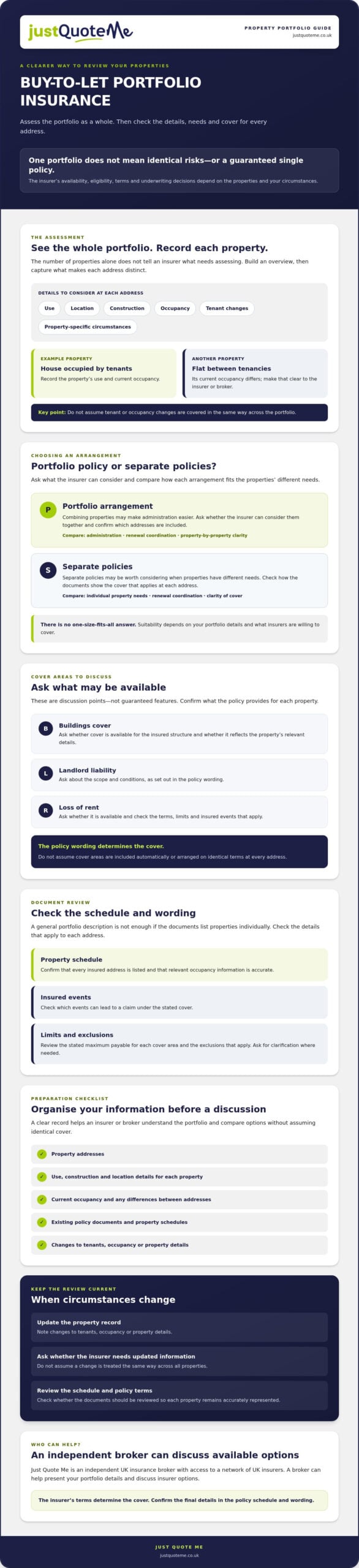
How to prepare and review cover across multiple rental properties
A clear record for each address makes it easier to discuss insurance for a portfolio of buy-to-let properties and spot missing information. Use a repeatable process, then check the details property by property rather than relying on one general description of the portfolio.
What information should landlords gather before requesting terms?
Start with a property schedule. Record each address, its use and occupancy, then note any other details the insurer or broker asks you to provide. Collect current policy documents, schedules, renewal dates and relevant correspondence so you can compare existing cover with any options discussed. To explore cover for rental homes, see residential letting insurance.
Before requesting terms, work through these steps:
- List every property. Use the full address and keep each property identifiable in your records.
- Confirm the details. Check the use and occupancy information against what is recorded in your current policy documents.
- Note questions and changes. Flag anything you’re unsure about, such as a planned renovation, a change in occupancy or a recent acquisition.
- Compare the documents. Review schedules and wording, not only summaries, to understand what applies at each address.
- Keep the record current. Update your portfolio notes when information changes and check with the insurer or broker what needs to be disclosed.
Insurers may request different information, so confirm what they need instead of assuming one checklist fits every application. An independent broker can help organise the details and present a varied portfolio clearly when discussing available options.
What should landlords check at renewal or after a change?
At renewal, compare the revised documents with your current cover. Check that the property details remain accurate, then review insured limits, excesses and exclusions in the wording. Don’t assume the terms will continue unchanged. Confirm what the insurer is offering for the new period and whether each property remains eligible.
Renovations, occupancy changes and adding a property can affect how an insurer assesses the risk. Ask how and when to report a change, and follow the requirements set out by the insurer and in your policy. Keep a note of what you reported and any response so your records match the information provided.
For help preparing your property information and discussing landlord cover, talk to Just Quote Me about your portfolio.
Arrange portfolio insurance with a broker: practical next steps
An independent broker can help organise information about your properties and discuss insurer options that may be available. When arranging insurance for a portfolio of buy-to-let properties, ask whether an insurer will consider the properties together or whether separate arrangements may be more appropriate. Availability and eligibility depend on the insurer and your circumstances.
Just Quote Me is an independent broker, not the policy underwriter. The insurer sets the policy terms and decides what cover is offered, so review the documents carefully before proceeding. Provide accurate details, raise anything you’re unsure about and ask for explanations in plain English.
What should landlords ask an insurance broker?
Use the discussion to clarify how your properties might be assessed and what the proposed terms mean for each address. Consider asking:
- Which insurers may consider the properties, and could they be covered together or need separate arrangements?
- What exclusions, limits, excesses or property-specific conditions should I understand?
- Are there broker fees or commission, and what service arrangements apply?
Ask for answers based on your property schedule and policy documents, not only general descriptions of cover. If an option is discussed, check its availability and eligibility with the insurer, and confirm that the schedule accurately records the properties concerned.
How can landlords take the next step?
Before asking for a review, gather your property schedule, current policy documents, renewal dates and relevant insurer correspondence. Note changes to property use, occupancy or condition, along with questions you want answered. This gives the broker a clearer basis for discussing options and helps you check the details against any terms offered.
Before proceeding, compare the proposed schedule and wording with your current cover. Check the limits, exclusions and excesses, and ask the broker or insurer to explain anything that isn’t clear. A quote request is a starting point, not confirmation that a particular arrangement or cover is available.
Choose the route that suits your next step:
- Get Your Free Business Insurance Quote now
- Request a Call back for free Expert advice
Take a clear next step with your property cover
Good portfolio cover starts with a clear picture of each property. Compare joined-up and separate arrangements without assuming one is automatically better, and check the schedule, wording, limits and exclusions for every address. Keep your property details and policy documents organised so you can ask focused questions when circumstances change or renewal approaches.
For insurance for a portfolio of buy-to-let properties, an independent broker can help you present the risks and discuss available insurer options. Just Quote Me is an FCA-authorised independent insurance broker, with over 30 years of industry experience and access to a broad network of UK insurers. The insurer sets the policy terms and decides what cover is offered.
Ready to discuss your requirements? Get Your Free Business Insurance Quote now. With accurate information and careful comparison, you can take an informed next step for your portfolio.
Frequently Asked Questions
Can one insurance policy cover a portfolio of buy-to-let properties?
It may be possible, but a single policy isn’t available or suitable for every portfolio. Ask an insurer or broker whether they can consider your properties together, based on their uses, characteristics and occupancy. Eligibility and terms depend on the insurer and your circumstances. Check the policy schedule and wording to confirm which properties are insured and what cover applies at each address.
Is portfolio insurance always better than separate landlord policies?
No. A portfolio arrangement may help coordinate administration, while separate policies can make individual property terms easier to review. Neither approach is automatically better, cheaper or more comprehensive. Compare the schedules, wording, limits, exclusions and renewal dates for the options available to you. Consider how changes to one property are handled, and choose based on the properties’ requirements and the insurer’s terms.
What does insurance for a portfolio of buy-to-let properties cover?
Insurance for a portfolio of buy-to-let properties may include options such as buildings cover, landlord liability or loss of rent, but these aren’t guaranteed inclusions. What’s offered depends on eligibility and the selected policy wording. Check each property’s schedule, insured events, limits, excesses and exclusions. Ask the insurer or broker to explain how the terms apply to each address before deciding whether the cover meets your needs.
Does buy-to-let portfolio insurance include loss of rent?
Not necessarily. Loss of rent may be available as a cover feature, but whether it’s included and when it applies depend on the policy wording, eligibility, limits and insured events. Check the schedule for each property and ask what circumstances could trigger this cover, how long it may apply and which exclusions or conditions are relevant. Don’t assume loss of rent applies across the whole portfolio simply because properties are insured together.
Can I add another rental property to my insurance portfolio?
You may be able to add a property, subject to the insurer’s agreement and eligibility requirements. Contact the insurer or broker before relying on cover for the new address, and provide accurate details about its use, construction and occupancy. Ask whether adding it changes the existing arrangement or requires separate cover. Once agreed, review the updated schedule and wording to confirm the property and applicable terms are recorded correctly.
Do all properties in a portfolio need the same type of cover?
No. Cover can depend on each property’s use, occupancy, characteristics and the insurer’s assessment. For example, a residential let and a property with a different use may need separate consideration. Even within one portfolio arrangement, don’t assume every address has identical limits, exclusions or conditions. Review each property’s schedule and wording, and ask the insurer or broker to clarify any differences.
What information do I need to get a quote for a property portfolio?
Prepare a property list with each address, use and occupancy details, along with current policy schedules, wording and renewal dates. Note relevant changes, such as renovations or a new acquisition, and gather insurer correspondence that may help explain the current cover. Insurers may ask for additional information depending on the properties. Provide accurate details and confirm what’s required with the insurer or broker before requesting terms.
