

A tenancy dispute can lead to legal costs even when the property itself is insured. Landlord legal expenses insurance in the UK can help with disputes connected to renting, such as rent arrears and repossession claims. Cover for other property disputes depends on the policy. Rent guarantee protection may be available as an optional addition to help with unpaid rent, subject to the policy terms.
Before choosing cover, understand what it includes, what it excludes and how legal support works. This guide explains the landlord disputes legal expenses cover may help with, how optional rent guarantee protection works and what to consider when arranging cover. It also outlines how legal advice and support may help you respond to a tenancy or property dispute.
Key Takeaways
- Identify which tenancy-related disputes legal expenses cover may help with, and where property damage or nuisance claims can differ.
- Understand how optional rent guarantee protection can support rent-arrears recovery and how policy limits relate to the tenancy term.
- See why notifying the insurer before incurring legal costs and keeping tenancy records can matter when making a claim.
- Learn how landlord insurance through Just Quote Me can help you consider cover suited to your property and circumstances.
Optional rent guarantee and legal protection insurance
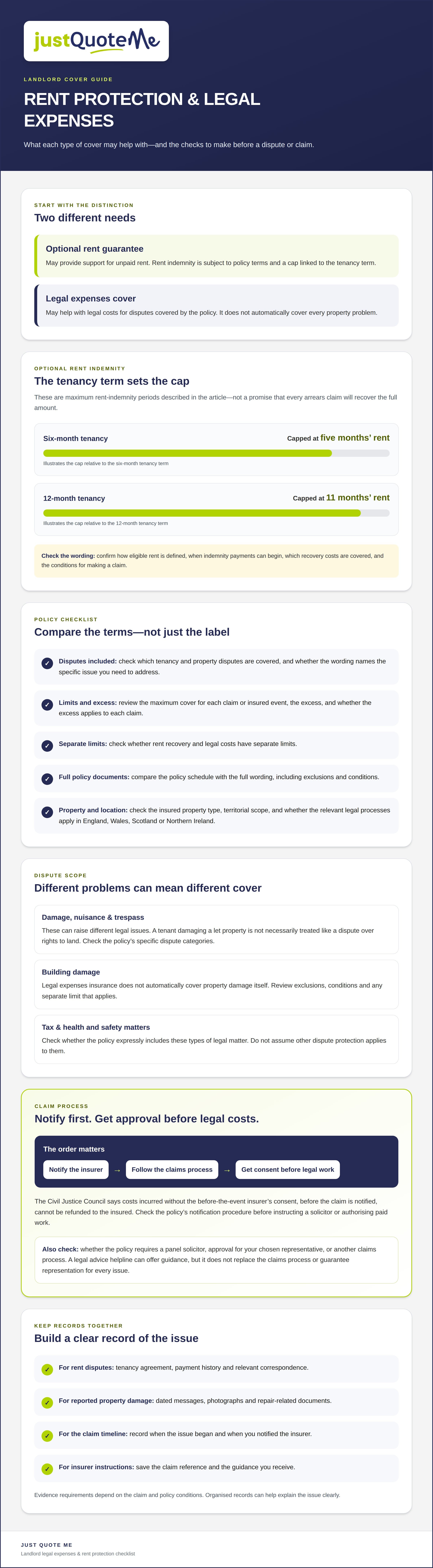
Rent guarantee protection may be available as an optional addition to legal expenses cover. The two address different needs: unpaid rent and legal costs for disputes covered by the policy.
Arrears and Rent Recovery
This is a policy limit, not a promise that every arrears claim will recover the full amount. Check how the policy defines rent arrears, which recovery costs it covers and the conditions for making a claim. Keep tenancy and payment records together to show clearly what remains unpaid.
Optional Rent Indemnity
Rent indemnity can provide a benefit for unpaid rent, subject to a cap linked to the tenancy term. For a six-month tenancy, optional rent indemnity is capped at five months’ rent. For a 12-month tenancy, it is capped at 11 months’ rent. These limits show why the tenancy length matters when assessing this protection. Check how the policy defines eligible rent and when indemnity payments can begin.
Cover Limits, Excesses and Terms
When comparing UK landlord legal expenses insurance, look at the maximum cover for each claim or insured event, the excess and the disputes included. Compare the policy schedule with the full wording. Check whether rent recovery and legal costs have separate limits, and whether the excess applies to each claim. These terms determine the support available for a particular dispute and which costs remain your responsibility.
Before Notifying a Claim
Notify the insurer before taking steps that incur legal costs. The Civil Justice Council says costs incurred without the before-the-event insurer’s consent, before the claim is notified, cannot be refunded to the insured. The order of action matters: report the dispute first, then follow the insurer’s claims process before authorising legal work. Keep relevant tenancy documents and payment records to explain the issue clearly.
Property damage, nuisance and trespass disputes
Legal expenses cover can help with specified landlord disputes, but it does not automatically protect you against every property problem. The type of dispute, the property’s location and the policy wording all matter.
Property Damage and Disputes
Damage, nuisance and trespass can raise different legal issues. For example, a tenant damaging a let property is not necessarily treated in the same way as a dispute over rights to land. Verbraucherzentrale notes that legal expenses cover can include rental and lease disputes, as well as certain rights relating to land and buildings. Check the wording for the specific dispute categories covered.
First identify whether the property is in England, Wales, Scotland or Northern Ireland. Check that the policy’s territorial scope and covered legal processes apply to that location. Do not assume one description covers every nation or claim. This distinction also matters when considering property owners’ liability, which is separate from legal expenses cover.
Exclusions and Cover Limits
Landlord legal expenses insurance does not automatically cover property damage. A policy may cover some landlord-related disputes without covering a claim for damage to the building itself. Check the exclusions, conditions and any separate limit for the dispute. Use the policy wording, rather than its broad label, to determine what legal support applies.
That limit applies to repossession claims, not every dispute involving property damage, nuisance or trespass. For tax or health and safety disputes, check whether the policy expressly includes that type of legal matter. Do not assume repossession protection extends to either category.
Property-specific cover matters because household insurance and landlord policies can address different risks. Review the insured property type and the legal disputes listed in the policy before relying on cover. If you’re considering protection for a let property, make sure the cover reflects the property and dispute you need to address.
Legal advice helplines and documentation
A landlord legal advice helpline may offer guidance on tenancy-related or business matters within UK and EU law. It can help clarify a situation before it develops into a formal dispute. However, the helpline is an advice resource: it does not replace the claims process or guarantee legal representation for every issue.
Get the insurer’s approval before legal costs build up. Notify the before-the-event insurer about the dispute and obtain consent before incurring legal costs. The Civil Justice Council says costs incurred without the insurer’s consent before the claim is notified cannot be refunded to the insured. The policy wording explains how to notify the insurer and proceed with legal action.
Whether the policy requires a panel solicitor depends on its terms. Read the claims procedure to find out whether the insurer appoints a solicitor, requires approval for your chosen representative or sets out another process. Do not instruct a solicitor or authorise paid work before following that procedure. Early notification lets the insurer consider the claim and explain the next steps.
Keep records organised so you can explain the issue clearly. Professional oversight can make this easier; full-service firms like TBM Property Management often emphasise rigorous lease administration and communication logs to prevent disputes from escalating. For a rent dispute, gather the tenancy agreement, payment history and relevant correspondence. For reported property damage, keep dated messages, photographs and repair-related documents. These records can help establish a timeline, but the evidence required depends on the claim and policy conditions.
- Record when the issue began and when you notified the insurer.
- Keep tenancy documents and communications together.
- Save the insurer’s claim reference and instructions.
- Ask the helpline focused questions about the relevant tenancy or business matter.
Clear records help distinguish a request for general advice from a claim for legal expenses. The policy’s notification rules, approval requirements and evidence conditions determine how a claim proceeds. Follow those steps before taking action that creates legal costs.
What does landlord legal expenses insurance cover in the UK?
Landlord legal expenses insurance can help with legal costs arising from covered rental disputes. Common areas include tenant disputes, rent arrears and eviction or repossession claims. The policy wording defines which legal services and costs are included, and any conditions for making a claim.
Verbraucherzentrale notes that legal expenses cover can include disputes arising from rental and lease relationships, as well as certain rights relating to land and buildings. That does not mean every property-related disagreement is covered. A tenancy-agreement dispute may fit one category, while damage to the building may fall outside the policy.
Rent arrears recovery may also be covered, subject to its own policy terms and limits. This protection concerns legal action, not necessarily the unpaid rent itself. Optional rent indemnity is separate and may respond to lost rent under its conditions.
The word “specified” matters: cover applies to the claim types described in the policy, not every dispute connected with property ownership. Read the covered-events list alongside the exclusions to understand the limits.
- Tenancy disputes: check which disagreements with tenants qualify.
- Repossession: review the claim limit and required process.
- Rent arrears: distinguish legal recovery costs from rent indemnity.
- Property rights: look for wording on land and building disputes.
Legal expenses cover differs from buildings or landlord insurance, which address other property risks. It may not pay to repair physical damage simply because a legal dispute follows. Before acting, notify the insurer and follow its claims procedure, including any approval requirements for legal costs.
To consider protection for your rental property, explore landlord insurance options alongside the legal risks you want to address.
Just Quote Me: Landlord Insurance
Just Quote Me can help you arrange Landlord Insurance suited to your rental property and insurance needs. Speak with the broker when reviewing protection for a let property or considering how landlord cover relates to tenant disputes and property ownership. Legal expenses cover and rent guarantee protection depend on the policy terms, so distinguish them from the broader purpose of landlord insurance.
If your rental activity also involves risks to other people or employees, Public Liability Insurance and Employers Liability Insurance may be relevant as separate considerations. The right combination depends on your circumstances and the protection you need. Discussing your property, letting arrangements and concerns can help focus the insurance conversation.
Contact Just Quote Me to discuss your landlord insurance needs.
Plan your next cover review
Your insurance needs may change as your rental arrangements and responsibilities change. At your next review, consider how the property is let, who could be affected by its operation and whether your existing cover still reflects those circumstances. For example, property owners exploring short-term stays can look to operators such as Home Vacay to understand how guest arrangements and associated operational risks differ from standard tenancies. A clear understanding of your risks makes it easier to discuss suitable protection without treating every policy as interchangeable.
Just Quote Me can help you consider Landlord Insurance alongside other relevant cover. Depending on your circumstances, this may include Public Liability Insurance, Employers Liability Insurance or Professional Indemnity Insurance. Each addresses a different exposure, so the purpose of the cover matters as much as the policy name.
As a practical next step, bring details of your property and letting arrangements to a conversation about the protection you need. Get Your Free Business Insurance Quote now from Just Quote Me to take the next step towards a clearer cover plan.
Frequently Asked Questions
Is landlord legal expenses insurance in the UK included in landlord insurance or available as an add-on?
Legal expenses cover may be available as an optional addition, so do not assume it comes automatically with landlord insurance. It may also be added to a buildings policy or a buildings and contents policy. Check the policy schedule to see whether legal protection is included or must be selected separately, and whether rent guarantee protection is a distinct option.
Does landlord legal expenses insurance in the UK cover tenant eviction and possession proceedings?
Cover may include repossession claims for let residential property, including legal action to regain possession, subject to the policy terms. Before proceedings begin, notify the insurer and follow its claims process. The wording determines which circumstances qualify and how legal costs must be authorised.
Does it cover rent arrears, debt recovery, and disputes over tenancy agreements?
Cover may include pursuing rent arrears and disputes arising from rental or lease relationships. Other debt recovery depends on whether the debt and recovery action fit the policy wording. For a disagreement over a tenancy agreement, keep the signed agreement and relevant correspondence together. To discuss suitable cover, Get Your Free Business Insurance Quote now or Request a Call back for free Expert advice from Just Quote Me.
