

Using a broker can make it easier to find suitable insurance, but it doesn’t guarantee the lowest premium. The pros and cons of using an insurance broker depend on the value of the advice and support you receive, as well as which insurers the broker can access and how it is paid. Brokers may receive commission, charge a separate fee, or both.
Weigh any costs against the time and effort of arranging cover yourself. A broker can compare policies from insurers on its panel and explain key differences, but the panel may not include every insurer.
This guide explains how broker remuneration works, what access to multiple insurers means in practice, and how policy guidance can help you spot gaps or overlapping cover. It also looks at support with renewals, policy changes and claims, so you can decide whether that help suits your needs.
You’ll find a practical way to compare using a broker with arranging insurance directly or choosing another route. The right option depends on how much guidance you need, how complex your cover is and what support you want after purchase.
Key Takeaways
- Understand how commission and administration fees can affect the overall value of a policy.
- Use a broker’s guidance to spot potential gaps, overlapping cover and important policy terms.
- Know what help may be available when your business changes, your policy renews or you need to make a claim.
- Weigh the convenience of access to several insurers against the limits of a broker’s panel.
Broker commissions and administration fees
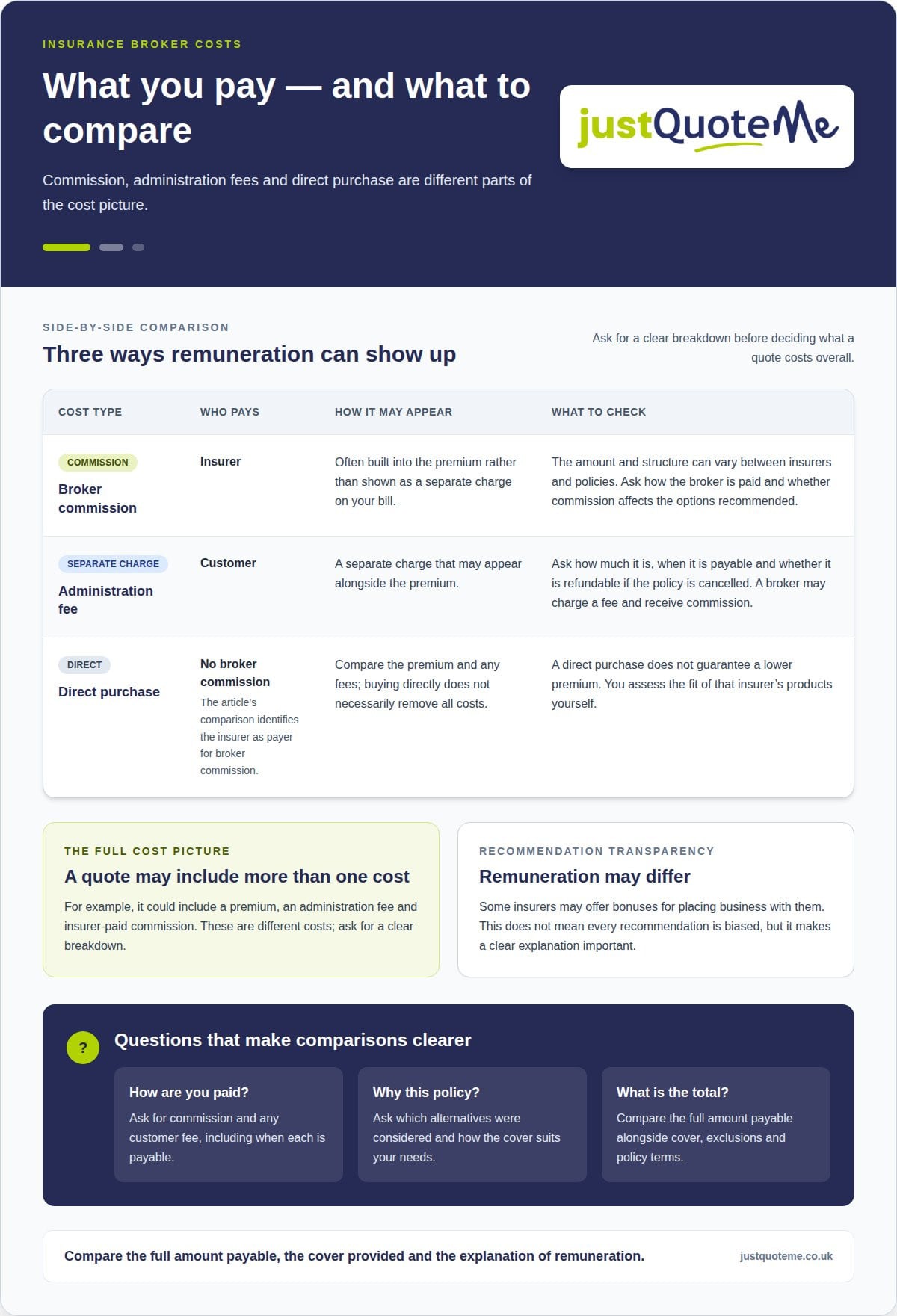
Broker remuneration can affect the cost of a policy, but it doesn’t automatically make broker-arranged cover more expensive. Distinguish between commission paid by an insurer and any fee charged directly to you.
Broker Commissions
An insurer may pay a broker commission for arranging a policy. This is commonly built into the premium rather than shown as a separate charge on your bill. The amount and structure can vary between insurers and policies, so two quotes may reflect different remuneration as well as different cover. Buying directly doesn’t necessarily remove this cost or result in a lower premium.
Compare the total premium and policy terms, not just whether commission applies. Ask how the broker is paid and whether commission affects the options it recommends.
Administration Fees
A broker or insurer may charge an administration fee when a policy is purchased. Unlike insurer-paid commission, this is a separate charge to you and may appear alongside the premium. A broker may receive commission and charge an additional fee, so ask for both amounts and when they are payable before proceeding.
For example, a quote could include a premium, an administration fee and insurer-paid commission. These are different costs, so ask for a clear breakdown and whether any fee is refundable if the policy is cancelled.
Commission-Related Bias
Some insurers may offer brokers bonuses for placing business with them. If remuneration varies between insurers, recommendations could favour an option that pays more. That doesn’t mean every recommendation is biased, but it makes a clear explanation important.
Ask the broker to explain why a policy suits your needs, which alternatives it considered and whether commission or bonuses differ. Focus on cover, exclusions and total cost. Expert advice can help you understand a recommendation, but it is not a substitute for understanding it yourself.
| Option | Who pays | Cost to compare | Key consideration |
|---|---|---|---|
| Broker commission | Insurer | Premium | May vary by insurer |
| Administration fee | Customer | Separate charge | Ask when it applies |
| Direct purchase | Insurer pays no broker | Premium and fees | Doesn’t guarantee savings |
Choose by comparing the full amount payable, the cover provided and the broker’s explanation of its remuneration.
Expert guidance on policy terms and underwriting
A broker acts as an intermediary, helping you understand policy wording and how insurers assess risk. This guidance can save time, especially when your business activities make suitable cover less straightforward to find.
Broker Expertise
A broker’s industry knowledge can help connect your circumstances with relevant insurance policies. For example, a business planning to hire staff or expand can explain those changes when discussing its insurance needs. The broker can then consider potential risks and identify gaps in existing cover. This differs from buying directly, where you assess the fit of one insurer’s products yourself.
Advice and Recommendations
A broker can explain exclusions, conditions and optional benefits, then recommend cover based on your demands and needs. Ask how a policy would respond to a realistic event, such as damage to business property, and which exclusions could affect a claim. Clear explanations can help you make a more informed decision without having to interpret all the wording alone. Advice can also help you understand how the premium, cover and underwriting information relate.
Buying directly gives you policies from one insurer, while a comparison website shows options from participating providers. A broker can compare insurers on its panel, offer advice and explain policy details.
UK business insurance brokers are FCA-authorised and can offer general financial advice and recommendations. FCA authorisation provides regulatory oversight, while customer protections depend on the applicable rules and the activity involved.
To check a broker’s authorisation, search its name on the Financial Services Register. Customers can check a broker’s registration with the British Insurance Brokers Association and the Financial Conduct Authority to help avoid ghost brokers. These checks help establish the firm’s status.
A UK insurance broker assesses your needs, compares relevant policies and helps arrange suitable cover. It can explain terms and recommend options, rather than simply presenting one insurer’s products.
Before choosing a broker, ask which insurers it considers, how it is paid and what advice it provides. Also ask who handles policy questions and what support is available if your circumstances change.
Renewals, adjustments and claims support
A broker’s work can continue after arranging cover. Renewal reviews, policy changes and claims assistance can help keep your protection aligned with your business.
Claims Assistance
At renewal, a broker can review changes in your business and help assess whether your current level of cover still fits. Hiring staff, buying equipment or changing services may affect the risks insurers assess. A broker can help you consider renewing or exploring alternatives, then obtain quotes from insurers on its panel.
Mid-term adjustments matter too. Tell your broker about material changes, such as moving premises or adding a business activity. It can explain how the change affects your policy and help communicate relevant details to the insurer. This support focuses on keeping policy information and cover current before a loss occurs, rather than advocating during a claim.
If you need to make a claim, a broker can explain the process, help organise information and guide communications with the insurer. For example, after damage to business equipment, you may need to describe what happened and provide supporting documents. The broker can clarify what the insurer needs and help you understand the next steps.
Claims Advocacy
Claims advocacy means the broker acts as an intermediary between you and the insurer during a claim. It can help present your circumstances, explain relevant policy terms and follow up on questions. This goes beyond process guidance: advocacy focuses on representing your position in discussions with the insurer.
If a claim is disputed or delayed, a broker may help you communicate your case and negotiate with the insurer. It can explain the insurer’s response in relation to the policy wording, while the insurer makes the claim decision. Keep records of correspondence, dates and documents shared so the broker has a clear timeline to work from.
An independent broker can remain a point of contact for renewals, adjustments and claims, rather than helping only with the initial purchase. Ask what ongoing support is available and who handles each stage, from renewal quotes to claim-related questions. This helps you judge whether the support suits the complexity of your business cover.
Access to multiple insurers
A broker can approach several insurance companies on your behalf, but access usually depends on its panel. This can widen your options while leaving some insurers outside the comparison. The pros and cons of using an insurance broker are clearer when you know which markets it can approach.
Independent brokers work with more than one insurer, unlike agents who sell their employer’s products. Buying directly shows you one insurer’s policies, while a broker can compare options from insurers it works with. A comparison website also presents multiple quotes, but its results depend on participating providers and the information you enter.
Panel access has drawbacks. A broker may not approach every insurer, so a suitable policy could be outside its available options. Ask which insurers it considers and whether its recommendation reflects a comparison across its panel. This gives you a clearer view of the broker’s role as an intermediary.
Specialist access can matter when standard policies don’t fit a particular risk. Some brokers focus on niche insurance and may connect clients with specialist insurers that don’t usually sell directly to the public. For example, classic-car or kit-car cover may require a specialist market. The broker’s ability to arrange cover still depends on the insurers and products available through its panel.
Additional products can also help when a business needs several types of protection. A broker can consider related needs together, such as property and liability risks, and help identify where a policy may already include cover. This can make the overall arrangement easier to understand, rather than treating each purchase as unrelated.
A broker may be most useful for business or specialist insurance when your activities, property or risks need tailored consideration. For straightforward home or car cover, buying directly may suit you. A broker can add value when you want help comparing terms or accessing specialist markets. For businesses weighing the pros and cons of using an insurance broker, the deciding factor is whether its access and guidance address a real need.
Before proceeding, ask which insurers the broker approached, what options fell outside its panel and why its recommendation suits your needs. Get Your Free Business Insurance Quote now to explore options for your business.
Just Quote Me: Construction and Tradesman Insurance
Just Quote Me helps construction businesses and tradespeople explore cover suited to their work and circumstances. Its Construction and Tradesman Insurance can be considered alongside Public Liability Insurance, Employers Liability Insurance and Professional Indemnity Insurance.
Turn to Just Quote Me when you need help understanding which types of cover may suit your work, or when your business activities, staffing or professional responsibilities change. The aim is to make your options clearer and help you consider relevant protection, recognising that trades have different needs.
If you’re weighing broker support against arranging cover yourself, discuss the work you do, the risks you want to address and the guidance you need. Contact Just Quote Me to talk through your insurance requirements.
Make your next cover decision with confidence
Before arranging cover, write down the work your business does, the changes you expect and the risks you most need to manage. This gives your next insurance conversation a practical starting point.
Assessing the pros and cons of using an insurance broker is ultimately about choosing the level of support that suits your business. Just Quote Me offers Public Liability Insurance, Employers Liability Insurance and Professional Indemnity Insurance for businesses considering protection for different responsibilities.
Use your next conversation to explain your activities and what you want your cover to address. You can then consider relevant options with a clearer understanding of how they relate to your business needs.
Explore your options with Just Quote Me: Get Your Free Business Insurance Quote now or Request a Call back for free Expert advice. Take the next step at a pace that feels right for your business.
Frequently Asked Questions
What are the benefits of using a broker?
A broker can help match insurance to your circumstances and reduce the work of researching policies yourself. For example, a business adding a new service can discuss how the activity affects its risks before arranging cover. A broker can also explain unfamiliar terms and help identify relevant options. This is most useful when your needs involve several risks or don’t fit a standard policy neatly.
What are the disadvantages of using a broker?
A broker’s insurer panel may not include every provider, so your choices can be limited. You may also pay a separate administration or arrangement fee, depending on the broker’s charging approach. For example, someone with straightforward needs may prefer to compare a few direct quotes themselves. Consider whether the broker’s support and available options justify any additional charge.
What are the main advantages of using an insurance broker?
The main advantages are help interpreting policy details, access to more than one insurer and support tailored to your circumstances. This can be valuable if a business has several activities, such as selling products and providing advice, as these may create different risks. A broker can help organise the questions and cover options to consider, giving you a clearer basis for making a decision.
What are the disadvantages of using an insurance broker?
The main drawbacks are possible fees, a limited insurer panel and the potential for commission arrangements to influence recommendations. These are reasons to understand how the broker is paid and which insurers it approached. For instance, a quote may not represent the whole market if some providers are outside the panel. Compare the reasoning behind the recommendation and the policy terms, not just the premium.
How do UK insurance brokers get paid, and what fees or commission do they charge?
UK brokers may receive commission from an insurer, charge you a separate fee, or use both methods. Commission is often included in the premium, while an administration charge may appear separately. The amount depends on the policy and the broker’s terms. Before buying, ask for a breakdown of commission and fees, when charges apply and whether cancellation affects any fee.
Can an insurance broker help with claims, renewals and policy changes?
Yes, a broker may support you at each stage, although the help available depends on the service provided. For a claim, it can explain what information the insurer needs and assist with communications. At renewal, it can review changed circumstances, such as new premises or equipment. Tell the broker promptly about changes so it can explain whether your existing policy needs updating.
To take the next step, choose Get Your Free Business Insurance Quote now or Request a Call back for free Expert advice.
