
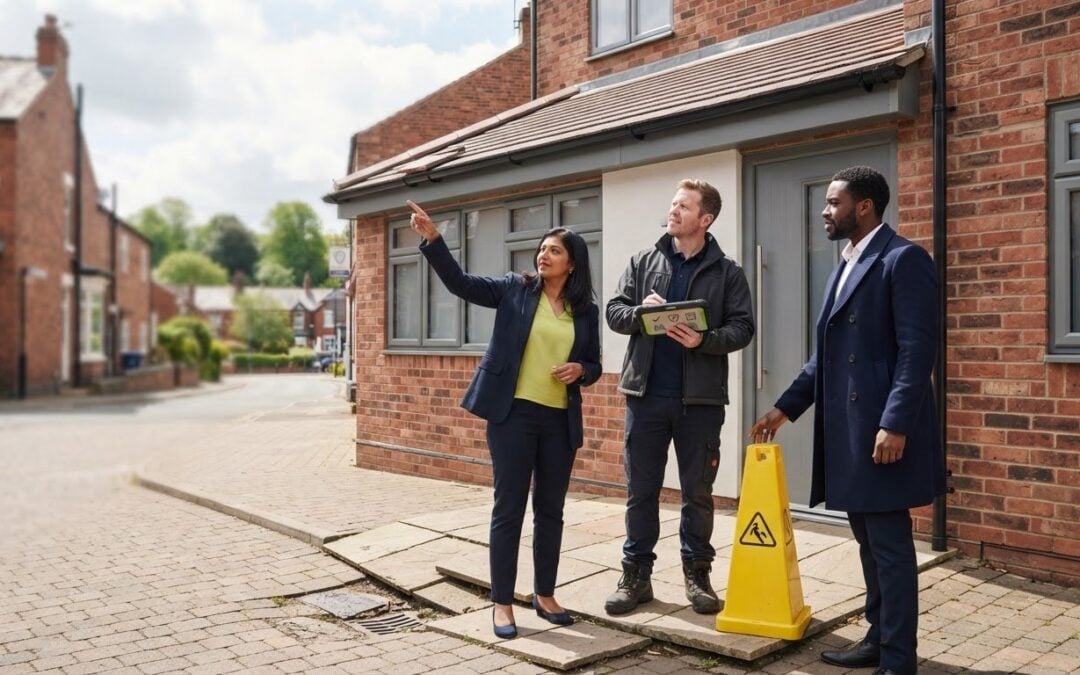
Could a loose roof tile make you responsible for an injury, even if a tenant runs the business inside? Understanding commercial property owner liability to public claims starts with what happened, where it happened and who was responsible for that part of the premises. A trip on a damaged path may raise different questions from a customer slipping on a wet shop floor.
It’s understandable to assume that commercial property insurance covers every risk connected with a building. But property owners’ liability and public liability relate to different exposures, and the policy label alone won’t tell you exactly what’s covered. The wording and the circumstances of an incident matter.
This guide explains common claims involving commercial premises, how responsibilities can differ between landlords and tenants, and what to review in your insurance documents. You’ll also learn practical steps to help assess your cover and explore relevant options, including Public Liability Insurance and Commercial Property Insurance, through Just Quote Me. The aim is to make the next steps clearer, without losing sight of the details that can affect a claim.
Key Takeaways
- Commercial property owner liability to public depends on the circumstances of an incident and who was responsible for the relevant area.
- An allegation is not the same as an established legal finding; understand how an incident, investigation and policy response may unfold.
- Compare public liability, property owners’ liability and commercial property insurance by their purpose and wording, rather than relying on policy names alone.
- Use a routine of inspecting, recording, prioritising, acting and reviewing to help manage risks around your premises.
- Gather details about the property, its use, public access and current policies to help compare suitable insurance options.
Commercial property owner liability to the public: how claims can arise
Commercial owners can be unsure where responsibility for an incident begins, especially when tenants, contractors and visitors use different parts of the premises. The key question isn’t simply who owns the building. The circumstances, the location of the hazard and who had control over the relevant area may all matter when responsibility is considered.
Property-related liability concerns an allegation that someone responsible for premises failed to address a danger there, causing injury or damage; it is not the same as cover for physical damage to the building itself. A property-damage policy concerns damage to insured property, while liability insurance addresses claims made against an insured party, subject to the policy wording. A commercial property insurance policy and liability cover therefore have different purposes, even when they relate to the same site.
Who might bring a claim connected with commercial premises?
A customer, supplier, contractor, tenant, other visitor or passer-by might report an injury or damage linked to a commercial site. Their presence alone doesn’t establish that the owner is responsible. The investigation may consider what happened, who controlled the area and whether the reported issue related to the premises or to an activity carried out there.
For example, a claim about loose paving outside a business may raise questions about the condition and management of that area. An incident involving equipment used during a tenant’s work may instead relate more closely to the business activity. These categories can overlap, so the facts and relevant insurance wording matter more than a label attached to the incident.
In England and Wales, the Occupiers’ Liability Act 1957 concerns the duty of care owed to lawful visitors. Which party is responsible in a particular situation still depends on the circumstances and the legal assessment of the facts.
What incidents can put a property owner under scrutiny?
Examples include a visitor tripping on uneven paving, a defective communal door fixture causing injury, or building materials falling and damaging a vehicle. Each may prompt questions about the condition of the premises, who was responsible for that part of the site and what was known about the hazard.
Reports, inspection notes, repair records and the timeline of events can help show how an issue was managed. A hazard reported before an incident may be relevant to understanding what action followed; a sudden fault may present a different picture. These details don’t automatically prove negligence, and a claim or allegation isn’t a finding of legal liability. Nor does every accident lead to an insurance payout. Any policy response depends on the circumstances, the insured party and the terms and conditions of the policy.
How property-related public liability works in practice
A report of an injury or damage is a starting point, not a decision about who is legally responsible. For a commercial property owner, the process may move from an incident to an allegation, then to fact-finding and consideration of any relevant insurance. The commercial property owner liability to public question turns on what happened, who was responsible for the area and what the policy says.
Once an incident is reported, the parties involved may gather details such as the location, timing, accounts from witnesses and any available maintenance records. An insurer may then assess the claim under the policy, taking account of its terms, conditions, exclusions and limits. The process and outcome depend on the particular circumstances and wording, so an allegation should not be treated as proof of fault or confirmation that a policy will respond.
The policy wording determines how an insurer responds to a claim, including whether the circumstances fall within the cover and what terms apply. Public liability policies differ, so avoid assuming that a particular event or type of loss is covered just because it happened at a commercial premises. For the relevant legal framework on occupiers and lawful visitors, see the Occupiers’ Liability Act 1957 on legislation.gov.uk.
Injury and property-damage allegations
Personal injury and damage to someone else’s property are distinct types of allegation. For example, a visitor might claim they were injured after a loose stair handrail gave way. Separately, a supplier might report that a leak from a building pipe damaged equipment they had left in a shared service area. In either case, the cause, control of the area and policy wording need careful consideration.
These examples describe possible allegations, not findings of negligence or promises of an insurance payout. The relevant policy may set out how bodily injury and third-party property damage are treated, along with applicable exclusions and limits. Check the actual wording rather than relying on a general description of public liability cover.
Why maintenance history and incident details matter
Inspection records, repair requests and incident reports can help establish what was known about a hazard and when. Record the date, location, observed condition and action taken, and keep the account factual. Note follow-up work or changes to access where relevant. Clear documentation can help explain the sequence of events, but it doesn’t automatically establish liability or determine whether an insurer will respond.
Keep related records together, such as photographs, correspondence and contractor reports, where available. Avoid presenting assumptions as facts; distinguish what someone observed from what they believe caused the incident. If you’re reviewing how liability cover fits alongside premises risks, compare Public Liability Insurance options and consider the wording against your property’s use and access.
Public liability, property owners’ liability and commercial property insurance compared
These policy names can sound interchangeable, but they describe different insurance questions. Public liability is generally associated with claims connected to business activities, while property owners’ liability concerns allegations linked to ownership or management of premises. Commercial property insurance addresses the insured property itself. The exact structure and terminology can vary between insurers, so compare the wording and schedule rather than relying on the label alone.
Public liability
Purpose: To address specified third-party liability exposures connected with business activities.
Possible exposure: A customer alleges they were injured during a business operation at the premises.
Wording to check: Who is insured, which activities and locations are described, and what exclusions and limits apply.
Property owners’ liability
Purpose: To address specified liability exposures associated with owning or managing premises.
Possible exposure: A visitor alleges an injury caused by a defect in a shared entrance or other building area.
Wording to check: Which premises and responsibilities are covered, and how the policy defines an insured claim.
Commercial property insurance
Purpose: To insure specified commercial property against risks set out in the policy.
Possible exposure: The owner needs to understand how damage to the building is treated under the policy.
Wording to check: The insured property, insured events, conditions, exclusions and any separate liability sections.
This comparison is a starting point, not a coverage decision. A single incident may involve both the condition of a building and the activity taking place there. Public liability and property owners’ liability may therefore overlap in the questions they raise, but one label doesn’t automatically replace the other or establish which policy applies. The commercial property owner liability to public issue should be assessed against the actual event, the parties involved and the relevant policy terms.
What is the difference between public liability and property owners’ liability?
Think first about the source of the alleged risk: was it connected mainly with the business’s work, or with the premises and its management? That distinction can help guide a review, but insurers may use different terms or arrange cover differently. For a broader explanation of public liability, consult the existing guide and compare its general description with your own policy documents.
Could liability cover sit within commercial property insurance?
It may be arranged alongside property insurance, but don’t assume liability cover is included or that a particular incident falls within it. Check the policy schedule for the sections actually selected, then read the wording for definitions, exclusions, conditions and limits. If you hold separate policies, review them together to understand how each describes the insured premises, activities and parties. This helps identify questions to resolve before relying on a policy label.
For a closer review of commercial property insurance cover, compare the schedule and wording with how the building is owned, occupied and used. Keep the relevant documents together, so the property and liability sections can be considered side by side.
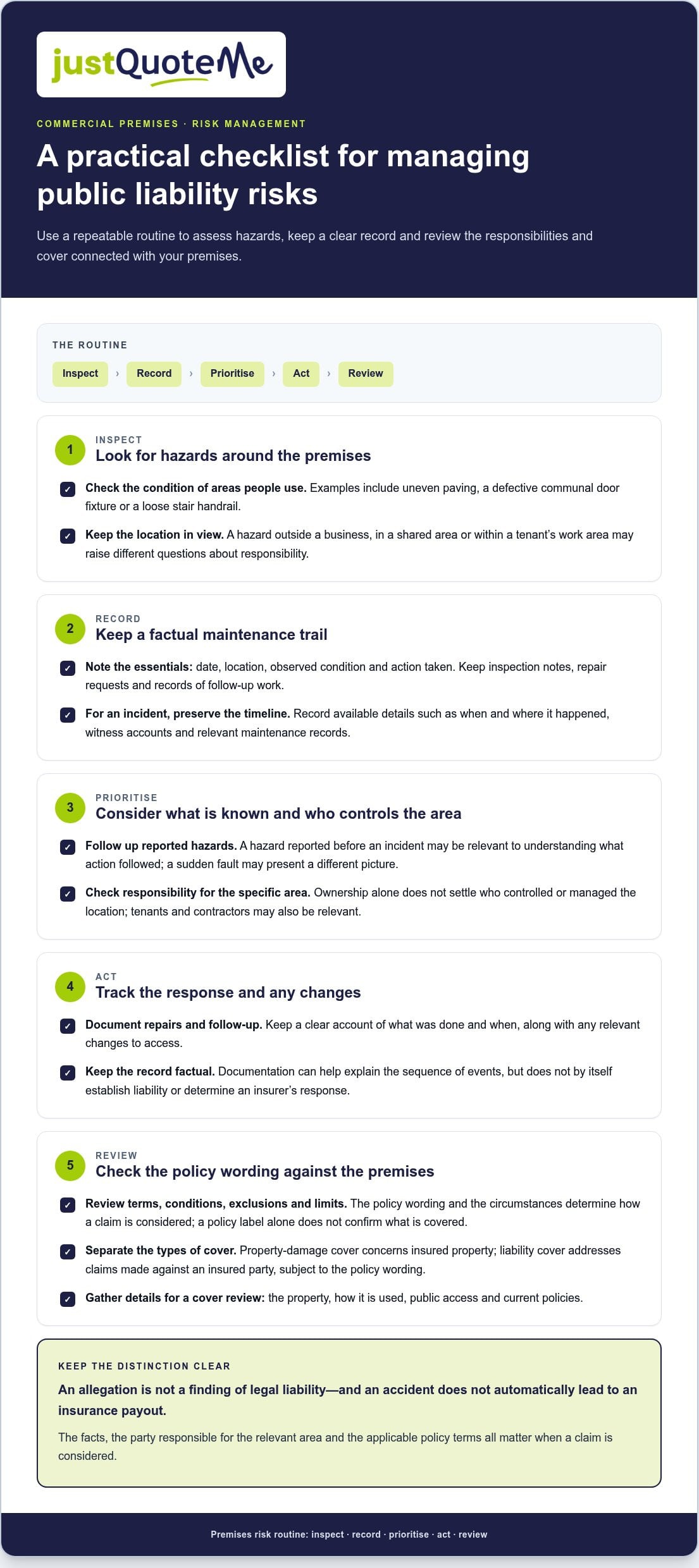
Checklist for Reducing Public Liability Risks
A repeatable routine helps property owners spot and address hazards before they become harder to manage. Focus on areas people use, including entrances, shared corridors, paths and access points, as well as visible defects to the building. This practical checklist supports day-to-day risk management; it isn’t a legal compliance checklist, and following it can’t remove the possibility of a claim.
Inspect, record, prioritise, act and review: a consistent process can help you manage premises risks, but it doesn’t determine liability or guarantee an insurance response.
- Inspect. Walk through the areas accessible to visitors and note hazards such as obstructions, poor lighting, loose surfaces or visible damage. Consider shared spaces as well as areas used by your own business.
- Record. Log the date, location and condition observed. Add photographs or other relevant details where appropriate, and note who completed the inspection.
- Prioritise. Consider whether the issue could affect safe access or use of an area, and decide what needs attention first. Record the reason for the priority and who will take the next step.
- Act. Arrange appropriate repairs or other steps to manage the hazard. If work cannot happen immediately, document any interim action taken and who is responsible for follow-up.
- Review. Check whether the issue was resolved and update the record. Use recurring reports or repeat defects to identify where your routine or maintenance process may need attention.
Inspection and maintenance records
Keep records in one consistent place so they’re easy to follow. For each inspection, note the date, observed issue, action taken and any follow-up still required. Give staff and contractors a clear way to report hazards, then track each report through to resolution. Set a process that suits the property and its use, rather than relying on an arbitrary inspection interval.
When a member of the public reports an incident
Capture a factual account, including when and where the incident occurred, what was reported and who received the information. Preserve relevant records, such as inspection logs, maintenance communications and photographs, without altering the original material. Separate direct observations from assumptions. Clear, timely documentation can help establish the sequence of events, but it doesn’t prove fault or guarantee cover. If a claim arises, follow the notification instructions in your policy.
For commercial property owner liability to public concerns, a well-kept log can make it easier to review how a reported hazard was handled. It should complement, not replace, the policy review and any professional advice appropriate to the circumstances.
If you’re reviewing your business insurance alongside your premises-risk routine, Get Your Free Business Insurance Quote now for a free, no-obligation quote.
Reviewing commercial property owner liability cover and choosing your next step
Reviewing commercial property owner liability to public cover starts with the real setup of your premises, not just the name of a policy. Consider who owns and manages the building, how it’s used, which areas the public can access and how your existing insurance describes those risks. This context can help you identify where policies may overlap, where wording differs and what questions to resolve before making a decision.
What information can help when reviewing a policy?
Pull together a clear description of the premises and the activities that take place there. Note whether the building is occupied by your business, tenants or a mix of users, and describe public access to entrances, shared areas and other relevant spaces. There’s no single information checklist that suits every property, but an accurate overview helps make a policy review more focused.
Then locate your current policy documents, including the schedule and relevant liability wording. Check the named insured, premises details, stated business use and any sections dealing with liability. If the property or its use has changed, note what changed and when. This makes it easier to compare the documents with the risks you’re seeking to address, without assuming that a policy label confirms the extent of cover.
A useful review asks whether the documents reflect the current arrangement: who uses the building, what activities happen there, and which areas visitors can reach. Make a note of unclear wording or apparent gaps. The aim is to understand what the policies say, not to infer cover from a summary or assume that separate policies respond in the same way.
Get help comparing relevant business insurance
An independent broker can help you compare relevant options from a network of UK insurers and make sense of how policy wording relates to your circumstances. Just Quote Me is an FCA-authorised independent insurance broker with access to a broad network of UK insurers. It can help you explore Public Liability Insurance and Commercial Property Insurance, with free, no-obligation quotes and callbacks.
When comparing options, focus on the details that matter to your premises and business use. Consider how each policy describes the insured party, property, activities, limits, conditions and exclusions. The wording varies between policies, so a comparison should help you see differences rather than assume that similarly named cover works identically. No quote or general description can guarantee that a particular future claim will be covered.
Once you’ve gathered your property details and existing documents, choose the next step that suits you. You can request a quote online or ask for a callback to discuss your requirements. Both routes offer a practical way to explore business insurance options without an obligation to proceed.
Get Your Free Business Insurance Quote now
Request a Call back for free Expert advice
Make your next policy review a practical one
Use your next review to connect the property’s day-to-day use with the insurance documents you hold. If ownership, occupancy, public access or business activities change, note the change and revisit whether your policy details still reflect the premises. This gives you a clear starting point for discussing commercial property owner liability to public exposures and comparing relevant insurance options.
Just Quote Me can help you explore business insurance options, including Public Liability Insurance and Commercial Property Insurance. It’s an FCA-authorised independent broker, with an average online review rating of 4.6 out of 5. Start with the information you have, then decide whether an online quote or a conversation would be more useful.
Get Your Free Business Insurance Quote now
A considered review can make complex policy details easier to approach. Take the next step at your own pace, with a clearer picture of what you need to discuss.
Frequently Asked Questions
Is public liability insurance a legal requirement for commercial property owners in the UK?
No, public liability insurance isn’t generally a legal requirement for commercial property owners in the UK, and there’s no legal minimum level of cover. However, a lease, contract or other commercial agreement may set its own insurance conditions. Check the documents relevant to your property and business, then compare those requirements with your policy schedule and wording rather than assuming the same rules apply to every owner.
What is the difference between public liability and property owners’ liability insurance?
Public liability insurance is generally associated with claims connected to business activities, while property owners’ liability relates to claims linked to owning or managing premises. For instance, an allegation about a service being provided may raise different policy questions from one about a building feature. Insurers may use these terms differently or arrange cover in different ways, so check how your policy defines the insured activities, premises and parties.
Does commercial property insurance include property owners’ liability cover?
Not necessarily. Some insurance arrangements may place property and liability cover together, while others may address them separately. Check your policy schedule to see which sections you have, then read the wording for the premises, insured parties, exclusions and limits. If you have more than one policy, review the documents together. A policy’s title alone doesn’t establish whether a particular liability claim falls within its terms.
Can a commercial property owner be liable if a visitor is injured on the premises?
Possibly, but an injury doesn’t automatically make the owner legally responsible. The assessment may consider who controlled the area, what caused the injury and what was reasonable in the circumstances. For example, if a visitor reports an injury in a shared stairwell, responsibility may depend on the arrangements for managing that space and the facts surrounding the incident. Assessing commercial property owner liability to public claims requires attention to those individual details.
Does property owners’ liability insurance cover damage to someone else’s property?
It may respond to certain third-party property-damage allegations, but cover depends on the policy wording and the circumstances. For example, a neighbouring business might report damage allegedly caused by an issue at your premises. The insurer would assess the claim against the policy’s definitions, exclusions and limits. Don’t assume all damage involving nearby property is covered; identify which policy applies and follow its claims notification instructions.
Can a tenant, contractor or member of the public make a claim against a commercial property owner?
Yes, any of them may make an allegation if they believe an owner’s actions or omissions caused injury or damage. A tenant could raise an issue involving a communal area, while a contractor might report damage during work at the site. A claim can be investigated without proving that the owner is responsible. The facts, control of the relevant area and any agreements between the parties may all be relevant.
