

Could an unpaid student still need to be considered under your business insurance? If you’re asking “do i need insurance for work experience students”, the answer depends on the placement and your policy wording, not just whether the student is paid. For insurance purposes, work experience students may be treated as employees, so your existing employers’ liability cover could apply, subject to the policy and insurer.
It’s understandable to want a clear answer before agreeing to host a student. Employers’ liability and public liability cover address different risks, and neither should be assumed to cover every activity or placement arrangement. Checking the details early can help you avoid gaps and set up the placement with confidence.
This guide explains which insurance may apply, what to review in your policies, and what to ask your insurer or broker. You’ll also learn how the student’s tasks, age and placement arrangements can affect the questions to consider, so you can prepare before their first day.
Key Takeaways
- To answer “do i need insurance for work experience students”, assess the placement itself rather than relying on whether it’s paid.
- Compare the student’s activities with your employers’ liability and public liability policy wording, including any exclusions or endorsements.
- Prepare the placement details before reviewing cover: tasks, dates, location, supervision and equipment involved.
- Record the insurer’s response before the placement starts, so you have a clear reference for the agreed arrangements.
- A broker can help review your placement details against relevant policy wording and identify questions to resolve.
Do you need insurance for work experience students? Start with the placement
There isn’t a single answer that applies to every student placement. Whether your existing insurance responds depends on the work involved, the circumstances of the placement and the wording of your policies. An unpaid student shouldn’t be assumed to fall outside your cover, or to be covered automatically just because the placement is unpaid. Review your policies before the student starts.
For UK health and safety and insurance purposes, work experience students are considered employees. Existing employers’ liability policies generally cover them where the insurer is a member of the Association of British Insurers or Lloyd’s. That doesn’t remove the need to read your own policy terms and consider what the student will actually do. You can review the scope of your employers’ liability insurance alongside the placement details.
Insurance follows the risks and policy wording, not the label attached to a placement. That’s the key point behind the question, “do i need insurance for work experience students”: first define the placement, then check how your cover applies.
What counts as a work experience placement?
A work experience placement is a temporary opportunity to see or take part in a workplace to support learning or career exploration. It might be arranged through a school or college, or organised through another route. Work experience can take different forms, so the label alone doesn’t establish how a particular insurance policy responds.
A school-arranged placement may come with agreed dates, learning aims and information about the student, but those arrangements don’t by themselves confirm the scope of your insurance. Other placements may have different arrangements. Treat each one on its own facts, and check relevant policy wording rather than assuming all placements receive identical treatment.
Why the student’s tasks matter
Consider the setting, the level of supervision and the tasks the student will perform. An observation-based placement, such as watching staff carry out routine work, presents a different set of activities to review than a placement where the student handles equipment, helps prepare items or interacts with customers. Neither arrangement is automatically covered or excluded: the details matter.
Write down what the student will and won’t do, where they’ll work, who will supervise them and whether they’ll use equipment. This makes it easier to compare the real activities with your policy wording and identify questions before the placement begins. A task that seems minor may still change the risks involved, particularly in a busy workplace or around customers.
Take extra care to check current guidance and the relevant policy terms if the student is under 18. Their age, experience and the nature of the work can affect how the placement should be planned. Don’t rely on assumptions based on a previous student or a similar-sounding arrangement. Review this placement as it is actually proposed.
Which insurance policies should you check for a student placement?
Start by separating risks involving the student from risks involving other people. Employers’ liability and public liability insurance serve different purposes, so one policy shouldn’t be treated as a substitute for the other. The exact protection depends on the wording, including definitions, exclusions and any endorsements that alter how the policy applies.
This distinction matters if you’re asking do i need insurance for work experience students. Rather than relying on the policy name or assuming a placement is included, match the student’s planned activities to the cover you hold. Check the current documents and discuss any uncertainty with your insurer or broker before the placement begins.
Employers’ liability: what to establish
Employers’ liability insurance is generally relevant to claims involving an employee’s injury or illness connected with their work, subject to the policy terms. Since a student’s status and activities can affect how cover applies, describe the specific arrangement to your insurer. Include the tasks, setting and supervision, and ask whether the existing wording responds or whether any policy change is needed.
The employers’ liability insurance you already hold is the starting point for that review, not a reason to assume every placement is covered. The Health and Safety Executive provides HSE guidance on work experience insurance and employer responsibilities. Use current official guidance alongside the policy wording, particularly if you’re unsure how the arrangement should be treated.
Public liability: where third-party risks fit
Public liability insurance is generally relevant to claims by third parties for injury or damage to their property. For example, a visitor might be injured during normal workplace operations involving the student. The policy wording determines whether the circumstances fall within cover, so consider the student’s contact with customers, visitors and other members of the public.
Public liability insurance addresses a different broad category of risk from employers’ liability. A placement could involve both: a student may be exposed to workplace risks, while their activities could also affect visitors or property. That doesn’t mean either policy automatically covers every possible claim. Review each policy separately and describe the planned work accurately.
When you read the documents, focus on the parts that define who is insured and what activities are covered. Look for exclusions that may relate to the student’s duties, the workplace or the use of equipment. Also check endorsements, which can change the standard terms. If the wording isn’t clear, ask the insurer to explain how it applies to the actual placement and keep a record of the response.
For employers asking whether they need insurance for work experience students, the useful next step is to compare the placement with both policies, then resolve any uncertainties before the first day. Just Quote Me can help you review business cover against the placement details and the relevant policy wording.
How placement circumstances can change the insurance questions
The same placement title can describe very different arrangements. A student might spend a short period observing in an office, or attend a longer placement where they move between work areas, speak with customers or take part in supervised tasks. These differences don’t determine the insurance outcome by themselves, but they shape what you need to describe and verify.
Observation-only and practical placements
An observation-based placement may involve following a member of staff, watching a process and asking questions. A practical placement could involve handling tools or equipment, helping with routine tasks or being present where customers and visitors are nearby. The risks to review will depend on what happens in practice, not simply whether the student is described as an observer.
Employers should describe the student’s actual placement duties when checking policy cover. Write down what the student may do, what they must not do, where each activity takes place and who supervises them. If a task might change during the placement, include that possibility in the description rather than relying on a broad label such as “work experience”. Discuss the details with your insurer or broker so the answer relates to the arrangement you’re planning.
Supervision is another detail to set out clearly. Explain whether the student will stay with a named member of staff, work in shared areas or move between locations. Describe any equipment they may encounter, even if they won’t operate it. Clear information helps the insurer understand the setting and the level of involvement, without assuming that supervision alone settles the question of cover.
School-arranged, unpaid and under-18 placements
A school or college may help organise the placement, but its involvement doesn’t by itself establish how your business policy applies. Likewise, unpaid status doesn’t answer the insurance question. If you’re wondering “do i need insurance for work experience students”, include the payment arrangement and who organised the placement in the details you provide, but don’t use either as a substitute for checking the policy.
Age is also relevant information to share, particularly for a student under 18. Include the student’s age, dates, location, planned duties and supervision arrangements when seeking an answer. If the placement involves particular settings or responsibilities, check current official guidance as well as your policy terms. Don’t assume that an arrangement suitable for an adult or a previous student applies in the same way here.
Duration can change the practical questions too. A longer placement may involve different tasks over time, while a student who returns to the workplace may have a changed role or level of involvement. Note any planned changes and agree how they’ll be handled before duties expand. If the actual activities differ from the description given to the insurer, revisit the information rather than relying on the original response.
A useful preparation is a short placement summary that staff can refer to: what the student will do, where they’ll be, who is responsible for supervision and any limits on their tasks. That gives your insurer or broker a clear basis for discussing the arrangement and helps keep the agreed placement consistent with what you’ve described.
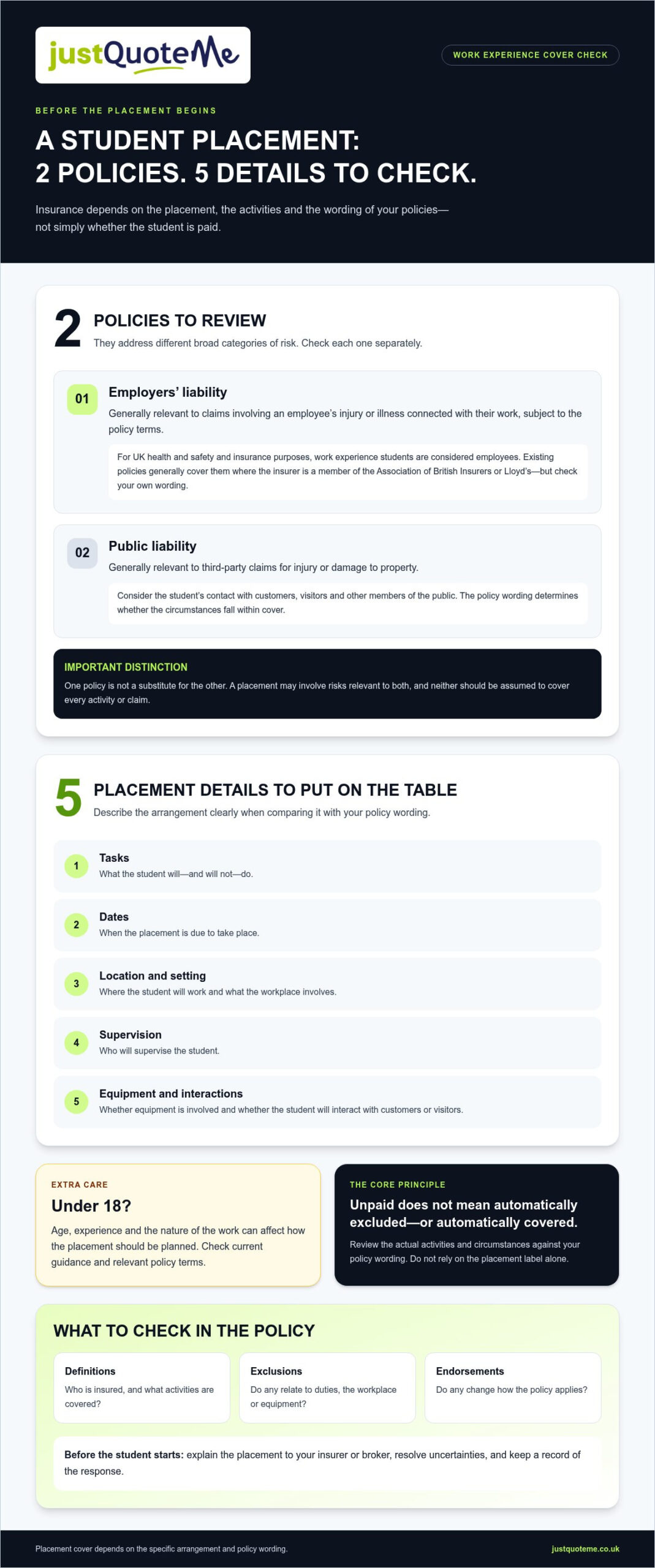
A practical insurance check before the student starts
A short, structured review can help you identify what to clarify before the placement begins. If you’re asking “do i need insurance for work experience students”, don’t start by buying a particular policy. First set out the placement, then compare its details with your current cover and get a clear response about any uncertainty.
- Describe the placement. Write down the student’s planned duties, where they’ll work, the dates and how they’ll be supervised. Include any practical tasks, equipment they may use and contact with customers or visitors.
- Review your policy wording. Check the relevant sections, definitions, exclusions and endorsements. Note anything that appears connected to the student’s activities, and mark wording you’d like explained.
- Contact your insurer or broker. Share the placement details and ask whether the existing policy wording applies to this specific arrangement. Avoid relying on a general answer that doesn’t reflect the student’s actual duties.
- Document the outcome. Keep the response with your placement records, along with any relevant policy changes or instructions. If the student’s duties or location change, revisit the details you provided.
What information to have ready
Give the insurer a practical description, not just the placement title. Include the student’s tasks and work environment, the placement dates and location, who will supervise them, whether they may interact with customers or visitors, and any equipment or practical activities involved. If there are limits on what the student may do, state those too. This helps ensure the response relates to the arrangement you intend to run.
Be specific about differences between planned duties. For example, say whether the student will observe a process only or may take part in a supervised task. If the placement spans more than one work area, describe each setting. Clear details make it easier to discuss relevant wording and identify whether any planned activity needs further clarification.
Questions to put to your insurer or broker
Keep your questions direct. Ask whether your existing policy wording extends to this specific work experience arrangement, and which policy sections, exclusions or conditions apply to the duties you’ve described. If the student’s age, dates or supervision arrangements affect the response, ask how those details have been considered.
Where available, request written clarification and retain it with the placement records. If the answer refers to a policy condition or endorsement, ask for the relevant wording or an explanation in plain English. A written record helps you follow the agreed arrangements and spot when a change in duties may require another review.
Just Quote Me can help you consider your placement details against relevant business insurance wording. Discuss your business insurance needs with Just Quote Me.
Get tailored business insurance guidance for your placement
A broker can help you connect the placement details with the wording of your business insurance. This is useful if a policy term is unclear, the student’s planned duties differ from your usual work, or you need to understand which sections of your cover are relevant. The aim is to make the questions easier to resolve, not to assume a particular outcome.
How an insurance broker can help clarify cover
Share a clear description of the arrangement, including the student’s intended activities, dates, location, supervision and any equipment involved. Explain whether they’ll observe, carry out practical tasks or interact with customers and visitors. Accurate details give the broker a sound basis to review relevant policy wording and raise specific questions with insurers where needed.
Just Quote Me is an FCA-authorised independent UK insurance broker with over 30 years of industry experience. It arranges business insurance, including employers’ liability and public liability cover, through a network of UK insurers. A broker can help you understand how policy terms relate to the placement and what points to clarify, but the insurer’s wording and response determine how cover applies. No broker can guarantee an insurer’s decision or the outcome of a future claim.
That distinction matters. A broad description such as “student placement” may leave important details unstated. Explaining that a student will, for example, observe staff in one area but handle equipment in another gives a clearer basis for reviewing the arrangement. If the tasks change, update the information rather than relying on an earlier description that no longer matches the placement.
Choose a clear next step
Before the student starts, bring together the placement details and your current policy documents. Identify any wording you’re unsure about, then seek a response that addresses the actual duties and setting. Keep written clarification and relevant policy changes with your placement records, so the agreed arrangements are clear to the people involved.
If you’re still considering “do i need insurance for work experience students”, focus on getting your particular placement reviewed rather than assuming every student arrangement is treated the same way. A tailored discussion can help you understand the questions to resolve and make an informed decision about your business cover.
Take the next step with Just Quote Me:
- Get Your Free Business Insurance Quote now
- Request a Call back for free Expert advice
Make your placement decision with confidence
The question “do i need insurance for work experience students” is best answered by reviewing the actual placement, not relying on assumptions about its title or whether it’s paid. Before agreeing dates and duties, make sure your insurance review reflects the arrangement you intend to provide. If the student’s role changes, revisit the details so your understanding of the cover stays aligned with the placement.
A clear next step can make the process more straightforward. Explore tailored business insurance support from Just Quote Me, then decide what review or advice would help you proceed with confidence.
Explore business insurance support
Get Your Free Business Insurance Quote now
Request a Call back for free Expert advice
With the right questions addressed before the placement begins, you can welcome a student with greater clarity and peace of mind.
Frequently Asked Questions
Do unpaid work experience students need to be covered by employers’ liability insurance?
Generally, an unpaid student should still be considered when reviewing employers’ liability cover. Payment status alone doesn’t establish whether a policy applies. For example, a student attending to observe staff may still need to be included in the insurer’s assessment of the placement. Give the insurer the arrangement details and check the policy response rather than treating “unpaid” as an exemption.
Does public liability insurance cover work experience students?
Public liability insurance generally relates to claims from third parties for injury or property damage, rather than claims made by the student as someone undertaking work experience. For instance, it may be relevant if a visitor is injured in circumstances connected with the placement. Whether a specific incident is covered depends on the policy wording, so consider public liability separately from cover relating to the student.
Are work experience students classed as employees for insurance purposes?
For health and safety and insurance purposes, work experience students are treated as employees. That means you shouldn’t decide whether your employers’ liability policy applies solely by looking at the student’s job title or whether they receive wages. Tell your insurer how the placement is organised and what the student will do, then check how your policy wording treats that specific arrangement.
Do I need insurance for a student on a one-day work experience placement?
A one-day duration doesn’t, by itself, settle whether your existing cover applies. The practical question, do i need insurance for work experience students, still turns on the activities, setting and policy terms. For a brief visit, explain whether the student will only observe, enter work areas or interact with customers. Share those details with your insurer before the visit rather than assuming a short placement is automatically covered.
What should I tell my insurer before hosting a work experience student?
Describe the student’s duties, placement dates and location, who will supervise them, and any equipment or practical activities involved. Also mention whether they may interact with customers or visitors, their age, and whether a school or college arranged the placement. If the student’s role could change during the placement, explain that too. Clear, complete information helps the insurer respond to the arrangement you’re actually planning.
Does my existing business insurance automatically cover a student placement?
No, don’t assume that every placement is automatically covered by an existing policy. A policy may respond depending on its terms and the placement circumstances, but definitions, exclusions and endorsements can affect the scope. Ask your insurer to address the actual tasks and setting, not just the phrase “work experience”. Keep the response with your policy records, particularly if it identifies conditions or changes relevant to the arrangement.
