
A website doesn’t remove the risks of meeting clients in person. Public liability for an online business that meets clients isn’t a legal requirement in the UK, but it can cover claims for injury to another person or damage to their property if your business is legally responsible. Cover may apply to accidents at your premises or elsewhere.
It’s useful to distinguish the risks of face-to-face meetings from problems caused by your work itself. Public liability insurance generally relates to injury or property damage claims. If a client claims financial loss because of an error in your work, professional indemnity insurance may be relevant instead.
This guide explains when public liability may matter for an online business, what it is designed to cover and how contract requirements can affect your decision. It also shows how public liability differs from other business insurance, helping you separate risks linked to client meetings from those arising from the service you provide.
Key Takeaways
- Being an online business doesn’t remove the risks of meeting clients or visiting their premises; consider where face-to-face work takes place.
- Check client and contract requirements before agreeing to work, as they may specify a minimum level of cover.
- Choose a cover limit that reflects your work and any requirements attached to contracts or client sites.
- Separate claims involving members of the public from claims involving your own employees, as they relate to different types of liability cover.
- Match your insurance to the risks you face: Just Quote Me offers public liability, employers’ liability and professional indemnity insurance.
What is public liability insurance?
Public liability insurance can help with compensation and claim costs when a business is legally responsible for injuring someone or damaging their property. For an online business, this may matter when clients visit its premises or when meetings take place at a client’s site.
Cover for self-employed businesses
Public liability insurance covers claims from members of the public, including clients, who suffer injury or property damage linked to a business. For example, a self-employed online consultant could face a claim if a client trips over equipment during a meeting. The policy is intended for third-party claims, not the business owner’s own injuries. Working from home therefore doesn’t automatically remove the risks of meeting clients.
Legal requirements for cover
UK law doesn’t generally make public liability insurance compulsory for businesses, although a trade association or contract may require it. That distinction matters to a self-employed person deciding whether to buy business insurance: a legal exemption doesn’t prevent a client or organisation from setting cover as a condition of working together. Employers’ liability is different. Under the Employers’ Liability (Compulsory Insurance) Act 1969, businesses with employees must hold it; the UK Government states its minimum cover is £5 million.
Coworking spaces and other venues may require proof of public liability insurance before allowing client meetings. Requirements depend on the venue’s terms. Ask about them when booking, then compare them with the cover limit and activities stated in your policy.
How liability policies differ
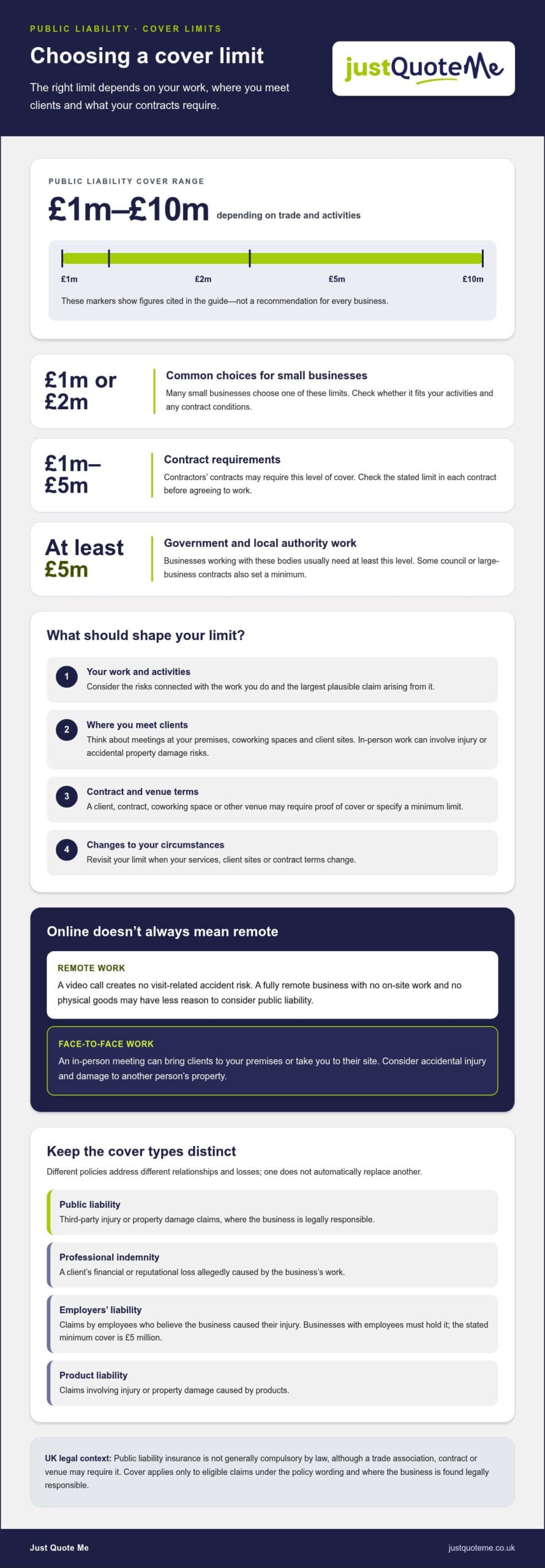
Public liability relates to claims from third parties. Employers’ liability relates to claims by employees who believe the business caused their injury. Professional indemnity is typically relevant when a client claims financial or reputational loss caused by the business’s work. Product liability relates to claims involving injury or property damage caused by products. These policies address different relationships and losses, so one doesn’t automatically replace another.
Injury and property damage claims
A public liability claim may involve a client injured at your premises or during a visit to theirs, or property damaged during a meeting. For example, a client could trip over a cable in a home office, or equipment could damage a client’s property. Cover applies only if the business is found legally responsible for compensation and claim costs. Claims can reach tens or hundreds of thousands of pounds.
For public liability for an online business with client meetings, exclusions depend on the policy wording and insured activities. Public liability is intended for third-party injury and property damage, not your own injury, an employee’s claim or a client’s financial loss caused by your work. These situations involve different liability risks and may call for other types of cover.
Premiums depend on the business’s activities, the level of cover and the policy terms. The quote reflects the business’s circumstances rather than a single standard cost.
Choosing a cover limit
Choose a limit that reflects your work, the places you visit and any contract conditions. Even online businesses can face public liability claims when meetings bring clients onto their premises or take their work to client sites.
Assessing the appropriate cover limit
A cover limit is the maximum amount a policy can pay towards an eligible liability claim. Many small businesses choose £1 million or £2 million, while public liability cover can range from £1 million to £10 million depending on the trade and activities. Contractors’ contracts may require £1 million to £5 million. Check each contract’s stated limit, then compare it with the largest plausible claim arising from your work.
Government and local authority work can set a higher benchmark: businesses working with these bodies usually need at least £5 million of cover. Some contracts with councils or large businesses specify a minimum, so a lower limit could prevent you taking on that work. Revisit the figure when your services, client sites or contract terms change.
Cover needs for online and client-facing businesses
A fully remote business with no on-site work and no physical goods may have less reason to consider public liability than a business that meets clients. Face-to-face meetings change the exposure: a client could be injured at your premises, or your work could damage their property. Home-based contractors may also need to consider cover when visiting client premises.
Consider what happens during each client interaction. A video call creates no visit-related accident risk, while an in-person meeting may take place in a home office, coworking space or customer site. A venue or client contract may require proof of insurance before work begins. Include that requirement in your decision rather than choosing a limit solely because your business operates online.
Accidental injury and property damage
Public liability cover is designed for eligible claims involving accidental injury to another person or damage to their property. For example, a consultant carrying equipment into a client’s office might accidentally damage a monitor. If the business is found legally responsible, a claim could involve compensation and associated costs.
Professional indemnity addresses a different risk: a client’s financial loss linked to an alleged mistake in your work. Public liability and professional indemnity therefore relate to different kinds of claims. A combined insurance arrangement may bring both protections together, but compare the wording and limits for each rather than assuming one limit applies to both.
Employers’ liability relates to employee claims, not client visits. If you employ staff, consider that exposure separately. Workplace contents cover is also distinct: a business with laptops, cameras or other equipment on its premises should consider how those items are protected against loss or damage. Assess these covers alongside public liability, rather than treating them as substitutes.
Injury or property claims from members of the public
A client meeting can create public liability exposure, even when your business operates online. The key question is whether someone is injured or their property is damaged because of your business’s actions.
Visits to client premises
A visit to a client’s premises can lead to a claim if your actions cause an accident. For example, a consultant could spill a drink on a client’s laptop while setting up equipment, and the client may claim against the business for the damage. A home-based contractor can face this risk when visiting a customer’s property, so include off-site work in your assessment.
Consider the practical details of each visit: what equipment you carry, where meetings take place and what tasks you perform. Bringing a laptop into a client’s office creates a different situation from a remote video call. If someone is injured or property is damaged, record what happened and who was present. Clear details help explain the circumstances of a claim.
Accidental injury and property damage claims
Public liability claims may involve injury to a member of the public or damage to their property. For instance, a client could trip over a bag left in a meeting room. A claim may seek compensation and claim costs, but insurance responds only if the business is found legally responsible, not simply because an accident happened.
Keep the type of loss clear. A client injured during a visit may make an injury claim; a client whose phone is damaged during a meeting may make a property claim. By contrast, a client alleging financial loss from a mistake in your work raises a different liability issue, typically associated with professional indemnity insurance.
How claims can arise
A claim can arise when a member of the public believes the business’s negligence caused injury or property loss. For an online retailer, for example, a customer might allege that a delivery or business activity damaged their property. The person may claim against the business, but liability depends on whether the business is legally responsible for the loss.
After an incident, note the date, location, people involved and sequence of events. For example, record where a client fell and what was on the floor. Keep relevant correspondence and details of damaged property together. Public liability insurance can address eligible third-party claims, but it does not cover employees or volunteers as members of the public. Separate cover addresses employee claims.
If your business meets clients, map where those interactions happen: your home office, a coworking room or a customer’s premises. Identify possible injury and property risks in each setting, then compare them with the activities described in your policy. A professional indemnity claim concerns a client’s financial loss from your work, not a visitor’s accident.
Public liability protection for client-facing businesses
For UK businesses that meet clients, public liability insurance can cover compensation and claim costs after injury or property damage if the business is legally responsible. It may apply to eligible accidents at business premises or off site, including client locations.
Protection for businesses that meet clients
Public liability protection is designed for claims from third parties who are injured or whose property is damaged through a business’s actions. It can matter to online businesses because client meetings may take place in homes, offices, coworking spaces or other premises. A digital service may have no shopfront, but in-person work still brings people and property into contact with business activities.
Use each contract as a practical reference point. A client or recruiter may specify levels of public liability and professional indemnity cover before work starts. Those requirements are contractual, not a general legal requirement for public liability insurance. Compare the stated limits with the work you’ll perform and where you’ll perform it. A remote appointment and an on-site installation involve different exposures.
Consider who could make a claim. A client, visitor or other member of the public may seek compensation after an incident linked to your work. Employee claims involve a different type of liability. Separating these scenarios helps you assess whether a policy addresses the people and activities involved.
Cover for in-person client meetings
At an in-person meeting, public liability insurance may respond to a third-party injury or property damage claim if the business is found legally responsible. For example, a client could trip over equipment brought into a meeting room, or a business activity could damage an item at the client’s premises. Cover isn’t simply payment for every accident: legal responsibility matters.
Claims can involve compensation and claim costs, so consider the possible consequences of each type of visit. A consultant carrying presentation equipment into client offices has different practical exposures from an online retailer whose customer interactions happen remotely. Record your business locations and activities, then compare them with the policy wording and any limits required by contracts.
Keep the different liability types clear. If a client claims financial loss because your advice or work contained an error, professional indemnity is typically relevant. If they claim injury or property damage during a visit, public liability is the category to assess. Neither label alone confirms that a particular incident is covered: the policy terms and circumstances determine the response.
Review cover options for client-facing work against your meeting locations, activities and contract requirements.
Just Quote Me: Public Liability Insurance
Just Quote Me can help you consider public liability insurance for client meetings, alongside professional indemnity or employers’ liability where relevant. The right cover depends on your work, meeting locations and contract requirements. If you’re reviewing protection for your online business, contact Just Quote Me or visit justquoteme.co.uk to discuss your options.
Make your next cover decision with confidence
Use your next contract renewal or a change in client work as a prompt to review your insurance. For public liability for an online business that meets clients, consider whether your cover reflects where meetings take place and the activities you carry out.
Just Quote Me offers Public Liability Insurance, Employers Liability Insurance and Professional Indemnity Insurance. These address different business risks, so consider which types relate to your work and client relationships.
Get Your Free Business Insurance Quote now, or Request a Call back for free Expert advice.
Frequently Asked Questions
What other covers can I get to protect my business?
Professional indemnity and employers’ liability are two other types of cover to consider, depending on your work and workforce. For example, a web designer may consider professional indemnity for claims involving an alleged mistake in their work. A business with employees should consider employers’ liability for employee-related risks. Just Quote Me offers both alongside public liability insurance, so you can discuss which covers fit your business activities.
Even if I’m working from home?
Yes. Working from home doesn’t automatically remove the need to consider public liability insurance. The key question is whether your business brings people or activities into contact with potential risks. A home-based tutor who welcomes clients faces different exposure from a remote consultant who never hosts visitors or visits customer sites. Include home appointments, client visits and off-site work when assessing how your business operates.
How do I compare cover?
Compare the policy wording, not just the headline limit. Check that your activities, such as client visits or demonstrations, match the policy description. Then review the limit, excess, exclusions and any contract requirements. If a client agreement specifies a particular limit, compare it with the policy’s limit of indemnity. Keep the relevant contract and policy documents together for reference.
How do claims work?
A claim starts when someone seeks compensation for a loss they believe your business caused. Record the incident, including the date, location, people involved and any relevant messages or photographs. If a client reports damage after a meeting, for example, preserve the correspondence and details of the item. The insurer assesses the circumstances against the policy terms and considers whether the business is legally responsible.
How long does it take to process a claim?
There isn’t one timeframe that applies to every claim. The process depends on factors such as how clearly the incident is documented, whether responsibility is disputed and whether the injury or damage needs further assessment. A straightforward property claim may involve different enquiries from a serious injury claim. Keep requested records organised and respond promptly to information requests so the assessment can progress with the available evidence.
How much does it cost?
Costs depend on your business activities, selected cover limit and policy terms. Client visits may affect the risk assessment compared with fully remote work. Just Quote Me provides free, no-obligation quotes. For a quote, choose Get Your Free Business Insurance Quote now, or request advice using Request a Call back for free Expert advice.
