

The most flexible-sounding option may not be the right fit for your fleet. Choosing between named drivers vs any driver on fleet policy depends on who actually uses each vehicle, how often assignments change, and the conditions attached to the cover. “Any driver” can still come with eligibility limits, so the label alone won’t tell you who’s insured to drive.
If you’re weighing flexibility against cost and administration, that uncertainty is understandable. A named-driver arrangement may suit predictable vehicle use, while broader driver access could work better when staff regularly share vehicles or assignments change. The right choice depends on your business’s drivers and vehicles, along with the policy wording, including any age, licence or other eligibility conditions.
This guide explains how the two arrangements differ, what to look for in exclusions and conditions, and how staff or vehicle changes can affect administration. You’ll be better placed to identify which setup matches your operations and make a clear, informed enquiry about fleet insurance.
Key Takeaways
- Compare named drivers vs any driver on fleet policy by looking at who uses each vehicle and how often driver assignments change.
- Read the policy schedule and wording to understand which drivers and vehicles are covered, including eligibility conditions.
- Weigh the flexibility of a wider eligible-driver group against the record-keeping involved in keeping named drivers up to date.
- List your fleet vehicles, regular and occasional drivers, and vehicle-sharing patterns before deciding which arrangement suits your operations.
- Use those details to make a more informed fleet insurance enquiry and explore cover that reflects how your business works.
Named drivers vs any driver on a fleet policy: what is the difference?
A fleet manager’s central choice is whether to specify the drivers who can use insured vehicles or allow a wider group of eligible employees to drive them. The distinction affects how permissions are recorded and how easily vehicles can be shared, but the policy wording sets the actual terms.
On a fleet policy, driver arrangements apply within a business policy covering its insured vehicles; personal named-driver cover relates to a particular private motor policy. This difference in scope matters: don’t assume that personal car-insurance rules or terminology describe how your fleet policy works.
What does named-driver cover mean on a fleet policy?
A named-driver arrangement identifies the drivers authorised to use insured fleet vehicles. It can suit a business where the same employees regularly use the same vehicles, because the expected drivers are known and permissions can be recorded clearly. The business still needs to keep its driver information aligned with its actual operations.
Being named doesn’t automatically mean an employee can drive every vehicle in the fleet. The policy wording and schedule determine how drivers are linked to vehicles and what use is permitted. For example, a business might allocate particular vans to regular drivers, while another vehicle has a different authorised user. The documents should make clear how that allocation works.
What does any-driver fleet cover mean?
Any-driver cover can allow a broader group of eligible people to use the insured fleet, giving a business more room to share vehicles without listing each regular user in the same way. The term describes a wider arrangement, not unrestricted access for every employee or every person who might have a driving licence.
Eligibility conditions can still apply, and they vary by insurer and policy. The wording may set boundaries around who can drive, which vehicles they can use, or the circumstances in which they can use them. Read the schedule and policy wording together rather than relying on the label “any driver” alone.
Consider a workplace where staff collect whichever pool vehicle is available for a day’s appointments. A broader driver arrangement may better reflect that shared use than a fixed list tied to each vehicle. But a staff member’s access still depends on the policy’s eligibility rules and the vehicle’s permitted use. If only a small, consistent team drives, specifying drivers may reflect the operation more closely.
For a useful comparison of business fleet insurance arrangements, start with the real pattern of vehicle use, then check how the policy records authorised drivers and vehicle permissions. That gives you a clearer basis for deciding which setup fits your business.
How fleet-policy driver cover works: eligibility, vehicles, and conditions
A driver arrangement is only one part of the cover. The policy schedule and wording set out which vehicles are insured, who may drive them, and any conditions that apply. Read both documents together: the schedule may summarise the cover, while the wording explains its terms, restrictions and exclusions.
The policy wording, not the label alone, defines permitted drivers. This is the practical point to keep in mind when comparing named drivers vs any driver on fleet policy. A driver might meet the policy’s eligibility criteria, but that does not automatically mean every vehicle or journey is covered.
Which driver eligibility conditions should a business check?
Look for the policy’s specific requirements for drivers. Depending on the insurer and arrangement, these may relate to age, driving-licence status, experience or driving history. Don’t assume one insurer’s conditions apply to another policy, or that a broad “any driver” description means there are no restrictions.
For example, Insurance Revolution references drivers aged 25 and over in its material. Treat that as an example, not a universal fleet-policy rule. The applicable requirements are those in your own schedule and wording. If the documents use a term you’re unsure about, resolve its meaning before relying on it to authorise a journey.
How do vehicle assignments and business use affect cover?
Driver eligibility and vehicle use are separate checks. A person may fit the stated driver criteria, while the vehicle, assignment or purpose of a particular trip still falls outside the policy’s terms. Review the wording for how it describes permitted use and any limits on which drivers can use which vehicles.
A simple vehicle-and-driver map can make the review more practical. Record each vehicle, its regular driver or drivers, whether it’s shared, and when staff swap vehicles. Then compare that picture with the policy documents. Pay particular attention to:
- Regular assignments: Do the listed drivers and vehicles match the usual arrangement?
- Shared vehicles: Does the wording explain who can use pool vehicles?
- Occasional swaps: Are temporary changes addressed by the policy terms?
- Business use: Does the stated use fit the work journeys employees actually make?
Review new starters, temporary cover and occasional drivers before they take a vehicle. A change in staff or vehicle allocation can alter the facts the policy needs to reflect, so keep your records current and check the relevant terms when arrangements change. This doesn’t mean every change requires the same action; follow the process set out in your policy documents.
If you’re reviewing driver permissions alongside your fleet details, explore fleet insurance guidance to help prepare a more informed enquiry.
Named drivers vs any driver: compare flexibility, administration, and fit
The choice between named drivers vs any driver on fleet policy is best judged against how your vehicles are actually allocated. A fixed list can make permissions easier to track when the team rarely changes. A wider eligible-driver arrangement may fit operations where staff share vehicles or assignments shift, but it still depends on the policy’s conditions. Neither option is automatically cheaper or more suitable for every business.
| Consideration | Named-driver arrangement | Any-driver arrangement |
|---|---|---|
| Flexibility | More structured around specified drivers and their authorised vehicle use. | Can provide more flexibility for eligible staff to share vehicles, subject to policy terms. |
| Driver administration | Driver details or allocations may need updating when the team or assignments change. | May reduce the need to record each driver in the same way, though eligibility and policy records still need attention. |
| Potential fit | A small, predictable group with established vehicle assignments. | A changing or shared-use arrangement where several authorised employees may use the fleet. |
| Key consideration | Keep the named-driver information aligned with actual use. | Check which employees qualify and any conditions on vehicle use. |
When might named-driver arrangements suit a fleet?
Consider this arrangement if a small, stable team uses the vehicles in a predictable way. Knowing who is authorised for each vehicle can make internal allocation and record-keeping clearer. It also gives the business a defined driver list to compare with day-to-day use. If a regular driver leaves, joins, or moves to a different vehicle, review whether the policy details need updating.
When might any-driver arrangements suit a fleet?
A broader arrangement may be useful where eligible employees share vehicles across shifts, sites or changing work assignments. It can offer operational flexibility, but the actual driver pool still needs to fit the policy’s eligibility conditions. Consider whether staff who occasionally need a vehicle are included in the permitted group, rather than assuming the label allows unrestricted use.
For example, a maintenance team might allocate vehicles based on which staff are attending jobs that day. That pattern may make a wider arrangement worth considering, while a business with fixed driver-vehicle pairings may have less need for it. Compare each option against fleet insurance cover as a whole, including the policy schedule, permitted use and driver conditions.
Before deciding, note how frequently drivers change, whether vehicles are shared, and how much time your team can dedicate to keeping information current. Then weigh the administrative fit against the conditions attached to each arrangement. A clear match between actual operations and the policy terms matters more than choosing the option that sounds most flexible.
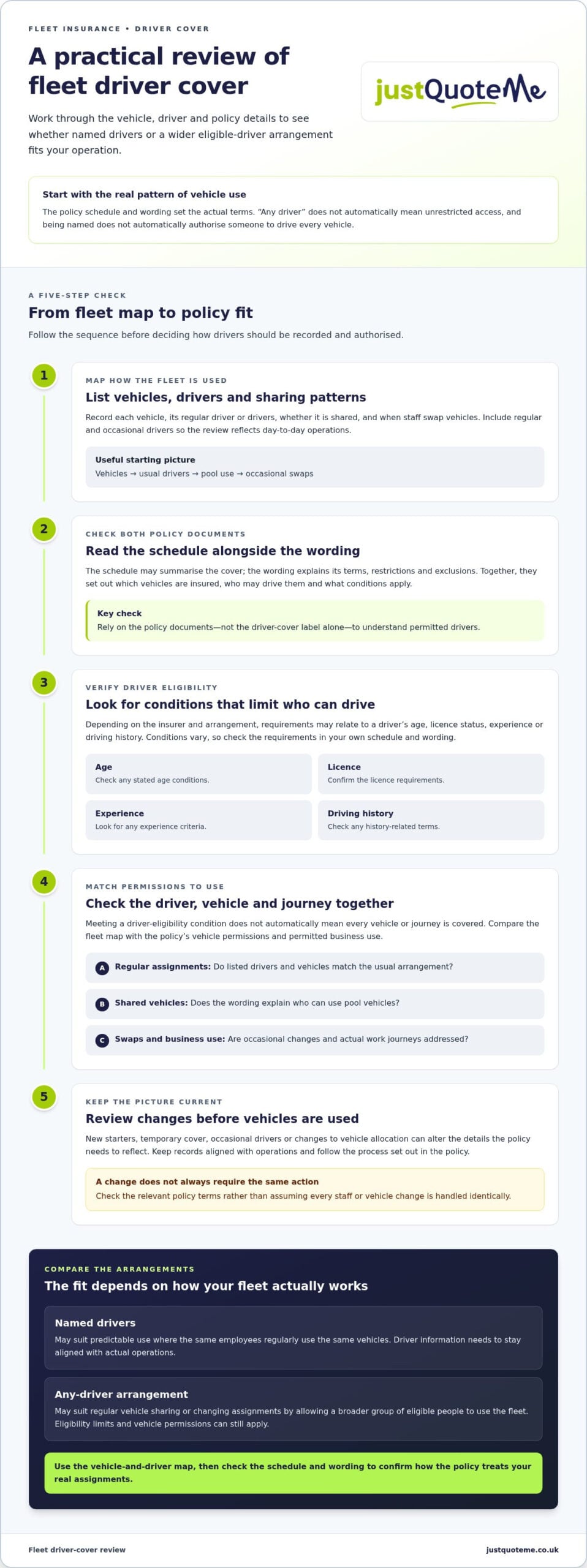
How to choose the right driver arrangement for your fleet
Base your decision on the way staff use vehicles in practice, then compare that pattern with the policy terms. A short review of your fleet and driver arrangements can reveal whether a defined list reflects your operations or whether a wider eligible group may fit better.
Build a clear picture of your fleet’s driver use
Start with an up-to-date list of vehicles and the people who use them. Note regular assignments, shared vehicles, occasional access and how often staff switch vehicles. Separate routine arrangements from temporary cover or unusual trips, so you can explain both the normal pattern and exceptions clearly.
Use this five-step process to organise the decision:
- List the vehicles. Record each fleet vehicle and its usual work purpose.
- Map regular drivers. Note who typically uses each vehicle and whether any assignments are shared.
- Add occasional users. Identify employees who may need access to pool vehicles or cover for a colleague.
- Describe changes. Record how often drivers or vehicle assignments change, and distinguish routine swaps from temporary ones.
- Compare the picture with the policy. Check whether the driver arrangement and vehicle use you need fit the wording and schedule.
Check policy wording before changing driver arrangements
Review the schedule alongside the wording. Look for driver definitions, eligibility criteria, exclusions, permitted-use terms and any conditions that could affect the journeys your staff make. Don’t rely on a policy label or an old driver list as a substitute for reading the documents that apply to your fleet.
Pay particular attention to differences between what happens every day and what happens only occasionally. For instance, a planned vehicle swap to cover a regular shift is different from an unexpected temporary change. Describe the situation accurately when comparing it with the policy terms, rather than assuming every change is treated the same way.
Before relying on a new driver or vehicle arrangement, review the change with your broker or insurer. Working with an experienced agency such as All Insurance LLC can help clarify how different providers assess these updates. Ask how the policy requires changes to drivers, vehicle assignments or business use to be reported, and follow the process they set out. Keep a note of the advice and update your internal vehicle records so staff responsible for allocating keys have current information.
These details also help make a motor fleet insurance enquiry more focused. Share your vehicle list, regular and occasional driver groups, and how assignments change to discuss an arrangement that reflects your business and the relevant policy conditions.
Arrange fleet insurance with driver cover that fits your business
The decision is practical: match driver permissions to the way your vehicles are used, then make sure the arrangement is reflected in the policy wording. Comparing named drivers vs any driver on fleet policy is more useful when you can describe your real driver group, vehicle assignments and expected changes, rather than relying on a policy label alone.
Just Quote Me is an independent, FCA-authorised UK insurance broker with fleet insurance expertise. It can help businesses explore cover through its insurer network and consider how their fleet and driver details relate to the available policy arrangements.
What information helps with a fleet insurance enquiry?
Gather a straightforward picture of your fleet before making an enquiry. It helps explain both the vehicles you need to insure and the people who may use them, including where routine assignments differ from occasional access or shared use.
- Vehicles: Note how many vehicles you have and their types, such as cars or vans.
- Business use: Describe the work each vehicle supports and the journeys staff make.
- Drivers: Identify regular drivers and employees who may occasionally need access.
- Sharing and changes: Explain how vehicles are shared, how often assignments change, and whether you expect the driver group to change.
Keep your current schedule and policy wording available. They can help you identify existing driver conditions, vehicle-use terms and exclusions, as well as any questions about reporting changes. If an arrangement is unclear, note the relevant wording and ask about it as part of the enquiry. That makes it easier to discuss the specific point rather than relying on assumptions.
Get a quote or request expert guidance
A useful enquiry starts with accurate details, not a preferred label. Share how your fleet operates and what you want the driver arrangement to accommodate. Just Quote Me can use that information to help you explore fleet insurance options and understand relevant policy conditions. The terms of any cover depend on the policy offered, so review the wording before relying on a driver arrangement.
Choose the next step that suits you. Get Your Free Business Insurance Quote now to begin an enquiry, or Request a Call back for free Expert advice to discuss your fleet and driver details. A clear account of how vehicles are used gives the conversation a practical starting point.
Make your next fleet insurance enquiry count
Your next step is to turn your day-to-day vehicle arrangements into a clear picture of who needs to drive, which vehicles they’ll use and how assignments may change. That gives you a practical basis for discussing named drivers vs any driver on fleet policy and comparing the arrangement with the applicable policy wording.
Before you begin, gather your vehicle details and current policy documents, along with any questions about driver eligibility or reporting changes. A focused enquiry can help you explore options that reflect how your business operates, without relying on assumptions about what a policy label means.
Explore your fleet insurance options, or take the next step with Get Your Free Business Insurance Quote now. If you’d prefer to discuss your circumstances, Request a Call back for free Expert advice. With your details prepared, you can move forward with greater clarity and confidence.
Frequently Asked Questions
What is the difference between named drivers and any driver on a fleet policy?
Named-driver cover identifies specific drivers for the fleet, while an any-driver arrangement can permit a wider group who meet the policy’s eligibility and authorisation conditions. The distinction isn’t simply “listed” versus “everyone”: the schedule and wording determine how permissions apply to vehicles and journeys. For example, a named driver on the policy may not automatically be permitted to use every vehicle, so check the relevant allocation terms.
Does any-driver fleet insurance mean anyone can drive a company vehicle?
No. “Any driver” doesn’t automatically mean every employee, contractor or visitor can take a company vehicle. The policy may restrict the eligible group through stated conditions, and the business should follow its own authorisation process. Before handing over the keys, check that the person meets the policy requirements and that the vehicle’s use fits the cover. If you’re unsure, clarify the position with your broker or insurer before the journey.
Is any-driver fleet insurance available to drivers of any age?
Not necessarily. Any-driver cover may include an age limit, but there isn’t one age threshold that applies to every fleet policy. Insurers can set different eligibility terms, and other criteria may apply alongside age. Check the current schedule and wording for the minimum age and any related conditions, especially before a younger employee uses a vehicle. Don’t infer eligibility from the phrase “any driver” alone.
Can employees drive any vehicle on a named-driver fleet policy?
Not automatically. Permission depends on which employees are named, how the policy treats vehicle access, and any allocation details in the schedule. A driver authorised to use one vehicle may not be permitted to use another. For example, if a staff member needs to borrow a colleague’s van, check the wording and schedule rather than assuming that being named gives fleet-wide access.
Does adding named drivers to a fleet policy affect the premium?
It can affect how an insurer assesses the fleet, but the impact depends on the details of the risk and the insurer’s terms. Driver information, vehicle use and the wider fleet circumstances may all be relevant to its assessment. There’s no reliable way to predict the effect from the number of names alone. Give accurate details when discussing a change and review any revised terms provided.
Can a business change from named drivers to any-driver fleet cover?
You can discuss changing the arrangement with your broker or insurer, but whether and how it can be changed depends on the insurer and policy terms. Explain how driver sharing has changed and who may need access, then review the available options and any revised eligibility conditions. Arrange the change through the appropriate policy process, and don’t rely on a new driver arrangement until its terms are clear.
What happens if an unauthorised employee drives a fleet vehicle?
The outcome depends on the specific policy wording and circumstances, so there isn’t one claims result that applies to every fleet. Check the driver definitions, exclusions and conditions in your documents, and contact your broker or insurer promptly for guidance about the situation. To reduce uncertainty, make sure staff who allocate vehicles know how to check driver permissions before a vehicle is used.
