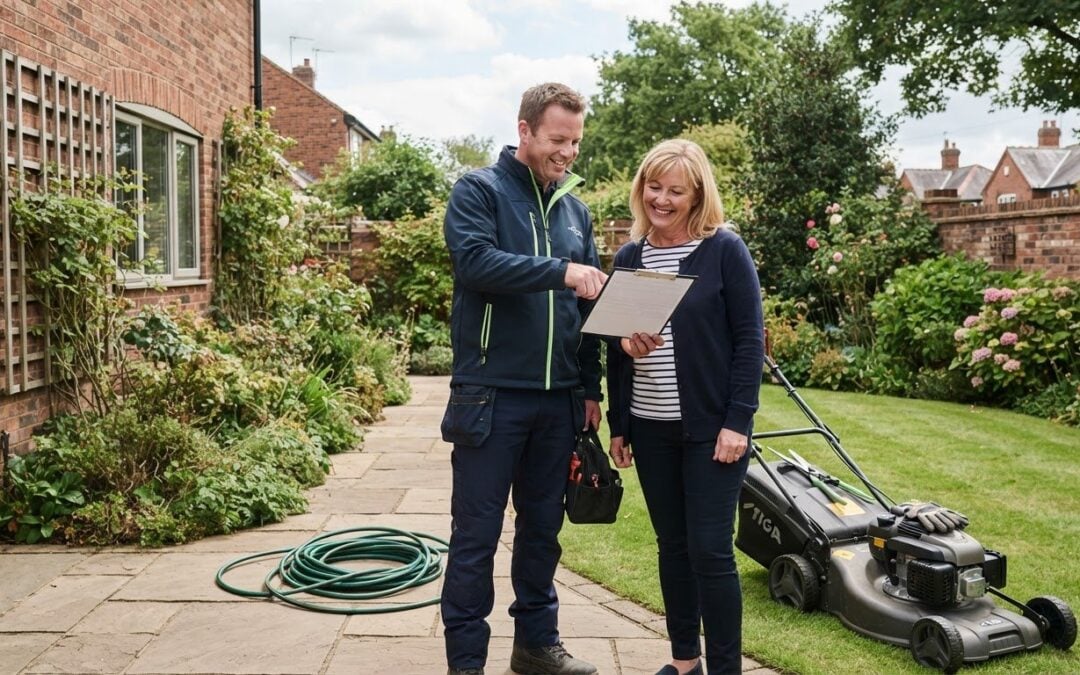
What if a customer trips over your hose, or a stone thrown up by a mower damages a nearby window? For gardeners, the right cover depends on the work you do and who or what could be affected. This guide to gardener public liability insurance UK explains how public liability may respond to third-party injury or property damage, and why the details of your work matter.
It’s reasonable to want clear answers before choosing a policy. Gardening can involve very different activities, from routine lawn care to planting, maintenance and garden design, and policy wording may treat them differently. A vague or incomplete description of your work could also create uncertainty if you need to make a claim.
We’ll outline what to check in a policy, including how public liability differs from employers’ liability, tools cover and professional indemnity. You’ll also see why it helps to consider your staff, equipment and any advice or design work you provide. Just Quote Me is an independent UK insurance broker with over 30 years of industry experience, offering tailored advice to help relate your gardening activities to suitable cover.
Key Takeaways
- Gardener public liability insurance uk relates to third-party injury and property damage, but the policy wording, declared activities, exclusions and limits shape how cover applies.
- Use hypothetical incidents, such as accidental damage to a customer’s property, to understand the risks to consider. Whether a claim is covered depends on the policy terms and circumstances.
- Compare public liability with employers’ liability, tools cover and professional indemnity by the type of risk each is designed to address.
- Prepare a clear list of your gardening activities, work sites, staff, equipment and contract requirements to support a more accurate review.
- Just Quote Me can help relate your business details to policy wording, drawing on its FCA-authorised independent broking experience and over 30 years in the industry.
What Does Gardener Public Liability Insurance in the UK Do?
Public liability insurance is designed to address claims from other people who say your business caused them injury or damaged their property. For example, a customer might claim that a garden wall was accidentally damaged during maintenance. Whether a policy responds depends on its wording and the circumstances of the incident.
This cover is different from protection for your own mower, tools or other equipment. Public liability focuses on third-party claims, while damage to your own belongings is a separate exposure. The broad principles of liability insurance can help explain the distinction, but the policy documents determine what a specific policy covers.
For a closer look at the cover, read Just Quote Me’s public liability insurance overview. As you compare gardener public liability insurance uk, pay attention to the activities declared, exclusions, applicable limits and any conditions. A policy’s title alone won’t tell you whether every task you undertake falls within its terms.
Which gardening jobs should you describe when arranging cover?
Give a clear picture of your day-to-day work and where you carry it out. Depending on your business, this could include:
- Lawn care and hedge trimming
- Planting, landscaping and garden clearance
- Work at customers’ homes, communal grounds or commercial sites
Describe unusual or higher-risk tasks accurately, rather than relying on a broad label such as “garden maintenance”. The more clearly your activities are presented, the easier it is to relate them to policy wording and identify questions about exclusions or limits before work begins.
Is public liability insurance a legal requirement for gardeners?
Public liability insurance isn’t universally compulsory for gardeners in the UK. That doesn’t mean you can assume a client will accept a job without evidence of cover. A contract, client or site owner may set insurance requirements as a condition of the work, so review those terms before agreeing to a project.
Check what evidence is requested and whether any stated limit or scope matches the work you’ve agreed to do. Clear documentation can help avoid uncertainty when arranging a contract, but it doesn’t change the policy’s terms. For employers’ liability, which relates to staff rather than third-party claims, consider the separate obligations that may apply to your business and seek advice based on your circumstances.
Gardening Risks and Incidents a Public Liability Policy May Address
Gardening work takes place around customers’ homes, shared spaces and members of the public. A mistake or accident could lead to a third party claiming that your work caused injury or damaged their property. These examples show the kinds of situations to consider, not guaranteed outcomes: how a claim is handled depends on the policy terms and the circumstances.
Examples involving customer property and members of the public
- Hypothetical, damage to a garden feature: While trimming a hedge or clearing a border, you accidentally damage a customer’s fence, paving or other garden feature. The customer may claim that your work caused the damage.
- Hypothetical, visitor trips over equipment: A visitor to a property trips over equipment left in a work area and alleges they were injured. They may bring a claim against your business.
In both scenarios, the insurer would assess the circumstances against the policy wording. The activity involved, the cover’s scope, exclusions and limits may all be relevant. Describing your work accurately when arranging cover can help the insurer assess the risks associated with your business.
What public liability may not include
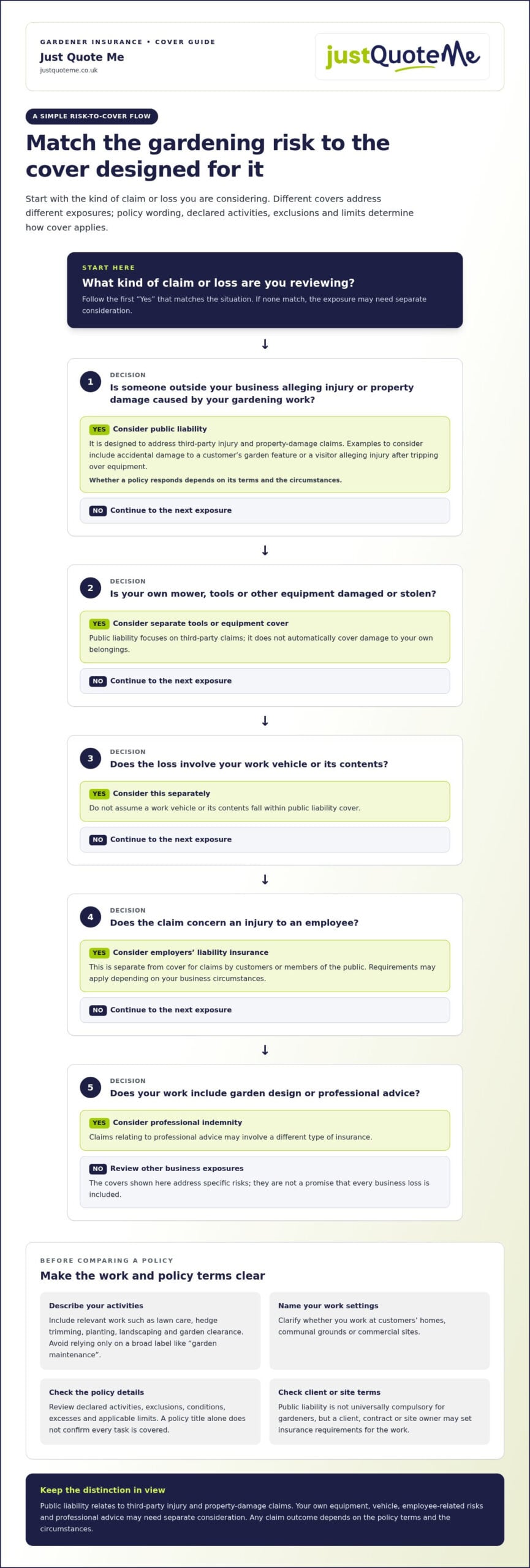
Public liability is intended for third-party claims, not every loss your gardening business could face. If your own mower or other equipment is stolen or damaged, that’s a separate business exposure. Your work vehicle and its contents also shouldn’t be assumed to fall within public liability cover.
Injuries to employees are a different matter from claims by customers or members of the public. Employers’ Liability (EL) insurance is a separate cover, and GOV.UK explains the requirements for businesses with employees. If your work includes garden design or professional advice, claims relating to that advice may also involve a different type of insurance, such as professional indemnity.
In short, public liability addresses third-party liability, while your own equipment, vehicle and other business losses need separate consideration.
Read the policy wording carefully for exclusions, excesses, conditions and applicable limits. Don’t assume that an activity or incident is covered simply because it happened during a gardening job. If you want help relating your work to policy terms, explore tailored insurance support from Just Quote Me.
How to Compare Gardener Public Liability Insurance and Related Covers
Different policies address different exposures. Comparing them by what they’re designed to cover can help you spot gaps without assuming one policy protects every part of your gardening business.
| Type of cover | Exposure it is designed to address | Gardening example |
|---|---|---|
| Public liability | Claims from third parties involving injury or property damage allegedly caused by your business. | A customer claims your work damaged their garden feature. |
| Employers’ liability | Claims relating to employees’ injury or illness connected with their work. | A member of staff is injured while carrying out a gardening task. |
| Tools and equipment cover | Loss of or damage to the business’s own tools and equipment, subject to the policy. | Your mower or hedge trimmer is stolen or damaged. |
| Professional indemnity | Claims connected with professional advice, designs or recommendations, depending on the wording. | A client alleges that a garden plan or recommendation caused them a loss. |
This comparison can help you assess gardener public liability insurance uk against the work your business actually does. Availability, terms, exclusions and limits vary by policy and insurer, so read the wording rather than relying on a cover name alone.
Public liability versus employers’ liability for gardening businesses
Public liability concerns claims from customers or other third parties. Employers’ liability relates to employees’ injury or illness connected with work. Whether employer insurance obligations apply depends on your circumstances and current UK rules. For more detail on this separate cover, read the employers’ liability insurance guide.
When tools cover or professional indemnity may be relevant
Consider tools cover if loss of or damage to your own equipment could disrupt your work. Professional indemnity may be relevant if you provide garden designs, advice or recommendations as part of your service. Neither is automatically necessary for every gardener; the decision depends on your activities, assets and appetite for risk.
Review each policy’s exclusions, conditions, excesses and limits alongside your contracts and work details. A broker can help relate those details to policy wording, so you can compare cover based on your actual business rather than generic assumptions.
What Information to Gather Before Comparing Gardener Insurance
A clear picture of your business makes it easier to compare cover against the work you actually undertake. Before discussing gardener public liability insurance uk, gather details about your activities, work locations, staff, equipment and any insurance requirements set by clients or site managers. Accurate information helps a broker and insurer assess your business’s risk profile and relate it to policy terms.
Describe your work, clients and work locations accurately
Start with a practical list of your services. Include routine jobs such as lawn care and planting, along with specialist tasks, clearance or subcontracted work where relevant. Note where you work: for example, at domestic properties, communal grounds or commercial premises. Include how many people work in the business and whether you use employees or subcontractors. Record the equipment you rely on, too.
Be specific about work that differs from your usual maintenance jobs. A broad description may not convey the range of activities you carry out. Clear details give the broker and insurer a better basis for discussing how the policy wording relates to your work.
Review policy wording, limits and evidence of cover
Once you have your business details together, compare the proposed cover against them. Check that the activities and locations described align with your work, then review relevant exclusions, conditions, excesses and policy limits. No single limit suits every gardener; consider the nature of your jobs and any requirements attached to the contracts you take on.
- Contract terms: Note insurance requirements stated by customers, clients or site managers, including any specified cover limits.
- Documents: Check that certificates and other evidence of cover meet the applicable client or contract requirements.
- Changes in your work: Keep new services, locations or staffing arrangements in view when reviewing whether your policy details remain accurate.
For a broader look at business cover for trades, read Just Quote Me’s tradesman insurance information. Policy terms and exclusions vary, so focus on the wording that applies to your activities rather than relying on a generic description of gardening work.
Ready to put your details to use? Share your gardening business information with Just Quote Me for tailored insurance advice.
Get Tailored Gardener Public Liability Insurance Advice from Just Quote Me
Choosing gardener public liability insurance uk starts with a clear description of your business, not a generic assumption about what every gardener needs. Share the gardening activities you carry out, where you work, whether you employ staff or use subcontractors, and any insurance requirements set out in customer contracts. These details help create a more useful basis for reviewing cover.
How broker support can help you review your cover
Just Quote Me is an FCA-authorised independent UK insurance broker with over 30 years of industry experience. It arranges public liability and related business insurance through a broad network of UK insurers, with tailored advice to help connect your declared gardening work to policy wording.
A review can consider the tasks you undertake, the sites where you work and any specific contract requirements. It can also consider related covers where they fit your circumstances, such as employers’ liability if you have staff, tools cover for your equipment or professional indemnity if you provide garden design advice. These covers address different exposures, and their terms, exclusions and suitability depend on your business and the relevant policy wording.
Before requesting a quote, gather a concise record of your activities, staffing arrangements, work locations and any contract conditions. Include specialist tasks and changes to the work you normally do. Clear information helps Just Quote Me discuss your requirements and consider options from its network of UK insurers without relying on assumptions about your business.
Take the next step towards a suitable policy
Choose the route that suits you. You can request a free business insurance quote online or ask for a callback to discuss your circumstances with an expert. Both options give you a way to start a tailored review of your gardening work and cover needs.
Get Your Free Business Insurance Quote now
Request a Call back for free Expert advice
Choose cover that fits your gardening work
The right gardener public liability insurance uk starts with an accurate picture of your activities, work locations, staff and contract requirements. Public liability is designed for third-party injury or property damage claims, while equipment, employee and professional advice risks may call for separate consideration. Always compare the policy wording, exclusions and limits against the work you actually do.
Just Quote Me is an FCA-authorised independent UK insurance broker with over 30 years of industry experience and access to a broad network of UK insurers. Tailored advice can help relate your declared gardening activities to policy terms and consider related cover in light of your business circumstances.
Take the next step in the way that suits you: Get Your Free Business Insurance Quote now or Request a Call back for free Expert advice. To learn more about Just Quote Me, explore our insurance support. A clear review of your work details can help you move forward with greater confidence.
Frequently Asked Questions
Is public liability insurance compulsory for gardeners in the UK?
No, public liability insurance isn’t generally a legal requirement for gardeners in the UK. However, a client, contract or site owner may require you to hold it before agreeing to work. Check any insurance conditions alongside your policy documents, including required limits and evidence of cover. Even where it isn’t a legal obligation, consider how a third-party injury or property damage claim could affect your business.
What does gardener public liability insurance cover?
Gardener public liability insurance is designed to cover claims from third parties who allege your business caused injury or property damage. For instance, someone might claim they were hurt in a work area, or that gardening work damaged their property. Whether a particular claim is covered depends on the policy wording and circumstances. Check which activities you’ve declared, the exclusions, conditions and limits. It doesn’t automatically cover your own tools or employee injuries.
Does public liability insurance cover damage to a customer’s garden?
It may respond to a claim alleging that your work accidentally damaged a customer’s garden, but cover isn’t automatic. The insurer will consider the circumstances and the policy terms, including relevant exclusions and conditions. For example, accidental damage to paving during an agreed job may be assessed differently from a dispute about the quality of the work. Describe your gardening activities clearly and read the wording to understand what applies.
Do self-employed gardeners need public liability insurance?
Self-employed gardeners aren’t generally required by law to hold public liability insurance, but clients or site owners may make it a condition of the work. It can also help address the financial exposure of claims from third parties alleging injury or property damage caused by your business. Consider the jobs you undertake, where you work and any contract requirements. The right cover and terms depend on your business activities and policy wording.
Do gardeners need employers’ liability insurance as well?
Employers’ liability is separate from public liability. It relates to claims involving employees who are injured or become ill because of their work, rather than claims from customers or other third parties. UK rules generally require businesses with employees to hold employers’ liability insurance, although circumstances and exemptions can matter. If you employ staff or use subcontractors, check current guidance and get advice relevant to your working arrangements.
