
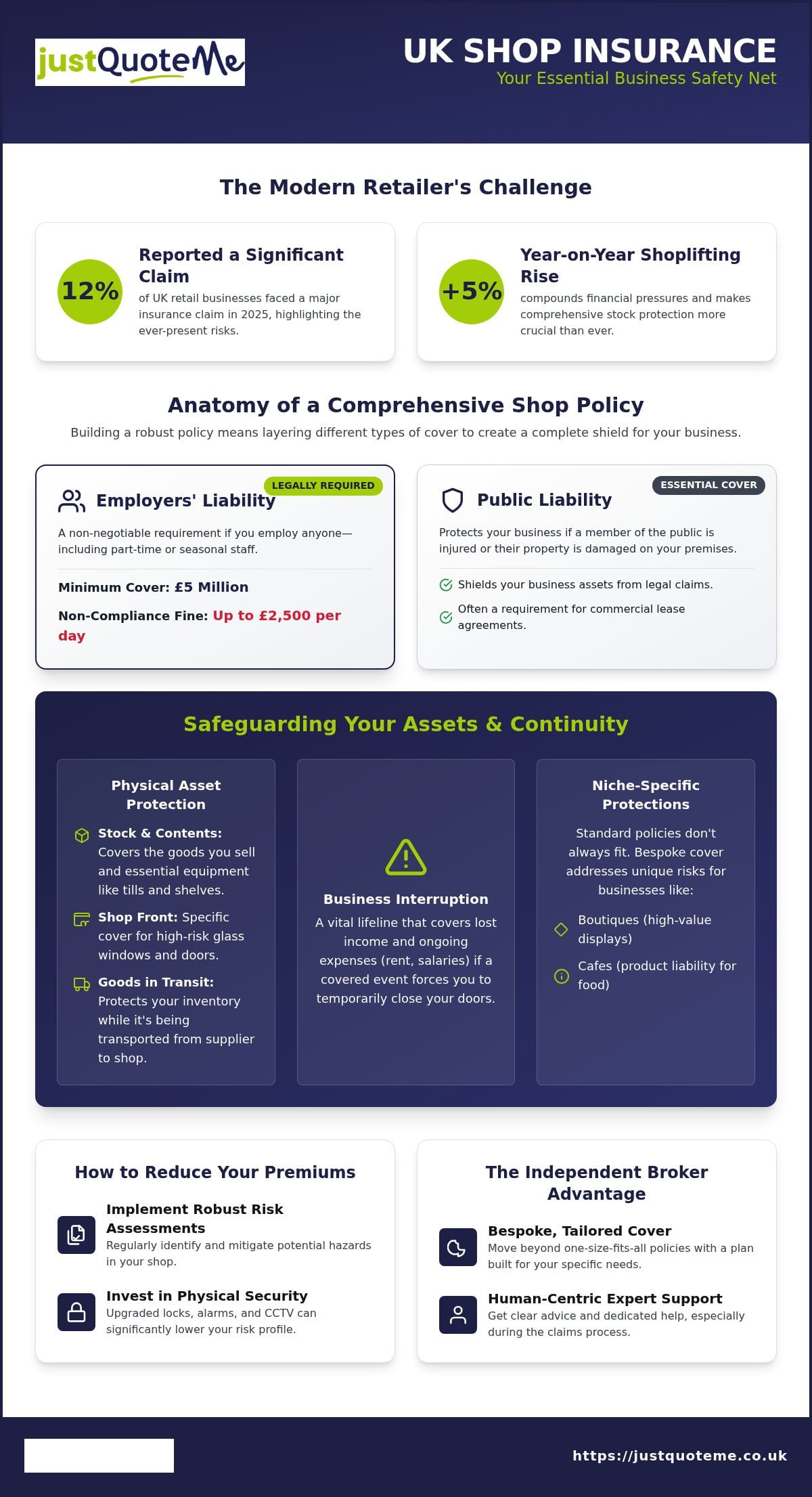
Did you know that 12% of UK retail businesses reported a significant insurance-related claim in 2025? For many shop owners, the reality of rising premium costs and the 5% year-on-year increase in shoplifting makes finding the right shop insurance feel like an uphill battle. It’s frustrating to deal with the confusion of legal requirements or the nagging fear that a claim might be rejected because of policy small print you didn’t quite understand. You need a solution that protects your livelihood without the administrative headache.
We understand that your business is unique, and a generic, automated policy rarely provides the security you deserve. This guide will help you discover how to protect your retail business with bespoke cover that handles everything from public liability to business interruption. We promise to simplify the complex and ensure you achieve full legal compliance while gaining expert support during the claims process. We will explore the latest 2026 FCA rule simplifications, clarify your mandatory obligations under the Employers’ Liability Act, and show you how to build a flexible policy that scales as your shop grows.
Key Takeaways
- Learn the legal essentials of shop insurance, including why Employers’ Liability is a non-negotiable requirement for any UK retailer with employees.
- Discover how to distinguish between standard business policies and bespoke retail cover to protect against specific risks like stock damage and business interruption.
- Explore niche-specific protections for boutiques and cafes that address unique challenges like high-value window displays and product liability.
- Gain practical insights into lowering your insurance costs by implementing robust risk assessments and physical security upgrades.
- Understand the benefits of partnering with an independent broker to secure expert, human-centric support that automated quote engines lack.
Understanding Shop Insurance: Why Your Retail Business Needs a Safety Net
Running a retail business in the UK involves balancing daily operations with long-term security. Shop insurance is more than a line item on your balance sheet; it’s a strategic safety net that protects your livelihood. This cover serves a dual role by ensuring legal compliance and providing the financial buffer needed for survival. A single incident, like a customer slipping on a wet floor or a break-in during the night, can trigger a ripple effect. Without the right protection, the legal fees and repair costs from one event could be enough to close your doors for good.
Generic business policies or standard home insurance often fail to address the specific needs of a high-street shop. These broad products might lack the depth required to cover high-value stock or the unique liability risks of constant footfall. Many savvy retailers opt for a structure similar to a Business Owner’s Policy (BOP), which integrates property and liability protections into a cohesive package. In 2026, with the FCA introducing more flexible digital rules for insurance providers, it’s easier than ever to find a policy that fits your specific niche rather than settling for a “one size fits all” solution.
Legal Obligations: Employers Liability and Beyond
If you employ anyone, employers liability insurance is a non-negotiable legal requirement. The Employers’ Liability (Compulsory Insurance) Act 1969 mandates that you hold at least £5 million in cover. This isn’t just for large corporations. It applies to independent boutiques with part-time staff and even family-run shops with seasonal help. Fines for non-compliance are severe, reaching up to £2,500 for each day you operate without a valid policy. We help Staffordshire retailers navigate these regulations to avoid penalties and ensure their team stays protected.
Protecting Your Reputation and Assets
Your shop’s reputation is built on trust, and public liability insurance is the essential shield for that trust. In a customer-facing environment, the risk of third-party injury or property damage is a daily reality. This cover provides peace of mind that you won’t be personally liable for expensive legal claims. Having a robust policy also serves as a vital signal to landlords and suppliers. Most commercial lease agreements in Newcastle-under-Lyme and Stafford require proof of liability cover before you can move in. By safeguarding the physical heart of your business, you ensure your premises remain a secure environment for both your staff and your customers.
The Anatomy of a Comprehensive Shop Insurance Policy
Building a robust shop insurance policy requires more than just picking a few options from a list. It’s about creating a cohesive structure where each element supports the others. While the previous section highlighted why you need cover, understanding the specific components ensures you aren’t paying for what you don’t need or leaving dangerous gaps in your protection. A standard policy typically bundles several key covers into one manageable package, often referred to as a comprehensive retail solution. This trend toward integrated digital protection is gaining traction globally; for example, platforms like insure.az demonstrate how online portals can simplify property and asset coverage for a variety of needs.
The foundation of any retail policy starts with public liability and employers liability. While public liability protects you if a customer is injured on your premises, employers liability is a legally required business insurance for anyone with a team. These two work together to shield your financial assets from legal claims that could otherwise bankrupt a small shop. Without this dual layer of protection, even a minor accident could result in devastating legal costs.
Safeguarding Your Inventory and Equipment
Distinguishing between stock and contents is vital for accurate valuation. Stock refers to the items you sell, while contents include your till systems and shelving. If you own a boutique in Stone, your stock levels likely fluctuate. You must account for seasonal peaks to avoid being underinsured during your busiest periods. To ensure your financial reporting remains accurate throughout these fluctuations, you can visit Mazuma for professional accountancy support. Many policies also include cover for shop front glass and goods in transit, protecting your assets from the moment they leave the supplier until they reach the customer.
Business interruption pays for lost income and ongoing bills like rent if you’re forced to close for repairs after a fire or flood. The key is choosing the right indemnity period. This is the timeframe your policy will support your recovery. We suggest a minimum of 12 months, though 24 months is safer for major refits. If you’re unsure about your specific risks, you can speak with a specialist broker to calculate your needs accurately.
Additional Options: Cyber and Legal Expenses
Modern shops rely on digital POS systems, making cyber insurance a critical addition for 2026. It protects you if customer data is breached or your payment systems are hacked. Additionally, legal expenses cover provides support for employment disputes or tax enquiries. You might also consider protection for money kept on the premises or cover against employee dishonesty, providing a final layer of security against internal and external threats.
Tailoring Cover for Your Specific Retail Niche
Retail isn’t a one-size-fits-all sector. A high-street boutique has different risks than a suburban deli. While a beginners’ guide to business insurance provides a good starting point, 2026 retailers need more granular detail. High-street boutiques deal with massive footfall and often have expensive, vulnerable window displays. Managing these risks requires precise shop insurance that covers accidental damage and glass breakage. For cafes and deli-shops, the focus shifts to food hygiene and product liability. It’s not just about the premises; it’s about what you serve to the public.
Some retail models cross into high-risk territory. If your retail brand includes late-night entertainment or physical security services, you’ll need specific nightclub insurance or security company insurance. Pop-up shops and market stalls also require flexibility. Short-term policies allow you to trade at events without committing to a full annual premium. This adaptability is essential for modern retailers who test new locations or seasonal markets.
The High Street Challenge: Premises and Public Access
Many UK retailers operate out of unique spaces. If you own the building, commercial property insurance is essential. This becomes more complex if there are residential flats above your shop or if you occupy a listed building. These scenarios require specialized underwriting to ensure the structure is protected against fire or subsidence while meeting strict heritage regulations. We help owners in Newcastle-under-Lyme and Stafford navigate these property nuances to ensure no part of the building is left vulnerable.
Specialist Sectors: From Pubs to Security
Some retail businesses are deeply traditional yet carry modern risks. For instance, thatched pub insurance requires an understanding of specialist materials and fire risks. Even service-based shops like hairdressers must adapt their shop insurance to include treatment liability for their clients. This level of detail is why working with an expert commercial insurance broker in Staffordshire is so valuable. We understand the local landscape in towns like Stafford and Stone, ensuring your specific niche is covered correctly from day one.
Practical Tips: How to Reduce Your Shop Insurance Premiums
Reducing the cost of your shop insurance doesn’t mean you have to compromise on the quality of your protection. In fact, the most effective way to lower premiums is by demonstrating to insurers that you’re a lower risk. This starts with a proactive approach to safety and security. While many retailers look for the lowest price, the “cheapest” option often contains hidden exclusions that can lead to expensive claim rejections later. A balanced policy provides the right level of cover at a price that reflects your commitment to risk management.
Risk Management for Retailers
Slips, trips, and falls are the most common public liability claims in retail. By conducting regular risk assessments and documenting floor checks, you create a paper trail that proves your commitment to safety. Staff training is another powerful tool. When your team knows how to handle spillages or manage crowds during sales, the likelihood of an accident drops significantly. Insurers often reward this diligence with lower liability premiums. Fire safety protocols, including regular alarm testing and clear exit routes, also play a crucial role in protecting your property and lowering building insurance costs.
Physical security is a major factor in premium calculation. Installing high-quality alarms, shutters, and CCTV systems can lead to a significant reduction in your annual costs. Research from early 2026 suggests that businesses implementing these proactive risk mitigation measures can see premium reductions of up to 15%. These upgrades protect your stock and act as a deterrent to the rising rates of shoplifting mentioned earlier in this guide. Investing in security doesn’t just lower your insurance bills; it protects your daily trade.
Optimising Your Policy Structure
Your policy should reflect the current state of your business. Over-insurance is a common mistake where retailers pay for cover they don’t need, such as stock levels that have long since decreased. Conversely, under-insurance is a dangerous gamble that can leave you out of pocket during a claim. Choosing a higher voluntary excess can lower your monthly payments, but you must ensure this amount remains affordable if you need to claim. We recommend annual policy reviews to adjust for changes in turnover or equipment.
Navigating these choices alone is difficult. An independent broker has the advantage of comparing the whole market to find competitive prices that automated systems often miss. With over 30 years of experience, we provide the human-centric advice needed to balance cost with comprehensive cover. To start saving on your premiums today, compare shop insurance quotes that fit your specific business needs.
Securing Bespoke Shop Insurance with Just Quote Me
Choosing the right shop insurance shouldn’t feel like a digital lottery. Many automated platforms prioritize speed over accuracy, leaving you with gaps in cover that only appear when you try to claim. Just Quote Me offers a human-centric alternative. With over 30 years of industry experience, we act as a steady hand in a complex market. We manage the administrative burdens so you can focus on your customers. Our status as an independent broker means we work for you, not the insurance companies. We compare options across a broad network to find the best value for your specific needs. This eliminates the frustration of dealing with rigid, automated systems that don’t understand the nuances of your trade.
Every business has its own set of risks. You might be a single high-street unit or part of a larger group that requires tradesman insurance alongside your retail cover. We specialize in creating tailored packages that address these complexities. Our access to a wide range of top UK insurers ensures competitive pricing without sacrificing the quality of your protection. Our support doesn’t end once you sign the policy. We provide ongoing assistance for mid-term adjustments and renewals, ensuring your cover always reflects your current operations and stock levels.
Get Started with Your Quote Today
We’ve designed our process to be as efficient as possible for busy shop owners. You don’t have time to fill out endless forms or wait on hold for hours. We provide direct access to professional advice, especially for non-standard risks that automated systems often reject. Our goal is to give you financial peace of mind and full legal compliance with minimal fuss. We handle the paperwork and the negotiations with insurers, acting as your partner throughout the life of your policy. Just Quote Me to simplify your administrative burdens and secure your future. Take the first step toward securing your shop insurance today.
Secure Your Retail Future Today
Protecting your high-street presence in 2026 requires more than a generic policy. Throughout this guide, we’ve explored how understanding your mandatory legal duties and implementing proactive risk management can significantly lower your overheads. Whether you’re managing a boutique in Stone or a busy deli in Stafford, the right shop insurance provides the financial safety net your hard work deserves. It’s about moving from a state of uncertainty to one of total business resilience.
Just Quote Me brings 30+ years of industry expertise to your doorstep. As an independent, FCA-authorised broker, we don’t rely on automated bots. Instead, we offer bespoke policies tailored to your specific retail niche, ensuring you never pay for cover you don’t need. We handle the complex administration and policy fine print so you can stay focused on serving your customers. Secure your retail business with expert guidance today and trade with the confidence that your livelihood is fully protected by professionals who understand your local market.
Get Your Free Business Insurance Quote now
Request a Call back for free Expert advice
Common Questions About Retail Protection
Is shop insurance a legal requirement in the UK?
Employers’ Liability insurance is the only component of shop insurance that is a strict legal requirement if you employ any staff. Under the Employers’ Liability (Compulsory Insurance) Act 1969, you must have at least £5 million in cover. While public liability and buildings cover aren’t mandated by UK law, most commercial landlords and local authorities will require proof of these before you can trade from a physical premises.
What is the difference between shop insurance and public liability insurance?
Public liability insurance is a specific type of protection, whereas shop insurance is a comprehensive package that includes multiple covers. Think of public liability as the shield against claims for injury or property damage from customers. A full shop policy goes much further by including protection for your stock, business interruption, and the building itself. We help you bundle these into one efficient contract that fits your specific retail niche.
Does my policy cover me for shoplifting and theft?
Most comprehensive policies provide cover for theft, but the specific terms depend on your security measures. Standard cover usually requires evidence of forcible or violent entry to the premises. However, many retailers add specific shoplifting extensions to their policy to account for losses during trading hours. It’s essential to check your policy small print regarding minimum security requirements like alarm systems or specific lock types to ensure your claim isn’t rejected.
How much does shop insurance cost on average?
The cost of shop insurance depends on your location, stock value, and security measures. Insurers calculate premiums based on the specific risks associated with your trade and premises. A high-end boutique in a city centre carries a different risk profile than a small village newsagent. We use our 30 years of industry experience to compare the whole market and find competitive prices that reflect your actual needs rather than using generic demographic assumptions.
Do I need insurance for a pop-up shop or market stall?
You absolutely need insurance for temporary trading, as you face the same liability risks as permanent retailers. Most pop-up organisers and market operators will insist on seeing proof of public liability cover before allowing you to set up. We provide flexible, short-term solutions that protect your stock and your legal liability without forcing you into a long-term annual commitment. This allows you to test new markets with full financial peace of mind.
What happens if I have a flat above my shop?
Having a residential flat above your shop changes your risk profile and requires a specialized commercial property policy. Insurers consider the increased risk of fire or water damage coming from the residential area. It’s vital to disclose this detail during your quote process to ensure your building cover remains valid. We specialize in these complex property arrangements, ensuring both the commercial and structural elements of your building are correctly protected.
Can I get insurance for a shop that is currently vacant?
You can secure insurance for a vacant shop, but it falls under unoccupied property terms. These policies focus on protecting the structure from vandalism, fire, and weather damage while the unit is empty. Be aware that insurers often set strict conditions for vacant units, such as regular site inspections and turning off the water supply. We help you navigate these requirements so your asset remains protected until you find a new tenant.
How do I make a claim on my shop insurance policy?
To make a claim, you should contact our expert advisors as soon as an incident occurs. We act as your advocate, handling the complex negotiations with the insurance underwriters so you don’t have to. You’ll need to provide evidence like photos of damage or a police crime reference number for thefts. Our human-centric approach ensures you receive personal support throughout the process, moving your claim from initial notification to a successful settlement quickly.
