

Could your standard home insurance policy be the biggest hidden risk to your business? Many hosts assume their existing cover extends to paying guests, but residential policies rarely account for the unique liabilities of the hospitality industry. Operating without specific bed and breakfast insurance leaves you exposed to expensive public liability claims and potential legal breaches that could shutter your doors. It’s a common point of confusion, but one that carries significant financial weight.
We know that running a guest house involves enough daily pressure without the added anxiety of deciphering complex policy wording. You want to focus on your guests while knowing your livelihood is secure. This guide explains how to protect your property and income with tailored cover that handles everything from guest injuries to business interruption. We also provide a clear overview of the 2026 mandatory national registration scheme and explain how a specialist broker can find the best market rates. You’ll learn how to secure full legal compliance and the peace of mind that comes with professional, expert-led protection.
Key Takeaways
- Learn why residential policies are insufficient for commercial hosting and how to avoid accidental coverage gaps that could invalidate your protection.
- Navigate your legal obligations regarding Employers’ Liability and the critical role of Public Liability in protecting your business from guest claims.
- Explore how tailored cover for buildings, contents, and business interruption secures both your physical assets and your future revenue.
- Understand the specific variables that determine the cost of your bed and breakfast insurance, from room capacity to regional risk factors.
- Discover the benefits of using an independent broker to access a broad network of top UK insurers for the most competitive and comprehensive rates.
Why Standard Home Insurance Isn’t Enough for Your B&B
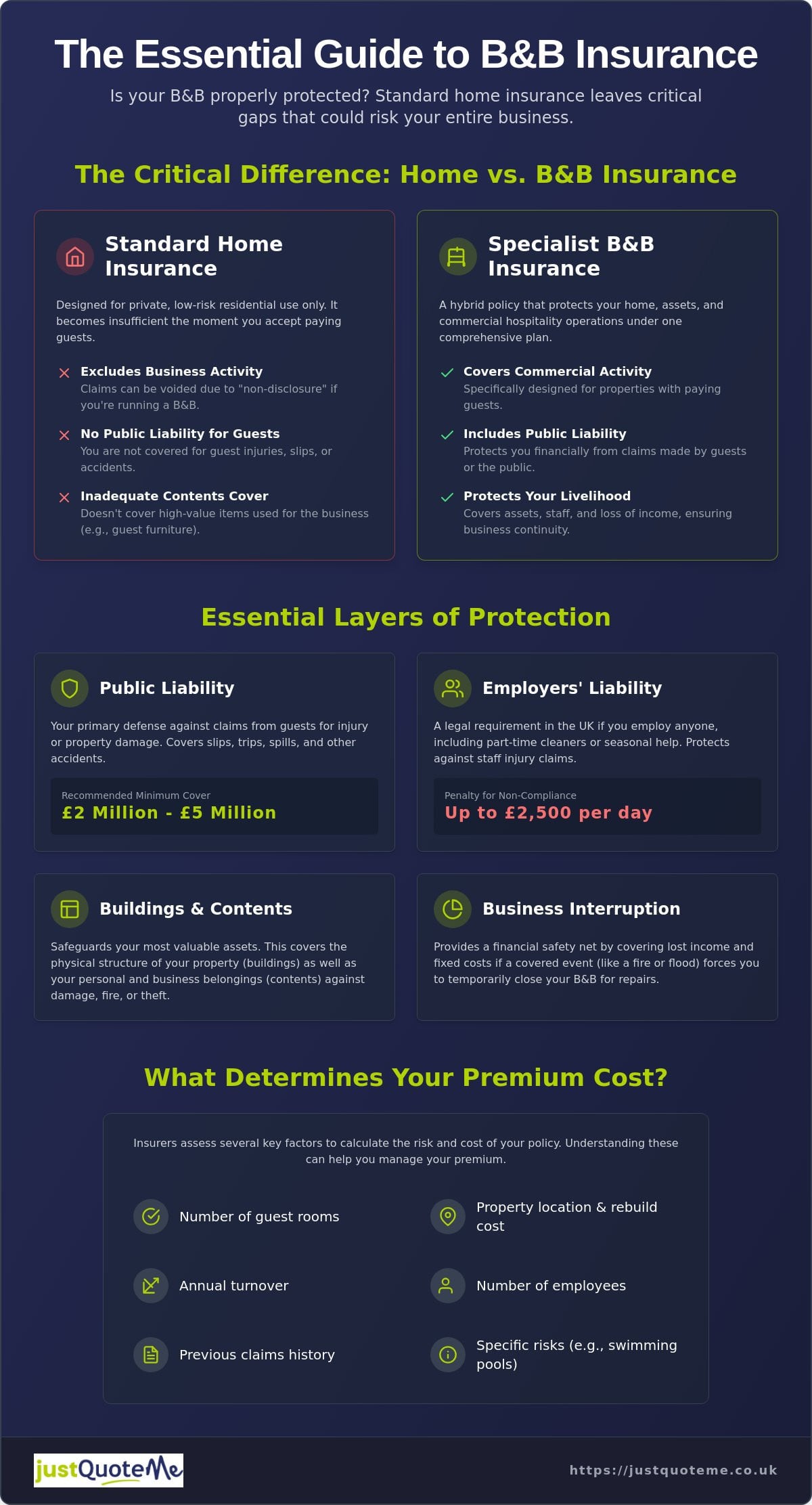
Many owners treat their guest house as an extension of their private life, but your insurer sees things differently. The moment you accept payment for a room, your property transitions from a private residence to a commercial enterprise. Standard residential policies are built on the assumption of low-risk, private occupancy. They don’t account for the increased footfall, fire safety requirements, or legal liabilities that come with running a business. With the mandatory national registration scheme for short-term lets in England launching in Spring 2026, maintaining correct cover is no longer optional; it’s a requirement for your unique registration number.
If you don’t disclose your business activity, you risk a total claim rejection. Insurers call this “non-disclosure of material facts.” Whether a guest slips in the bath or a storm damages your roof, the discovery of an undeclared B&B operation gives the provider grounds to void your cover entirely. Securing bed and breakfast insurance solves this by creating a comprehensive hybrid. It protects the structural integrity of your home while providing the commercial-grade protection required for guest safety and business continuity.
The “Paying Guest” Clause Explained
In the insurance world, a “paying guest” is anyone who provides financial consideration for their stay. It doesn’t matter if you only host during the peak summer months or rent out a single spare room. Most standard policies explicitly exclude any loss or damage that occurs while the property is used for business. To stay protected, you must issue a “Change of Use” notification. Upgrading to a dedicated Hotel and Guest House insurance policy ensures your provider understands the exact nature of your risks.
Home vs. Business: Where the Lines Blur
Managing a B&B means your personal life and your professional life share the same four walls. This creates unique insurance challenges. You need to ensure your personal belongings are covered against theft or damage, while also protecting the high-value furniture and linens used by guests. Shared spaces like stairwells and dining rooms represent the highest liability risks. A robust bed and breakfast insurance policy includes Commercial General Liability (CGL) insurance to handle these overlaps. It ensures your family remains secure under the same roof while providing a professional safety net for your guests and your reputation. Just Quote Me to find a policy that effectively bridges the gap between your home and your business.
Essential Liability Covers: Protecting Guests, Staff, and Reputation
Liability is the most significant financial risk any hospitality business faces. While your property is your asset, your guests are your responsibility. In a high-traffic environment where visitors are unfamiliar with the layout, accidents happen easily. A comprehensive bed and breakfast insurance policy acts as a shield against the legal and financial fallout from these incidents.
Public Liability for B&B Owners
Public Liability is your primary defense against claims from the general public. In the context of a guest house, Public Liability provides financial protection if a visitor suffers an injury or property damage for which your business is held legally responsible. Common risks include slips on polished floorboards, trips on loose stair carpets, or accidental hot drink spills during breakfast service. We recommend a minimum limit of £2 million, though many owners opt for £5 million to ensure they are fully protected against high-value personal injury claims. Even a minor incident can lead to substantial legal fees and compensation costs that could bankrupt an uninsured business.
Employers’ Liability: Staying Legal
If you employ anyone to help run your B&B, you must have Employers Liability Insurance. This is a legal mandate in the UK, requiring a minimum cover of £5 million. This applies to full-time staff, part-time cleaners, and even seasonal help. The only common exception is for family-run businesses that aren’t incorporated as limited companies. However, if you’ve structured your guest house as a limited company, even family members count as employees in the eyes of the law. Failing to hold this cover can result in daily fines of up to £2,500. It’s often helpful to speak with a specialist broker to clarify your specific obligations under current 2026 regulations.
Beyond these core protections, you should consider Product Liability and Legal Expenses. Product Liability is vital if you serve food or provide amenities like toiletries. It covers you if a guest falls ill from a meal or suffers an allergic reaction to a provided product. Legal Expenses cover provides the funds needed to defend your business against various disputes, including contract disagreements or employment tribunals. Together, these layers of protection ensure that a single mistake or stroke of bad luck doesn’t end your hosting career. Bed and breakfast insurance isn’t just about ticking boxes; it’s about securing your reputation and your future.
Buildings, Contents, and Business Interruption: Safeguarding Your Assets
While liability covers the people, your property and its contents represent your most significant capital investment. Standard residential policies often fall short here, especially if your guest house is a listed building or features traditional construction. Specialist bed and breakfast insurance provides the specific cover needed for these unique structures, ensuring that a physical disaster doesn’t lead to a total financial collapse.
Protecting Your Property and Stock
When calculating your buildings cover, you must focus on the rebuild cost rather than the market value. Market prices fluctuate based on location and demand; the cost of labor and materials to reconstruct a stone or brick property is what matters to an insurer. This is particularly critical for those operating in specialized environments like Thatched Pub insurance contexts, where specialized craft skills and materials significantly drive up repair costs. You also need to protect your business contents, including high-value furniture, professional linens, and food stock. Be aware that many policies only cover theft if there is evidence of “forcible and violent entry.” If a guest leaves with a television or designer towels, a standard theft claim might be rejected unless you’ve secured specific extensions for guest-related losses.
The Importance of Business Interruption
Physical damage is only half the battle. If a fire or flood forces you to close for several months, the loss of bookings can be more damaging than the repair bill itself. This is where Business Interruption cover becomes essential. It replaces your lost income, ensuring you can still meet ongoing expenses like mortgages and staff wages while your doors are shut. For seasonal hospitality businesses, calculating the “Indemnity Period” is vital. You need to ensure the cover lasts long enough to see you through to the next peak booking window. Many owners underestimate how long repairs to specialist properties can take. A 12-month period might seem sufficient, but 24 or 36 months provides a much safer buffer for businesses that rely on specific peak seasons to remain profitable.
Finally, consider including cover for Guest Effects. While most visitors should carry their own travel insurance, providing a limited amount of cover for their lost or damaged items is a mark of a professional host. It helps preserve your reputation if a guest’s suitcase is damaged by a leak or accidental fire. Integrating these protections into your bed and breakfast insurance package ensures that both your physical assets and your future revenue remain secure. It’s about building a safety net that catches everything from a broken window to a season of lost revenue.
Calculating the Cost: What Influences Your B&B Insurance Premium?
Understanding the variables behind your premium helps you manage your overheads effectively. Insurers don’t just look at the size of your property; they analyze the level of exposure your business creates. A larger guest house with ten rooms naturally carries more risk than a two-room establishment, as the probability of an incident occurring increases with higher occupancy levels. Your bed and breakfast insurance rate is essentially a reflection of these combined risk factors.
Location remains a primary driver of cost. Properties situated in high-flood-risk areas or regions with higher than average crime rates will see this reflected in their quotes. However, your personal track record is equally important. A clean claims history over several years can secure a substantial No Claims Discount, significantly lowering your annual outlay. Insurers view a lack of previous claims as a primary indicator of a well-managed, low-risk business.
How to Lower Your Premium
You have direct control over several factors that influence your rate. Installing industry-standard security, such as five-lever mortice deadlocks on external doors and an approved alarm system, signals to insurers that you take asset protection seriously. Maintaining detailed health and safety records, including regular fire risk assessments and PAT testing for guest appliances, further demonstrates a proactive approach to risk management. You might also consider choosing a higher voluntary excess. By agreeing to pay a larger portion of a claim yourself, you reduce the insurer’s liability and can often secure a lower monthly or annual premium.
Factors Unique to Hospitality
The specific services you offer also shift the risk landscape. If you serve alcohol, your policy will need to reflect this, often incorporating elements similar to restaurant insurance to manage the increased liability associated with licensing. Additional activities like bike hire, boat rentals, or guided tours introduce new layers of risk that must be declared to ensure your cover remains valid.
In the modern market, even your digital reputation plays a role. Robust online reviews and a professional website suggest a well-managed operation, which some niche insurers view as a sign of lower operational risk. Because these factors vary so widely between properties, it’s vital to compare tailored insurance options that reflect your specific business model rather than relying on a generic policy. This ensures you aren’t paying for cover you don’t need while remaining fully protected for the services you do provide.
Choosing a Broker: Bespoke B&B Insurance with Just Quote Me
Selecting the right bed and breakfast insurance shouldn’t be another administrative burden on your already busy schedule. While automated comparison sites promise speed, they often lack the professional depth required to handle complex hospitality risks. Just Quote Me offers a human-led alternative. We leverage 30 years of industry experience to navigate the UK insurance market for you. Based in Stone, Staffordshire, we combine local accessibility with the authority of an established independent broker. We don’t just provide a quote; we provide a partnership that manages the complex paperwork so you can stay focused on your guests.
The Advantage of Independent Advice
A “one size fits all” approach is dangerous in the hospitality sector. Direct insurers only offer their own products, which might leave you with dangerous coverage gaps. As an independent broker, we have access to a panel of top UK insurers. This allows us to perform a competitive comparison that aggregators simply can’t match. We specialize in building bespoke Hotel and Guest House insurance packages that reflect your specific occupancy levels and service offerings. Whether you operate a traditional stone cottage or a modern boutique establishment, we ensure your policy is as unique as your business. If the worst happens and you need to make a claim, we act as your advocate, handling the negotiations to ensure a fair and efficient resolution.
Get Started with Just Quote Me
Our process is straightforward and designed for efficiency. We’ve stripped away the jargon to provide a frictionless experience from your first inquiry to the final policy documents. Every B&B has a different risk profile, and we take the time to understand yours through expert call backs and tailored assessments. This personalized service ensures you only pay for the specific cover your business requires, avoiding the wasted costs of irrelevant “bundle” products. We pride ourselves on being a steady hand in a complex market, offering the reliability you need to host with confidence.
Secure Your Hospitality Future Today
Running a successful guest house requires more than just excellent hospitality; it demands a solid foundation of legal and financial security. You’ve seen how standard residential policies fail to cover the unique risks of paying guests and how specialist liability and business interruption covers keep your doors open during unforeseen events. Maintaining the right bed and breakfast insurance is the most effective way to protect your livelihood and reputation in an increasingly regulated market.
As an FCA Authorised Broker with 30+ years of industry experience, Just Quote Me provides the expertise you need to navigate this complex landscape. We offer access to top UK insurers to ensure you receive a bespoke policy at a competitive rate. We manage the administrative details so you can focus on providing an exceptional guest experience. Take the first step toward comprehensive protection and long-term peace of mind by partnering with a specialist broker who understands your industry.
Get Your Free Business Insurance Quote now
Request a Call back for free Expert advice
Frequently Asked Questions
Do I need specific insurance for a B&B if I only have one guest room?
Yes, you require specialist cover even if you only rent out a single room on an occasional basis. Most residential home policies explicitly exclude business activities and paying guests, which means any claim could be rejected if your insurer discovers you are operating a hospitality business. Securing dedicated bed and breakfast insurance ensures you are protected against the unique liabilities that arise the moment you accept payment for a stay.
Is public liability insurance a legal requirement for B&Bs in the UK?
Public liability insurance is not a statutory legal requirement in the UK, but it is considered essential for any hospitality business. Most mortgage lenders and local authorities will insist on a minimum level of cover before you can legally operate or be included in local tourism directories. Without it, you are personally liable for legal fees and compensation if a guest is injured or their property is damaged while staying at your premises.
Does B&B insurance cover my own personal contents?
Yes, a tailored policy acts as a hybrid to cover both your professional equipment and your personal belongings. While standard commercial policies focus solely on business assets, a guest house policy is designed for live-in owners. It ensures that your private furniture, clothes, and electronics are protected alongside the linens and furniture used by your guests, providing comprehensive cover for your entire home under one single policy.
Can I get insurance for a guest house with a thatched roof?
You can certainly get insurance for a thatched guest house, though it requires a specialist approach due to the higher fire risk associated with the construction material. Standard insurers often avoid thatched properties, so using a broker with experience in non-standard buildings is vital. We can help you find a provider that understands the maintenance requirements and safety protocols necessary to secure robust cover for your heritage building.
What happens if a guest sues me for food poisoning?
Your policy’s Product Liability section will handle the legal defense and any resulting compensation if a guest sues for food poisoning. This protection is critical for any host serving breakfast or providing snacks. The insurer will investigate the claim and manage the costs of defending your business, ensuring that a single hygiene dispute or allergic reaction doesn’t lead to a devastating financial loss for your establishment.
How much does B&B insurance typically cost in 2026?
The cost of your premium depends on several variables including your location, the number of guest rooms, and your claims history. In 2026, factors such as updated fire safety regulations and the new national registration scheme also influence how insurers calculate risk. Because every establishment is unique, the most accurate way to determine your cost is to request a tailored quote that reflects your specific operational risks and occupancy levels.
Does my policy cover damage caused by guests?
Most bed and breakfast insurance policies include cover for accidental damage caused by guests, such as spills on carpets or broken fixtures. However, malicious damage or theft by guests often requires a specific extension and may only be covered if there is evidence of a police report. It’s important to check your policy wording to understand the exact level of protection provided for guest-related incidents and any applicable excesses.
What is the difference between guest house and hotel insurance?
The primary difference lies in the scale of the operation and the level of service provided. Guest house insurance is typically designed for smaller, owner-managed properties where the host often lives on-site. Hotel insurance accounts for larger staff numbers, complex facilities like spas or gyms, and higher guest turnover. Both provide similar core protections, but the specific limits and additional covers are scaled to match the complexity and size of the business.
