
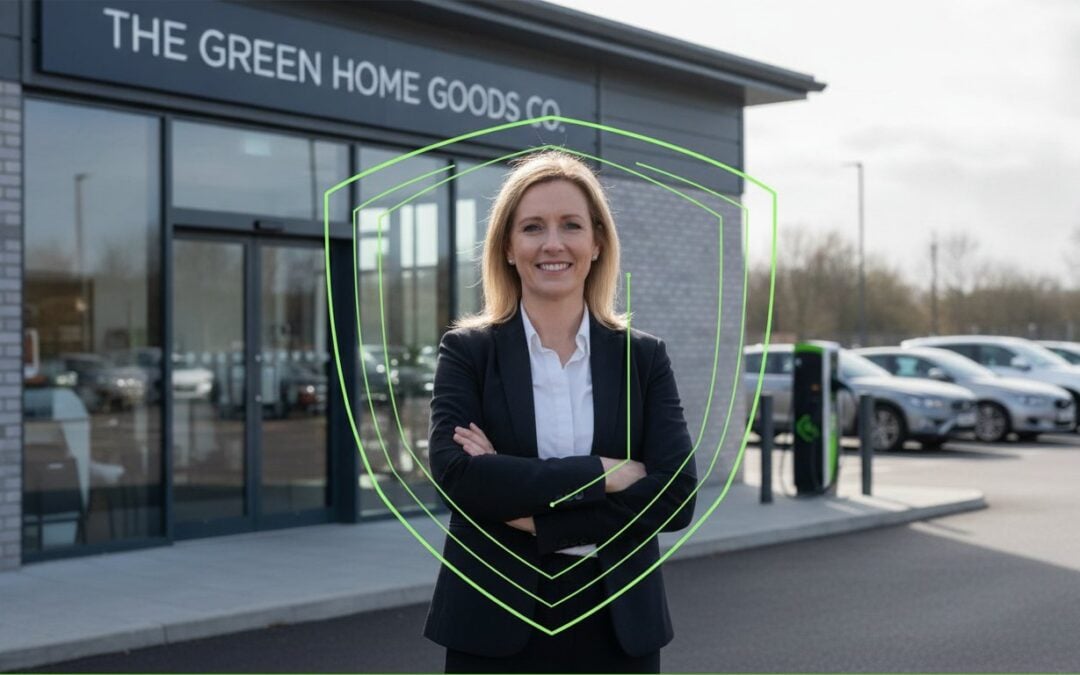
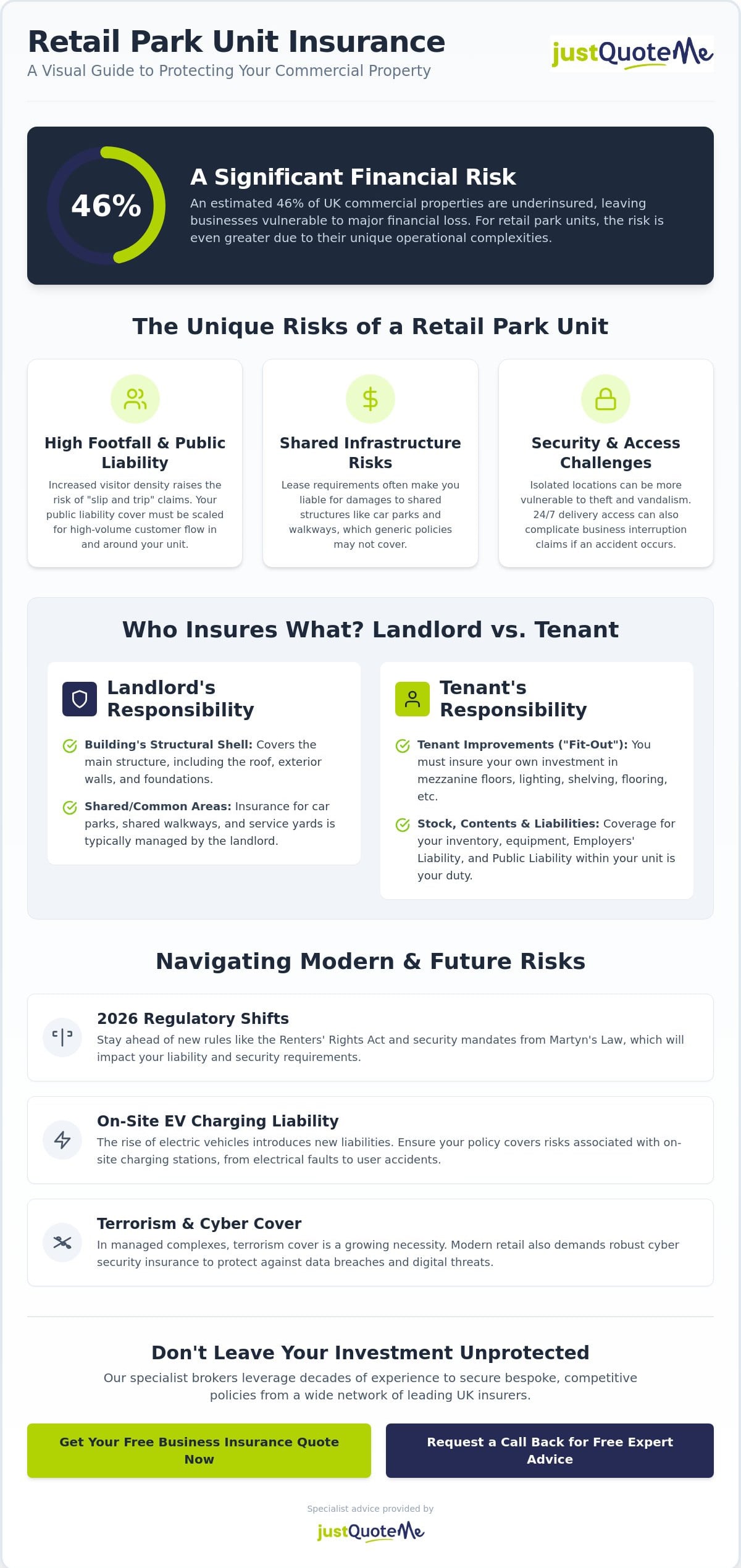
Did you know that 46% of UK commercial properties are currently estimated to be underinsured? For businesses operating in a busy shopping hub, this statistic represents a significant financial risk. We understand that securing a retail park unit insurance policy often feels like trying to solve a puzzle where the pieces don’t quite fit. You’re likely managing high footfall, complex multi-tenant regulations, and the constant question of who is actually responsible for the car park or the shared walkways.
It’s a lot to handle, but protecting your investment shouldn’t be a source of stress. We’ll help you clarify your legal obligations and explain how 2026 updates, such as the Renters’ Rights Act and the implementation of Martyn’s Law, impact your specific coverage needs. This guide breaks down essential policy components and modern risk management strategies to ensure your protection is as robust as your business. You’ll gain a clear path to managing high-volume risks while securing competitive pricing through expert, specialist insights.
Key Takeaways
- Learn why a retail park unit insurance policy requires a bespoke approach to manage high vehicle traffic and shared infrastructure risks effectively.
- Clarify the division of responsibility in Full Repairing and Insuring (FRI) leases so you don’t mistakenly leave your tenant improvements uninsured.
- Stay ahead of 2026 regulatory shifts, including new security mandates for public spaces and the necessity of terrorism cover in managed complexes.
- Address emerging liability concerns surrounding on-site EV charging stations and the latest cyber security requirements for modern retail operations.
- Explore how a specialist broker leverages decades of industry experience to secure competitive premiums from a wide network of leading UK insurers.
Understanding the Unique Risks of a Retail Park Unit
A retail park unit insurance policy is a bespoke contract designed specifically for the logistical and operational realities of out-of-town commercial spaces. Unlike a traditional high street shop, which might occupy a narrow, pedestrian-facing storefront in an older building, a retail park unit exists within a vast, managed ecosystem. This environment introduces unique variables that a generic shop insurance policy simply isn’t equipped to handle. You’re dealing with massive multi-tenant sites where shared infrastructure is the norm, not the exception.
Retail parks operate differently. They rely on heavy vehicle traffic and sprawling shared car parks, creating a risk profile that’s distinct from pedestrian-only zones. Because these policies often function similarly to a Business Owner’s Policy (BOP), they bundle critical property and liability protections into a single, cohesive framework. Relying on FCA-authorised advice is vital. Without it, you might miss specific lease requirements that leave you personally liable for damages to shared structures or common areas that you’re contractually bound to protect.
High Footfall and Public Liability Dynamics
By 2026, retail parks have solidified their position as the primary destination for large-format shopping, leading to increased footfall density. This surge in visitors directly impacts your liability requirements. A “slip and trip” claim in a shared walkway or at your unit entrance can result in significant legal costs. Ensuring your public liability insurance is scaled to these high-volume risks is the foundation of any solid policy. You need coverage that accounts for the constant flow of customers and the potential for accidents in areas where your responsibility might overlap with the landlord’s.
The “Out-of-Town” Factor: Security and Access
The isolated nature of many retail parks presents specific security challenges. While high street shops benefit from constant natural surveillance, out-of-town units are often more vulnerable to targeted theft and vandalism after hours. Additionally, many of these parks allow for 24/7 delivery access. While this is great for efficiency, it complicates your business interruption coverage if a delivery accident or vehicle fire blocks access to your unit. A Retail Park Risk Profile is a combination of high-value stock and shared public access. We focus on these details so your business remains resilient regardless of external disruptions.
Core Components of a Retail Park Unit Insurance Policy
Securing a retail park unit insurance policy is about more than just meeting a lease requirement. It’s about building a safety net that accounts for every operational detail. While different jurisdictions have varying rules, much like how the federal government requires specific protections for small businesses in the US, the UK has its own strict mandates. If you employ staff at your unit, employers liability insurance is a non-negotiable legal requirement. This covers you against claims if an employee is injured or falls ill due to their work in your store.
You also need to understand the line between buildings insurance and tenants improvements. In most retail park setups, the landlord insures the structural shell. However, you’re responsible for the “fit-out.” This includes everything from mezzanine floors and lighting systems to bespoke shelving and flooring. These improvements represent a massive capital investment. If they aren’t explicitly insured by you, a major fire or flood could leave you with a shell of a building and no funds to rebuild your interior.
Stock and contents cover should be equally precise. Retail park units often serve as mini-distribution hubs, holding significant inventory levels. Your policy must account for high-value goods, including those in transit between sites. If you move stock from a central warehouse to your unit, ensure the transit phase is covered. If you’re looking for a policy that fits these specific needs, consulting with an experienced broker ensures no gaps are left in your coverage.
Business Interruption: Protecting Your Revenue
Retail parks rely on the “anchor tenant” effect. If a major supermarket or department store on your site closes unexpectedly, your footfall could drop overnight. A “loss of attraction” clause in your business interruption cover is vital for these scenarios. It helps replace lost income if a neighbouring draw disappears. You should also choose an indemnity period of at least 24 months to account for slow rebuilding processes or long-term utility failures across the managed estate.
Glass and Signage: The Retailer’s Face
The aesthetic of a retail park unit usually involves massive glass shopfronts and large-scale external signage. These are prime targets for storm damage or accidental breakage. We integrate elements of shop insurance to cover these specific risks. Replacing a 10-foot panes of toughened glass or a damaged digital display is an expensive job. Having these items clearly listed in your policy ensures the “face” of your business is restored quickly without draining your cash flow.
Landlord vs. Tenant: Who Insures What in a Managed Complex?
Most retail park agreements in the UK operate under a Full Repairing and Insuring (FRI) lease. This structure is efficient for the landlord, but it often creates confusion for the tenant. A common misconception is that because you pay an insurance contribution via your service charge, the landlord’s policy protects your entire business. In reality, a retail park unit insurance policy must be carefully coordinated between both parties to avoid expensive gaps in coverage. The guide to commercial property insurance from the Association of British Insurers provides a helpful baseline for distinguishing between these two roles, but your specific lease is the final authority.
Disputes often arise in the “grey areas” of a managed complex. For example, while the landlord usually insures the main structure, the shopfront, roller shutters, and the pavement area immediately outside your door often fall under your responsibility. If a delivery vehicle clips your roller shutter or a customer trips on the specific patch of pavement leading into your unit, you don’t want to find yourself in a legal battle over whose policy responds. It’s vital to review your service charge breakdown to see exactly what you’re paying for and where your personal liability begins.
The Landlord’s Responsibility
The landlord is primarily concerned with the structural integrity of the buildings and the safety of the common parts. This includes the car parks, service roads, and shared lighting. Their commercial property insurance covers the “shell” of the unit against major perils like fire, lightning, and aircraft impact. They also hold property owners’ liability to cover accidents that happen in shared spaces, such as a slip in the main car park. However, this policy typically stops at the “demised” boundary of your specific unit.
The Tenant’s Obligations
As the tenant, you’re responsible for everything you’ve brought into the space. This includes internal fit-outs, mezzanine floors, shelving, and any trade-specific machinery. You’re also responsible for third-party liability within your unit’s demised area. Lease agreements usually dictate insurance minimums that tenants must meet, often specifying a minimum limit for public liability. Ensuring your retail park unit insurance policy meets these contractual requirements is essential to avoid being in breach of your lease. You should treat your unit as its own ecosystem, requiring its own dedicated protections for contents and revenue.
Navigating Modern Risks: EV Charging, Cyber, and Terrorism Cover
As we move through 2026, the risk landscape for out-of-town retailers has shifted significantly. A modern retail park unit insurance policy must now account for technological and societal changes that didn’t exist a decade ago. One of the most common contractual requirements in managed complexes is Terrorism Cover, typically provided through Pool Re. Landlords often insist on this because of the high concentration of public visitors, making the entire site a potential target. Beyond security, environmental liability is another growing concern. If your unit handles hazardous materials or even just standard commercial waste, a spill in a shared service yard can lead to massive cleanup costs and multi-tenant disputes.
EV Infrastructure and Physical Liability
The push for sustainability has led to a surge in on-site EV charging stations. If you’ve installed dedicated charging points for your customers, you’ve also introduced new physical hazards. Who is liable if a customer trips over a charging cable at your unit? The charging liability gap is a specific risk where standard public liability might not clearly cover hardware-specific accidents unless explicitly stated. You must also insure the physical hardware against vandalism or accidental damage, as these units represent a significant capital investment. Ensuring your policy specifically names these assets is a vital step in modern risk management.
Cyber Security for Modern Retailers
Retailers are increasingly reliant on cloud-based inventory systems and digital Point of Sale (PoS) hardware. This connectivity makes you a prime target for ransomware attacks that can shut down your operations in minutes. Implementing cyber insurance is no longer optional for businesses handling customer data and digital transactions. It provides the financial support needed to recover data, manage legal fallout from UK GDPR breaches, and cover lost revenue during downtime.
By 2026, insurers often require proof of robust data practices, such as multi-factor authentication, before offering coverage. This shift from simple questionnaires to evidence-based underwriting means you need to be prepared with your security documentation. If you’re unsure if your current tech stack is protected, talk to our specialist brokers today to identify any hidden vulnerabilities in your setup and ensure your digital assets are as secure as your physical ones.
Securing a Bespoke Policy with Just Quote Me
Finding the right retail park unit insurance policy shouldn’t involve hours of data entry into faceless comparison sites. At Just Quote Me, we believe in the value of human-led advice. With 30 years of experience as an independent broker, we’ve seen how the retail landscape has evolved, especially within the busy hubs of Staffordshire and the West Midlands. We don’t rely on “one-size-fits-all” algorithms. Instead, we use our deep-rooted relationships with a broad network of top UK insurers to find coverage that actually fits your specific lease and operational risks.
Our role is to act as your advocate in a complex market. We understand the nuances of out-of-town retail, from the specific security requirements of a standalone unit to the liability complexities of shared infrastructure. We do the heavy lifting. We compare the market, negotiate terms, and present you with options that balance comprehensive protection with competitive pricing. This pragmatic approach ensures you aren’t paying for redundant cover while guaranteeing that high-volume risks are fully addressed.
Why a Personalised Approach Matters
Every retailer has a different risk profile. A unit selling bulky furniture faces different stock and manual handling challenges than a high-end fashion boutique or a tech outlet. To see the type of substantial inventory that requires specialized storage and handling cover, you can check out Sheepbridge Sofas & Beds. We tailor your policy to your specific trade, ensuring your contents and “fit-out” values are accurate. As your business grows or diversifies, we manage mid-term adjustments (MTAs) with efficiency. If you decide to add a click-and-collect service or install new mezzanine flooring, we update your coverage quickly so there’s never a gap in your security. Our commitment is to simplify the administrative burden, letting you focus on your customers.
Take Action for Your Business Security
Securing your unit starts with a professional risk assessment. To get the most accurate quote, have your lease details, fit-out costs, and latest security measures ready. Knowing your specific obligations under your FRI lease allows us to pinpoint the exact level of buildings and liability cover you need. Don’t leave your investment to chance with automated systems that might overlook the “grey areas” of a managed complex. We provide the steady hand and specialist knowledge required to protect your livelihood in 2026 and beyond.
Get Your Free Business Insurance Quote now
Request a Call back for free Expert advice
Future-Proof Your Retail Operations
Operating in a high-traffic hub requires a strategy that goes beyond standard shop protection. You now understand how the unique liability of shared spaces, the specific requirements of an FRI lease, and modern risks like EV infrastructure demand a specialized approach. By clarifying the division between your internal fit-out and the landlord’s structural cover, you’ve taken a vital step toward ensuring your business remains resilient against any disruption.
Securing a retail park unit insurance policy doesn’t have to be a complex administrative hurdle. Just Quote Me offers FCA-authorised expert advice backed by over 30 years of industry experience. We provide access to a broad network of top UK insurers to ensure your coverage is both comprehensive and competitively priced. Our team handles the technical details so you can stay focused on your customers. Partner with a trusted insurance broker who understands your regional needs and is ready to protect your livelihood.
Get Your Free Business Insurance Quote now
Request a Call back for free Expert advice
Frequently Asked Questions
Is retail park unit insurance more expensive than high street shop insurance?
Premiums for a retail park unit are often higher than high street shops due to the increased risks associated with high vehicle traffic and larger floor areas. While a high street shop might rely on local foot traffic, retail parks attract thousands of cars daily, increasing the likelihood of public liability claims. Additionally, the typical “fit-out” for these larger units is more expensive to replace, which insurers factor into the total cost.
Do I need a separate policy for the car park spaces in front of my unit?
You usually don’t need a separate policy for the main car park, as the landlord covers this through their property owners’ liability. However, you must check your lease to see if the “demised area” includes the specific parking bays or pavement directly in front of your entrance. If those areas are your responsibility, your retail park unit insurance policy must include public liability that specifically extends to these external zones.
Does my retail park insurance cover “Click and Collect” operations?
Click and Collect operations are covered as long as you have declared this activity to your insurer. This service introduces specific risks, such as increased vehicle movement near your unit and potential manual handling injuries for staff delivering goods to cars. We ensure your liability limits are adjusted to account for these interactions, protecting you from claims arising from this modern retail workflow.
What happens if the retail park is forced to close due to an incident at another unit?
Your business interruption insurance can provide protection if the park closes due to an incident elsewhere, provided you have “Non-Damage Denial of Access” cover. If a fire or security threat at a neighbouring unit causes authorities to cordon off the entire site, this clause helps replace your lost revenue. It’s a vital component for units in managed complexes where your access depends on the safety of the wider estate.
Is terrorism insurance mandatory for units in UK retail parks?
Terrorism insurance is almost always a mandatory requirement in UK retail park lease agreements. Landlords typically insist on this cover because retail parks are considered high-occupancy public locations. Most standard policies exclude terrorism as a default, so you’ll need to add this through a specialist provider like Pool Re to remain compliant with your contractual obligations and protect against large-scale incidents.
Can I combine my stock, liability, and building cover into one policy?
You can combine stock, liability, and your specific portion of building cover into a single, comprehensive commercial package. This approach is often more cost-effective and simplifies your administrative work. While the landlord usually handles the main structure, your policy covers the “fit-out,” your inventory, and your legal liabilities to employees and the public, providing a unified shield for your entire operation.
How does the “anchor tenant” leaving affect my business interruption insurance?
If an anchor tenant leaves, your business interruption insurance only helps if you have a “Loss of Attraction” clause. This specific addition covers the drop in revenue that occurs when a major supermarket or department store on your site closes, leading to fewer visitors for everyone else. Without this clause, standard policies only trigger if there is physical damage to your own unit or the immediate vicinity.
What information do I need to provide for a retail park insurance quote?
To obtain an accurate retail park unit insurance policy quote, you need to provide your lease terms, the rebuild value of your internal fit-out, and your maximum stock levels. You’ll also need details on your security systems, such as alarms and shutters, and your annual turnover. Having this information ready allows us to access our network of insurers and negotiate the most competitive rate for your specific trade.
