
To understand how to reduce fleet insurance costs, focus first on preventing claims and limiting their severity. Lower claims costs per vehicle can support a lower premium.
It’s natural to look for savings in the policy itself, but your fleet’s claims record and day-to-day risks matter too. Track claims costs and use practical risk controls to improve your risk profile over time. Driver training, telematics, prompt incident reporting, vehicle maintenance and secure overnight parking can all help manage risk. Review these measures before renewal.
Key Takeaways
- Use licence checks and targeted refresher training to address driver risks before they contribute to further claims.
- Review incident patterns alongside camera and tracking data to identify repeat hazards and focus safety improvements.
- Keep a clear record of claims and incidents, then use it to guide renewal discussions and assess whether changes to your risk controls are working.
- Reduce theft exposure with secure overnight vehicle storage, and consider Public Liability Insurance separately for your business’s liability needs.
1. How does your claims cost per vehicle (CCPV) affect your fleet insurance premium?
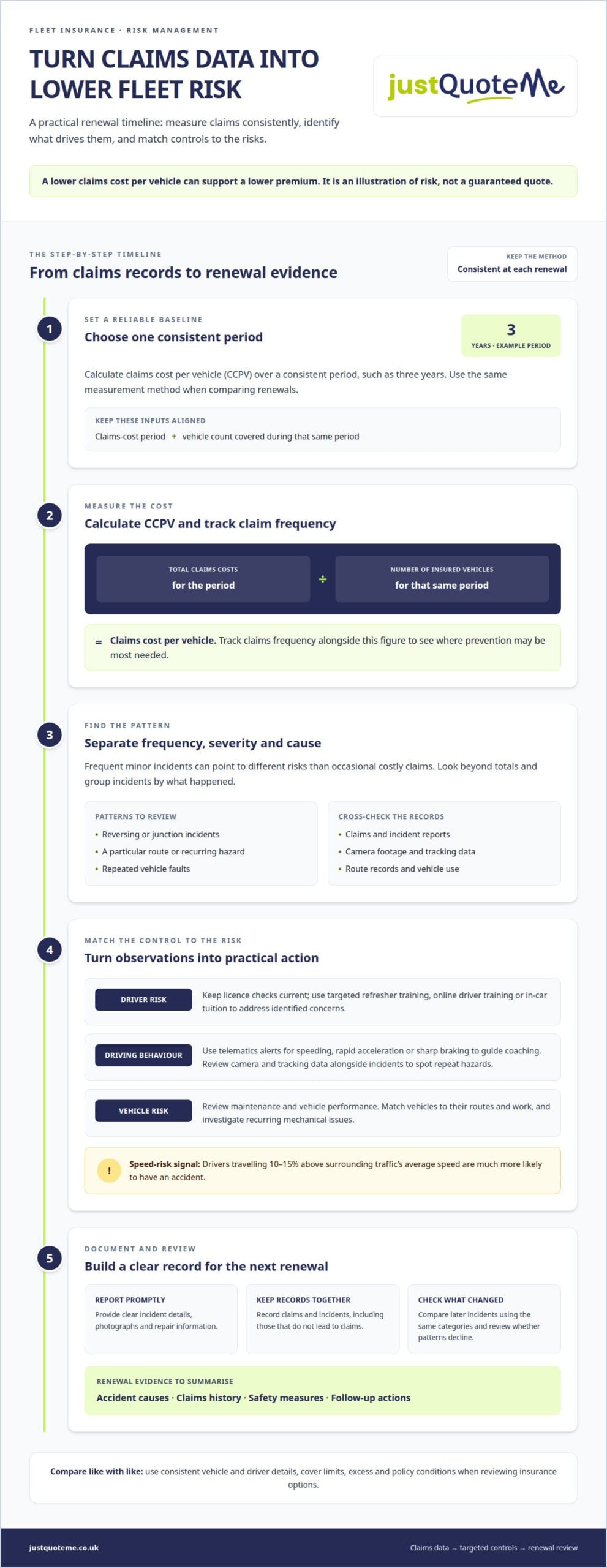
A fleet’s claims cost per vehicle (CCPV) measures claims costs against the number of insured vehicles. A lower CCPV can support a lower premium. If you’re exploring how to reduce fleet insurance costs, tracking this figure alongside claims frequency can help identify where prevention is most needed. It is an illustration, not a guaranteed quote.
Calculate CCPV over a consistent period, such as three years, and compare total claims costs with the number of vehicles. Use the same method at each renewal. Then separate frequent minor incidents from occasional costly claims. This helps you decide whether to prioritise driver coaching, vehicle maintenance or another risk control.
Use regular licence checks to keep driver records current and identify disclosed convictions. Monitor drivers with more points, since further penalties could place them in a higher-risk insurance category. Match support to the concern, using online driver training or in-car tuition. Refresher courses can reinforce defensive driving habits. For managers weighing how to reduce fleet insurance costs, targeted training can support safer driving and fewer claims. Drivers travelling 10-15% above surrounding traffic’s average speed are much more likely to have an accident.
Telematics can flag speeding, rapid acceleration and possible vehicle-performance issues. Use the data to coach the relevant driver, then review whether behaviour or incident patterns change. This makes monitoring useful for training, rather than leaving the records unused.
How can UK businesses compare fleet insurance quotes and cover? Compare the same vehicle and driver details, cover limits, excess and policy conditions. Assess the cover and claims terms as well as the premium.
What UK fleet insurance cover is legally required for business vehicles? Business vehicles used on public roads need motor insurance that meets the UK legal minimum. The appropriate cover also depends on how the vehicles are used.
What factors affect fleet insurance premiums in the UK? Claims history, driver profiles, vehicle use, mileage, security and excess can affect premiums. CCPV shows claims costs in relation to fleet size.
What discounts or schemes are available for UK small business fleet insurance? Telematics-based usage insurance can deliver 15-25% savings. It may suit fleets with low mileage or strong driver safety records.
2. Camera systems, vehicle tracking and predictive risk analysis
Use camera footage and tracking data to understand how accidents happen, not just to collect recordings. A dashcam may help establish fault and provide evidence for insurance or police enquiries after a serious collision. Cameras do not prevent accidents by themselves, so pair them with changes to routes, policies or driver training when incident reviews reveal a pattern.
GPS tracking can flag speeding, sharp braking and rapid acceleration. Compare alerts with incident reports, route records and vehicle use to identify recurring risks. For example, repeated harsh braking on one route could prompt a review of traffic conditions, scheduling or driver behaviour. Telematics can also track vehicle performance, helping you identify maintenance issues before they contribute to breakdowns or accidents.
Can telematics and dashcams lower UK fleet insurance premiums? They can support risk management and help document safer practices. Some insurers offer discounts to fleets that demonstrate proactive safety management. Dashcams can help establish responsibility after a collision, while tracking data can guide preventive action.
Turn observations into clear, consistent policies. Set expectations for safe driving, incident reporting and vehicle checks, then record claims and incidents that do not lead to claims. Regular safety audits can reveal policy gaps, training needs and hazards. Keep the records together to show what changed and assess whether accidents or recurring behaviours decline.
Vehicle choice and maintenance also affect risk. Select vehicles suited to their routes and work, and consider how their use, condition and maintenance needs influence exposure. Well-maintained vehicles are less likely to have accidents caused by mechanical problems. Compare incident patterns by vehicle type, then consider whether a different model or maintenance approach could reduce risk without disrupting operations.
At each renewal, summarise accident causes, claims, safety measures and follow-up actions. This evidence explains your risk controls in practical terms, rather than presenting cameras or tracking as stand-alone expenses.
3. How claims history and claims cost per vehicle can affect fleet premiums
Insurers use claims history to understand the frequency and cost of losses across a fleet. A pattern of repeated accidents can affect future fleet insurance premiums, while fewer claims can improve the fleet’s risk profile over time. In an example mid-size fleet budget, insurance and claims account for 8% of spending. Tracking this share helps businesses compare insurance and claims costs with other operating expenses.
Calculate claims cost per vehicle by dividing total claims costs by the number of vehicles covered during the same period. Keep both the period and vehicle count consistent when comparing renewals. Separate claim frequency from severity: several small repairs suggest different risks from a single costly incident. This breakdown helps you direct prevention efforts where they can make a practical difference.
Use claims data to identify causes, not just totals. For example, check whether incidents involve reversing, junctions, a particular route or a recurring vehicle fault. Then set a specific action, such as revising a reversing procedure, arranging focused driver training or improving maintenance checks. Compare later incidents using the same categories. Targeted controls and safer driving habits can help reduce accidents and the claims that influence premiums.
Claims handling also matters. Report incidents promptly and provide clear details, photographs and repair information so claims can be managed efficiently. Reporting a fleet vehicle incident within the first 60 minutes can help control claim costs before they inflate. A complete record of incidents, including those that don’t result in claims, gives managers a fuller view of recurring risks.
At renewal, present claims trends, corrective actions and results to the insurer. This gives a clearer picture of how your business manages risk than a total-loss figure alone. Review the policy excess alongside your claims budget: a higher excess means your business pays more towards a claim. Compare that potential cost with available cash before changing it.
4. Secure overnight vehicle storage
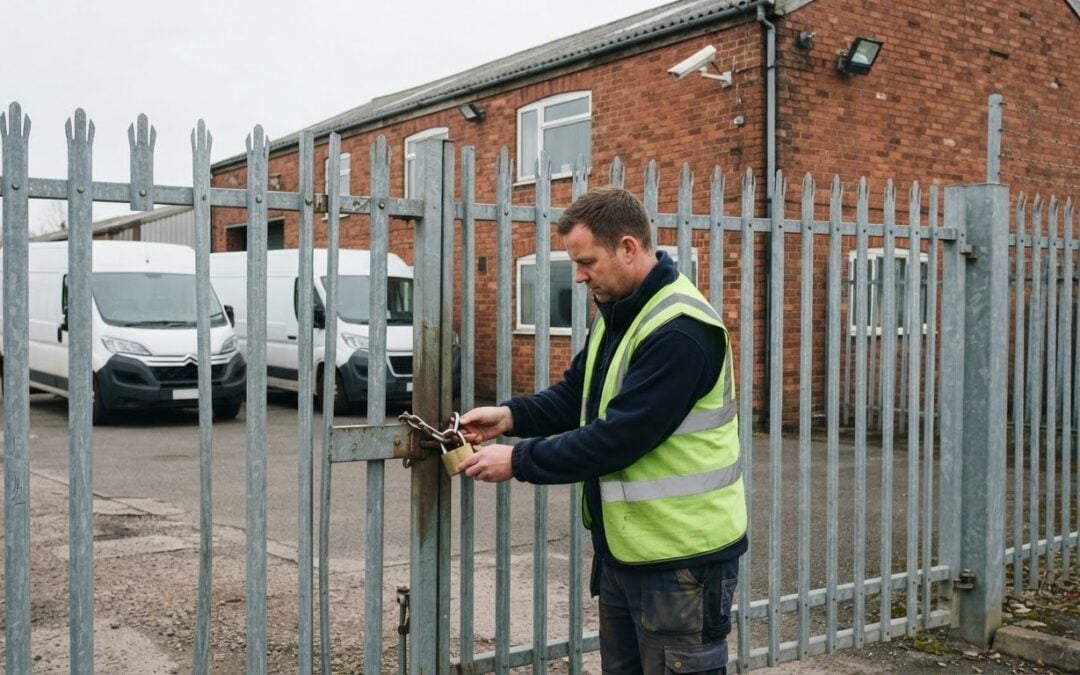
Where vehicles are parked overnight can affect theft exposure and insurance discussions. A locked yard or indoor storage may help lower fleet insurance premiums. Set a consistent parking procedure, record where each vehicle is kept and control access. Include this information in your renewal details to show the security measures in place.
Theft remains a practical concern: police in England and Wales recorded over 135,000 vehicle thefts in 2025, a 15% rise compared with the previous year. Combine secure parking with appropriate vehicle security, such as alarms, trackers and dashcams. These measures serve different purposes: alarms can deter unauthorised access, trackers can help locate vehicles, and camera footage can help document incidents.
Thatcham-approved trackers may help businesses save on fleet insurance premiums. Before fitting devices, identify which vehicles need tracking and where they are usually parked. Geo-fencing can set permitted vehicle zones and alert managers when a vehicle leaves its designated area. Investigate unexpected movements and record the response, rather than relying on monitoring alone.
Electric vehicles may suit UK fleets that travel short distances. Assess daily routes, charging access and overnight parking together: vehicles that return to a secure base may be easier to monitor and charge. Businesses with their own EV chargers may also generate income by letting other drivers use them. Choose vehicles according to actual use, rather than assuming one model suits every route.
Keep a straightforward security record for each vehicle. Note its usual overnight location, tracker status, access arrangements and any theft-related incidents. Use the record at renewal to explain the controls in place and how your fleet responds to risks. Compare each measure’s cost and practical workload with the exposure it addresses, including the cost of recovering or replacing a vehicle.
Just Quote Me: Public Liability Insurance
Just Quote Me offers Public Liability Insurance for risks arising from business activities. It may be relevant if your operations involve contact with customers, clients or members of the public, where an incident could lead to an injury or property damage claim.
Public Liability Insurance serves a different purpose from fleet risk management. Driver controls, vehicle security and claims reviews address risks connected with fleet operations; Public Liability Insurance relates to third-party liability arising from business activities. Consider both areas as part of your wider risk arrangements, rather than expecting one policy to address every exposure.
Just Quote Me also offers Employers Liability Insurance, Professional Indemnity Insurance and Landlord Insurance for businesses with those separate needs. Request a free, no-obligation business insurance quote or callback from Just Quote Me.
Turn risk controls into a renewal plan
Make renewal preparation part of your regular business routine. Set a date to assess whether your fleet’s risk controls still suit its routes, vehicle use and working practices. Record who is responsible for each action and focus on steps your team can maintain. A consistent process helps you approach renewal with a clearer view of your priorities.
Use that review to consider wider business insurance needs alongside fleet cover. Just Quote Me offers Public Liability Insurance, Employers Liability Insurance and Professional Indemnity Insurance for distinct business exposures. Consider which policies suit your activities and responsibilities, rather than assuming one type of cover addresses them all.
Take the next step: Get Your Free Business Insurance Quote or Request a Call back for free Expert advice. Choose the option that suits your needs and move forward with a clearer plan.
Frequently Asked Questions
How does your claims cost per vehicle (CCPV) affect your fleet insurance premium?
CCPV shows how claims costs compare with the size of your insured fleet, helping explain your claims experience to an insurer. Keep vehicle numbers and the measurement period consistent when comparing renewal years. If your fleet has grown or shrunk, note the change alongside the figure so you can distinguish a change in fleet size from a change in claims performance.
Does increasing your excess lower your premiums?
A higher excess may be associated with a lower premium, but it also means your business pays more towards each claim. Before changing it, consider whether your cash reserves could cover that contribution across several incidents. Compare the proposed excess with the cost of common minor damage and your claims budget, rather than choosing a higher amount based on the premium alone.
What are fleet costs?
Fleet costs are the expenses involved in acquiring, operating and managing business vehicles. They can include vehicle purchase and depreciation, fuel or energy, maintenance and repairs, driver labour, technology, insurance and claims. To see where spending is concentrated, separate recurring operating expenses from acquisition costs, then review each category against how the fleet is used.
How do vehicle security measures reduce fleet insurance costs?
Security measures can reduce theft exposure, which may influence how insurers assess a fleet. Match safeguards to the vehicles and their overnight locations: secure parking, alarms and trackers address different aspects of risk. Record the measures installed and where vehicles are stored, so renewal discussions reflect actual arrangements rather than assumptions.
How do driver age, experience and training affect fleet insurance costs?
Fleet premiums are likely to be higher when a fleet includes drivers under 25. Businesses may insure younger drivers as named drivers rather than exclude them, while experience and training help inform risk management. Review each person’s driving record and role, then use suitable coaching to address gaps. Keep training records so completed support is visible during renewal discussions.
How can businesses reduce fleet claims and improve their claims history?
Use incident records to identify recurring causes, assign a practical corrective action and review whether it helps. For minor damage, compare repair costs with the policy excess and the potential effect of making a claim before deciding how to proceed. Record incidents even when no claim follows to give managers a fuller picture of patterns and prevention priorities.
