

A tenancy dispute can mean more than unpaid rent: property damage or a liability claim may bring additional costs. Rent protection insurance can help with lost rent, while legal expenses cover may help with eligible dispute and eviction costs. A practical approach to legal protection for landlords against bad tenants also means following deposit rules and keeping clear records.
When a tenancy goes wrong, it is understandable to want to limit the financial impact. This guide explains how rent protection insurance works, when deposit deductions may be appropriate, what legal expenses cover can help with, and how liability protection fits into landlord insurance. It also explains why evidence, from an inventory to repair records and tenant communications, matters when a disagreement escalates. The right protection depends on the problem: insurance can support landlords, but it does not replace careful tenancy management or the legal process.
Key Takeaways
- Compare rent protection terms, including how much arrears are covered and whether protection extends through the eviction process.
- Use dated property-condition evidence to support any deposit deductions, and itemise the costs you claim.
- Review what legal expenses cover includes for disputes and eviction proceedings, along with any limits or exclusions.
- Keep clear records of repairs and tenant communications, and consider liability cover alongside protection for the property and rental income.
1. What is rent protection insurance?
Rent protection insurance can cover lost rental income when a tenant falls into arrears. Some policies cover the full arrears, while others cover a percentage, subject to limits and conditions. Check the policy wording for the payment period and whether cover continues through eviction proceedings, rather than ending after the notice period.
Landlord insurance may also help with property damage, lost rent while repairs are under way, and liability claims. Legal expenses cover may assist with costs linked to eviction, property disputes or damage claims. These are distinct risks, so check which protections the policy includes and what evidence or steps it requires.
UK landlords’ legal protections depend on the nation and tenancy. In England, the Renters’ Rights Act requires possession grounds under Section 8 and abolishes Section 21 evictions. A landlord dealing with antisocial behaviour, unauthorised subletting or damage should keep records, follow the applicable notice process and seek a court possession order if the tenant does not leave. Don’t try to remove a tenant without following the lawful process.
Legal expenses cover may help with costs related to notices and disputes, while mediation can give both parties a way to seek a resolution before litigation. If possession is contested, a court application is the route to seeking an order. Legal aid is separate from insurance, so having a policy does not confirm eligibility for legal aid.
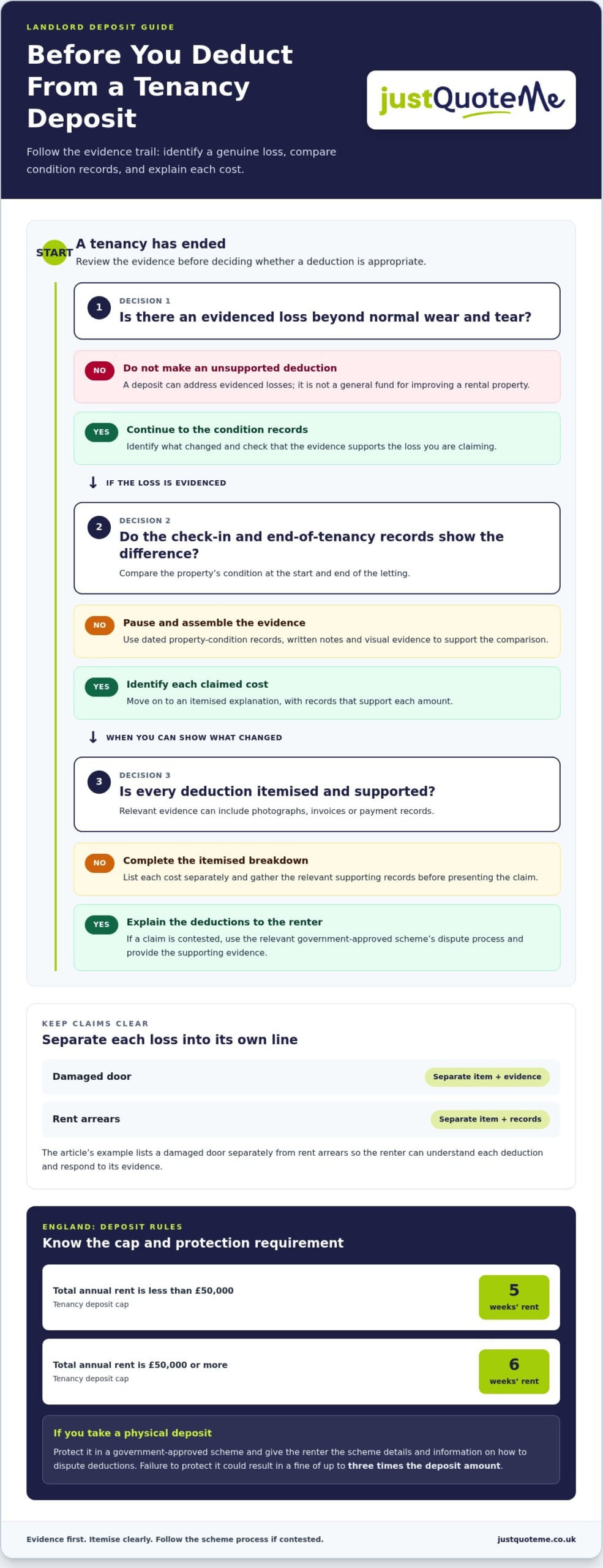
A property inventory records its contents and condition using written notes and visual evidence. Compare the check-in and end-of-tenancy records to identify damage beyond normal wear and tear. If claiming against a tenancy deposit, provide an itemised explanation and use the relevant government-approved scheme’s dispute process.
Recovering a property to sell or move in also requires the correct legal process. In England, the Renters’ Rights Act prevents a landlord from using those grounds during the first 12 months of the tenancy, and requires 4 months’ notice when those grounds apply.
2. Security deposit deductions and itemised lists
A tenancy deposit can help address evidenced losses, but it is not a general fund for improving a rental property. At the end of the letting, compare the property’s condition with the check-in record and identify each claimed cost. For example, list a damaged door separately from rent arrears, with relevant photographs, invoices or payment records. An itemised explanation helps the renter understand each deduction and respond to the evidence.
In England, the Tenant Fees Act limits a tenancy deposit to five weeks’ rent when total annual rent is less than £50,000, according to The National Archives. Where annual rent is £50,000 or more, the permitted cap is six weeks’ rent. A landlord who takes a physical deposit must protect it in a government-approved scheme, or could face a fine of up to three times the deposit amount, according to The National Archives.
Deposit protection is not just paperwork. In England, deposits taken for assured shorthold tenancies have required protection in a tenancy deposit scheme since 2007. Give the renter the scheme details and information on how to dispute deductions. If the renter contests a claim, use the scheme’s dispute process and provide the supporting evidence rather than escalating the disagreement without records.
Risk management starts before the tenancy agreement is signed. Reference prospective renters, verify employment and income, contact previous landlords, and consider a guarantor if affordability needs additional support. Make the agreement clear about rent, the deposit, maintenance responsibilities and property rules. These steps clarify each party’s obligations and give you a written basis for responding to a breach.
Keep the paperwork together: signed agreement, deposit-protection information, dated condition records, rent ledger, and itemised deduction evidence. A rental investment can involve different risks, so keep deposit handling separate from insurance decisions. If you’re reviewing broader cover for a let property, explore residential letting insurance alongside the tenancy documents.
3. Why do landlords need legal expenses cover?
A rent dispute can lead to possession proceedings, paperwork and possible enforcement costs. Legal expenses cover may help with eligible costs linked to eviction, property disputes or damage claims. Policy terms set out covered events, limits, excesses and required steps. Read them before a dispute arises, and keep the tenancy agreement, rent records, notices and repair correspondence together.
Landlords must follow the lawful possession process. Do not change the locks, remove a tenant’s belongings or harass them into leaving. Serve the correct legal notice and apply to court if the tenant does not leave. The procedure depends on the tenancy and jurisdiction, so follow the applicable rules carefully. Taking possession outside the legal process can create further disputes.
Legal protection for landlords against bad tenants works alongside property insurance, not as a substitute for it. Cover may include buildings and contents, liability, alternative accommodation, loss of rent, emergency assistance, rent guarantee and legal expenses. The right combination depends on the property and its risks, such as rent arrears, accidental damage or a claim involving a tenant. Check the exclusions, limits and excess for each section.
Set the buildings sum insured using the rebuilding cost, not the property’s sale value. Include clearance costs and surveyor fees in the calculation. For example, debris may need to be removed before a damaged building can be rebuilt. Contents cover addresses a separate risk, while legal cover responds to eligible disputes. Keep these needs distinct when reviewing the policy schedule.
The amount you receive after a claim can depend on the policy terms. The price depends on the property and selected cover, and is provided after a quote request. Insurers may consider factors such as location, rebuilding value, claims history and excess. A higher excess can leave more of a claim payable by the landlord. Compare the policy wording, limits and excess together, not just the premium, when choosing cover for rental income, property damage and legal disputes.
4. Landlord liability and tenant claims
A tenant’s complaint can concern an unsafe condition, delayed repairs or injury linked to the property. In England, the Landlord and Tenant Act 1985 makes landlords responsible for repairs to a property’s exterior and structure. The Homes (Fitness for Human Habitation) Act 2018 requires rented homes to remain fit to live in throughout the tenancy. These duties make prompt action and clear repair records important safeguards.
Respond to each maintenance report with a dated record of the complaint, inspection, work arranged and completion. If a tenant reports a loose stair rail, for example, note when the report arrived and what action followed. Keep photographs, contractor invoices and messages with the tenancy documents. If a letting agent manages repairs, agree in writing who receives reports, authorises work and updates the tenant.
Liability protection may help with covered injury or damage claims, while landlord insurance can address other property-related risks. The policy wording sets out the cover, exclusions and any excess. Keep liability cover distinct from buildings cover: a claim that someone was injured by a defect differs from a claim for damage to the building itself. Review the policy schedule against the property’s condition and how it is used.
A tenancy agreement should explain rent payment arrangements, how to report repairs and each party’s responsibilities. It cannot remove statutory repair duties. If a dispute develops, preserve the agreement, payment history, inspection notes and tenant communications. A clear timeline can show when the issue arose, what action you took and whether repairs were completed. It can also help distinguish a maintenance complaint from a disagreement about the contract.
Set a practical review routine: inspect the property, log defects, arrange necessary repairs and retain evidence of completion. If a tenant makes a claim, notify the relevant insurer promptly and provide the documents required by the policy. Do not dismiss a repair report because the tenant has breached another contract term. Address the safety concern separately, then handle the breach through the appropriate tenancy process.
Just Quote Me: Public Liability Insurance
Just Quote Me can help landlords consider their insurance needs alongside tenancy and property risks. Public Liability Insurance may be relevant if a third party claims injury or property damage connected with your activities as a landlord. It serves a different purpose from rent protection or legal expenses cover, so review each policy’s scope, exclusions and excess separately.
Unpaid rent and a visitor’s injury are different situations and require different responses. Landlord Insurance can help address risks associated with a let property, while public liability cover relates to eligible third-party claims. The right combination depends on your property and circumstances.
Explore Public Liability Insurance information, or contact Just Quote Me to discuss your landlord cover needs.
Plan for a more resilient tenancy
Use your next tenancy review to consider how you manage risks across the property and your wider responsibilities. A clear plan can help you respond consistently when circumstances change, rather than making decisions under pressure. Consider which protections suit the way you let and manage your property.
Legal protection for landlords against bad tenants is one part of a broader approach to managing risk. Just Quote Me can help you explore insurance options suited to your circumstances and responsibilities.
To take the next step, choose Get Your Free Business Insurance Quote or Request a Call back for free Expert advice. A considered conversation can help clarify your insurance planning.
Frequently Asked Questions
What is rent protection insurance?
Rent protection insurance is designed to help landlords manage lost rental income when a tenant falls behind with rent. The policy sets out eligible arrears, payment periods, conditions and exclusions. For example, one policy may pay a percentage of rent, while another may cover the full arrears subject to its terms. Check what evidence and tenancy documents are needed to make a claim.
What’s a tenancy agreement?
A tenancy agreement is the contract that sets out the landlord’s and renter’s terms, including rent, responsibilities and property rules. Keep a signed copy and refer to it to clarify what each party agreed to do. The name and legal framework vary across the UK: residential agreements in Wales are occupation contracts under the Renting Homes (Wales) Act, while Scotland’s Private Housing (Tenancies) (Scotland) Act requires a written tenancy agreement.
Why do landlords need legal expenses cover?
Legal expenses cover can help with eligible costs arising from disputes, possession proceedings or property damage claims. It can support a landlord facing a contested tenancy issue, but the policy wording determines which events and costs qualify. Some legal protection plans also include mediation, which may help resolve a disagreement before court action. Keep notices, correspondence and the tenancy agreement organised in case you need to make a claim.
What evidence should a landlord collect to prove tenant damage, rent arrears, or antisocial behaviour?
Keep a dated record of each issue. For property damage, retain check-in and check-out condition reports, clear photographs and repair invoices. For rent arrears, keep the rent ledger, bank records and written payment requests. For antisocial behaviour, record dates, descriptions, tenant reports and relevant correspondence. Store original messages and documents securely, and keep the record factual rather than making assumptions about the tenant’s motives.
How can UK landlords recover unpaid rent and what court procedures apply?
Start by listing missed payments in a clear rent statement and asking the tenant to pay or discuss the arrears. Keep proof of payments, communications and any notices served. If the tenant remains in the property, follow the applicable notice process and apply to court for possession when required. If the tenant does not leave after the court process, enforcement may involve bailiffs. Rules vary by jurisdiction.
What are the lawful steps and notice periods for evicting a tenant in England, Wales, Scotland, and Northern Ireland?
There is no single UK-wide notice period: the process depends on where the property is and the applicable tenancy and possession ground. In England, the Renters’ Rights Act requires Section 8 grounds and abolishes Section 21 evictions. For sale or moving-in grounds, it bars eviction during the first 12 months and requires 4 months’ notice when those grounds apply. Wales, Scotland and Northern Ireland have separate frameworks, so use the procedure for that nation.
