Not every tattoo treatment is automatically covered by a liability policy. Tattoo artist liability insurance in the UK may exclude work outside your training or declared services, treatments beyond the agreed business activities, and deliberate or reckless acts. Hygiene requirements matter too: a policy may exclude an infection claim if you did not follow the required standards.
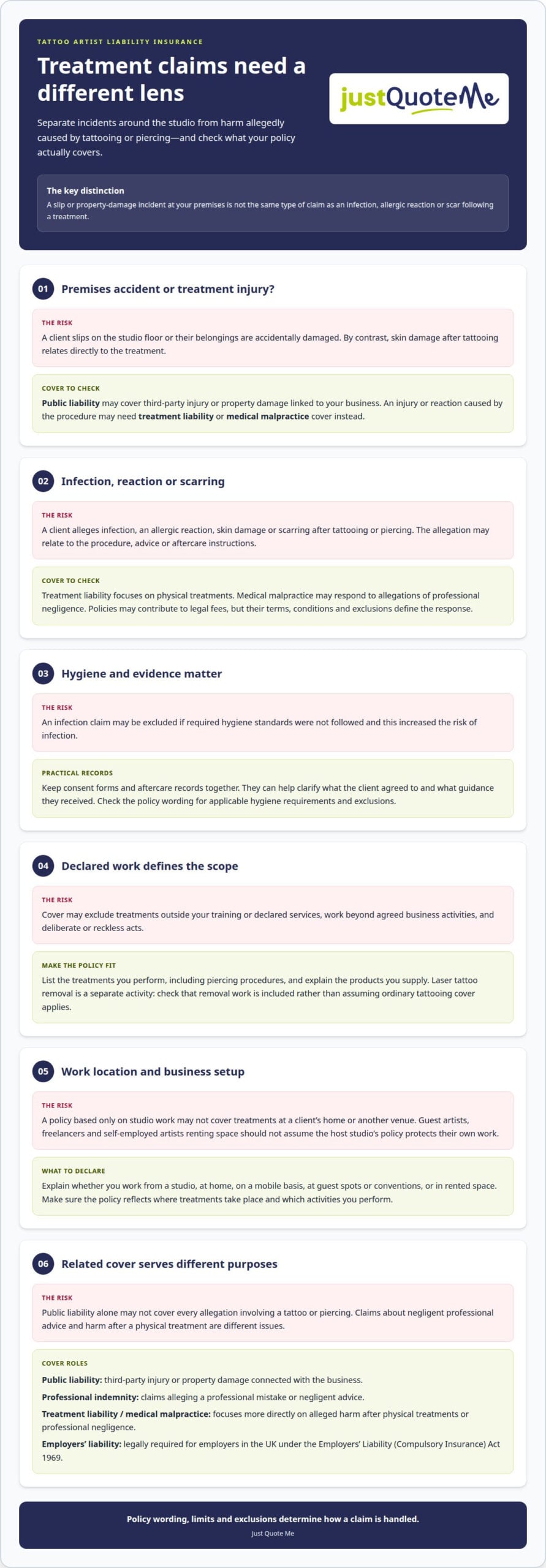
It’s reasonable to expect cover to respond if a client is injured, but public liability and treatment-related cover address different risks. Public liability may cover incidents such as a client slipping in your studio or damage to their property. An injury or reaction caused by the tattoo itself may need treatment-specific cover. The policy wording and exclusions determine how a claim is handled.
This guide explains what public liability may cover, how claims can arise from tattooing and piercing, and when cover may not apply. It also explains how professional indemnity and employers’ liability fit into a tattoo business, and what to consider when arranging cover for studio work, guest spots or rented space.
Key Takeaways
- Separate accidents on studio premises from injuries linked directly to a tattoo or piercing treatment when considering liability cover.
- Understand why an infection or skin reaction may be treated differently from a slip, trip or property damage claim.
- Identify how training, declared services and hygiene practices can affect whether a treatment claim is covered.
- See which types of cover may be relevant to your work, including when you employ staff or work away from your own studio.
Does public liability cover an infected tattoo?
Public liability usually addresses accidents and property damage, not harm caused directly by a treatment. A tattoo-related infection or skin reaction may need treatment liability or medical malpractice cover instead.
Bodily Injury and Property Damage
Public liability can cover legal fees and compensation after a third party suffers an injury or property damage linked to your business. For example, a customer might slip on the studio floor, or you might accidentally damage a visitor’s belongings. This differs from an injury caused by the tattoo procedure itself. Review the policy wording for its definitions of covered incidents and exclusions.
Infection, Allergic Reactions and Scarring
An infection, allergic reaction or scar following tattooing may lead to a treatment-related claim. Public liability typically concerns third-party injury or property damage not directly caused by treatment, so don’t assume it covers these claims. Treatment liability or medical malpractice cover may address allegations of physical or mental harm, illness or death caused by negligence or error. The policy terms determine the scope of cover.
Tattooists and piercers should distinguish treatment claims from incidents around the premises. A client who develops skin damage after tattooing raises a different issue from someone injured by a collapsing studio bed. Treatment liability policies focus on physical treatments, while medical malpractice cover may respond to allegations of professional negligence. Both depend on the activities and treatments described in the policy.
Laser tattoo removal is a separate activity from tattooing, so professionals need cover that includes removal work. Employers also face a distinct responsibility: in the UK, employers’ liability insurance is legally required for employers under the Employers’ Liability (Compulsory Insurance) Act 1969, according to UK legislation register. This applies separately from cover for client treatment claims. A studio’s policy should reflect whether it employs staff and the services performed.
Public liability insurance
Public liability can address third-party injury or property damage connected with your business. It does not necessarily cover claims alleging harm caused by tattooing or piercing itself.
Comparing Quotes and Buying Cover
A broker can compare policy wording, exclusions, limits and covered activities across quotes. Explain the treatments you perform, products you supply and locations where you work. This helps assess options for tattoo artist liability insurance in the UK against your actual business activities, and clarify the differences before arranging cover.
Public liability insurance is not generally a legal requirement for UK tattoo artists. Local councils may ask for evidence when registering a studio, and each council decides which liability limit it accepts. Registration requirements may vary depending on where a tattooist operates.
Cover for Freelance and Mobile Work
Freelancers working guest spots or conventions should arrange their own policy. Don’t assume the host studio’s cover protects you against claims from clients you tattoo. Self-employed artists renting space should also arrange cover for their own work rather than rely on the studio owner’s policy.
For mobile work or a home studio, the policy should reflect where treatments take place and which activities you perform. Describe these arrangements when arranging tattoo artist liability insurance in the UK. A policy based only on studio work may not cover treatments at a client’s home or another venue.
Public liability may cover compensation and legal costs after a customer is injured or their property is damaged through your business. Tattoo artist public and products liability can also relate to injury or damage caused by the business or products it supplies. Check policy definitions, limits and exclusions to understand what is covered.
Professional indemnity may respond to claims alleging a mistake or negligent professional advice. Medical malpractice or treatment liability focuses more directly on alleged harm after physical treatments. These protections address different types of claims, so public liability alone may not cover every allegation involving a tattoo or piercing. Keep the activities described in the policy aligned with the work you perform.
Claims arising from tattoo and piercing treatments
A treatment claim can follow an alleged injury after tattooing or piercing. Examples include infection, an allergic reaction, skin damage or scarring. The allegation may concern the procedure, advice given or aftercare instructions. Treatment risk insurance focuses on claims arising from physical treatments, rather than accidents around the studio.
Policies may cover claims alleging harm after treatment and contribute towards legal fees to defend them. The insurer’s terms, conditions and exclusions define its response. For example, an exclusion may apply if hygiene standards were not followed and this increased the risk of infection. Keep consent forms and aftercare records together. These documents can help clarify what the client agreed to and what guidance they received.
The scope matters. A policy may exclude treatments outside your training or declared services, as well as work beyond agreed business activities. Advanced tattooing or beauty treatments can therefore create a gap if the policy doesn’t describe them. List the treatments you perform, including piercing procedures, so the cover reflects your actual work. Deliberate or reckless acts may also fall outside cover.
Tattoo removal needs particular attention. Professionals who use lasers for tattoo removal need cover for that activity. Don’t assume ordinary tattooing cover includes it. The same principle applies when you add a new technique or treatment. The policy needs to reflect the work you undertake, including any advanced procedure that changes the nature of the risk.
If a client raises a concern, don’t accept responsibility immediately. Let the claims team assess the circumstances first, and contact the claims line shown on your policy schedule. Keep relevant treatment notes, consent records and aftercare information available. Clear records can help establish what treatment you provided and what advice you gave while the insurer considers the allegation under the policy terms.
Insurance for tattoo artists
A tattoo business may need different cover for treatment claims, premises risks and staff responsibilities. Choose cover based on the work you perform, where you work and whether you employ staff.
Public liability insurance can address third-party injury or property damage linked to your business. Professional indemnity may respond to claims alleging mistakes or negligent professional advice. Treatment risk insurance focuses on alleged harm after physical treatments. These protections address different risks, so consider which activities each policy describes.
Employers’ liability becomes essential when staff are employed. According to UK legislation register, UK employers’ liability insurance must provide a minimum of £5 million cover when staff are employed. This applies to claims made by an employee who suffers injury or illness through their work. A studio employing even one staff member should account for this requirement separately from customer-facing cover.
Premises and equipment create another exposure. Contents insurance can help protect a studio’s equipment and supplies against events such as fire, flood or theft. A studio owner may also consider cover for damage to the building. These policies protect physical assets, not claims alleging an allergic reaction after treatment, so they serve a different purpose.
Guest artists at conventions or studios should arrange cover for their own work rather than rely on the host’s policy. Self-employed tattooists renting space should do the same. Policies may exclude treatments outside your training, declared services or agreed business activities. Keep the insured activities aligned with each procedure you offer, including piercing or laser work.
Treatment risk insurance is often written on a claims-occurring basis: the policy active when an incident happens may respond. Policy terms still govern the claim. Tattooists with less than 12 months’ experience can be considered for cover, so experience alone need not end the enquiry. Explore insurance options for your tattoo business and consider how your treatments, premises and staffing shape the protection needed.
Just Quote Me
Just Quote Me helps you consider how business insurance can fit your tattoo work, premises and staffing. If you’re weighing public liability against professional indemnity, or need employers’ liability because you employ staff, its team can help you understand the relevant options. The right combination depends on your activities and the risks you need to address, including claims involving customers, employees or professional advice.
Turn to Just Quote Me when you’re ready to discuss your circumstances and arrange suitable cover. Request a Call back for free Expert advice.
Make your next cover decision with confidence
When discussing your policy, explain how your tattoo business works, including the treatments you provide, where you work and whether you employ staff. A clear account of your activities helps keep the conversation focused on protection relevant to your circumstances.
Just Quote Me offers Public Liability Insurance, Employers Liability Insurance and Professional Indemnity Insurance. Which options to consider depends on your business and the risks you want to address. Take the next step when you’re ready: Get Your Free Business Insurance Quote now.
Frequently Asked Questions
Are there any circumstances where you cannot cover tattoo artists?
Cover may exclude work outside your training, declared services or agreed business activities. For example, a policy describing tattooing may not cover an additional procedure you introduce later. Deliberate or reckless acts may also be excluded, and hygiene-related exclusions can affect infection claims. Describe each treatment accurately when arranging cover, so the insurer can assess the activities your policy needs to address.
Can I get cover with less than 12 months’ experience?
Yes, tattoo artists with less than 12 months’ experience can be considered for cover. Experience is one detail in assessing an application, alongside your treatments, training and work arrangements. Be clear about the procedures you perform and your level of experience. If you’re newly qualified and add piercing or laser removal, include those activities in the information used to arrange cover.
Can you cover a tattoo parlour for property damage?
Property risks can be covered, depending on the policy and the property involved. A parlour owner may need to consider the building separately from equipment, stock and supplies. For example, a fire could damage both the premises and tattoo equipment. Public liability addresses a different situation, such as damage to a visitor’s property linked to the business.
Do I need my own insurance for guest spots and conventions?
It’s sensible to arrange your own policy for guest spots and conventions. A host studio’s insurance may not cover claims from clients you tattoo, so don’t assume its protection extends to your work. Before accepting an appointment at a convention, make sure the policy describes the treatments and locations involved. This helps keep your cover aligned with temporary work.
How much does it cost?
The cost depends on the work you do and the protection included in the policy. Factors include whether you tattoo, pierce or perform laser removal, where you work, whether you employ staff, and the cover limits and exclusions. A quote reflects those details rather than a single standard rate. Just Quote Me provides free, no-obligation quotes, with no commitment to proceed.
What happens when tattoo artists make a mistake?
An alleged mistake may lead to a claim for harm, and the policy terms determine whether it responds. Notify the claims team using the contact details on your schedule, and keep relevant records together. Treatment notes, consent details and aftercare guidance, for example, can help establish what happened. Avoid admitting liability or promising compensation before the insurer has assessed the circumstances.
