
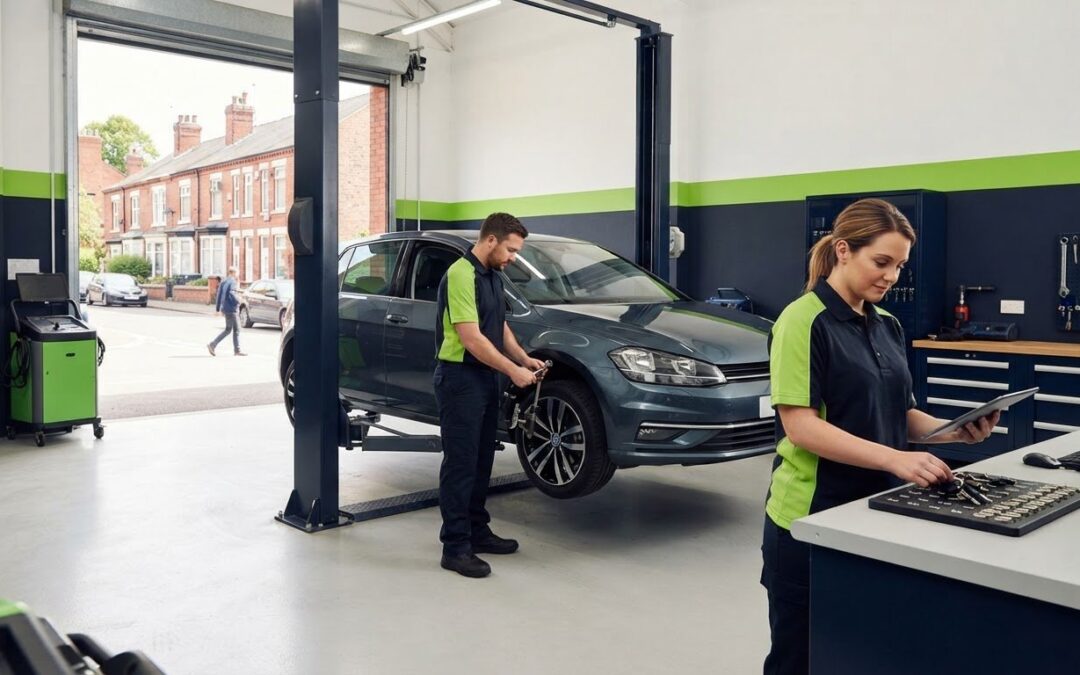
Customer vehicles need protection beyond the work being carried out on them. A UK MOT garage or service centre must have at least Third Party Only motor trade insurance. For vehicles in the garage’s care while they are not being driven, garage custody and control cover applies. Insuring customer vehicles at my garage means understanding how cover responds in different situations.
A customer’s car can be at risk beyond the repair itself. It may be stored on site, moved around the premises, taken on a road test or damaged by faulty workmanship. This guide explains how garage insurance relates to customer vehicles, workmanship liability and consequential damage, as well as courtesy cars and customer keys. You’ll learn what each type of cover is intended to address and how to assess your garage’s risks, helping you make informed decisions about vehicles in your care.
Key Takeaways
- Understand why motor trade insurance is designed for garage work and vehicle handling, unlike ordinary car insurance.
- Separate the cost of correcting faulty work from claims for damage it causes to a customer’s vehicle.
- Factor courtesy cars and customer keys into your risk planning, including the potential impact of loss or damage.
- Consider how custody and control cover relates to customer vehicles held at your premises or worked on there.
What Is Garage Insurance?
Garage insurance is designed for business activities involving vehicles, rather than an individual’s personal use of a car. Compare cover for vehicles, premises and staff against the work your garage carries out.
Motor Trade and Ordinary Car Cover
Ordinary car insurance relates to a vehicle’s use by its policyholder. Motor trade insurance is arranged for business activities such as handling, repairing and moving vehicles. Compare the insured activities rather than assuming a personal policy fits garage work, and check which drivers and vehicle uses are included. A road test, for example, involves different use from keeping a car stationary on site.
A UK MOT garage or service centre must have at least Third Party Only motor trade insurance. The policy’s scope matters: the minimum level of cover does not automatically mean every type of damage to a customer’s vehicle is insured.
Combined and Road Risk Policies
Road risk policies focus on motor-related risks, while Motor Trade Combined cover can also include the garage’s premises, buildings and contents. Compare the policy sections with your needs, such as protection for tools or premises as well as vehicles. The policy name alone does not establish which risks are covered.
When comparing broker quotations, line up the insured activities, vehicle cover, exclusions, limits and excesses. Check that the wording reflects repairs, storage and test drives. Distinguish protection for motor-related injury from cover for vehicle damage, and review who and what the policy wording covers.
Vehicle Use and Policy Checks
Check the wording for storage, repairs and test drives as separate activities. Garage custody and control cover applies to customer vehicles in the garage’s care while they are not being driven. Third Party Only garage cover covers third-party vehicles, including customer vehicles being worked on, for damage or loss.
A UK garage employing anyone, including an apprentice, must have employers’ liability insurance. According to the Health and Safety Executive, most employers must hold at least £5 million of employers’ liability cover, subject to limited exemptions.
At renewal, review claims history across policy sections. Insurers may ask for three to five years. Compare exclusions, limits and excesses, then confirm the wording matches your current work and vehicle use.
Workmanship liability and consequential damage
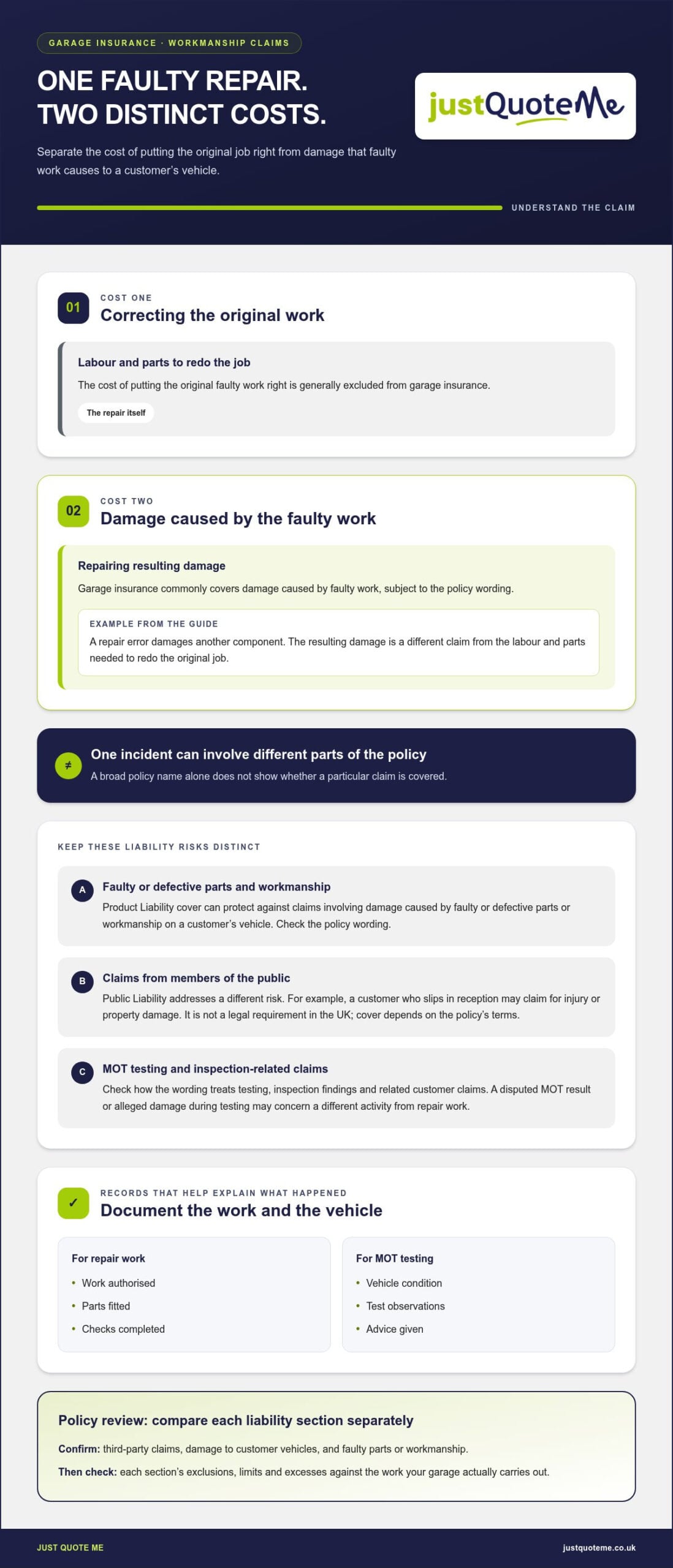
Faulty workmanship can create two separate costs: correcting the original work and repairing damage it causes. Garage insurance commonly covers damage caused by faulty work, but generally excludes the cost of redoing that work. For example, a repair error might damage another component. A claim for that resulting damage is different from the labour and parts costs of putting the original job right.
Check how the policy wording treats faulty or defective parts and workmanship. Product Liability cover can protect against claims involving damage caused by faulty or defective parts or workmanship on a customer’s vehicle. Keep job records showing the work authorised, parts fitted and checks completed. These details help distinguish the repair itself from subsequent damage if a customer makes a claim.
Public Liability insurance addresses a different risk: claims made by members of the public. For example, a customer who slips in reception may make a claim involving injury or property damage. Public Liability insurance is not a legal requirement in the UK, but it can respond to claims within the policy’s terms. Check the insured activities, exclusions and limits rather than assuming every incident is covered.
MOT testing liability also needs careful attention. Read the policy wording to see how it treats testing, inspection findings and related customer claims. Keep clear records of the vehicle’s condition, test observations and advice given. If a customer disputes an MOT result or alleges damage during the process, those records help establish what happened and which activity the claim concerns.
Compare liability sections separately at renewal. Confirm whether the policy addresses third-party claims, damage to customer vehicles, and faulty parts or workmanship. Then check each excess and exclusion against your garage’s actual work. A broad policy name alone does not show whether a particular claim will be covered.
Courtesy cars and customer keys
A courtesy car raises a separate vehicle-use question from repairing a customer’s car. Before handing over the keys, identify who may drive it, where it can be used and how it is insured. Compare those details with the policy wording. A car kept for customer use may be treated differently from a vehicle used for garage business, so do not assume one arrangement covers both.
Record each handover with the customer’s name, vehicle details, date and time, and the car’s condition. Note any existing marks and give clear instructions for returning the vehicle and its keys. If an employee moves a courtesy car or takes it on a business-related journey, make sure the use matches the insured activities. A consistent handover process also gives the garage a clear record if a claim arises.
Customer keys need their own safeguards. Keep keys labelled without displaying unnecessary customer details, and store them in a controlled location rather than beside reception. Record who takes a key and when it is returned. If a key goes missing, note the vehicle involved, its last known location and the steps taken to secure it. These records help establish the circumstances of any later claim.
Include key loss in your review rather than treating it as a minor administration issue. Check whether the policy wording addresses lost or stolen customer keys, replacement costs and any resulting vehicle damage. Review exclusions, limits and excesses alongside the garage’s key-control process.
At renewal, list every courtesy vehicle and explain how customers and employees use it. Compare those details with the policy’s vehicle-use terms, then update your handover and key logs to match. Clear records, controlled storage and accurate descriptions of vehicle use connect day-to-day procedures with the cover you arrange.
Insurance for Customer Vehicles at a Garage
Customer vehicles face different risks while parked, being repaired or moved around the premises. Arrange cover for each stage, from accepting a vehicle to returning it.
Cover for Held and Repaired Vehicles
Garage custody and control cover applies to customer vehicles in the garage’s care while they are not being driven. Third Party Only garage cover covers third-party vehicles, including customer vehicles being worked on, for damage or loss. These terms address different situations, so identify whether a vehicle is stationary, undergoing repairs or being moved.
For example, a car left overnight in the workshop is not being driven, while a road test involves vehicle use. Compare the relevant policy sections and wording for each situation. Check how the policy defines damage to customer vehicles, and note any exclusions, limits and excesses that could affect a claim.
Factors Affecting Insurance Costs
The cost of insuring customer vehicles at a garage depends on the risks and cover arranged. Relevant details include the work your garage does, whether vehicles are stored or driven, the number and type of vehicles handled, and the limits and excesses selected. Give accurate information about each activity so the insurance reflects the work performed.
Compare quotations by matching the same activities and cover levels, not just the premium. A lower excess can change the premium, while a higher limit can affect the insurer’s assessment. Review the policy wording alongside the price to understand the applicable risks, exclusions and claim scenarios.
Map a vehicle’s journey through your business: record when it arrives, where it is kept, what work is done and when it leaves. This helps distinguish a storage claim from damage during repair or movement. Then match each exposure to the relevant policy wording. Arrange cover for the work you actually do, rather than assuming one section applies throughout.
Explore motor trade insurance options for cover suited to your garage’s vehicle-related risks.
Just Quote Me: Public Liability Insurance
Just Quote Me can help you consider Public Liability Insurance for claims made by members of the public, such as an injury or property damage incident at your garage. This cover addresses a different exposure from damage to a customer’s vehicle, so treat it as one part of your wider business insurance review, not a replacement for vehicle-related cover.
Turn to Just Quote Me when reviewing how your garage’s activities, premises and customer interactions affect your insurance needs. Clear details about the work you carry out help focus the discussion on relevant risks and cover.
For help considering Public Liability Insurance for your garage, contact Just Quote Me or visit justquoteme.co.uk.
Make your next cover review practical
At your next renewal, map how vehicles move through the garage, from customer drop-off to collection. Note changes to repair work, storage arrangements, courtesy-car use or key handling, then use those details to describe the risks you need to address. This is a practical starting point for insuring customer vehicles at my garage and reviewing the business risks involved.
Just Quote Me can help you consider business cover for your garage. Take the next step with Get Your Free Business Insurance Quote now, or Request a Call back for free Expert advice if you’d prefer to discuss your needs.
With a clear picture of your work and vehicle-handling arrangements, you can make a more informed decision about reviewing your cover.
Frequently Asked Questions
What Do You Need to Get a Garage Quote?
Prepare a clear outline of your garage’s activities and vehicle handling. Include the types of work you do, whether customer vehicles are stored, repaired, moved or road-tested, and how courtesy cars are used. For example, a service centre that also carries out MOT tests should describe both activities. This helps focus cover on the work taking place at your premises.
Which Garage Work Can Be Covered?
Garage policies can be arranged around activities such as servicing, repairs, vehicle storage and test drives, subject to the policy wording. Describe your actual work rather than relying on a broad label like “garage”. For example, explain if staff collect vehicles, carry out MOT tests or lend courtesy cars. Then review the policy sections and exclusions against those activities.
What insurance covers customer vehicles kept or worked on at a UK garage?
Garage custody and control cover applies to customer vehicles in your care while they are not being driven. For a vehicle undergoing repairs, Third Party Only garage cover is described as covering third-party vehicles, including customer vehicles being worked on, for damage or loss. Match the wording to each stage of a vehicle’s time at your garage, from arrival to collection.
What does garage keepers insurance cover in the UK?
For a customer’s vehicle in your care that is not being driven, look for garage custody and control cover. Consider a car left in a workshop overnight: the key question is whether the policy wording addresses that vehicle’s situation and the type of loss involved. Check exclusions, limits and excesses, and distinguish a stationary vehicle from one being moved or test-driven.
Does motor trade insurance cover customers’ vehicles while being repaired or serviced?
This can address customer vehicles being worked on, but the policy type and wording matter. Third Party Only garage cover is described as covering third-party vehicles, including customer vehicles under repair, for damage or loss. Do not assume this includes every kind of damage or repair cost. Read the relevant section and check how it treats the specific work being carried out.
What is road risk insurance for UK motor traders, and when is it needed?
Road risk insurance relates to motor trade vehicle use on the road, such as moving a customer’s car or taking it for a test drive. It matters when garage work involves driving vehicles, rather than only keeping them stationary. A UK MOT garage or service centre must have at least Third Party Only motor trade insurance. Check that the policy wording reflects the vehicle use involved.
