Using a laptop at the kitchen table usually creates a different insurance risk from running a business at home. If you’re asking whether you need to tell your home insurer you work from home, routine clerical tasks such as using a laptop or making phone calls are often covered by home insurance. However, business activities, specialist equipment, stock, customer visits or changes to your home may affect cover. Tell your insurer if your work goes beyond ordinary office duties.
Working from home doesn’t automatically mean you need business insurance. What matters is what you do at home and what you keep there, not simply where you work. The key questions are whether you store stock or specialist equipment, see clients, employ people at your property or make changes to the building. These activities can affect how your home insurance applies and whether separate business cover is worth considering.
Key Takeaways
- Routine office tasks at home may be treated differently from running a business there; the activities and risks matter.
- Tell your home insurer about business visitors, stock, specialist equipment or changes to your property, as these can affect cover and premiums.
- Check how your policy treats work equipment, especially items owned by your employer or taken away from home.
- Visitors and employees can bring separate liability risks, so learn which business insurance may be relevant to your setup.
Do you need business insurance when you’re working from home?
Routine office work may fit standard home insurance, but running a business at home can bring additional risks. Business activities, equipment, visitors and changes to the property can affect your cover and premium.
Business Use Under Home Insurance
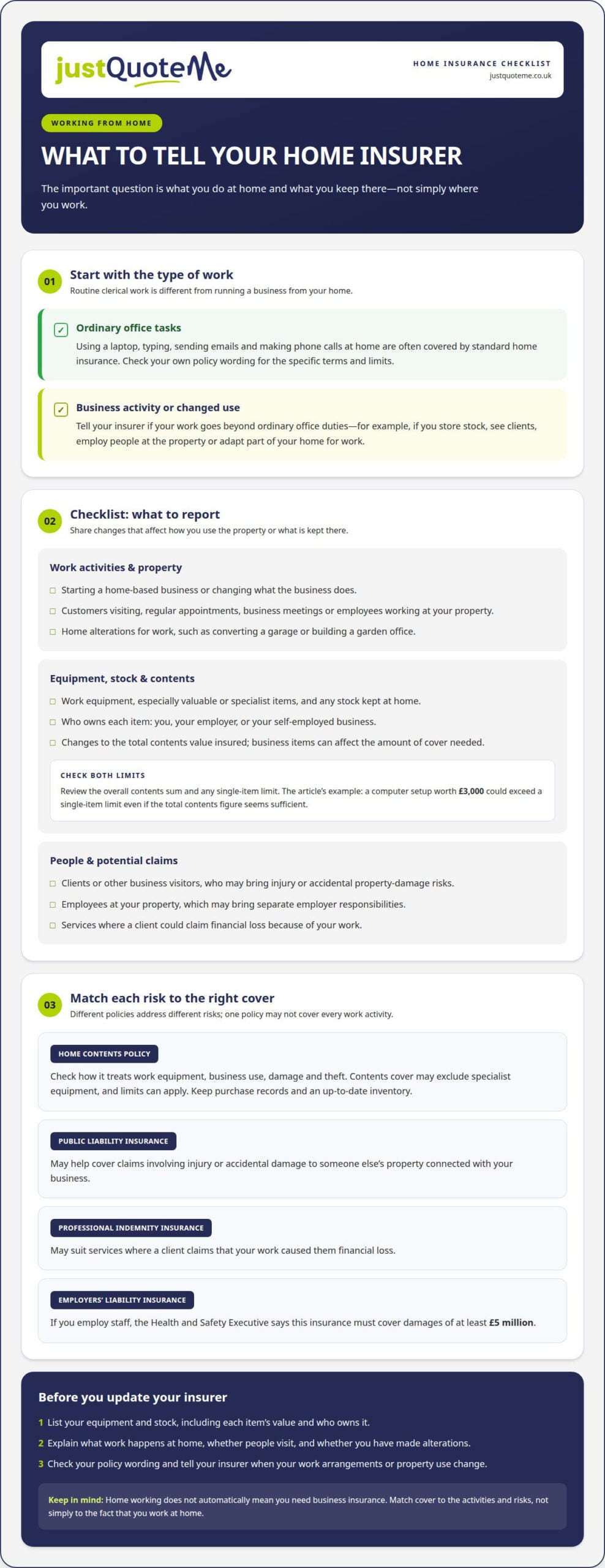
Business use means using your home for work beyond ordinary office tasks, for example, storing stock, seeing clients or adapting a room for business. A laptop and phone calls present different risks from customer visits or a garden office. Tell your home insurer what you do so they can assess whether your existing cover applies. The policy wording determines how it treats business use.
Home Insurance Coverage for Business Activities
Standard home insurance often covers office work, such as using a laptop or making phone calls, but may not cover business risks. Contents cover may exclude specialist equipment used for work, and home insurance is unlikely to cover risks involving business visitors or stock. For example, a client injured during an appointment at your home could make a compensation claim. Public Liability Insurance can help cover claims involving injury or accidental damage to someone else’s property.
Business Activity and Home Insurance Premiums
Business activity may affect your home insurance premium if it changes the property’s risk or the value of its contents. Relevant details include the type and amount of equipment you keep there and whether visitors attend regularly. A home office used for calls differs from a room containing stock or specialist equipment. Business items may also affect the total contents value insured, so tell your insurer about changes rather than assuming your existing sum insured is enough.
When Home-Based Businesses Need Business Insurance
Business insurance may be relevant if you store stock, receive customers, employ people, or adapt your home for work. Public Liability Insurance can address claims following injury or property damage connected with your business. Professional Indemnity Insurance may suit work where a client claims a service caused them financial loss. If you employ staff, the Health and Safety Executive says employers’ liability insurance must cover damages of at least £5 million. Match the cover to the activity, not simply your home-working status.
Telling your home insurer about working from home
Tell your home insurer if your work changes how you use your property or what you keep there. If you’re asking, “Do I need to tell my home insurer I work from home?”, report changes such as starting business activities, adding valuable equipment or having regular visitors.
When to Notify Your Home Insurer
Notify your insurer when you start a home-based business or change its activities. Explain what equipment and stock you keep there, whether customers visit and whether you’ve made alterations, such as converting a garage or building a garden office. This helps the insurer assess your home insurance against how you actually use the property.
Report valuable specialist work equipment too, as contents insurance may not provide enough cover for it. Keep an inventory noting each item, its value and whether you own it or use it for self-employed work.
Home Working During the COVID-19 Pandemic
During the COVID-19 crisis, the Association of British Insurers said home insurance cover would not be affected in most cases by clerical work at home. That statement concerned office-based tasks during that period. It doesn’t automatically describe a business involving stock, specialist equipment, customer visits or property changes.
If you’re an employee, distinguish equipment supplied by your employer from your own belongings. Your employer’s insurance should cover a work laptop or monitor they provide if it is damaged, stolen or lost. Keep track of who owns each item and how it is used.
If you’re still wondering, “Do I need to tell my home insurer I work from home?”, focus on changes to your work arrangements. Tell your insurer if employees work at your property or business meetings take place there. Update them if you start storing stock or hosting regular appointments, so your home and business cover reflect the activity.
Clerical work and standard home insurance
Clerical work usually involves office tasks such as typing, emails and phone calls, without customer visits or business stock. Home insurance in the UK often covers this type of work, including ordinary laptop use. However, that doesn’t mean every work item has unlimited protection. Contents policies have limits, and some treat business equipment differently from personal belongings. Check your policy wording for the specific terms.
For home contents, check both the overall contents sum and any single-item limit. A computer setup worth £3,000 could therefore exceed an item limit, even if the total contents figure seems sufficient. List valuable equipment accurately and note whether you own it or use it for self-employed work.
Check what your policy says about damage, theft and equipment used for business. A laptop used for routine administration differs from specialist equipment used to provide paid services. If you claim for damaged work equipment, the insurer will consider the policy wording, the item’s value and how you used it. Keep purchase records and an up-to-date inventory to support accurate information.
Clerical work alone doesn’t bring the same risks as having clients enter your home. Using a computer and phone at a desk differs from hosting appointments where visitors could be injured. Public Liability Insurance may be relevant if your business involves visitors, while Professional Indemnity Insurance may suit services where a client could claim financial loss. Neither replaces home contents insurance for household belongings. Match each risk to the relevant cover rather than assuming one policy protects every work activity.
Does home insurance cover clients or employees visiting a home office?
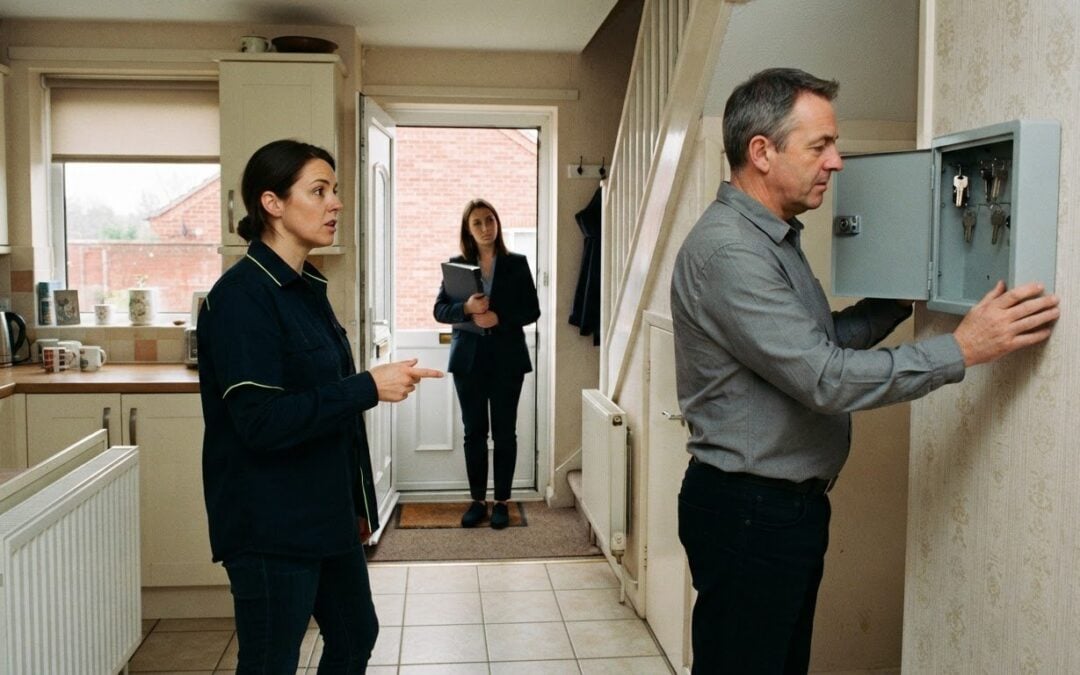
Standard home insurance is unlikely to cover risks involving business visitors. A client visiting for a consultation or treatment creates a different exposure from someone visiting socially. If the client is injured, they could make a claim against your business. Tell your home insurer if clients attend appointments, and explain the work and how often visits take place.
Public Liability Insurance can help with claims if someone is injured because of your business or their property is accidentally damaged. For example, a customer might trip over equipment in a hallway, or your service might damage a visitor’s belongings. This cover addresses claims against your business; it doesn’t replace home insurance for damage to your own property. Explain your setup, including work areas and routes visitors use.
Employees create a separate consideration. If staff come to your home office, your home policy may not cover injury claims connected with their work. Employers’ liability insurance is a distinct protection for employee claims. According to the Health and Safety Executive, employers must have employers’ liability insurance covering damages of at least £5 million if they have employees, including employees who work from home.
Separate the risks before deciding what cover applies: a client’s injury, an employee’s injury and damage to your own home involve different insurance questions. Record whether visitors are clients or staff, what activities take place, and which rooms they use. Share these details with your home insurer so business visits are understood alongside your household use. If your work involves appointments or staff at the property, review insurance options for home-based business risks.
Just Quote Me: Public Liability Insurance
Just Quote Me offers Public Liability Insurance for businesses whose activities involve clients visiting at home. It can help with claims involving injury to a visitor or accidental damage to their property connected with your business. Home insurance may not cover these business-related risks, so this cover may be relevant for appointments, treatments or consultations at home.
If employees work at your property, Employers Liability Insurance may also be relevant. Professional Indemnity Insurance may suit businesses whose clients could claim financial loss caused by their work. The appropriate cover depends on your activities and the risks involved, not simply on whether you have a home office.
Contact Just Quote Me to discuss insurance options for your home-based work.
Make your next insurance decision with confidence
Whether you need to tell your home insurer that you work from home depends on how you use the property for work and the risks involved. Keep a clear record of your activities, equipment and visitors. Use those details to review your insurance arrangements.
Just Quote Me offers Public Liability Insurance, Employers Liability Insurance and Professional Indemnity Insurance. Each addresses different business risks, so consider which types relate to your work and the people affected by it.
Request a callback for free, no-obligation advice about your options. Take the next step with a clear view of your home-based business insurance needs.
Frequently Asked Questions
What type of insurance do I need if I work from home?
The cover depends on your work, equipment and who you deal with. A freelance consultant may consider Professional Indemnity Insurance for claims alleging their work caused a client financial loss. Someone whose work involves visitors may consider Public Liability Insurance. If you take work equipment away from home, look for all-risks or personal possessions cover for loss or accidental damage outside the property.
Does home insurance cover my garden office?
A garden office can change how you use your property, particularly if it’s a new building or an adapted workspace. Tell your home insurer about the structure and its business use, and notify your business insurer too. Describe what it contains, such as furniture, computers or stock. This helps distinguish the building from the equipment inside and the work you carry out there.
Is running a business from home covered?
Not automatically. A home policy may cover basic office tasks, but a business involving stock, appointments or specialist equipment can create risks beyond ordinary household use. For example, an online seller storing products at home faces different risks from someone doing occasional paperwork. Explain your business activities and what you keep at the property, then consider whether separate business insurance suits those risks.
What about if I’m only working from home because of the pandemic?
Temporary clerical work during the COVID-19 crisis was generally treated differently from establishing a home-based business. The Association of British Insurers said home insurance cover would not be affected in most cases by clerical work from home during that crisis. A temporary arrangement involving emails and calls differs from adding customer appointments, stock or business alterations, which change how the property is used.
What important things should you think about if you work from home long-term?
If you work from home long-term, distinguish equipment you own from items supplied by your employer, and keep a current record of valuable work belongings. Consider where your equipment travels: a laptop taken to meetings may need cover for loss or accidental damage away from home. Note changes to your work, such as starting client appointments or storing materials, as these can alter the risks at your address.
