

A spare room can change more than who pays the rent. Subletting is when a tenant lets all or part of a rented home to someone else. In the UK private rented sector, tenants generally need their landlord’s permission. The insurance implications of subletting can be significant: cover may be affected, so landlords should tell their insurer when the arrangement changes who lives in the property.
An existing policy may not automatically continue to apply as before. Subletting can change how an insurer views the property and its use. Tenants should also check their tenancy agreement for restrictions before taking in a lodger or advertising a room.
This guide explains what counts as subletting, when landlords should notify insurers, and how inspections can help identify changes in occupancy. It also covers rent-to-rent agreements and Airbnb, with practical steps to help you understand the risks and protect your position.
Key Takeaways
- Keep tenancy and occupancy details up to date, and notify the insurer when someone new sublets the property.
- Use regular inspections to spot changes in who lives at the property and address suspected unauthorised subletting.
- Review rent-to-rent arrangements carefully, as they can affect whether the landlord’s existing policy remains valid.
- Before allowing Airbnb stays, consider how short-term paying guests may change the property’s insurance needs.
Property inspections and notifying insurers
Subletting changes who lives in a property and how it is occupied. Tell the insurer when a tenant sublets, whether they rent out a room or the whole home. A policy based on the original tenancy may not reflect the new arrangement.
Landlord buildings insurance covers the building, while landlord contents cover can protect furnishings and appliances against damage. Subletting may affect whether either part of the policy responds. Disclose the arrangement and ask for cover that reflects the property’s actual use.
Standard tenants’ contents insurance is very unlikely to cover theft of or damage to a subtenant’s belongings when a property is sublet. It should not be treated as cover for the subtenant’s possessions or liability. The subtenant may need separate insurance.
Yes. An insurer may refuse a claim if the property was sublet without disclosure. Subletting could invalidate cover, so tell the insurer when occupancy changes and keep a record of your notification and its response.
Use inspections to compare the people living at the property with those named on the tenancy agreement. Record who occupies each room, note any changes, and contact the insurer when a new occupant appears. If you suspect unauthorised subletting, document your concerns and consider the legal options available.
According to UK legislation register, a tenancy cannot be an Assured Shorthold Tenancy if rent exceeds £100,000 per year. If a landlord believes a tenant breached their contract by subletting, they may serve a section 146 notice, according to UK legislation register.
For a leasehold flat, review the lease and any freeholder conditions, then disclose the arrangement to the insurer. Housing association tenants should get written permission from the association before subletting and notify the relevant insurer. Landlords should also update their insurer if the occupants or letting arrangement changes.
Rent-to-rent agreements
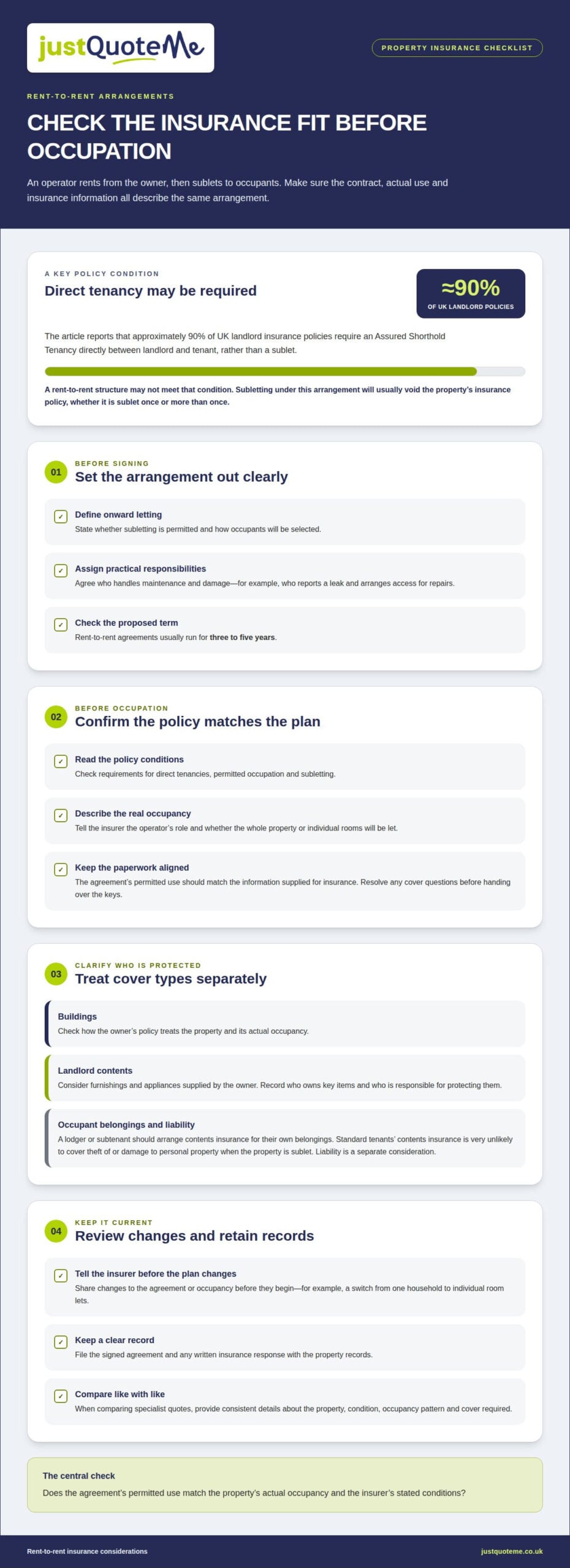
A rent-to-rent agreement lets an operator rent a property from its owner and then sublet it to occupants. The owner’s contract is with the operator, who arranges the onward occupation. This extra contractual layer matters: the insurer needs accurate information about who controls the property and who lives there.
Rent-to-rent agreements usually run for three to five years. Before signing, set out whether onward letting is permitted, how occupants will be selected, and who handles maintenance and damage. For example, specify how the operator reports a leak and arranges access for repairs. Clear responsibilities help the owner assess the arrangement and explain it accurately to the insurer.
Insurance can be the weak point. Approximately 90% of UK landlord insurance policies require landlords to have an Assured Shorthold Tenancy directly with a tenant rather than a sublet. A rent-to-rent structure may not meet that condition. Subletting under this arrangement will usually void the property’s insurance policy, whether the property is sublet once or more than once.
- Describe the arrangement: Give the insurer the operator’s role and explain how occupants will use the property.
- Read the policy conditions: Look for requirements about direct tenancies, permitted occupation and subletting.
- Align the paperwork: Make sure the agreement’s permitted use matches the information supplied for insurance.
Keep the signed agreement and any written insurance response with the property records. If the operator changes the plan, such as switching from one household to individual room lets, share the change with the insurer before it begins. Different occupancy patterns can affect the risk the policy was arranged to cover.
For landlords, the key question is whether the proposed contract and actual use fit the insurance terms. Don’t assume a standard landlord policy automatically accommodates an operator who sublets. Resolve the cover question before handing over the keys, and review it if the agreement or occupancy changes.
Rent-to-rent insurance
In a rent-to-rent arrangement, the owner lets the property to an operator, who then lets it to occupants. This creates separate insurance questions for the owner and operator. Each should identify their role, the property’s use, and who is responsible for arranging cover before occupation begins.
Start with the owner’s policy wording. Check the tenancy requirements, permitted occupancy, and any restrictions on subletting. Then explain the proposed arrangement to the insurer, including whether the operator plans to let the whole property or individual rooms. A change from one household to room-by-room lets can affect how the risk is assessed.
Compare specialist insurance quotes using the same details and cover requirements. The price depends on the case and is given after a quote request; relevant factors include the property type, occupancy pattern, condition and cover required. Comparing different assumptions can make quotes misleading, so give each insurer consistent information about the operator and planned use.
Review what each policy covers and who it protects. Consider buildings, landlord contents, and liability cover separately rather than treating them as interchangeable. For example, furniture supplied by the owner differs from an occupant’s personal belongings. Record who owns key items and who must arrange protection for them.
A lodger or subtenant should arrange contents insurance for their own belongings. Standard tenants’ contents insurance is very unlikely to cover theft of or damage to personal property when the property is sublet. Liability is a separate consideration, so occupants should not assume contents cover protects them against every claim connected with their stay.
- Before signing: Match the agreement’s permitted use to the information given for insurance.
- Before occupation: Obtain clarity on the policyholder, insured parties and responsibility for contents.
- After a change: Tell the insurer if the operator, letting method or occupancy changes.
Keep the agreement, insurer correspondence, and policy documents together. If an operator proposes room lets when the owner expected a single household, pause the change until the insurance arrangements reflect that use. Clear records help show what was disclosed and what each party agreed to arrange.
Subletting through Airbnb
Listing a rented room or home on Airbnb changes its use to short-term guest accommodation. This can affect insurance and may breach tenancy conditions.
Insurance for Airbnb Subletting
Many policies may not cover subletting, and short stays can affect a property’s existing cover. Tell the insurer that paying guests will stay, how often the property will be let, and whether guests will use a room or the whole home. Establish whether the policy reflects this activity before accepting bookings. Tenants should also remember that their contents cover is very unlikely to protect their belongings against theft or damage during subletting.
Landlord Permission to Sublet
Yes. In the UK private rented sector, tenants need their landlord’s permission before letting all or part of the property to someone else. Written permission is required to comply with the Housing Act 1988. Read the tenancy agreement and ask for consent before creating an Airbnb listing; permission to have a guest visit isn’t the same as approval to host paying guests.
For a landlord, the practical steps are to review the tenancy restrictions, notify the insurer, and record any permission given. For a tenant, share the proposed arrangement, including whether guests would use a spare room or the entire property. This gives the landlord and insurer a clear picture of the intended use instead of leaving them to infer it from a listing.
London has an additional restriction: providing temporary sleeping accommodation for paying guests for more than 90 days per calendar year is illegal. A London host should count the days the accommodation is provided and plan bookings within that limit. The restriction concerns the accommodation offered to paying guests, so distinguish those stays from ordinary visits by friends.
Before hosting, landlords can review residential letting insurance options suited to their property and letting arrangement.
Just Quote Me: Public Liability Insurance
Just Quote Me offers Landlord Insurance for landlords considering a property let or sublet. Describe the arrangement and occupancy when discussing cover. Public Liability Insurance may be relevant to separate business activities involving members of the public, but it is not a substitute for cover on a rented home or automatic protection for Airbnb guests.
When discussing cover, explain how the property is used, who occupies it, and whether there are rent-to-rent or short-stay arrangements. This gives you a practical basis for considering which insurance fits your circumstances, rather than assuming an existing policy covers every change.
For help considering your insurance needs, contact Just Quote Me or visit justquoteme.co.uk.
Make your next move with confidence
Before changing how a property is occupied, bring together the tenancy terms, intended use, and current policy details. This gives you a clear starting point for discussing your insurance needs and deciding what to address before the arrangement begins.
Just Quote Me offers Landlord Insurance alongside Public Liability Insurance, Employers Liability Insurance, and Professional Indemnity Insurance. These cover types serve different needs, so consider them in relation to your property and any separate business activities.
Choose the next step that suits you: Get Your Free Business Insurance Quote now or Request a Call back for free Expert advice. A clear conversation can help you move forward with confidence.
Frequently Asked Questions
What is subletting?
Subletting is when a tenant grants someone else the right to occupy all or part of the home they rent. For example, a tenant might rent out a bedroom while continuing to live there, or let the whole property while temporarily away. The original tenant remains responsible to their landlord under the tenancy agreement, even when someone else lives there.
Does subletting invalidate a UK home insurance policy?
Subletting can invalidate or restrict a home insurance policy, but the effect depends on the policy terms and the arrangement. The insurance implications of subletting may differ for a room let, a whole-property sublet, or paying guests. A policy may have been arranged for a specific occupancy, so tell the insurer about any change and keep its response with your policy documents.
What should landlords tell their insurer before allowing a tenant to sublet?
Give the insurer a clear account of who will occupy the property and how the sublet will work. Explain whether the tenant will let a room or the entire home, whether occupants will pay, and whether stays will be short-term or ongoing. For a rent-to-rent proposal, describe the operator’s role too. Keep a record of what you disclosed and the insurer’s response.
Are short-term lets and Airbnb sublets covered by standard UK home insurance?
Standard policies may not cover subletting, so don’t assume Airbnb stays fall within ordinary home insurance. Paying guests can change the property’s use and how the insurer assesses its risk. Before listing a room or home, explain the planned short-term letting to the insurer and establish whether the existing cover applies or different cover is needed.
How does subletting affect liability cover for injury or damage?
The insurance implications of subletting can include questions about who is insured if an injury or damage claim arises. The policyholder, occupant, and person responsible for an incident may be different people. For example, a guest could be injured in a shared area, or an occupant could damage someone else’s belongings. Liability cover depends on the policy wording, insured parties, and circumstances.
