

Yes, an insurance broker can save you money by comparing suitable policies and, in some cases, accessing rates not offered directly to customers. Whether a broker can save you money depends on the total cost, including any fee or commission, and how well the policy meets your needs.
It’s sensible to look closely at the price: using a broker doesn’t automatically mean a lower premium. A useful comparison goes beyond the headline figure, weighing cover, exclusions and service so you can see what you’re paying for.
This article explains how broker fees and commissions work, where potential savings may come from, and how to compare broker quotes with direct options. It also covers when a broker can help you find suitable cover and what to consider before choosing a policy.
Key Takeaways
- Compare the total premium with any broker fee or commission to judge the real cost of a policy.
- A broker may find savings by accessing insurer rates or policies that aren’t available directly, but savings depend on the cover and quote.
- Compare policy limits, exclusions and excesses as well as price so you can assess whether quotes offer similar protection.
- Consider whether a broker’s support with choosing cover, policy changes or claims is valuable for your needs.
- For business insurance, match the cover to your work and risks rather than choosing on price alone.
Broker fees and insurer commission
Broker remuneration can come from a customer fee, insurer commission, or both, depending on the service. In the UK, insurance brokerages must be regulated by the Financial Conduct Authority (FCA); check the FCA Register and whether the broker is authorised for advised sales.
Broker Fee Structures
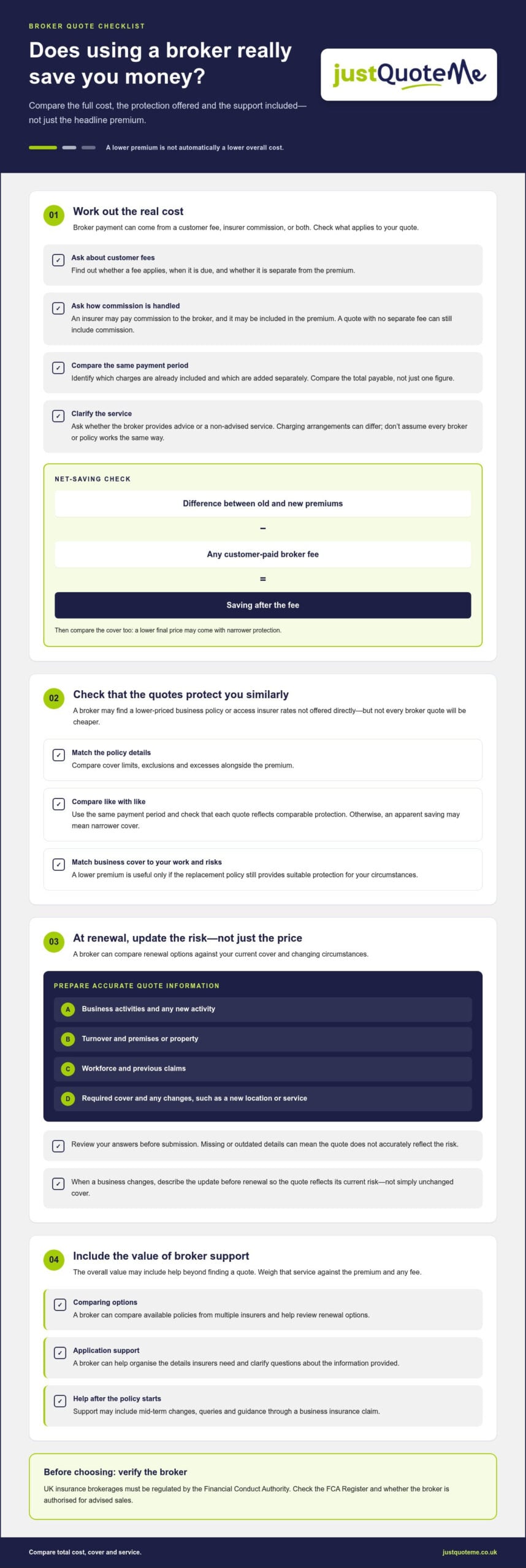
A broker fee is a charge paid by the customer for arranging or supporting insurance. Commission is paid by an insurer when a policy is sold. Some life insurance brokers charge customers a fee, while a non-advised life insurance service often does not. Ask what payment applies to your quote, when it is due and whether it is separate from the premium. This helps you compare the full cost, not just one figure.
Commissions and Premiums
Commission is payment an insurer makes to a broker for placing a policy, and it may be included in the premium. For car insurance, commission is usually reflected in the monthly or annual premium. So a quote may include the broker’s commission even when there is no separate broker fee. Compare the total premium and any customer-paid fee, then weigh them against the cover and service.
Payment arrangements matter because a low-looking fee doesn’t necessarily mean the policy costs less overall. For example, a quote with no separate charge could still include insurer commission in its premium. Another quote might show a separate broker fee alongside the premium. Compare the total payable for the same period, and identify which charges are included or added separately.
Commission can also be a reason to ask how a broker is paid. Ask for the fee and commission details for your quote, and whether the broker provides advice or a non-advised service. This distinction matters because non-advised life insurance services may have different charging arrangements from advised services. Don’t assume every broker or policy has the same payment structure.
To assess whether an insurance broker can save you money, consider how the broker is paid alongside the policy itself. Check the insurer, cover limits, exclusions, excesses and payment frequency. A lower premium may not be better value if the policy changes the protection you need. A broker fee may be worthwhile if the policy better suits your circumstances or saves time when you’re dealing with a complex insurance decision.
If you’re unhappy with a life insurance broker’s service, the Financial Ombudsman Service can consider complaints. Keep the quote, policy documents and any written explanation of fees or commission together. These records help you understand what you agreed to and explain the issue clearly if you make a complaint.
Potential savings and costs of using a broker
A broker may find business insurance at a lower price than a direct insurer, and some insurers offer brokers lower rates. Brokers can also help compare renewal options and gather application details. Weigh any potential savings against the time involved.
At renewal, a broker can compare available quotes and identify cover that better fits your changing needs. For an accurate quote, provide details about your activities, property, workforce, claims history and required cover.
Potential Savings After Fees
To work out whether you save money after fees, compare any premium reduction with the broker’s charge. This shows whether the arrangement lowers your overall cost, not just the premium. For example, if a broker finds a lower-priced policy, subtract any customer-paid fee from the difference between the old and new premiums. Then compare the cover as well as the final amount.
Insurers may offer brokers lower rates than direct customers receive, and brokers may find business policies at lower prices than direct insurers. But not every broker quote will be cheaper. Compare the same payment period, cover limits, exclusions and excesses. Otherwise, an apparent saving may simply mean the policy offers narrower cover.
Renewal Premiums and Better Cover
A broker can review renewal options by comparing available policies with your current cover and circumstances. This matters if your work, property, staff or other risks have changed, as an old policy may no longer meet your needs. A lower premium is useful only if the replacement policy still provides suitable protection.
For instance, a business adding a new activity should describe the change before renewal. The broker can use the updated information to seek a quote that reflects the business’s current risk, rather than simply renewing the existing cover unchanged. Compare exclusions, limits and excesses as well as the price before deciding.
Application support can make it easier to explain your circumstances to insurers. A broker can help organise the details needed for a quote and clarify questions about the information you provide. Prepare accurate records of your business activities, turnover, premises, employees and previous claims. The relevant details vary by policy, so focus on information related to the cover you’re considering.
Complete information matters. If an application leaves out an important activity or gives an outdated description, the quote may not reflect the risk accurately. Review your answers before submission and update any changes, such as a new location or service. This gives insurers a clearer basis for pricing and makes quotes easier to compare.
Broker support may continue after the application. Brokers can assist with mid-term changes and queries, and guide customers through a business insurance claim. When assessing the value of the service, include this practical support alongside the premium and any fee.
Comparing broker quotes with other options
A broker can compare policies from multiple insurers, while a direct insurer offers its own policy. A useful comparison considers not just the premium, but also the cover, exclusions and service behind each quote.
Insurance Types and Broker Pricing
A broker’s prices reflect the insurers and policies available through that broker, so the panel matters. A broker may find business insurance at a lower price than a direct insurer, but no broker has access to every policy. This helps explain why quotes can differ, even when they appear to cover similar needs.
For car insurance, brokers may obtain quotes from specialist insurers covering classic or kit cars. This can help drivers with less standard vehicles compare relevant options. Life insurance brokers may also compare only a set panel, so another quote could be lower elsewhere in the UK market. Ask what kind of market access the comparison represents.
Direct insurers offer customers their own policy. A broker can provide alternatives from multiple insurers, but may still work with a limited panel. Neither route automatically gives you a complete view of the market. Compare the quotes you receive against the specific risks and cover requirements you’ve identified.
Total Cost and Exclusions
Comparing total cost and exclusions means reviewing what each quote charges and what it leaves out. Two premiums are meaningfully comparable only when the protection is similar. Put the premium, any separate fee, excess, cover limits and exclusions side by side before choosing.
For example, one business quote may have a lower premium but exclude an activity central to the business. Another may include that activity but have a different excess or limit. Read the policy wording and quote schedule, not just the summary price. Note any differences that could affect a claim.
A practical comparison can use these points:
- Match the policy type and insured activities across quotes.
- Compare premiums and any separately charged broker fee.
- Review exclusions, excesses, limits and payment frequency.
- Record which insurers and policies the broker included.
In the UK, insurance brokerages must be regulated by the Financial Conduct Authority. The FCA works to make financial markets honest, fair and effective so consumers get a fair deal. You can check a brokerage’s FCA registration and whether it is authorised for advised sales. British Insurance Brokers Association membership is another detail to consider when assessing a broker.
These checks help you understand who is arranging the cover and the authority under which they operate. They can also help you avoid ghost brokers, who may sell fake or invalid car insurance. If a car policy seems suspect, contact the insurer directly or check the Motor Insurance Database. Checking the seller’s credentials is part of comparing quotes responsibly.
Finding suitable cover through a broker
A broker can help identify suitable cover by matching your circumstances with insurers’ policies and arranging a policy with an appropriate insurer. This can be useful when your work, property or responsibilities don’t fit a straightforward insurance category.
Start by describing what you need to insure and how you use it. For example, a business should explain its activities, premises, staff and any operational changes. A landlord should describe the property and how it is used. These details help the broker understand the risks and identify relevant cover.
The broker can then compare policy terms against those risks, rather than relying on a broad label such as “business insurance”. A tradesperson, for instance, may need to check that a policy reflects the work they actually do. The broker’s role is to help identify suitable cover and arrange it with an insurer whose policy fits.
Before accepting a recommendation, make sure the proposed cover reflects the information you provided. Check the policy schedule and wording for:
- The activities or property insured, including any important changes.
- Cover limits and excesses that affect a claim.
- Exclusions that could apply to your work or circumstances.
- Whether the policy matches the protection you asked for.
Accuracy matters when you apply and renew. If your business adds a service, moves premises or changes how it operates, tell the broker. For example, a property owner changing a building’s use should ensure the new details are included in the insurance arrangement. Outdated information can leave a mismatch between the policy and the risk presented.
A broker may also help after arranging cover. Brokers can assist with mid-term changes and queries, guide customers through business insurance claims, and represent customers when dealing with an insurer about a claim. This support can help you understand what information the insurer needs and follow the claim’s progress.
In the UK, check the FCA Register to see whether a broker is authorised to offer advised sales. This helps you understand the basis on which advice is provided. Trade-body membership, such as membership of the British Insurance Brokers Association, is a separate consideration. A licence or membership label alone doesn’t tell you whether a policy’s exclusions and limits suit your needs.
Good preparation makes the discussion more useful: list your activities, identify what needs protection and note any changes since your last policy. A specialist broker can use these details to help arrange cover that reflects your situation, rather than treating every customer as having the same risks.
Which types of UK insurance are most likely to be cheaper through a broker?
No type of insurance is automatically cheaper through a broker. The strongest opportunity is often when a broker can match a specific risk with an insurer that understands it, or access rates unavailable to direct customers. Business insurance and specialist motor cover are examples, but compare policy terms as well as price.
Business insurance is one area where a broker may find a lower-priced policy than a direct insurer. Insurers may offer brokers lower rates than customers buying directly. This can matter when a business has several activities or needs cover tailored to its work. For example, a trades business should explain the jobs it actually does, rather than relying on a broad description that could misrepresent its risk.
Specialist car insurance may also benefit from broker access. Brokers can obtain quotes from specialist insurers covering classic or kit cars. A driver with a modified or unusual vehicle may need a policy designed around that vehicle rather than a standard option. The useful comparison is whether the quote recognises the vehicle’s characteristics and offers appropriate terms, not just whether its premium looks lower.
For less unusual risks, a direct insurer’s quote may be competitive. A broker’s value depends on the insurers they approach and how well the available policies fit the customer. For instance, compare a classic car policy with another quote covering the same vehicle and use. For a business, compare the insured activities and cover limits before treating a lower premium as a saving.
These factors can help you identify where broker comparisons are most useful:
- Specialist vehicles: classic cars and kit cars can need quotes from insurers familiar with those vehicles.
- Business risks: a broker may find a business policy at a lower price than a direct insurer.
- Unusual activities: clear details can help match the risk with a relevant policy.
- Renewal decisions: compare equivalent cover, exclusions and excesses before switching.
For UK businesses, relevant cover depends on the work being done. A shop, restaurant and construction business face different risks, so the same policy comparison won’t suit every operation. A broker can help identify suitable cover and arrange it with an appropriate insurer. The business still needs to provide accurate details, because the activities described shape the quote and the cover being considered.
Use the comparison to assess both price and fit. Check the insured activities, limits, exclusions and excesses, then account for any separate broker charge. A specialist quote can be useful even if it isn’t the lowest-priced, when its terms better match the risk. Conversely, a familiar insurer’s direct quote may suit a straightforward need. The best option balances suitable protection with total cost.
Just Quote Me: Public Liability Insurance
Just Quote Me can help you compare cover options if your business needs protection against claims involving third parties. Public Liability Insurance may be relevant if your work brings you into contact with customers or members of the public. The right policy depends on your activities, the risks you face and the cover terms, so compare exclusions and limits as well as the premium.
If you also need cover for employees, professional advice or a rental property, Just Quote Me offers Employers Liability Insurance, Professional Indemnity Insurance and Landlord Insurance. Provide accurate details about your work and circumstances to support a suitable quote.
Get Your Free Business Insurance Quote now, or contact Just Quote Me to discuss your insurance needs.
Make your next insurance decision with confidence
Whether an insurance broker can save you money depends on the total cost and how well the cover suits your needs. A renewal or change in circumstances is a useful opportunity to reconsider what you need insured and what matters most, such as protecting your business, employees or professional work.
Just Quote Me offers Public Liability Insurance, Employers Liability Insurance and Professional Indemnity Insurance. To assess whether an insurance broker can save you money, consider the policy terms alongside the cost, rather than focusing on price alone.
If you’re ready to explore your options, Get Your Free Business Insurance Quote now, or Request a Call back for free Expert advice.
Frequently Asked Questions
What are the benefits of using a broker?
A broker can help you understand which cover suits your circumstances and arrange it with an insurer. This can be useful if your needs span several policy types or your business has specialist risks. For example, a business owner can discuss changing activities and ask how those changes affect cover. A broker may also help with policy queries or support during a claim, giving you a contact for insurance-related questions.
What are the disadvantages of using a broker?
A broker may not compare every insurer, so the choice may be limited to its panel. You may also pay a broker fee, while insurer commission may form part of the premium. These factors can affect value. Before deciding, compare the policy with other options available to you, consider the total payable and check whether the broker’s service meets your needs.
Can an insurance broker get cheaper quotes than buying directly in the UK?
Yes, a broker may find a lower-priced business insurance policy than a direct insurer because some insurers offer brokers lower rates. The result depends on the insurers approached and the details of your risk. For a useful comparison, use the same business information and cover requirements for each quote. A lower price alone doesn’t show whether the policy provides the protection you need.
How do UK insurance brokers earn commission and charge fees?
Brokers can earn commission from insurers when they arrange a policy, and some also charge customers a fee. Commission may be reflected in the premium, while a customer fee can be a separate charge. Depending on the service, charges may apply to arranging or administering a policy, making an adjustment or cancellation. Ask for a clear explanation of each payment and when it applies.
How do broker quotes compare with price-comparison websites and insurers direct?
A direct insurer quotes for its own policy, while a broker may compare policies from several insurers on its panel. A price-comparison website also presents quotes from participating insurers, so its results represent the providers available through that platform. Compare each route using consistent details, then review the policy documents. Differences in excesses, exclusions and limits can matter more than a small difference in premium.
What are the risks or drawbacks of using an insurance broker?
The main drawback is assuming a broker’s quote represents every option in the UK market. A limited panel can exclude other policies from the comparison, and unclear fee arrangements can make total costs harder to assess. For car insurance, also beware of ghost brokers selling fake or invalid policies. Confirm the policy directly with the insurer or check its entry on the Motor Insurance Database.
