

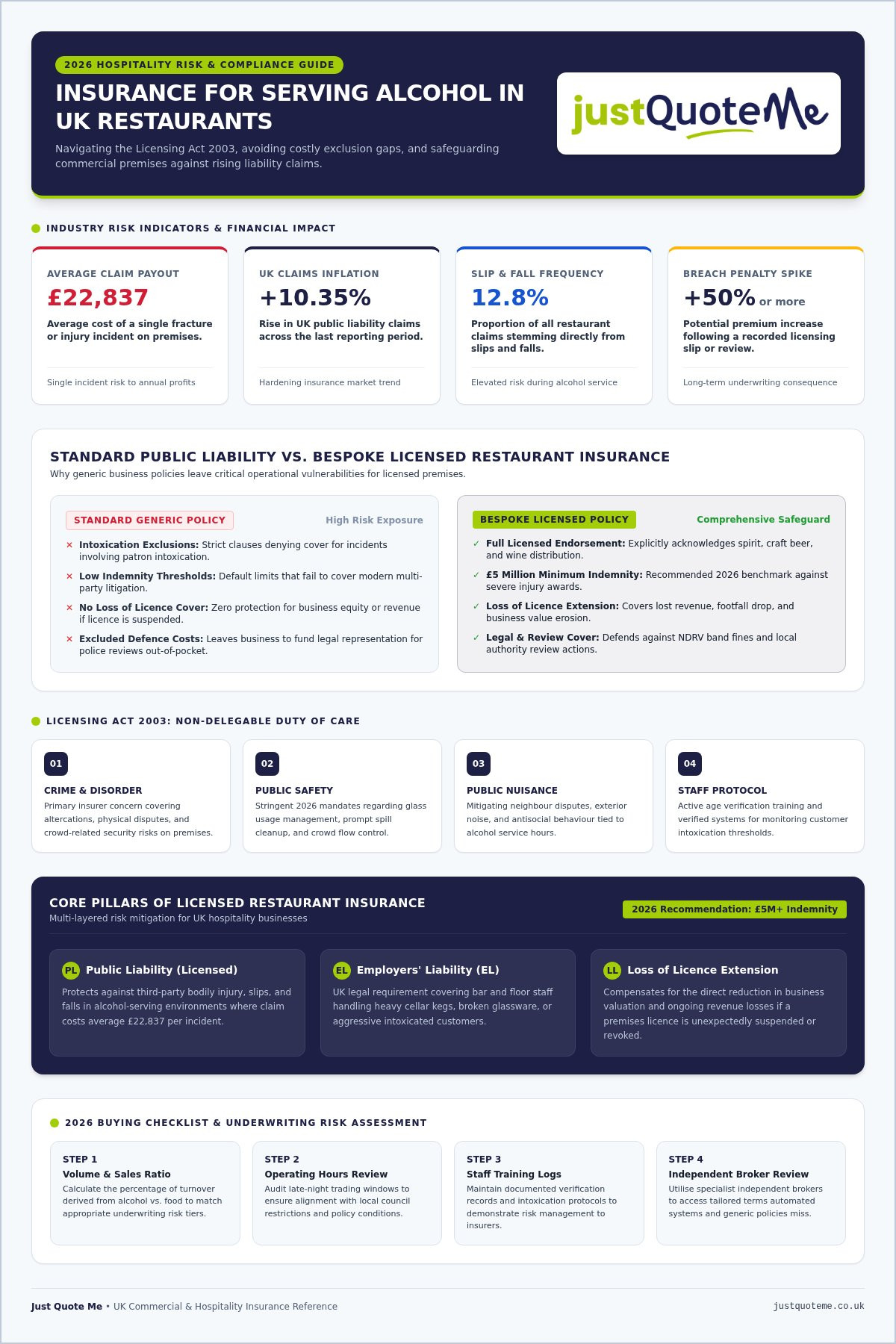
If you think your standard public liability policy has you fully covered, a single alcohol-related incident could prove to be a £22,837 mistake. With public liability claims across the UK rising by 10.35% in the last reporting period, the margin for error for hospitality owners has never been thinner. Finding the right insurance for serving alcohol in a restaurant is no longer just a box-ticking exercise; it’s a vital safeguard against rising premiums and increasingly litigious third-party claims.
It’s frustrating to see your overheads climb while you’re left wondering if your premises licence is truly protected. You shouldn’t have to choose between affordable premiums and comprehensive security. This 2026 guide will show you how to navigate the hardening insurance market, secure specific licence protection, and ensure your business remains compliant with the latest UK regulations. We’ll break down exactly what you need to look for in a bespoke policy so you can focus on service, not paperwork.
Key Takeaways
- Understand your specific duty of care under the Licensing Act 2003 and how alcohol-related injury claims can impact your bottom line.
- Learn why standard public liability often falls short and how specialized insurance for serving alcohol in a restaurant fills critical coverage gaps.
- Discover how Loss of Licence extensions protect your business value and revenue if your premises licence is suspended or revoked.
- Use our 2026 buying checklist to assess your risk profile based on alcohol volume and operating hours to secure more competitive quotes.
- Identify the benefits of working with an independent broker to access bespoke solutions that automated, one-size-fits-all systems often miss.
The Legal and Financial Risks of Serving Alcohol in a UK Restaurant
Serving alcohol transforms your restaurant’s risk profile instantly. Under the Licensing Act 2003, you have a non-delegable duty of care to your patrons and the public. If a customer is over-served and later injures themselves or a third party, the financial repercussions can be devastating. While you might assume your general policy covers these events, specific Public Liability Insurance is required to handle the nuances of licensed premises. Many standard policies contain strict exclusions for “intoxication-related” incidents, leaving a massive gap in your protection.
The legal framework is clear. You must adhere to UK alcohol licensing laws to remain operational. Local authorities and the police conduct regular risk assessments, and any failure to meet their standards can lead to immediate licence reviews. This isn’t just a legal headache; it’s a financial one. With the average cost of a fracture claim reaching £22,837, one slip-up can wipe out your annual profit. This makes specialized insurance for serving alcohol in a restaurant a necessity rather than a luxury.
Licensing Objectives and Your Insurance
Your insurance policy needs to align with the four licensing objectives. The prevention of crime and disorder is a primary concern for insurers, as it covers risks like physical altercations on your premises. Public safety requirements have become more stringent in 2026, particularly regarding crowd control and glass usage. Finally, protection against “Prevention of Public Nuisance” claims is vital if neighbours complain about noise or antisocial behaviour linked to your alcohol service.
The Cost of Non-Compliance
Breaching licensing conditions carries heavy penalties. Beyond statutory fines, which vary based on your NDRV band, the hidden cost lies in legal fees. If the police trigger a licence review, you’ll face substantial costs to defend your right to trade. Insurers also track these incidents. If you’ve had a previous licensing “slip,” your premiums could rise by 50% or more. A suspended licence doesn’t just stop alcohol sales; it often results in a total loss of footfall, creating a ripple effect that standard business interruption might not cover without specific extensions.
Managing these risks requires a proactive approach. You need to ensure your staff are fully trained in age verification and that you have robust systems for monitoring intoxication levels. By demonstrating a commitment to these licensing objectives, you not only protect your business from legal action but also position yourself as a lower risk to insurers, which can help keep your premiums manageable.
Core Insurance Covers for Licensed Restaurants
While understanding legal risks is the first step, building a robust insurance portfolio is what keeps your doors open when things go wrong. A standard policy might cover a quiet café, but the moment you introduce spirits, craft beers, or wine, your requirements shift. The right insurance for serving alcohol in a restaurant creates a multi-layered safety net that protects your assets, your staff, and your reputation from the unique volatility of the hospitality sector.
Public Liability for Licensed Premises
This is the bedrock of your protection. In a busy restaurant environment, spills are inevitable. When alcohol is involved, the risk of a customer slipping or falling increases significantly. You need Public Liability Insurance that specifically acknowledges your licensed status. In 2026, we recommend that restaurant owners maintain an indemnity limit of at least £5 million. This reflects the rising costs of legal settlements and the fact that 12.8% of all restaurant claims now stem from slip-and-fall incidents. Without adequate limits, a major injury claim could exceed your coverage, leaving your personal assets vulnerable.
Employers Liability for Bar and Floor Staff
If you employ anyone, Employers’ Liability (EL) insurance is a legal requirement in the UK. This isn’t just about administrative compliance; it’s about protecting your team. Bar and floor staff face specific hazards, from handling heavy kegs to managing intoxicated or aggressive guests. If a staff member is injured while performing their duties, your Employers Liability Insurance covers the resulting legal costs and compensation. Failing to have this cover in place can result in fines of up to £2,500 per day from the Health and Safety Executive.
Beyond these liability covers, you must account for your physical assets. Product liability is essential for protecting against claims of drink-related illness, such as allergic reactions to undeclared ingredients or contamination. Additionally, your buildings and contents insurance should be tailored to reflect the high value of modern bar equipment and your liquid stock. Spirits and fine wines are high-theft items and represent a significant capital investment that requires specific protection within your policy.
Securing the right balance of these covers doesn’t have to be complicated. Working with a specialist who understands the nuances of bespoke hospitality insurance ensures you aren’t paying for redundant features while remaining fully protected against the most common industry risks.
Specialised Alcohol Liability and Loss of Licence Extensions
Core covers protect against everyday accidents, but alcohol service introduces risks that can completely halt your business operations. A standard package covers physical slip-and-trip hazards, but it won’t protect the underlying value of your business if your right to sell alcohol is stripped away. Securing comprehensive insurance for serving alcohol in a restaurant requires specific extensions designed to protect your revenue, your licence, and your specialist stock from unique hospitality threats.
What is Loss of Licence Insurance?
Losing your premises licence can destroy your restaurant’s market value overnight. Loss of licence insurance provides indemnity for the reduction in property value if your licence is suspended or revoked through no fault of your own. It also steps in to cover the steep legal costs incurred during a licence appeal process with local authorities. You must review the exclusions carefully; underwriters will not pay out if the revocation stems from gross negligence, direct criminal acts, or failing to maintain basic statutory standards.
Business Interruption for Hospitality
While standard commercial property insurance handles physical damage from fires or floods, it rarely triggers during licensing disputes. You need a specific “non-damage” extension within your business interruption policy to cover revenue losses caused by a forced closure due to licensing issues. This cover keeps your business afloat by protecting your fixed costs, including rent and ongoing staff commitments, while your bar remains legally closed.
While mandatory protections like the Employers’ Liability (Compulsory Insurance) Act 1969 focus entirely on staff welfare, your physical storefront requires specialised attention too. Street-facing licensed venues face a higher risk of late-night vandalism, making dedicated glass and signage cover an essential addition to your policy. Finally, you must safeguard your liquid assets with accurate stock cover. Premium spirit inventories and extensive wine cellars represent thousands of pounds in upfront capital. Ensuring this stock is insured at current replacement cost, rather than original purchase price, protects your business from the severe financial strain of theft or cellar flooding.
How to Choose the Right Policy: A Buying Checklist
Selecting the right policy requires looking beyond the cheapest annual premium. With general liability rates rising by up to 25% in recent hardening markets, finding competitive insurance for serving alcohol in a restaurant means presenting a clean, well-managed risk profile to underwriters. You need an organized approach to evaluate your specific liabilities before speaking with a provider, ensuring you buy exactly what you need without paying for duplicate covers.
Step 1: Risk Assessment
Your risk exposure changes depending on your operating model. A venue serving wine with dinner at 7:00 PM has a vastly different risk profile than a restaurant running a busy late-night bar until 2:00 AM on weekends. You must identify these high-risk windows and document your mitigation strategies. Showing that your floor staff hold formal qualifications, such as BIIAB personal licences or structured age-verification training, can directly lower your premiums. For businesses operating in major metropolitan hubs, securing specialized Restaurant Insurance ensures your policy accounts for high footfall and urban liability trends.
Step 2: Comparing Broker Quotes
Automated comparison websites often fail to capture the nuances of licensed hospitality premises. Independent brokers offer a distinct advantage over direct insurers because they can access niche markets and tailor policies to your exact footprint. When evaluating a broker, ensure they are an FCA-authorised firm with demonstrable experience in the hospitality sector. Regional expertise is equally valuable. A broker who understands the specific commercial landscapes of Newcastle-under-Lyme, Stafford, and the wider West Midlands can negotiate better terms based on local risk data rather than generic national averages.
Before finalizing your coverage, use this quick checklist to audit your current position:
- Audit exclusions: Check your existing public liability policy for hidden restrictions regarding alcohol-related customer injuries.
- Value your assets: Calculate the accurate replacement cost of your current wine cellars, premium spirit lines, and specialized bar equipment.
- Review service hours: Ensure your stated operating hours match your local authority premises licence exactly.
Taking these steps ensures your business remains fully protected while keeping overheads under control. If you are ready to secure a policy tailored to your specific venue, Just Quote Me can manage the administrative burden and find the right coverage for your licensed restaurant.
Securing Your Restaurant with Just Quote Me
Arranging the right insurance for serving alcohol in a restaurant shouldn’t feel like an administrative burden. With over 30 years of experience in the UK hospitality insurance market, Just Quote Me provides a human-centric alternative to automated underwriting systems. We understand that a licensed venue in Staffordshire or the West Midlands faces distinct challenges that a generic corporate framework will miss. Our independent status means we answer directly to you, not a single parent insurer.
Our deep industry relationships give you direct access to a broad network of top UK underwriters. This positioning allows us to build highly competitive, bespoke coverage structures that match your exact operational risks. We cut through the complex terminology to deliver straightforward, pragmatic advice so you can make informed decisions quickly. Your focus should remain on delivering excellent service to your guests, while we manage the background complexities of your legal protections.
Why Choose an Independent Broker?
Corporate call centres rely on rigid algorithms that often misclassify complex hospitality businesses, leading to inflated premiums or severe coverage gaps. As an independent broker, we design flexible policies that adapt as your business expands, whether you are extending your floor space or adjusting your operating hours. We offer dedicated support throughout your policy term, providing expert claims handling and efficient administration. When you call our office, you speak directly with an experienced professional who understands your sector, completely eliminating automated phone queues.
Get Protected Today
Protecting your livelihood from third-party injury claims and licence suspension is a straightforward process. Our experienced team can assess your risk profile and build a comprehensive policy structure within minutes. By choosing a tailored approach, you secure reliable protection for your premises licence while maintaining competitive overheads in a challenging market. Take control of your business administration and secure your venue’s future today.
Get Your Free Business Insurance Quote now to explore our bespoke coverage options, or Request a Call back for free Expert advice from our specialist hospitality team.
Protecting Your Licensed Venue for the Future
Managing a hospitality business in 2026 involves more than just great food; it requires a proactive approach to risk management. We’ve explored why standard public liability policies often leave critical gaps and how specialized extensions like Loss of Licence cover act as a vital financial safety net. Securing the right insurance for serving alcohol in a restaurant means you can trade with confidence, knowing your premises and staff are protected from the unique pressures of the UK market.
As an FCA-authorised independent broker with 30+ years of industry expertise, Just Quote Me provides bespoke UK-wide coverage that automated systems simply can’t match. We’re here to help you navigate the administrative burden and secure competitive rates through our network of top underwriters. You’ve built a successful business; don’t let an unforeseen liability incident take it away. We’re ready to help you safeguard your future today.
Get Your Free Business Insurance Quote now
Request a Call back for free Expert advice
Frequently Asked Questions
Is insurance for serving alcohol mandatory for UK restaurants?
While not a statutory requirement like Employers’ Liability, having specialized insurance for serving alcohol in a restaurant is often a mandatory condition of your commercial lease or mortgage agreement. Without it, you’re personally liable for legal costs and compensation claims. Most UK local authorities also expect to see proof of adequate public liability cover during the premises licence application process to ensure you meet public safety objectives.
Does standard Public Liability cover alcohol-related fights?
Standard public liability policies frequently exclude incidents involving “intoxication” or “deliberate acts of violence.” This means if a fight breaks out, you could be left without cover for third-party injuries or property damage. You need a policy that specifically includes an extension for licensed premises. This ensures that incidents arising from the sale of alcohol are fully covered, provided you haven’t breached your specific licensing conditions or statutory duties.
How much does Loss of Licence insurance typically cost?
The cost of Loss of Licence insurance varies based on your restaurant’s non-domestic rateable value (NDRV) and your annual alcohol turnover. Higher-risk bands, such as Band D and E premises primarily used for on-site consumption, generally face higher premiums. Factors like your claims history and operating hours also influence the final figure. Because this is a bespoke extension, we recommend requesting a tailored quote to get an accurate reflection of your specific business needs.
Can I get insurance if my restaurant has had a licence review before?
Yes, you can still secure cover, but you’ll likely need the help of an independent broker who can access specialist underwriters. A previous licence review signals a higher risk to standard insurers, which often results in increased premiums or stricter policy terms for insurance for serving alcohol in a restaurant. You’ll need to demonstrate that you’ve implemented robust remedial measures, such as improved staff training, to reassure insurers that the underlying issues have been resolved.
Do I need extra cover for outdoor seating areas where alcohol is served?
You must declare all outdoor seating areas to your insurer to ensure your public liability extends beyond the building’s walls. Alcohol service in pavement cafes or beer gardens increases the risk of slips, trips, and glass-related injuries in public spaces. If these areas aren’t explicitly included in your policy schedule, any claims arising from them could be rejected. It’s also vital to check if your stock cover includes outdoor furniture and specialist heating equipment.
What happens to my insurance if I change my opening hours?
You must notify your broker immediately if you intend to change your opening hours, especially if you’re extending into late-night service. Insurers calculate premiums based on the risk profile of your stated hours; trading outside these times without approval can invalidate your cover. Late-night alcohol service carries a higher probability of liability claims, so your underwriter may need to adjust your premium or add specific conditions to your policy to maintain full protection.
Is my staff covered if they are injured by an intoxicated customer?
Your staff are protected through your Employers’ Liability Insurance, which is a legal requirement under the Employers’ Liability (Compulsory Insurance) Act 1969. This cover applies if an employee is injured by an intoxicated guest while performing their duties. It handles the legal costs and any compensation awarded if the business is found liable for failing to provide a safe working environment. Maintaining clear intoxication policies and conflict management training helps demonstrate that you’ve taken reasonable steps to protect your team.
Does restaurant insurance cover stolen or broken stock?
Stolen or broken stock is typically covered under a specific “Stock” section of your policy, but you must ensure the indemnity limits are accurate. For licensed restaurants, this should include high-value spirits and wine cellars. Most policies cover theft following forcible entry and damage caused by insured perils like fire or flooding. However, regular breakages during service are usually considered a standard business cost and are often excluded unless you’ve opted for specific accidental damage extensions.
