
A single accident or insured event can put more than a day’s baking at risk. Bakery insurance can help protect your business against claims involving employees or customers, and damage to stock, equipment and other contents. In the UK, businesses with employees, including temporary or seasonal staff, apprentices or volunteers, are legally required to have employers’ liability insurance.
Fresh ingredients, working equipment and a reliable team are essential to keeping orders on track. Insurance won’t prevent every disruption, but cover that reflects how your bakery operates can help manage the financial impact when something goes wrong.
This guide explains why bakers need business insurance and how employers’ liability, public liability, contents and stock cover can help. It also explains what to consider if you bake from home, sell to the public or deliver orders, so you can identify which protections are relevant to your business.
Key Takeaways
- Consider how a forced closure could affect income, and whether interruption cover fits your bakery’s risks.
- If you employ staff, understand your legal responsibility to hold employers’ liability insurance and the consequences of being uninsured.
- Assess how public liability cover could help if a customer or another person is injured or their property is damaged because of your business.
- Review the value of your equipment, ingredients and other contents to decide what protection your premises and stock may need.
Why would a baker need business insurance?
A bakery faces risks to its people, premises and products. Bakery insurance can help address claims and protect income, equipment and stock when an insured event disrupts trading.
Business Interruption Cover
Business interruption cover can help replace lost income if an insured event forces your bakery to close. For example, insured damage that makes the kitchen unusable could stop sales while bills continue. Check the policy wording to see which events trigger cover, how lost income is calculated and the maximum indemnity period. Consider how long it might take to replace equipment or restore the premises.
Equipment, Documents, and Stock
Contents insurance can help protect bakery equipment, stock and other contents at the premises. Equipment cover can also protect tools against breakdown, theft or property damage. It may help with ovens and mixers, while stock cover can apply to ingredients and finished goods. Check which documents and items are included, the insured amounts and whether accidental damage is covered. Keep an inventory of equipment, records and stock to help assess your needs.
Policy Exclusions and Bakery Risks
Does bakery insurance cover ovens, mixers, stock and equipment breakdown? Contents cover can protect equipment and stock, while equipment insurance may cover breakdown, theft or property damage. The policy wording defines the covered events and items, so compare its exclusions, limits and excesses with your actual equipment and stock.
What exclusions and risks should UK bakery owners check in a policy? Review exclusions and limits for the premises, equipment, stock and business interruption. Product liability insurance can address liabilities such as food poisoning claims, but the policy wording determines the cover. Consider how an incident could affect a customer or employee, and how each risk relates to your operations.
Home-based bakers need business insurance for trading from their own kitchen, as standard home insurance doesn’t provide business cover. For a pop-up cake business, describe the temporary venue and sales activity when arranging insurance. This helps match cover to where you bake, how customers buy your products and whether stock moves between locations.
Employers’ liability cover
Bakery insurance can combine protection for employees, customers, products and premises. Employers’ liability addresses employee injury claims, while public liability relates to injuries or property damage involving other people.
Cover for Bakery Staff
Employers’ liability insurance covers claims from employees injured through their employer’s negligence at work. In a bakery kitchen, an employee might allege that an injury resulted from unsafe working conditions. The policy wording explains which claims qualify and sets the cover limit. Review it against your staffing arrangements, including temporary or seasonal workers, apprentices and volunteers.
Public liability and employers’ liability relate to different relationships. A customer injured in the shop may bring a public liability claim; an employee injured at work may bring an employers’ liability claim. Product liability is a separate consideration, addressing liabilities connected with products sold, such as food poisoning. These covers aren’t interchangeable, so match each to the people and activities involved.
Employers’ Liability Requirements
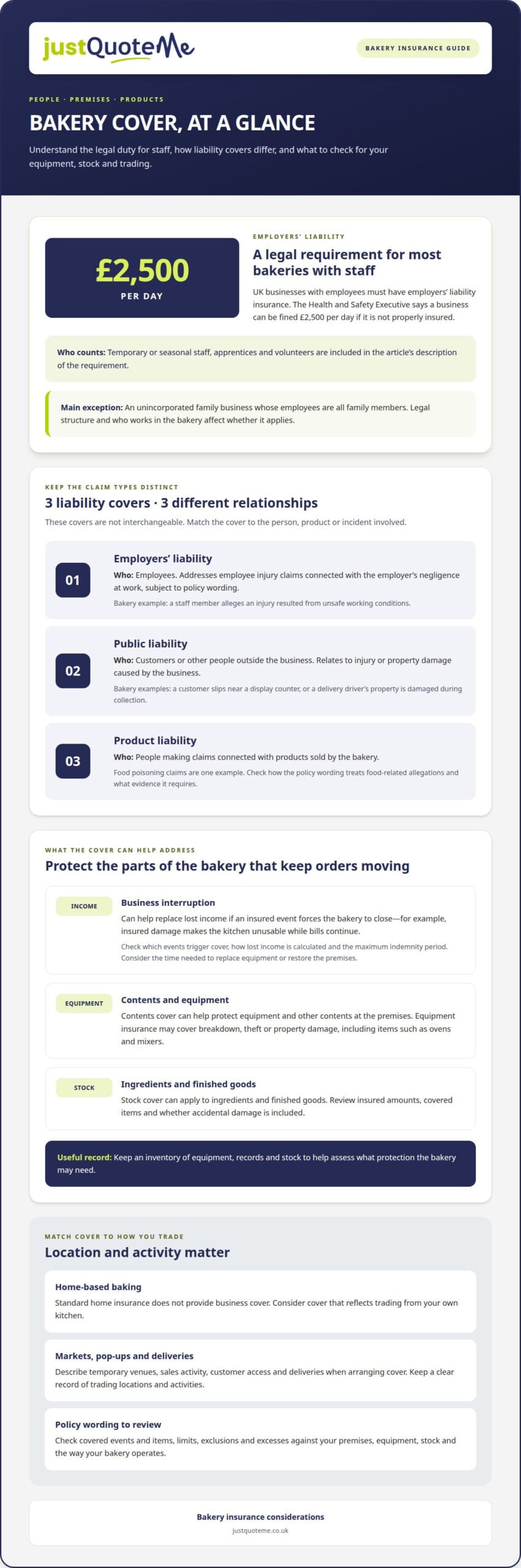
UK businesses with employees, including temporary or seasonal staff, apprentices or volunteers, are legally required to have employers’ liability insurance. One main exception is an unincorporated family business whose employees are all family members. Your bakery’s legal structure and who works in the business affect whether that exception applies.
According to the Health and Safety Executive, a business can be fined £2500 per day if it isn’t properly insured for employers’ liability. Identify everyone working for the bakery, then arrange cover that reflects those roles. Keep policy details accessible so staff and relevant records can be matched to the insured business.
What does bakery insurance typically cover? It can include employers’ liability, public liability, contents and stock, business interruption, and product liability insurance. The right combination depends on your staff, premises, products and trading activities.
Review these details when arranging cover: who works in the bakery, where they work, and which activities involve customers or products. For cover focused on employee injury claims, employers’ liability insurance is a relevant starting point.
Public liability insurance
Public liability insurance can protect a bakery if someone is injured or their property is damaged because of the business. A customer slipping beside a display counter or a delivery driver’s property being damaged during collection illustrates how claims can arise during ordinary trading.
Public Liability Cover
Public liability insurance can help with claims involving injury to someone outside the business or damage to their property. It may be relevant in a shop, at a market stall or during a pop-up event. Consider where customers enter, how deliveries are handled and which activities take place away from the bakery.
Read the policy wording for covered activities, limits, exclusions and excesses. Selling at a temporary venue, for example, may involve different circumstances from serving customers at your usual premises. Keep a clear record of your trading locations and activities when arranging cover, so the policy reflects how you run the business.
Product Liability for Food Risks
Product liability cover relates to claims arising from products a bakery sells. It can address liabilities such as food poisoning. A customer who alleges illness after eating a cake may make a claim, so check how the policy wording treats food-related allegations and what evidence it requires.
Contamination and allergic reactions also deserve attention when reviewing policy wording. Check how the policy defines covered product claims and whether exclusions apply to particular ingredients, preparation processes or alleged allergen issues. Don’t assume public liability and product liability are interchangeable: public liability concerns injury or property damage caused by the business, while product liability concerns products sold.
Before choosing cover, list the bakery’s sales channels, products and customer-facing activities. Compare those details with the policy’s definitions, limits and exclusions. A bakery selling packaged goods at a market, for example, should consider how that activity fits its product liability wording. This helps identify gaps between the risks involved in trading and the protection the policy provides. Explore public liability insurance for cover focused on injury or property damage claims involving other people.
Contents and stock cover
For a bakery, contents cover can help protect equipment, stock and other items kept at the premises. If theft or property damage affects the kitchen, the impact may extend beyond the ovens. Consider what the business relies on each day, from mixers and trays to ingredients and finished products.
Stock cover relates to items held for sale or used to make products. A bakery might list flour, chocolate, packaging and celebration cakes separately from its equipment. This helps show the range of contents to consider, including items that change as orders are completed and ingredients replenished.
Equipment cover may protect tools against breakdown, theft or property damage. Check how the policy describes covered equipment and which events apply. For example, compare the wording for a mixer that breaks down with one damaged by an insured event. The policy terms determine what protection applies.
Build an inventory before choosing cover. Record each oven, display cabinet and mixer, along with its business use and value. Add stock categories and other contents, such as business documents, where relevant. An inventory gives you a clearer picture of what could be lost or damaged, rather than relying on memory after an incident.
Contents and buildings are different considerations. Property insurance can protect the physical building where a bakery operates, while contents cover concerns items inside the premises. A bakery renting its shop and one that owns its commercial premises may therefore need to consider these risks differently.
Review the inventory when equipment changes, stock expands or the business moves premises. Check the policy’s limits, exclusions and excess against the items listed, including seasonal ingredients or high-value orders awaiting collection. If building protection is relevant, explore commercial property insurance as part of planning cover for the premises.
Just Quote Me: Public Liability Insurance
Just Quote Me offers Public Liability Insurance for claims involving customers or other people affected by your bakery business. It’s a useful option to consider if you’re reviewing risks in your shop, selling at events or welcoming customers onto your premises.
Cover needs can differ between a home-based cake business, a market stall and a high-street bakery. Think about where you trade, what customers do on site and whether you make deliveries or attend temporary venues. Just Quote Me also offers Employers Liability Insurance, Professional Indemnity Insurance and Landlord Insurance, where relevant to your circumstances.
Explain how your bakery operates and which liability risks you want to address. This provides a practical starting point for discussing suitable cover, without treating every bakery as the same. Contact Just Quote Me to discuss Public Liability Insurance for your business.
Make your next cover review count
When reviewing bakery insurance, consider whether your arrangements still fit the way your business operates. Note any changes to your trading activities and the risks they may bring. This makes the review a practical business decision, not just a check of paperwork.
Just Quote Me offers Public Liability Insurance, Employers Liability Insurance and Professional Indemnity Insurance. If you’re considering which options are relevant, a conversation can help identify questions to resolve and details to discuss. Explain how your bakery works so the discussion focuses on its actual activities.
A review at key planning points can help keep the discussion timely. Make it part of routine business administration, rather than waiting until something goes wrong. A clear next step can make the process more manageable.
Take the next step with Get Your Free Business Insurance Quote now or Request a Call back for free Expert advice.
Frequently Asked Questions
Can I get cover for baked goods in transit?
Yes, goods-in-transit insurance can protect bakery stock against theft or accidental damage while in transit. It may be relevant when transporting celebration cakes to venues, delivering wholesale orders or taking products to a market. Consider which goods travel, how often you make deliveries and whether finished products or ingredients need protection. The policy wording explains which goods and events are covered.
Can I get my baking equipment insured?
Yes, equipment insurance can protect baking tools against breakdown, theft or property damage. Start by listing key items such as ovens, mixers, refrigeration units and display equipment, then record how you use them in the business. This inventory helps identify which equipment matters most to keeping orders moving. Read the policy terms to understand covered events, exclusions and limits for each category.
Can you cover me if I work at a pop-up?
Business insurance can be arranged for a baking business operating at a pop-up or from home. Describe the temporary venue, the products you sell and the equipment you bring. Selling cupcakes from a market stall, for example, differs from taking custom cakes to a private event. The policy wording should reflect your business activity and location.
Do I need to tell you if I hire more staff?
Tell your insurer when your staffing arrangements change, including when you hire temporary or seasonal workers. Changes to your staffing arrangements can affect the insurance cover your bakery may need, so check your policy when you hire workers. Keep an up-to-date record of staff roles and employment arrangements, so the policy details reflect how your bakery operates.
Will I be covered if someone has an allergic reaction to food my bakery has sold?
Product liability insurance is the relevant cover for a claim involving an allergic reaction to a bakery product. Whether a particular claim is covered depends on the policy wording, including its terms, exclusions and limits. Keep clear product and ingredient records, and retain order details where possible. These records can help establish which item was sold and what information accompanied it.
