
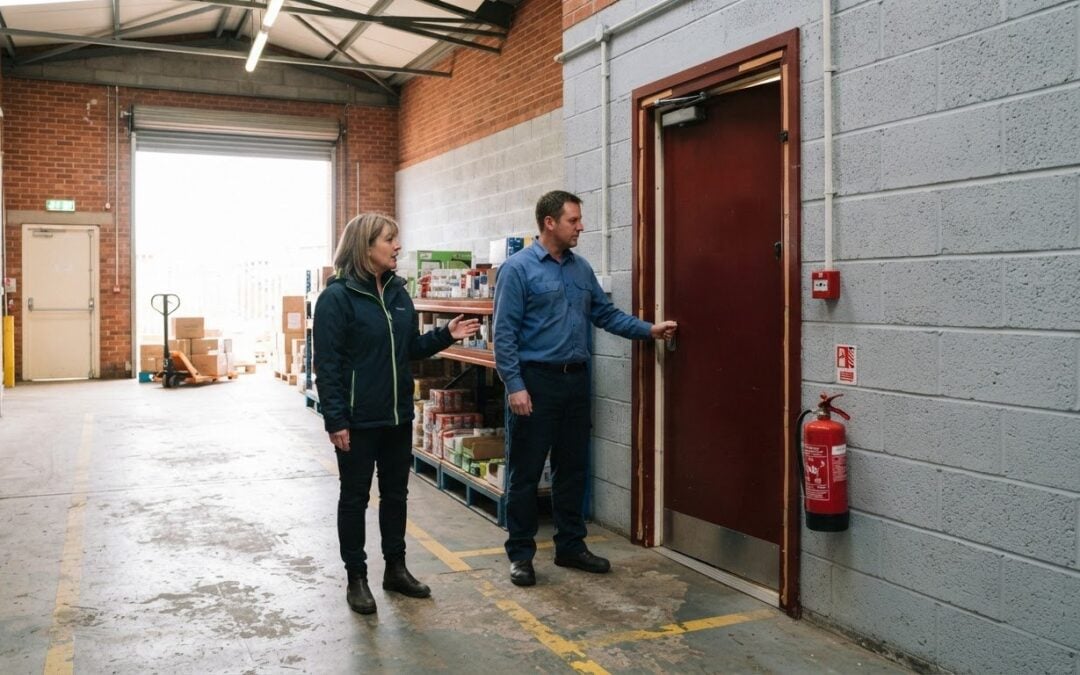
A satisfactory fire risk assessment doesn’t automatically mean an insurer will have the same confidence in your premises. For UK workplaces, the responsible person must carry out and regularly review an assessment under the Regulatory Reform (Fire Safety) Order 2005, the relevant workplace fire-safety law according to UK legislation. A fire risk assessment for commercial premises insurance should reflect the actual hazards and the building as it stands.
A fire risk assessment is primarily a safety requirement, but it can also be relevant when an insurer considers a property and its cover. This article explains what an assessment examines, who is responsible for arranging it, and how changes to a building can affect fire precautions and insurance conditions.
Risks and controls vary between an office, shop, warehouse and hospitality venue. Learn how an assessment considers hazards, people at risk, fire detection, escape routes and emergency planning, and why it needs reviewing when the premises, layout or use changes.
Key Takeaways
- Understand what a fire risk assessment examines and how its findings can shape fire precautions at your premises.
- Clarify who is responsible for the assessment and why keeping it up to date matters.
- See how the right guidance can vary between offices, shops, warehouses and other types of premises.
- Learn why changes to a building, its layout or its use can affect fire safety measures and insurance conditions.
What is a Fire Risk Assessment?
A fire risk assessment identifies hazards, people who may be affected and actions to reduce danger. When discussing commercial premises insurance, it can also help explain the building’s fire precautions and current use.
Presenting Commercial Property Risks
Fair presentation means giving insurers a clear, accurate account of a risk when arranging or renewing commercial property insurance. According to UK legislation, the Insurance Act 2015 requires a fair presentation of the risk at those points. A current assessment can help describe hazards, precautions and outstanding actions. Insurers consider this information when assessing the premises and setting policy terms, limits, exclusions and premiums.
Keeping a fire risk assessment for commercial premises insurance current helps ensure the information reflects the actual building, rather than an earlier layout or use. If a policy condition is unmet, a fire claim may be delayed, reduced or refused. An assessment does not guarantee a particular premium or claims outcome.
Assessing and Reducing Fire Risks
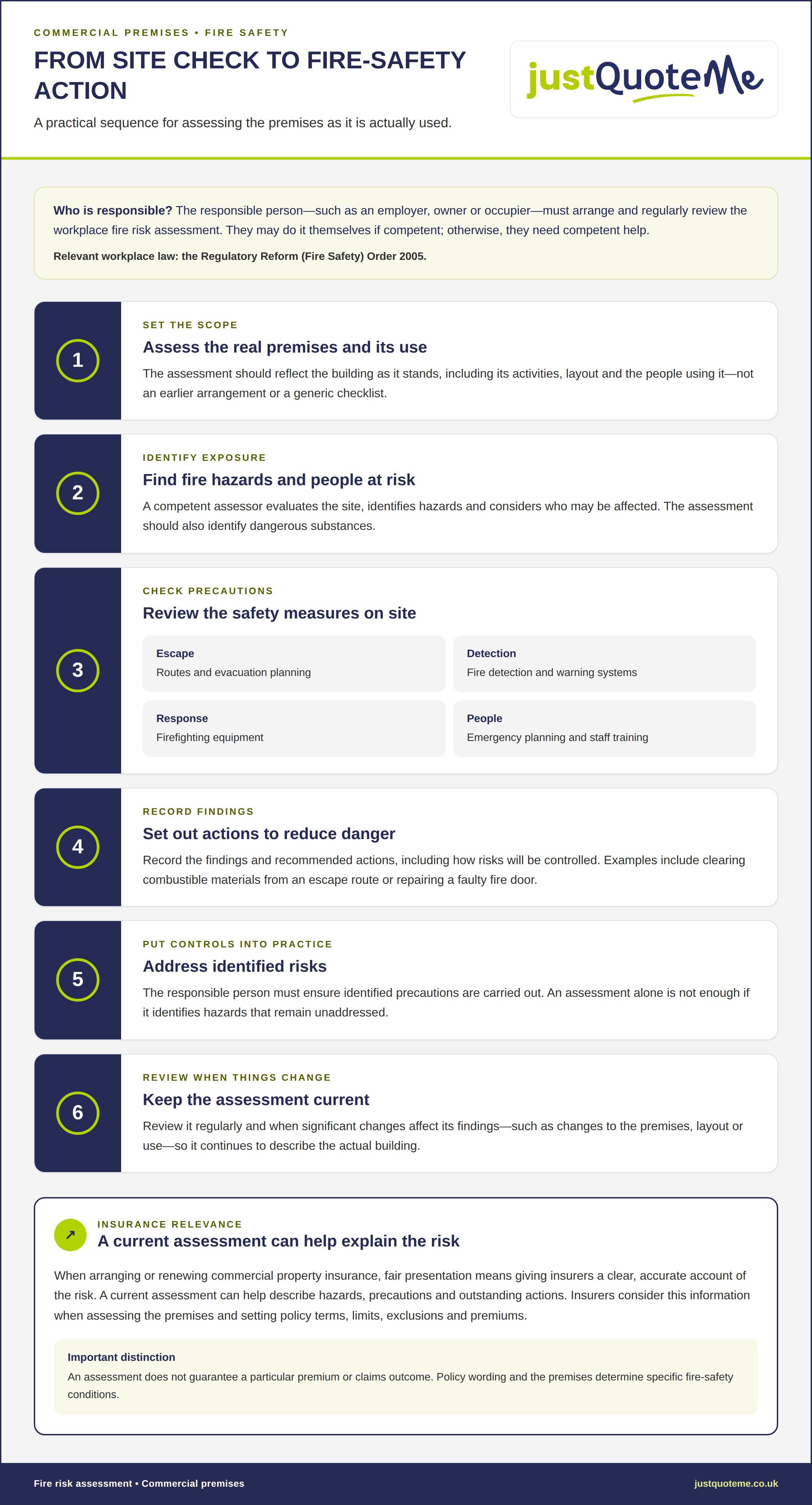
The responsible person must assess workplace fire risks and keep the assessment under review. The Regulatory Reform (Fire Safety) Order 2005 is the Fire Safety Order relevant to workplace fire safety in the United Kingdom, according to UK legislation. A responsible person may do the assessment if competent; if they lack the expertise or time, they need a competent person’s help.
A competent assessor evaluates the site, identifies hazards and people at risk, and records findings and recommended actions. These might include clearing combustible materials from an escape route or repairing a faulty fire door. Assessment costs depend on factors such as the premises’ size, complexity and scope.
Assessment Requirements and Safety Measures
A commercial assessment considers hazards, people at risk, escape routes, fire detection and warning systems, firefighting equipment, evacuation planning and staff training. It should also identify dangerous substances and explain how risks will be controlled.
Insurers commonly require compliance with relevant fire-safety conditions, which may include having a valid, up-to-date assessment. Requirements can cover maintained alarms, clear exits, suitable firefighting equipment and an evacuation plan. The policy wording and premises determine the specific conditions. A shop, warehouse or restaurant may have different hazards, so precautions should reflect its activities and layout.
Fire risk assessment legal duties
Fire-safety law places duties on the person responsible for a workplace, and requirements vary across the UK. Identifying who holds that responsibility helps align day-to-day safety management with legal duties.
Legal Requirements for Premises
A fire risk assessment is legally required for a building that is not a single private dwelling when someone is responsible for it, such as an employer, owner or occupier. This requirement applies to commercial premises, including workplaces used by staff or customers. In Scotland, fire safety legislation includes the Fire (Scotland) Act 2005, according to UK legislation.
In England, failure to follow fire-safety regulations can result in unlimited fines and up to 2 years in prison, according to UK legislation. An assessment alone is not enough if it identifies hazards that remain unaddressed. The responsible person must arrange suitable action and keep the assessment current when significant changes affect its findings.
Responsibility for Fire Risk Assessments
The responsible person must arrange and regularly review the assessment, then ensure identified precautions are put into practice. Depending on the premises, this may be an employer, owner or occupier. They can carry out the assessment themselves if they have sufficient knowledge and expertise; otherwise, they need competent help. Delegating the work does not remove their responsibility for meeting fire-safety duties.
Unresolved risks can bring enforcement action, disruption and costs for repairs or safer equipment. Commercial insurance does not replace legal compliance, and a claim can be affected if a policy condition has not been met. Legal expenses cover is separate: its wording defines which legal costs it covers, so don’t assume it pays fines or the cost of correcting hazards. To explore how commercial property insurance can fit your premises, review the cover relevant to your business.
Fire risk assessment guides for different premises
The right assessment guide depends on how a building is used, not just its label. An office, shop, warehouse, industrial site, furnished holiday let, house in multiple occupation or garden office can each present different fire hazards. The employer or other responsible person needs an assessment that reflects the actual activities, layout and people using the premises.
For assembly venues, capacity helps identify the relevant GOV.UK guide. Its small and medium places of assembly guide covers premises holding 300 people or less; its large places of assembly guide applies to premises holding more than 300 people. A venue’s use and occupant numbers therefore shape which guidance is relevant. A restaurant with a public dining area, for example, needs its assessment to consider how customers and staff would leave safely.
An assessment should account for a premises’ specific features. For a warehouse, consider storage arrangements and work areas; for a shop, customer access and escape routes. In a house in multiple occupation, sleeping residents and shared areas affect evacuation risks. The guide should help the assessor examine the building as it is used, rather than rely on a generic checklist.
Heritage buildings need particular care. The London Fire Brigade recommends appointing a specialist who understands fire safety in heritage premises, including museums, galleries and historic buildings. This helps account for building features that may shape suitable precautions. For a mixed-use property, identify each distinct activity and occupancy so the assessment records relevant hazards throughout the premises.
The Regulatory Reform (Fire Safety) Order 2005 is relevant to workplace fire safety in the United Kingdom, but the suitable assessment approach still depends on the premises. Choosing a guide by use and occupancy gives the responsible person a clearer basis for recording risks, setting actions and reviewing changes. That record can also help explain the property’s fire precautions when considering liability and insurance conditions.
What must a UK commercial fire risk assessment include?
A useful assessment links building hazards with the people who may be exposed and the precautions available. It should record findings and practical actions, not simply list equipment. A warehouse, restaurant and office need different assessments because their activities, layouts and fire hazards differ.
The assessment should consider these core areas:
- Fire hazards: identify ignition sources, combustible materials and any dangerous substances used or stored.
- People at risk: consider staff, visitors and anyone who may need help evacuating.
- Escape: assess emergency routes, exits and whether people can leave safely.
- Detection and warning: consider how a fire is detected and how occupants receive an alert.
- Firefighting equipment: assess whether suitable equipment is available and accessible.
- Emergency arrangements: record evacuation planning, information for occupants and staff training needs.
Dangerous substances need attention where workplace activities involve them. According to UK legislation, the Dangerous Substances and Explosive Atmospheres Regulations 2002 apply to dangerous substances in workplaces. The assessment should identify relevant substances and consider how their presence affects fire and explosion risks. For example, a work area storing flammable materials requires controls suited to that hazard.
Electrical equipment and installations also form part of the review. According to UK legislation, the Electricity at Work Regulations 1989 are relevant to electrical safety in the workplace. The assessment should consider electrical ignition risks, such as damaged equipment or unsafe arrangements, and identify suitable action. It should also assess vulnerable people, evacuation support and whether staff understand their roles.
Finish with a clear record of findings, assigned actions and review points. Separate hazards from ignition sources where practicable, then prioritise measures that reduce exposure or improve escape. To consider how property protection fits alongside these precautions, explore business insurance options.
Just Quote Me: Commercial Property Insurance
Just Quote Me can help you arrange Commercial Property Insurance for a business building and its contents. A fire assessment can clarify the premises’ use, construction, existing precautions and outstanding work, all relevant details when discussing the property risk and policy terms.
If building work is planned, Contractors all risks insurance may also be relevant. Public Liability Insurance and Employers Liability Insurance address different business risks; they do not replace property cover or fire-safety duties. The right combination depends on your business activities and the protection you need.
For help considering cover for your premises, contact Just Quote Me for a conversation.
Keep Your Cover Aligned With Your Premises
Use a fire risk assessment as part of an ongoing conversation about commercial premises insurance and how your business operates. As your plans develop, keep information about the premises up to date and relevant to its current use. This gives you a clearer basis for discussing cover and considering what protection suits your circumstances.
Just Quote Me can help you explore business insurance options. Get a free, no-obligation quote or request a callback.
Start with Just Quote Me: Get Your Free Business Insurance Quote now or Request a Call back for free Expert advice. Take the next step when you’re ready.
Frequently Asked Questions
How can a business check its fire warranty conditions and compliance deadlines?
Review the policy schedule, wording and endorsements for fire-related warranties, required precautions and dates. Make a simple record of each condition, the person responsible and its due date. For example, if the policy requires an alarm maintenance record, keep the service documentation with the insurance papers. If wording is unclear, ask your insurance contact to explain the condition before relying on an assumption.
So, What Should You Do?
Start by identifying who manages fire safety at the premises and where the current assessment and insurance documents are kept. Compare the recorded actions with completed work, then note any outstanding hazards or changes in use. Assign each action to a responsible person and record progress. If an alteration or new business activity changes the risk, arrange a review and discuss relevant policy conditions with your insurance contact.
What happens if my business fails the FRA?
An assessment is not usually a pass-or-fail test. It identifies risks and actions needed to improve safety. If it records a serious issue, such as an obstructed exit, the responsible person should arrange appropriate corrective action and document it. Unresolved risks can prompt enforcement action, and an insurer may question whether policy conditions were met after a fire. Keep clear records of actions and progress.
What is a fire risk assessment for commercial premises in the UK?
A fire risk assessment is a recorded evaluation of fire hazards, people who may be affected, and measures to prevent fire or enable safe evacuation. For example, an assessment of a shop might consider stock near electrical equipment, customer escape routes and staff response arrangements. It should produce practical findings and actions suited to the premises, rather than a generic form that overlooks how the business operates.
Is a fire risk assessment legally required for UK commercial premises?
Generally, a responsible person must arrange an assessment for premises that are not a single private dwelling. This includes commercial workplaces and other buildings where an employer, owner or occupier has responsibility. Fire-safety requirements differ across the UK, so identify where the premises are located and who is responsible for safety. The assessment must lead to action on risks, not simply be stored as paperwork.
Who is responsible for arranging a commercial premises fire risk assessment?
The responsible person arranges the assessment. Depending on the premises, that may be an employer, owner or occupier, and more than one party can have responsibilities. They may complete it themselves if competent; otherwise, they should appoint a competent person to assist. For a leased shop, clarify how fire-safety duties are divided between landlord and tenant, then record responsibilities and completed actions clearly.
