
Building regulations compliance and insurance serve different purposes: compliance is a legal requirement, while insurance protects against specified risks under a policy. In the UK, most major building alterations or changes to a property’s use require confirmation that building regulations have been met. Missing approval can cause complications if the work is questioned or an insurance claim arises.
It’s reasonable to expect your buildings insurance to reflect your property’s condition and history. Insurers assess building risks, and evidence of compliant work can help explain how alterations were completed. If work falls short of regulations, enforcement action may follow. The effect on insurance depends on the policy and circumstances.
This article explains what building regulations cover, including structural safety, fire protection and energy efficiency. It also covers how enforcement can affect insurance, what missing approval may mean, and how building regulations indemnity insurance differs from cover for a property’s physical condition. You’ll get a clearer picture of which records matter and when an insurance discussion may help.
Key Takeaways
- Understand why building control approval and insurance serve different purposes, and how each relates to your property.
- See how structural safety, fire protection and energy efficiency shape building standards.
- Learn how enforcement action over building work can affect a property and its insurance cover.
- Find out what missing approval may mean, and why indemnity insurance is not proof that past work is safe or compliant.
What is regulatory compliance when it comes to insurance?
Building regulations compliance and insurance address different risks: regulations govern building work, while a policy responds to the risks it covers. Compliance records can help explain how alterations were designed, completed and inspected.
Legal and Local Authority Requirements
Building regulations set legal standards for relevant construction work. Local authorities or approved inspectors review plans and carry out site visits. This matters because major alterations or changes to a property’s use generally require confirmation that the rules have been met. Building control can provide guidance and approve plans before construction begins. Insurers also need appropriate licences to operate, a separate requirement from compliance by a property owner or builder.
Responsibility for Compliance
Responsibility can involve the homeowner, builder and designer, but appointing a contractor does not remove the need to ensure the work meets applicable requirements. The builder carries out construction, while design professionals may prepare plans or engineering details. Clear roles, agreed measures and records help show who handled each part. UK Parliament says the Defective Premises Act 1972 limitation period was extended from six years to 30 years retrospectively and 15 years prospectively.
Approval Processes and Costs
Approval generally involves submitting plans to the relevant building control body, arranging inspections and keeping evidence of completion. Processes and forms differ across England, Wales, Scotland and Northern Ireland, so start with the building control authority responsible for the property. An approved inspector may also review plans and inspect work where applicable. Application and inspection costs depend on the work and the relevant fee schedule. There is no single UK-wide fee: the authority’s schedule and project details determine the charge. Mortgage conditions may also specify evidence requirements, making approval documents relevant when arranging or changing finance.
Risks of Non-Compliant Builders
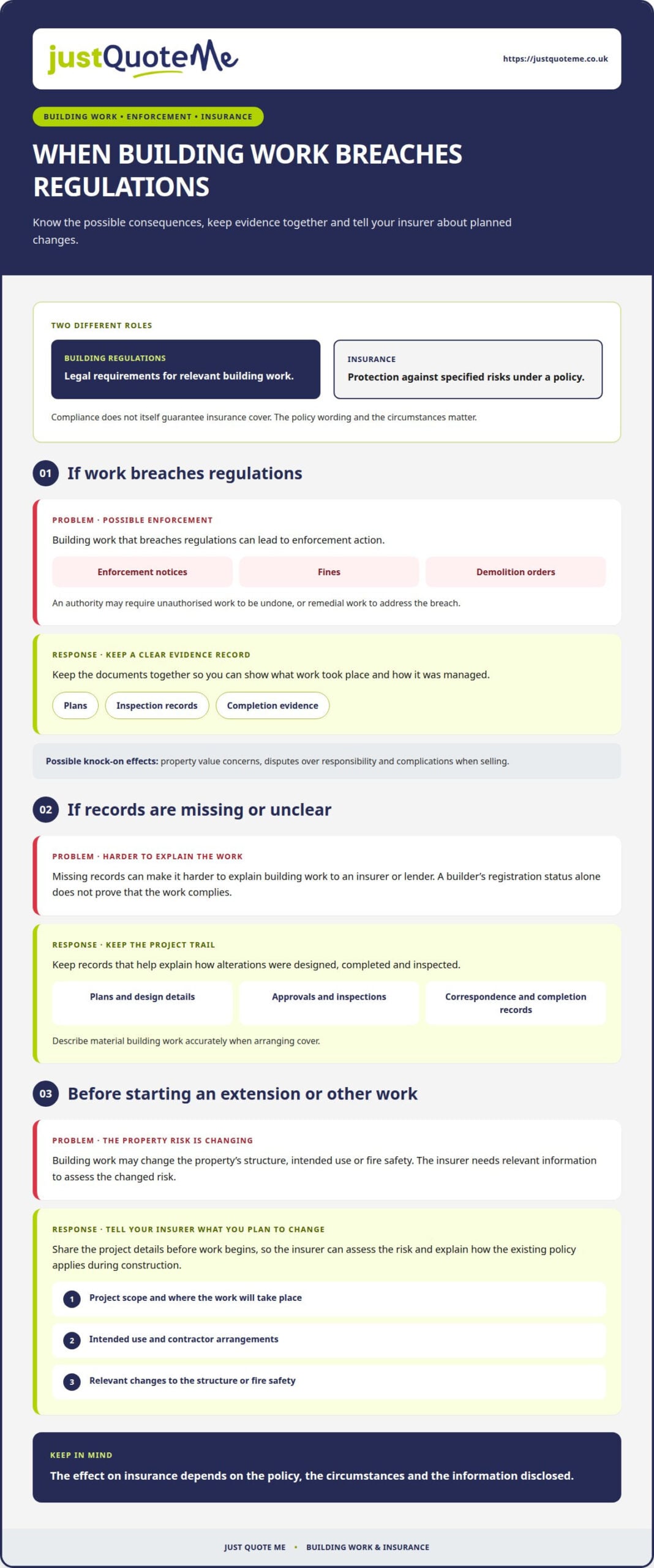
A builder’s registration status alone does not prove that work complies. The construction itself and its inspection evidence matter. For homeowners seeking examples of how major additions and custom builds are coordinated, established renovation firms like vancouvergeneralcontractors.com emphasize thorough project management and adherence to building standards from start to finish. If work fails to meet regulations, enforcement action can affect the property, while missing records can make it harder to explain the work to an insurer or lender. Insurance consequences depend on policy terms and the information disclosed. Keep plans, approvals, inspection records and correspondence together, and describe material building work accurately when arranging cover.
Structural safety, fire safety and energy efficiency
UK building regulations set minimum standards for building design, construction and maintenance. They cover structural integrity, fire safety, energy efficiency and accessibility, as well as areas such as ventilation and drainage. These standards affect how a building performs and the safety measures owners and responsible parties need to implement.
Higher-risk buildings have additional oversight. According to UK Parliament, in England, an in-occupation higher-risk building has at least two residential units and is 18 metres or higher or 7 storeys or more. The Building Safety Act 2022 established a stronger framework for building safety. The Building Safety Regulator registers high-rise residential buildings, with registration handled by the principal accountable person.
For applicable higher-risk building work, gateway controls make safety information and design decisions part of project oversight. Organising documentation around these checkpoints helps show how structural and fire safety risks are considered as work progresses. Once the building is occupied, accountable persons must maintain relevant information about the building’s structure and fire safety, along with a live, maintained and reviewable safety case report process.
Fire safety duties also vary by building type. The Fire Safety (England) Regulations 2022 set additional duties for multi-occupied residential buildings, including extra requirements for high-rise buildings, according to UK Parliament. Relevant measures include keeping safety information current and sharing building plans with fire and rescue services where required. These duties sit alongside wider building standards, rather than replacing them.
Insurers assessing a property may consider its construction, safety controls, inspection evidence and outstanding defects. Clear records can help explain the building’s risk profile, while unresolved issues may affect underwriting decisions or policy terms. Building safety compliance does not itself guarantee insurance cover; the policy wording and disclosed circumstances remain important. For property owners considering insurance considerations for their building, accurate information about its use, condition and safety measures helps frame the discussion.
Potential enforcement actions and insurance coverage
Building work that breaches regulations can lead to enforcement notices, fines or demolition orders. An authority may require unauthorised work to be undone or remedial work to address the breach. This can affect property value, lead to disputes over responsibility and complicate a later sale. Keep plans, inspection records and completion evidence together to document what work took place and how it was managed.
Before starting an extension or other building work, tell your insurer what you plan to change, where the work will take place and how it may affect the property. This also applies to energy efficiency projects, where guidance from specialists like MarGav Solar can help homeowners navigate planning permission and building standards. Include the project scope, intended use, contractor arrangements and relevant changes to the structure or fire safety. Clear disclosure helps the insurer assess the changed risk and explain how the existing policy applies during construction.
Cover should reflect the project’s complexity. Work affecting a load-bearing wall, building structure or fire precautions raises different considerations from a straightforward alteration. Insurers may consider the work’s scale, construction methods, property use, safety controls and available evidence. For commercial insurance, the duty of fair presentation requires material circumstances to be disclosed clearly. Incomplete details can complicate decisions about a claim or policy dispute.
Building regulations indemnity insurance addresses a different exposure from standard buildings insurance. Cover under this type of policy can include loss of market value, damages and expenses arising from compliance with an enforcement notice or proceedings brought by the appropriate authority. The policy wording determines the precise protection. It does not certify that historic work is safe or meets a reasonable standard, and it does not replace physical repairs.
For example, if an authority pursues a notice concerning an unauthorised alteration, an indemnity policy may respond to covered financial consequences. It does not automatically pay for every improvement or defect, and it cannot make non-compliant work compliant. Before relying on this cover, distinguish the risk of enforcement over missing approval from damage to the building itself. The project details, disclosure and policy terms determine how each exposure is treated.
Missing building regulations approval or certification
A missing completion certificate can become an issue during a property sale, an insurance discussion or a later building project. In the UK, purchasers and conveyancing solicitors typically request evidence that relevant work complied with building regulations. A completion certificate can provide evidence that building work has met applicable requirements. Without one, plans, approval documents, inspection records and correspondence can help explain what happened, but they do not automatically replace formal certification.
Home insurance does not automatically cover building work that breaches regulations. A standard home policy and building regulations indemnity insurance address different risks: the first responds to insured property events under its wording, while the second can cover specified consequences of enforcement over missing approval. Neither type of cover proves past work is safe or meets building standards. Tell your insurer about relevant alterations and provide accurate details when arranging or updating cover.
If paperwork is missing, identify the work involved and gather project records, such as plans, approvals, inspection reports and correspondence. These details can help clarify whether documents have been lost or the work never received approval. Retrospective permissions or further documentation may be relevant, but building regulations indemnity insurance can avoid the need to apply for them in appropriate cases. The policy is not a technical assessment and does not remedy a defect.
Consider the timing before taking action. A previous general understanding was that councils could not enforce against building work more than twelve months old, but councils can now take enforcement action over building work at any time. Contacting a council independently about an approval issue can prevent an indemnity policy from being obtained or make it ineffective. Get advice on the implications before making contact, especially during a property transaction.
Keep the evidence together for conveyancing, underwriting and future maintenance. A clear record of the work, its completion date and any inspection outcomes can help explain the property’s history and mitigate avoidable disputes. If missing approval affects your property cover, discuss suitable insurance options based on the building’s use and the work involved.
Just Quote Me
Just Quote Me can help you consider how building work, property use and existing cover relate to your wider insurance needs. This can be useful when planning construction, managing a rental property or reviewing cover after an alteration. The right policy depends on the risks involved: buildings insurance and liability cover address different exposures.
For example, a landlord may need to consider Landlord Insurance, while a business engaging with the public may need Public Liability Insurance. Just Quote Me can discuss relevant options and provide tailored insurance advice. Insurance does not replace building control approval or prove that completed work meets regulations, so keep these issues distinct when reviewing your protection.
Contact Just Quote Me to discuss your insurance needs.
Make your next property decision with confidence
A sound approach to building regulations compliance and insurance treats property records and policy decisions as connected but distinct parts of property management. When planning work, renewing cover or reviewing a property’s use, bring the relevant details together before deciding what protection you need.
Just Quote Me can help you consider insurance options suited to your circumstances, including Public Liability Insurance, Employers Liability Insurance and Professional Indemnity Insurance. These policies address different liability exposures, so a useful discussion starts with your activities and responsibilities. Insurance advice does not replace building approval or technical safety assessments.
For a practical next step, Get Your Free Business Insurance Quote now, or Request a Call back for free Expert advice. Choose the option that best suits how you’d like to discuss your needs.
Frequently Asked Questions
How do insurance companies ensure compliance?
Insurers manage their own regulatory obligations and assess information about the risks they insure. For a property, they may consider its use, construction, safety measures and the applicant’s description of alterations. Clear disclosure helps them assess the risk and set policy terms. Insurers do not certify building work or replace building control inspections: those processes serve separate purposes.
In what circumstances is cover required?
Insurance may be required by a contract, mortgage terms or the responsibilities attached to a particular activity. For example, a property lender may make buildings cover a condition of borrowing, while a business may arrange liability cover for risks connected with its operations. Building regulations approval and insurance are separate: having a policy does not satisfy approval requirements or prove that work complies.
The Building Safety Act 2022: What about the insurance implications?
The Building Safety Act adds safety-management responsibilities that can affect how a higher-risk building is assessed for insurance. In England, UK Parliament defines an in-occupation higher-risk building as having at least two residential units and being 18 metres or higher or 7 storeys or more. Current safety records, defect information and remedial-work evidence can help explain the building’s risk profile during underwriting.
What are the consequences of non-compliance?
Non-compliant building work can lead to enforcement notices, fines or demolition orders, depending on the circumstances. An authority may require work to be reversed or remedied, creating costs and possible disputes about responsibility. Insurance outcomes depend on the policy wording and information provided. A missing approval document alone does not establish whether a claim will be accepted or rejected.
What is building code compliance?
Building code compliance means relevant design and construction work meets the building standards that apply to it. In the UK, those standards address structural integrity, fire safety, energy efficiency and accessibility. Compliance is demonstrated through the applicable approval and inspection process, with records showing how the work was designed, carried out and assessed.
What are UK building regulations and which building work requires approval?
UK building regulations set standards for building design, construction and maintenance. Most major alterations or changes to a property’s use require confirmation that the relevant requirements have been met. A project involving a structural change or conversion may therefore need building control involvement. The applicable process depends on the property’s location and the nature of the proposed work.
