
A start-up doesn’t need a large fleet to consider one policy: UK fleet insurance may be available for businesses with two or more vehicles, although minimum requirements vary between insurers. Motor Fleet Insurance cover for start-ups and new businesses can bring multiple business vehicles under one arrangement instead of requiring a separate policy for each.
It’s understandable to want cover for your vehicles without paying for protection your business doesn’t need. Fleet insurance can be arranged at different levels, from third-party-only to comprehensive. The right choice depends on the protection your vehicles and business need.
This guide explains what fleet insurance covers, how vehicle numbers can affect eligibility, and which optional extras may suit a growing business. It also sets out practical points to consider when choosing cover, helping you make an informed decision as your business gets moving.
Key Takeaways
- Fleet insurance can bring multiple business vehicles under one policy, and UK businesses may be eligible from two vehicles.
- Choose between third-party-only, third-party, fire and theft, and comprehensive cover based on the protection your vehicles need.
- Consider extras such as breakdown cover or legal expenses in light of how your business vehicles are used.
- Match cover to your start-up’s vehicles, drivers and day-to-day work, then explore fleet insurance support from Just Quote Me.
How many vehicles count as a fleet?
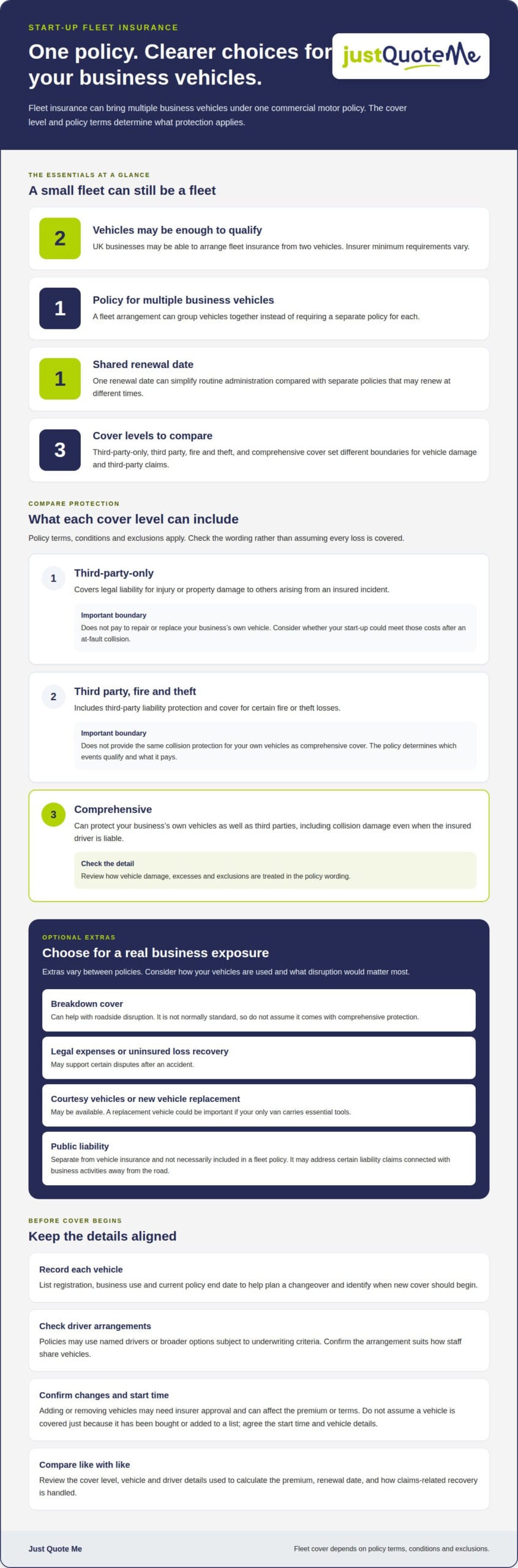
UK businesses may be able to arrange fleet insurance from two vehicles, although insurer minimums vary. A delivery van and a company car, for example, may meet this starting point. One fleet policy can cover both vehicles under a single insurance arrangement, with one renewal date to simplify routine administration. The policy terms still define which vehicles and business uses are covered.
Moving from individual vehicle policies can make renewals and records easier to manage. Separate policies may have different renewal dates and documents. A fleet policy groups vehicles under one arrangement, so you can manage their details together. Before switching, list each vehicle’s registration, business use and current policy end date. This helps you plan the changeover and identify when the new cover should begin.
Driver arrangements vary between fleet policies. Some use named drivers, while others offer broader options subject to underwriting criteria. If staff share a van, check that the permitted driver arrangement suits how your start-up operates. When vehicles are added or removed during the policy period, some policies allow changes subject to insurer approval and possible adjustments to the premium or terms. Keep vehicle and driver records aligned with the agreed policy details.
The cover level affects what happens after an incident. Third-party liability can respond to injury or property damage caused to others by an insured vehicle, subject to policy terms. Third Party Only does not cover damage to your business’s own vehicle. Third Party, Fire and Theft can include protection for certain fire or theft losses, while comprehensive cover can protect your vehicles as well as third parties. Conditions and exclusions apply, so consider how the selected level could affect repair expenses.
“Declaration basis” describes an arrangement in which the business declares vehicle details through the process set out in its policy. The documents explain what information is required and when to provide it. Don’t assume a vehicle is covered immediately just because you have bought it or added it to a list. The start time and vehicle details must be agreed for cover to apply. Confirm these terms before putting another vehicle to work.
What is New Fleet Insurance?
New fleet insurance brings business vehicles under one commercial motor policy. Its three cover levels set different boundaries for vehicle damage and third-party claims.
Third-Party-Only Cover
Third-party-only cover protects against legal liability for injury or property damage to others arising from an insured incident. It is the basic level required by law for vehicles on UK roads, but it doesn’t pay to repair or replace your business’s own vehicle. If you choose this level, consider whether your start-up could meet repair or replacement expenses itself after an at-fault collision.
Comprehensive Cover
Comprehensive fleet cover can protect your business’s own vehicles as well as third parties, subject to policy terms, conditions and exclusions. It can cover collision damage even when the insured driver is liable. Check how the policy wording treats vehicle damage, excesses and exclusions rather than assuming every loss is covered. A damaged delivery van, for example, could bring repair costs and disruption to your operations.
Between these levels, Third Party, Fire and Theft includes third-party liability protection and cover for certain fire and theft losses. It doesn’t provide the same collision protection for your own vehicles as comprehensive cover. If your start-up’s van is parked overnight, weigh fire and theft exposure against its value and role in daily operations. The policy terms determine which events qualify and what it pays.
When reviewing quotes, compare the cover level and the vehicle and driver details used to calculate the premium. Claims history, drivers, vehicles and vehicle use can affect the premium. Also check the policy’s renewal date and how claims-related recovery is handled. Breakdown cover isn’t normally standard, so don’t assume roadside assistance follows from choosing comprehensive protection. Explore fleet insurance options suited to your business vehicles and operations.
Optional policy extras
Choose extras to address a real business exposure, not just because an option appears on a quote. Breakdown cover can help with roadside disruption, while legal expenses or uninsured loss recovery can support certain disputes after an accident. Courtesy vehicles and new vehicle replacement cover may also be available. If your only van carries essential tools, for example, a replacement vehicle could matter more to your operations than overseas driving cover.
Public liability insurance is separate from vehicle insurance and isn’t necessarily included in a fleet policy. It may be available as additional cover, protecting against certain liability claims connected with business activities away from the road. A delivery company, for example, could consider whether an incident at a customer’s premises creates a different exposure from a collision. Public liability cover addresses that separate risk.
Some fleet policies include benefits such as legal protection, medical expenses, courtesy vehicles, misfuelling cover, replacement locks, theft of in-vehicle safety technology, preferential repair costs or driving abroad. These features aren’t universal. Read the policy wording for conditions, limits and exclusions. For example, theft may be excluded if a van is left unlocked. Wear and tear, an invalid licence, an uninsured named driver or driving under the influence can also affect cover.
One fleet policy can simplify administration with a shared renewal date, but vehicle changes still need careful handling. Record each registration, business use and driver change, then follow the policy’s process for updates. Some policies allow vehicles to be added or removed during the period, subject to insurer approval and possible changes to the premium or terms. Goods in transit is separate from vehicle insurance, so consider this exposure separately if your business carries stock, tools or equipment. Choose extras according to daily operations, likely disruption and the financial impact of an uncovered claim.
Fleet cover for start-ups and new businesses
Motor Fleet Insurance cover for start-ups and new businesses should reflect the vehicles, drivers and commercial activity involved. Insurers assess these details alongside the business’s claims history and operating arrangements.
Insurers and Brokers for New Businesses
UK insurers and brokers arrange fleet insurance for new businesses, with eligibility and terms based on underwriting criteria. Many insurers may offer cover from two vehicles, although minimum requirements vary. A start-up with a van and a company car could seek quotes for both under one arrangement. Compare eligible vehicle types, driver requirements and business uses, not just the premium, to see whether the policy fits your planned work.
Comparing Policy Options
Give each insurer or broker consistent details to make quotes easier to compare. Include vehicle types, how they’ll be used, who will drive them and the work they support. Then review cover levels, driver arrangements, exclusions and claims conditions. A trades business carrying equipment in vans has different needs from a consultancy using cars for client visits or a luxury passenger service like Red Carpet Limousine LLC. Describe your actual operations accurately, including where vehicles travel and what they carry.
The premium depends on factors such as claims history, drivers, vehicles and vehicle use. Compare how each policy responds to an accident, including its cover for vehicle damage and third-party liability. Note differences in renewal dates and claims processes too. A lower premium may come with terms that suit your business less well, so weigh the protection against exclusions and practical conditions.
Cover Without a Claims History
A start-up can apply for fleet insurance without an established business claims record. Claims history is one factor in premium calculations, alongside drivers, vehicles and their use. Underwriting criteria also shape the offer. Give an accurate account of your business, driving activity and vehicle details so the assessment reflects how you actually operate.
Motor Fleet Insurance cover for start-ups and new businesses should fit the firm’s investment in its vehicles and the disruption an uncovered claim could cause. Get help comparing fleet cover for your start-up.
Just Quote Me: Motor Trade Insurance
Just Quote Me can help start-ups consider Fleet Insurance suited to their vehicles, drivers and business use. If your business sells, maintains, repairs or restores vehicles, Motor Trade Insurance may be relevant. Other businesses should focus on cover for their business vehicle fleet. Public Liability Insurance and Employers Liability Insurance address separate business risks and don’t replace motor cover.
Gather details of your vehicles, how they’re used and who drives them. This gives you a clear starting point for discussing policy options and the cover your business needs. To talk through your requirements, request a callback from Just Quote Me.
Build your cover around the next stage of growth
As your start-up develops, its insurance needs can change alongside its work, staffing and vehicle use. Treat Motor Fleet Insurance cover for a start-up or new business as part of an ongoing review of how the business operates, not a one-off administrative task. A new contract, a change in drivers or different work at customer premises can prompt a fresh look at your protection.
Just Quote Me also offers Public Liability Insurance, Employers Liability Insurance and Professional Indemnity Insurance. These address business exposures that differ from motor risks, so considering them alongside fleet cover can support a joined-up approach to insurance. Discuss the work your business does and the protection you want in place.
Take the next step with Just Quote Me: Get Your Free Business Insurance Quote now or Request a Call back for free Expert advice. Move forward with a clearer plan for your growing business.
Frequently Asked Questions
What Types of Vehicles Can Be Included?
Fleet policies may include light goods vehicles (LGVs) up to 3.5 tonnes. Cars, vans and other business vehicles can be considered, with acceptance depending on the insurer’s terms. Commercial vehicle operators, such as towing and transport providers like Done Wright Towing & Transport, demonstrate how specialized functions and carrying capacities must be factored into coverage. Tell the insurer how each vehicle is used, such as carrying tools or transporting goods, because the business activity and vehicle type both inform the assessment.
What other cover should I consider?
Consider risks that vehicle insurance doesn’t address. Goods in transit insurance is separate and may suit businesses transporting stock, tools or equipment. Public Liability Insurance can address risks involving third parties away from the road, while Employers Liability Insurance and Professional Indemnity Insurance cover other business exposures. The right combination depends on your work, staff and responsibilities.
What qualifies as a fleet?
A business may qualify for fleet insurance with two or more vehicles, though insurers set their own minimums. The definition can apply to a small operation as well as a much larger vehicle group. For example, some policies are designed for fleets with fewer than 10 vehicles, while other arrangements can cater for fleets numbering in the hundreds or thousands.
What is motor fleet insurance and how many vehicles qualify as a fleet in the UK?
Motor fleet insurance is commercial motor cover that brings two or more business vehicles under one policy. The minimum number varies by insurer, so a new business with two vehicles may be eligible, but requirements differ. This arrangement is for business vehicles, and insurers assess the vehicles and their use when considering an application.
What vehicles and business uses can a UK motor fleet policy cover?
Policies may cover business vehicles such as cars, vans and LGVs up to 3.5 tonnes. The business use must fit the insurer’s terms, so describe activities such as deliveries, carrying equipment or travelling between work locations accurately. Driver eligibility can also matter: some policies use minimum ages such as 21+, 25+ or 30+, alongside licence criteria.
How are drivers covered on a fleet policy, including young, newly qualified, or temporary drivers?
Driver cover depends on the policy: it may use named drivers or broader any-driver options, subject to underwriting criteria. Insurers may set minimum ages, such as 21, 25 or 30, and require drivers to have held a full licence for a certain period. Check that young, newly qualified or temporary drivers meet the policy terms before they drive.
