

A tenant leaving suddenly doesn’t automatically mean landlord insurance will cover the resulting loss. Whether landlord insurance covers tenant abandonment depends on the policy: rent loss and damage aren’t automatic, and a property empty for 30 days or more may be treated as unoccupied, with cover restricted.
It’s understandable to expect your policy to protect you when a tenancy goes wrong. But a tenant’s absence, the tenancy’s legal status and the property’s insurance status are separate issues, and each can affect what happens next.
This guide explains what tenant abandonment means, how to assess whether a tenant has really left, and what an abandonment notice can and can’t do. It also outlines where insurance cover may be limited, so you can understand the practical and legal issues before taking action.
Key Takeaways
- A tenant’s absence alone doesn’t prove they’ve abandoned the property or ended the tenancy. Look for evidence and keep a record of reasonable attempts to contact them.
- An abandonment notice isn’t, by itself, proof that you can take back possession. Understand the legal limits before changing locks, removing belongings or re-letting.
- Insurance may restrict cover when a property is unoccupied, and rent loss or damage isn’t automatically covered. The policy wording and circumstances of the claim matter.
- Tell your insurer about suspected abandonment and keep records of your actions. This can help you understand how the policy applies while you address the tenancy and property.
What is an abandonment notice?
An abandonment notice is a written warning about a landlord’s belief that a tenant has left and may have stopped using the property. It can record the landlord’s concerns and invite the tenant to respond. In England, however, a notice alone doesn’t end a tenancy or grant possession. A letting agent’s letter saying “vacate in 14 days” isn’t a possession order.
The Housing and Planning Act 2016 proposed a specific abandonment procedure for England, but that route was never brought into force and was made void by the Renters’ Rights Act. Its proposed steps are background, not a current shortcut to possession. They included warning notices and attempts to contact the tenant. The second notice would have been served at least two weeks and no more than four weeks after the first. For a monthly-rent tenancy, it required at least two months’ rent arrears. The proposed process also allowed a response deadline after eight weeks from the warning notice, with a tenant able to apply to the county court within six months of service.
Make the purpose of any notice clear. Include the property address, the date, why you suspect abandonment, how the tenant can respond, and what action you are considering. Keep a copy and evidence of delivery. Check the dates and any reply against your records before taking another step. If the tenant contacts you, record what they say and avoid assuming they have given up the property. A notice of intention to take possession is not legal authority to repossess.
Wales has a separate procedure: Welsh Government describes a warning notice and reasonable enquiries over a four-week period. Don’t apply that process to an English tenancy. Across the UK, the correct route depends on the tenancy and the relevant nation’s rules. The National Archives (legislation.gov.uk) states that unlawful eviction is an offence under the Protection from Eviction Act 1977, with possible prosecution, a fine, imprisonment, or both. If the tenant’s status remains uncertain, seek a possession order through the proper process rather than relying on an abandonment notice.
Confirming whether a tenant has abandoned a property
Start with evidence, not an assumption. There’s no fixed period after which a UK rental automatically counts as abandoned. Visit the property, note whether belongings remain, and record the date and condition. Ask neighbours whether they’ve seen the tenant, then keep a log of calls, messages and letters. In Sheffield, these checks help distinguish a permanent move from a temporary absence, such as hospital treatment or imprisonment.
Look for several signs together: rooms cleared, post accumulating, utilities apparently unused, or the tenant telling a letting agent they’ve moved elsewhere. None proves abandonment alone. A tenant may have another tenancy but still retain rights in the original home. A recorded-delivery letter asking for their intentions should allow 14 days for a response. Keep delivery records and any reply with your notes.
In England and Wales, a tenant’s absence doesn’t itself end the tenancy or remove their occupancy rights. Until the tenancy ends lawfully, the tenant retains those rights and the landlord must follow the correct possession process. Landlord insurance covers property risks; rent guarantee insurance addresses lost rent, while legal expenses cover can help with covered legal costs.
Entering requires care. Don’t use suspected abandonment as permission to change locks or remove belongings. Entry can be justified to secure a vulnerable property, address danger to neighbours, or complete urgent repairs. Record why entry was necessary, what you did, and the condition found. The Torts (Interference with Goods) Act 1977 also means tenants should have a reasonable opportunity to collect belongings; a notice commonly allows 14 to 28 days.
Tell your insurer when the property becomes unoccupied and ask how that affects cover. Policies can restrict protection after 30, 60 or 90 days without occupancy. This matters if damage occurs during a void period or rent remains unpaid. Keep the insurer updated, retain photos and contact records, and follow the policy’s requirements while addressing possession and the tenant’s belongings.
What is tenant abandonment?
Tenant abandonment is a suspected departure, not proof that a tenancy has ended. Build a dated record of several consistent signs, such as cleared rooms, returned keys, unpaid rent and unanswered written contact. A single missed payment or an empty-looking home may have another explanation, so consider the wider evidence.
To help show that a tenant has abandoned a rented property, keep copies of letters, delivery records, call logs and messages. Record each visit in dated notes and photographs. Neighbours’ observations may add context, but don’t treat them as proof on their own. A tenant’s written confirmation that they intend to surrender the tenancy is stronger evidence of their intention.
Before making an insurance claim, organise the evidence into a clear timeline. Include the tenancy agreement, rent account, inspection records, photographs of damage, repair invoices and records of contact with the tenant. Describe what you found at the abandoned property without presenting assumptions as facts. Tell the insurer promptly and keep a copy of each update and claim document.
Evidence of suspected abandonment doesn’t itself grant possession. The tenancy generally continues until it ends through a valid route, such as surrender, notice or a court order. If the tenant’s intention remains unclear, formal possession proceedings may be needed before you take control or re-let. Keep records of the legal steps with your claim documents. An insurer may reject a claim if locks were changed without proper authority, so document the basis for any action.
Belongings left behind need separate care. The Torts (Interference with Goods) Act 1977 concerns how landlords handle tenants’ goods; keep an inventory, store valuable items safely and retain notices asking the tenant to collect them. If goods are later sold, record the sale and costs, and keep any remaining proceeds for the tenant. These records help explain what happened to the property and its contents during the claim.
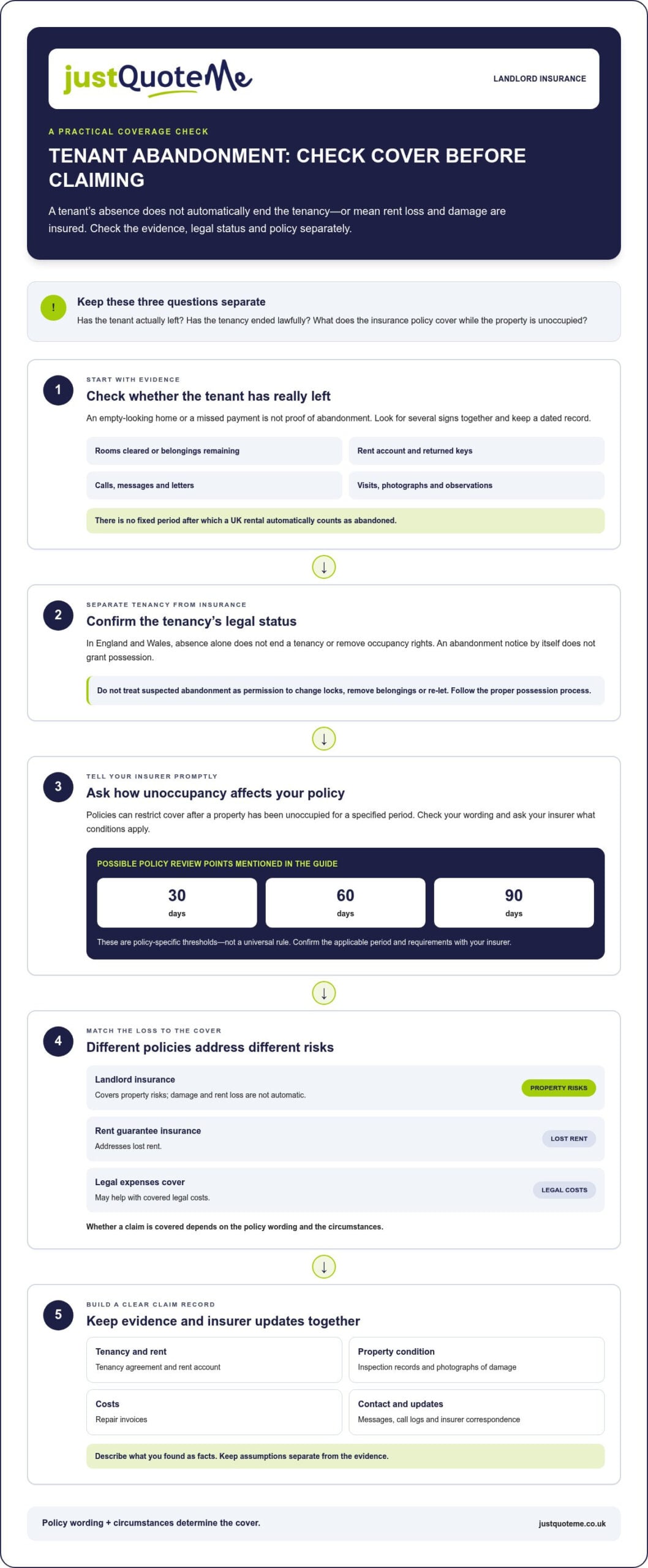
Landlord insurance limits during tenant abandonment
Does UK landlord insurance cover a tenant abandoning the property? Abandonment, rent arrears and losses during a void aren’t automatically covered. Policies vary on lost rent, malicious damage, legal costs for possession proceedings, and property clearance or cleaning. Check the wording for each benefit, its exclusions and any conditions that apply when a home is unoccupied.
Unoccupied periods are a key limit. Most insurers set a limit of 30 days without occupancy before cover is restricted or the premium is revised upwards. Standard policies may also restrict cover after 30, 60 or 90 days, depending on their terms. Tell your insurer when the property becomes empty, and record when the tenant left and when you reported the change.
Separate protection can address different losses. Legal and rent guarantee insurance can cover lost rental income for up to 15 months. That doesn’t mean every landlord policy includes rent guarantee, or that every abandonment-related loss qualifies. Check whether the wording addresses rent arrears, damage, legal expenses and clearance separately, then keep rent records, photographs, invoices and insurer correspondence together.
Rules for ending a tenancy also differ across the UK. Scotland’s Private Residential Tenancy process requires notice and enquiries before possession is recovered. In Northern Ireland, landlords should take care to establish that the tenancy has ended before changing locks or re-letting. The process uses a notice to quit and, if needed, a court order.
Taking possession unlawfully can create a separate problem, even if you believe the tenant has abandoned the property. A lock change without proper authority can also put an insurance claim at risk. Follow the legal process, preserve evidence and keep the insurer informed before disposing of belongings or arranging work. For cover suited to a rental property, explore residential letting insurance.
Just Quote Me: Public Liability Insurance
Just Quote Me arranges Landlord Insurance to help landlords consider the risks discussed here. Tenant abandonment can raise questions about lost rent, damage and an unoccupied property, so understanding how policy terms apply is an important part of choosing suitable cover.
Public Liability Insurance serves a different purpose and isn’t a substitute for landlord cover. The relevant option depends on the risks you need to insure and your property’s circumstances. Just Quote Me is an independent insurance broker offering tailored insurance solutions and advice to help you consider your requirements.
For guidance on Landlord Insurance or other relevant cover, contact Just Quote Me.
Make your next insurance review count
Treat suspected abandonment as a prompt to review whether your insurance still fits your property and responsibilities. If you’re considering whether landlord insurance covers tenant abandonment, focus on the risks you need to protect and the policy terms that apply to your situation.
Just Quote Me offers Public Liability Insurance, Employers Liability Insurance and Professional Indemnity Insurance. These covers address different responsibilities, so consider which are relevant to your business alongside your property insurance needs.
Choose the next step that suits you: get a free, no-obligation Business Insurance quote or request a free callback for expert advice. A conversation can help you decide what to consider next.
Frequently Asked Questions
What About the Tenant’s Belongings?
Keep an inventory and give the tenant a clear chance to collect their belongings before disposal. Under the Torts (Interference with Goods) Act 1977, landlords must handle goods left behind appropriately. If the tenant can’t be traced after notice, Section 12(1)(c) allows disposal; a sale requires at least three months between notice and sale. Keep any proceeds for the tenant, minus your costs.
What does tenant abandonment cover in UK landlord insurance policies?
Abandonment itself isn’t a standard insured loss. Whether landlord insurance covers tenant abandonment depends on the policy’s specific benefits and exclusions. A policy might, for example, cover damage to the building, while rent arrears, legal costs or clearance may require separate cover. Read the schedule and wording to identify which losses are insured, what conditions apply and what evidence the insurer expects.
Does landlord insurance cover lost rent after a tenant abandons a property?
Not automatically. Rent remains due until the tenancy ends or the property is let again, but recovering rent from a tenant is different from making an insurance claim. Legal and rent guarantee insurance can cover lost rental income for up to 15 months. The policy terms determine whether abandonment-related arrears qualify, so keep a rent account showing amounts due and payments received.
What exclusions apply to tenant abandonment and rent guarantee cover?
Common limits include restrictions once a property has been unoccupied beyond the period stated in the policy, and requirements to notify the insurer about a vacancy. A claim may also be affected if a landlord changes the locks without proper authority. Rent guarantee cover has its own terms, so compare its eligibility conditions and exclusions with the tenancy and rent records before relying on it.
