

Ransomware attack insurance coverage can help a UK business meet costs after an incident, including business interruption, data and system recovery, and some legal or liability expenses. Some policies may also cover a ransom payment, subject to policy terms, insurer approval and legal requirements. The wording determines the scope of cover.
It’s reasonable to expect cyber insurance to provide a financial safety net, but paying a ransom is not a straightforward route to recovery. Payment does not guarantee that access will be restored or malicious software removed. This article explains what cover may apply, how interruption and recovery costs are treated, and where liability can arise.
It also considers why insurers may limit ransom-related cover and what support a policy can provide instead. Understanding these distinctions helps you see how cyber insurance fits into a practical response to a ransomware attack.
Key Takeaways
- Review what your policy includes for ransom payments, specialist response support and recovery expenses, as limits and conditions can differ.
- Understand how the policy measures interruption losses, when the indemnity period begins and which extra costs may qualify.
- Separate your business’s own losses from claims or losses affecting customers, suppliers and other third parties.
- Weigh ransom-related cover carefully: payment may require insurer approval and legal compliance, and it does not guarantee recovery.
Does cyber insurance cover ransomware?
Cyber insurance often includes ransomware, but UK policies vary in limits, ransom terms and response support. After an incident, notify the insurer, preserve evidence, follow the claims process and seek approval before incurring response costs where required.
Choosing the Amount of Coverage
The coverage amount is the limit available for losses following a cyber incident. Estimate potential downtime, data restoration, forensic work, legal advice and extra operating costs. Then consider how much your business relies on digital systems, sensitive records, customer data and suppliers. A business processing online payments may face different interruption risks from one using mostly offline records. Ransomware attack insurance coverage should reflect these practical exposures, not turnover alone.
Cybersecurity Measures and Policy Requirements
Insurers may assess security controls when setting policy terms, exclusions or limits. Applications may ask about multi-factor authentication, encryption, zero-trust controls and tested backups. Requirements vary by policy. If attackers exploit a known vulnerability that has not been patched, this may affect a claim. Keep records of patching and access controls, document backup tests, and understand reporting and approval requirements before starting chargeable response work.
Liability After Attacks and Data Breaches
Third-party liability concerns claims from people or organisations affected by an incident. A breach exposing customer information could lead to legal advice or defence costs. Cover for regulatory fines and other liabilities depends on policy wording and applicable law. The European Union adopted GDPR legislation in 2018. Check whether the policy distinguishes claims by customers, suppliers and other affected parties.
Comparing UK Ransomware Policies
Compare ransomware attack insurance coverage by reviewing covered events, sublimits, exclusions, response arrangements and interruption definitions. Policies may include forensic investigation, malware containment, negotiation support or data restoration, each subject to its own terms. Ransom payments may require insurer approval and legal compliance, and some insurers limit or exclude this cover. After an attack, report it through the stated claims channel, preserve relevant records and follow the insurer’s instructions on response costs. These details show how the policy fits your systems, data and recovery needs.
Business interruption and recovery costs
A ransomware incident can disrupt sales if staff lose access to a booking platform, payment system or network. Business interruption cover may address some resulting income losses and recovery expenses.
Coverage for Business Interruption
Business interruption cover may help replace income lost when an insured incident prevents normal operations. It matters when a network outage stops orders, bookings or payments, even if the premises remain open. The policy defines when the indemnity period starts and how interruption is measured. Check whether the trigger depends on systems being unusable, operations being restricted or another condition set out in the wording.
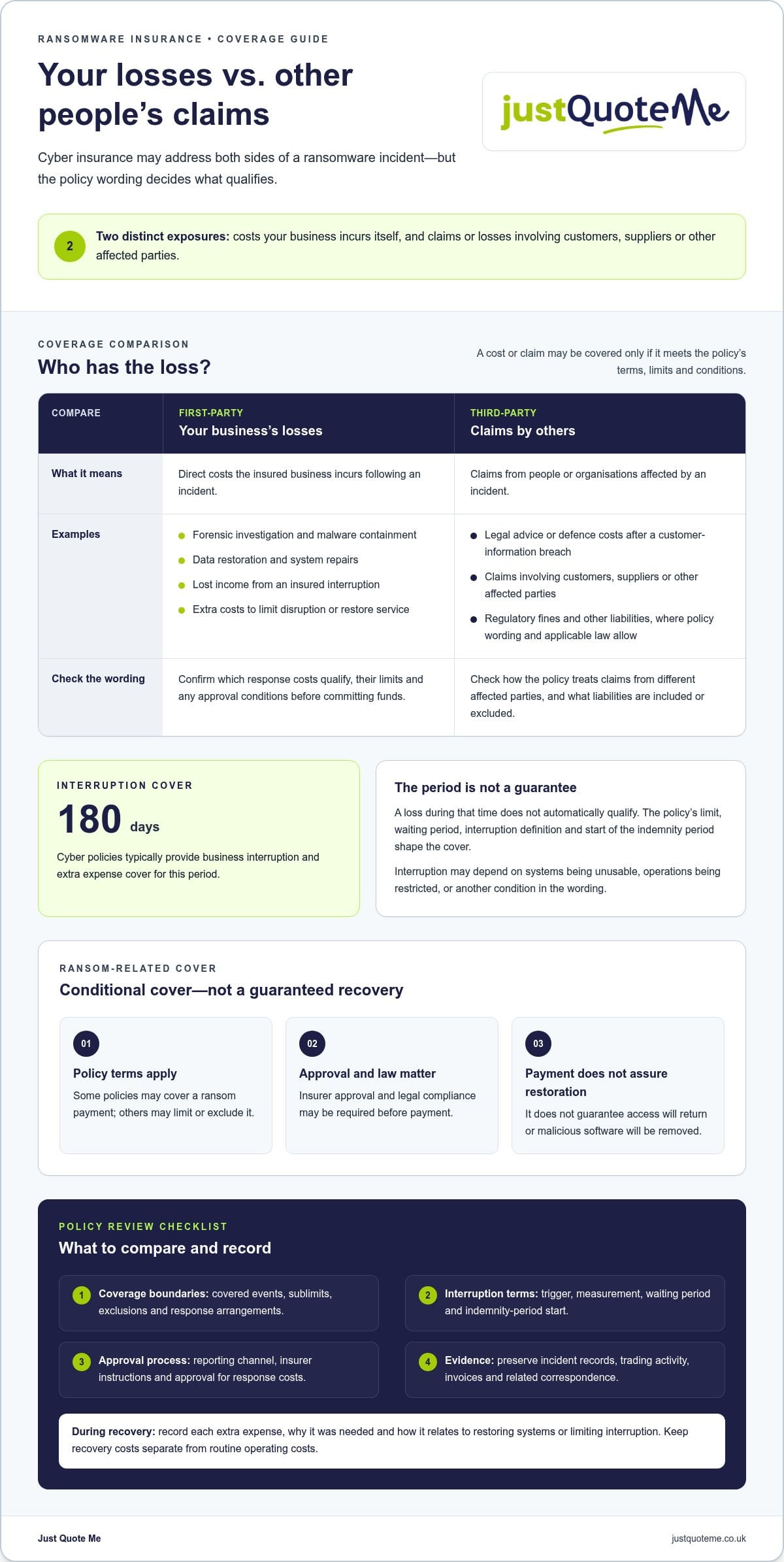
Cyber policies typically provide business interruption and extra expense cover for 180 days. That period is not a promise that every loss during that time qualifies. A policy’s limit, waiting period and definition of covered interruption shape the protection. For example, an online retailer could record disrupted orders and the dates its payment service was unavailable.
Extra Expenses During Recovery
Extra expenses are additional operating costs incurred to reduce disruption or restore normal service. They may arise when a business needs temporary systems, specialist recovery work or alternative ways to serve customers. The policy wording explains which expenses qualify and whether the insurer must approve them before work begins.
Keep a clear record of each expense, its purpose and its connection to the incident. For example, a company using a temporary booking platform can retain invoices and note how long it relied on the service. Separate recovery expenses from routine operating costs. This helps show how each cost relates to restoring the affected network or limiting further interruption.
Loss of Income
Loss-of-income cover addresses revenue a business misses while an insured interruption affects its operations. It matters to firms whose sales depend on digital access, such as online shops, booking businesses and payment-dependent services. The policy explains how lost income is calculated and which associated costs may be considered.
Businesses should preserve trading records that show normal activity and the incident’s effect. Compare affected sales periods with relevant business records, then document when services returned. Claims can involve several parties, such as a payment provider or hosting service, so keep related correspondence together. To explore broader business protection, review insurance options for your business.
First-party and third-party coverage
Cyber insurance can address two different exposures after ransomware: the business’s own losses and claims made by other parties. Separating them helps you identify which part of a policy may respond to each cost.
First-party losses
First-party cover applies to direct costs the insured business incurs following an incident. Examples include forensic investigation, malware containment, data restoration and system repairs. A policy may also provide incident response support, such as specialist advice or negotiation assistance. Ransom payments may be covered under specific terms, with insurer approval and legal compliance relevant to payment. Check how the policy treats each cost, its limits and any conditions before committing funds.
For example, a firm whose files are encrypted might face restoration costs and lose access to internal records. These are the firm’s own losses, distinct from a customer’s claim. Keep invoices, response reports and records showing how each payment relates to the incident. Notify the insurer through the stated reporting process, because unapproved work or delayed reporting may affect how the claim is handled.
Third-party liability
Third-party cover concerns claims from people or organisations affected by an attack. A breach exposing customer details could lead to claims alleging harm or loss. A ransomware incident could also disrupt a supplier’s service, creating contractual or commercial disputes. Cyber insurance may fund legal advice or defence costs, while cover for regulatory fines and other liabilities depends on the policy wording and applicable law.
Consider a business that stores customer information on a compromised network. Its response may involve investigating what happened, identifying affected records and addressing claims from customers or business partners. The policy’s liability section sets out which claims and associated defence expenses may qualify. First-party cyber insurance does not automatically cover every third-party claim, so review the two protections separately.
Keep the claim clear
Organise evidence by cost and claimant: record response invoices, incident findings, customer or supplier correspondence, and any decisions about ransom payments. This gives the insurer a clearer basis to assess direct losses and third-party demands separately. For each payment, note who received it and how it relates to the incident.
Insurance and ransomware incentives
Cyber insurance involves a difficult balance: it can help a business respond, but ransom payments may also reward criminals. Treat insurance as support for recovery and resilience, not as a reason to pay.
Do UK businesses need insurer approval before paying a ransom? Where a policy covers ransom payments, insurer approval and legal and regulatory compliance apply. Follow the policy’s reporting process before authorising payment, and involve its incident response support. This helps the business understand the terms and assess alternatives before deciding.
The National Cyber Security Centre strongly discourages UK organisations from paying ransomware demands. Payment does not guarantee the incident will end or malicious software will be removed. Criminals may fail to provide a working decryption key, or may retain and misuse stolen data. Payment can therefore bring further costs without restoring systems or preventing another attack.
Insurance can still support practical response measures. A policy may provide access to cyber security experts, forensic investigation, negotiation support and recovery services. These services can help contain an incident and inform decisions, while controls such as backups and multi-factor authentication help address cyber threats. Insurers may require safeguards, and known vulnerabilities left unpatched can affect claims. These conditions connect eligibility for protection with steps that can reduce avoidable exposure.
Insurance also shapes incentives across the market. If policies routinely fund ransom payments, they could make payment appear to be the easiest route for businesses under pressure. Insurers may limit or remove ransom cover as costs rise, while payments in response to cyber attacks have been reported on a downward global trend. Understand your policy’s approval process and response services before an incident, then prioritise recovery options that do not rely on payment.
Strengthen your understanding of cyber insurance options alongside your organisation’s incident response planning.
Just Quote Me: Public Liability Insurance
Just Quote Me helps businesses consider Public Liability Insurance for claims involving third parties and their business activities. This is separate from cyber insurance and should not be treated as cover for ransomware response, data restoration or cyber liability. Matching each policy to the relevant risk helps clarify where protection may apply and where separate cover is needed.
If you’re reviewing your wider business insurance after considering how cyber incidents can affect operations and customers, identify the different exposures your organisation faces. Public Liability Insurance may be relevant to third-party risks, while Employers Liability Insurance, Professional Indemnity Insurance and Landlord Insurance address distinct business needs. The policy wording determines the cover provided.
Contact Just Quote Me for advice about your business insurance needs.
Make your cover part of your preparedness plan
Use your ransomware attack insurance coverage review to turn policy details into a practical business decision. Record who can report an incident, who can authorise urgent spending, and where essential policy and system records are stored. Assign these responsibilities in advance so staff are not trying to establish ownership during a disruption.
Also consider how cyber risks sit alongside other business exposures. Just Quote Me offers Public Liability Insurance, Employers Liability Insurance and Professional Indemnity Insurance. These address different risks from cyber cover, and understanding the distinction can help you organise your insurance needs without assuming one policy responds to every event.
As your systems, suppliers and business activities change, revisit your response arrangements and insurance needs. A clear plan gives decision-makers a useful starting point when pressure rises. Take the next step with Get Your Free Business Insurance Quote now, or Request a Call back for free Expert advice.
Frequently Asked Questions
Are backups required for cover?
Not universally: some cyber insurance policies require backups, while others set different security conditions. Read the policy’s security requirements and application answers for backup wording, including which systems and data are covered. Keep dated records of backup schedules and restoration tests. For example, successfully restoring a sample file shows whether a copy is usable, not simply present.
How do I know if I’m covered?
Read the policy schedule, wording and endorsements together to understand your ransomware attack insurance coverage. The schedule identifies selected cover and limits, while exclusions and conditions explain restrictions. Look specifically for ransomware, cyber extortion, incident response, interruption and liability terms. Also note reporting instructions, approval requirements and any sublimits. For example, a ransom payment limit may differ from the overall policy limit.
What are the five main areas covered under cyber liability?
There’s no single standard five-part framework, but cover is often grouped into these areas:
- Incident response and forensic investigation.
- Data and system restoration.
- Business interruption and extra expenses.
- Third-party claims and legal defence costs.
- Cyber extortion support, potentially including ransom payments.
Read each section separately, because a policy can set different limits, conditions and exclusions for each area.
What else impacts cyber insurance costs?
Insurers assess a business’s industry, needs, stored data and technology protections. A technology survey may ask about access controls, encryption, multi-factor authentication and backup practices. The cover limit also matters: a policy offering greater protection will typically cost more than one with a lower limit. The business’s answers help insurers assess its exposure to cyber threats.
What does UK cyber insurance cover for ransomware attacks?
Ransomware attack insurance coverage may include forensic investigation, malware containment, data restoration, system repairs and interruption losses, depending on the policy terms. Some policies also provide legal advice or response specialists. Review how the wording defines an insured incident, which costs need prior approval and whether separate sublimits apply. The listed services, exclusions and conditions determine the practical scope of protection.
Does cyber insurance cover ransom payments in the UK?
Some policies may cover ransom payments, subject to policy terms, insurer approval and legal and regulatory compliance. The National Cyber Security Centre strongly discourages UK organisations from paying: payment does not guarantee criminals will restore access or remove malware. Before deciding, establish the insurer’s approval process and consider available response support. Insurance cover does not make payment a reliable recovery method.
