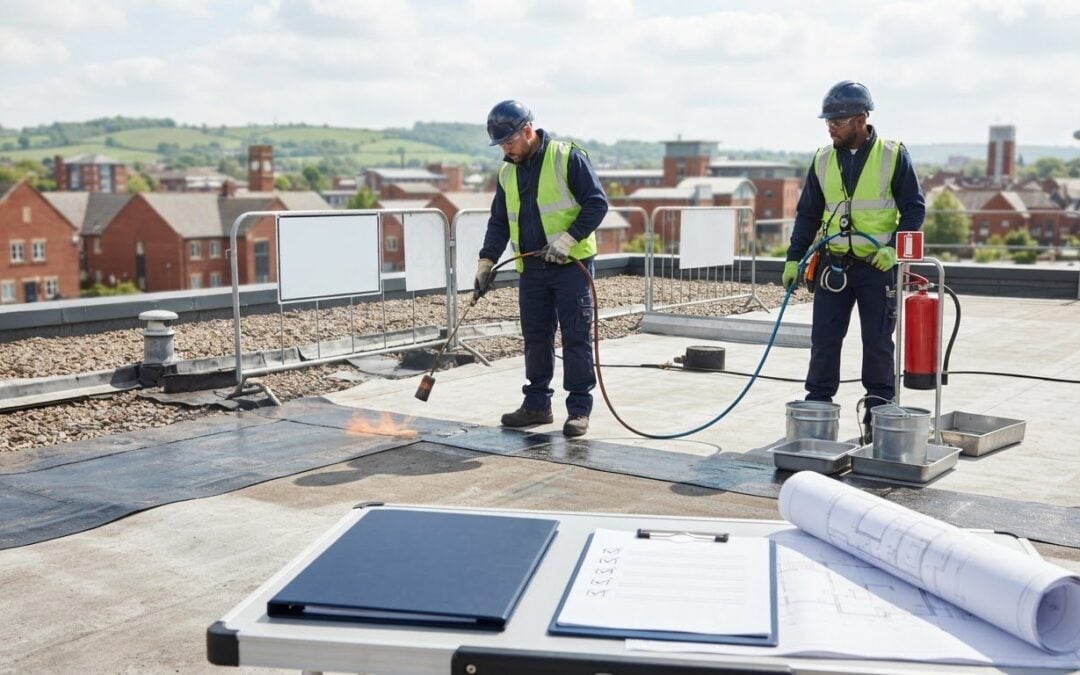
For roofers, hot works include tasks that use an open flame or apply heat or friction locally, such as torching roof coverings, welding, soldering, cutting and grinding. Standard commercial policies generally exclude thermal work unless a written hot works endorsement is in place. A hot works insurance endorsement for roofers can address that gap, while policy warranties may set fire-watch and permit conditions that affect whether cover applies.
Hot works are not limited to roofing with a torch. The term can cover several heat-producing processes, and the details matter: the work disclosed, the endorsement wording and the safeguards required by the policy all shape how cover responds.
This guide explains what counts as hot works, how endorsements differ from fire-watch warranties, and why heat-use exclusions deserve close attention. It also covers possible insurer controls and factors that influence premiums, so you know what to review when arranging cover for roofing work.
Key Takeaways
- Hot works include more than torch-on roofing, so identify every heat- or friction-based task your business carries out.
- Fire-watch, permit and clearance conditions can affect how cover responds; understand the policy requirements before work begins.
- Premiums reflect factors such as the cover level, excess, building types, claims record and the quality of your safety documentation.
- A heat-use exclusion can leave thermal work outside cover unless the policy wording addresses it, making accurate disclosure essential.
- Public Liability Insurance can help address claims involving injury to members of the public or damage to their property arising from your work.
Hot works warranties and fire-watch requirements
A hot works warranty turns fire precautions into policy conditions, not optional site guidance. For torch-on roofing, an underwriting control may require a 60-minute fire watch and clearance of timber. The wording can also specify who watches, what equipment must be available and when the site may be left. Read each condition against the actual task, roof build-up and work area.
Plan the watch around the final use of heat. A common procedure stops hot work 60 minutes before the crew leaves, then requires a further site check before the area is unattended. After the work, someone should remain with a fire extinguisher until all smoke has gone. A competent fire watcher stays present while lighted flame equipment remains in use. Keep the watcher’s role distinct from the roofer operating the torch.
Use a written permit for each occasion when the policy requires one. Record the work location, process, precautions, authorisation and close-out check, then keep the permit with the project documents. The permit system should cover work outside designated hot-work areas, with management checking periodically that employees, contractors and subcontractors follow it. This creates a record if a fire leads to a claim.
According to UK legislation, the Construction (Design and Management) Regulations 2015 apply to hot-work clearance duties in the UK. According to UK legislation, the Health and Safety at Work Act 1974 also applies to those duties. These requirements make planning and clearance relevant alongside the insurer’s policy wording. Section 10 of the Insurance Act 2015 makes a warranty breach suspensory while non-compliance continues, with cover reviving once it is remedied. According to UK legislation, Section 11 of the Insurance Act 2015 says breach of a term intended to reduce a particular kind of risk does not defeat a claim for a loss of an entirely different kind.
On a commercial site, align your permit with the site’s hot-work controls before starting. For example, a roofing crew working above occupied premises should identify the work area, combustible materials and roof voids, then record the fire-watch arrangements. Include access at height and falling-debris controls in the project plan. A vehicle-mounted extinguisher does not replace equipment kept immediately available at the hot-work point.
Subcontracting does not remove the need to manage the work. The principal contractor should establish who authorises the permit, monitors the work and completes the final inspection. Align the subcontractor’s process and insurance arrangements with the site requirements, and record any change in method. If a subcontractor switches from cold fixing to torch application, pause work and update the permit before heat work resumes.
Keep the signed permit, risk assessment, method statement and close-out record together. They help show which precautions were agreed and completed if a later claim concerns fire damage. Reviewing them also makes it easier to spot gaps before the next roofing task begins.
Factors affecting insurance costs
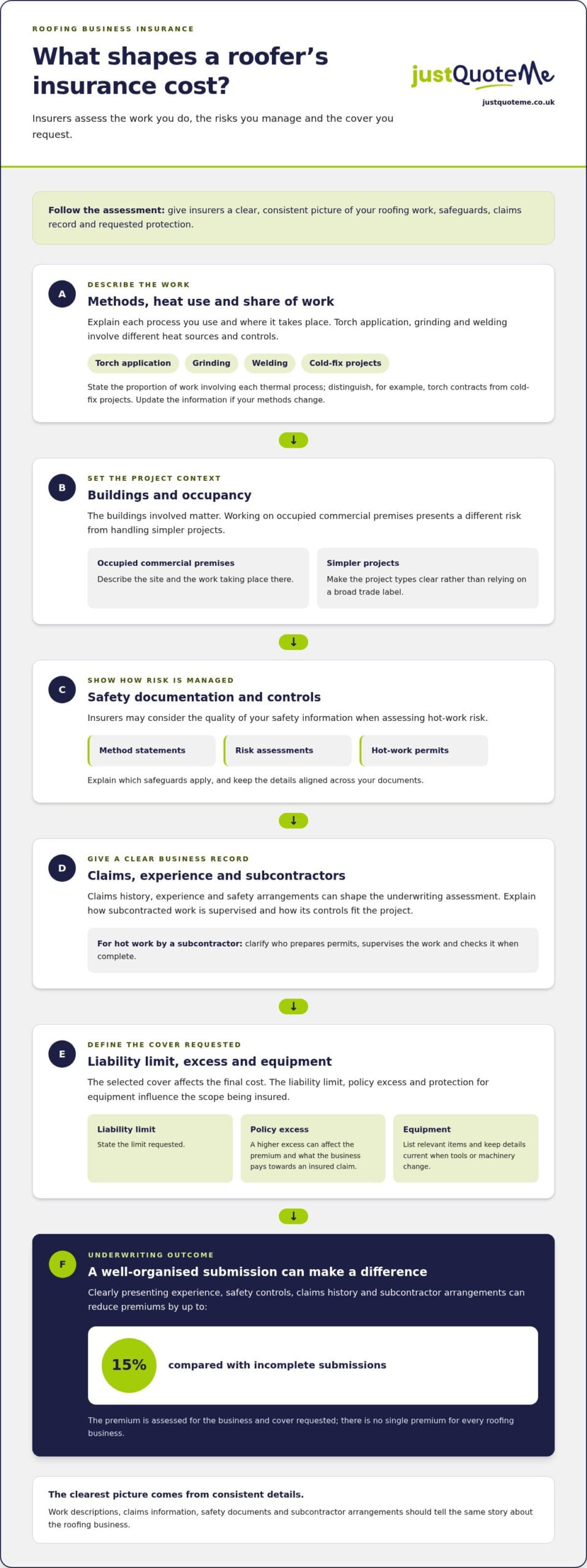
There is no single premium for every roofing business. Insurers assess the work, the buildings involved and the cover requested. Working on occupied commercial premises presents a different risk from handling simpler projects. The excess matters too: a higher excess can affect both the premium and the amount the business pays towards an insured claim.
Hot-work methods affect how insurers assess risk. Torch application, grinding and welding involve different heat sources and controls. When quoting roofing businesses, insurers may consider method statements, risk assessments and hot-work permits. Explain which processes you use, where they take place and what safeguards apply. If your methods change, update the information used for the insurance assessment.
The share of work involving heat is relevant too. Describe each thermal process and the proportion of your work it represents. For example, distinguish contracts using a roofing torch from cold-fix projects. Clear descriptions help insurers assess your actual activities rather than relying on a broad trade label.
Claims history, experience and safety arrangements also shape an underwriting assessment. Present a clear record of previous claims and explain the controls used to manage fire risk. A well-organised submission can matter: clearly presenting experience, safety controls, claims history and subcontractor arrangements can reduce premiums by up to 15% compared with incomplete submissions.
Describe subcontractor arrangements clearly. Set out which tasks subcontractors perform, how their work is supervised and how their risk controls fit the project. For example, explain who prepares permits and checks completed work when a subcontractor uses a torch. This helps insurers assess how responsibility is managed across the roofing contract.
The cover selected affects the final cost. The liability limit, policy excess and protection for equipment all influence the scope being insured. List the equipment relevant to your work and explain its role, rather than assuming every item falls under the same cover. If you replace a tool or machine, keep your insurance information aligned with your current needs.
A broker can help organise these details into a clear risk presentation. Before seeking terms, gather your work descriptions, claims information, risk assessments, method statements and permit procedures. Use consistent details throughout. If one document describes torch-on roofing while another lists only general repairs, resolve the mismatch before submitting the information.
Focus on accuracy rather than leaving out higher-risk work to seek a lower figure. A complete account lets insurers assess the roofing operation and the controls supporting it. For a broader view of tradesman insurance cover, review how the work, liability needs and equipment fit together.
Hot-works and use-of-heat exclusions
A hot-works endorsement can extend cover for liability arising from heat-based tasks, if its wording includes that work. Fire damage to a client’s property may fall within the cover, but consequential losses are not automatic. The policy must cover the relevant liability and loss.
Standard commercial policies generally exclude thermal work unless a written hot-works endorsement is in place. Where a blanket heat exclusion applies, standard Public Liability Insurance does not automatically cover open-flame work. Read the schedule and endorsement together: the schedule identifies the insured cover, while the endorsement sets terms for specified heat processes. A certificate may not show every restriction, so keep the full wording with the project records.
Check that the wording describes the actual roofing operation. Torch application to roof coverings, structural steel welding, plumbing brazing and disc grinding involve different ignition risks, and an endorsement may set separate safeguards for each. For example, welding controls can include non-combustible screens and permits. Brazing may require heat-shield mats and removal of combustible materials. A broad description such as “roof repairs” may not communicate these distinct activities.
Clearance requirements can also be precise. For angle grinding and cutting, an underwriting control may require a six-metre combustible-clearance perimeter. Sparks from disc grinding can travel over nine metres horizontally, so a nearby roof void or stored material matters. For hot works, gas cylinders not in use should be outside the building where practicable and at least 15 metres from the point where heat is applied. Compare these controls with the worksite before starting.
Some locations may prohibit hot work altogether. Examples include areas containing fast-burning polystyrene, or combustible liquids, gases or dusts that cannot reasonably be removed. In these settings, switching to a non-thermal method may avoid breaching the restriction. A specialist risk assessment should identify concealed hazards around roof penetrations, including felt underlay, timber trusses, combustible dust and roof voids.
Exclusions can affect more than a direct fire claim. If a fire damages a client’s building, the policy wording determines whether the resulting legal liability is insured. Business interruption and other consequential losses need clear treatment in the insurance contract. Do not assume they follow automatically from property damage cover. Record the client’s premises, work method and relevant safeguards in the permit and risk assessment.
Before accepting a roofing contract, compare its heat requirements with the endorsement’s covered activities and restrictions. If the contract includes welding but the wording addresses torch-on roofing only, resolve the mismatch before work begins. Keep the endorsement, certificate, permit and method statement accessible to the site team, and update the documents if the process changes.
Definition and examples of hot works
For insurance purposes, hot works include operations using an open flame or applying heat or friction locally. The category covers more than a roofer holding a torch. Welding, soldering, torch cutting, grinding, hot riveting and applying heat to roof coverings can all qualify. The policy wording defines how the insurer treats each activity, so identify the actual process rather than relying on a general trade description.
On a roofing job, torch-on work applies heat directly to a roof covering. A metal repair may involve welding or cutting, while grinding a fixing creates heat and sparks through friction. Soldering and brazing use heat to join materials. Each process can ignite nearby materials or concealed spaces. Describe the method for each task in your project documents and insurance disclosures.
Consider the whole work sequence, not just the tool. For example, a roofer might grind metal before using a torch to seal an adjacent roof covering. Both stages involve ignition sources, even though only one uses an open flame. Sparks, hot fragments or heat reaching combustible materials can cause fire or property damage at a client’s premises. Name each process in the assessment and identify where it occurs.
Hot-work locations are commonly grouped into three categories:
- Designated areas: spaces set aside for hot work, with suitable controls in place.
- Non-designated areas: other work locations where permits and precautions may be required.
- Prohibited areas: places where hot work should not proceed, such as areas with fast-burning polystyrene or combustible liquids, gases or dust that cannot reasonably be removed.
A roofing assessment should consider what lies beyond the visible work surface. A torch near a roof penetration may expose concealed materials or cavities to heat. Cutting or grinding can send sparks beyond the immediate work area. Record the location, materials, ignition sources and chosen controls in the risk assessment and method statement. A competent person with relevant knowledge, training and experience should assess the hazards and controls.
Choosing a less hazardous method can change the risk profile. For some roof-covering tasks, mechanical fixing or cold application may avoid an open flame. The method must still suit the materials and job requirements. If you switch from cold fixing to torch application, the work becomes thermal and should be treated accordingly in the assessment and insurance disclosure.
These distinctions help roofers describe their operations accurately. A clear list of tasks, such as torch application, metal grinding and welding, gives insurers a more useful picture than “general roofing.” It also helps the client and contractors align the project assessment, site controls and insurance terms with the work actually planned.
Hot works insurance endorsements and disclosure
A written endorsement can extend liability insurance to specified heat-based work excluded by a standard policy. To arrange suitable terms, disclose each thermal process and compare the wording, limits and excesses.
Comparing Insurers and Obtaining an Endorsement
Compare written endorsement terms against the roofing tasks you perform. This matters because a general Public Liability Insurance policy may exclude open-flame work unless its wording extends cover.
Tell insurers about every thermal process and the percentage of your work each represents. For example, distinguish torch-on roofing from grinding, welding or soldering. The Insurance Act 2015 requires a fair presentation of the risk. Supply clear work descriptions, method statements, risk assessments, permit arrangements, claims information and subcontractor details. Then compare what each endorsement covers, its conditions and exclusions, rather than relying on a certificate alone.
Limits and Excesses
A limit sets the maximum amount available for an insured liability, while an excess is the amount the policyholder pays towards a claim. Both affect the protection and the business’s potential outlay.
Roofers’ public liability insurance is commonly arranged with limits of £1 million, £2 million, £5 million or £10 million. Those figures describe common public liability limits, not a fixed standard for every hot-works endorsement. Excesses also vary with policy terms and the risk being insured, so compare the stated excess for relevant claims. Check whether the endorsement changes either term.
Review the wording for the exact operations, locations and safeguards it names. An endorsement covering torch application to roof coverings may not include structural welding or disc grinding. If your work involves several heat processes, make sure each is described in the insurance presentation and addressed in the written terms. An extension is useful only when its scope matches the planned work.
Disclose your business as it operates, not just its main trade label. List thermal activities, their share of turnover or work, the types of buildings involved and any subcontracted tasks. For example, state whether subcontractors carry out torch-on work and how you manage it. Update the insurer when your process or work mix changes, so the risk presentation remains accurate.
Before accepting a contract, compare its insurance requirements with the endorsement and policy schedule. Check liability limits, excesses, heat-process descriptions and any warranty conditions together. A client’s contract may require a particular limit, while the policy may impose controls on the work itself. Resolve any mismatch before starting the job.
Prepare a concise submission with your process list, risk assessments, permits, method statements and claims record. A broker can use these details to seek terms that reflect the work. For public liability insurance, focus on the written cover and its fit with your roofing activities.
Just Quote Me: Public Liability Insurance
Just Quote Me arranges Public Liability Insurance for roofers. This cover can address legal fees and compensation if a member of the public is injured or their property is damaged because of your work. If you use heat-based methods, discuss how your activities relate to the policy wording, including any exclusions or endorsement conditions.
Just Quote Me also arranges Employers Liability Insurance and Professional Indemnity Insurance, which address different business risks. The right combination depends on your work and responsibilities, so review each policy’s terms rather than assuming one type of cover replaces another.
For help considering your roofing insurance needs, contact Just Quote Me.
Make your next insurance review count
At renewal or when reviewing a contract, make sure your insurance reflects the roofing work you plan to take on. A hot works insurance endorsement for roofers should fit the processes you use and the responsibilities you accept, not just the trade name on the policy. Clear, current information gives you a sound basis for discussing cover.
Just Quote Me can help you consider insurance options for your business. Choose the next step that suits you: Get Your Free Business Insurance Quote now or Request a Call back for free Expert advice.
Take time to make an informed choice and move forward with confidence.
Frequently Asked Questions
What are hot works?
Hot works are tasks that use an open flame or apply heat or friction locally. For roofers, examples include torching roof coverings, grinding metal, soldering, welding and torch cutting. The tool alone does not determine the classification: the process and the heat or sparks it produces matter. For instance, grinding a metal fixing can count even without a flame.
What is hot works insurance cover for UK roofers?
It is insurance wording that addresses specified heat-based roofing tasks, often through a written endorsement to a commercial policy. A hot works insurance endorsement for roofers can extend liability cover where the policy otherwise excludes thermal work. Its scope depends on the named processes, conditions and exclusions. If you use a torch on felt, compare that activity with the written wording rather than relying on a general trade description.
What does a hot works endorsement cover and exclude?
A hot works endorsement can cover liability arising from the heat processes it names, subject to its terms. It may exclude processes that were not disclosed, work in prohibited areas or claims linked to unmet conditions. For example, wording describing torch-on roofing does not automatically include welding. Check whether the cover addresses damage to a client’s property and resulting liability, and whether the policy treats consequential losses separately.
Which roofing activities count as hot works, such as torch-on felt or lead welding?
Torch-on felt and welding are hot works because they apply heat or create ignition sources. Other examples include soldering, torch cutting, grinding and hot riveting. Lead work counts when the method uses local heat, such as welding; cold fixing is different. Describe each process in the project documents and insurance disclosure, since “roof repairs” alone does not identify the heat involved.
What hot works safety conditions must roofers follow under UK insurance policies?
Follow the permit, clearance and fire-watch conditions stated in the policy. Practical controls include sealing floor gaps, wall penetrations and service ducts so sparks cannot enter concealed spaces. For elevated work, fire-resistant debris netting and solid scaffold boarding can help catch molten metal. Keep propane, acetylene and oxygen cylinders upright and secured during use, and record precautions in the job’s risk assessment.
How much does hot works insurance cost for UK roofing contractors?
A roofer’s premium depends on the individual risk and is provided after a quote request. Insurers assess the cover level, excess and types of buildings involved, alongside the business’s processes, claims record and safety documentation. Subcontractor arrangements and the proportion of work involving heat also affect the assessment. A clear submission helps insurers evaluate the actual roofing operation.
Can roofers add hot works cover to public liability or contractors all risks insurance?
Roofers can seek a written hot works endorsement to address thermal work excluded by a commercial policy. Public Liability Insurance concerns legal liability to others, while contractors all risks insurance can cover ongoing works, materials costs and business-owned or hired plant. Do not assume either policy automatically includes every heat process. Compare the endorsement wording with the roofing tasks and the property or work being insured.
What claims or circumstances can invalidate a roofer’s hot works insurance?
Undisclosed heat processes, excluded work and failure to meet a policy warranty can affect a claim. Under Section 10 of the Insurance Act 2015, cover is suspended while a warranty breach continues and revives once remedied. Section 11 also limits the effect of breaching a risk-reduction term when the loss is of an entirely different kind. Deliberate acts leading to damage or injury are another example of an insurance exclusion.
