
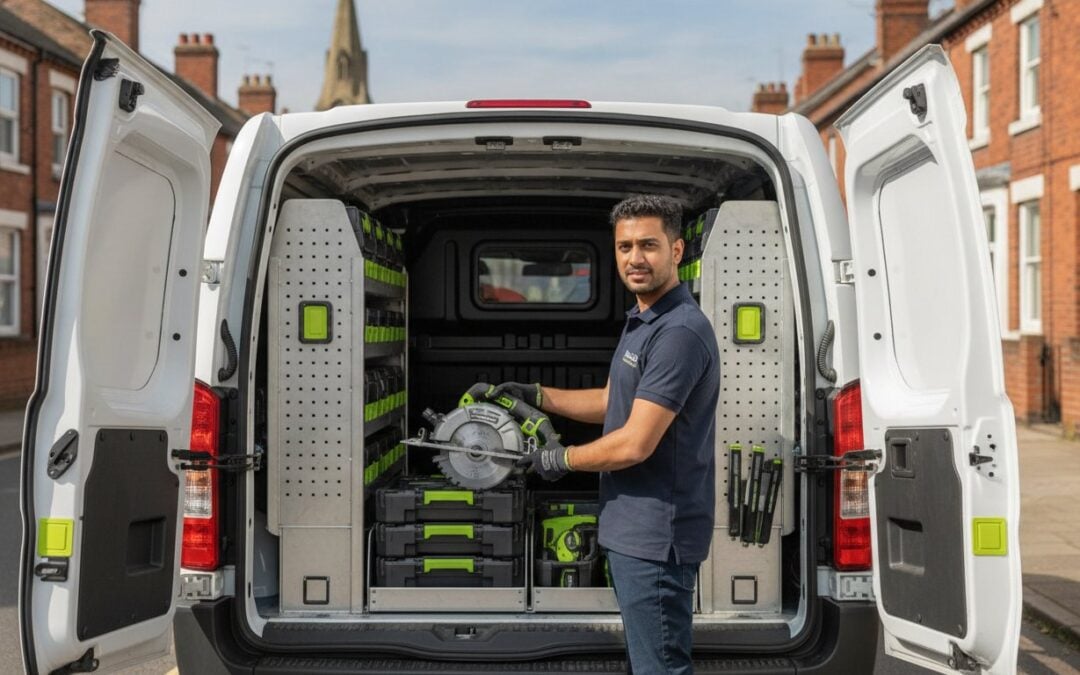
Did you know that 74% of UK tradespeople have been victims of tool theft at some point during their careers? With 30,848 recorded offenses in 2025, an increase of 16% from the previous year, this epidemic is hitting professionals harder than ever before. It is a common mistake to assume a standard motor policy automatically covers your kit, but specialized van insurance for tools and equipment is the only way to ensure your livelihood is truly protected against theft or damage.
We understand the stress of facing high replacement costs and the devastating loss of income while you wait for new gear to arrive. You need clarity on complex overnight storage rules and security requirements that actually make sense for your daily routine. This complete 2026 guide will show you how to secure comprehensive protection that pays out quickly, covering both your owned tools and hired-in equipment. We will explore the latest security standards and expert brokerage strategies to keep your business running, moving you quickly from uncertainty to total peace of mind.
Key Takeaways
- Understand the vital distinction between standard motor policies and specialized protection designed specifically for your business assets.
- Learn how to secure comprehensive cover for hand tools, power tools, and diagnostic equipment, including protection against accidental damage during transit.
- Compare the practical benefits of bundling van insurance for tools and equipment with your public liability policy versus choosing standalone cover for high-value gear.
- Identify the specific security prerequisites, such as 5-lever deadlocks and overnight storage rules, that are essential for ensuring a successful claim payout.
- Discover how a specialist broker provides more reliable, personalized protection and better value than automated comparison websites.
What is Van Insurance for Tools and Equipment and Why is it Essential?
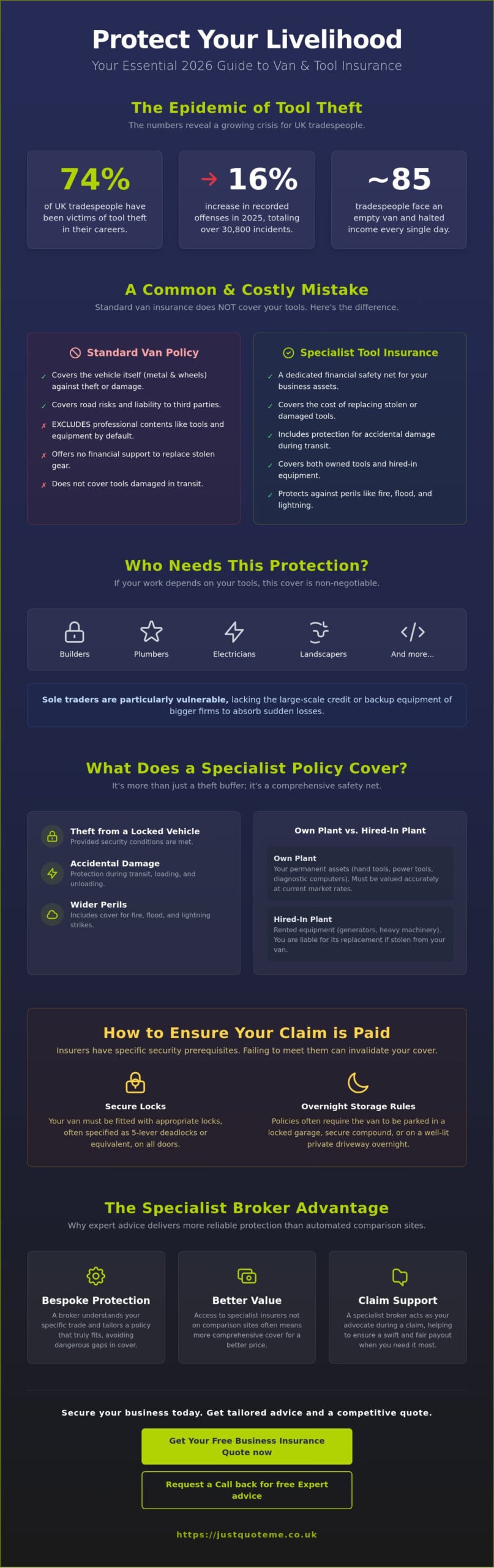
For most UK tradespeople, a van is more than just a vehicle; it is a mobile workshop. While your motor policy covers the metal and wheels, van insurance for tools and equipment is a specialized form of protection designed to cover the high cost of replacing your professional kit. In the current 2026 landscape, this cover has transitioned from an optional extra to a business necessity. According to data from 2025, tool theft incidents rose by 16% to over 30,000 recorded offenses. This means approximately 85 tradespeople every single day face the reality of an empty van and a halted income.
Relying on basic public liability insurance is a common mistake. While those policies protect you against claims from third parties, they don’t provide any funds to replace your stolen drills, saws, or diagnostic kit. Specialist tool cover bridges this gap by focusing on your business assets. It ensures that if your livelihood is targeted, you have the financial support to get back on-site without draining your personal savings or business reserves.
The Difference Between Van Insurance and Tool Cover
It is a frustrating realization for many that even a comprehensive van policy usually excludes professional contents by default. Motor insurance is primarily concerned with road risks and vehicle value. To protect what is inside, you need to understand property insurance basics, which distinguish between the vehicle itself and the business property it carries. Most specialized policies differentiate between “In-Transit” cover, which protects items while you’re moving between jobs, and “Stationary Storage,” which applies when the vehicle is parked.
Tool insurance is a dedicated financial safety net that ensures your business can continue operating immediately following the loss or theft of your essential equipment.
Who Needs This Protection?
If your work depends on specialized power tools or expensive hand kits, this protection is non-negotiable. Builders, plumbers, electricians, and landscapers are the primary targets for opportunistic thieves. Sole traders are particularly vulnerable because they often lack the fleet backup or large-scale credit lines that bigger firms use to absorb sudden losses. For those in the construction sector, integrating van insurance for tools and equipment with builders insurance creates a robust defense against the most common professional risks. Protecting your tools means protecting your reputation; if you can’t show up to the job because your kit is gone, you lose more than just the tools, you lose the client’s trust too.
What Does a Specialist Tools and Equipment Policy Actually Cover?
A specialist policy is more than just a theft buffer. It acts as a comprehensive safety net for the physical assets that make your work possible. While many focus solely on stolen gear, a robust policy for van insurance for tools and equipment also protects against accidental damage during transit or while you’re loading and unloading at a job site. If a heavy power saw drops and breaks while you’re moving it from the van to the workspace, a standard motor policy won’t help, but a specialist tool policy will.
Coverage typically extends to fire, flood, and lightning strikes. If your van is caught in a flash flood or a vehicle fire destroys your entire inventory, these policies ensure you aren’t left footing the bill for a total replacement. It is this level of detail that defines comprehensive contractor insurance, protecting you against a wide range of perils that could otherwise bankrupt a small trade business. Most policies cover theft from a locked vehicle, provided you meet specific security conditions which we will detail later in this guide.
Own Plant vs. Hired-In Plant
It is vital to distinguish between the equipment you own and the gear you rent. “Own Plant” refers to your permanent assets, from basic hand tools to specialized diagnostic computers. You must value these accurately based on current 2026 market rates to avoid being underinsured. However, many tradespeople forget they are also liable for hired equipment. If you rent a high-end generator and it is stolen from your van, the hire company will expect you to pay for the replacement. For larger items, you should consider specific plant and machinery insurance to cover these high-value liabilities.
Stock and Business Materials
Your van doesn’t just carry tools; it carries the materials you need for the day’s work. There is a clear distinction between “tools,” which are the assets you keep, and “stock,” which are the consumables you leave behind, like copper piping, timber, or tiles. A quality policy for van insurance for tools and equipment allows you to add stock cover for these items while they are in transit. When calculating your “sum insured,” always use the 2026 replacement cost rather than what you originally paid. If you are unsure about the right coverage levels for your specific trade, you can speak with a specialist broker to refine your policy.
Comparing Tool Insurance Options: Add-ons vs. Standalone Policies
Choosing the right way to structure your van insurance for tools and equipment depends on the scale of your business and the value of your kit. Most tradespeople find that adding tool cover to their public liability insurance is the most efficient and cost-effective route. This approach consolidates your business protection, ensuring you only have one premium to track and one point of contact for claims. However, if you carry specialized diagnostic gear or high-value kits that exceed standard bundle limits, a standalone policy might be the better option. These dedicated plans often provide higher total limits and more tailored terms for specific professional assets that a general add-on might not fully protect.
You also need to weigh the benefits of “New for Old” replacement versus “Market Value” cover. A “New for Old” policy is designed to pay for a brand-new equivalent of your stolen or damaged tool at current 2026 market prices. This is vital for professionals who cannot afford the downtime of searching for used replacements. Conversely, a “Market Value” policy factors in wear and tear, meaning the payout will be lower based on the age and condition of the equipment. While “Market Value” premiums are often cheaper, the financial gap you’ll have to bridge during a replacement can be substantial.
Integrated Trade Packages
For many contractors, a comprehensive tradesman insurance package offers the best balance of value and protection. These all-in-one solutions combine liability and tool cover into a single document with one renewal date. If your business is growing, these packages make it easy to add employers liability insurance when you take on staff or apprentices. This integrated approach removes the administrative burden of managing multiple policies and ensures there are no conflicting terms that could complicate a claim.
Evaluating Policy Limits
It’s essential to select a policy limit that reflects the true replacement cost of your inventory. Common tiers usually range from £1,000 to over £10,000, but you must look closely at the “Single Article Limit.” This is a common trap where an insurer caps the payout for any one individual item. For example, if you have a £3,000 specialized testing unit but your policy has a £1,500 single article limit, you’ll be left with a significant shortfall. Conducting a regular inventory of your van insurance for tools and equipment ensures your coverage levels remain accurate as you invest in new gear.
Security Requirements: How to Ensure Your Claim is Paid
Having a policy is only the first step. If you don’t adhere to the strict security mandates hidden in the small print, your insurer may refuse to pay out after a theft. The most common pitfall for tradespeople is the “Overnight Requirement.” Many specialist providers stipulate that between 9 PM and 6 AM, tools must either be removed from the vehicle or the van must be secured in a specific manner. If your kit is stolen from your van while it’s parked on a public road overnight, and your policy requires off-street parking, you’ll likely face a rejected claim. This “overnight storage” trap is a primary reason why van insurance for tools and equipment requires careful management rather than a “set and forget” attitude.
Lock standards are equally critical. Most insurers now view factory-fitted locks as a baseline rather than a complete solution. You’ll often find that Thatcham-approved, 5-lever deadlocks are a prerequisite for valid cover. While visible signage like “No Tools Left in This Vehicle” can act as a deterrent for opportunistic thieves, it rarely impacts your premium or the validity of a claim. Instead, insurers focus on the presence of functioning alarms and immobilizers. If your alarm wasn’t active at the time of the theft, or if you can’t prove the vehicle was double-locked, you risk losing your settlement entirely.
The “Garaged” Clause Explained
Insurers define “securely garaged” or “off-street parking” with high precision. This usually means the vehicle must be kept in a locked building, a secure compound, or on a private driveway. If you operate in theft hotspots across Staffordshire or the West Midlands, these mandates are often non-negotiable. High crime rates in these regions mean underwriters are less likely to cover tools left in vans parked on public highways. You can ensure your policy meets these strict criteria by speaking to our experts who understand the regional requirements for different UK postcodes.
Documenting Your Assets
If the worst happens, you must be able to prove what was taken. A successful claim in 2026 relies on clear documentation. You should maintain a digital inventory that includes serial numbers and original purchase receipts for every high-value item. Digital inventory apps are now the standard for speeding up the claims process, allowing you to submit evidence instantly from your phone. It’s also vital to take regular, date-stamped photos of your tools as they are stored inside your van to prove you were following security protocols at the time of the incident. Don’t wait for a theft to happen before you start organizing your records; a lack of proof of ownership is a frequent hurdle that delays or reduces payouts.
The Just Quote Me Advantage: Bespoke Tool Protection
While automated comparison sites offer speed, they often lack the depth required to navigate the complexities of 2026 tool protection. Using Just Quote Me gives you a direct line to an expert who understands that your business isn’t a generic data point. We provide bespoke van insurance for tools and equipment by accessing a broad panel of UK insurers, ensuring you get a policy that balances competitive pricing with the strict security requirements we discussed earlier. Unlike a bot, an independent broker acts as your advocate, especially during the claims process when you need a human voice to help navigate the administrative hurdles and ensure a fair settlement.
Our approach is grounded in reliability. We don’t just provide a document; we provide a partnership. This means we take the time to understand the specific nuances of your trade, whether you are a sole trader with a single van or a growing firm with a small fleet. By managing the complex administrative burdens on your behalf, we allow you to focus on your work, confident that your livelihood is secured by a policy that actually performs when you need it most.
Local Expertise in Staffordshire
We take pride in our regional roots, serving tradespeople across Stone, Stafford, and Newcastle-under-Lyme. This local presence allows us to understand the specific risks facing the construction and hospitality sectors in the West Midlands. We know which areas are seeing shifts in crime patterns and which security upgrades insurers are currently prioritizing in our region. For businesses with complex needs, our local office provides a space for face-to-face risk assessment consultations, ensuring no detail of your equipment or storage setup is overlooked.
Streamlined Quote Process
We know your time is money, so we’ve designed a quote process that is both fast and thorough. We simplify the administrative burden by gathering all necessary details in one go, allowing us to build a comprehensive trade setup for you. This might involve customizing your policy to include contractors all risk insurance to cover ongoing works alongside your van insurance for tools and equipment. Our goal is to move you from an initial inquiry to a fully protected state with minimal friction and maximum clarity.
Secure Your Livelihood for 2026 and Beyond
Protecting your professional assets requires more than just a standard motor policy. You’ve seen how specialized van insurance for tools and equipment acts as a vital safeguard, bridging the gap between basic vehicle cover and the comprehensive protection your business needs. By adhering to strict security requirements and choosing the right policy structure, you ensure that a theft doesn’t result in a permanent loss of income. It’s about more than just replacing gear; it’s about maintaining your professional continuity.
As an FCA-authorised independent broker with over 30 years of UK industry experience, Just Quote Me offers you access to a broad network of top UK insurers. We don’t just provide a quote; we provide a partnership grounded in reliability and expert advocacy. When you’re ready to secure your business, partner with an expert broker who understands your trade. Don’t leave your professional future to chance. Take a proactive step today to secure the tools that build your success.
Frequently Asked Questions
Is my van insurance for tools and equipment valid if I leave tools in the van overnight?
Validity depends on your specific “overnight storage” clause. Most insurers require the vehicle to be parked in a secure location, such as a locked garage or a private driveway, between set hours. If you leave tools in a van parked on a public road during these hours, your claim could be rejected for failing to meet the security requirements detailed in your policy wording.
Does tool insurance cover hired-in equipment like diggers or generators?
Standard policies focus on owned assets, but many can be extended to include hired-in plant. You are usually contractually liable for any equipment you rent, meaning you must pay for its replacement if it is stolen or damaged while in your care. Check that your policy specifically mentions “hired-in plant” to ensure these high-value liabilities are fully protected.
Can I get “new for old” replacement on my stolen power tools?
“New for old” cover is a common feature in specialist policies, ensuring you receive a brand-new equivalent at current market prices. Without this, your insurer will only pay the “market value,” which subtracts depreciation for wear and tear. This can leave a significant financial gap when you need to replace older kit immediately to stay on the job.
How much does tool insurance typically cost for a UK sole trader?
Pricing for van insurance for tools and equipment varies based on the total value of your kit, your postcode, and your chosen excess. While designed to be affordable for sole traders, your premium reflects the specific risk level of your trade and location. Requesting a personalized quote is the most efficient way to see the exact cost for your business setup.
What is a “single article limit” and how does it affect my claim?
A single article limit is the maximum amount an insurer will pay for any one individual item, regardless of your total policy limit. If you have a total cover of £5,000 but a single article limit of £500, you cannot claim the full value of a £1,500 specialized diagnostic tool. Ensure your highest-value items fall within these individual caps to avoid being underinsured.
Do I need receipts to make a claim for stolen tools?
Proof of ownership is essential, and original purchase receipts are the most reliable evidence. If receipts are missing, insurers may accept bank statements, dated photographs, or serial numbers. Maintaining a digital inventory with these details ensures your claim progresses quickly and helps establish the true replacement value of your lost equipment.
Does tool insurance cover me if my tools are stolen from a job site rather than the van?
Comprehensive policies often include “on-site” cover, but it is rarely automatic in basic transit plans. This extension protects your equipment while it is being used or stored temporarily at a customer’s property. If your work involves leaving gear on-site, verify that your policy specifically covers theft from locations other than your locked vehicle.
Is accidental damage included in standard tool insurance policies?
Accidental damage is usually an optional add-on rather than a standard feature. This cover protects you if a tool is dropped, crushed, or broken during the normal course of your work, such as during loading or unloading. It provides a robust level of protection, ensuring simple mishaps don’t result in a total loss or halt your business operations.
