
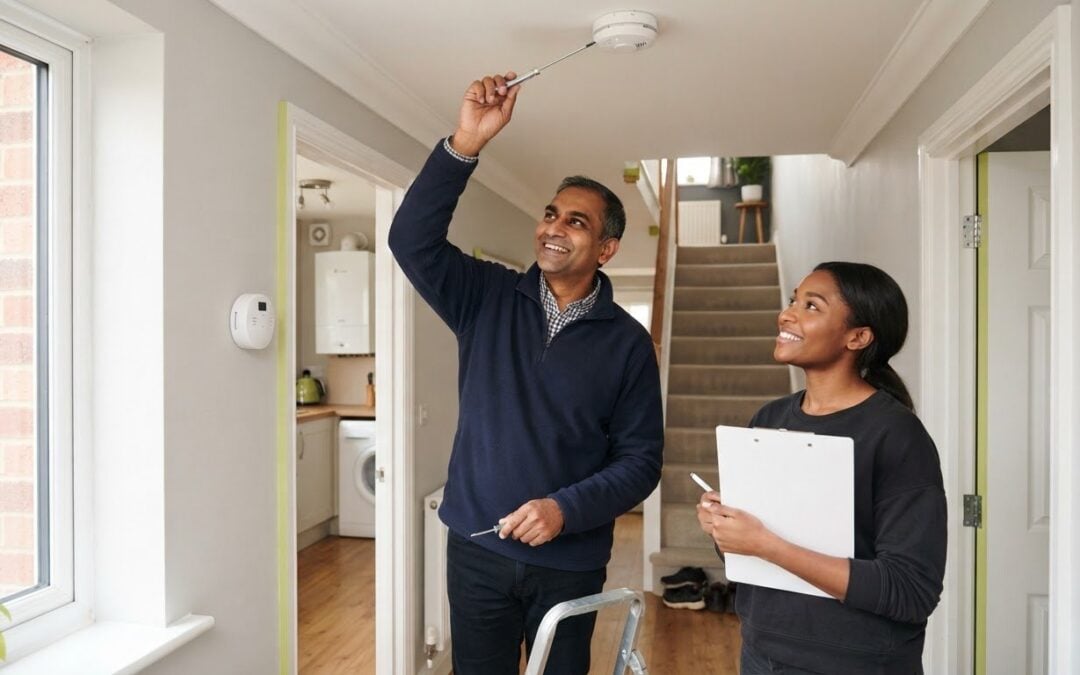
Fire safety duties don’t stop at fitting an alarm. In England, landlords must install at least one working smoke alarm on every floor and carbon monoxide alarms in rooms with qualifying appliances; the Smoke and Carbon Monoxide Alarm (England) Regulations 2015 set out these obligations. Understanding fire safety requirements for landlord insurance in the UK also means considering escape routes, furnishings, gas safety and how policy conditions relate to fire precautions.
It’s reasonable to want a clear checklist: fire safety rules vary across the UK, and insurance adds another issue to consider. This guide covers key landlord responsibilities, including alarms, escape routes, fire-safe furnishings, gas checks and risk assessments, then explains how those duties relate to landlord insurance.
You’ll also see how requirements differ between England, Scotland and Wales, and which records can help demonstrate the steps you’ve taken. The aim is to clarify what to do without confusing legal duties with the cover your policy provides.
Key Takeaways
- Use the alarm rules that apply where your property is located, and make sure alarms are working when a tenancy starts.
- Keep escape routes clear and ensure any furniture you supply meets fire-safety requirements.
- Arrange gas safety checks and give tenants the required record within the correct timeframe.
- Assess fire risks, act on the findings and keep suitable records of safety measures and tenant communications.
- Review your landlord insurance alongside your fire precautions so you understand how policy conditions relate to your responsibilities.
1. What are the fire safety responsibilities for landlords?
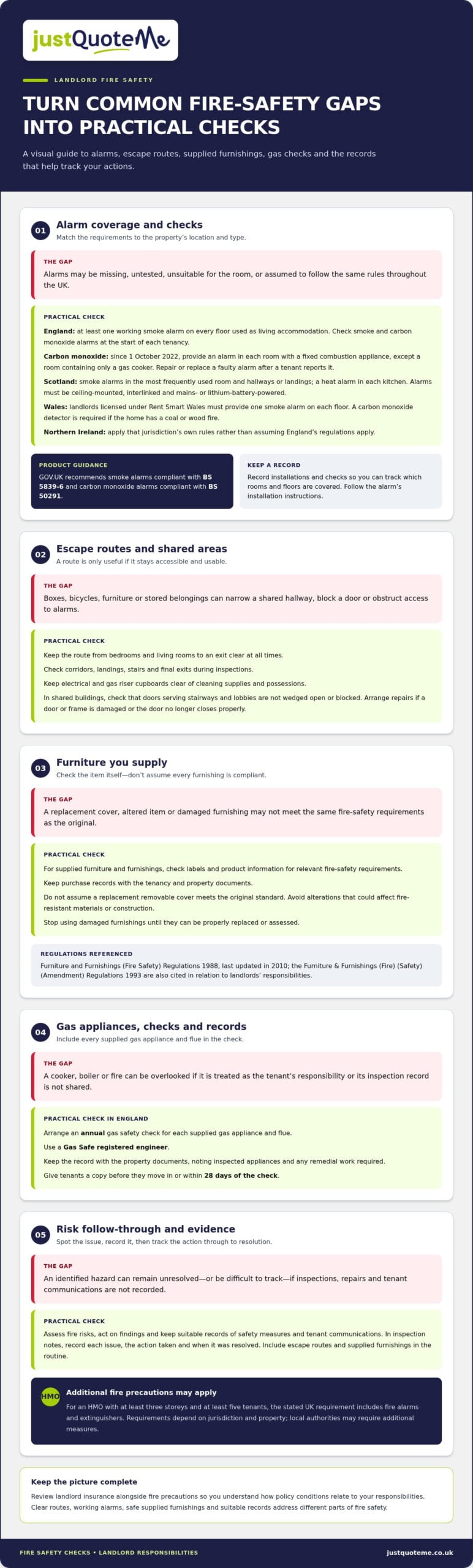
Landlords must provide appropriate alarms and keep fire precautions working. In England, the Smoke and Carbon Monoxide Alarm (England) Regulations 2015 set out private landlords’ alarm duties. Install at least one working smoke alarm on every floor used as living accommodation. Check that smoke and carbon monoxide alarms work at the start of each tenancy.
Carbon monoxide alarm rules cover more than solid-fuel appliances. Since 1 October 2022, landlords in England must provide a detector in each room with a fixed combustion appliance, except a room containing only a gas cooker. This includes relevant rooms with appliances such as a gas boiler. If a tenant reports a faulty alarm, landlords must repair or replace it after being informed.
Choose alarms suited to the property and follow their installation instructions. GOV.UK recommends smoke alarms compliant with British Standard BS 5839-6 and carbon monoxide alarms compliant with BS 50291. These standards help inform product selection; they don’t replace the duty to provide and maintain alarms. Record installation and checks so you can track which rooms and floors are covered.
Scotland specifies an alarm arrangement for homes: at least one smoke alarm in the most frequently used room, such as the living room, and one in hallways or landings. Each kitchen must have at least one heat alarm. Alarms must be ceiling-mounted, interlinked and powered by mains electricity or lithium batteries. Consider whether a carbon monoxide alarm is needed where fuel-burning appliances or flues are present.
In Wales, landlords licensed under Rent Smart Wales must provide one smoke alarm on each floor. A carbon monoxide detector is required if the home contains a coal or wood fire. Northern Ireland has its own rules, so apply the requirements for that jurisdiction rather than assuming England’s regulations apply.
For HMOs across England, Scotland, Wales and Northern Ireland, fire precautions depend on the jurisdiction and the property. The stated UK requirement includes fire alarms and extinguishers where an HMO has at least three storeys and at least five tenants. Local authorities may require additional measures.
HMO systems may need interlinked alarms on each storey with living accommodation, smoke alarms in units, and heat alarms in higher-risk rooms such as kitchens. Fire extinguishers and blankets may also form part of the safety arrangements. Check alarm coverage, test equipment regularly, and keep escape routes and access to alarms clear.
2. Escape routes and fire-safe furnishings
Tenants need access to escape routes at all times. A clear route from a bedroom or living room to an exit can make a practical difference during a fire. Check corridors, landings, stairs and final exits during inspections. Remove boxes, bicycles and other belongings that narrow a shared hallway or block a door. Keep electrical and gas riser cupboards clear, too. They should not become overflow storage for cleaning supplies or tenants’ possessions.
In a shared building, pay close attention to stairways and lobbies. Doors serving these areas must be fire-resistant to help separate the escape route from other parts of the property. Check that doors aren’t wedged open or blocked by furniture. Arrange suitable repairs if a door or frame is damaged, so the route remains usable. Technical work may require an engineer, but routine visual checks can reveal obvious damage, blocked access or a door that no longer closes properly.
Landlords who provide furniture must ensure it is fire safe. The Furniture and Furnishings (Fire Safety) Regulations 1988, last updated in 2010, apply to furniture and furnishings supplied in rental properties. The Furniture & Furnishings (Fire) (Safety) (Amendment) Regulations 1993 are also cited in relation to landlords’ responsibilities. These rules concern fire resistance in items such as sofas, chairs, mattresses and cushions. They don’t mean every item in a rented home is automatically compliant.
When buying or replacing furniture, check the labels and product information to confirm the item meets relevant fire-safety requirements. Keep purchase records with tenancy and property documents. If a sofa has a removable cover, don’t assume a replacement meets the same standard as the original. Avoid altering supplied furniture in ways that could affect its fire-resistant materials or construction. Stop using damaged furnishings until they can be properly replaced or assessed.
Include furnishings and escape routes in a practical inspection routine. Check, for example, that a mattress hasn’t been moved into a shared hallway and that a chair isn’t blocking an exit. Record each issue, the action taken and when it was resolved. Written notes help track recurring obstructions between tenancies and show which repairs are still outstanding.
Clear routes and fire-resistant furniture address different parts of the fire risk: one supports escape, while the other reduces the hazard from supplied items. If you’re reviewing how property protection fits your wider arrangements, explore landlord protection options.
3. Gas safety checks and records
Gas checks help identify hazards from appliances, flues and gas installations. In England, landlords must arrange an annual gas safety check for each supplied gas appliance and flue. A Gas Safe registered engineer must carry out the check. Keep the record with the property documents, noting which appliances were inspected and any remedial work required. If a cooker, boiler or fire is supplied, include it in the check rather than treating it as a tenant’s responsibility.
In England, landlords must give tenants a copy of the gas safety check record before they move in or within 28 days of the check, according to the Health and Safety Executive. Give new tenants the relevant record before occupation, and retain evidence of when you shared it. For an ongoing tenancy, make sure the tenant receives the record within the stated timeframe after the check. A clear filing system helps you track renewal dates and avoid missing paperwork.
Electrical safety needs a separate inspection process. According to the UK Government, landlords in England must have rental-property electrical installations inspected and tested by a qualified and competent person at least every five years. The inspection produces an Electrical Installation Condition Report, usually called an EICR. Keep the report, note any remedial actions, and retain records showing when those actions were completed. Between inspections, look for visible damage to sockets, switches, wiring and supplied appliances.
Fire door checks also form part of maintenance in some multi-occupied buildings. Under the Fire Safety (England) Regulations 2022, responsible persons must check communal fire doors quarterly and flat entrance doors annually in multi-occupied residential buildings over 11 metres high, according to the UK Government. Record defects such as damaged closers, gaps or doors that don’t shut properly. Arrange repairs promptly, because a door that fails to close can undermine separation between a flat and shared areas.
What checks and maintenance must landlords complete, and how often? In England, arrange gas safety checks annually and electrical inspections at least every five years. Inspect supplied appliances and visible electrical fittings between formal checks, too, and act promptly on faults. For relevant multi-occupied buildings, include the specified quarterly and annual fire door checks in the maintenance schedule.
Use one property record to coordinate gas, electrical and fire safety tasks. List each appliance, installation and door, then note the inspection date, findings, repair action and record shared with tenants. If an engineer identifies a faulty boiler during a gas check, for example, record the follow-up work and keep the updated safety documents together. This creates a practical audit trail and helps you manage fire safety alongside other essential property checks.
4. Who is responsible for completing a fire risk assessment?
Responsibility rests with the person responsible for fire safety in the building. In a rented property, this may be the landlord, particularly if they control shared areas. In buildings with multiple homes, responsibility may involve the person managing or controlling communal areas. Identify who can arrange the assessment, maintain shared precautions and act on its findings.
A fire risk assessment helps identify fire hazards, people at risk and practical steps to reduce danger. Walk through the property and consider ignition sources, combustible materials, alarm coverage, escape arrangements and tenants’ needs. Check, for example, that smoke alarms can be heard in sleeping areas and that any extinguishers provided remain accessible. Consider how a fire could affect both individual homes and shared corridors.
An assessment should lead to clear actions, not just a completed form. Record each hazard, who could be affected, the control measure needed and who will arrange it. Prioritise urgent problems, such as a blocked exit or defective fire door, then track repairs through to completion. Keep the assessment with relevant property records so the responsible person can show what was identified and how it was addressed.
In England and Wales, HMO landlords are required to carry out periodic fire risk assessments under the Regulatory Reform (Fire Safety) Order 2005. The Order also makes review important when a material change is planned within an occupied building. Changes could affect escape routes, shared spaces or the building’s use. Review the assessment against the planned work, then update the findings and evacuation arrangements where needed.
A fire risk assessment became a legal requirement from 1 October 2023 for people responsible for a building that is not a single private dwelling. This makes it important to distinguish a single rental home from a building with shared or communal areas. The property layout, occupancy and control of common parts help determine who must take responsibility and which fire precautions the assessment should address.
Keep a review schedule with other safety records, including the annual gas safety record and documents from a Gas Safe engineer. These records cover different hazards, but together they help organise property maintenance. A dated assessment, action log and evidence of completed work make it easier to track unresolved issues between tenancies. Give tenants clear written information about evacuation arrangements and what to do if an alarm sounds.
There is no single assessment that suits every rental property. A house let to one household has different shared-area considerations from an HMO with communal halls and stairs. The responsible person should tailor the assessment to the building, review it when material changes are planned, and ensure its findings lead to practical improvements.
5. Fire safety and landlord insurance
Fire precautions and insurance address related but different responsibilities. Safety regulations set duties for landlords and responsible persons; an insurance policy sets out the terms of cover. Meeting legal requirements doesn’t automatically mean every loss is covered. Read the policy schedule and wording to understand applicable conditions, exclusions and the information requested about your rental property. Consider the fire safety requirements for landlord insurance in the UK alongside, not instead of, your legal duties.
Landlord insurance policies typically require compliance with fire safety standards as a condition of coverage. Breaches can lead to a claim being denied or a policy being cancelled. Treat alarms, carbon monoxide alarms, escape routes, supplied furniture and furnishings, and documented maintenance as part of your property risk management. Keep records that show inspections took place and that identified problems were addressed.
For multi-occupied buildings in England, the Fire Safety (England) Regulations 2022 include specific fire-door checks. According to the UK Government, responsible persons must check communal fire doors quarterly and flat entrance doors annually in multi-occupied residential buildings over 11 metres high. Keep a dated record of each check, defects found and repairs completed. This helps demonstrate how you manage shared-building fire precautions.
The same regulations define high-rise residential buildings in England as buildings at least 18 metres high or seven or more storeys, according to the UK Government. Building height and storeys therefore affect which regulatory category applies. Record the building’s relevant details and identify who manages communal fire safety. Don’t assume responsibilities for shared areas sit solely with an individual flat landlord.
Before arranging cover, provide accurate information about the property and how it is let. Relevant details may include whether the building is an HMO, has communal areas, or has fire precautions that need ongoing maintenance. If the property’s use or layout changes, review the policy information and safety arrangements together. Keep correspondence, risk assessment records and evidence of completed work with the insurance documents.
Keep legal compliance and insurance decisions distinct. A working alarm or compliant door supports fire safety, but it doesn’t define the scope of an insurance policy. Check what the policy says about fire-related damage, responsibilities and required precautions, then keep a simple record of how you meet those terms. Understanding the fire safety requirements for landlord insurance in the UK can help you compare your documented precautions with the policy conditions.
For a property-specific review of cover, review landlord insurance options alongside your fire-safety records and policy requirements.
Just Quote Me: Public Liability Insurance
Just Quote Me offers Landlord Insurance and Public Liability Insurance for property-related arrangements. Fire precautions and insurance serve different purposes: alarms, clear escape routes and maintenance support safety, while insurance responds according to policy terms. Reviewing both can help you understand how cover relates to your responsibilities as a landlord.
Public Liability Insurance may be relevant when considering potential liability to others connected with your property activities. Landlord Insurance is the more direct starting point for reviewing cover for a let property. The appropriate option depends on your circumstances and the protection you’re seeking, so read the policy wording carefully and keep fire-safety records organised.
To discuss your options, Get Your Free Business Insurance Quote now or Request a Call back for free Expert advice.
Make your next property decision with confidence
Fire precautions and insurance work best as part of a considered approach to managing a rental property. If you’re changing how a property is let, reviewing its use or planning improvements, use the opportunity to reassess how your responsibilities and cover fit together. Understanding fire safety requirements for landlord insurance in the UK can help you have a more informed conversation about the protection you need.
Just Quote Me offers Public Liability Insurance, Employers Liability Insurance and Professional Indemnity Insurance. These policies address different needs. Discuss which options relate to your property or wider activities rather than assuming one policy covers every exposure.
Bring your questions about the property and the cover you’re considering. Contact Just Quote Me to discuss cover and take a clear next step for your landlord insurance.
Frequently Asked Questions
What are the fire safety responsibilities for landlords?
Landlords must manage fire hazards in the property and any areas they control. This means considering how residents can escape, maintaining relevant alarms and addressing defects found during inspections. If a tenant reports a faulty alarm, for example, arrange repair or replacement and record the report and action taken. Give tenants clear information about the building’s evacuation arrangements, especially where shared areas are involved.
What are the fire safety regulations for rented properties in England?
Key legislation includes the Smoke and Carbon Monoxide Alarm (England) Regulations 2015, the Regulatory Reform (Fire Safety) Order 2005 and the Fire Safety (England) Regulations 2022. The Housing Act 2004, including the Housing Health and Safety Rating System, is also identified as a source of fire safety requirements. The rules apply to different situations, so consider whether the issue concerns a home, an HMO or shared parts of a building.
What do you need to focus on?
Start with risks that could prevent someone escaping or delay action during a fire. Check that exits aren’t obstructed, alarms can be accessed and tested, and supplied furnishings meet fire-safety requirements. Then review outstanding maintenance, including faults reported by tenants. In a shared building, identify who manages communal precautions and how residents receive emergency instructions. Keep records of checks and completed repairs together for easy reference.
Who is responsible for completing a fire risk assessment?
The responsible person for fire safety in a building must ensure the assessment is completed and its findings acted upon. This may be a landlord, managing agent or another person with control over the premises or shared areas. In an HMO, landlords in England and Wales must carry out periodic assessments under the Regulatory Reform (Fire Safety) Order 2005. Clarify who controls each area so responsibilities for common parts aren’t overlooked.
What fire safety laws apply to UK landlords and rental properties?
Requirements vary across the UK, so a landlord should apply the rules for the property’s location. In England, relevant frameworks include the Housing Act 2004, the Regulatory Reform (Fire Safety) Order 2005 and the Fire Safety (England) Regulations 2022. Scotland and Wales have distinct requirements, while Northern Ireland’s rules can differ too. If you own properties in more than one nation, keep separate compliance records for each address.
Which smoke alarms and carbon monoxide alarms must UK landlords provide, and where?
Alarm arrangements depend on the nation and property. In England, GOV.UK recommends smoke alarms compliant with BS 5839-6 and carbon monoxide alarms compliant with BS 50291. Scotland requires smoke alarms in the most frequently used room and hallways or landings, plus a heat alarm in every kitchen. In Wales, licensed landlords must provide a smoke alarm on each floor. Northern Ireland has separate rules, so don’t assume England’s requirements apply.
What fire doors, escape routes and fire precautions are required in rental properties?
Tenants must have access to escape routes, so keep corridors, stairs and exits clear of belongings. Doors to stairways and lobbies must be fire-resistant. In HMOs, precautions can include interlinked alarms across storeys, smoke alarms in units and heat alarms in higher-risk rooms. Extinguishers or fire blankets may also be needed, with specific measures varying by local authority. Consider the building layout and shared areas when reviewing precautions.
Do landlords need a fire risk assessment, and who must carry it out?
A fire risk assessment is required for people responsible for a building that isn’t a single private dwelling, and HMO landlords in England and Wales have periodic assessment duties. The responsible person must ensure the assessment reflects the property and that its findings lead to action. A landlord can complete it if competent to do so; otherwise, suitable expertise may be needed. Review the assessment when a material change is planned in an occupied building.
