

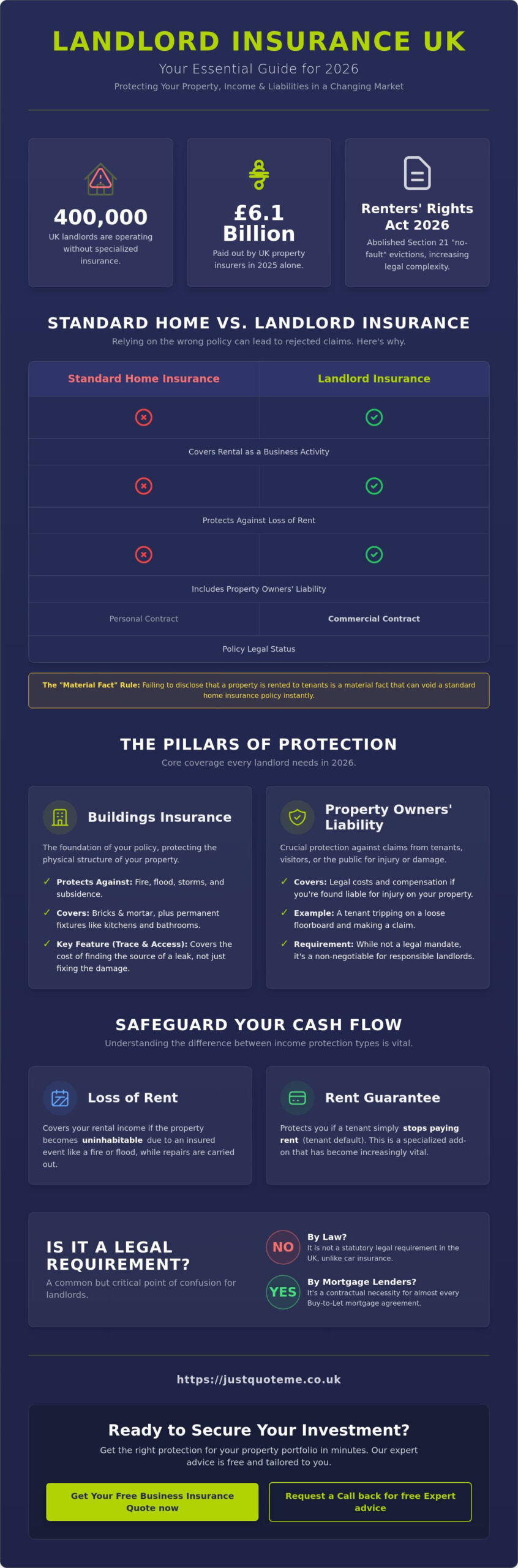
Did you know that roughly 400,000 UK landlords are currently operating without a specialized insurance policy? Relying on standard home insurance is a common mistake that often leads to rejected claims because these policies don’t account for the unique risks of a rental agreement. If you are asking what does landlord insurance cover uk property owners need to know in 2026, you’re already taking the right steps to protect your investment. With UK property insurers paying out a record £6.1 billion in 2025, ensuring your portfolio is correctly protected is now a vital part of your business strategy.
We know the current landscape feels complex. Between rising premiums and the legal shifts brought by the Renters’ Rights Act 2026, which abolished Section 21 “no-fault” evictions on May 1st, the administrative burden on landlords is significant. This guide will show you exactly what protections you need to safeguard your rental property, income, and legal liabilities in the current market. We’ll explore the essential differences between buildings cover, property owners’ liability, and the increasingly vital rent guarantee insurance. You’ll gain a clear, pragmatic roadmap to securing your assets and maintaining your cash flow with confidence.
Key Takeaways
- Understand the “Material Fact” rule and why standard home insurance is legally insufficient for rental properties.
- Discover exactly what does landlord insurance cover uk regarding structural protection against fire, flood, and subsidence.
- Learn the critical distinction between loss of rent during property repairs and protecting your income against tenant default.
- Identify which specialized add-ons, such as accidental or malicious damage, are necessary to safeguard your specific portfolio.
- Find out how an independent broker identifies hidden gaps in generic policies to ensure you are fully protected in 2026.
Why Standard Home Insurance Falls Short for UK Landlords
Landlord insurance is essentially a commercial contract tailored for residential property. While the physical building stays the same, the risk profile changes entirely when you move from being an owner-occupier to a landlord. This shift is what triggers the need for a specialized policy. When investigating what does landlord insurance cover uk owners must understand that the “Material Fact” rule is the foundation of any claim. Failing to disclose that a property is let to tenants is a breach of the duty of fair presentation. This oversight usually voids a standard home policy instantly, leaving you to face repair costs alone.
A standard domestic policy assumes you are present to maintain the property and mitigate risks daily. However, Core Coverage: Buildings Insurance for landlords accounts for the increased likelihood of accidental damage, liability claims from third parties, and the financial impact of the property becoming uninhabitable. These are risks that a standard homeowner simply doesn’t face in the same way.
The “Business Use” Exclusion Explained
Insurers view rental income as a commercial enterprise. Standard home insurance includes a “business use” exclusion that typically prohibits any activity where money is exchanged for residence. If a pipe bursts or a fire occurs and the insurer discovers the occupants are tenants rather than the policyholder, they’ll likely reject the claim. When you look at what does landlord insurance cover uk providers include, the “business use” clause is the most significant hurdle for those using domestic policies. The legal distinction is clear; a private resident has a personal interest in the property, whereas a tenant is part of a commercial contract. This difference in “insurable interest” means you need a residential letting insurance policy designed for these specific risks.
Is Landlord Insurance a Legal Requirement in the UK?
It’s a common misconception that landlord insurance is a statutory legal requirement like car insurance. There’s no law that forces you to have it. However, it’s a contractual necessity for almost every Buy-to-Let mortgage in the UK. By 2026, mortgage lenders have become even stricter with their terms, often requiring proof of specialist cover before releasing funds. Professional landlords treat this as a mandatory business expense because the alternative is being personally liable for massive flood repairs or multi-million-pound liability claims. It’s a pragmatic step that manages the complex administrative burdens so you don’t have to worry about your financial security if something goes wrong.
Core Coverage: Buildings Insurance and Property Owners Liability
When you analyze what does landlord insurance cover uk policies typically center on two pillars: the physical structure and your legal liability. Buildings insurance is the most substantial part of your policy. It protects the bricks and mortar against major perils such as fire, flood, and subsidence. In 2026, the frequency of weather-related claims has made this protection more critical than ever. Beyond the walls, your policy also covers permanent fixtures like fitted kitchens, bathroom suites, and built-in wardrobes. If you’re letting a furnished property, you’ll need to ensure your sum insured includes these items to avoid being under-insured during a total loss claim.
One often overlooked but vital feature is Trace and Access cover. This doesn’t pay for the plumbing repair itself; instead, it covers the significant costs of finding the leak. This includes removing floorboards or tearing out sections of drywall to locate a burst pipe and then making good the damage afterwards. Without this sub-limit, you could be left with a massive bill for exploratory work before the actual repair even begins.
Calculating Your Rebuild Cost in 2026
A common mistake is insuring a property for its market value. In 2026, the market value is often completely irrelevant to your insurance needs. You must insure for the full rebuild cost, which includes professional fees, debris removal, and modern construction materials. Due to significant inflation in building material costs over the last year, many landlords find their old estimates are now dangerously low. Most professional policies now include index-linking. This automatically adjusts your sum insured in line with rising costs, ensuring that a claim payout won’t be reduced by the “Condition of Average” clause. If you’re unsure about your current levels, it’s a good idea to review your current policy with a specialist.
Property Owners Liability: Protecting Your Assets
As a landlord, you have a legal duty of care to your tenants and any visitors to your property. This responsibility is a primary reason Why Standard Home Insurance Falls Short, as domestic policies aren’t designed for the liabilities of a rental business. Property Owners Liability protects you if a tenant or third party suffers an injury or property damage due to your negligence. Common examples include a tenant tripping on a loose carpet tile or being injured by a faulty door handle.
While a £2 million limit used to be the standard, many landlords now opt for £5 million, especially when dealing with local authority contracts or blocks of flats. This protection is similar to public liability insurance but specifically addresses the risks associated with property ownership. It covers both the legal defense costs and any compensation awards, preventing a single accident from bankrupting your rental business.
Protecting Your Cash Flow: Loss of Rent and Tenant Default
Maintaining a consistent income stream is the backbone of any rental business. When landlords ask what does landlord insurance cover uk property owners need to understand that protecting your cash flow is just as vital as protecting the bricks and mortar. There are two primary ways a policy safeguards your revenue: Loss of Rent and Tenant Default. While they might sound similar, their triggers are entirely different. Loss of Rent kicks in if your property is damaged by an insured event, like a fire or flood, making it impossible for tenants to stay. Tenant Default, often called Rent Guarantee, protects you if the tenant remains in the property but simply stops paying.
Choosing the right indemnity period is a critical decision in 2026. This is the length of time the insurer will continue to pay out for lost rent. While 12 months used to be the standard, many landlords now opt for 24 or 36 months. Recent trends show that supply chain issues and contractor shortages can significantly delay major rebuilds. If your indemnity period is too short, the payments will stop even if the house isn’t ready for new tenants. Extending this period provides a safety net against these modern logistical delays.
Loss of Rent vs. Rent Guarantee: The Critical Difference
The trigger event is the main distinction between these two covers. Loss of Rent requires a physical peril to occur. If a storm makes the roof unsafe, your insurer compensates you for the rent you lose while the property is empty for repairs. In contrast, Rent Guarantee addresses the financial risk of the tenant. Following the Renters’ Rights Act 2026, which abolished Section 21 evictions on May 1st, 2026, the process of regaining possession has become more complex and potentially longer. This shift is likely why demand for rent guarantee products surged by 41% in late 2025. You can often add this protection to a residential letting insurance policy. This MoneySavingExpert guide to landlord insurance provides more context on how these protections fit into a broader financial plan.
The “Uninhabitable” Clause
A Loss of Rent claim hinges on the property being legally “uninhabitable.” This isn’t a subjective term. It usually means the property lacks essential services like water, electricity, or sanitation, or has structural damage that poses a safety risk. A surveyor or loss adjuster will visit the property to determine if it meets this threshold. Maintenance issues, such as a slowly leaking tap or peeling wallpaper, don’t count. The damage must result from a sudden, accidental event. If the property is declared unfit, your policy may also cover alternative accommodation costs. This ensures your tenants have somewhere to live while you continue to receive your rental income, maintaining your business stability during a crisis.
Specialized Add-ons: Accidental Damage and Legal Expenses
While core buildings and liability insurance provide a solid foundation, they don’t cover every operational hurdle. When considering what does landlord insurance cover uk investors frequently look toward specialized add-ons to handle the day-to-day friction of property management. These extensions bridge the gap between major structural disasters and the smaller, more common incidents that can erode your profit margins. Adding accidental damage, malicious damage, and legal expenses cover transforms a basic policy into a comprehensive business shield.
Home emergency cover is another pragmatic addition for the modern landlord. It provides 24/7 assistance for urgent issues like boiler breakdowns, burst pipes, or lost keys. Instead of you scrambling to find a plumber at 3 a.m., the insurer dispatches a qualified contractor to secure the property. This efficiency keeps your tenants happy and prevents minor leaks from turning into major insurance claims. If you employ staff to manage your portfolio, such as gardeners or cleaners, you should also consider employers liability insurance to meet your legal obligations as a business owner.
Navigating Tenant-Related Damage
Differentiating between “fair wear and tear” and “accidental damage” is a common point of confusion. Wear and tear, such as a carpet becoming thin over five years, is never insurable. Accidental damage covers sudden, one-off mishaps like a tenant dropping a heavy object on a ceramic hob or spilling oil on a hardwood floor. Malicious damage is a separate category altogether. It involves intentional vandalism by a tenant, such as graffiti or punched walls. Most insurers will only process a malicious damage claim if you provide a police crime reference number.
A sophisticated feature to look for is the “Tenant Subrogation Waiver.” Usually, if an insurer pays for damage caused by a tenant, they have the right to sue that tenant to get their money back. This can destroy the landlord-tenant relationship. A subrogation waiver prevents the insurer from taking this action, provided the damage wasn’t intentional. It’s a subtle but powerful way to maintain a professional atmosphere within your rental business. To ensure your policy includes these nuances, it’s best to get a tailored landlord quote that reflects your specific needs.
Legal Expenses and Eviction Support
The legal landscape for UK landlords shifted significantly on May 1, 2026, with the abolition of Section 21 “no-fault” evictions. Regaining possession now requires specific legal grounds under Section 8, making the process more complex and technically demanding. In 2026, the average eviction process takes between six to nine months and can cost a landlord anywhere from £6,000 to over £15,000 in lost rent and legal fees. Legal expenses insurance is no longer just an “extra”; it’s a vital tool for managing these risks. It pays for the specialist solicitors required to navigate the new court processes and handles the administrative burden of contract disputes, helping you stay compliant while protecting your investment.
Tailoring Your 2026 Policy with an Independent Broker
In a market as volatile as 2026, relying on automated comparison sites can be a costly mistake for your rental business. These “off-the-shelf” policies often prioritize the lowest premium at the expense of robust protection, leading to the fear of claim rejection that many landlords face today. When you analyze what does landlord insurance cover uk property owners often realize that generic policies miss the nuances of their specific portfolio. An independent broker like Just Quote Me acts as your advocate, digging into the fine print that algorithms often ignore. Whether you’re looking for standard residential cover or need to identify gaps in generic commercial property insurance for a mixed-use building, professional guidance ensures you aren’t paying for redundant features while leaving critical risks exposed.
Consolidating multiple properties into a single portfolio policy is one of the most efficient ways to manage your business in 2026. It aligns all your renewal dates to a single day and often secures more competitive rates than maintaining a dozen individual contracts. With over 30 years of industry experience, we understand that your time is better spent managing your properties than chasing insurance paperwork. We handle the administrative heavy lifting, providing a steady hand in a complex market and ensuring your coverage evolves alongside your growing investment list.
Broker vs. Direct: Why Expertise Matters
Brokers provide access to specialist underwriters who don’t deal directly with the general public. These underwriters often offer more flexible terms for non-standard risks, such as HMOs, thatched properties, or buildings with a history of subsidence. A bespoke risk assessment ensures your policy is built around your actual needs, rather than a one-size-fits-all template. Beyond the initial setup, a broker serves as your advocate during the claims process. If a major event occurs, having a knowledgeable partner to manage the communication with the insurer ensures a smoother, more efficient resolution. This human-centric approach is a vital alternative to the impersonal automated systems that dominate the modern insurance landscape.
Getting Your Quote Today
To get started, you’ll need basic details about your property, including the construction materials, the tenant profile, and an accurate rebuild cost assessment as discussed earlier in this guide. We’ve simplified the inquiry process to be as frictionless as possible, reflecting our commitment to efficiency. By providing clear, honest communication, we move you quickly from a state of inquiry to a secure, active policy. We manage the complex administrative burdens so you don’t have to, giving you the confidence that your rental income and legal liabilities are fully protected for the year ahead.
Securing Your Rental Portfolio for the Year Ahead
The rental market in 2026 demands a proactive approach to risk management. Understanding exactly what does landlord insurance cover uk property owners is no longer just about protecting against fire and flood damage. It’s about building a resilient business that can withstand significant legal shifts and the rising costs of property maintenance. By prioritizing specialized buildings cover, robust liability protection, and income safeguards like rent guarantee, you ensure that a single accident or tenant dispute doesn’t derail your financial future.
Relying on generic policies leaves gaps that often only become visible when it’s too late to act. As an FCA Authorised Broker with 30+ years of industry experience, we provide the expertise needed to navigate these complexities. We offer access to top UK insurers, ensuring your policy is both comprehensive and cost-effective. Don’t leave your investment to chance in an unpredictable market.
Just Quote Me is here to help you manage the complex administrative burdens so you can focus on growing your portfolio with complete peace of mind. Let us find the right protection for your needs today.
Frequently Asked Questions
Do I need landlord insurance if I am renting to a family member?
Yes, you still need a specialist landlord policy. Standard home insurance is designed for owner-occupiers, and any rental agreement, even with family, represents a material change in risk. If you don’t disclose the tenancy, your insurer could reject a future claim. A landlord policy ensures you have the correct liability and structural protection in place regardless of who is living in the property.
Does landlord insurance cover my tenants’ belongings?
No, it doesn’t. Your policy only covers the building and any contents you own, such as white goods or furniture provided in a furnished let. Tenants are responsible for insuring their own personal items like laptops, clothes, and jewelry. It’s often helpful to mention this in the tenancy agreement so they know to arrange their own contents cover.
What is the difference between buildings insurance and landlord insurance?
Buildings insurance is a specific type of cover that protects the physical structure of a property. Landlord insurance is a broader commercial contract that includes buildings cover alongside other essential protections. When landlords ask what does landlord insurance cover uk providers usually explain that it combines structural protection with property owners’ liability, loss of rent, and optional legal expenses.
Is accidental damage included as standard in landlord policies?
Accidental damage is typically an optional add-on rather than a standard feature. While your main policy covers major events like fire or storms, it won’t pay for one-off mishaps like a tenant spilling red wine on a new carpet or cracking a bathroom tile. You should check your policy schedule to see if this specific protection is active or needs to be added.
How much does landlord insurance cost in the UK in 2026?
Premiums are influenced by several factors, including the property’s location, its rebuild value, and the type of tenants you house. In 2026, rising construction costs and more frequent weather-related claims have caused a general increase in insurance rates across the industry. Getting a tailored quote is the only way to determine the exact cost for your specific rental business.
Can I get landlord insurance for a property that is currently vacant?
Yes, but you must notify your insurer if the property is empty for more than 30 to 60 days. Standard policies often have “unoccupancy” limits that restrict cover after a certain period. If you’re between tenants or undergoing renovations, you may need a specialized unoccupied property policy to ensure you stay protected against risks like vandalism or water damage.
Does landlord insurance cover boiler breakdowns?
Standard policies generally don’t cover mechanical failure or general maintenance issues. To get protection for your heating system, you’ll need to add home emergency cover to your policy. This add-on provides a 24/7 helpline and covers the cost of a contractor’s call-out and labor to get the boiler back in working order during an emergency.
What happens if my tenant refuses to leave and I have no legal cover?
You’ll be responsible for all legal fees and court costs required to regain possession of your property. Under the 2026 regulations, the eviction process is technically demanding and can take many months to resolve. Without legal expenses insurance, you’ll have to manage the solicitors yourself and absorb the cost of lost rent during the entire duration of the dispute.
